-
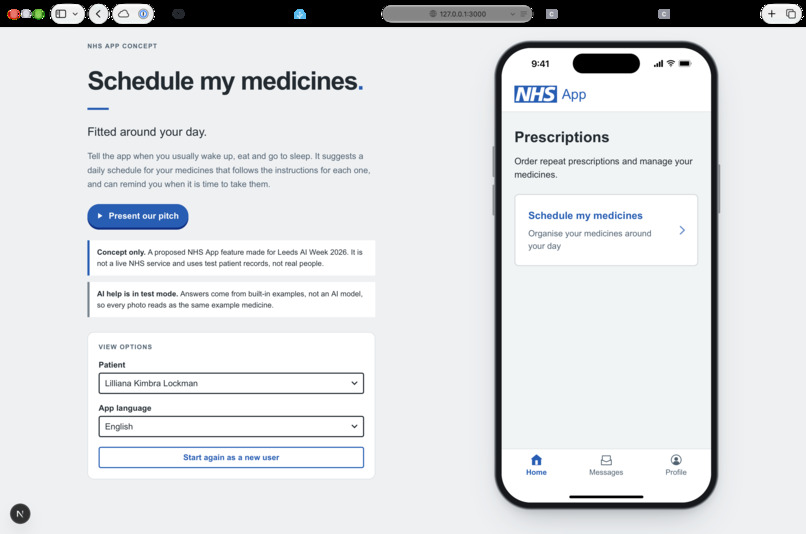
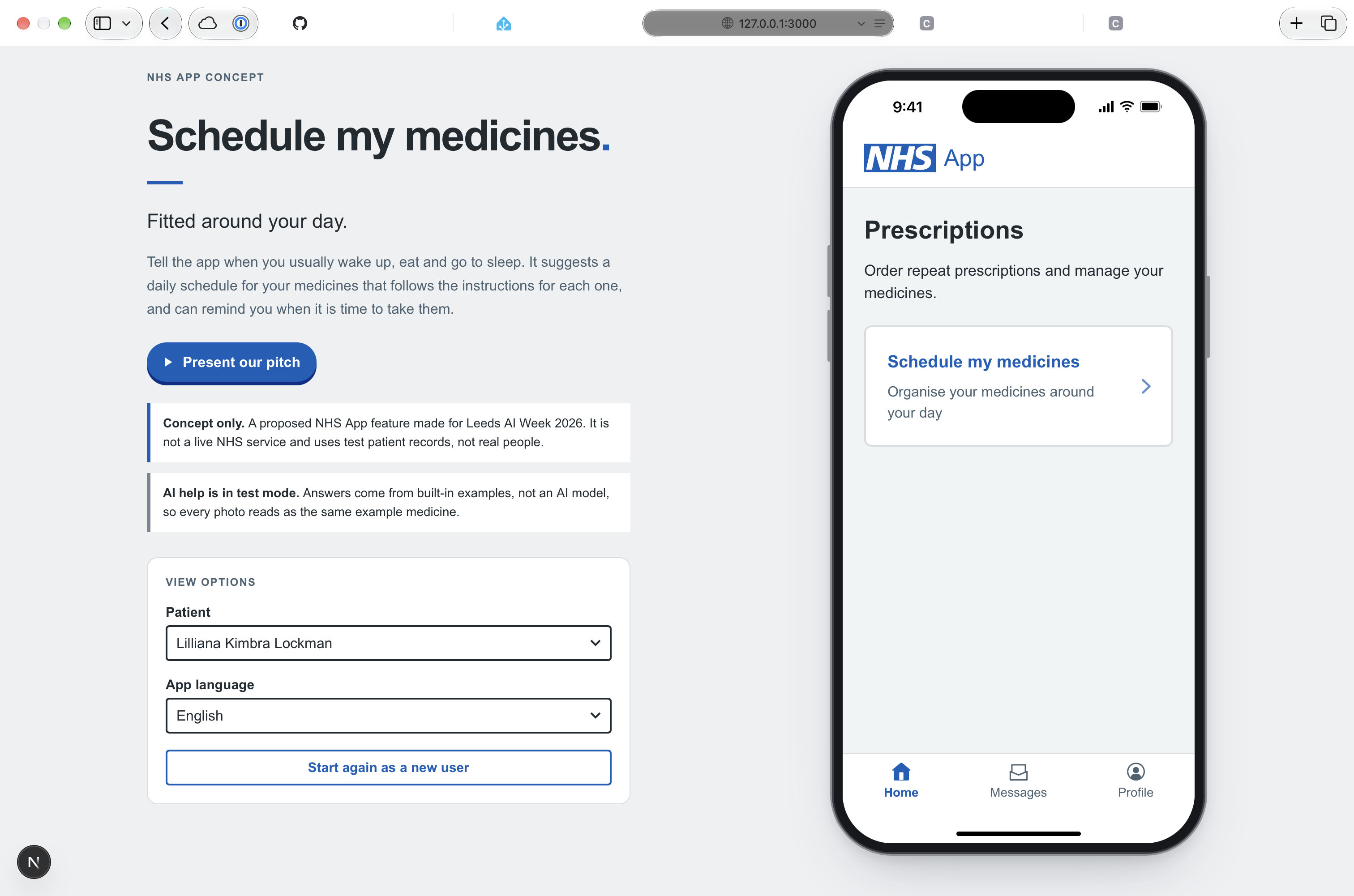
Main screen
-
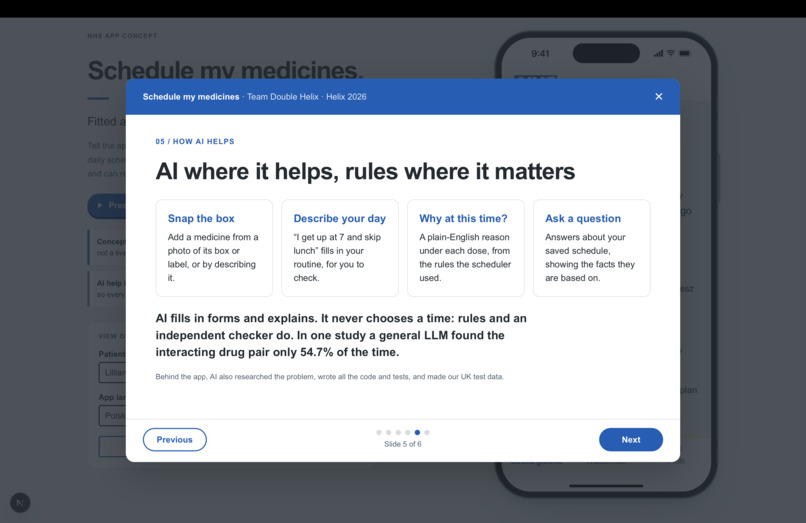
Pitch deck
-
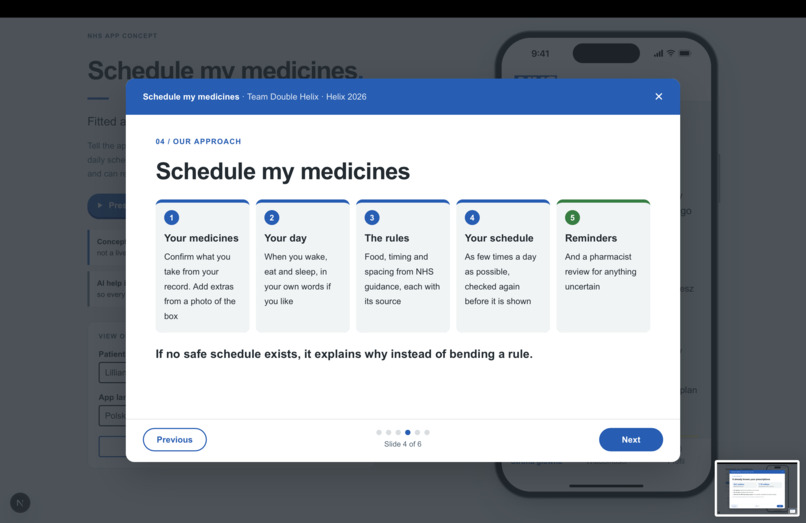
Pitch deck
-
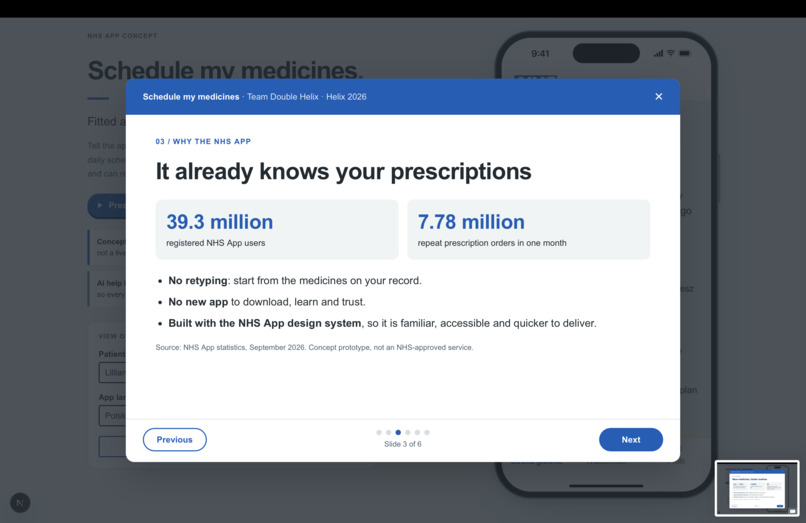
Pitch deck
-
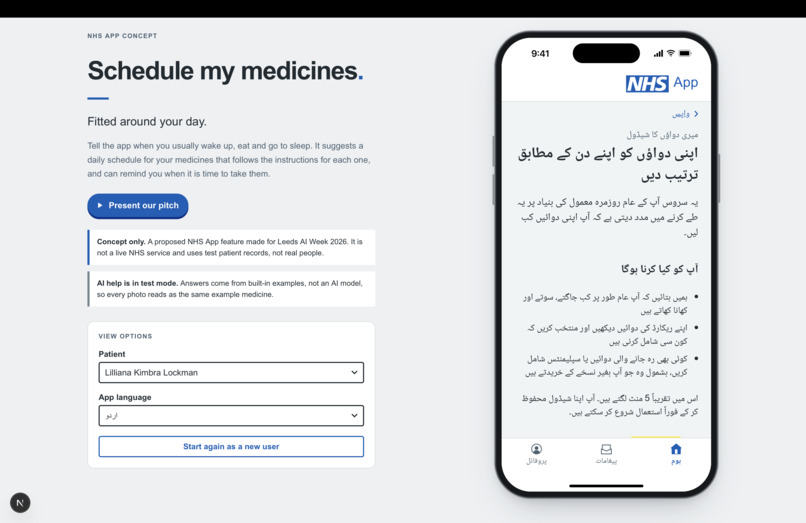
Translation to Urdu
-
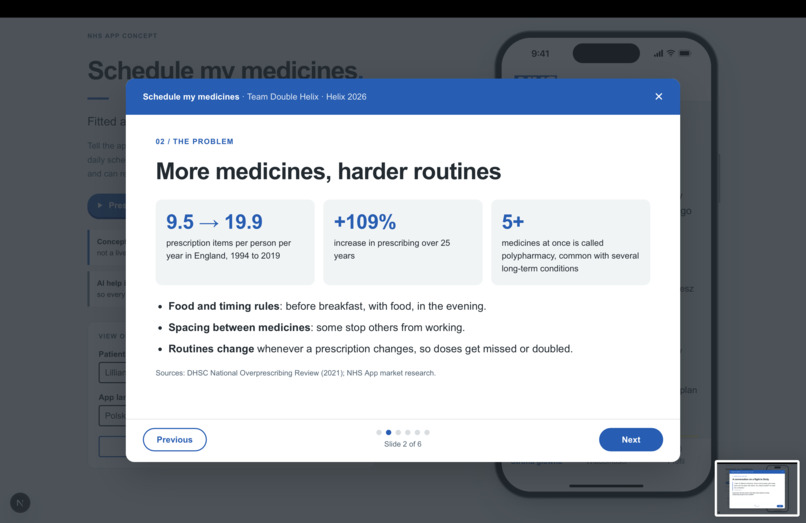
Pitch deck
-
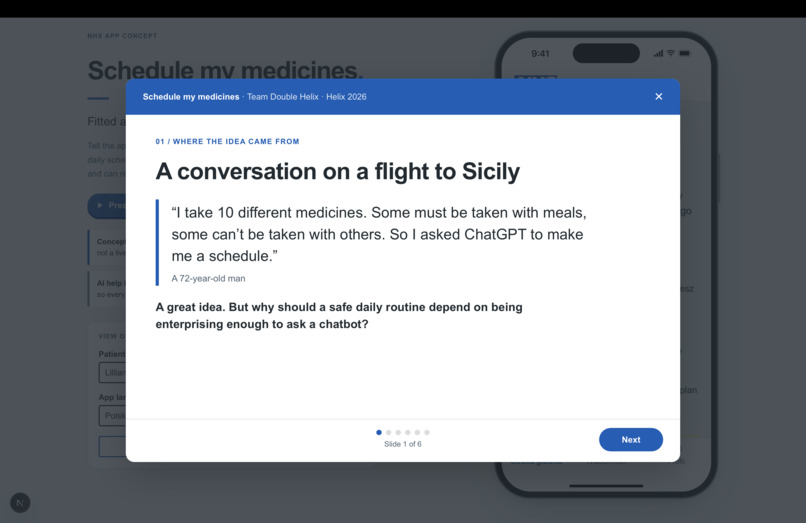
Pitch deck
-
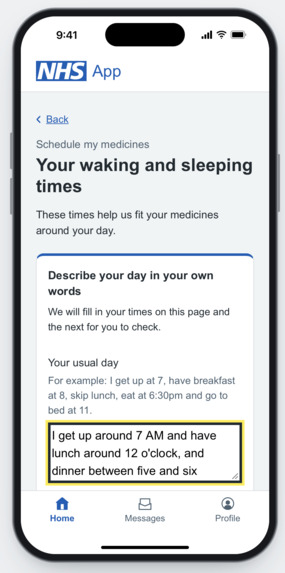
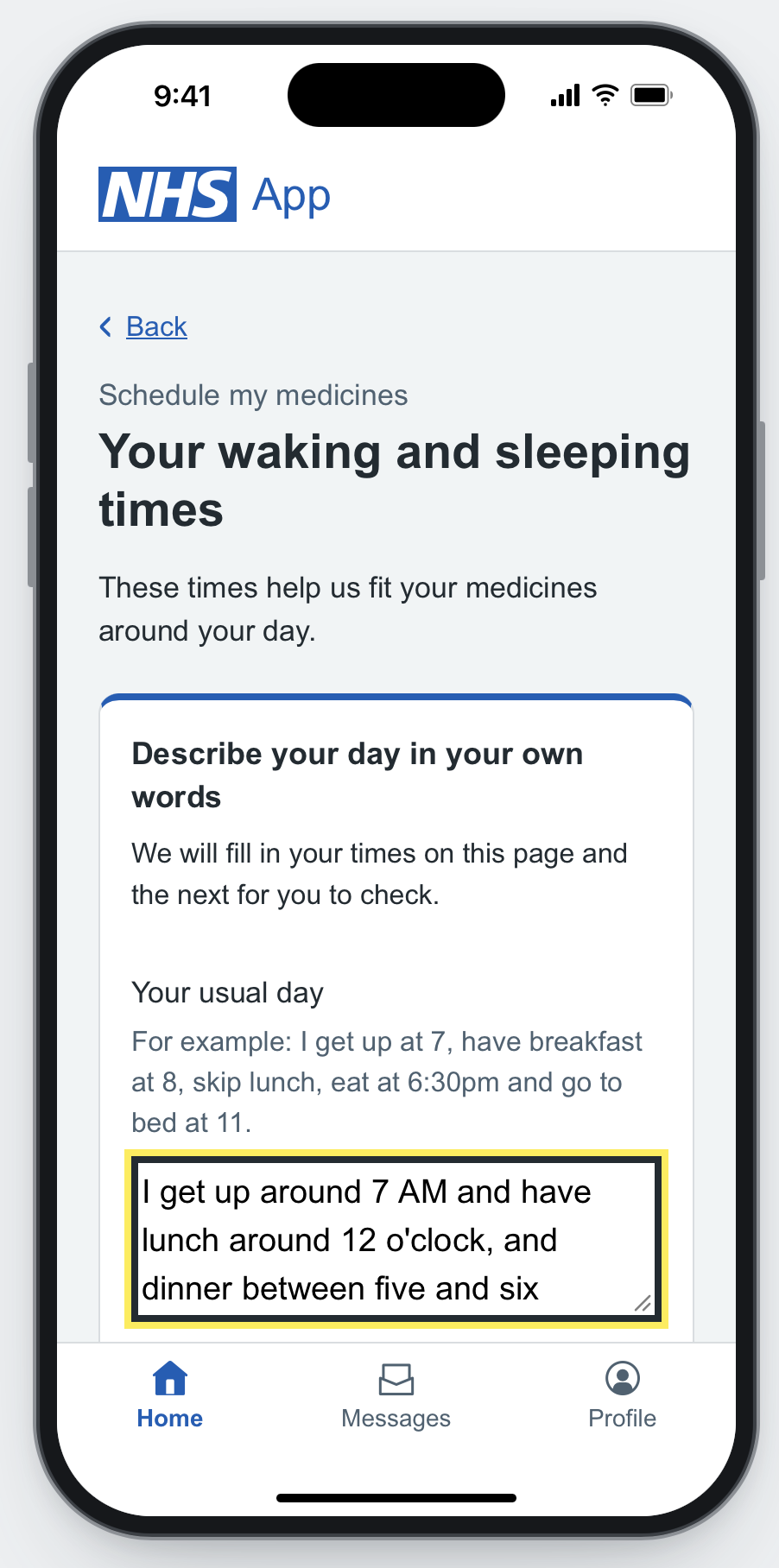
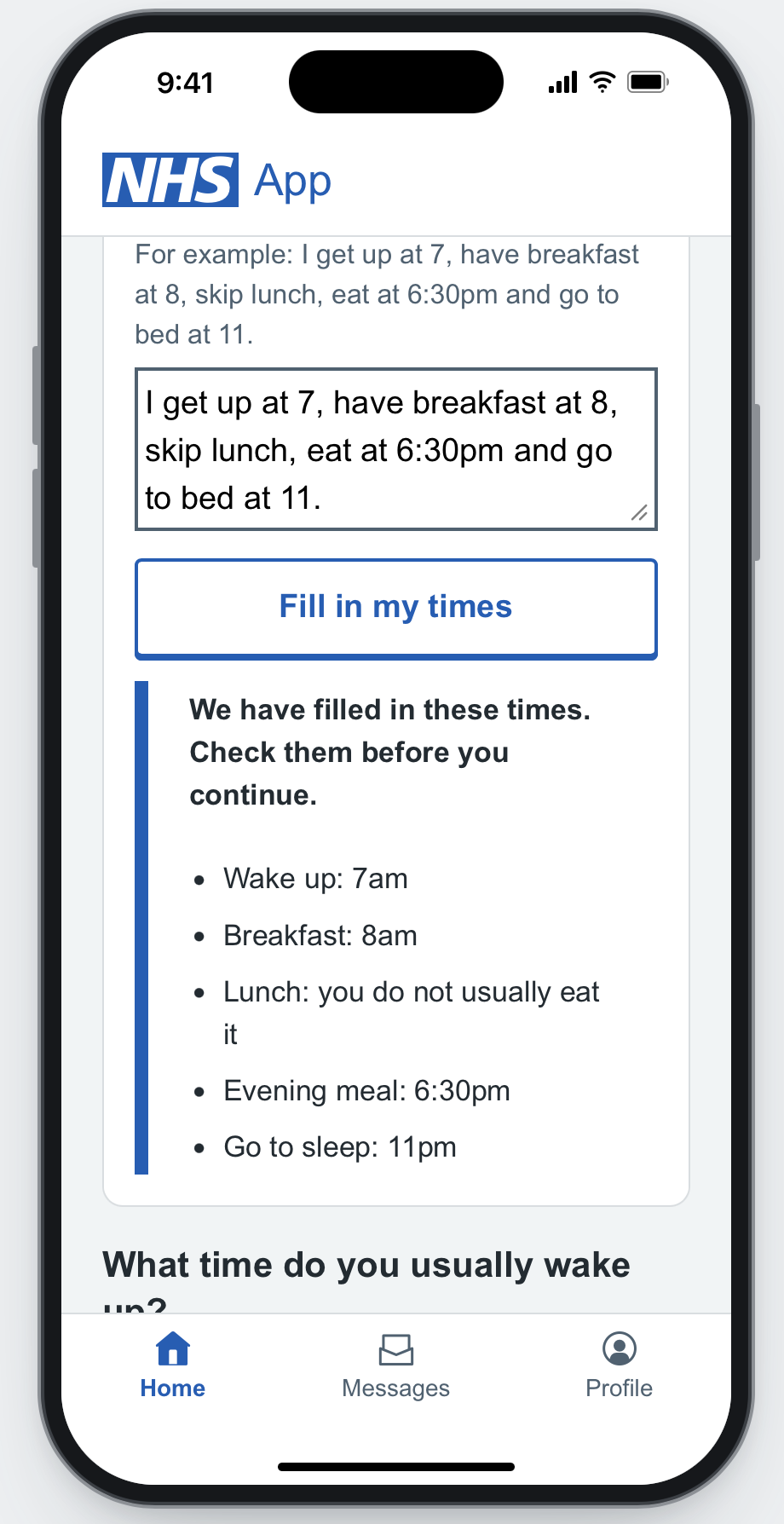
Using AI to enter user schedule via free text
-
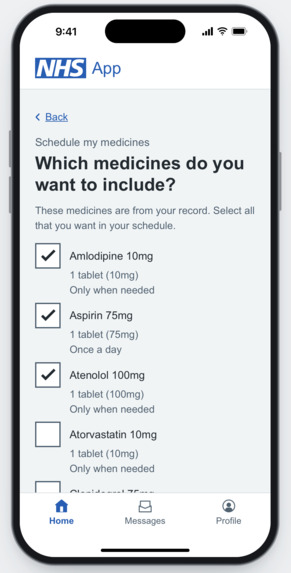
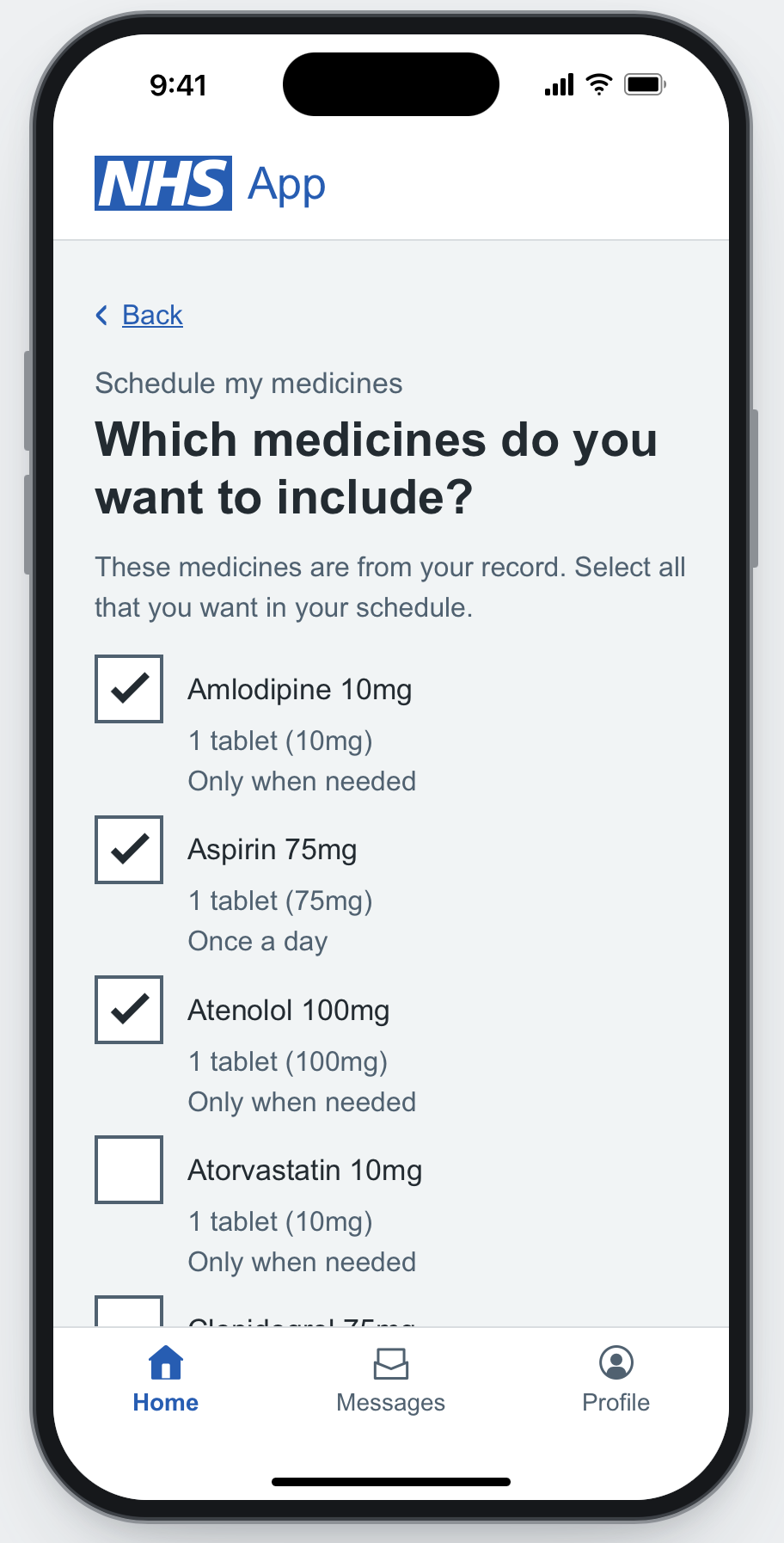
App screen: confirm existing medicines
-
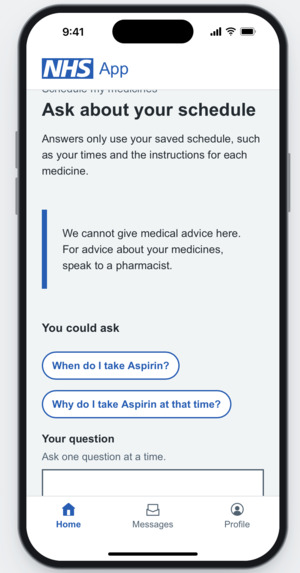
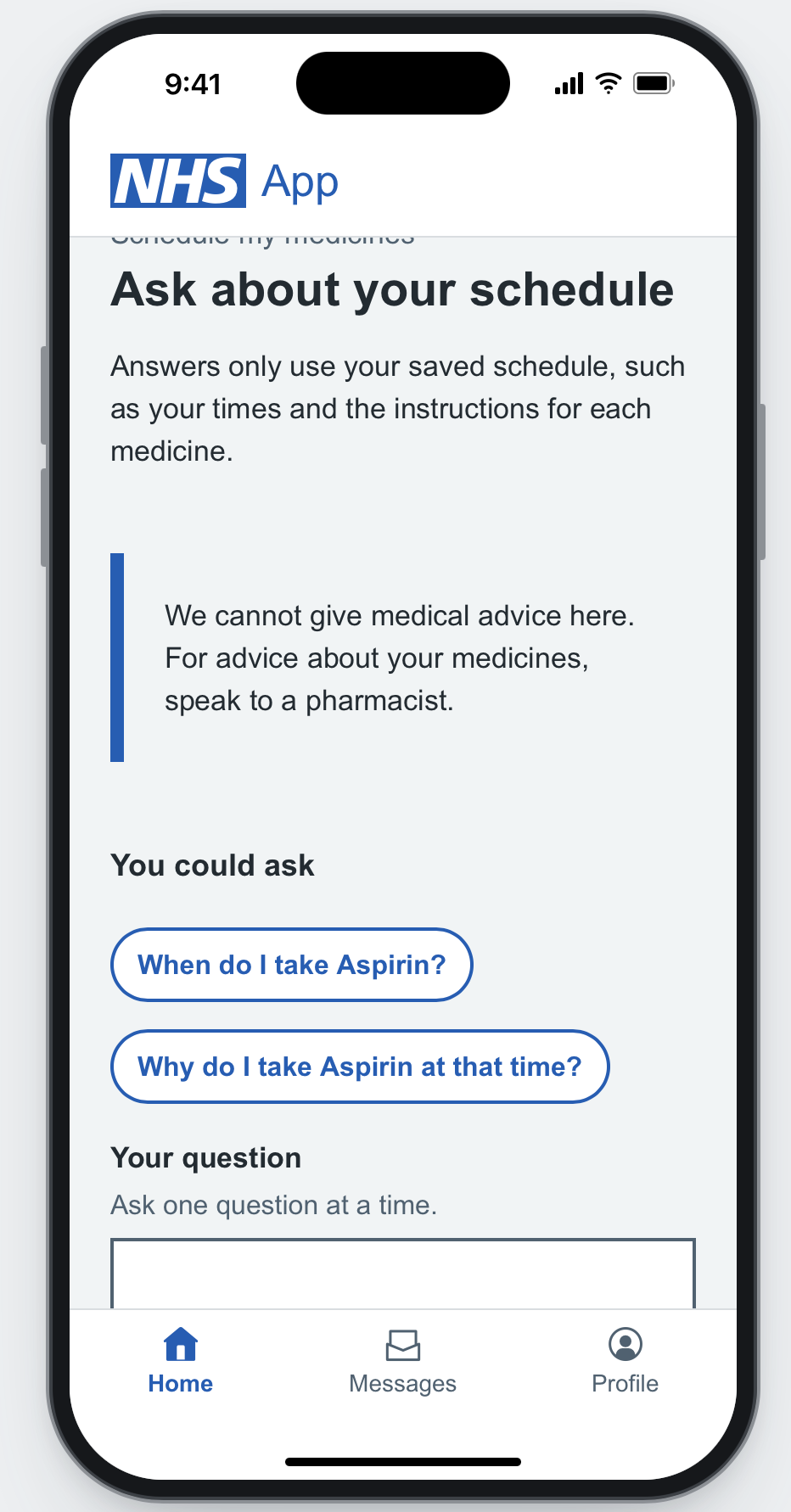
App screen: ask about your schedule
-
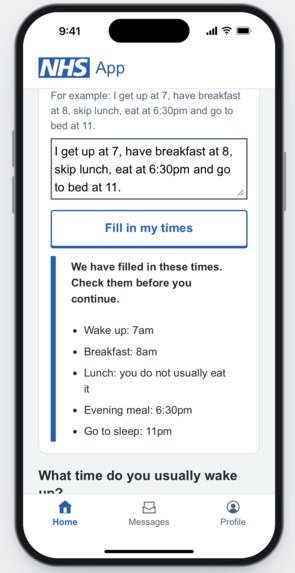
App screen: enter daily schedule
-
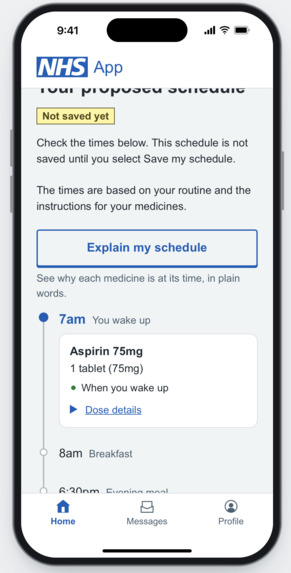
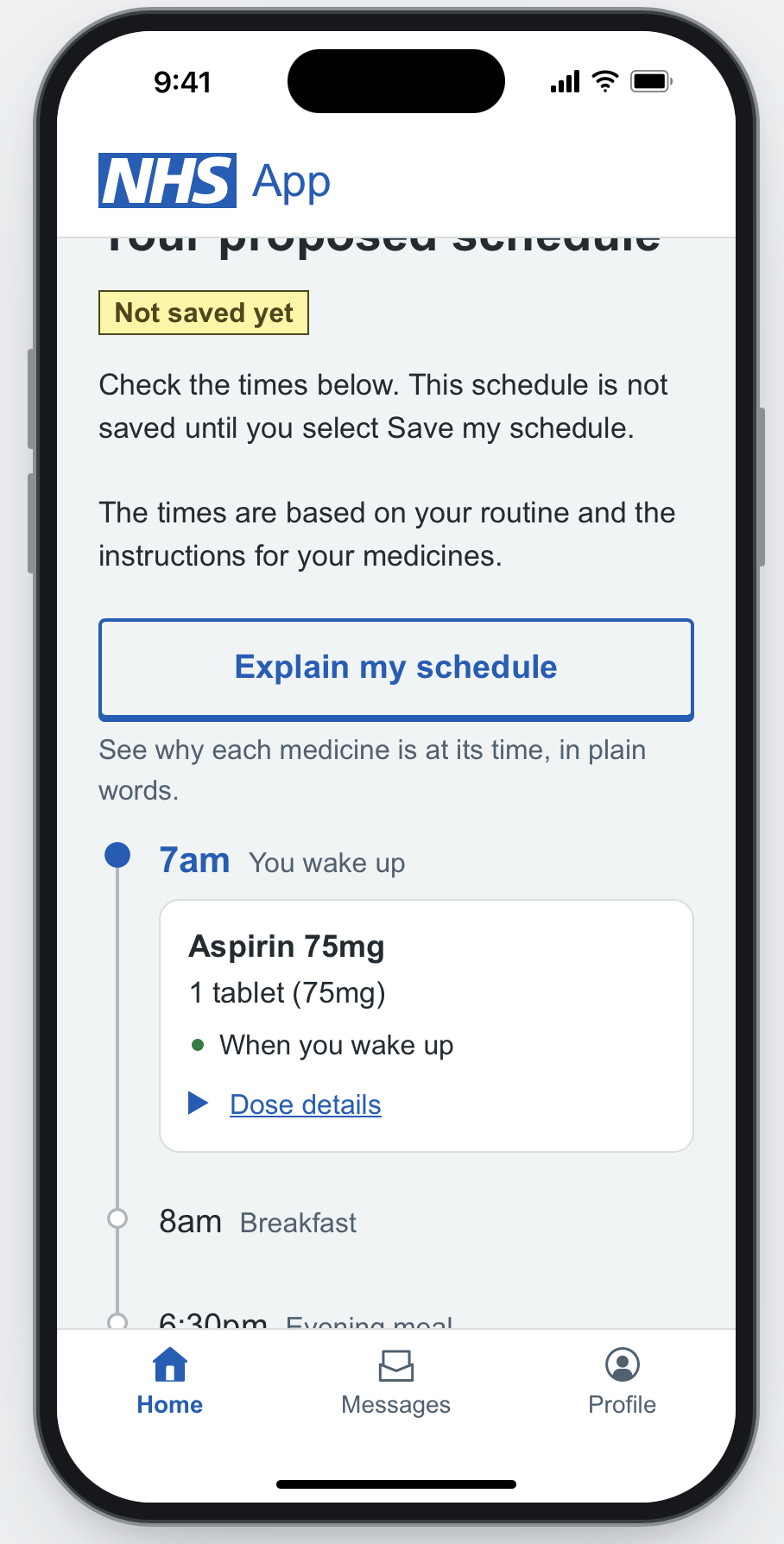
App screen: view schedule
-
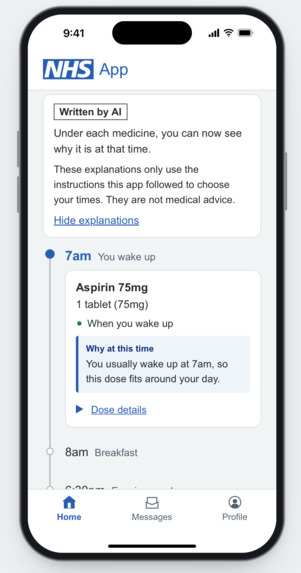
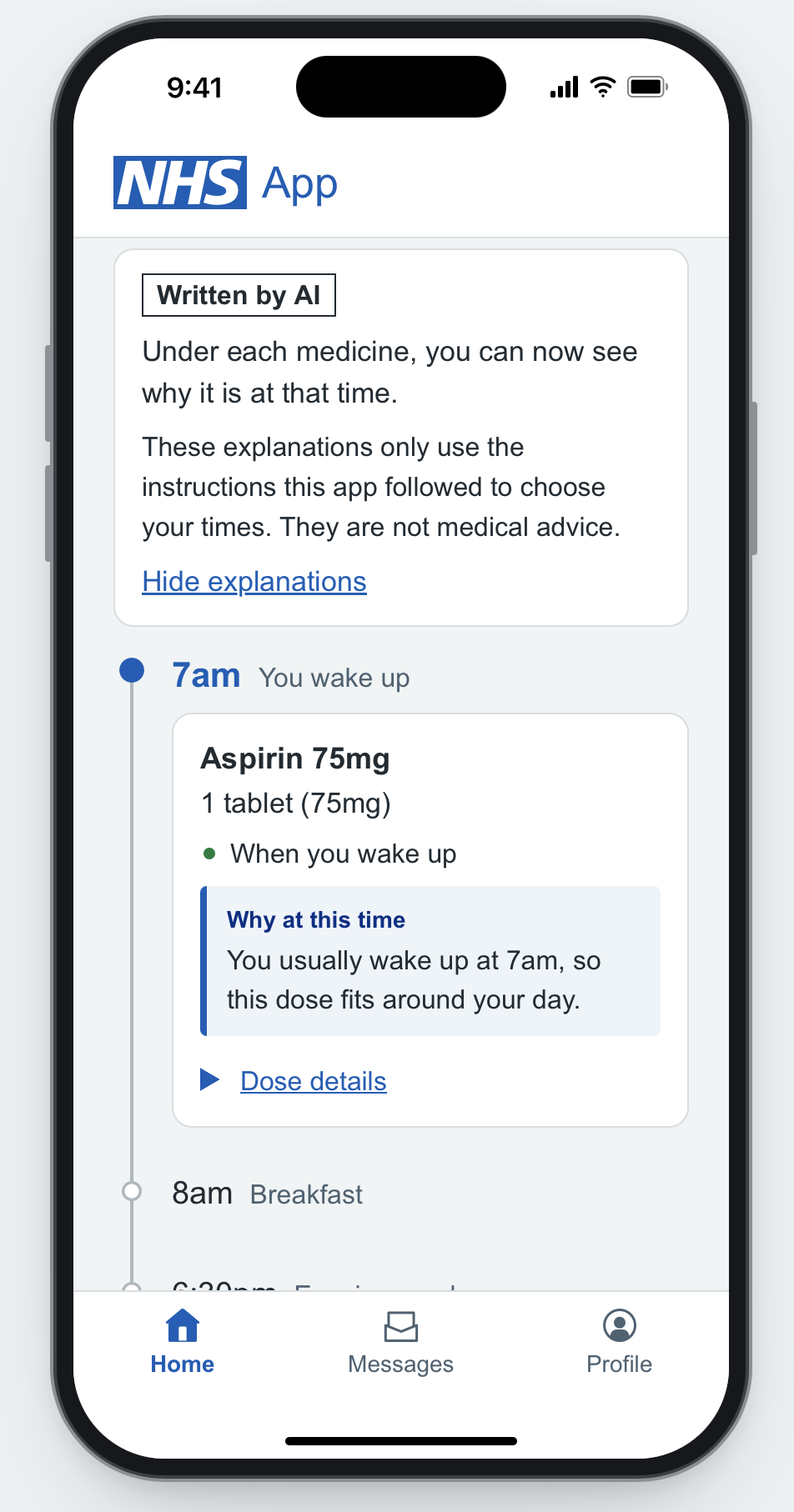
App screen: explainations generated by AI for the schedule
-
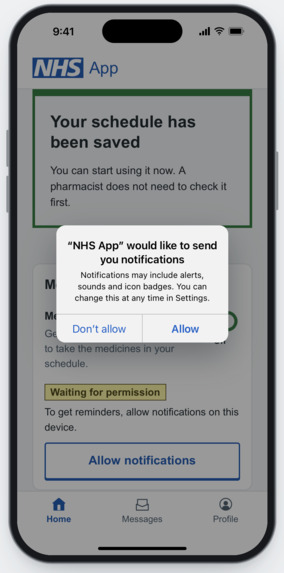
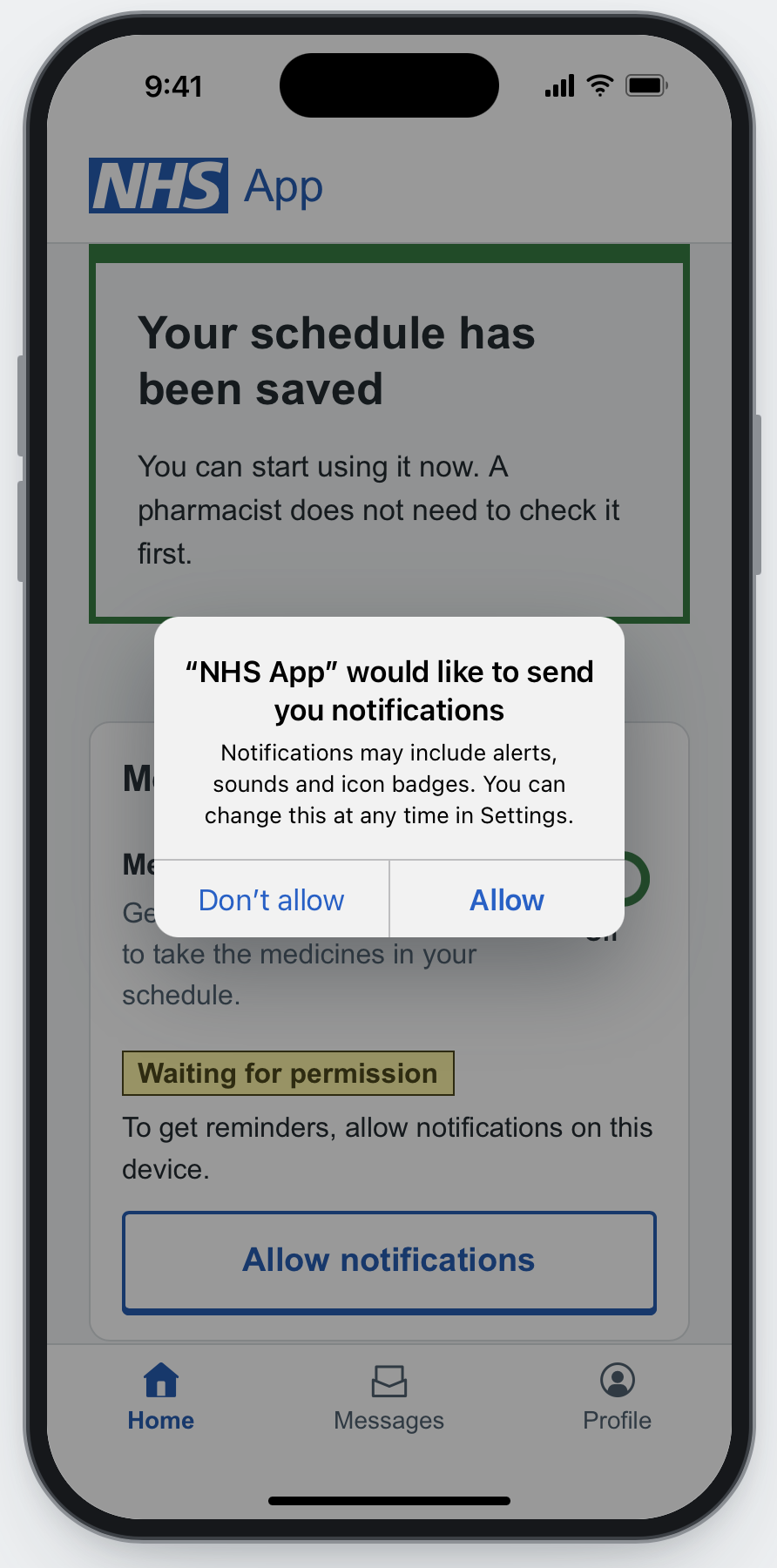
App screen: Enable notifications, for reminders
-
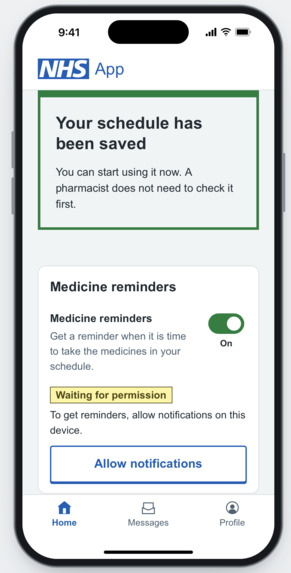
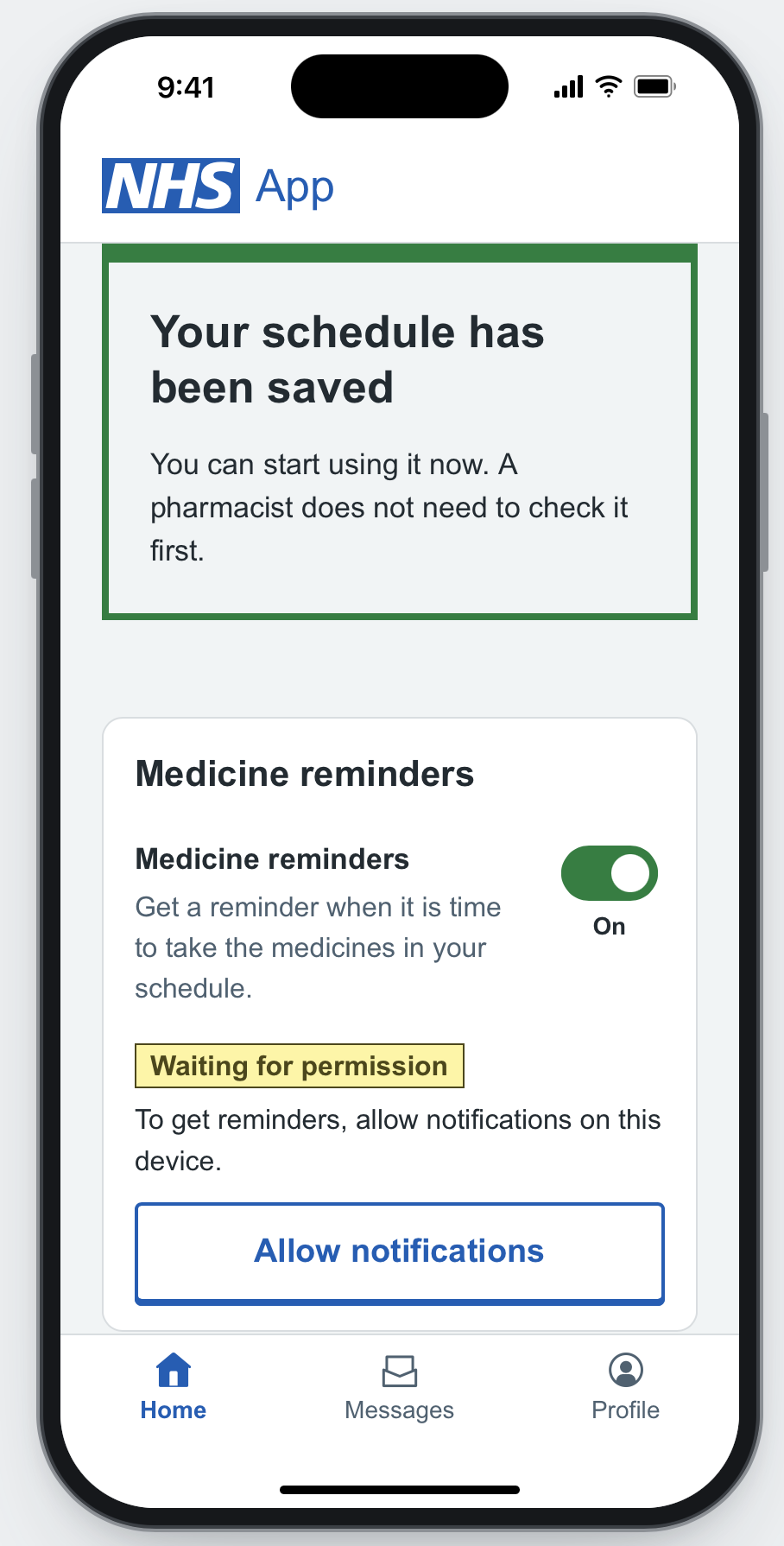
App screen: Enable reminders
Inspiration
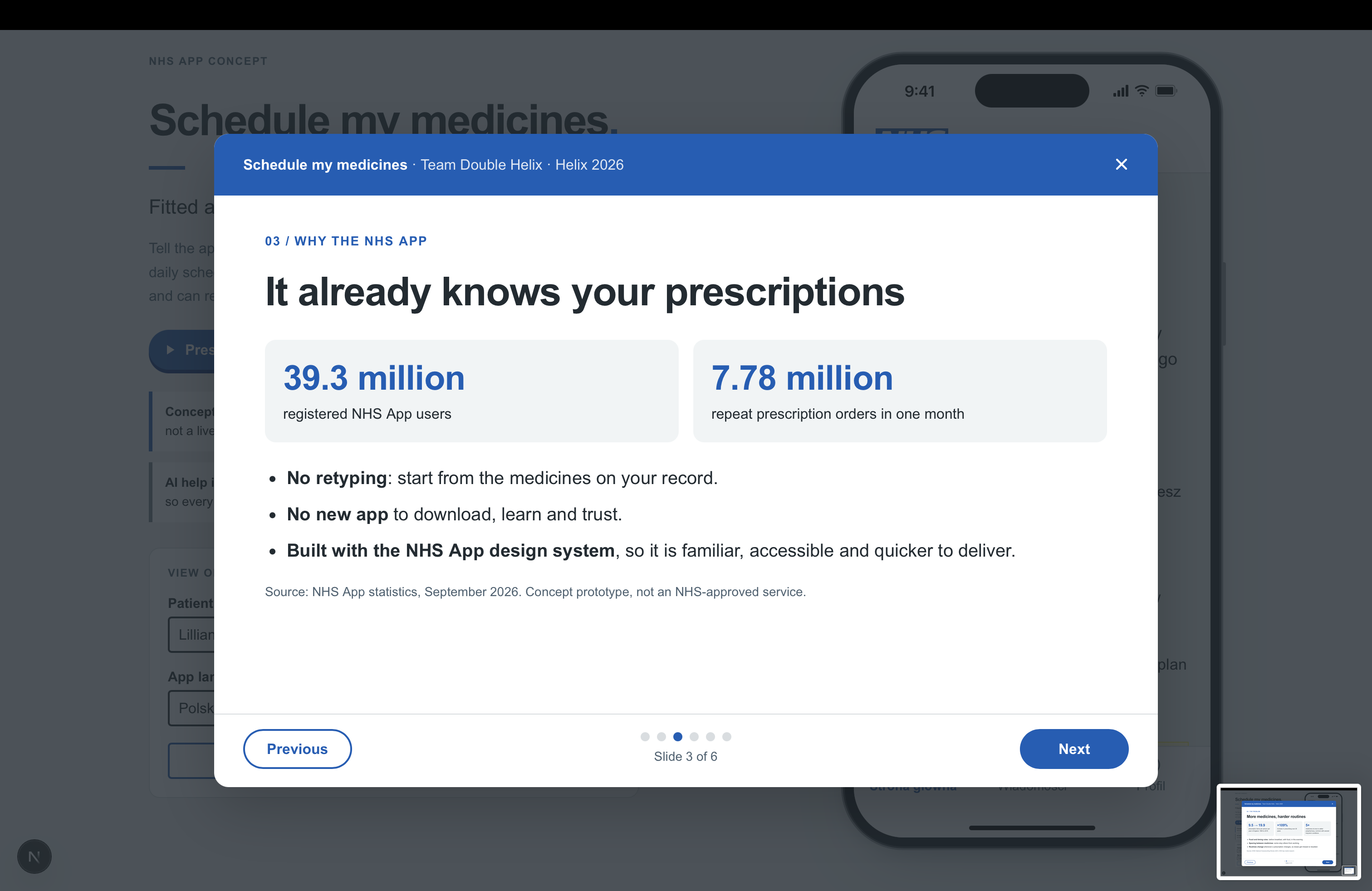
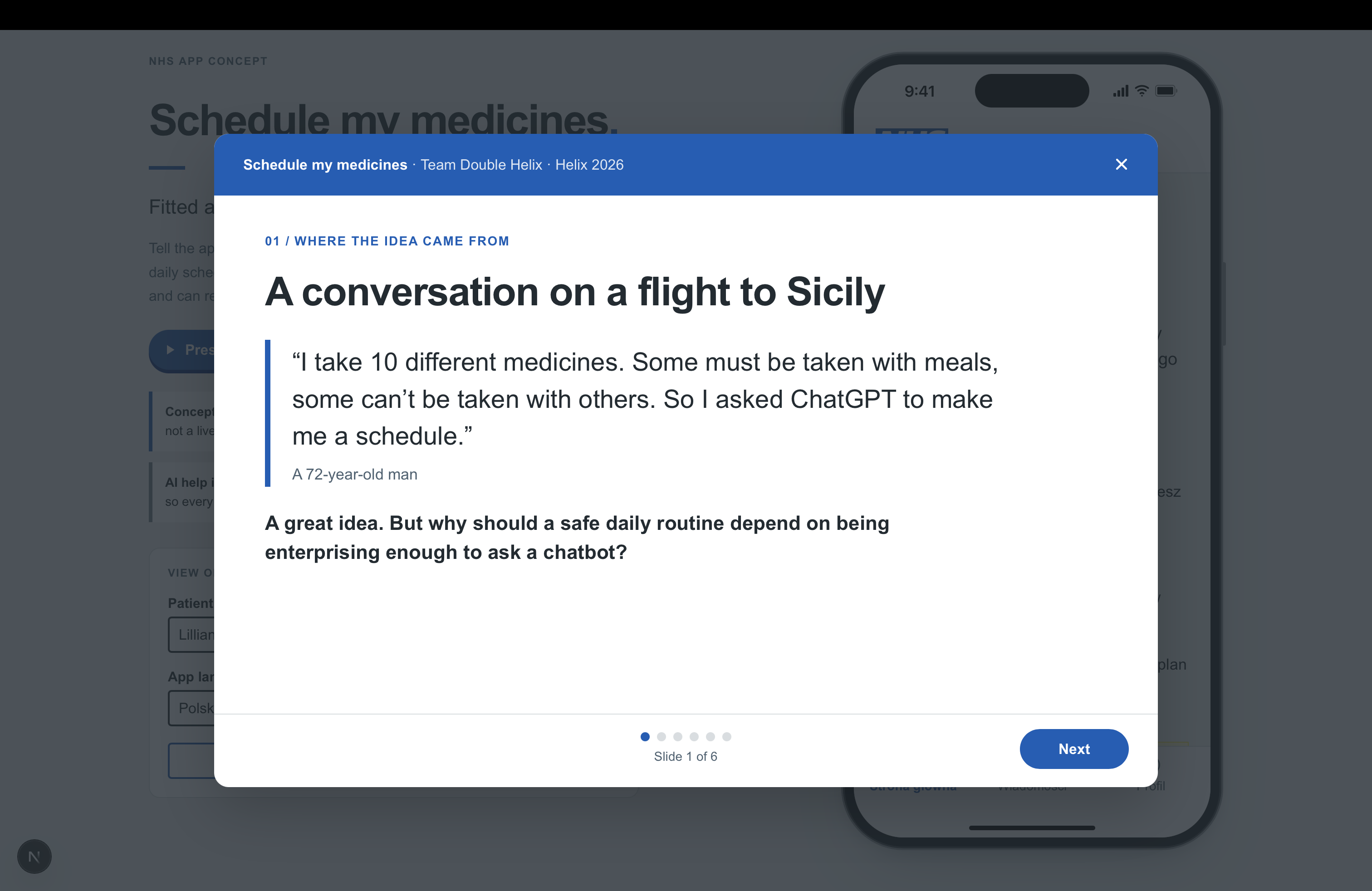
A few weeks ago, on a flight to Sicily, I was sat next to a 72-year-old man and we got talking about many things, including AI and how it affects our lives. He mentioned that being older he had 10 different medications, and it was difficult to know when to take them, as some must be taken with meals and some can't be taken with others. He told me he used ChatGPT to create a personal schedule of which drugs to take when during the day. On seeing the hackathon challenge and discussing it within the team, we thought this was a great idea. But why keep it limited to enterprising individuals? We can harness the NHS App's knowledge of a patient's prescriptions and make it an app feature to schedule your medicines.
What it does
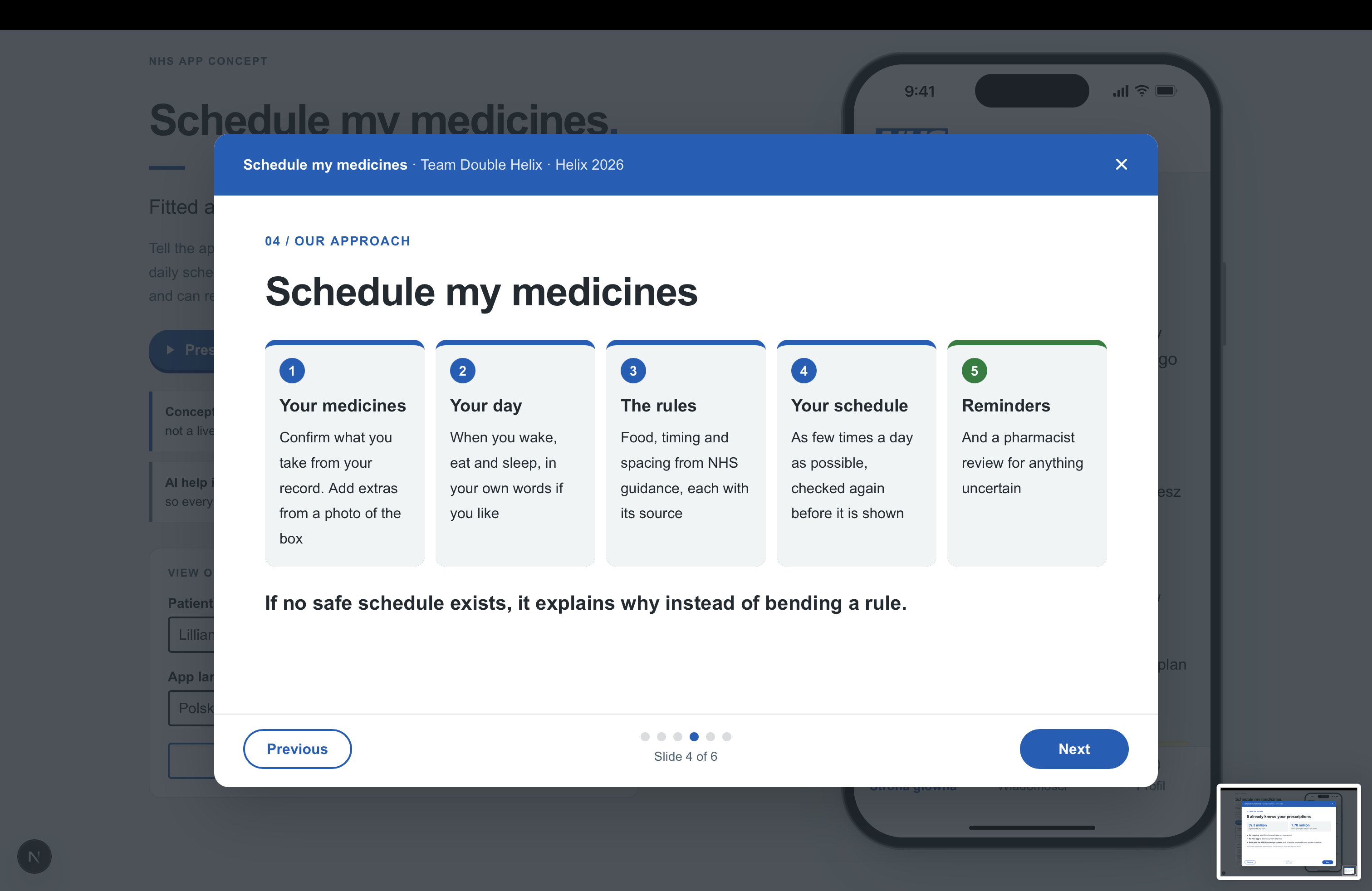
Extends the NHS App to not just list a patient's medications, but to let the patient build a medicines schedule, so they know which medications to take when during the day.
You enter your daily routine. It reads your medications from your GP record. It suggests a schedule for your medications and explains why.
AI is used to:
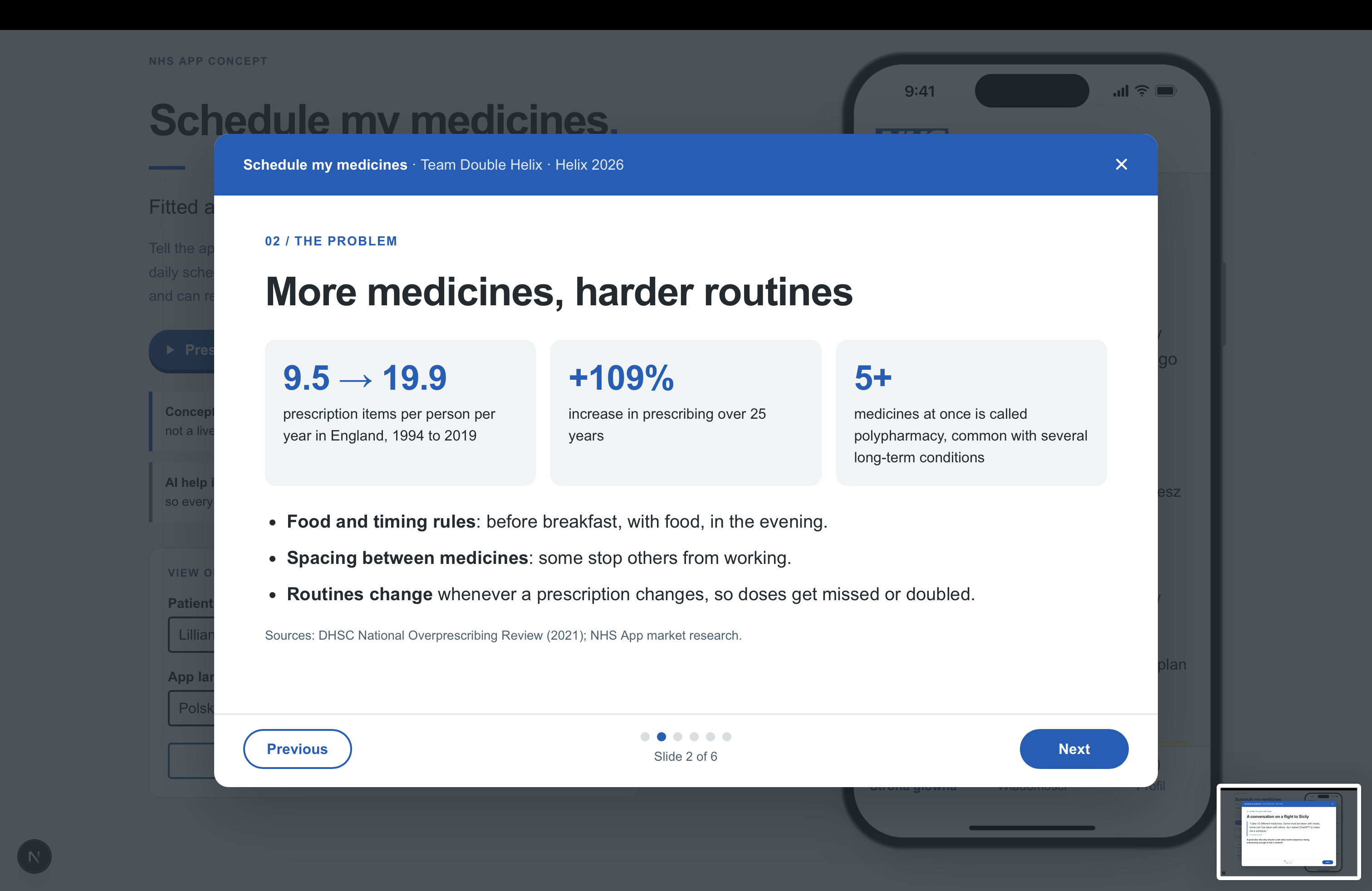
- Understand the user's routine
- Understand drug names and dosing from a photo
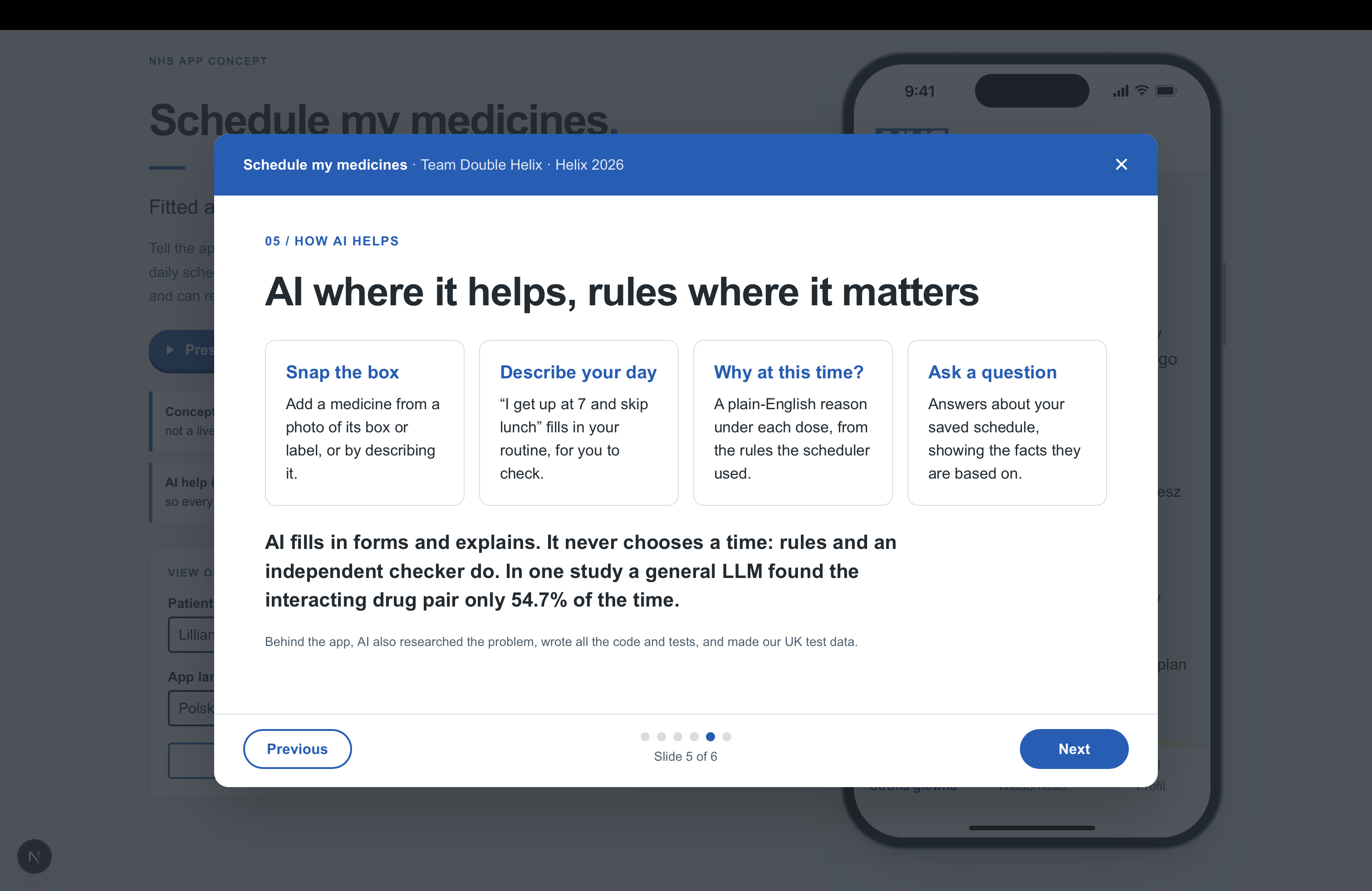
- Explain in plain English why each dose is at its time
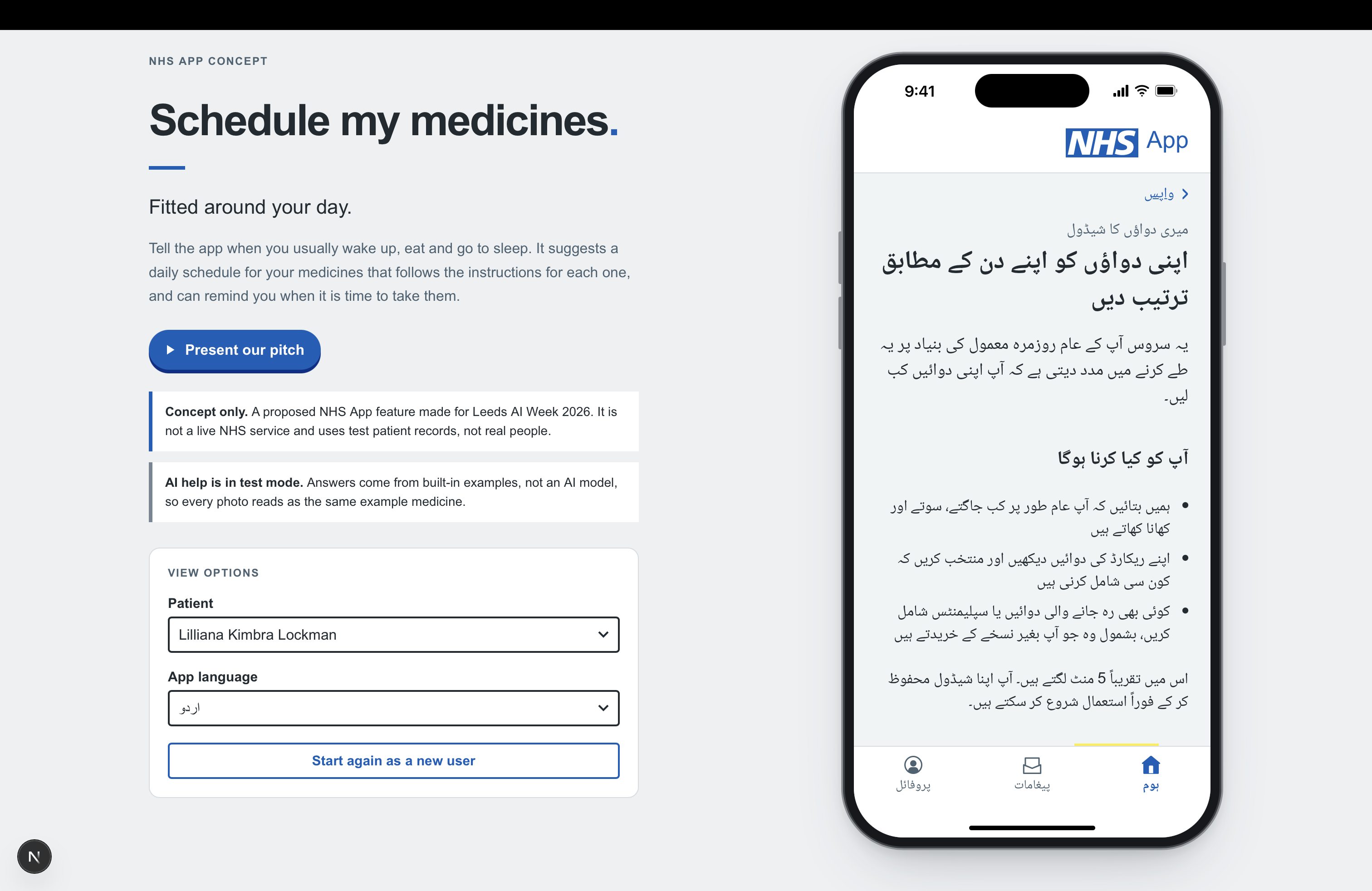
- Internationalisation of the interface into multiple languages
AI never chooses a dose time. The schedule comes from explainable rules based on NHS guidance, and an independent checker verifies it, so the same input always gives the same result and every time can be traced back to a rule and its source. This is a deliberate choice: medicines scheduling software is likely to be regulated by the MHRA as a medical device, and deterministic, testable rules should make that process much easier than relying on a language model's judgement.
How we built it
Once we agreed as a team on which problem we were solving, we broke the work down into key steps and listed them on a whiteboard. Team members picked up tasks they felt comfortable working on. We used the NHS App design system, with agentic coding. All the code is new code written by AI, guided by us, our knowledge and materials found on the web.
Challenges we ran into
- Having too many ideas to implement
- Breaking the work down into small steps
- Merging code and resolving conflicts
- Commercial drug interaction databases need licences
- Test data was using American drug names, e.g. Tylenol vs paracetamol
Accomplishments that we're proud of
- Getting a slick working prototype
- AI guardrails (fact-checked answers, fixed 999 and 111 wording)
- English, Polish and Urdu (right to left)
- Accessible: WCAG 2.1 AA checks
- A live deployment to AWS, using OpenAI APIs
What we learned
- How the need we found is real
- How quickly we can create working apps with agentic coding
What's next for Schedule my medicines
If we wanted to progress, we would do user research with actual polypharmacy patients, look at medicines reminders, and find a way to show it to the NHS App team. Get access to a licensed drug interaction database. Use a model hosted in the UK.
Built With
- amazon-web-services
- chatgpt
- claude
- codex
- github-copilot
- nhs-app
- openai
- pnpm
- pulumi
- react
- typescript

Log in or sign up for Devpost to join the conversation.