-
-
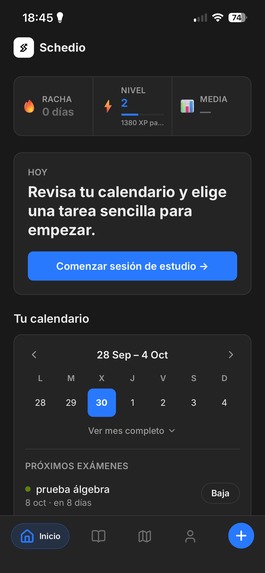
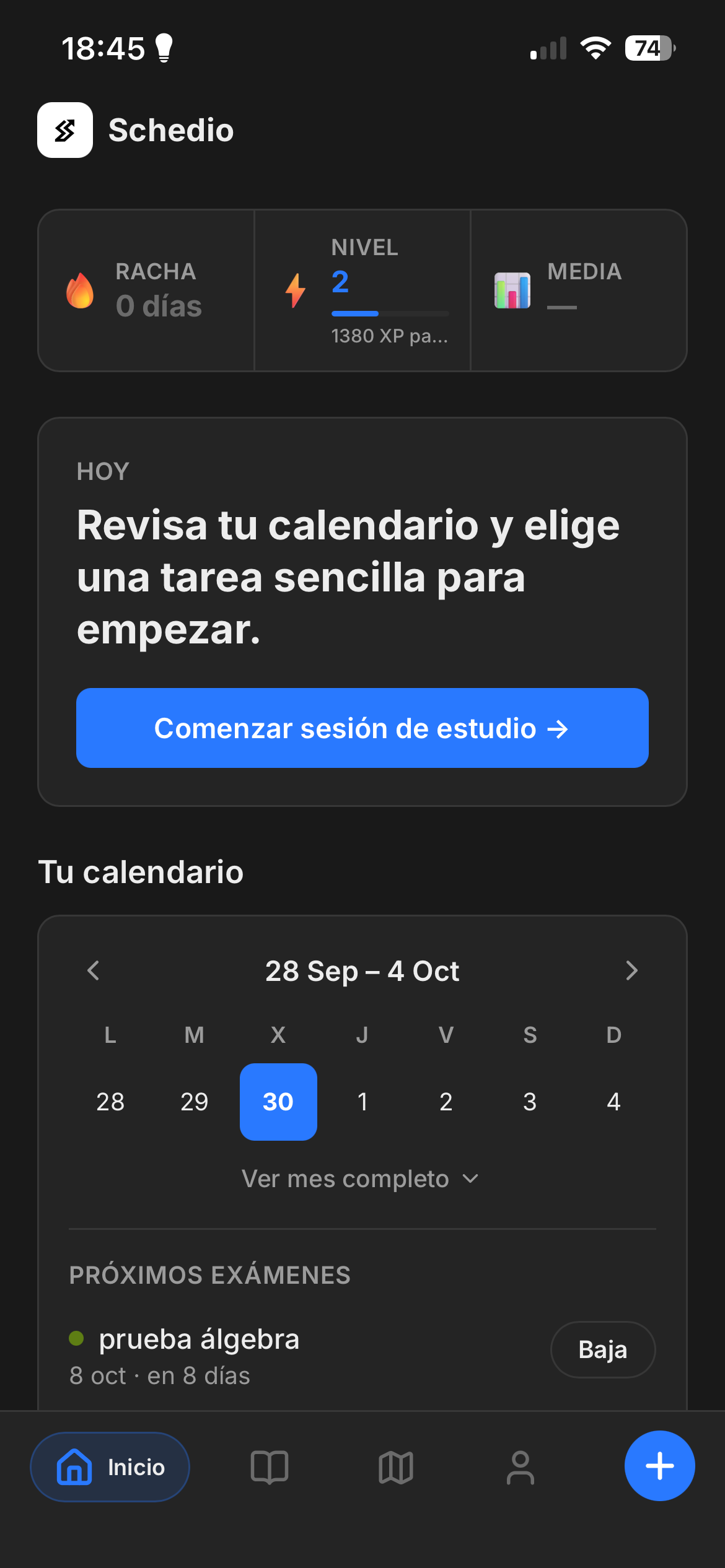
Home screen with calendar, suggestions and streak, study level and general note.
-
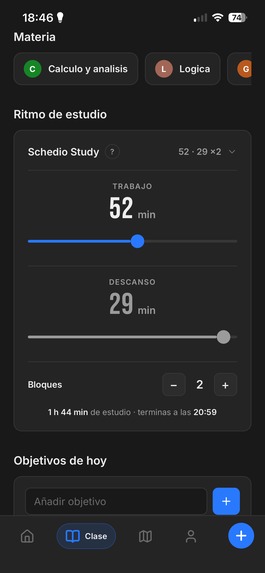
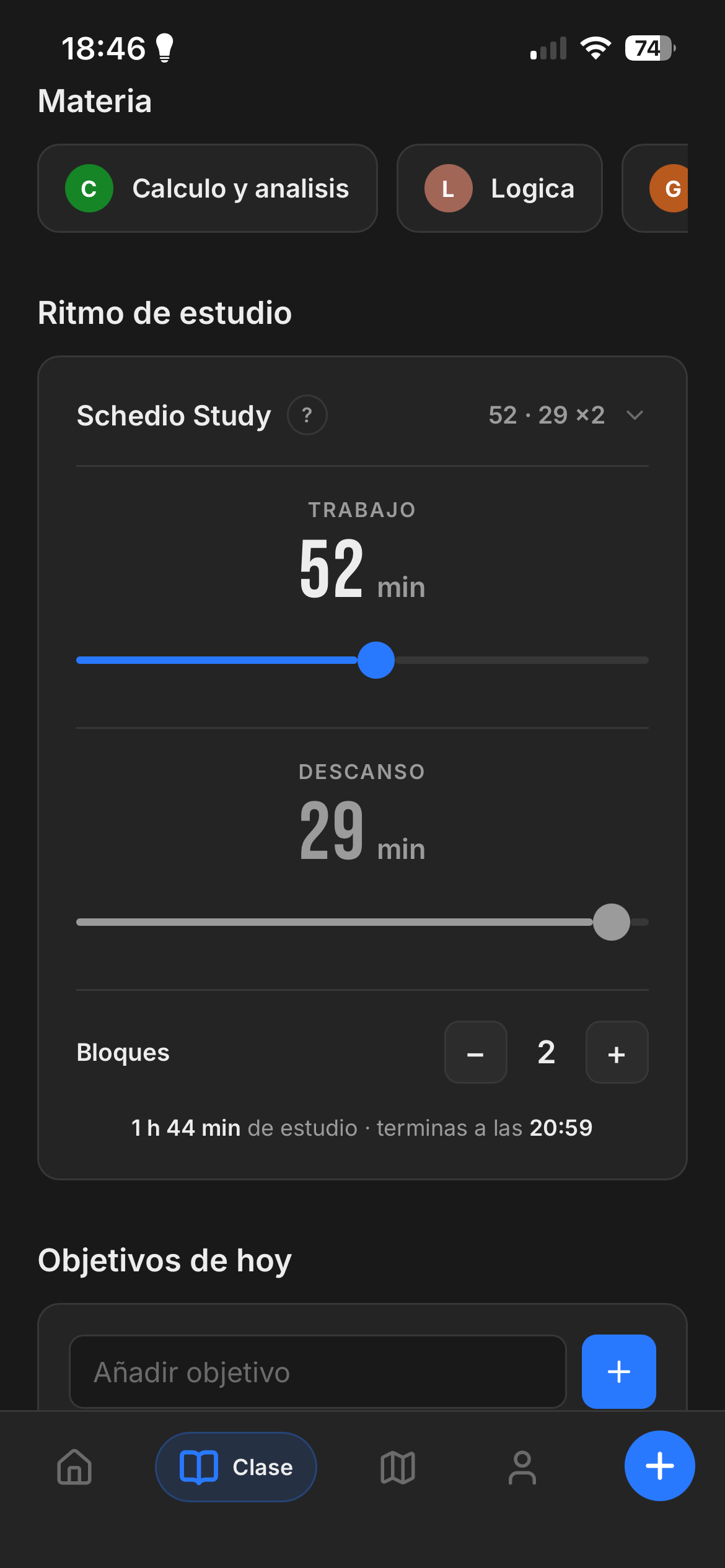
Study screen with the options to start a study session
-
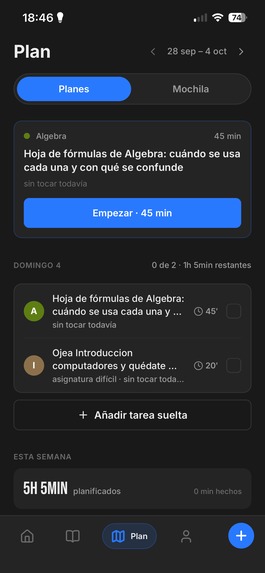
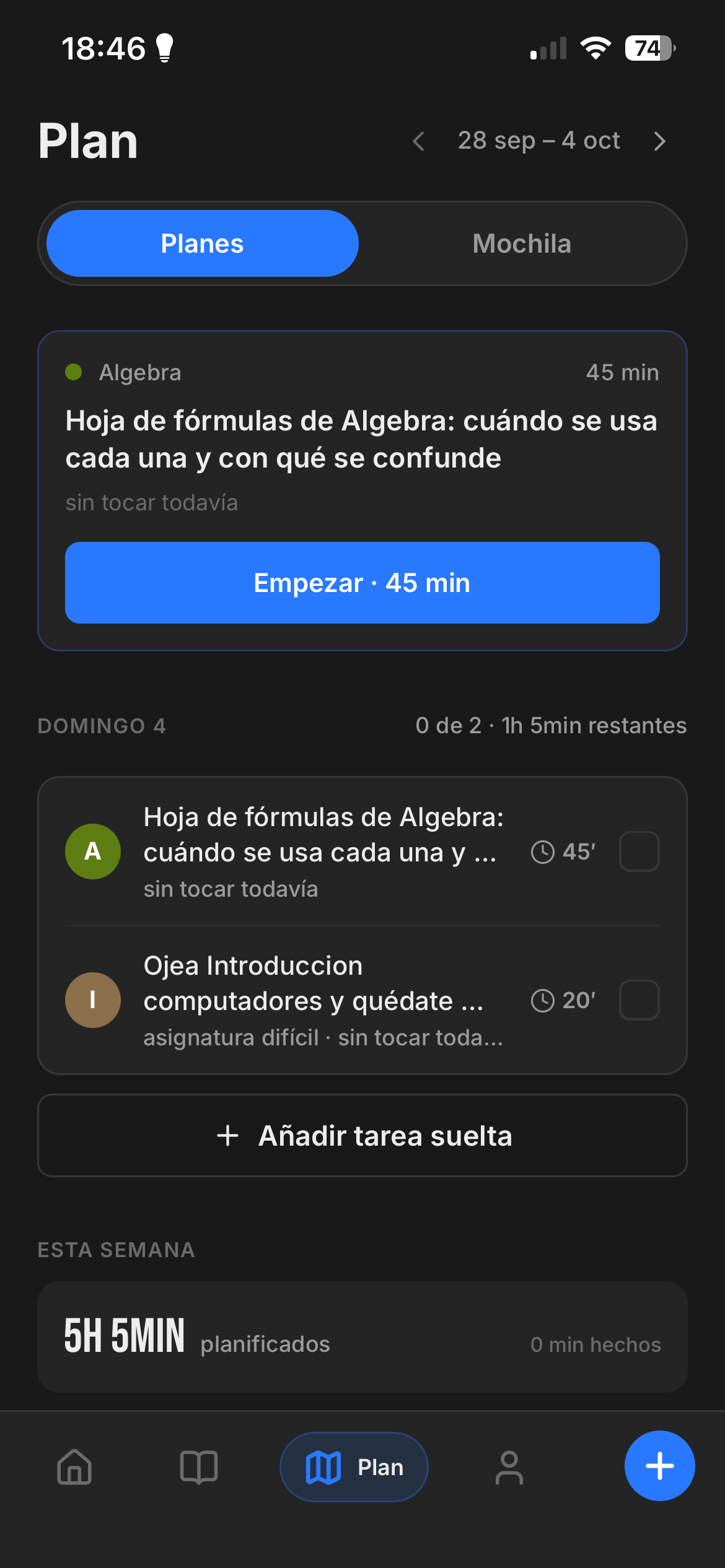
Plan screen with the recommended plan of study made with the Schedio algorithm
-
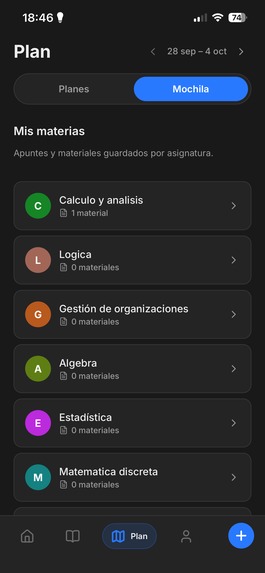
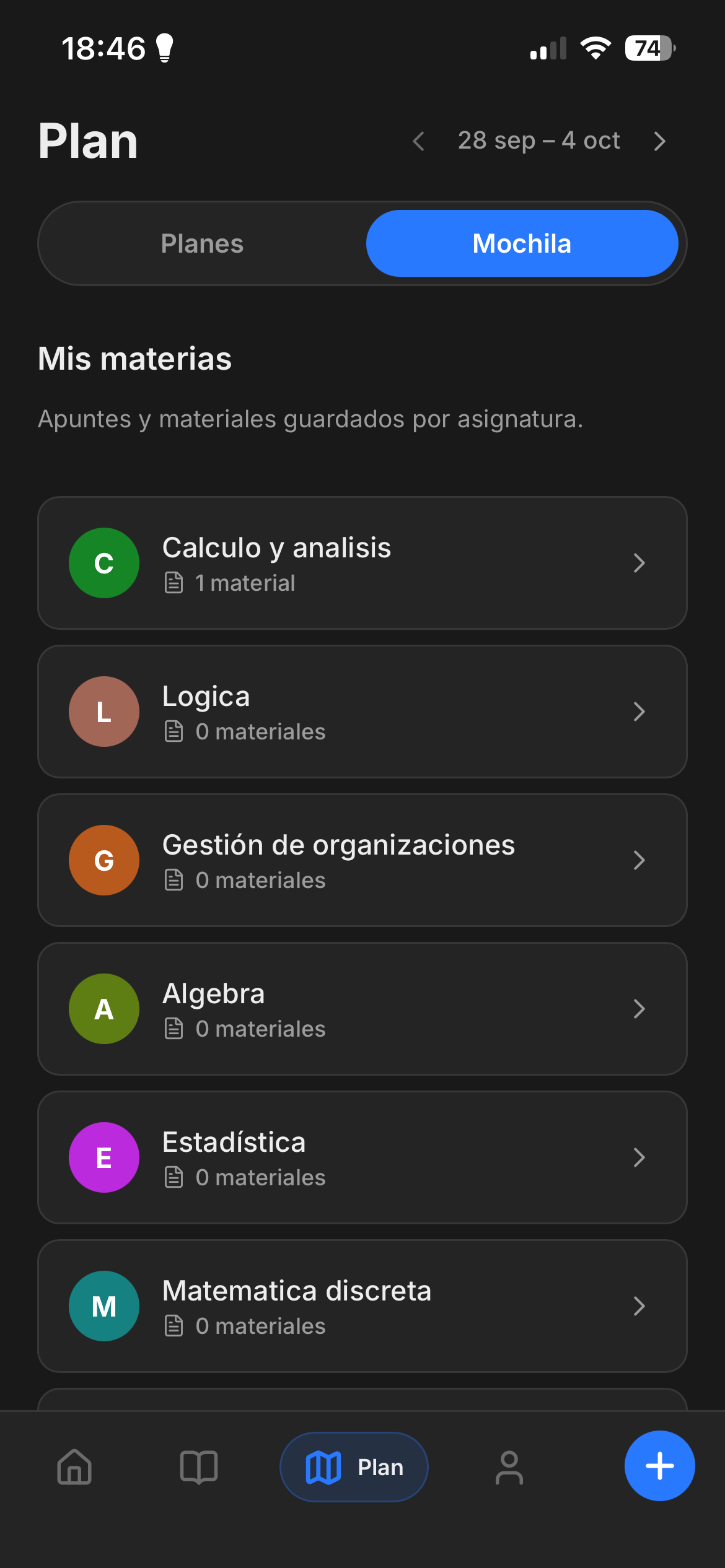
Mochila screen where are saved notes, files, etc
-
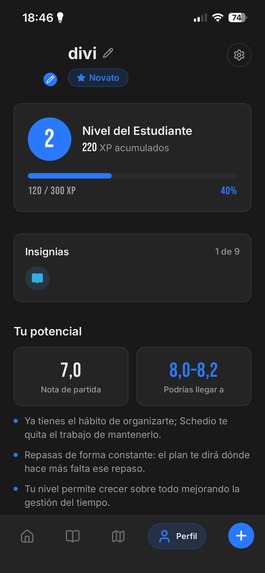
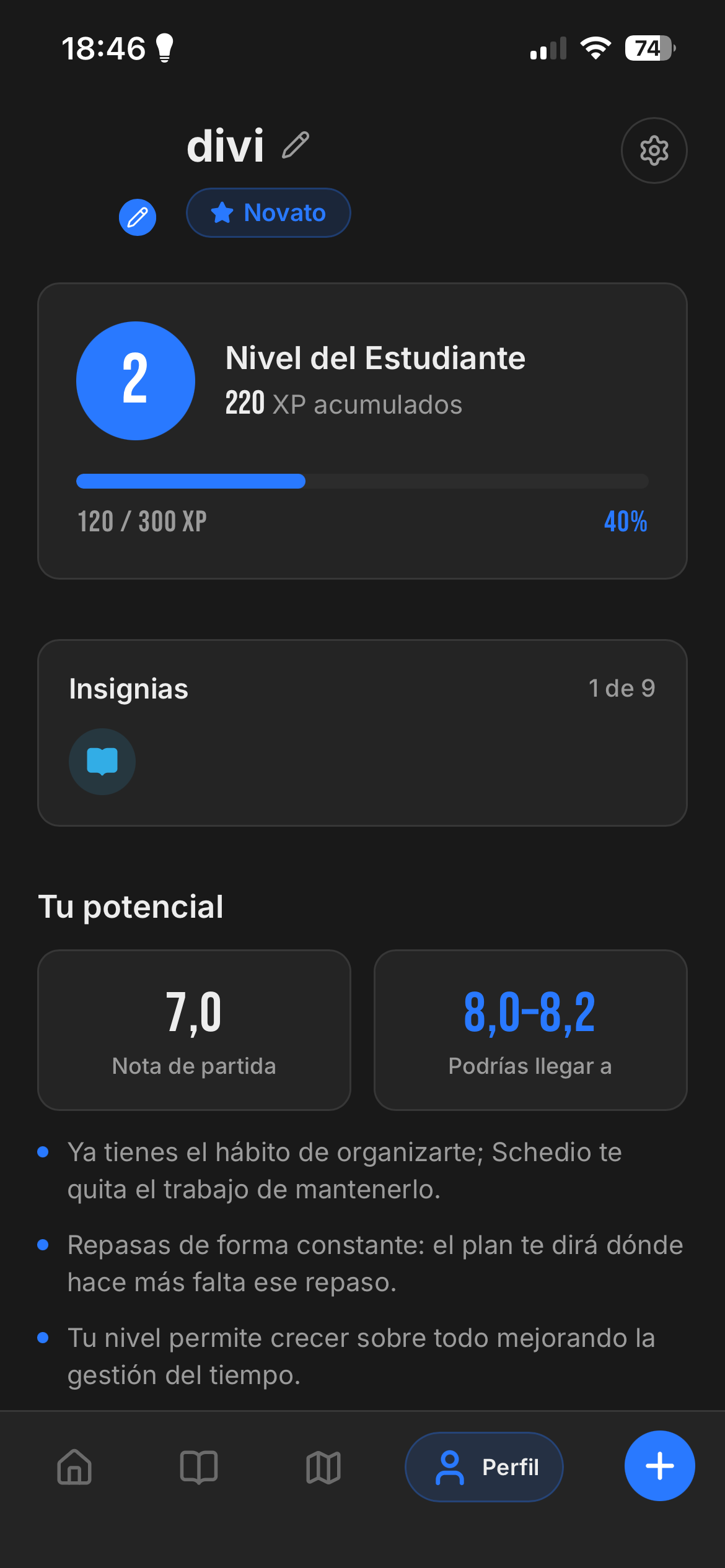
Profile screen with basic data of the student and insignia
-
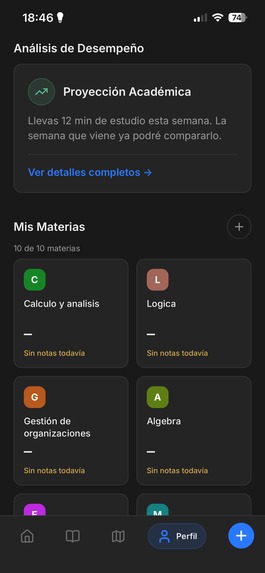
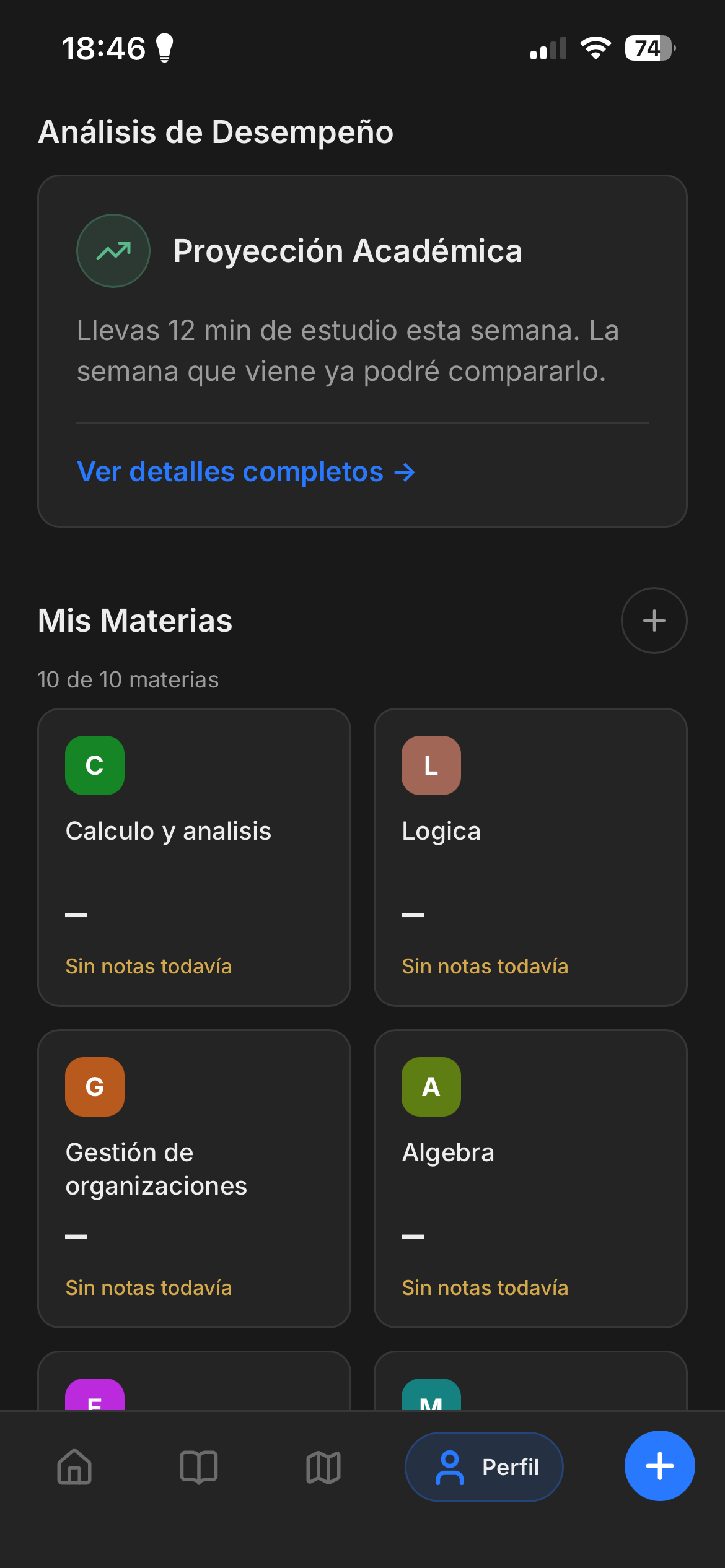
Profile screen with the subjects and the academic performance made by the data of the student
Inspiration
Schedio started from a problem I lived myself: as a student, I never struggled with understanding content — I struggled with knowing what to study first when three exams landed the same week. Every planning app I tried was either a generic to-do list that didn't understand academic priority, or a heavy AI tutor that solved my homework instead of teaching me how to organize my own time.
I built the first version of Schedio during my last trimester of high school (2º Bachillerato), used it myself to prepare for real exams, and it worked — it genuinely changed how I approached studying. That's when I decided to turn it into a real product for other students facing the same problem, across Spain first and beyond later.
What it does
Schedio turns a student's subjects, exams, and difficulty levels into a smart, distraction-free study plan. At its core is a rules-based prioritization engine — no AI black box — that weighs how urgent an exam is, how hard the student says the subject is, and their current grade in it, to tell them exactly what to focus on today.
Beyond that: a weekly/monthly academic calendar, a "Mochila" to centralize notes and study materials, focused study sessions with streaks and progress tracking, and Schedio Prime, a subscription (via RevenueCat) that unlocks expanded storage, unlimited subjects, and full planning views — while the core prioritization engine stays free for everyone, always.
How we built it
Schedio is built with Expo / React Native for cross-platform mobile, backed by Firebase (Auth, Firestore, Cloud Storage, Cloud Messaging) for data and push notifications, and RevenueCat for subscription management. The design system is intentionally minimal — a black/white/blue palette, Inter typography, and a Notion-inspired visual language, built to reduce cognitive load rather than compete for attention.
As a solo founder, I leaned heavily on AI-assisted development (Claude Code, Antigravity) to move fast without sacrificing product discipline — every feature gets classified as launch-blocking or post-launch before a single line of code is written, to protect the deadline.
Challenges we ran into
- Scope discipline as a solo founder. The hardest part wasn't technical — it was constantly resisting the urge to add "one more feature" (AI coach, social features, community) before the core product was solid. I kept a strict rule: if it doesn't block the core hook — showing a student their whole academic course in one screen — it waits for v1.1.
- Play Store compliance. Data safety forms, account deletion flows, closed testing requirements — none of it is hard individually, but doing it right from day one (instead of scrambling at the end, a mistake I made on an earlier project) took real planning.
- Positioning against well-funded competitors. Apps like Astra AI or Knowunity have huge user bases, but they solve a different problem — content and community, not organization. Staying disciplined about not copying their noise (social feeds, content marketplaces) while they had more resources was a constant judgment call.
What I learned
That the hardest technical problem is rarely the algorithm — it's saying no. The prioritization engine that powers Schedio took one afternoon to specify properly once I stopped treating it as vague and forced myself to write the exact formula. Everything else took discipline, not cleverness.
Accomplishments that we're proud of
Shipping something a real user already depended on. Before this was a hackathon project, it was the app I used myself to get through my last trimester of Bachillerato — and it worked. That's a bar most side projects never clear.
I'm proud of the discipline behind the product, not just the code. Every feature in Schedio got tested against one question: does this block the core hook, or can it wait? That discipline meant saying no to an AI coach, social features, and "smarter" premium algorithms — even when they were tempting and even when competitors already had them — to protect a clean, focused v1.
I'm also proud that the business model doesn't compromise the product. The prioritization engine — the single most valuable thing Schedio does — is free for every user, forever. Monetization (Schedio Prime) only touches storage limits, planning horizon, and convenience features. Nothing that makes Schedio useful sits behind a paywall.
And practically: going from a stalled, paused first attempt at this idea to a working cross-platform app (Android native + iOS PWA), with real Firebase infrastructure, RevenueCat billing, and Play Store compliance handled properly from week one — as a solo founder, alongside another active project — in a two-month window.
What we learned
That scope is the real enemy, not complexity. The prioritization algorithm — the technical heart of the app — took one focused afternoon to fully specify once I forced myself to write the exact formula instead of leaving it as a vague idea. Almost every delay I hit came from unspecified features, not hard ones. "We need better limitations for storage" or "the app should feel more premium" cost far more time than any algorithm, because vague ideas can't be estimated — they have to be defined first.
I learned to treat AI-assisted development tools (Claude Code, Antigravity) as capable of large, autonomous changes, but only when given real context — a codebase alone doesn't tell an AI why a decision was made. Writing that context down explicitly turned out to matter as much as writing the code itself.
And I learned, again, that "we'll make it viral" is not a strategy — it's a hope with a deadline attached. The lesson from an earlier project came back deliberately this time: build a distribution plan that doesn't depend on an algorithm's mood, starting with a waiting list and real beta testers before a single piece of content goes out.
What's next for Schedio
Post-launch, the plan is a genuine AI Study Coach — personalized long-term study plans and study-technique recommendations — built on the behavioral data Schedio is already collecting from day one (session feedback, grades, study patterns), so it launches with real signal instead of guesswork. In a few months we want to be in the App Store but now I need more money.
Built With
- claude-code
- cloud
- expo.io
- firebase-auth
- firebase-cloud-messaging
- firestore
- javascript
- messaging
- native
- posthog
- react
- revenuecat
- sentry
- storage
- typescript

