-
-
Presentation Slide 1: Intro
-
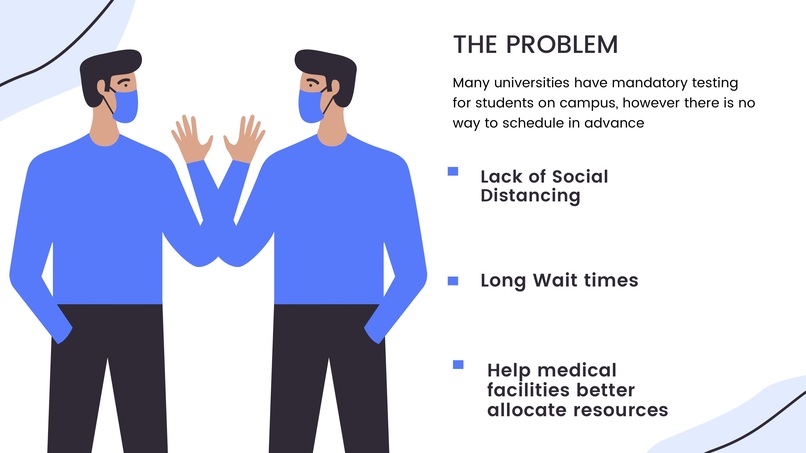
Presentation Slide 2: Problem Statement
-
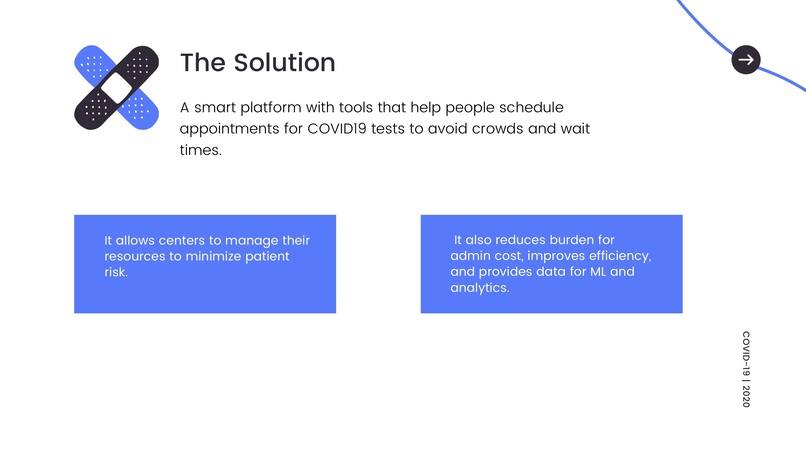
Presentation Slide 3: Solution
-
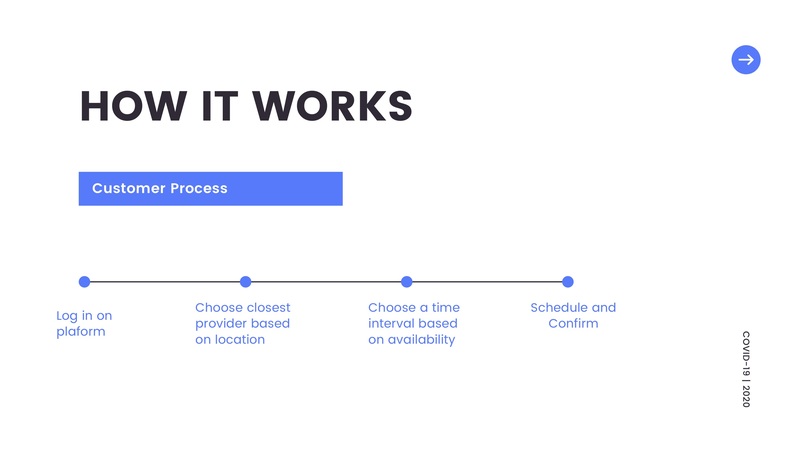
Presentation Slide 4: User Experience
-
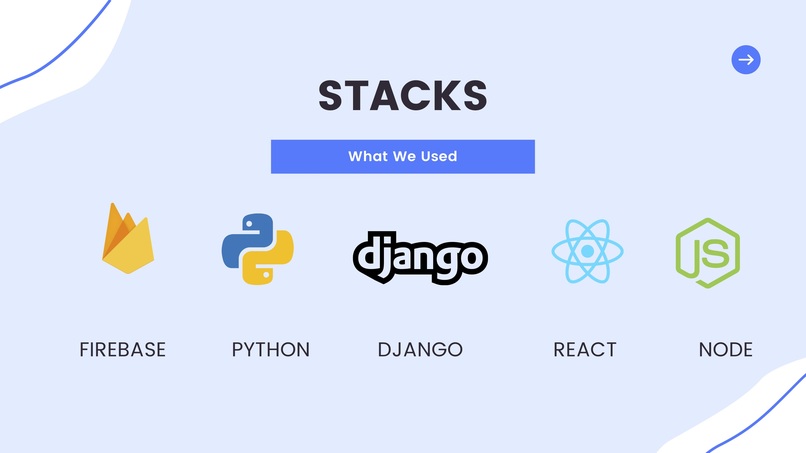
Presentation Slide 5: Tech Stacks
-
Presentation Slide 6: Futurability
-
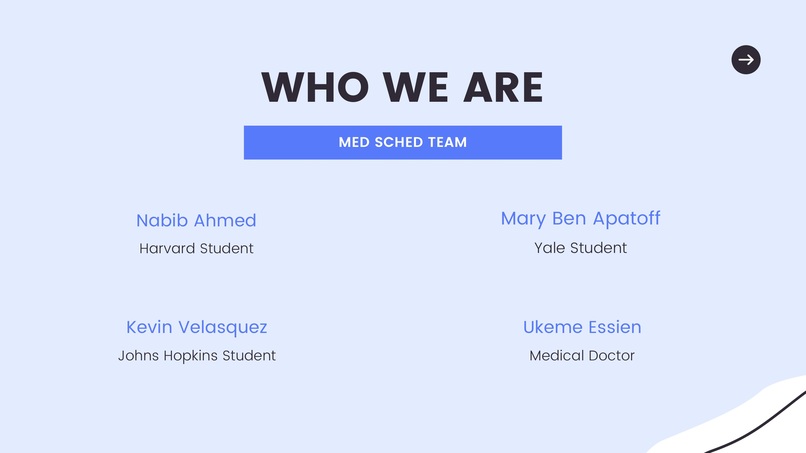
Presentation Slide 7: Team Bios
-
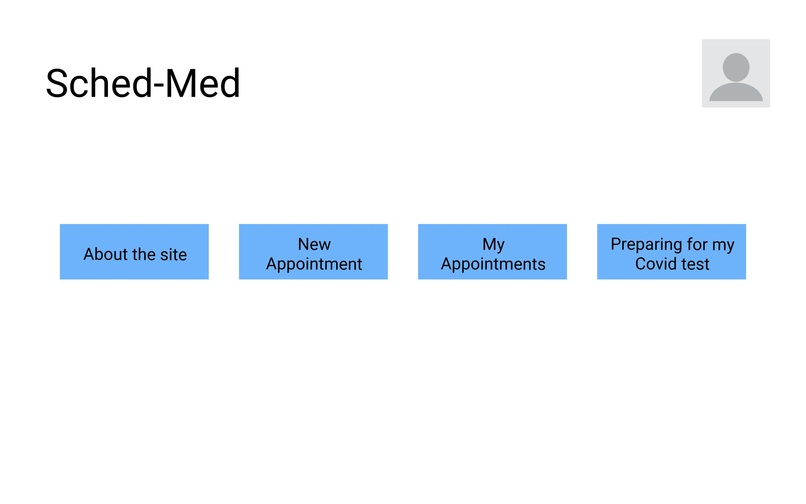
UI Design 1: NavBar
-
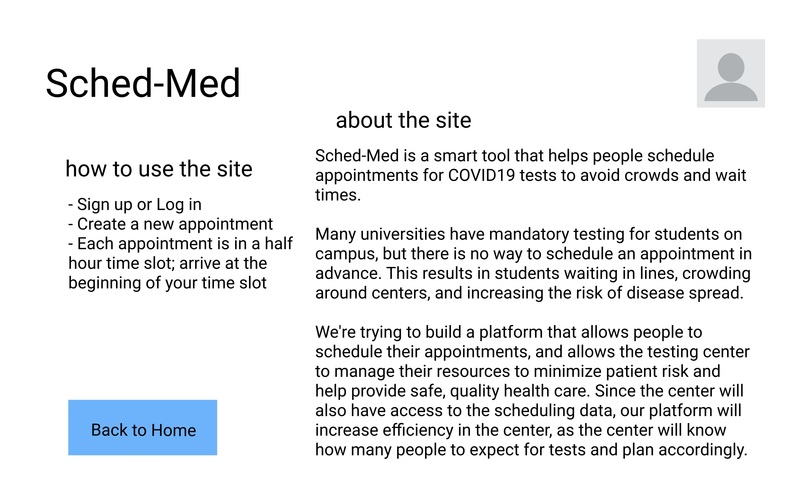
UI Design 2: About Us
-
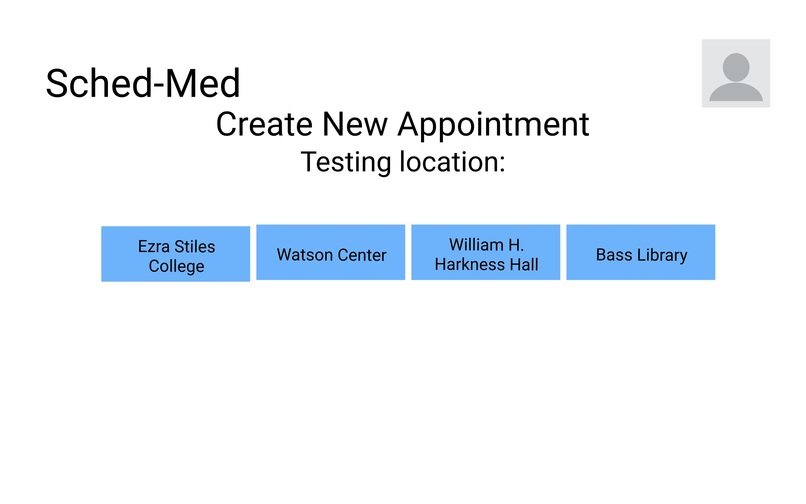
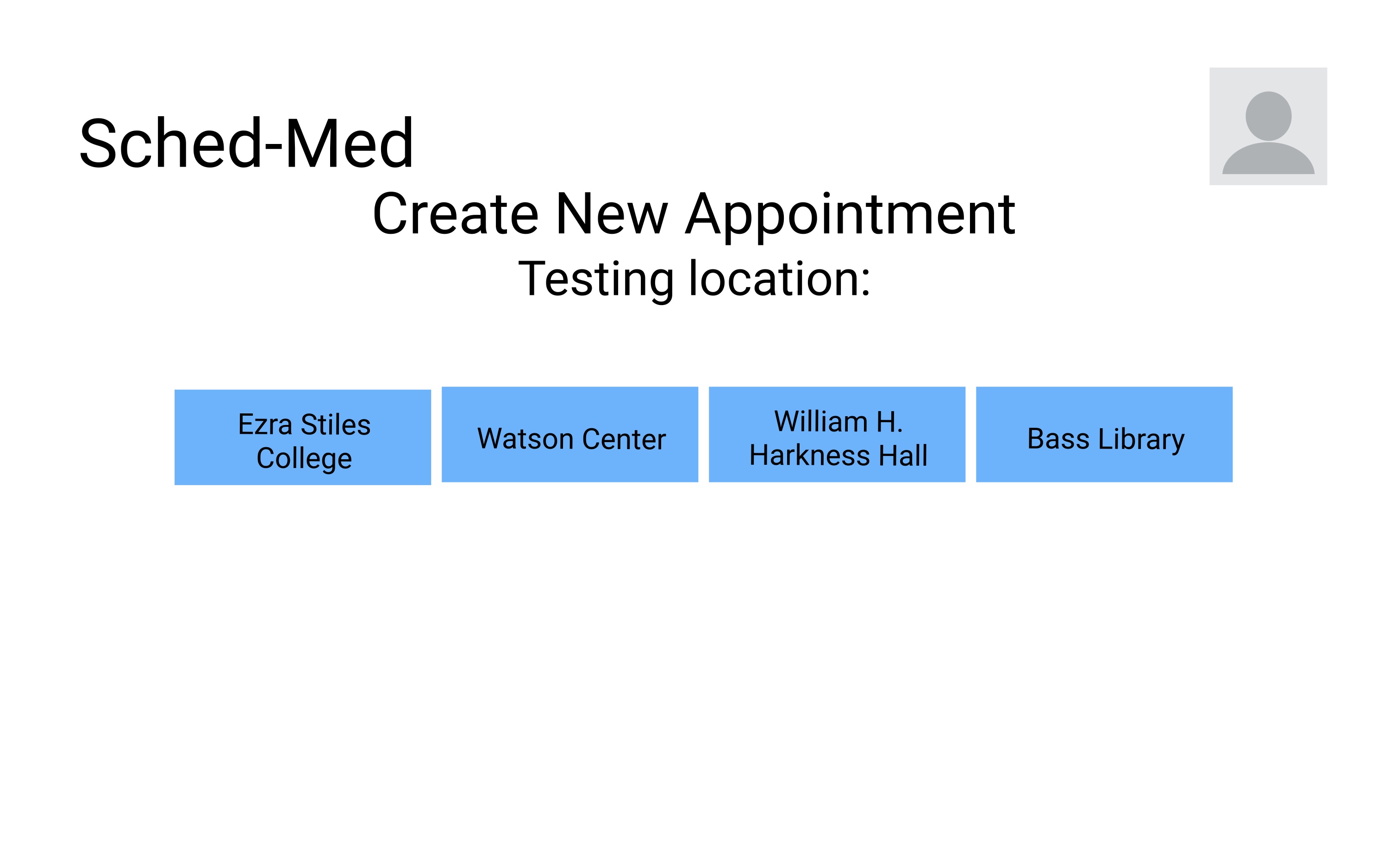
UI Design 3: Scheduling Tests
-
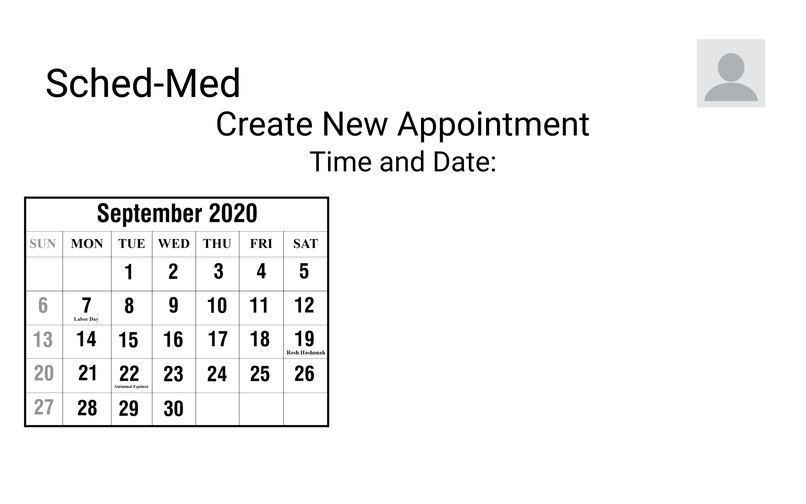
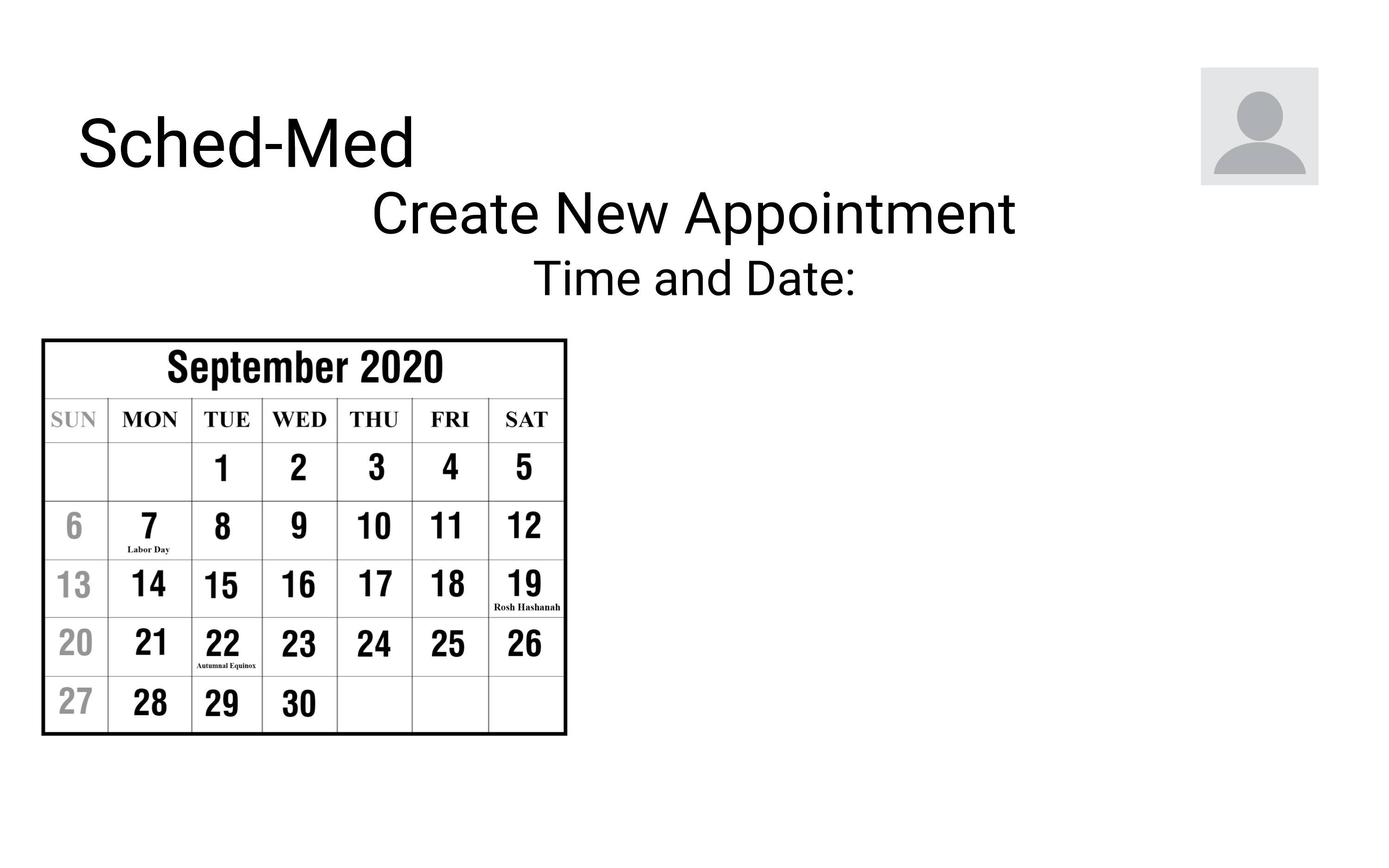
UI Design 4: Calendar Function
-
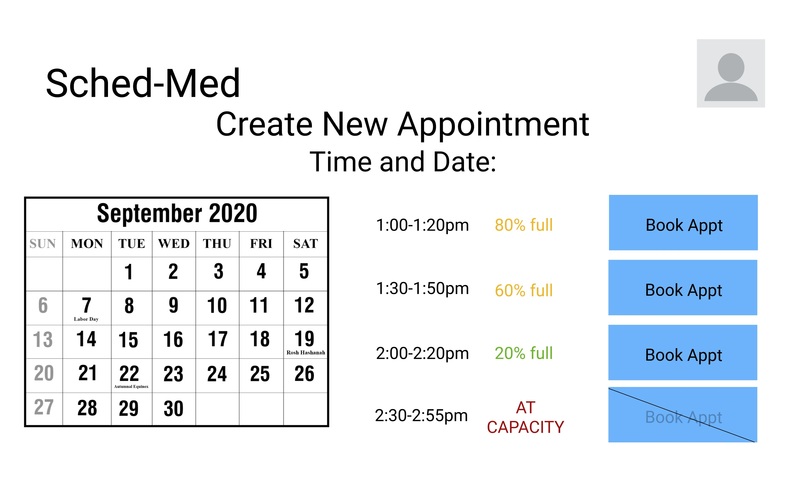
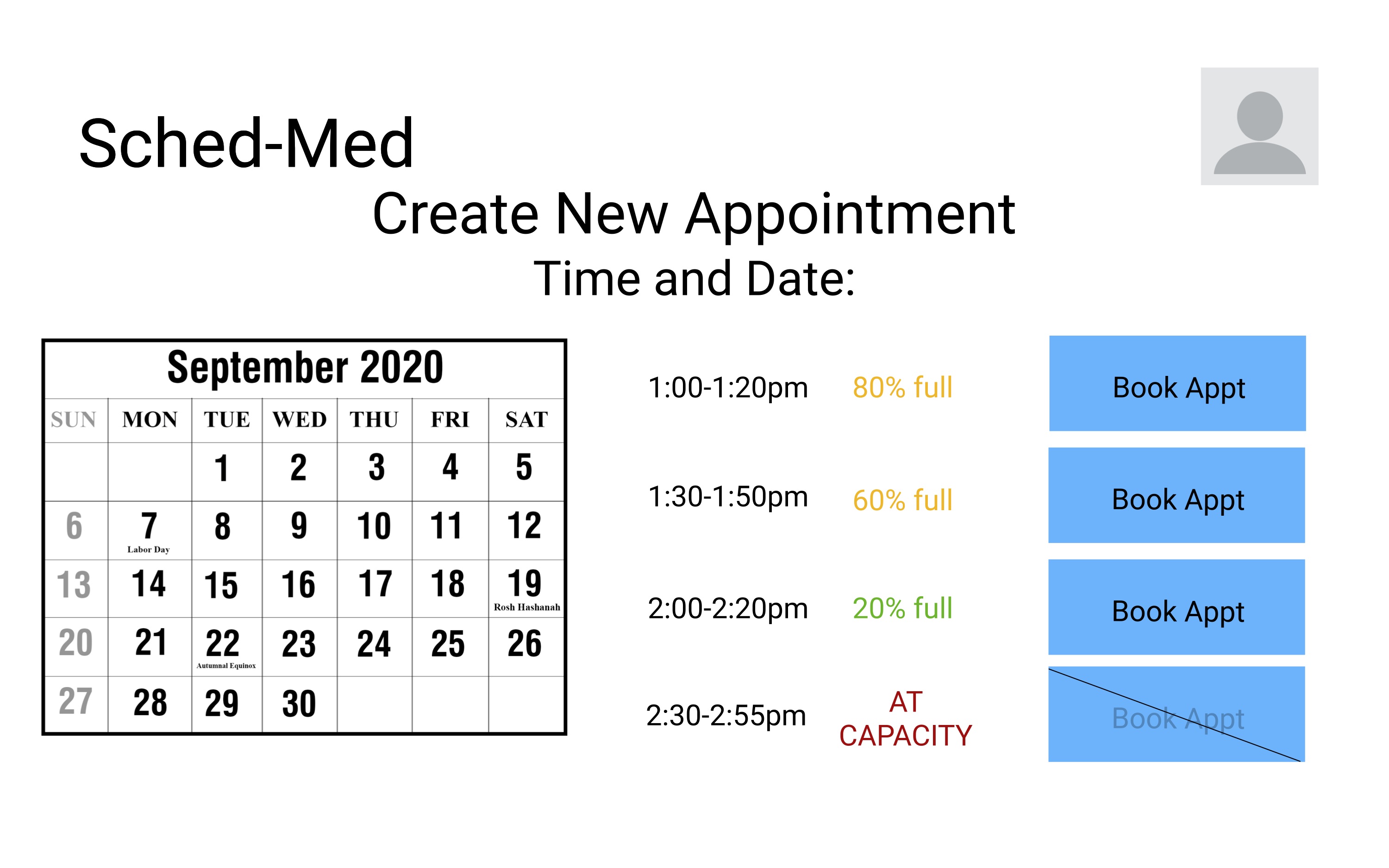
UI Design 5: Time Function
-
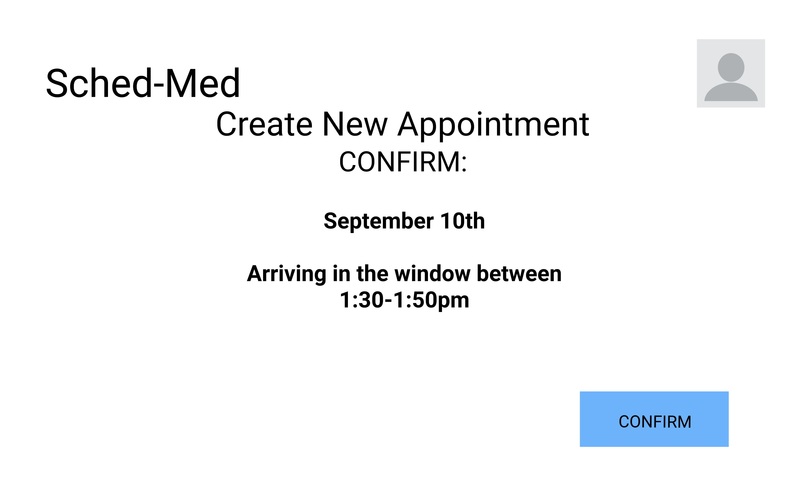
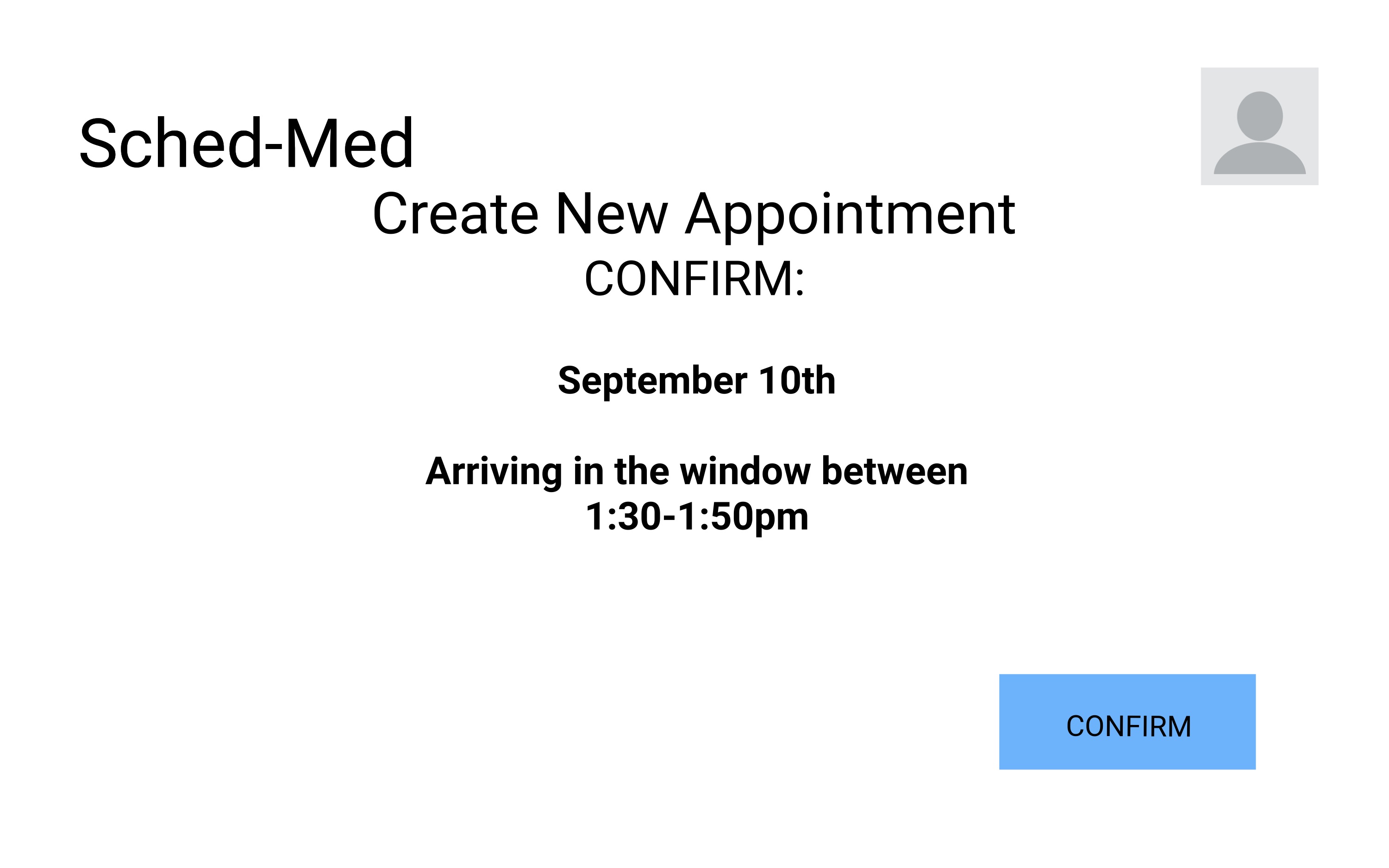
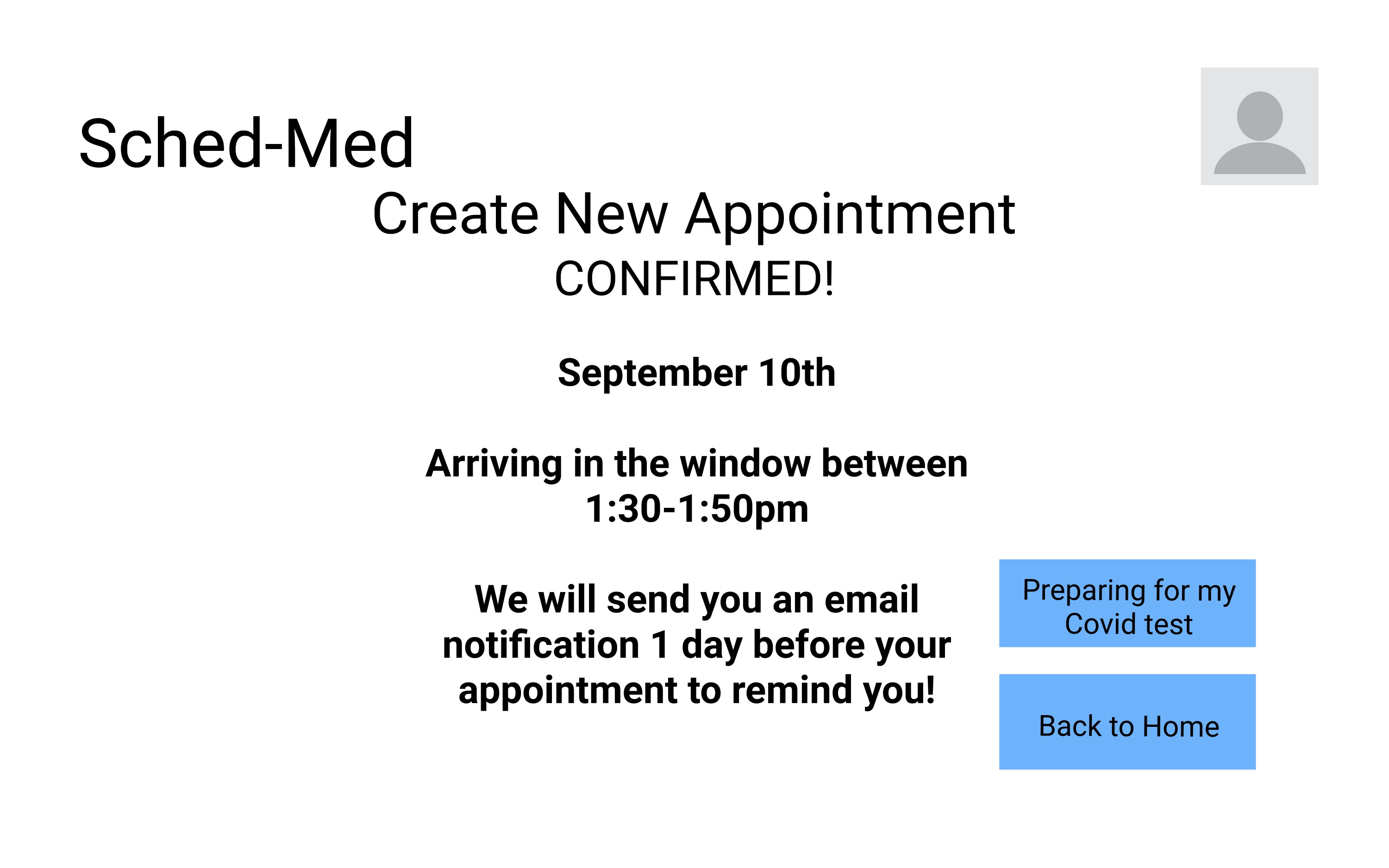
UI Design 6: Confirmation
-
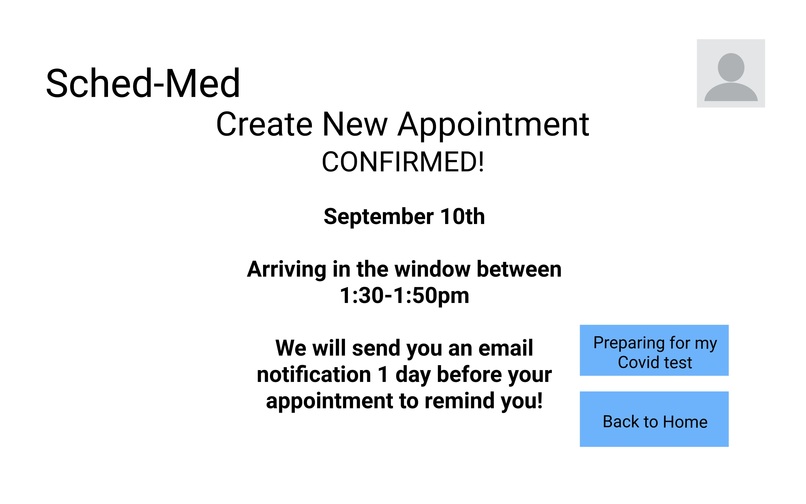
UI Design 7: Calendar and Email Integration
-
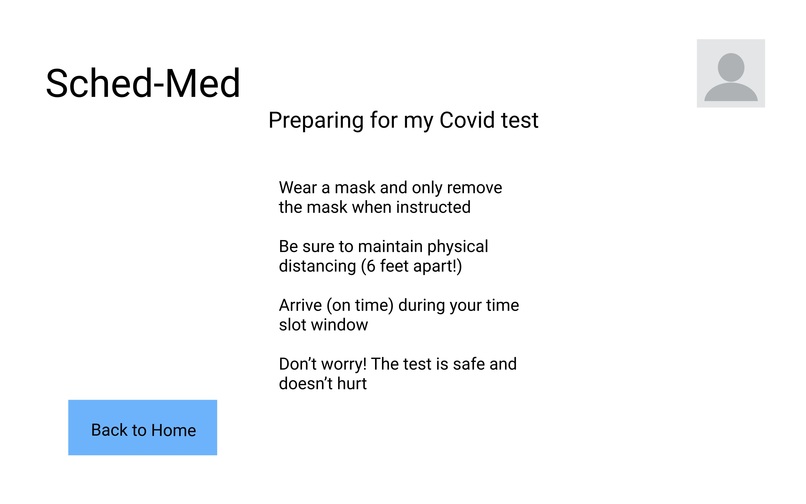
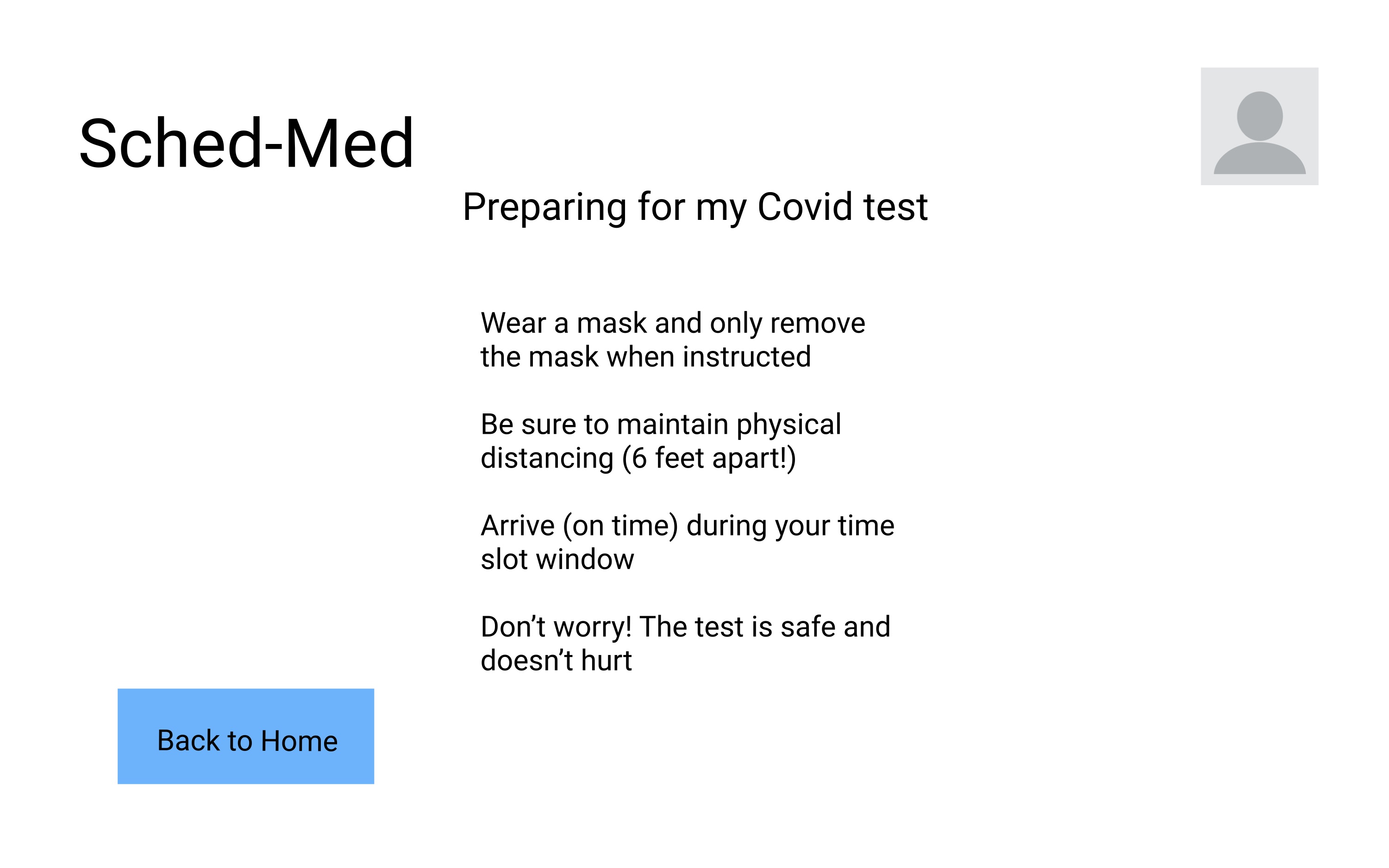
UI Design 8: Patient Advice
-
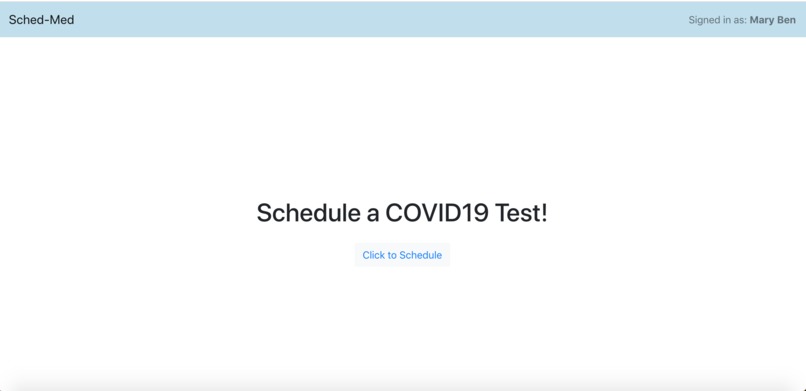
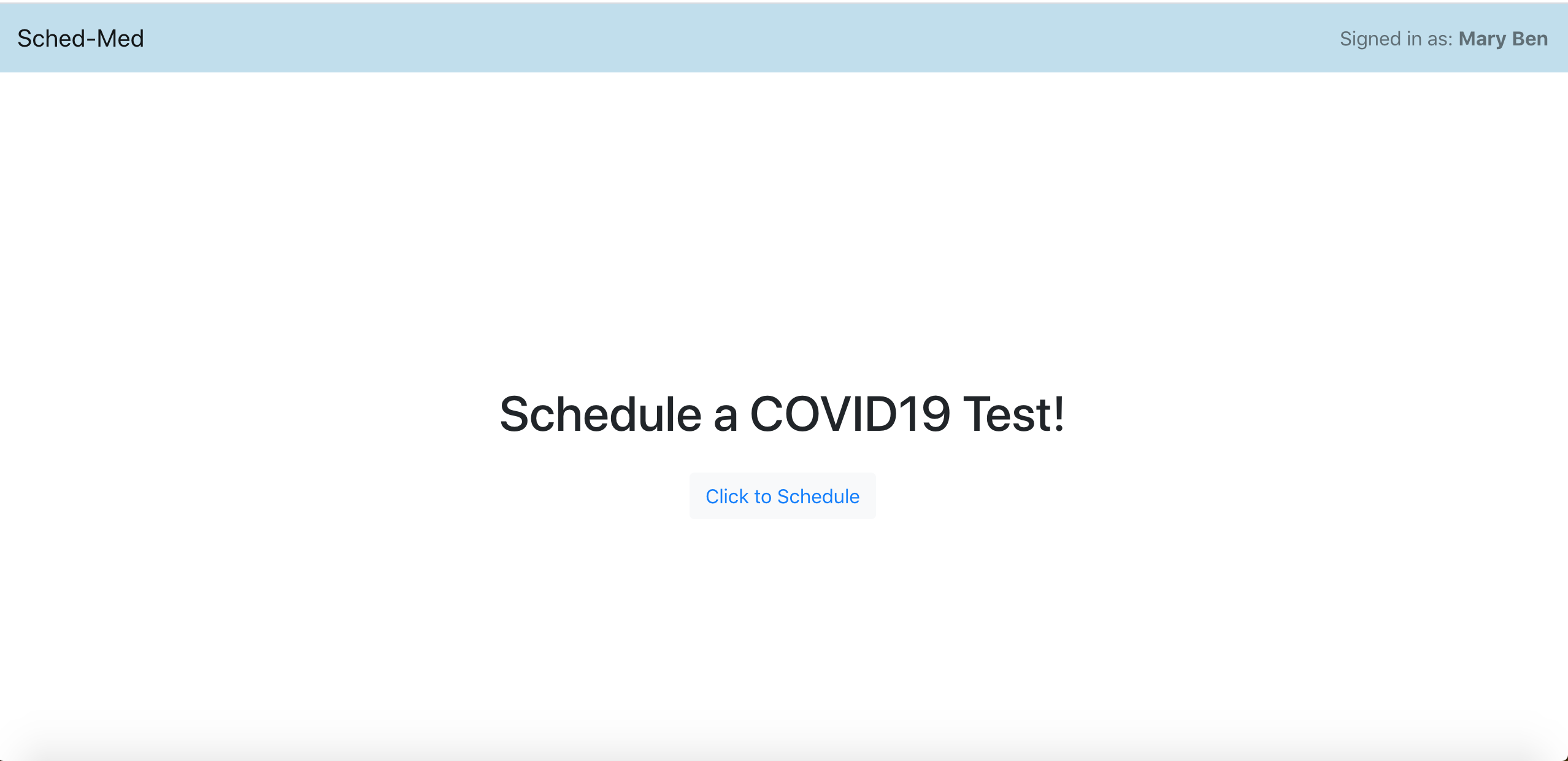
Demo 1: Welcome Page (user can schedule test after login)
-
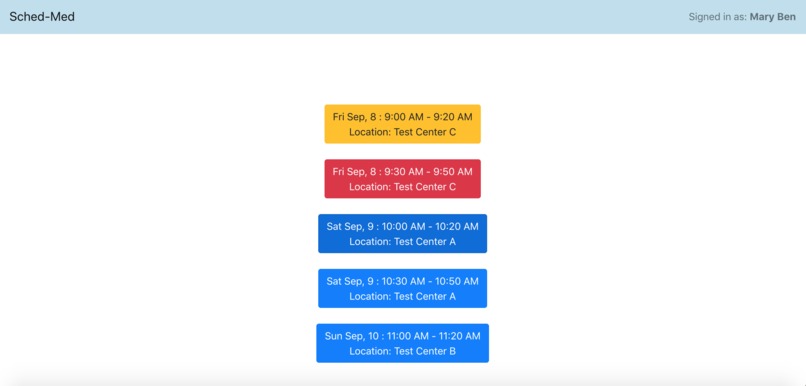
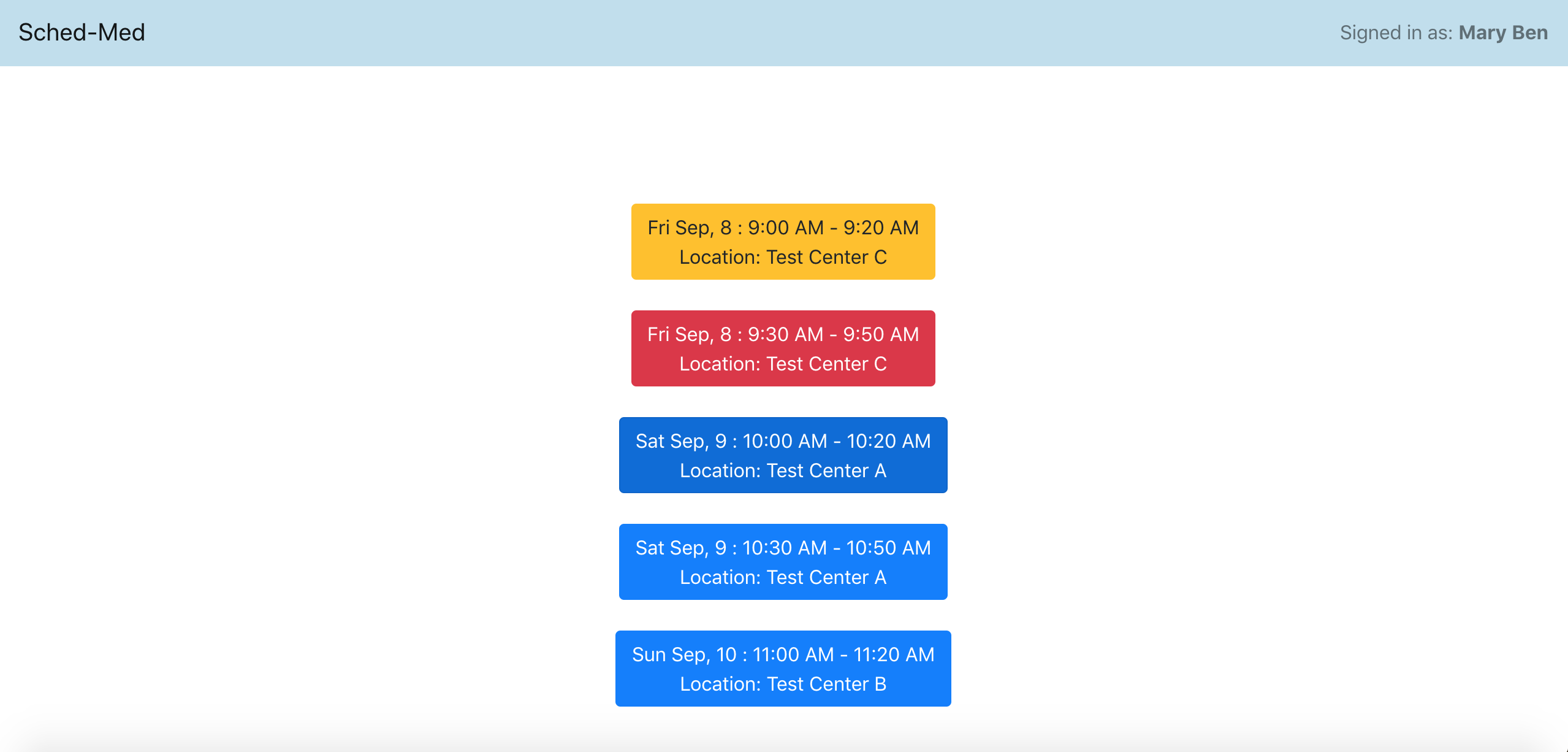
Demo 2: Schedule Page (user picks test time, color code for available spots left; populated from Firebase, appt selection updates Firebase)
-
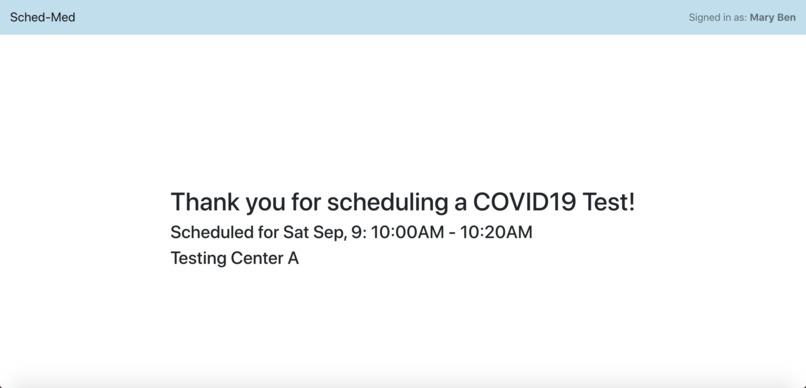
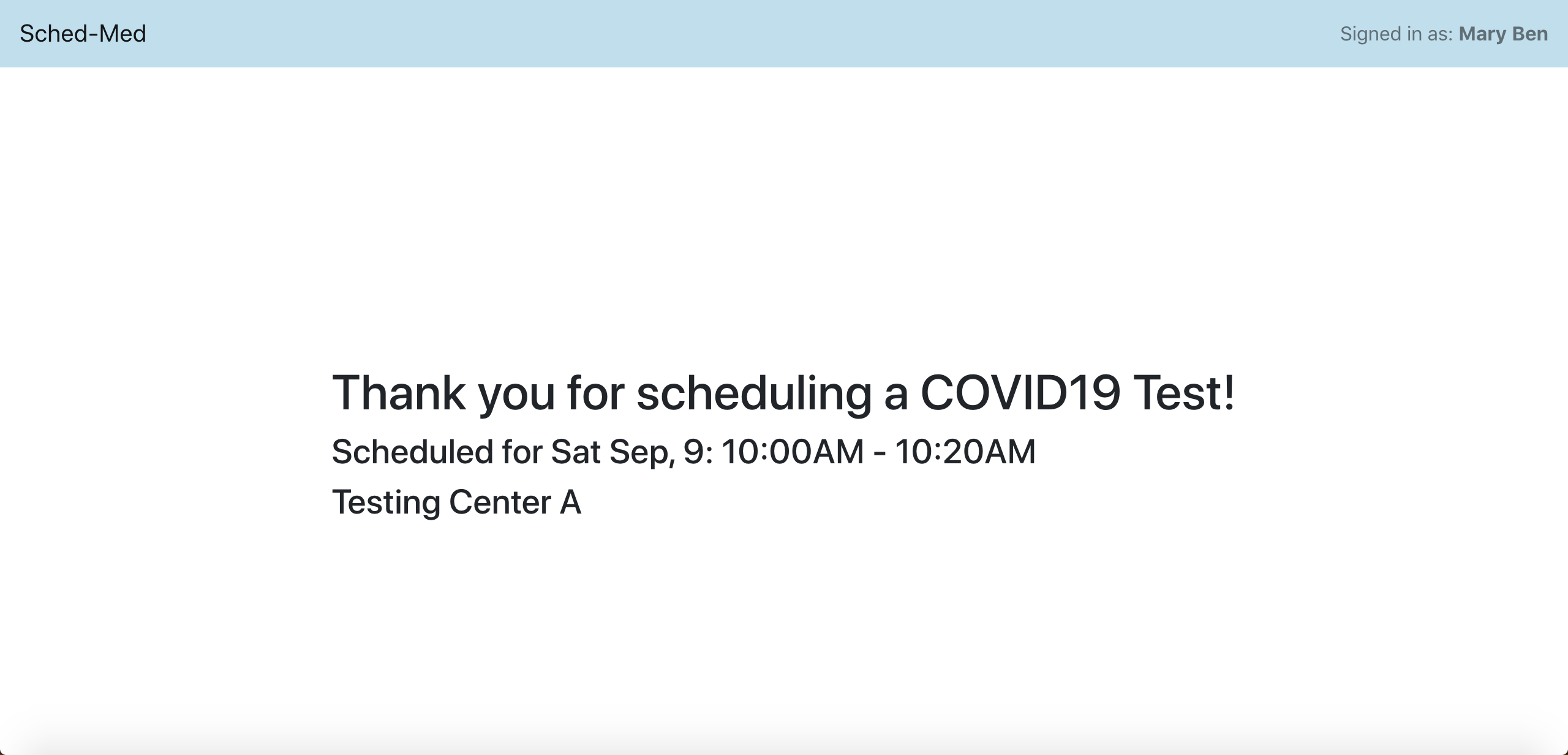
Demo 3: Confirmation Page (user is confirmed; test centers are notified; scheduling is updated on Firebase with one less vacancies)
-
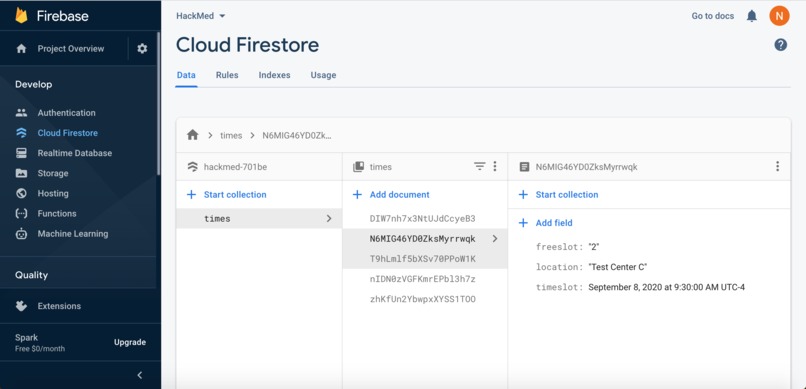
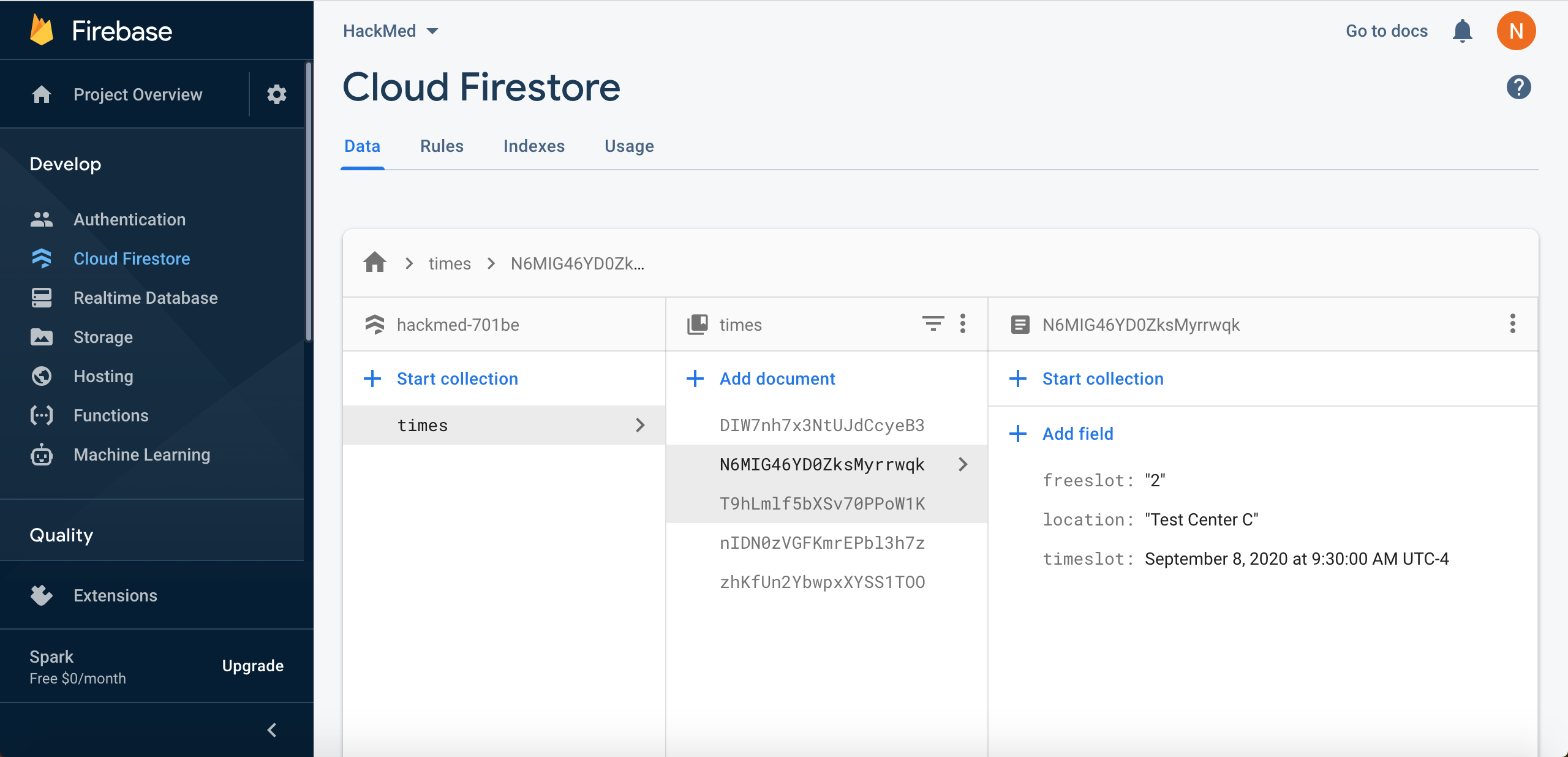
Demo 4: Firebase Database (backend data management of test center availability done on Firebase; time slots are populated and updated here)
Inspiration
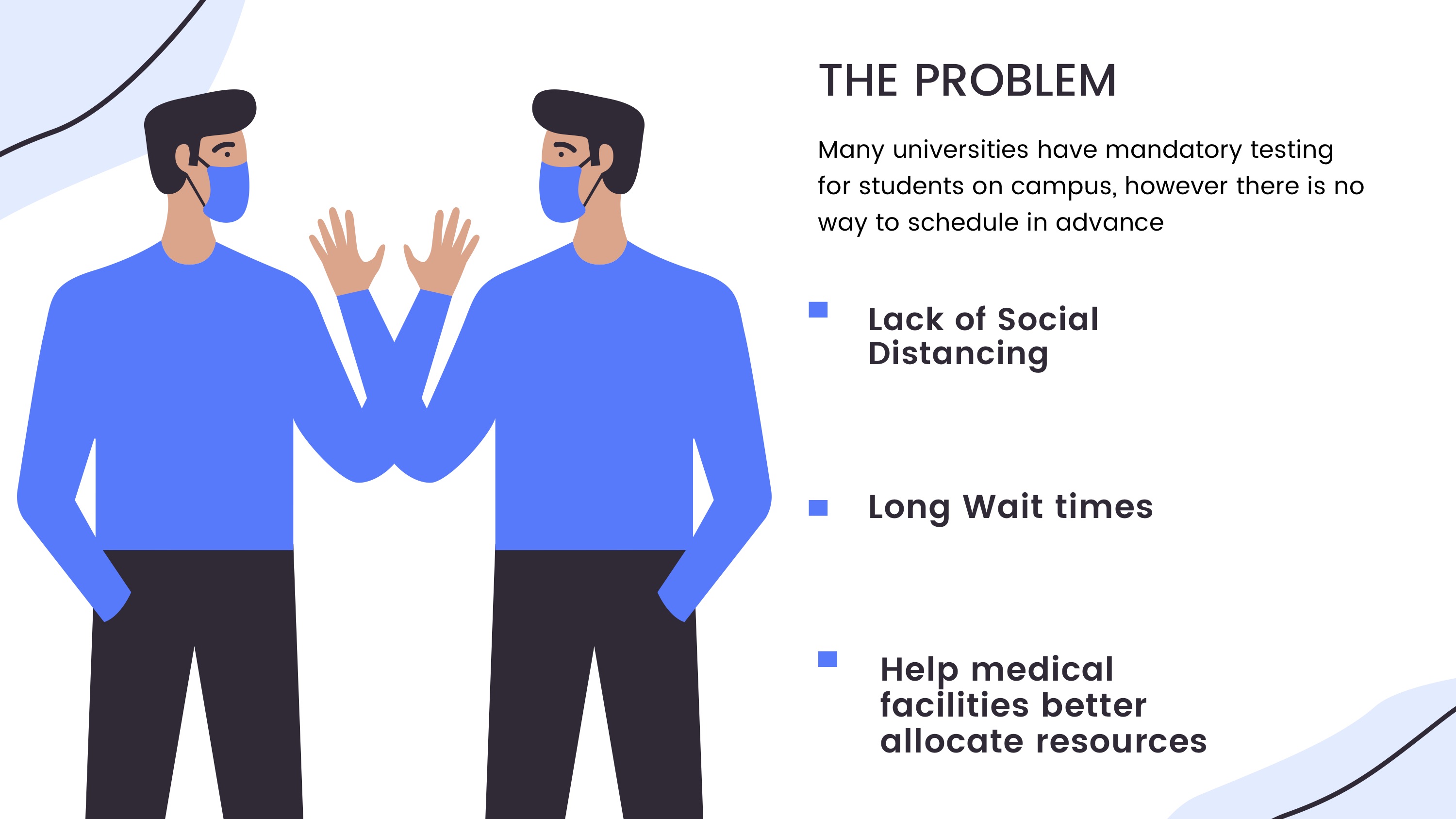
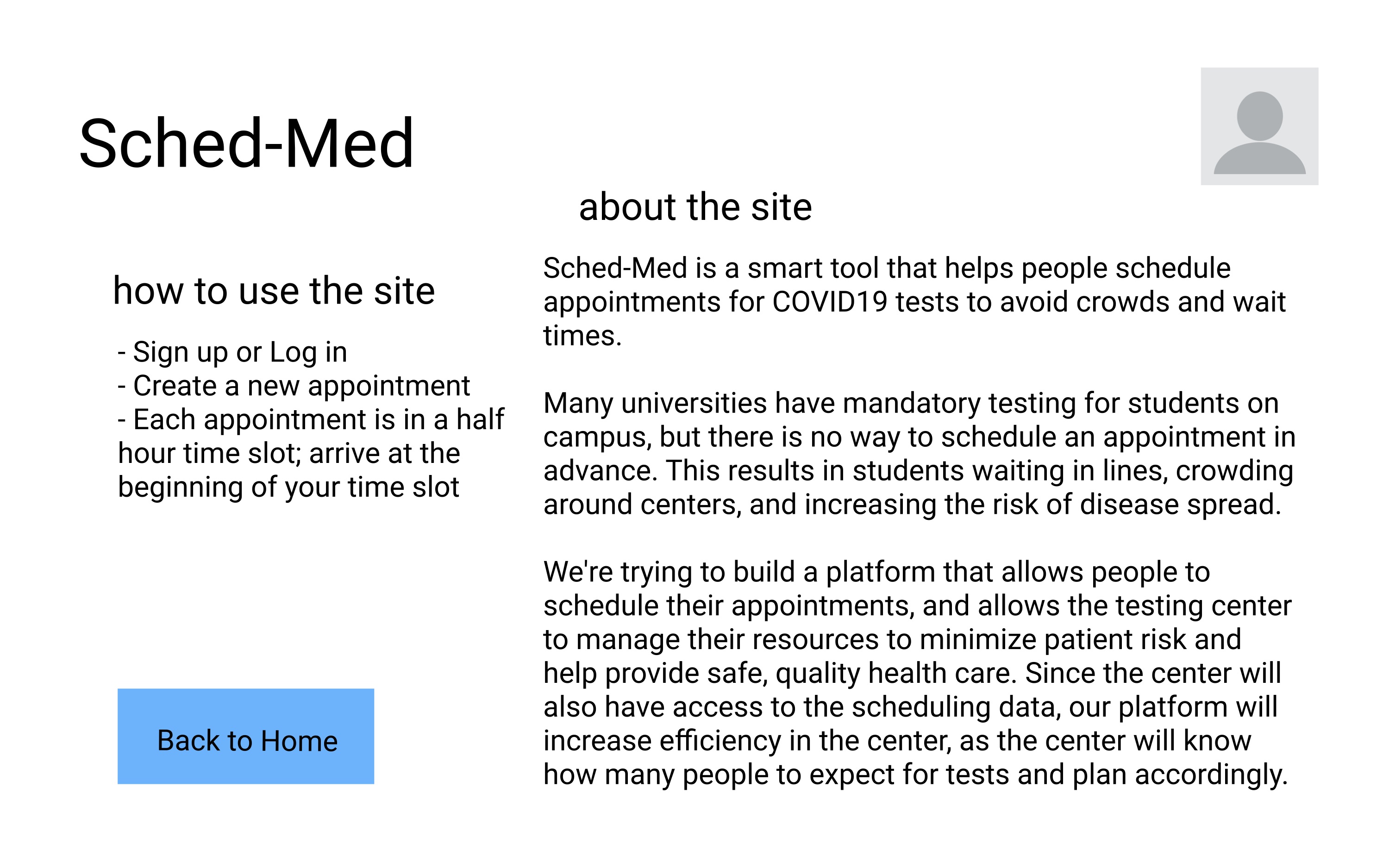
A New York Times survey of more than 1,500 American colleges and universities has revealed at least 51,000 cases and at least 60 deaths since the pandemic began (https://www.nytimes.com/interactive/2020/us/covid-college-cases-tracker.html). As students move back onto campus, and universities mandate frequent COVID19 testing, test centers are experiencing higher volumes. Personally, some members of our team (Nabib, Mary Ben, Kevin - all university students) experienced long wait times and crowded test centers, which puts people at risk. Moreover, Ukeme, a medical doctor has seen in her clinical work test centers being over-burdened with people. There are huge periods of patient inflow and other periods with a very minimal amount of patients. This problem not only puts patients are risk but is exhaustive on test centers as they can't appropriate allocate resources and staff needed.
What it does
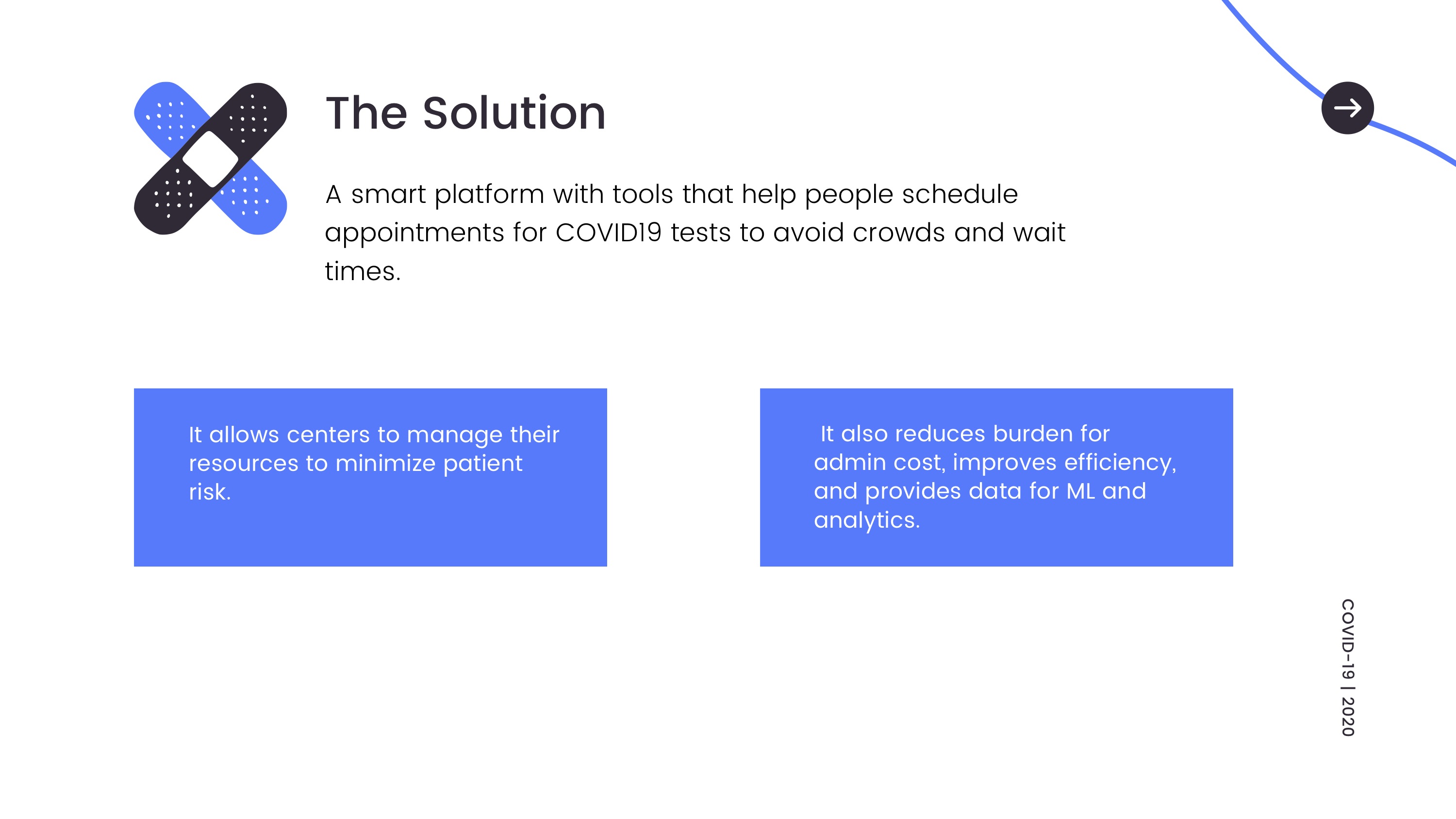
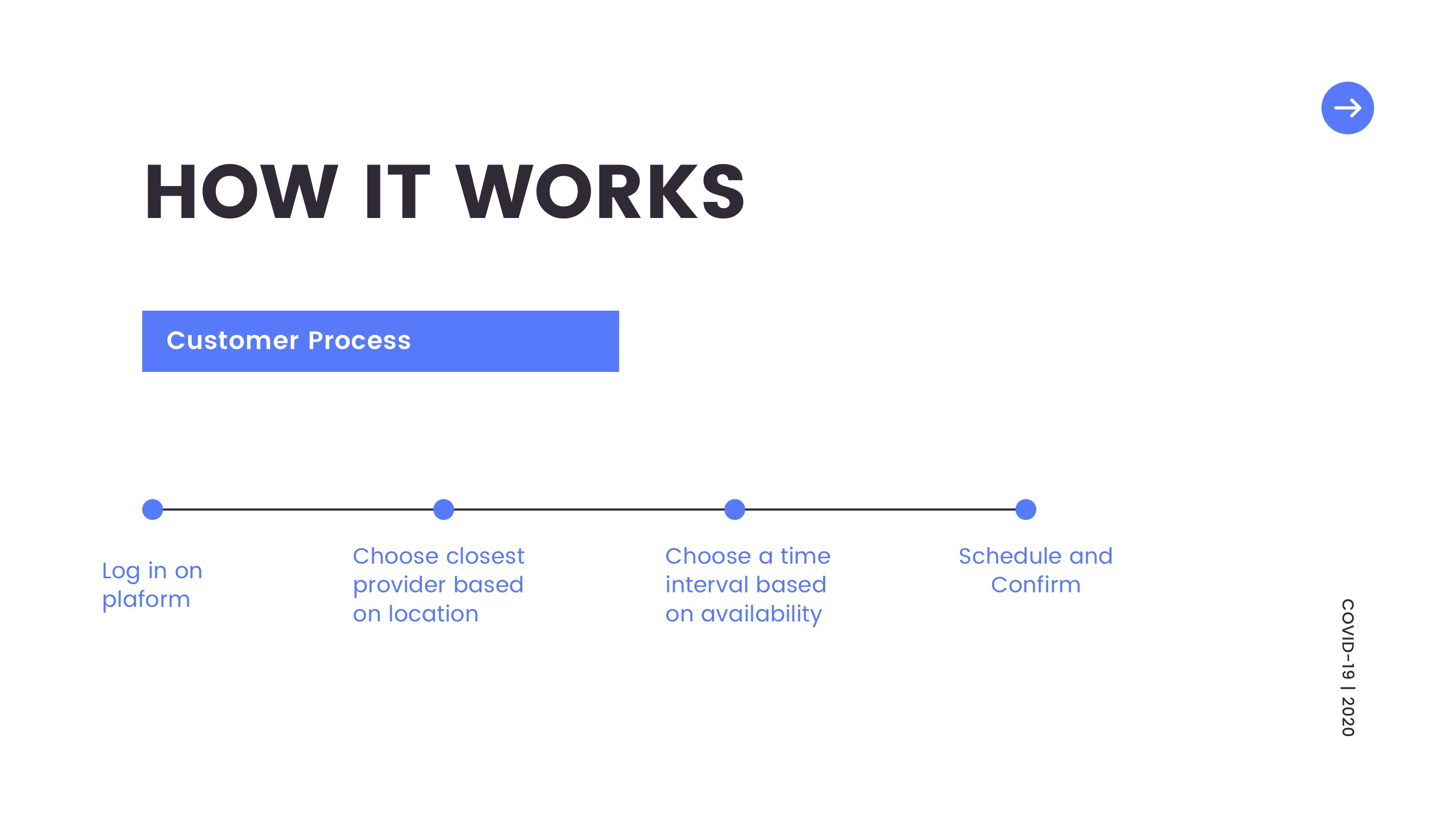
Our project is smart platform for patients to schedule their COVID19 tests in set windows. Clinics can limit the number of allowed patients per testing window to avoid crowding and ensure social distance protocols. Patients no longer have to wait or face crowds, and can stay safe. Health providers can regulate patient traffic, spread out patients, and properly bring in the right amount of workers and kits to meet patient needs. They can also employ data analytics and ML to improve efficiency.
How we built it
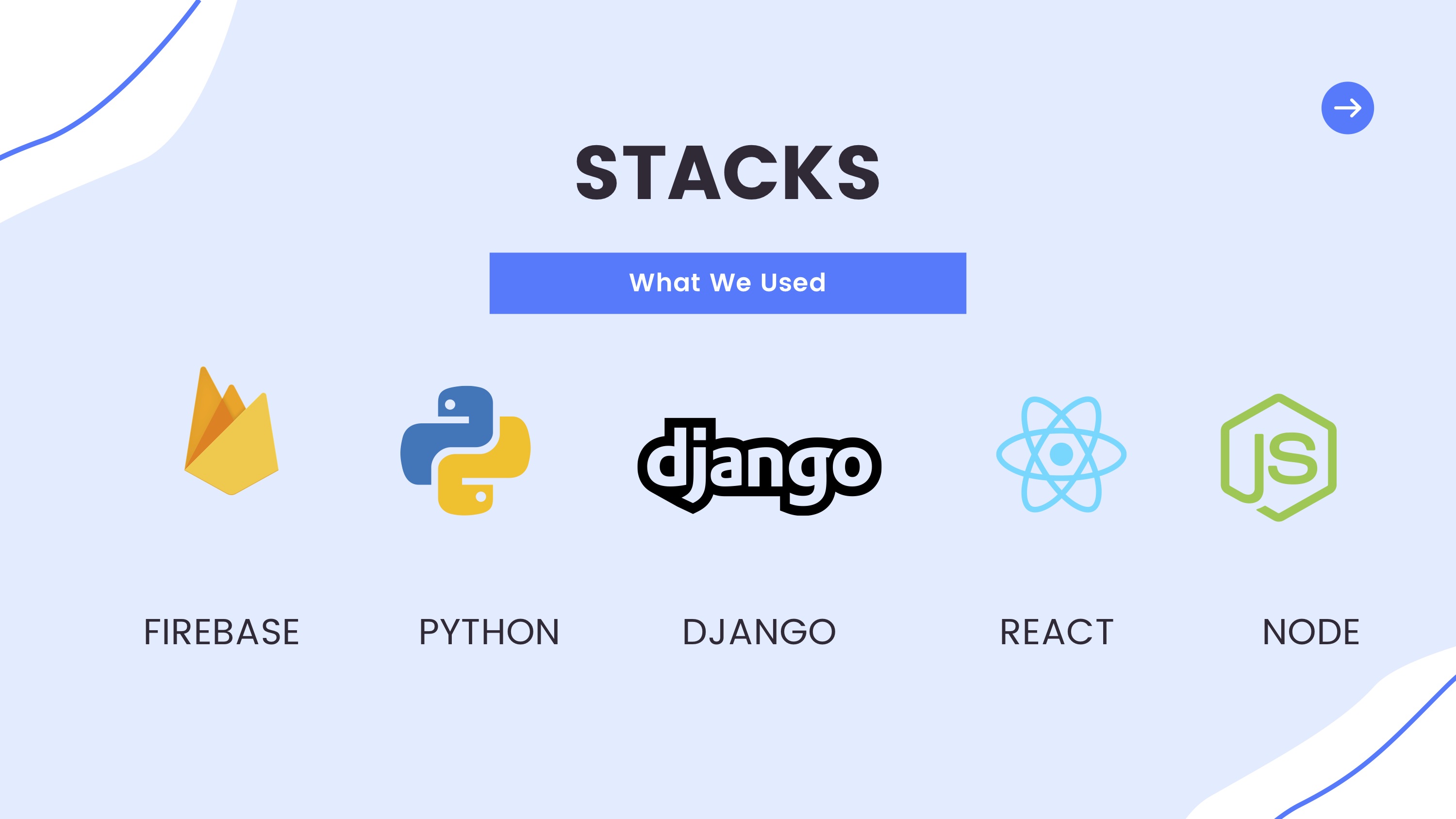
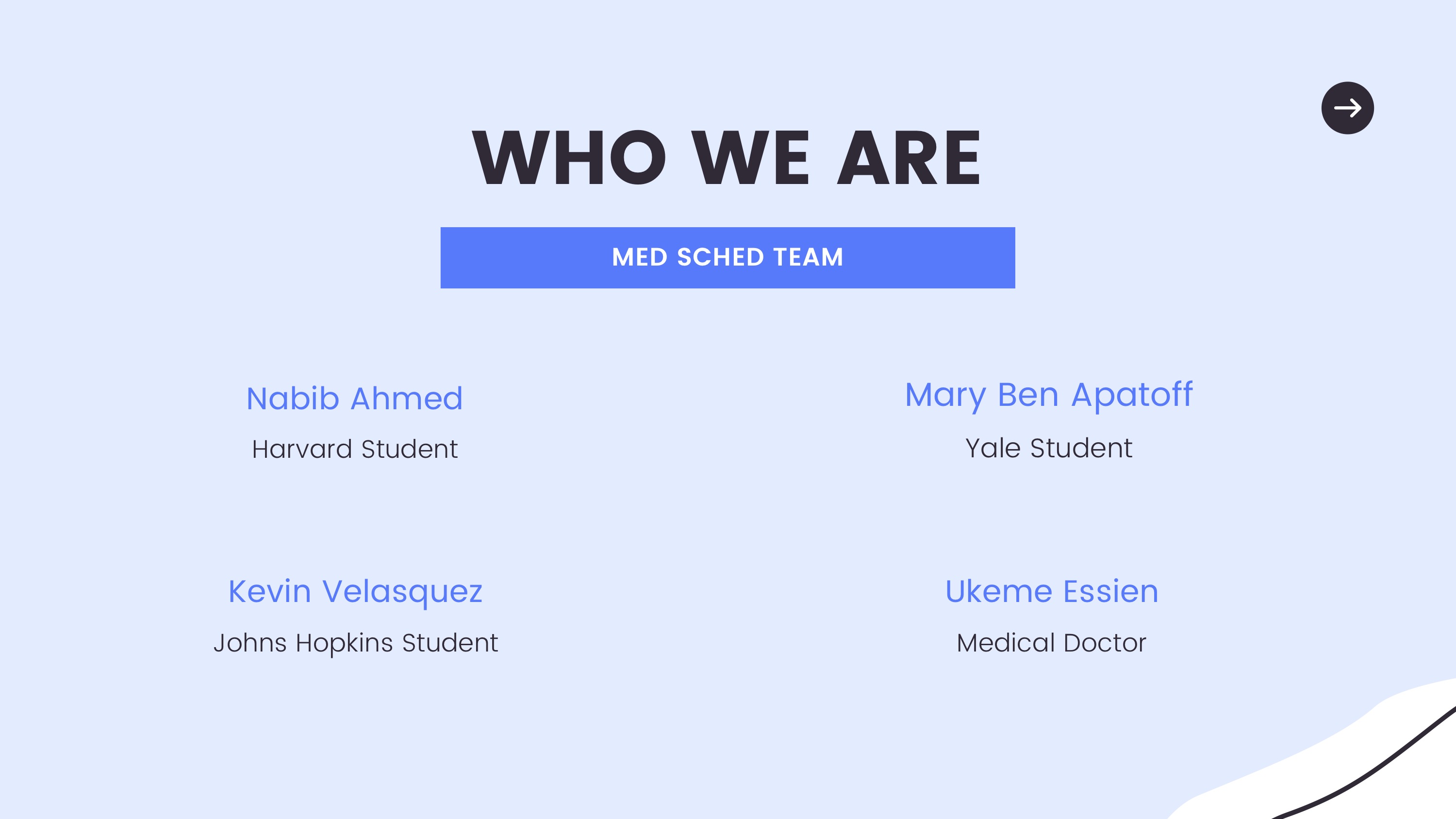
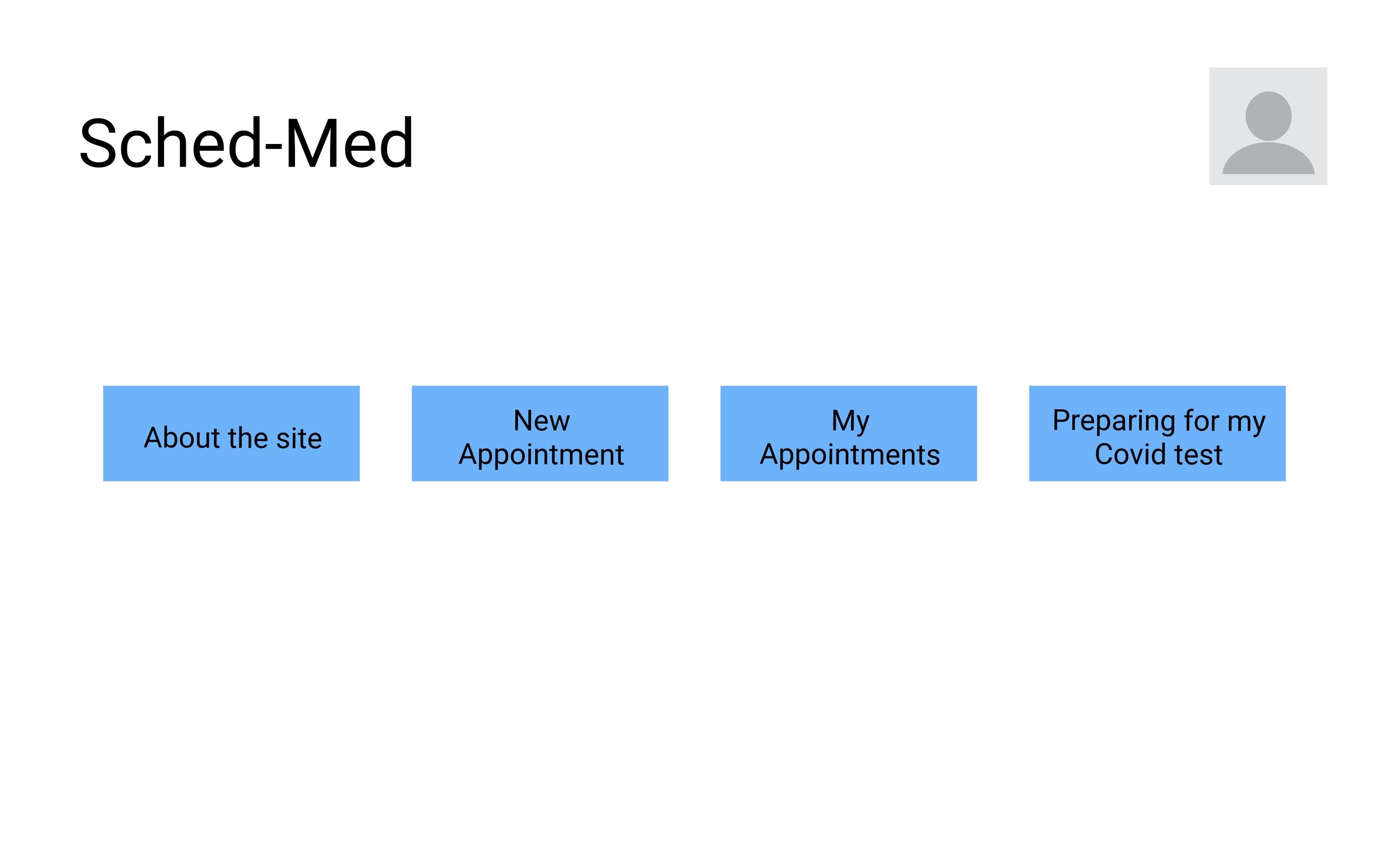
We used Google's Firebase for data management, databases, and authentication. We have a database on Firebase of users that allows health providers track and monitor individual patients through email authentication. We also have a database on Firebase that manages available testing windows, and updates them accordingly based on user's actions. Our backend was supplement with Python's Django; Django provides an admin portal which health providers can use to track patients. Kevin was responsible for back-end. The patient experience is done with JavaScript, React.js, and Node.js; all the time windows listed on the UI is programmatic and is pulled from the Firebase database. Since Firebase has realtime updates, we're able to updated the availability in instantly for users as other people book. For design we used React Bootstrap. Nabib was responsible for front-end. We prototyped and design the UI and web-app logic on Figma. This allowed us to collaborate and make a strategy to implement. Mary Ben was responsible for documenting design ideas.
Challenges we ran into
For each member on the team, this was our first hack-a-thon, it was virtual, and none of us came in with strong experiences in making web-apps or using Firebase. We challenged ourselves to use Firebase and other frameworks, and made the experience be about learning. We spent a lot of time searching the web, watching YouTube tutorials, attending workshops, and speaking with mentors to build a prototype! In addition, we had to coordinate the different strategies. We had made the login in Django and the patient portal in React, and we didn't know how to merge the two components. Google and StackOverFlow was sparse on this material. We found a way but we couldn't implement due to our time constraints.
Accomplishments that we're proud of
Given it was our collective first hack-a-thon, we are extremely proud we made a minimum viable product (MVP). When we started, we discussed our design goals and the tech stack we want to use. We completed a majority of our goals we layout. Our demo contains the core functionality from our UI design, and used Firebase effectively to manage data. It's only a few steps away from being production ready and being used by real providers - it's crazy our team made it in less than a weekend. We're also really proud of the learning we've done and for not giving up. The virtual format made it hard to communicate at times, but we stayed at it and ultimately walked away with a demo-able product that has potential to improve patient treatment and quality care.
What we learned
We learned a lot of new tech skills. Namely we learned how to use Google's Firebase and integrate it with Python's Django and React,js/Node.js. We also learned how to use collaborative tools like Figma to design our layout and make our game plan. In addition to technical skills, we learned more about the industry from peer mentors and workshops. We also learned about healthcare and technology. Since our track was patient adherence and quality care, we learned a lot about tele-medicine, the challenges, and the tech infrastructure.
What's next for Sched-Med
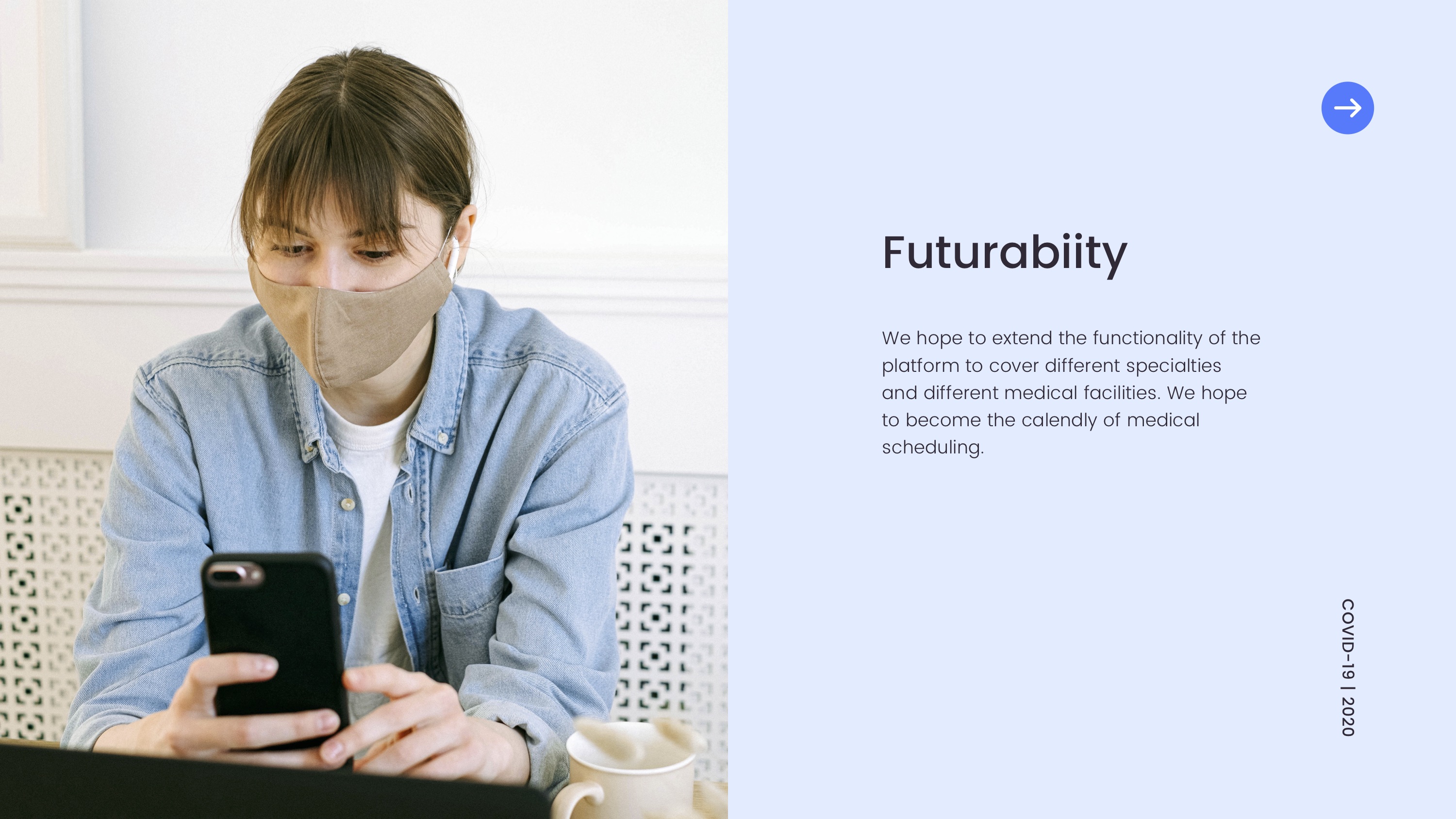
Currently Sched-Med let's people schedule appointments at test centers for COVID19, but another problem clinics face is periods of high and low foot traffic. Thus we'll add a feature where users can provide a range and the app will allocate them to a low traffic period. The algorithm would use past scheduling patterns from previous users and ML to predict periods of low traffic and assign them out accordingly. Other features include integration with Calendar and Email apps through APIs that allow people to add them to their calendar, get email notification, and reschedule/cancel directly from their emails/calendar app. For the UI, adding a visual calendar component and search bar feature to filter center location, dates, and times. We're also hoping to expand the app for more than test centers and university. Ukeme, a medical professional, recommended using it for flu vaccines and other procedures done not just at university but at clinics and hospitals. We're hoping to have this be used by universities and branch out to have other health services use our platform.

Log in or sign up for Devpost to join the conversation.