-
-
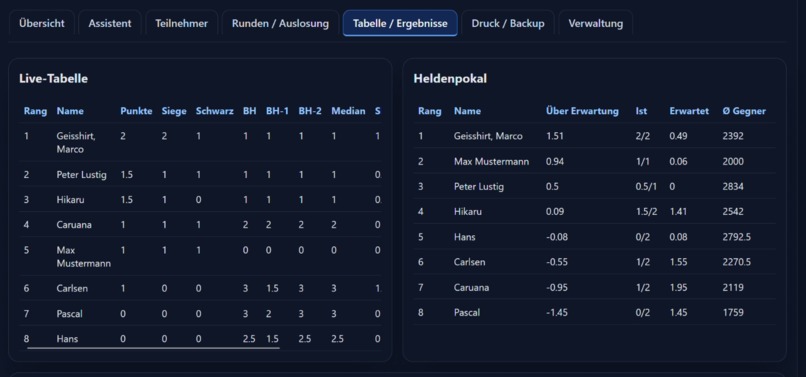
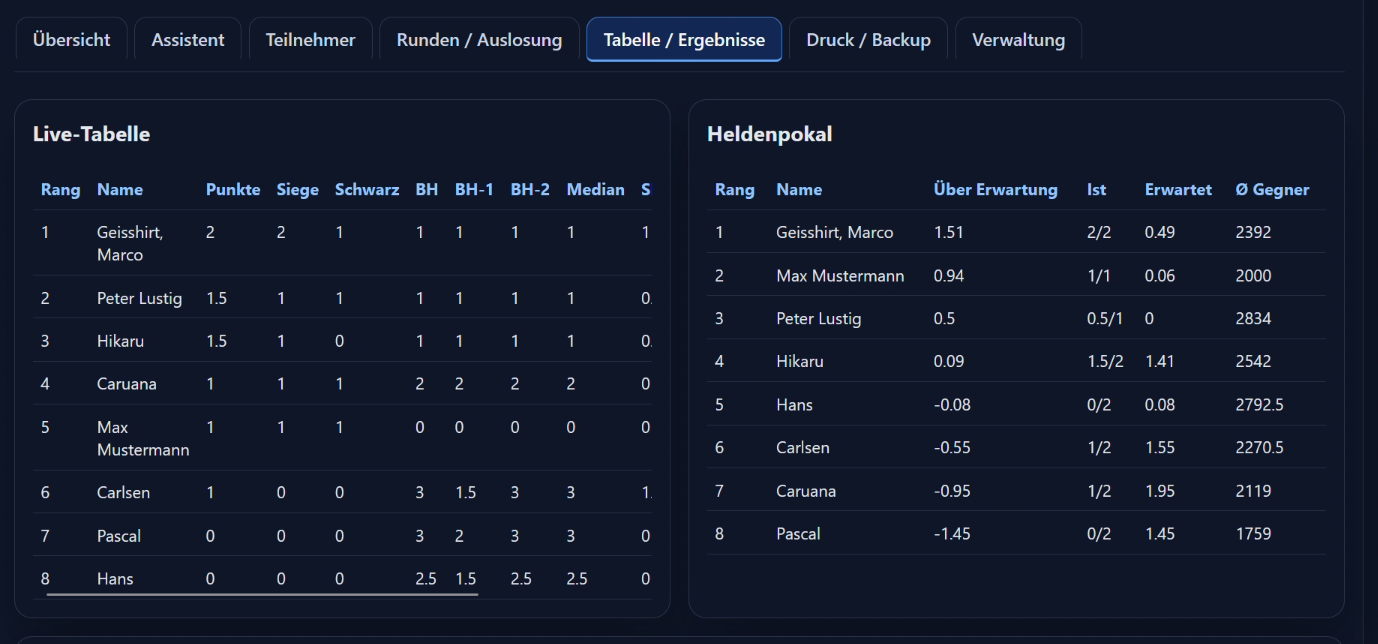
Live Standings and Performance Analysis
-
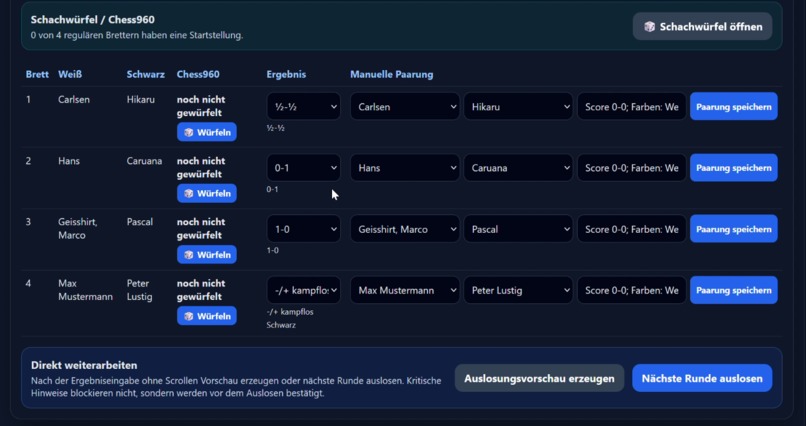
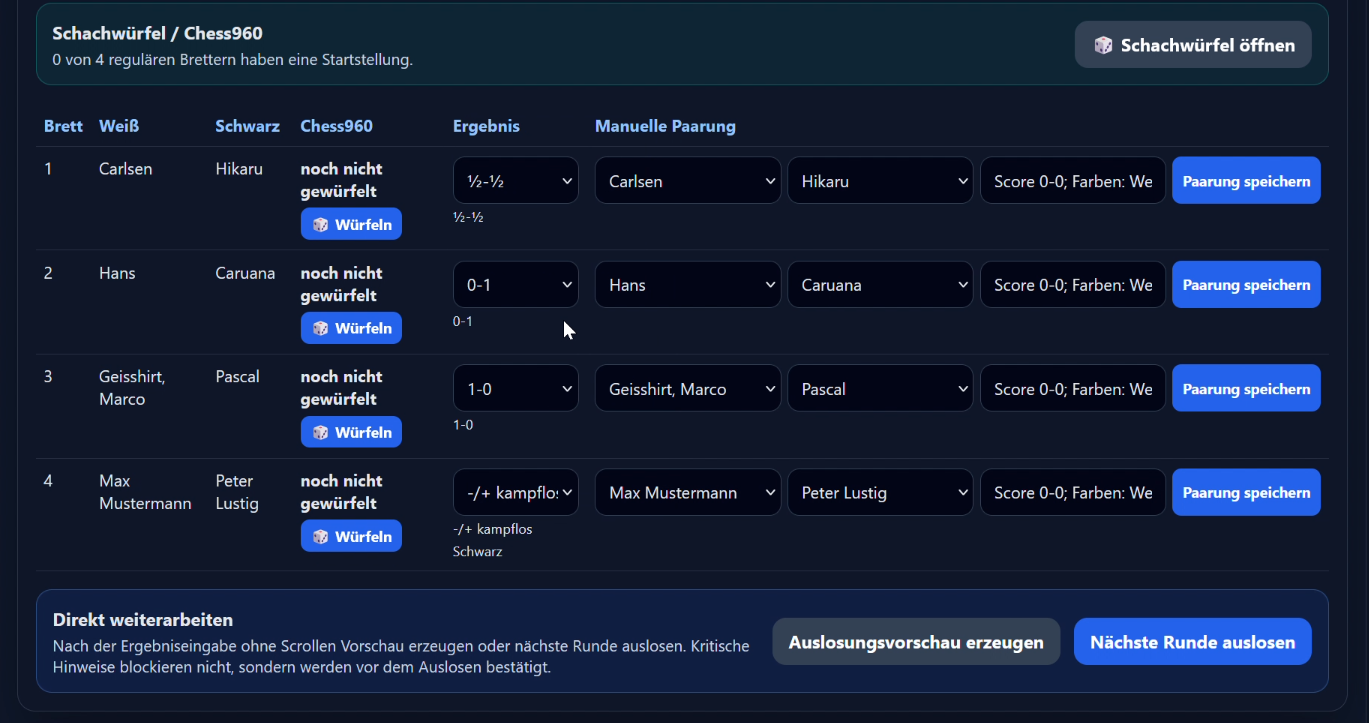
Pairings, Result Entry and Round Progression
-
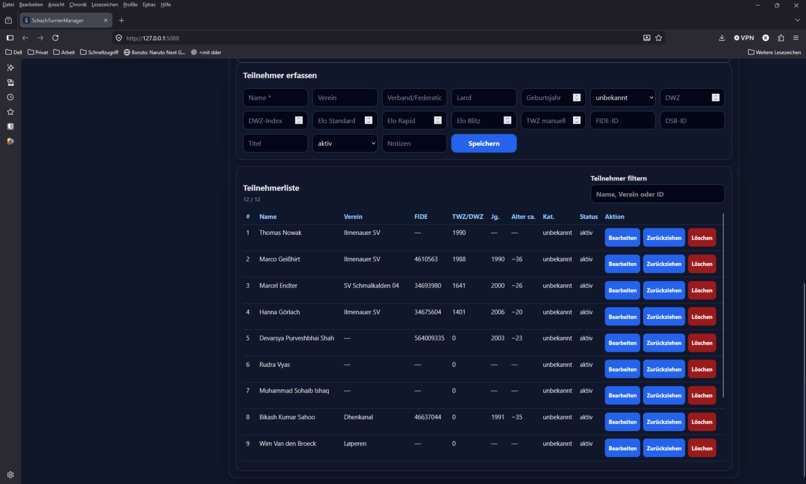
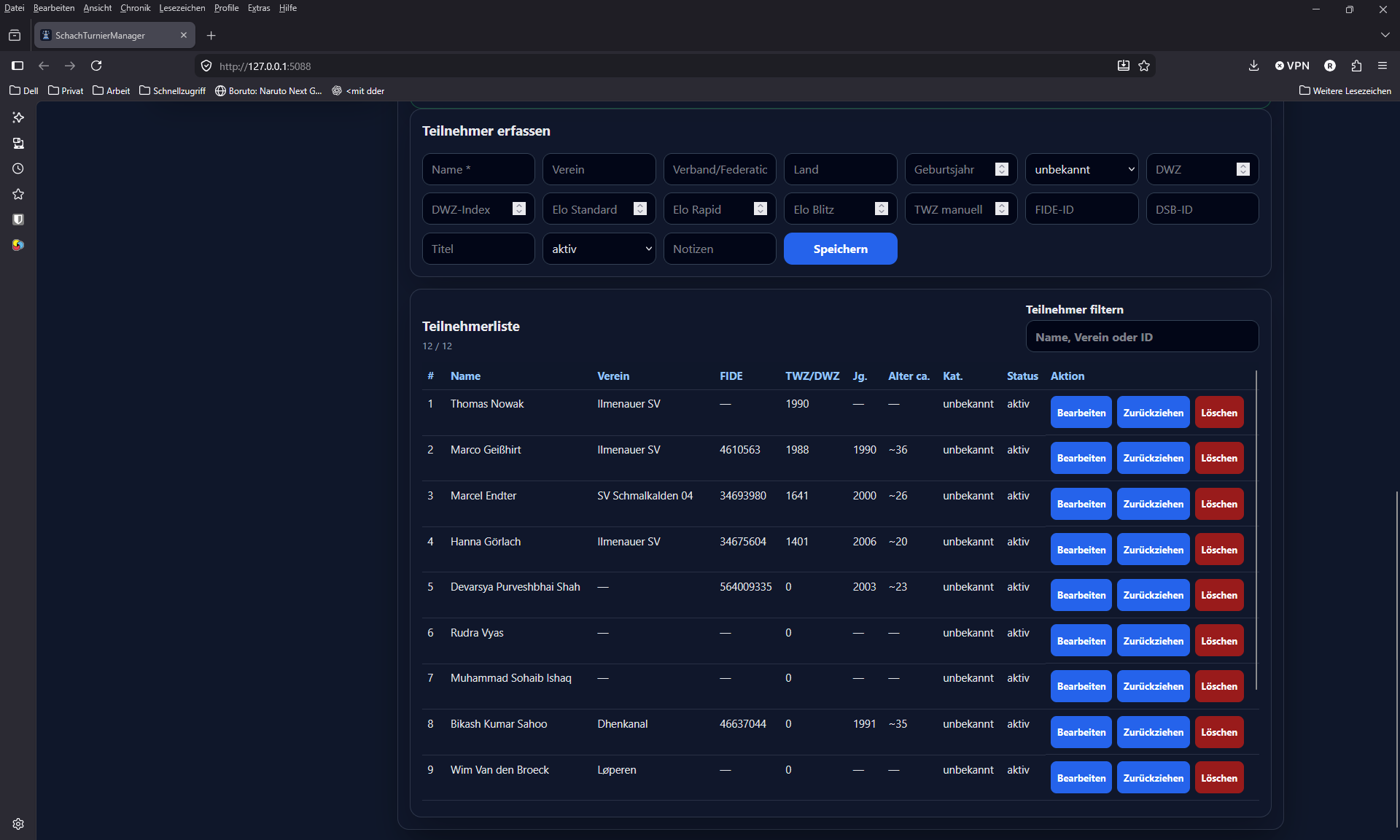
Participant Management and Rating Data
-
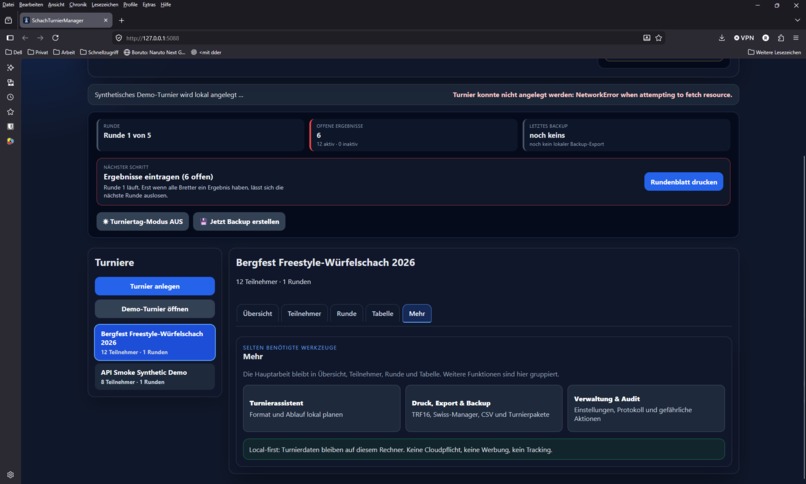
Tournament Overview and Guided Workflow

Inspiration
SchachTurnierManager was built to solve a practical problem: running local chess tournaments is often far more chaotic than it should be. Pairings, player management, round handling, exports, and communication are frequently spread across different tools, handwritten notes, or ad-hoc workflows. I wanted to create one streamlined system that helps tournament organizers run events more reliably and with less stress.
What it does
SchachTurnierManager is a tournament management application focused on chess events. It helps organizers manage tournaments, players, rounds, and results in one place. The project also includes a mobile companion direction for Android so tournament information can be accessed more easily in practical event scenarios. The goal is to support the full flow from preparation to operation and presentation.
How I built it
The project was developed as a real software product, not just as a mockup. It combines backend, frontend, packaging, testing, and release preparation work. A major focus during Build Week was improving the structure and maintainability of the codebase, especially in the frontend. Large parts of the application were reviewed and modularized, architectural boundaries were clarified, and additional tests and safety checks were added.
I used AI-assisted development heavily throughout the project. Codex was a major contributor to the codebase and the Build Week workflow, especially for implementation, review, structured refactoring, and technical cleanup. I also used AI support for analysis, validation, and iteration while keeping a strong focus on making the final result technically consistent and presentation-ready.
Challenges I ran into
The biggest challenges were not only feature work, but also finishing the project in a way that would hold up under review. That included:
- cleaning up repository structure
- improving the frontend architecture
- reducing monolithic code areas
- fixing browser-specific issues, especially around Firefox dialog behavior
- preparing Windows installer and mobile companion artifacts
- validating tests, safety gates, and release readiness
Another challenge was that some remote integration and tooling steps were blocked at different times by environment, network, and workflow issues. This meant I had to spend significant effort on recovery, verification, and making sure the project state stayed clean and understandable.
Accomplishments that I'm proud of
I am especially proud that SchachTurnierManager is not just a concept, but a working project with real progress in architecture, testing, packaging, and usability. During the final push, the project gained:
- a cleaner frontend structure
- additional automated tests
- verified Firefox-related fixes
- improved project documentation
- contest-ready assets and submission preparation
- a stronger technical foundation for future development
What I learned
This project reinforced how important code quality, repository hygiene, and release discipline are when building with AI. AI can dramatically accelerate development, but the real value comes from combining speed with review, structure, and verification. I also learned how important it is to keep a project understandable for both humans and automated reviewers.
What's next for SchachTurnierManager
Next steps include:
- finalizing and polishing the Android companion workflow
- continuing frontend modularization
- improving tournament UX and visual polish
- expanding testing and device validation
- preparing the application for broader real-world tournament usage
SchachTurnierManager is already useful today, but the long-term vision is to turn it into a robust, organizer-friendly platform for chess tournaments.

Log in or sign up for Devpost to join the conversation.