Inspiration
Many of the habits that shape our everyday lives are so common that we rarely stop to think about their influence. How we sleep, how much we move, how long we sit, whether we use our phones in bed, and what we eat and drink are small, repeated parts of our routines. Yet these everyday choices can influence how we feel and how we experience our day.
At the same time, we are surrounded by health advice and opinions, and it is not always easy to distinguish evidence-informed guidance from general claims or personal experiences. We wanted to explore a simple question: What if people had a way to better understand their everyday habits, experiment with small changes, and reflect on how those changes affect them personally?
That question inspired Scept. We began with a selected set of common daily habits because they are familiar to many people and provide a practical starting point for self-reflection. By combining evidence-informed health guidance with daily energy and mood check-ins and structured 14-day experiments, Scept encourages users to approach their habits with curiosity rather than blindly following advice.
Our goal is not to tell everyone how they should live, or to claim that a short experiment can prove cause and effect. Instead, we want to help people become more aware of their routines, explore small changes, and make more informed decisions about their everyday lives.
What it does
Scept helps users explore evidence-informed health habits and test small changes through personal experiments.
Users can:
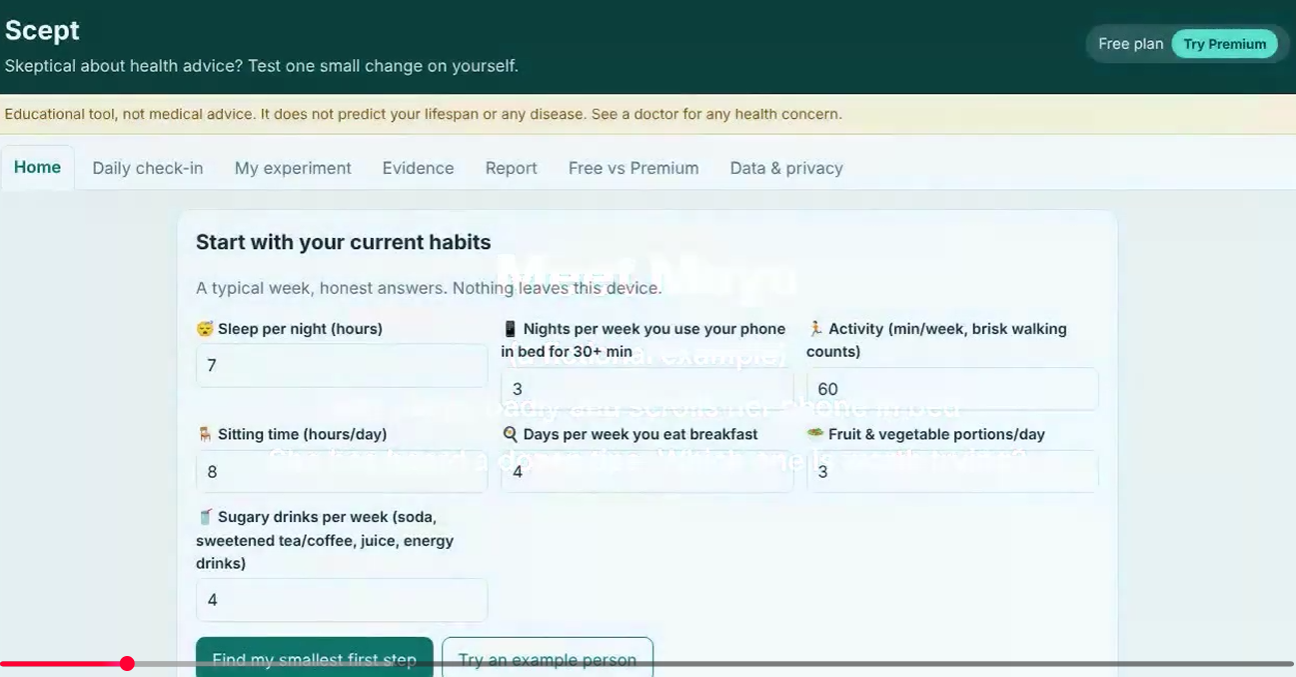
- Answer questions about everyday habits, including sleep, phone use in bed, physical activity, sitting, and diet.
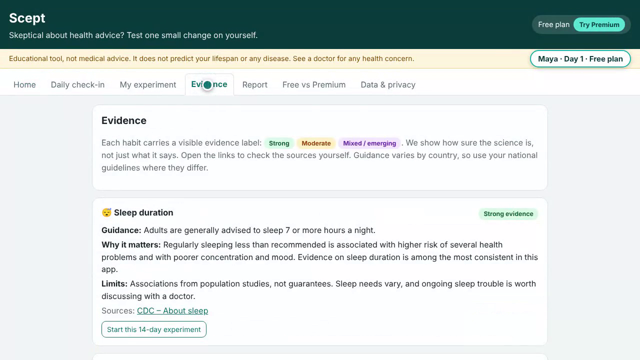
- Explore suggested habits supported by health information from sources such as the WHO and CDC.
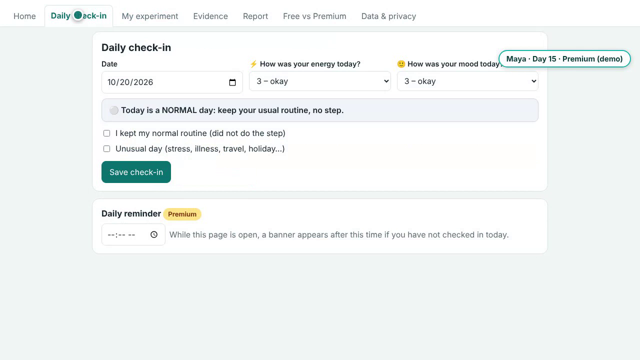
- Track daily energy and mood check-ins.
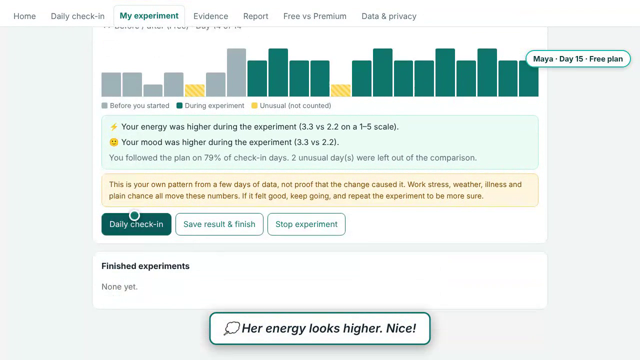
- Run 14-day experiments and compare their results before and after a change.
- Explore optional randomized on/off days to help reflect on whether a habit might be making a difference.
- Export, import, and delete their data, with information stored locally in the browser.
Scept is designed for self-reflection and habit exploration, not medical diagnosis or treatment.
How we built it
We built Scept using HTML, CSS, and JavaScript, keeping the app lightweight and accessible through a web browser.
JavaScript powers the interactive features, including habit experiments, daily check-ins, comparisons, and data management. We use browser localStorage to save information locally, so the current version does not require a backend server, user account, or paid AI API.
We also included evidence labels and links to health resources to help users explore the reasoning behind suggested habits.
Challenges we ran into
One of our biggest challenges was turning a broad idea about personal health into something practical and easy to use.
We wanted the app to encourage experimentation without suggesting that a short personal experiment can prove a habit causes a particular result. Another challenge was making the experience useful while keeping it lightweight and avoiding the cost and complexity of external APIs and backend infrastructure.
We also had to think carefully about privacy, clear explanations, and how to present personal tracking results without overstating what they mean.
Accomplishments that we're proud of
We are proud to have turned the idea into a working interactive prototype rather than stopping at a concept.
Scept brings together habit suggestions, daily energy and mood tracking, 14-day experiments, before-and-after comparisons, and local data management in one lightweight app.
We are especially proud of its focus on personal curiosity: instead of simply telling users what to do, Scept encourages them to observe their own routines and reflect on their experiences.
What we learned
Building Scept taught us that creating a useful health-focused app involves more than writing code. It also requires thinking about user experience, privacy, evidence, and the limits of what an app's data can tell us.
We learned how HTML, CSS, and JavaScript can work together to create an interactive application, and how browser-based storage can support a lightweight prototype without a backend.
Most importantly, we learned to treat personal results as clues for reflection rather than scientific proof.
What's next for Scept
Scept currently focuses on a selected set of everyday health habits, including sleep, physical activity, phone use in bed, sitting, and diet. We chose these areas to give users a practical starting point based on established health guidance, rather than overwhelming them with unlimited choices from the beginning. By focusing on a manageable set of habits, the current version helps users explore small changes, track their energy and mood, and reflect on their experiences through structured 14-day experiments.
In the future, we want to expand this approach by integrating AI and more flexible personalization. We envision a version of Scept where users are not limited to the habits and questions already provided by the app. They could introduce their own daily habits based on their individual routines, goals, interests, and challenges.
AI could help users turn their goals into manageable actions and make the experimentation process more personalized, while keeping recommendations responsible and transparent about what their results can—and cannot—tell them.
Our vision is not to abandon the evidence-informed foundation of the current Scept, but to build on it. We want to preserve the value of structured, research-informed health guidance while giving people greater freedom to explore the habits that matter to them personally.
Ultimately, we envision Scept evolving from a guided health-habit experimentation tool into a more flexible, personalized platform where evidence-informed guidance and individual choice work together.
Built With
- css
- html
- javascript
- localstorage

Log in or sign up for Devpost to join the conversation.