-
-
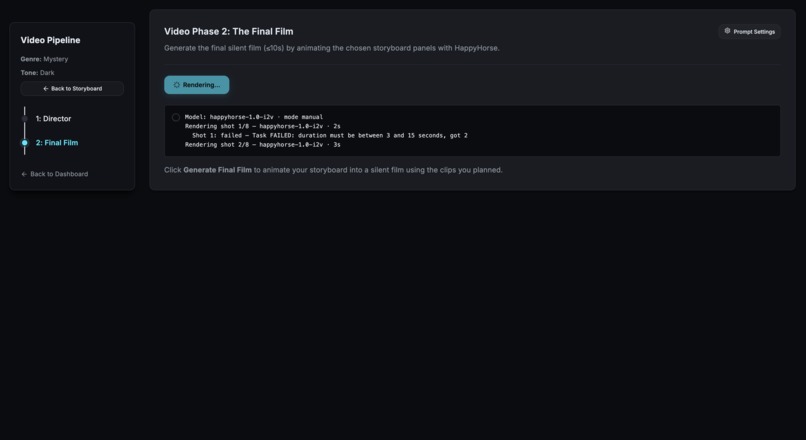
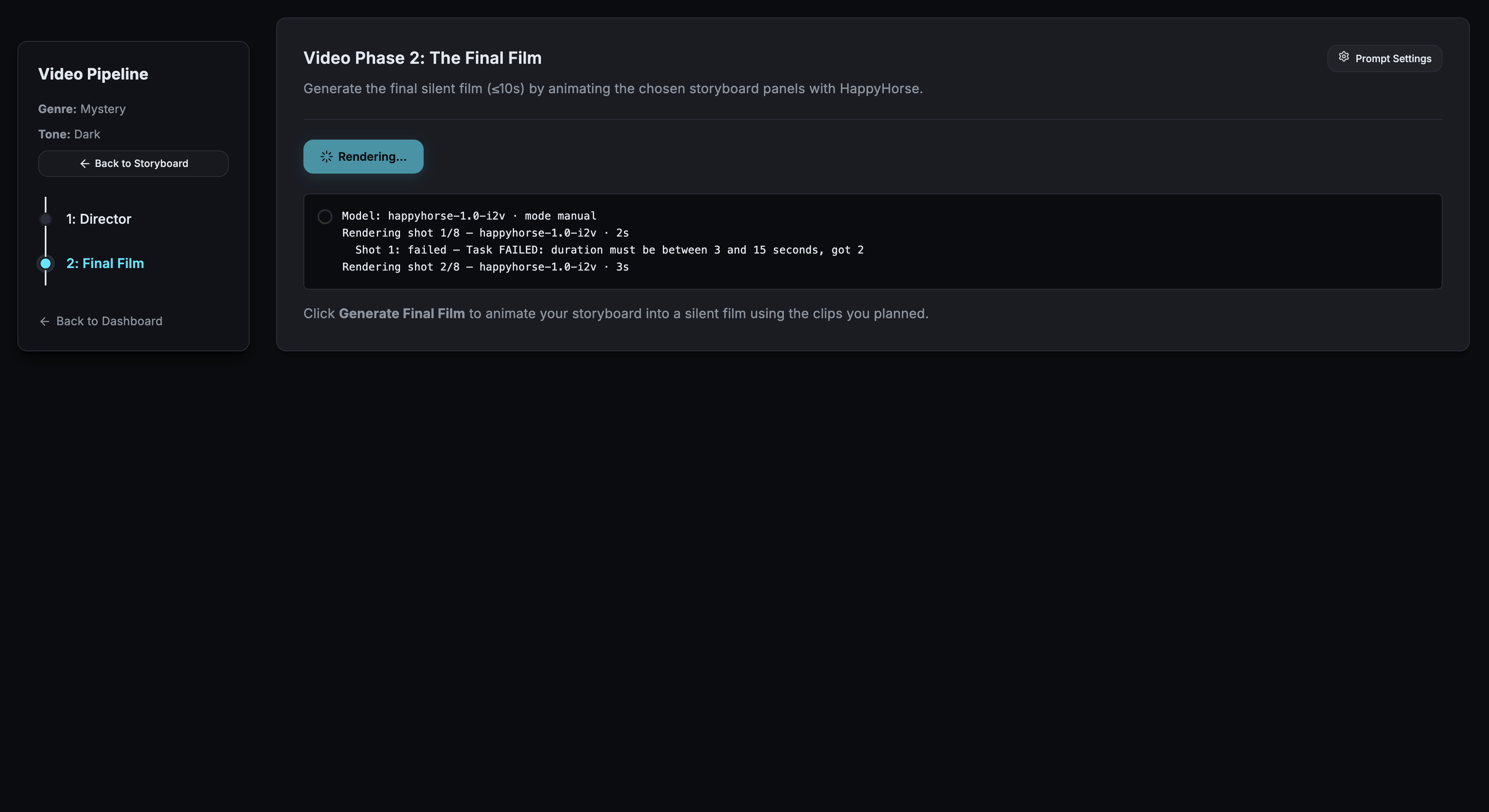
Project rendering
-
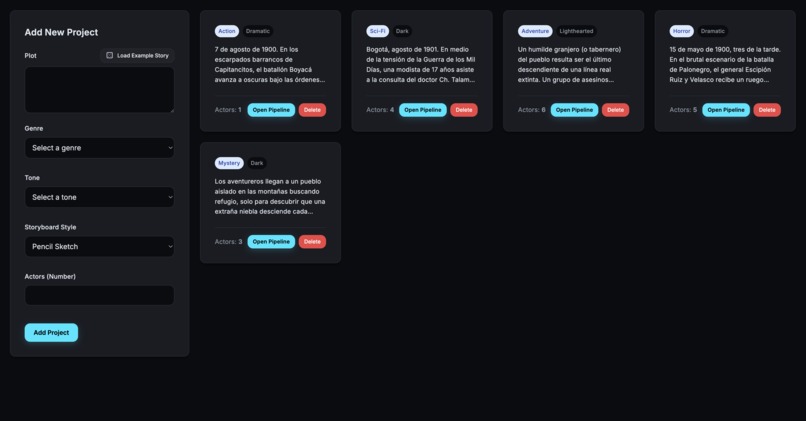
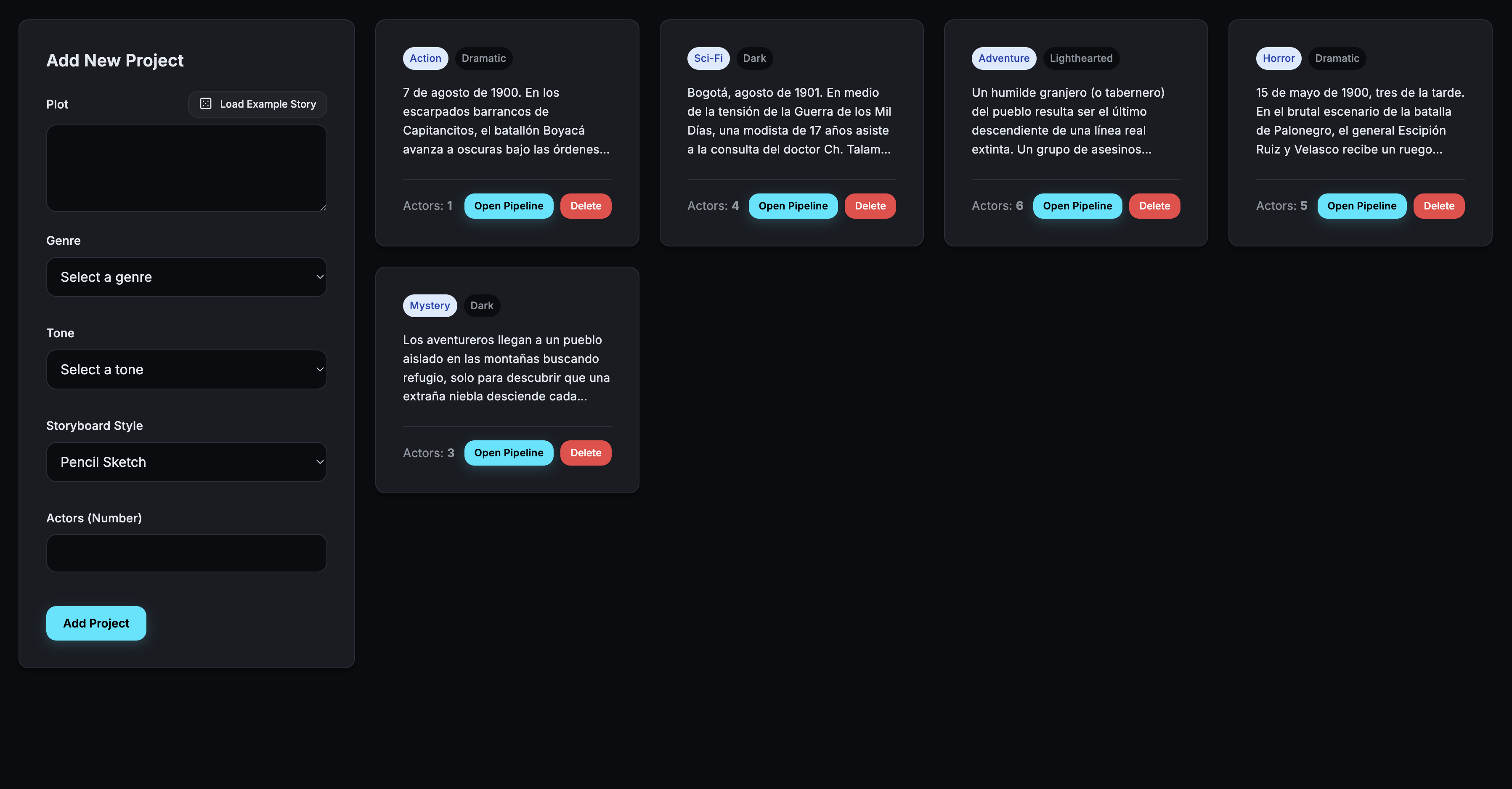
Project dashboard
-
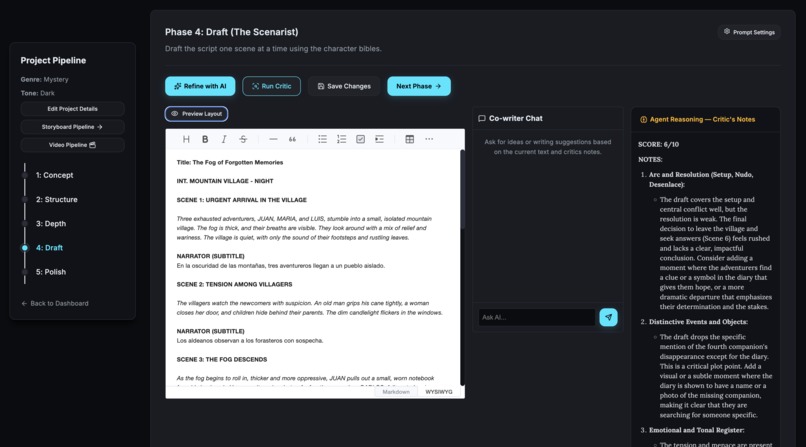
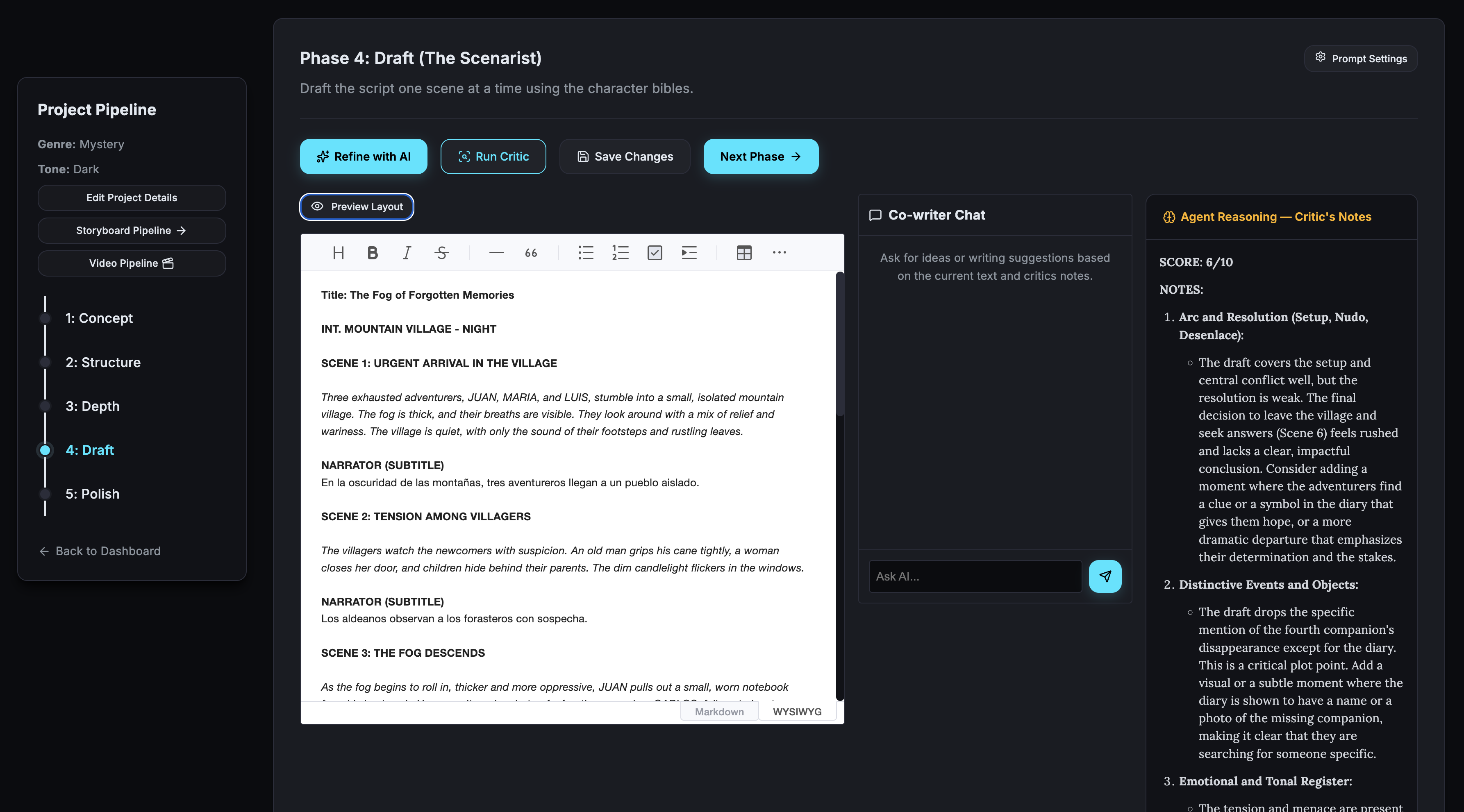
Edit everything or use AI, even the system prompt can be adjusted
-
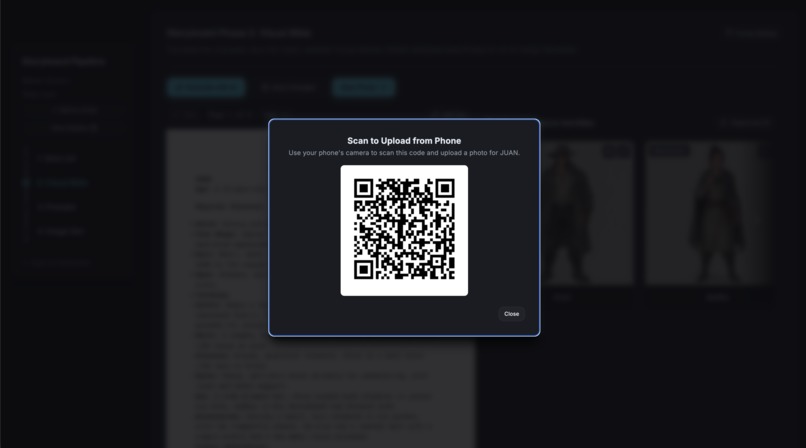
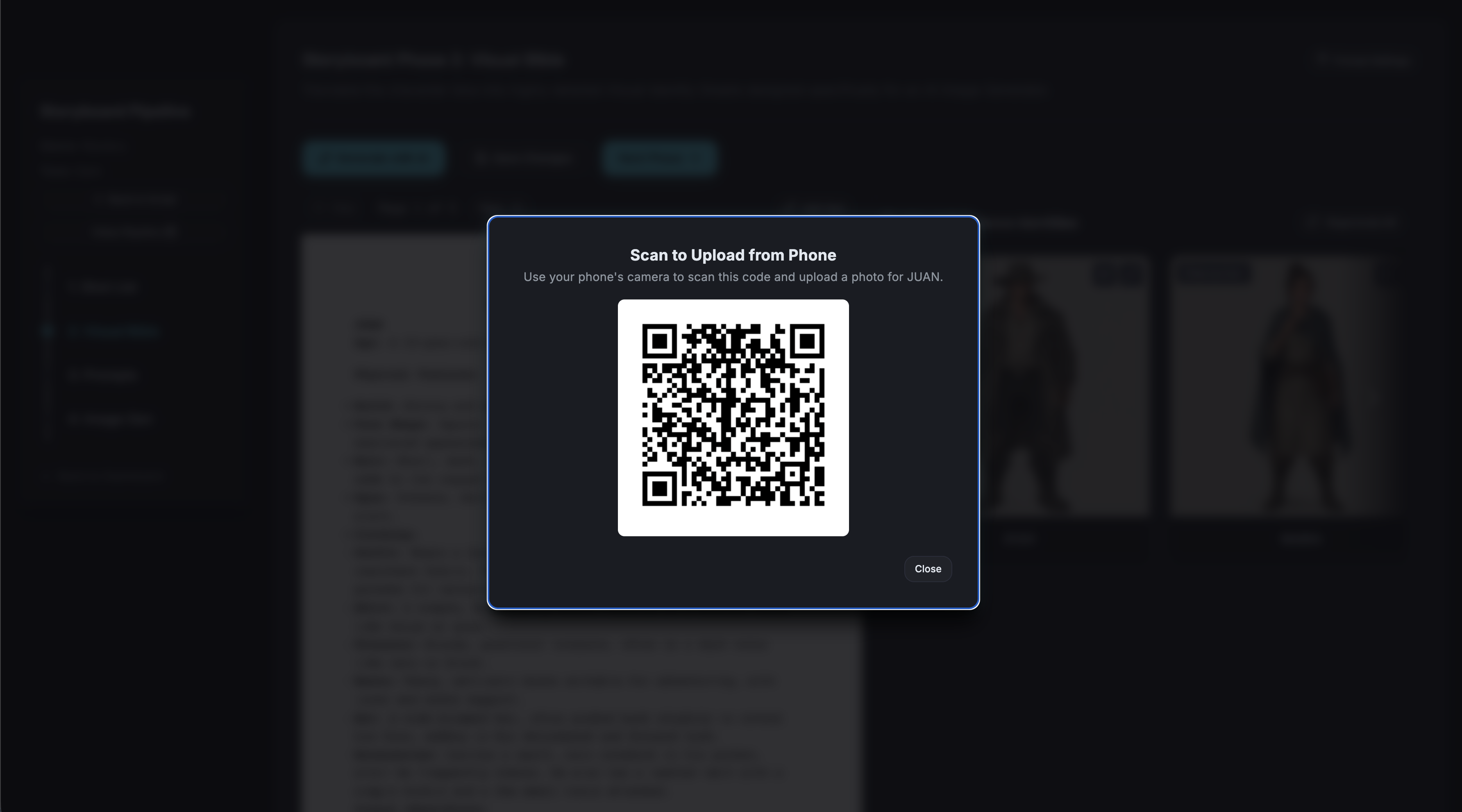
QR code for scketch upload using a phone
-
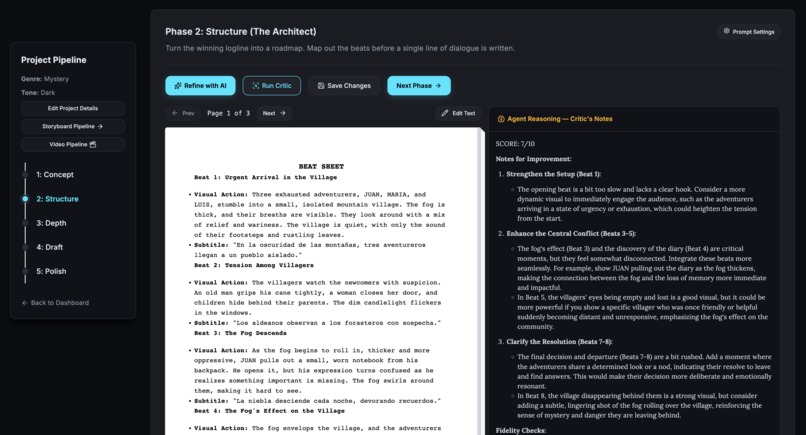
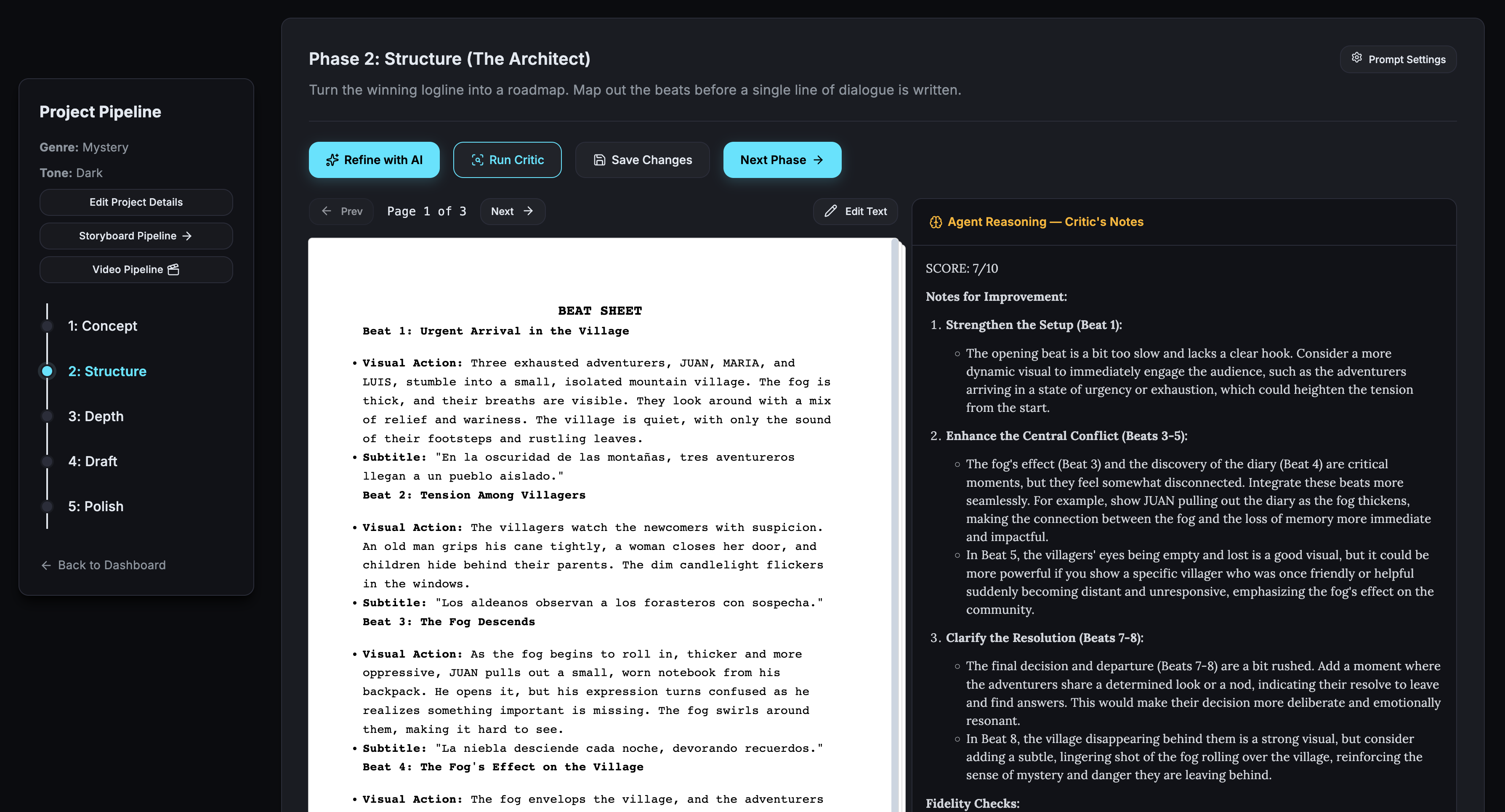
Critic agent to get feedback on writing
-
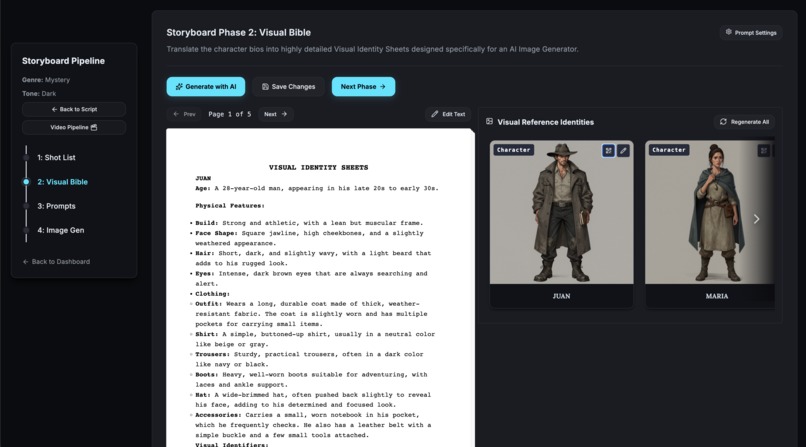
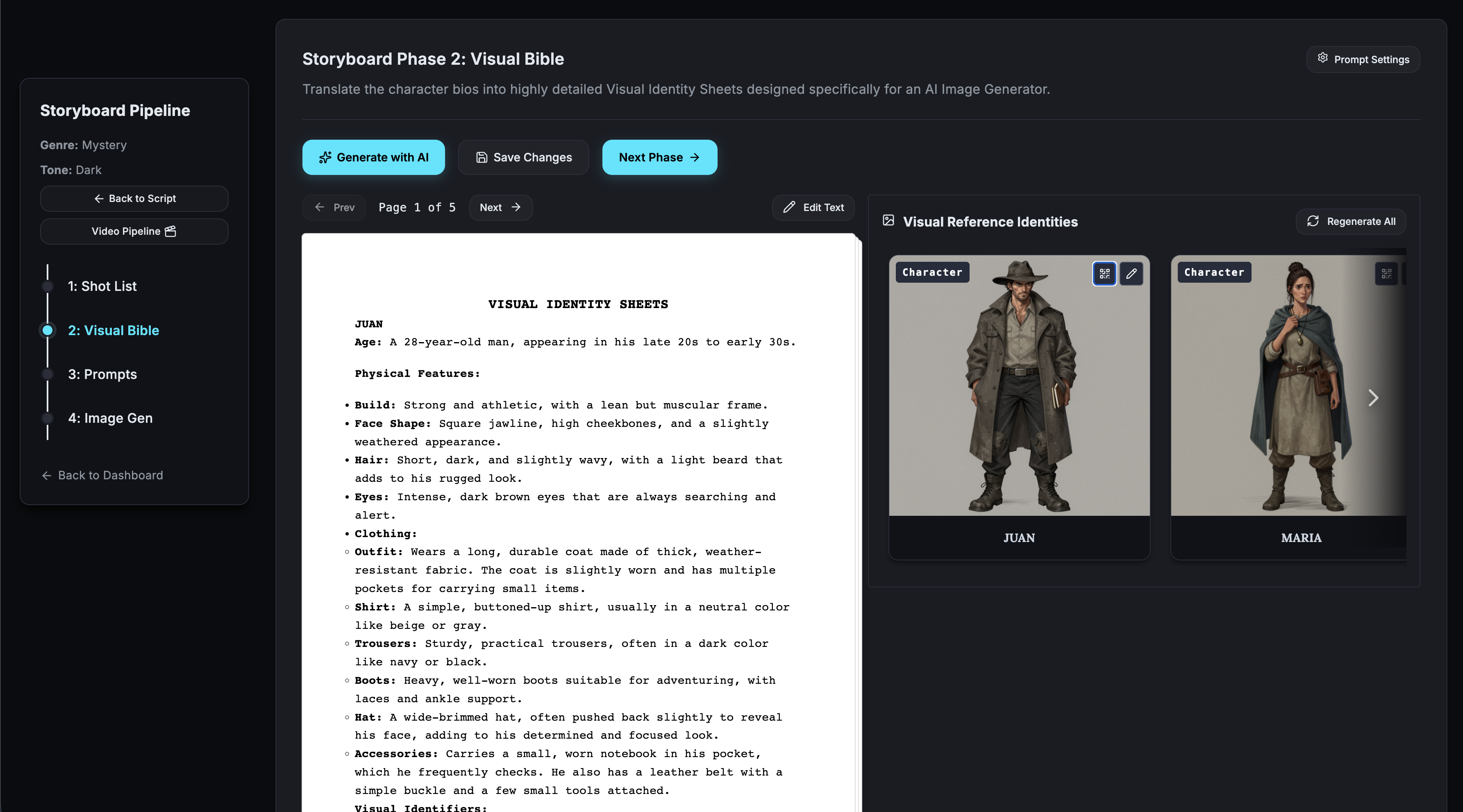
Visual bible for consistent caracter
-
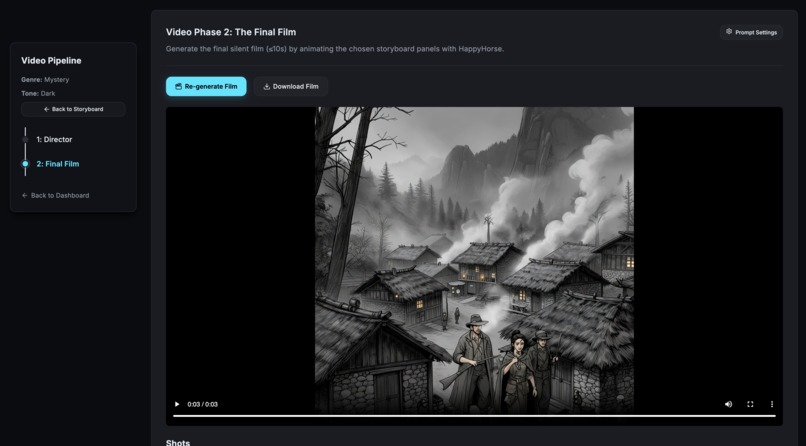
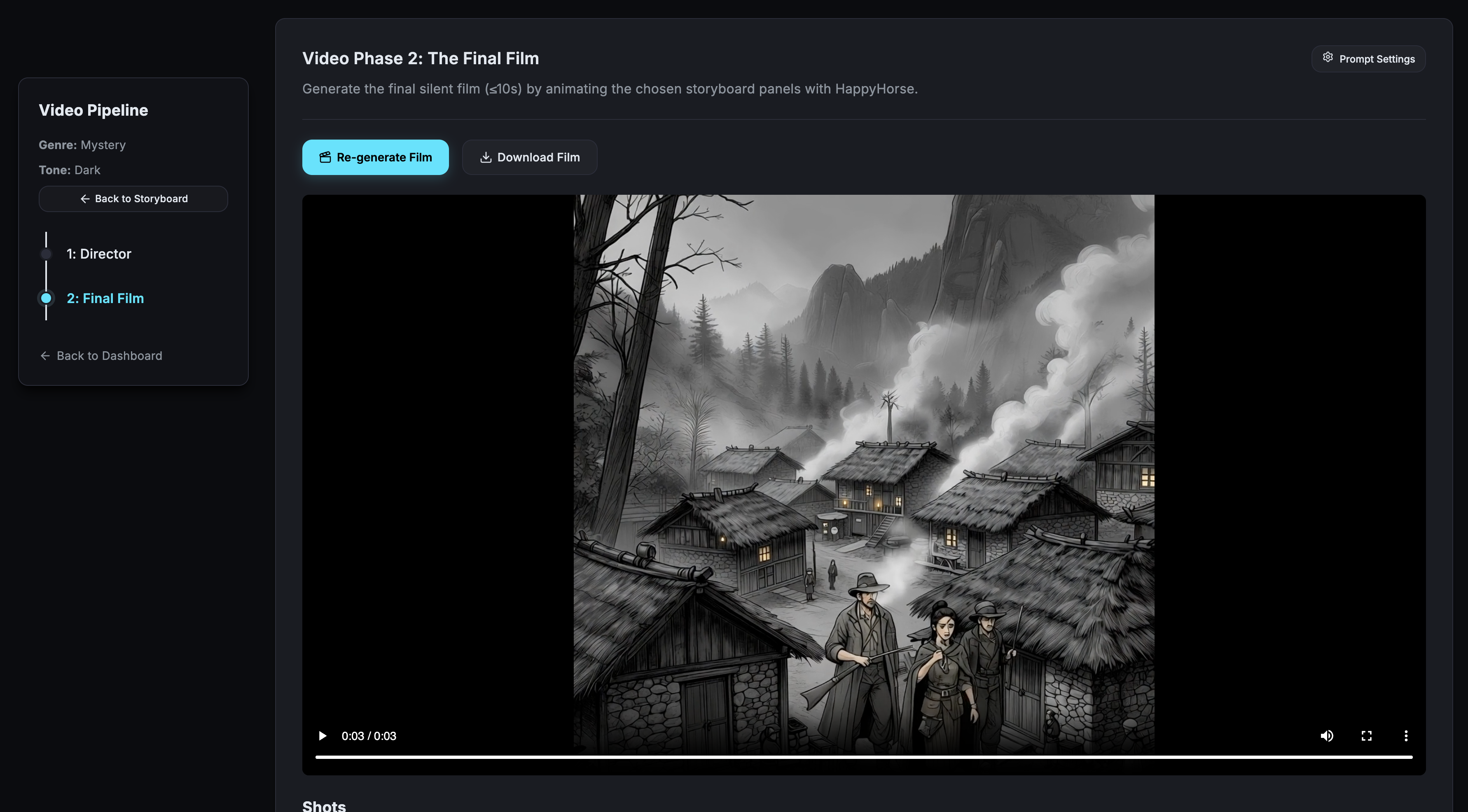
Final render
-
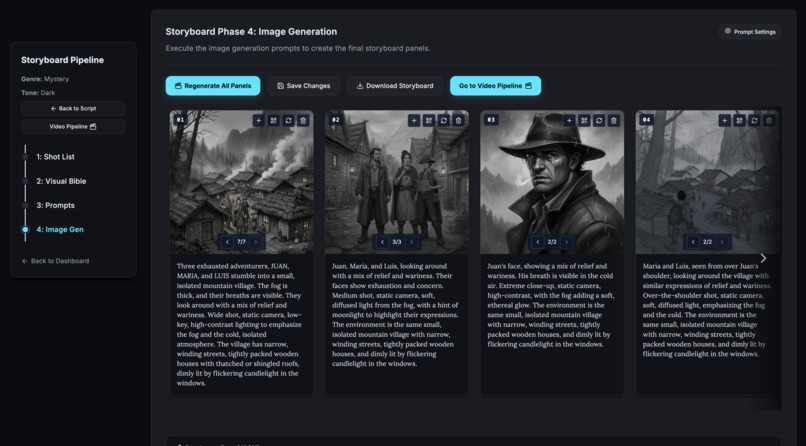
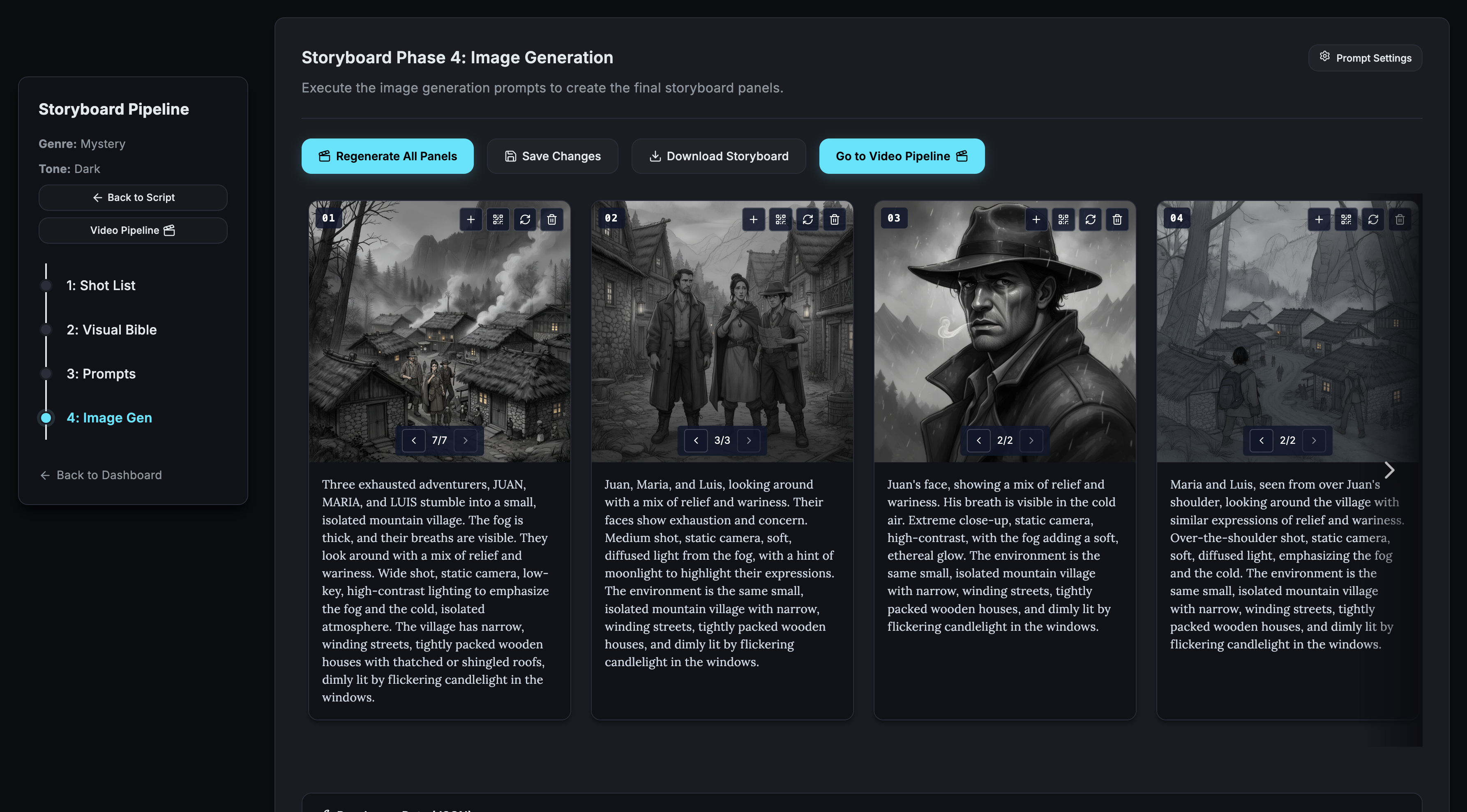
Storyboard view and edit
-
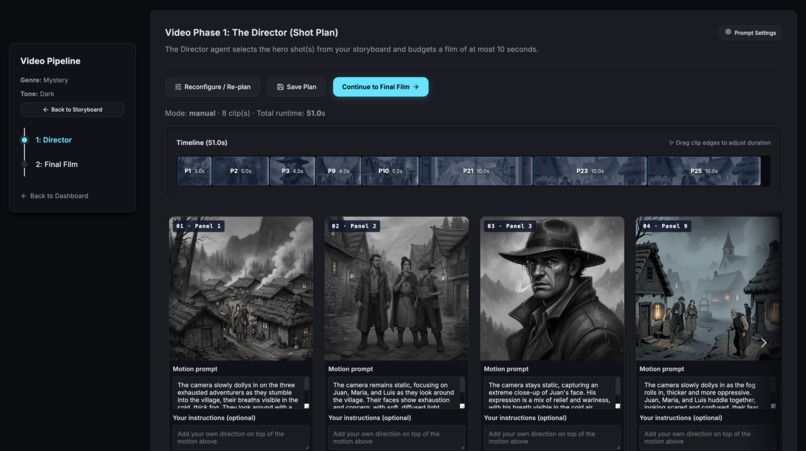
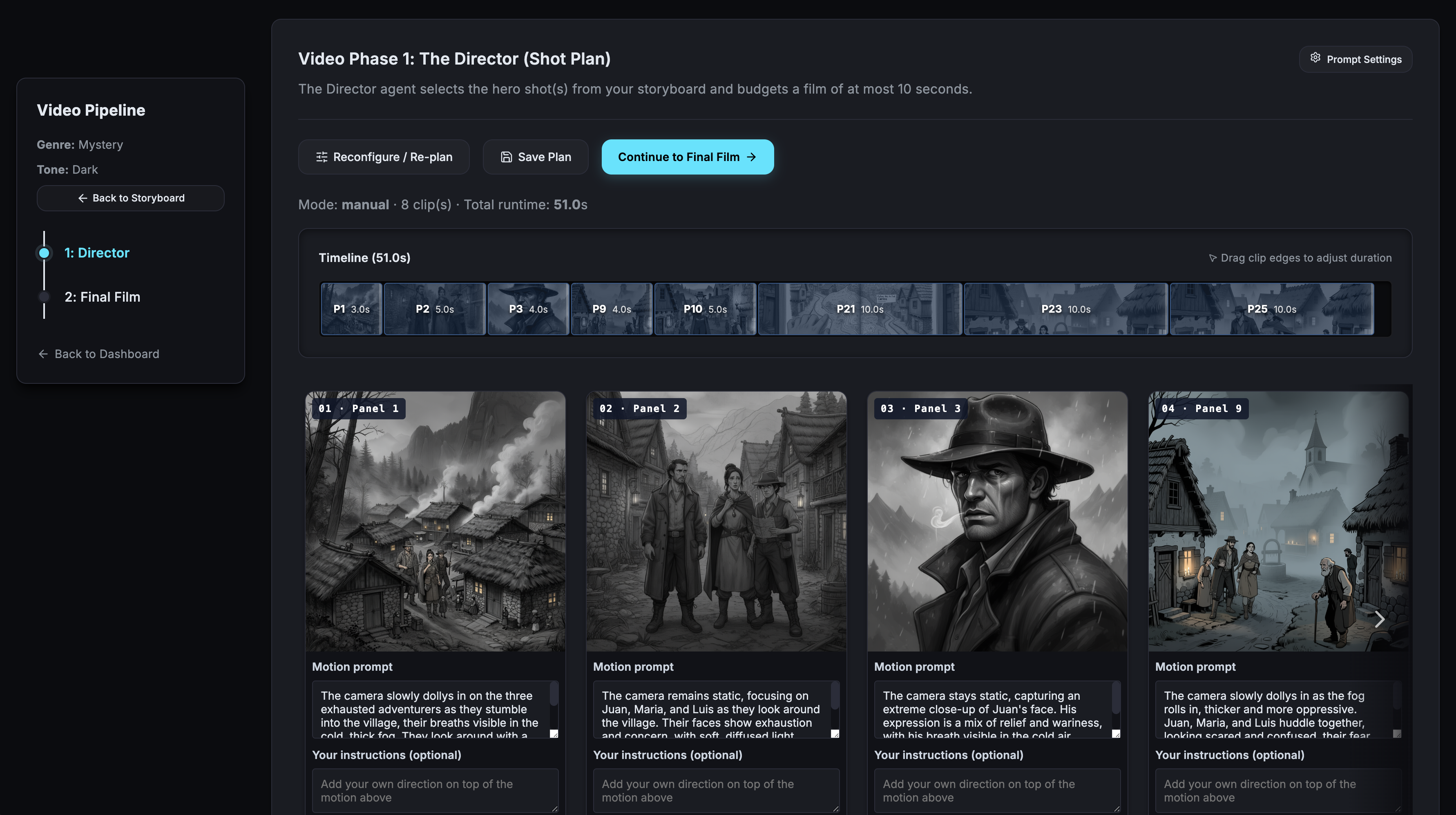
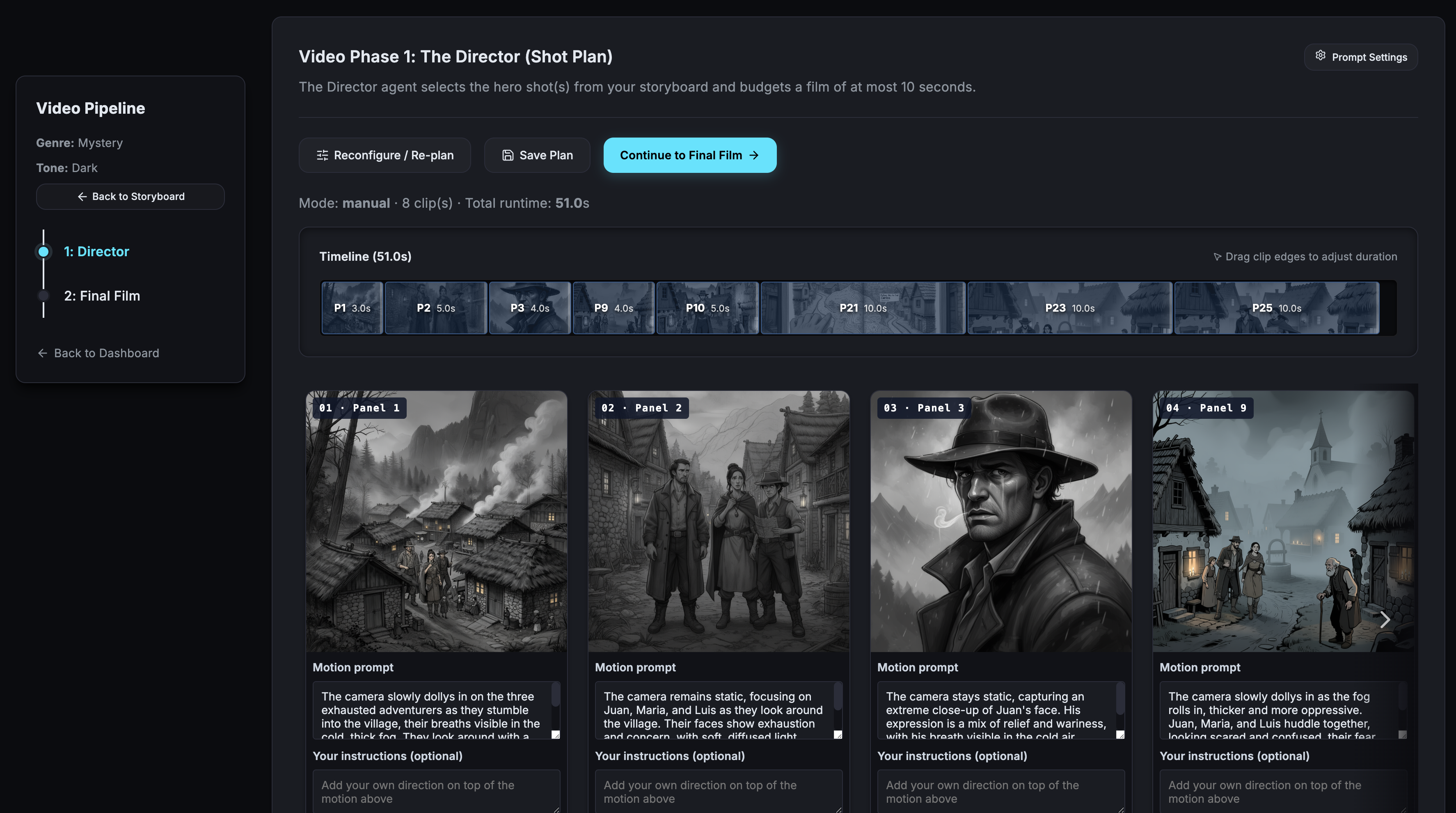
Timeline edit
-
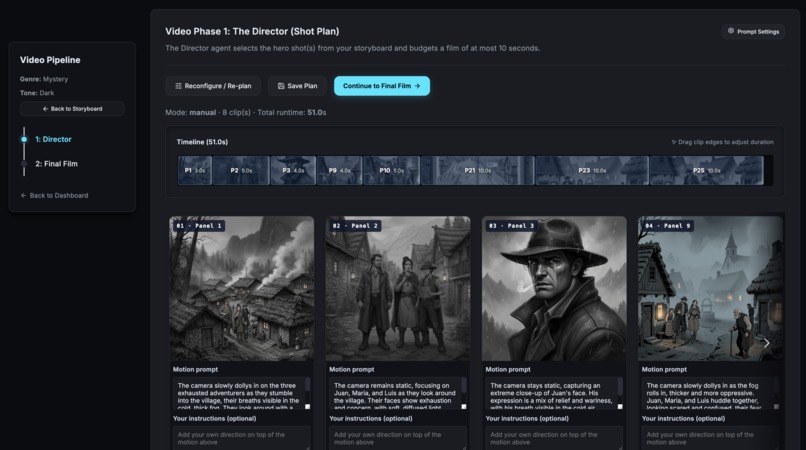
Timeline view
Scenius
About This Project
Developed for the Qwen Hackathon, Scenius leverages multiple models from the Qwen family to orchestrate a complex creative pipeline. Our core goal was to build an application that enhances the traditional workflow of writing and generating storyboards, transforming a simple concept and a few parameters into a structured narrative. Above all, the main driver of our application is keeping the human in the loop: at every single step, the user retains full control to modify the AI's output or bypass it completely.
Inspiration: Who We Are & Why This Matters
We are Néstor and Pedro, the co-founders of Bitsol. We blend artistic vision and technical excellence to create software that preserves memory, respects truth, and drives sustainable progress.
That vision is at the heart of ArchiHUB, an open-source Colombian platform designed to manage, organize, explore, and activate digital archives. It was created for institutions, communities, and organizations that need more than a static storage system: they need flexible tools to catalog information, define metadata structures, preserve diverse formats, and make knowledge accessible over time.
For us, archives are not static containers. They are living ecosystems. Every collection carries stories, decisions, voices, images, silences, and traces of the people and communities behind it.
With Scenius, we wanted to take that mission one step further: If ArchiHUB preserves memory, Scenius gives that memory a way to move.
Scenius explores what happens when archived knowledge becomes the raw material for visual storytelling. Instead of leaving information locked inside documents, transcripts, or metadata, Scenius helps transform that material into micro-films—short visual narratives that allow users to revisit, reinterpret, and communicate memory in an entirely new way.
Methodology & Theoretical Framework
The scriptwriting pipeline is heavily inspired by the 2022 paper "Co-Writing Screenplays and Theatre Scripts with Language Models: An Evaluation by Industry Professionals". While not identical, our workflow adopts a similar stepped progression for script development. The process initiates from a foundational idea (or archival context) and continuously iterates through manual user input or AI assistance.
We also integrated a dedicated "critic" agent that analyzes the draft to highlight narrative gaps or areas of improvement, leaving the final creative decision entirely to the writer. Although the AI assistant remains completely optional, our testing consistently showed that integrating human guidance at early stages dramatically improves the quality of the final output—proving that collaboration yields better results, even for non-professional writers.
What It Does: The Orchestration Pipeline
Scenius turns a story idea into a micro-film by coordinating a group of AI agents across three distinct pipelines. The user starts with a story idea, genre, tone, cast size, and visual style, and the system takes over from there—always waiting for human approval.
1. The Script Pipeline
The multi-agent workflow operates across five specialized stages to build the narrative:
- Concept (The Brainstormer): Establishes the opening narrative segment, outlining the setting, characters, and inciting incident. It is strictly constrained from resolving the plot or escalating the core conflict prematurely.
- Structure (The Architect): Translates the foundational concept into a structured 6-to-12-scene beat sheet, enforcing strict factual fidelity to the original parameters.
- Depth (The Profiler): Generates comprehensive character bibles and defines the narrator's tonal voice. Because Scenius produces silent films, this agent focuses heavily on physical tells, visual motifs, and external, actionable goals.
- Draft (The Scenarist): Converts the beat sheet and character bibles into a complete script. It strictly enforces a "no spoken dialogue" constraint, formatting the output exclusively around visual actions and contextual narrator subtitles.
- Polish (The Script Doctor): Refines the final draft by enhancing subtext, eliminating boilerplate "AI-speak," and tightening the overall pacing to ensure the story fits a compressed 1-minute runtime.
2. The Storyboard & Visual Pipeline
The storyboard generation pipeline is engineered to ensure visual continuity and technical precision, combining structural LLM logic with a tailored image-to-image workflow:
- Shot List (The Master Cinematographer): Converts the polished script into a highly technical, production-ready shot list, detailing specific camera movements, framing, lighting conditions, and precise action blocking for every single frame.
- Visual Bible (The Concept Artist): Establishes the visual identity for characters and environments. It ingests the text descriptions from the Profiler stage—which the writer can freely modify or craft from scratch—and generates a definitive character reference image. This phase strictly enforces an "Age-Lock Rule" to ensure characters maintain structural and age consistency across subsequent generations.
- Prompts (The Prompt Architect): Translates the technical shot list into machine-optimized prompts for the image generation engine. Crucially, this agent is explicitly restricted from describing character physics or features in the text prompt, relying entirely on the visual anchors established in the Visual Bible.
- Image Generation (The Pipeline Engine): Executes the underlying API calls. It automatically injects the generated character reference images alongside a global visual style suffix (e.g., "Pencil Sketch" or "Noir Photography"), ensuring the entire automated storyboard maintains strict visual and stylistic coherence.
Key Feature: The "Sketch-to-Shot" Bridge Late in the development process, our testing revealed a crucial insight: the most effective way to guide the visual AI generation was through image-to-image conditioning rather than text alone. To streamline this, we implemented an intuitive QR-code-based upload system. At any visual generation stage, the user can scan a QR code with their phone to instantly upload a photo of a hand-drawn sketch, a specific location, or a reference person. This is absolutely critical during the Visual Bible phase, allowing users to lock in character features using their own tangible references as the visual foundation.
3. The Animation & Video Pipeline
The final phase focuses on motion and sequencing. Once the storyboard images are rendered, the creator has one final point of intervention before sending the panels to the animation engine. In this stage, the user can selectively choose which frames to animate and precisely define the duration of each shot.
To accommodate different creative workflows, this sequencing process can be entirely automated by a Director Agent or meticulously curated by hand. Once the timeline is finalized, the system triggers the video pipeline to render the final micro-film.
How We Built It
We built Scenius as an extension of ArchiHUB’s broader mission. The project combines three main layers:
- ArchiHUB as the Memory Layer: Instead of starting from an empty prompt, Scenius starts from context. The information stored in ArchiHUB—descriptions, archival records, project notes, audiovisual content, transcriptions—becomes the creative material.
- Multi-Agent Story Orchestration: Inspired by a small creative writers' room, this workflow helps us avoid a single-pass generation process. The goal is not only to generate faster but to generate with more intention.
- Visual Storytelling: A silent micro-film can help communicate what a collection contains, what a project meant, or how a memory can be experienced beyond search results and metadata tables.
Challenges We Faced
- Balancing Autonomy and Control: The AI Showrunner track invited us to think about agents that can handle the short drama creation pipeline. We wanted Scenius to follow that ambition, but without removing the creator from the process.
- Translating Archives into Narratives: Archives are complex, technical, emotional, and fragmented. Turning that into a visual story requires careful decisions to avoid flattening the richness of the original material.
- Meaningful Orchestration: A multi-agent system can easily become a chain of basic model calls. Our challenge was to make each step meaningful, ensuring critique, refinement, and visual planning all contributed to a superior final result.
- Product Vision: We had to think about Scenius as part of ArchiHUB, not as a separate demo. That meant designing around real product architecture: modularity, plugins, and user control.
What's Next? (Can we achieve this using Qwen?)
Yes! Scenius is only the first step toward a richer way of activating memory through video.
Today, Scenius generates a refined animated storyboard. In future versions, utilizing advanced image-to-image and video-to-video Qwen models, users will be able to record their own reference video: a gesture, a place, a movement, or a performance. Scenius will then use that human-made input as part of the generation process, allowing the final video to remain more faithful to the emotional, cultural, and visual intention behind the archive.
We are not fully there yet, but the path is clear: more control, more context, and more respect for the people who carry the memory.
Conclusion & Key Takeaways
The development of Scenius reinforced a fundamental truth about AI in creative workflows: attempting to fully automate creative problem-solving by excluding the human element consistently produces shallow, generic results.
Through Scenius, we learned that:
- Augmentation over Automation: Optimizing for human steering yields vastly superior storytelling and visual quality.
- Memory Requires Activation: Preserving information is essential, but people need ways to explore and reinterpret what has been preserved. AI-generated video can become a new interface for archives.
- Adaptability: To ensure long-term flexibility, our pipeline is designed so system prompts can be tailored to fit the specific needs, tones, and artistic constraints of any individual project.
Why Scenius Matters
At Bitsol, we care about building tools that help people work with knowledge in deeper ways. With Scenius, memory is no longer something that only sits in a database. It can be revisited. It can be shaped. It can become a visual narrative. It can move.
And most importantly, it can move with the creator still guiding the path.



Log in or sign up for Devpost to join the conversation.