-
-
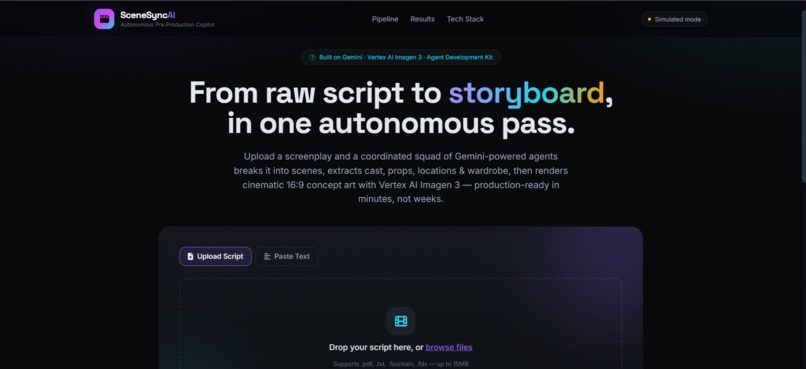
Script to Storyboard
-
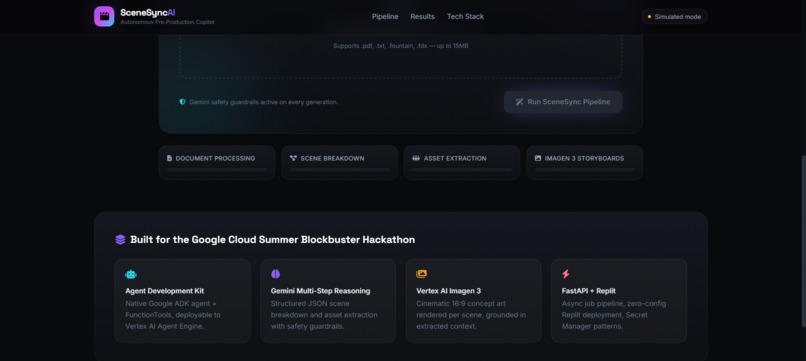
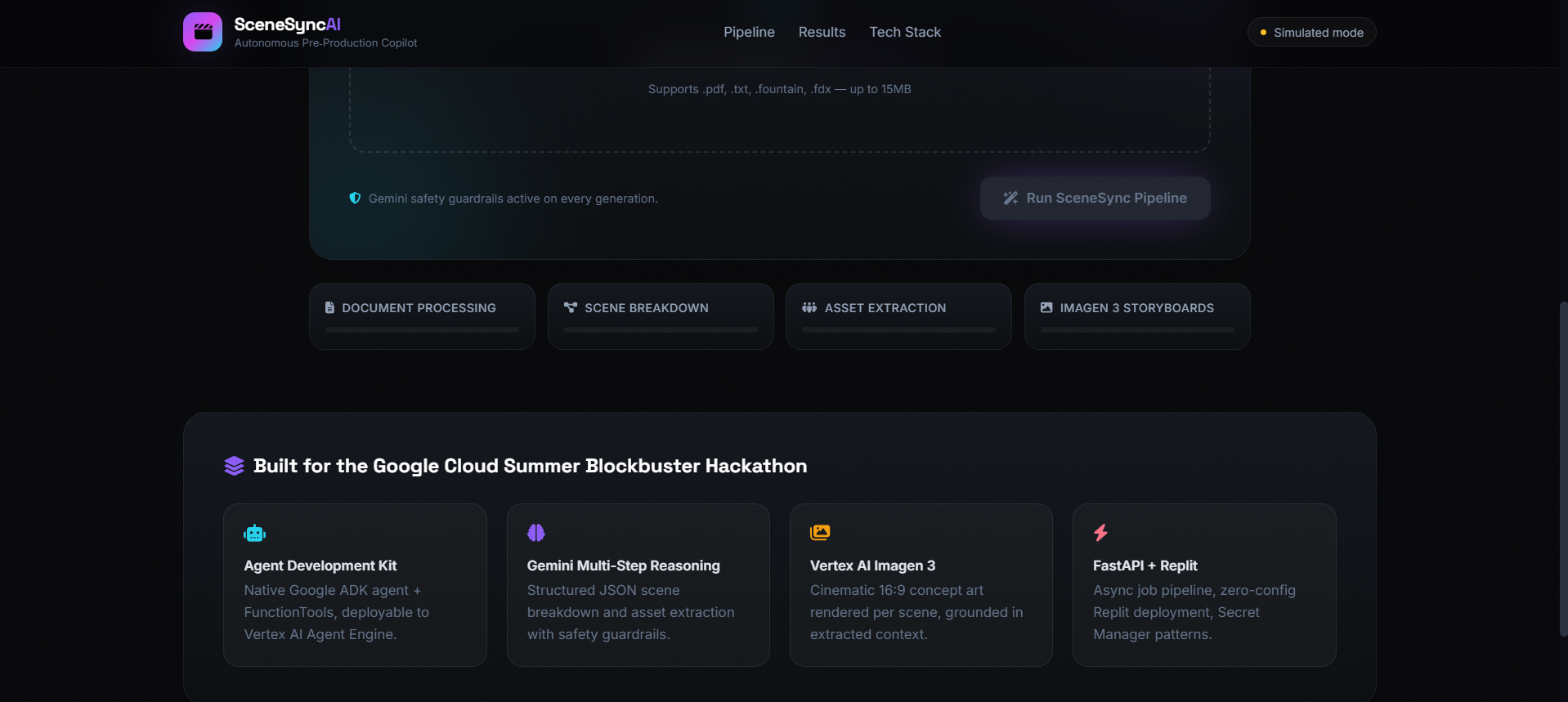
Agent Development Kit, Gemini Multi-Step Reasoning, Vertex AI Imagen 3, FastAPI + Replit
Inspiration
Creators often waste countless hours manually aligning scenes, processing transcripts, and matching media files. I wanted to build a seamless tool that takes the heavy lifting out of media organization, letting creators focus purely on storytelling.
What it does
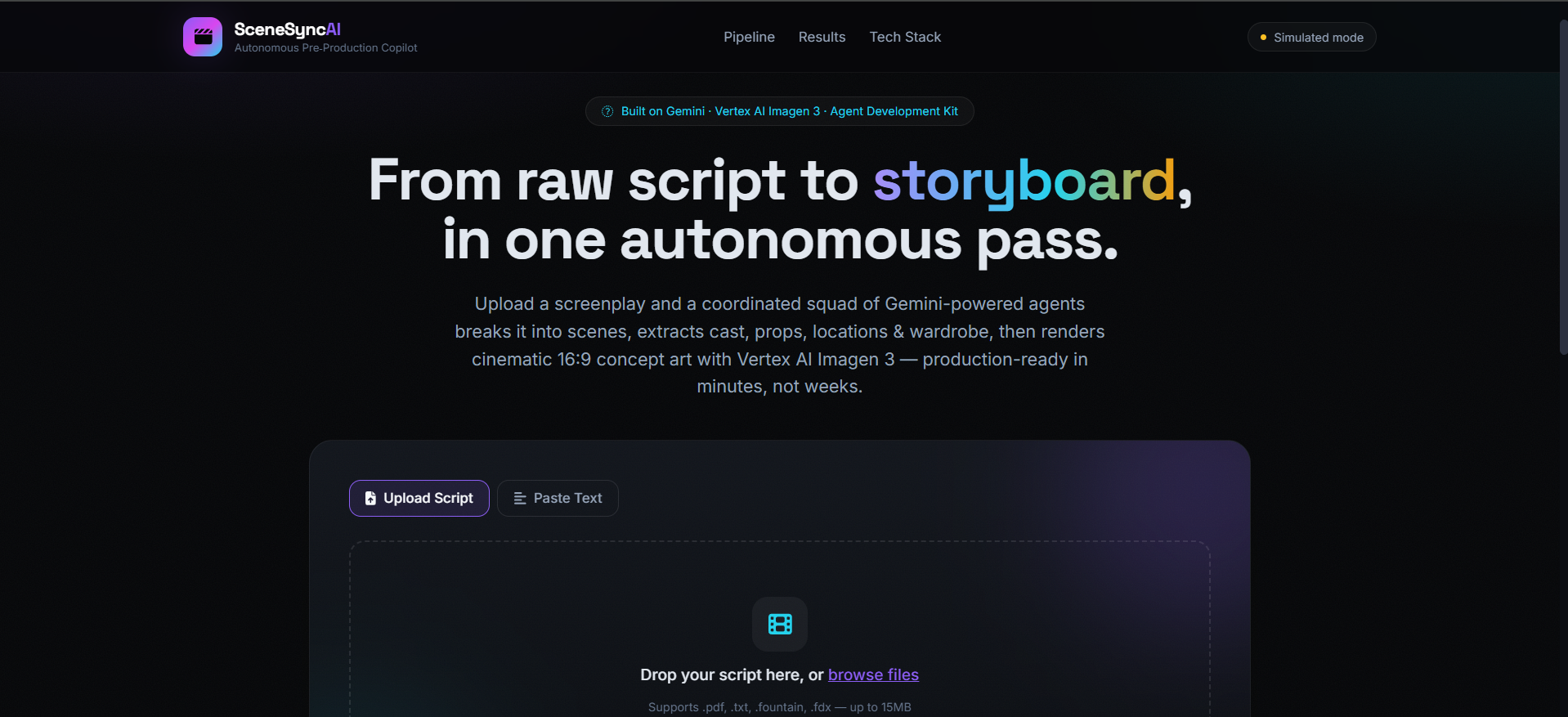
SceneSync AI ingests media files and transcripts, automatically parsing the data to match and synchronize timeline scenes accurately. It streamlines content workflows by connecting text descriptions directly to the right video and audio assets.
How I built it
I developed a robust architecture combining a backend processing engine with an intuitive interface to handle file uploads, text parsing, and automated timeline mapping smoothly.
Challenges I ran into
Handling diverse file formats and ensuring the text-to-scene matching stayed precise without lagging was a major hurdle. I fine-tuned my parsing logic to optimize file processing speeds and deliver clean alignment results.
What I learned
I mastered advanced file handling, data processing pipelines, and building cohesive, practical tools that solve real-world content creation bottlenecks.
What's next
- Build a Web Interface: Connect the backend engine to a clean UI so users can drag, drop, and test files interactively.
- Automated Subtitle Generation: Integrate speech-to-text APIs to automatically generate and sync captions alongside video timelines.
- Optimize Processing Speeds: Implement multithreading and background task queues to handle large video files efficiently.


Log in or sign up for Devpost to join the conversation.