-
-
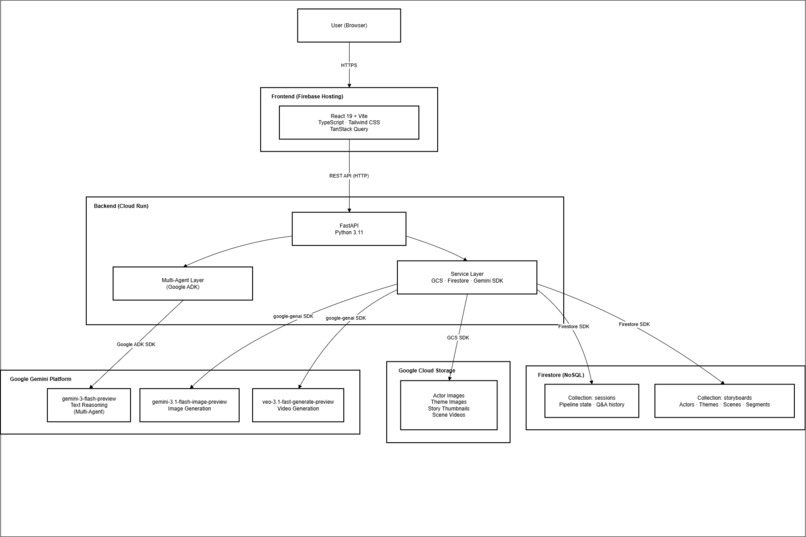
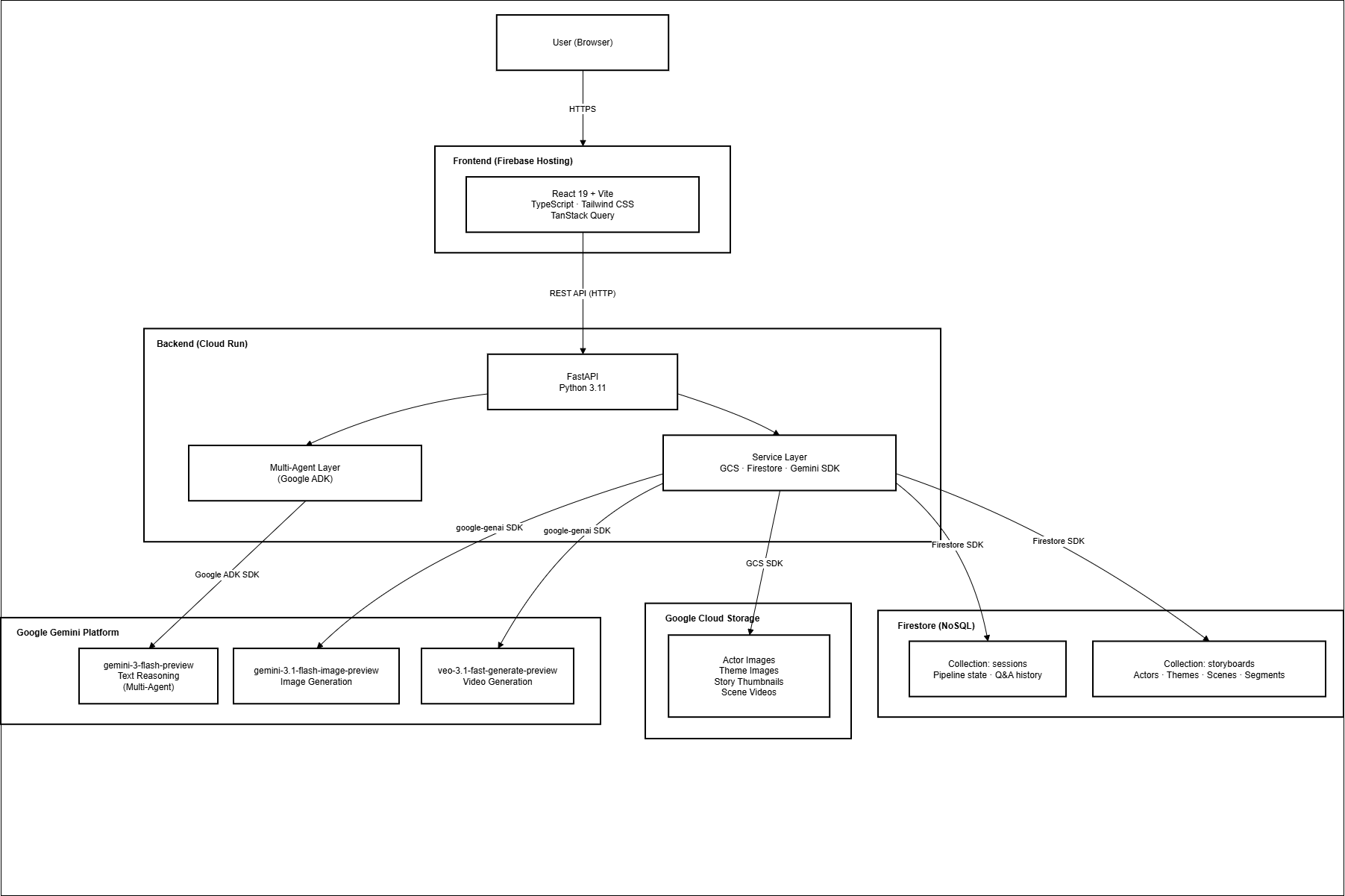
architecture diagram
-
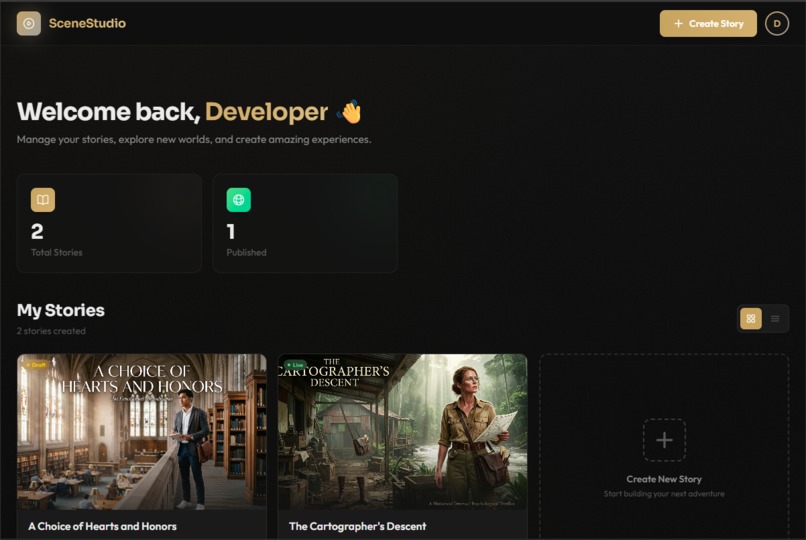
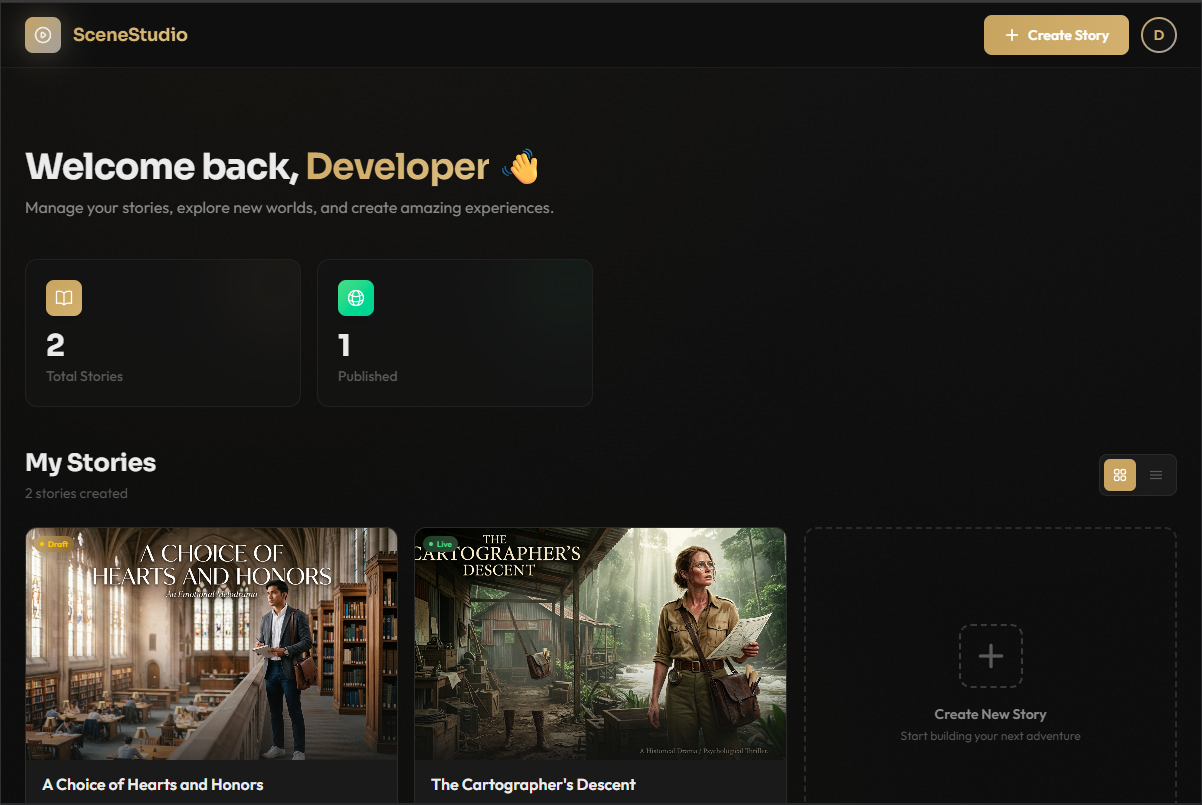
app preview - dashboard
-
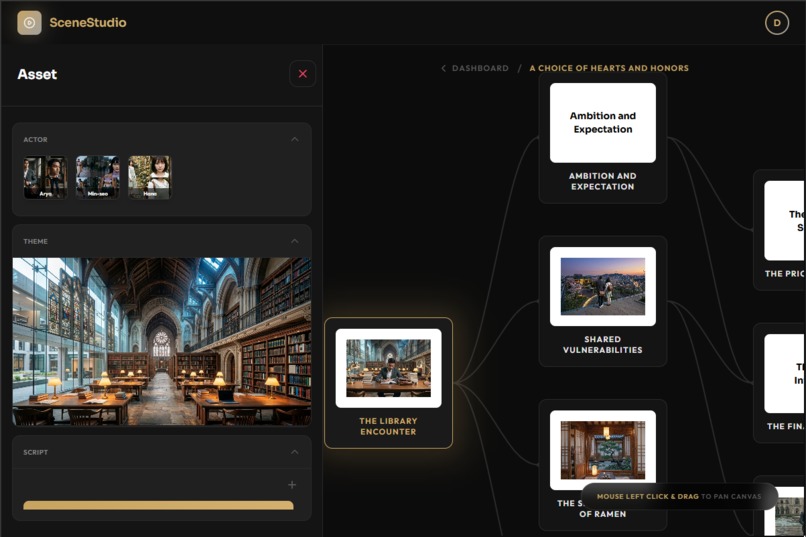
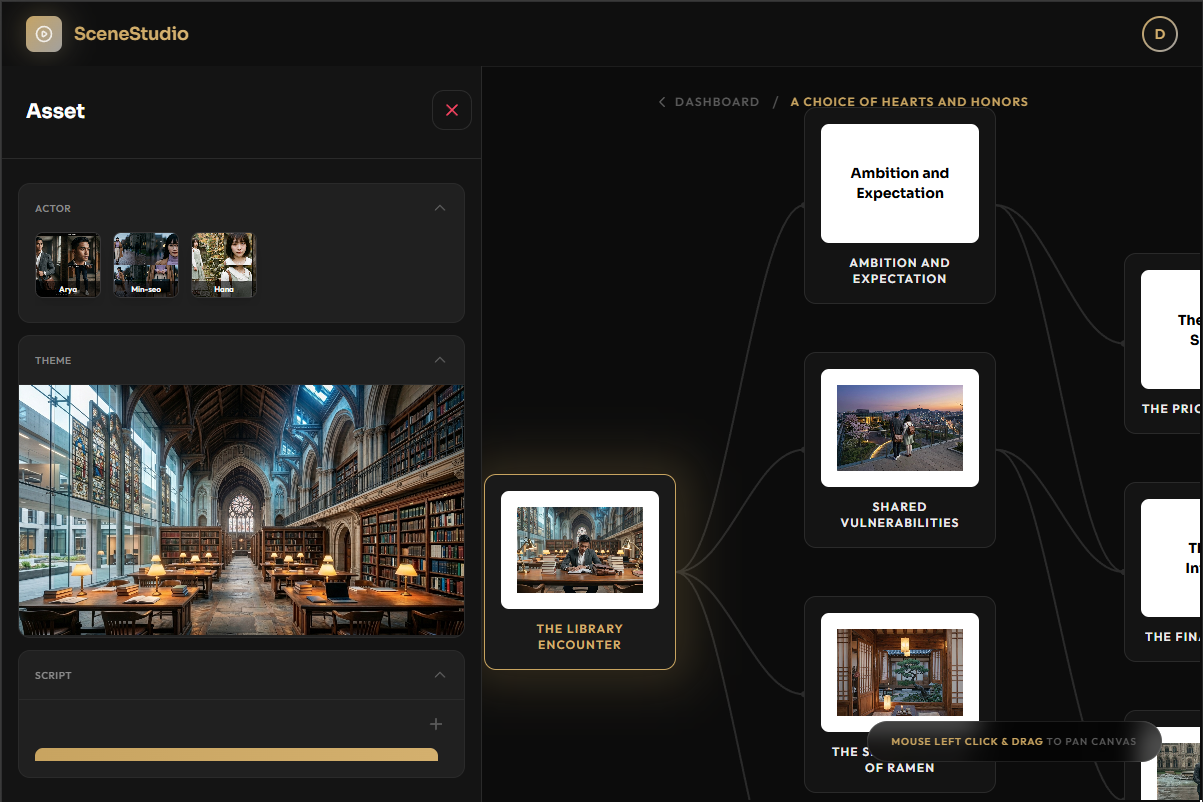
app preview - scene dashboard
-
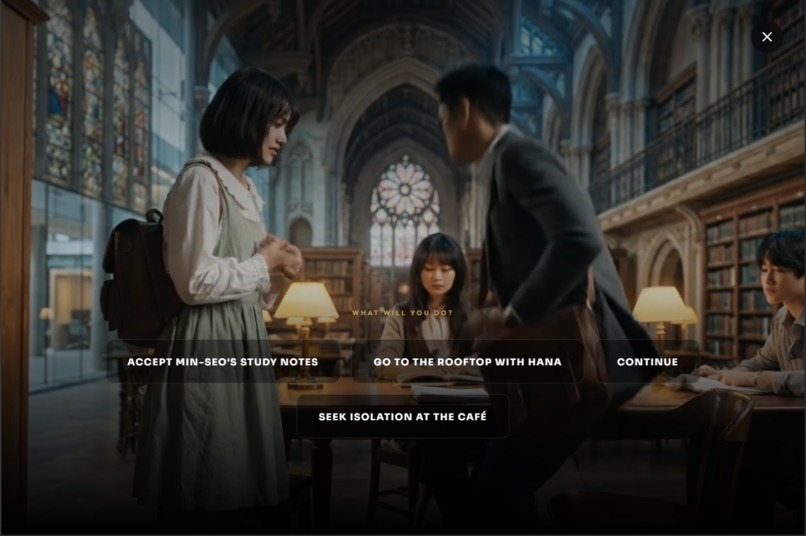
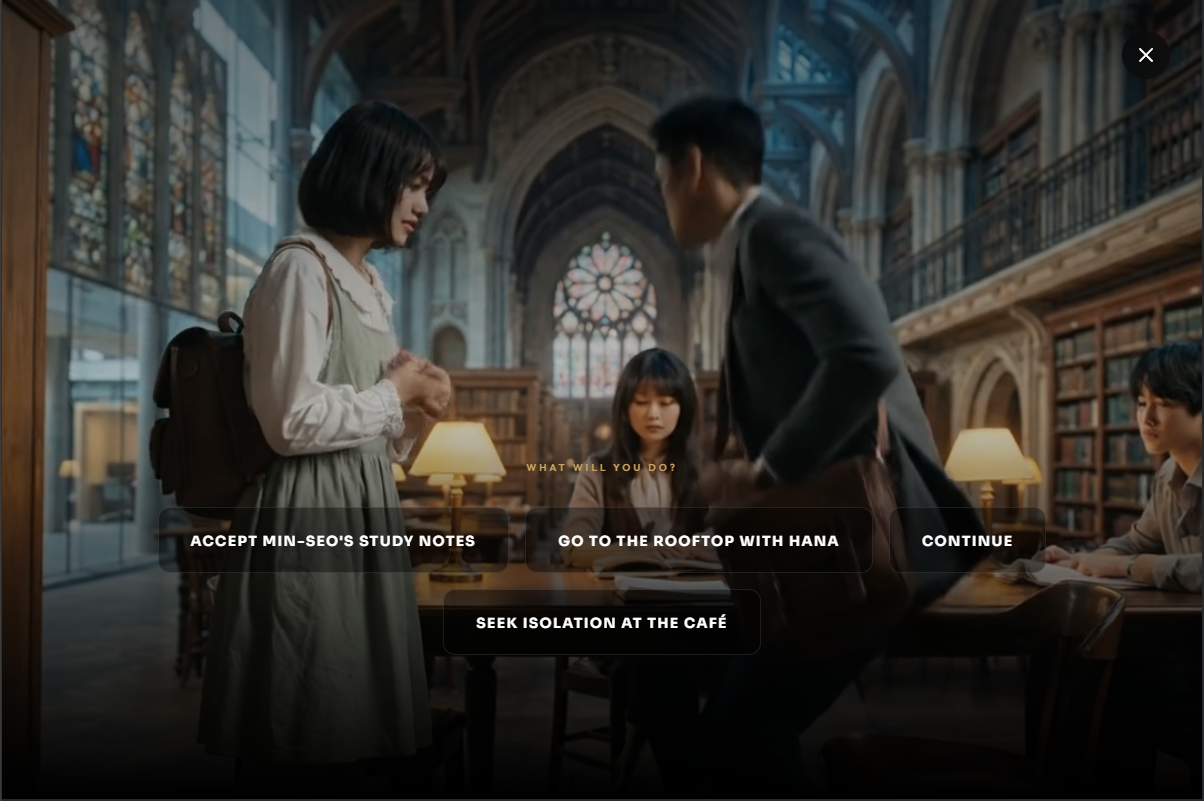
app preview - scene
Inspiration
Our inspiration came from two worlds: game creation platforms like Roblox Studio and narrative-driven visual novel engines. Creating visual novels traditionally requires a large number of assets, including artwork, scripts, and animations, which can be extremely time-consuming and expensive to produce. We wanted to build a platform where anyone could become a storyteller or game creator without needing a full production team.
This idea led us to design a system similar to a visual novel creation studio, where creators can generate entire story scenes using AI. Instead of manually producing every asset, creators can use AI to generate scripts, images, and cinematic videos that bring their stories to life.
What it does
SceneStudio is a creative platform that allows creators to build cinematic visual novel experiences using AI-generated assets. Instead of manually creating scripts, artwork, and animations, creators can generate complete story scenes that combine narrative text, images, and videos.
Using Gemini’s multimodal capabilities, the platform produces scenes where storytelling and visual elements are generated together. Creators can define characters, themes, and story ideas, and the system generates the supporting assets needed to bring the scene to life.
The platform works similarly to a visual novel creation studio, where creators assemble scenes into a story that players can experience. This approach dramatically reduces the time and resources needed to produce visual storytelling content, making it possible for smaller teams or independent creators to build narrative-driven games.
How we built it
We built SceneStudio using Google Cloud and Gemini’s multimodal capabilities, combining several AI components into a structured creative pipeline.
First, we designed a multi-agent orchestration system where different agents handle specific tasks such as story generation, asset generation, and scene assembly. This allows the system to produce structured outputs instead of isolated AI responses.
For visual generation, we used image and video generation models with ingredient references. These references allow us to provide example images of characters and themes so the generated videos maintain a more consistent visual identity across scenes.
To overcome the short duration limits of generated videos, we implemented video extension techniques that allow scenes to continue beyond the initial generation length. This makes it possible to produce longer cinematic sequences suitable for storytelling.
Finally, we combined these outputs using Gemini’s interleaved multimodal output, enabling text, visuals, and video to be generated together as a cohesive storytelling experience.
Challenges we ran into
The biggest challenges were related to video generation constraints and consistency. 1. Rate limits Video generation APIs were limited to a small number of requests per day, which made experimentation difficult for a system that generates multiple scenes per story.
2. High generation costs Video pricing is calculated per second, which means generating longer scenes can become expensive. For example, generating a single scene with multiple video segments can cost several dollars.
3. Visual inconsistency and hallucination Like many generative systems, video outputs can occasionally produce artifacts such as incorrect anatomy or inconsistent characters. To reduce these issues we used reference images through ingredient inputs so that actors and themes remain visually aligned across scenes. However, the ingredient system only allows a limited number of reference images, which makes maintaining consistency for many characters more challenging.
Accomplishments that we're proud of
One of our biggest accomplishments was successfully building a working multimodal storytelling pipeline that generates complete visual novel scenes rather than isolated assets.
We were able to orchestrate multiple AI agents to collaboratively produce scripts, visuals, and cinematic videos that form a coherent scene. This demonstrates how multimodal AI can function as a creative production tool rather than just a content generator.
Another accomplishment was improving visual consistency across generated videos by using ingredient-based reference inputs for actors and themes. This significantly reduced inconsistencies and helped maintain recognizable characters throughout a story.
Despite the strict rate limits and high generation costs of video models, we were still able to prototype a system capable of generating extended story scenes using video extension techniques.
Overall, we are proud of building a platform that demonstrates how AI can dramatically lower the barrier to creating cinematic storytelling experiences, enabling creators to produce visual novel content faster and more affordably.
What we learned
During development we learned several key technical concepts: 1. Multi-agent orchestration Instead of relying on a single model call, we designed a pipeline where multiple AI agents collaborate to produce structured story scenes.
2. Consistent video generation with reference inputs We used video generation features such as ingredient references, which allow images to be used as visual anchors. By providing reference images for actors and themes, we were able to significantly improve consistency in generated scenes.
3. Extending generated video scenes Because the base video generation was limited to short durations, we used video extension techniques to lengthen scenes and produce more cinematic storytelling sequences. These techniques allowed us to build a system that generates cohesive story scenes rather than isolated AI outputs.
What's next for SceneStudio
We plan to expand SceneStudio from a prototype into a more complete platform for AI-powered visual storytelling.
One of the next steps is to make all generated assets fully editable and customizable. Creators will be able to modify actors, themes, and scenes after generation so they can refine characters, adjust visual styles, and iterate on story details without regenerating everything from scratch.
We also want to introduce multiple storytelling templates. The current prototype focuses on a cinematic visual novel format where scenes are presented as short videos, inspired by games like Five Hearts Under One Roof. In the future, we plan to support other visual novel formats, such as conversation-driven templates similar to Ace Attorney, where storytelling relies more on dialogue, character portraits, and interactive visual elements instead of cinematic footage.
Another direction is adding interactive gameplay mechanics inside scenes. For example, players could collect items or clues that influence story progression, unlocking alternative paths and branching narratives. This would transform SceneStudio from a linear storytelling tool into a platform capable of creating more dynamic narrative experiences.
Finally, we aim to significantly improve the UI and UX of the platform so that creators can design stories more intuitively. This includes better scene editing tools, clearer workflow for generating assets, and a smoother creation experience that feels closer to professional game development tools.

Log in or sign up for Devpost to join the conversation.