

## Inspiration
Medical drama consultants charge $5,000+ per episode and still ship errors that trend on medical Twitter the next morning. Across television, the same three mistakes repeat in almost every
medical show: the wrong drug for the wrong rhythm, physiologically impossible recoveries, and critical procedures dramatized as if they finished in six seconds.
The consultants aren't incompetent—there are simply too many scenes, too many episodes, and too many parallel productions for any single clinician to audit line-by-line at the speed modern
television ships. That's not a labor shortage; it's an orchestration problem.
SceneMedic is what happens when practicing clinicians and informatics engineers build the advisor Hollywood actually needs: an agentic multi-agent system that audits every scene against peer-
reviewed clinical literature, verifies character history against prior season canon, and generates voice-preserving rewrites in the writer's own dialogue style.
## What it does

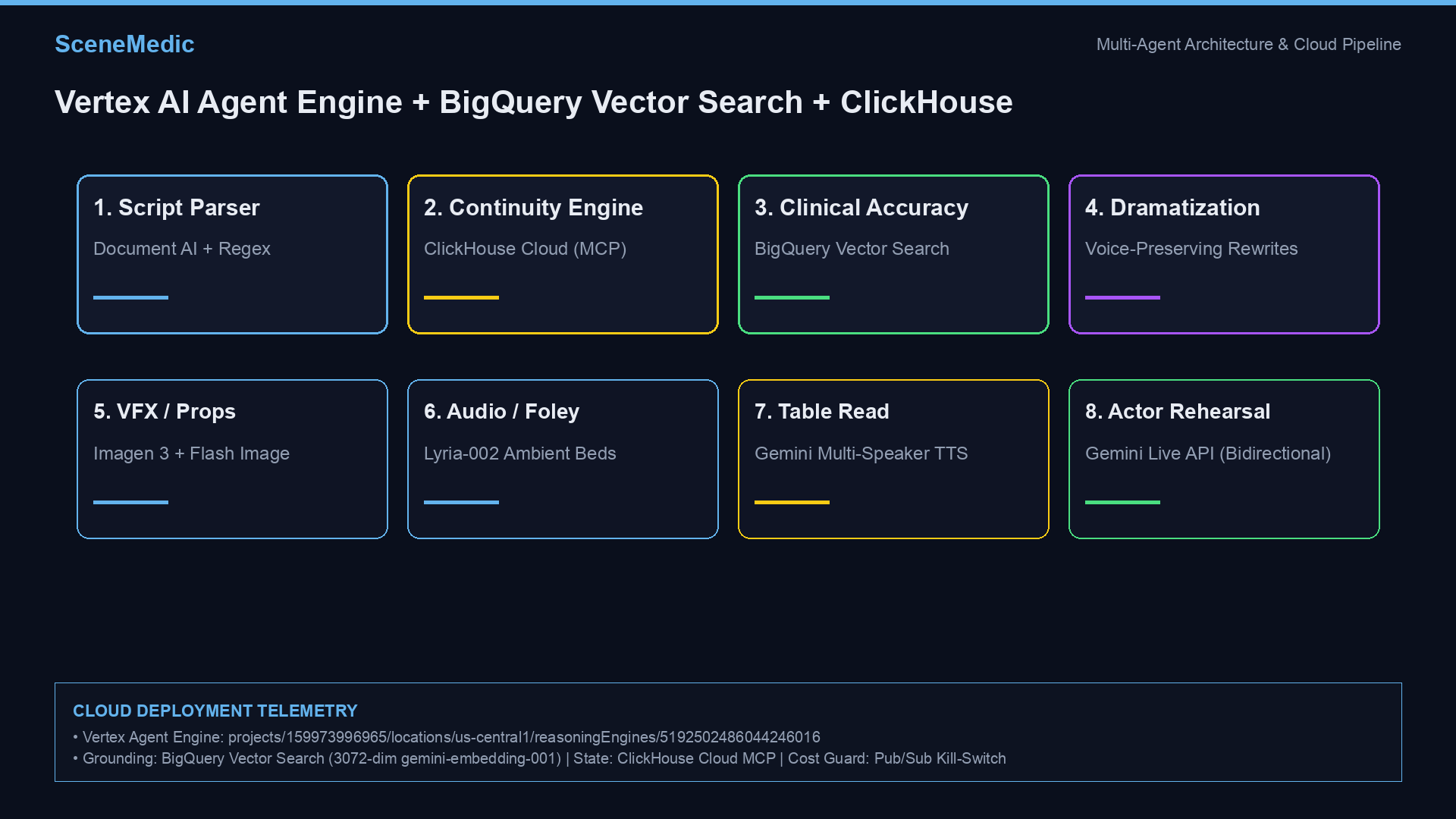
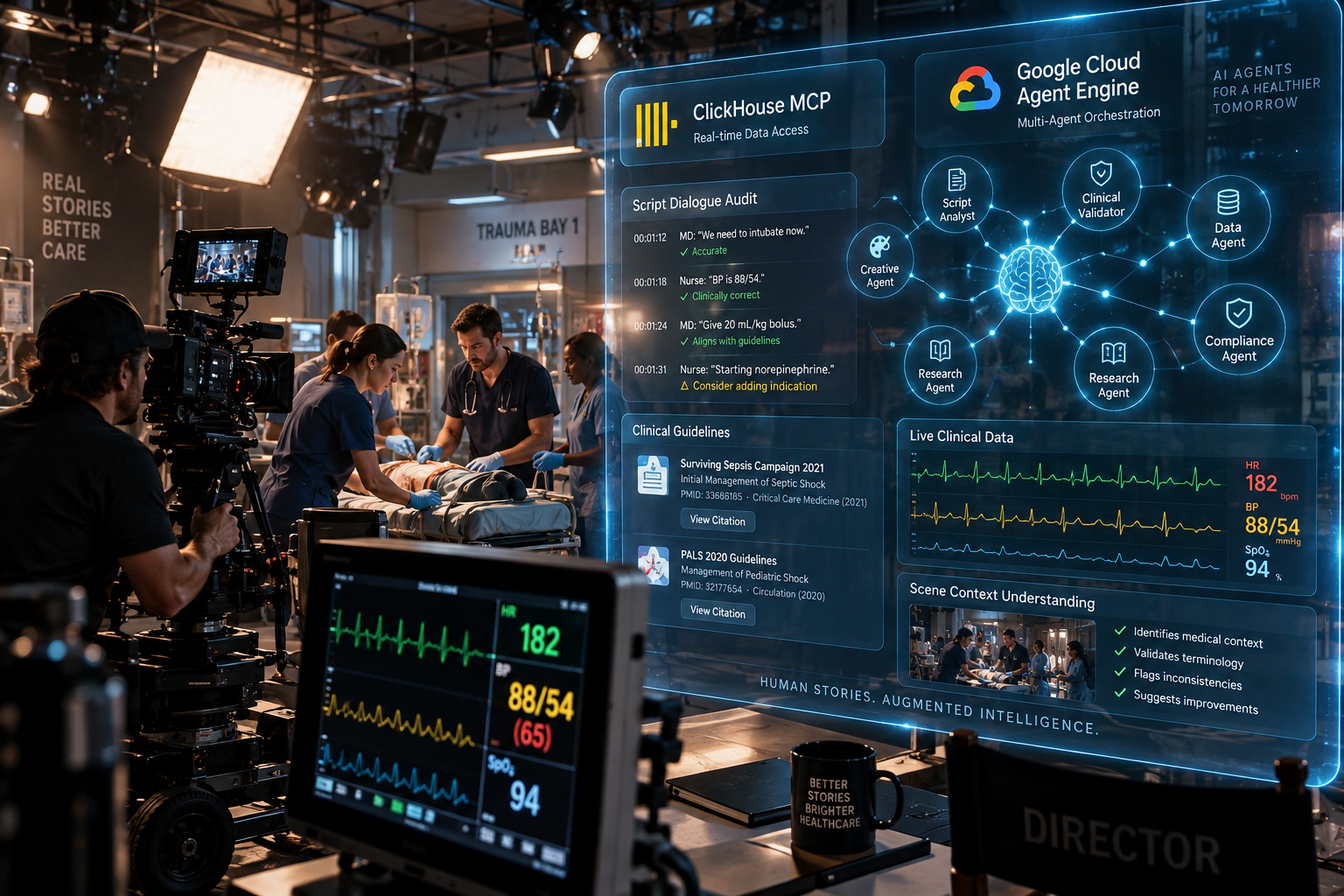
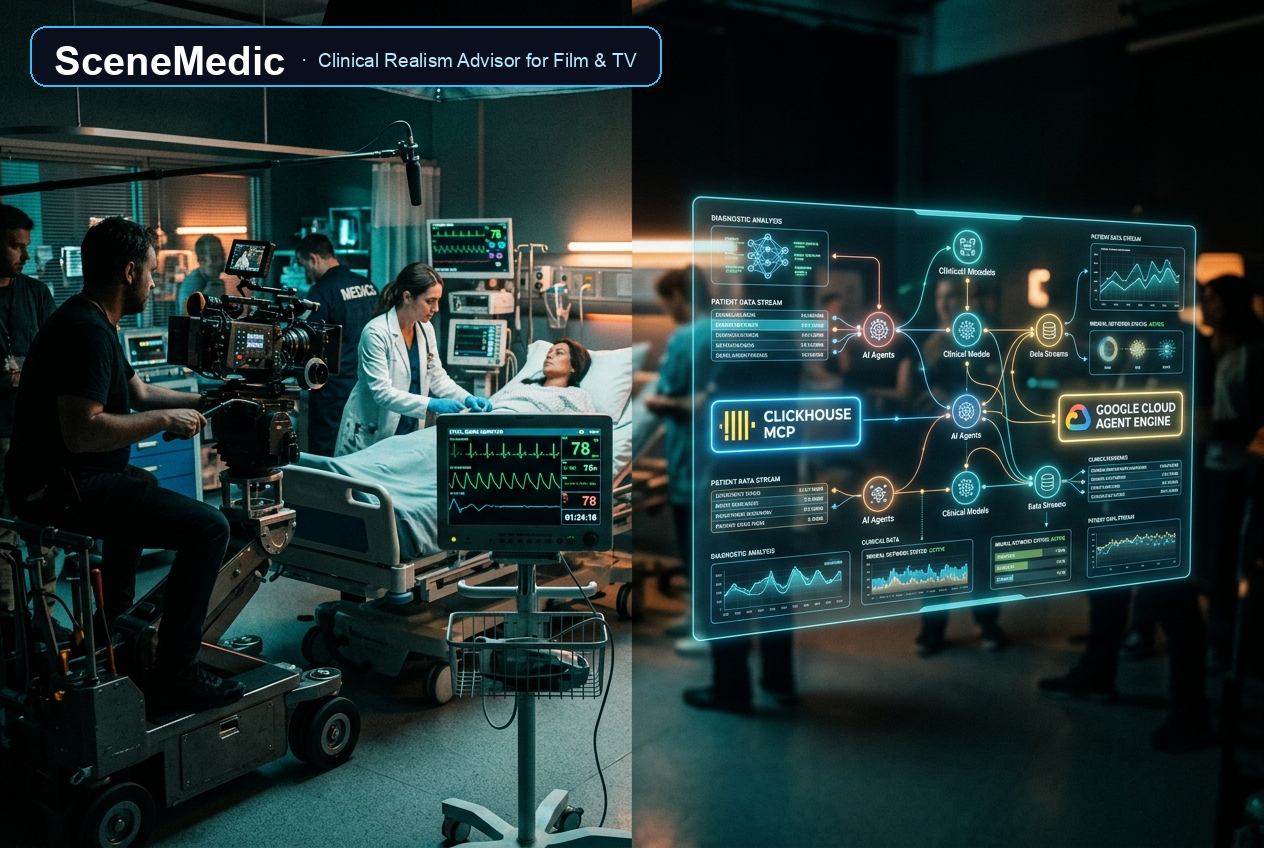
SceneMedic ingests a script scene (PDF, Fountain, or plain text) and runs it through a six-agent pipeline powered by Google ADK and Vertex AI Agent Engine:

1. **Script Parser Agent:** Document AI deconstructs scenes into characters, dialogue, vital signs, and procedures.
2. **Continuity Engine:** Queries ClickHouse Cloud (via the official ClickHouse MCP server and native driver) for character canon: prior labs, chronic conditions, and past episodes.
Contradictions are instantly flagged.
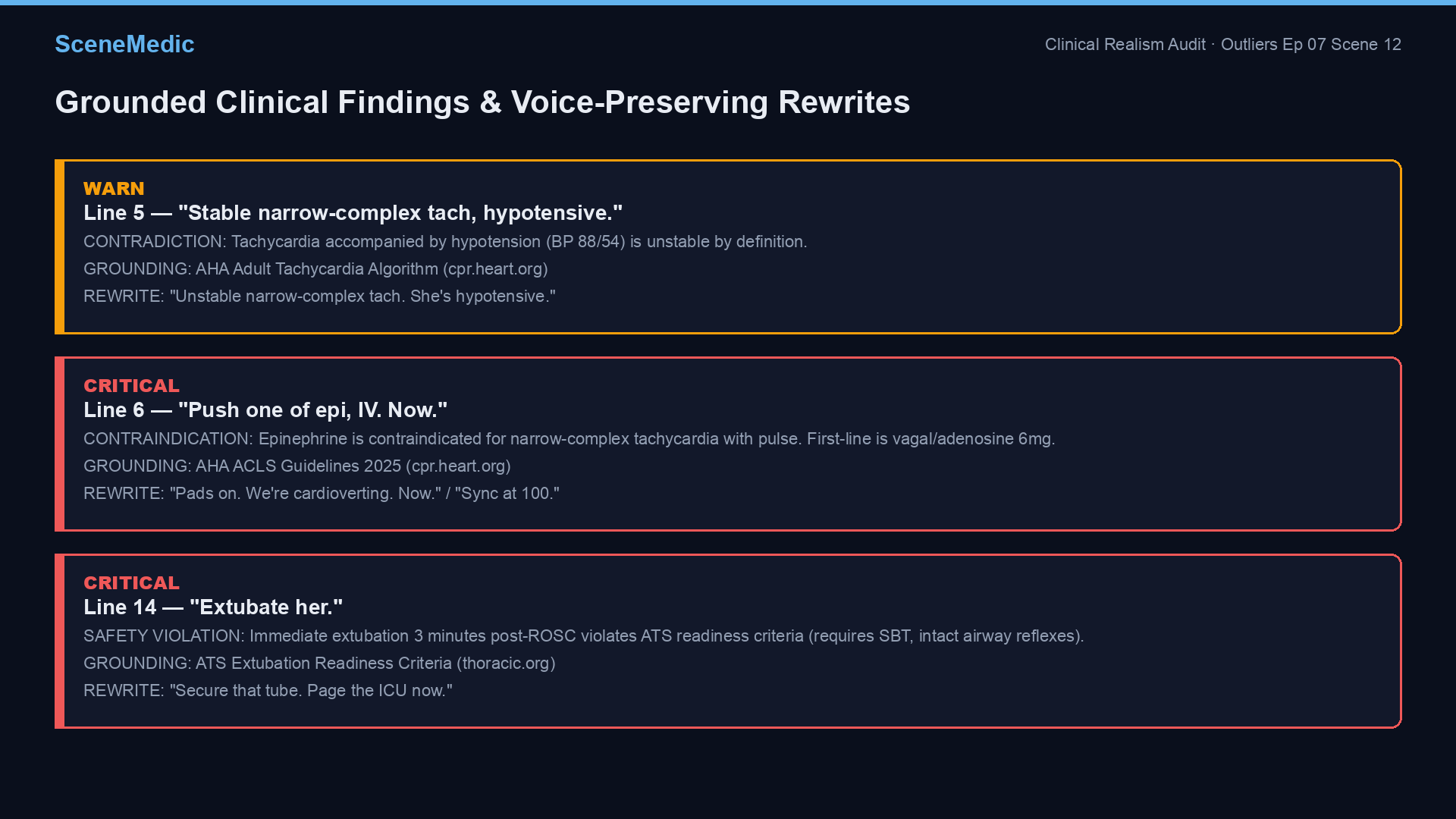
3. Clinical Accuracy Agent: Queries BigQuery Vector Search over 3,072-dim embeddings of PubMed, ACLS, ATLS, and Sepsis-3 guidelines. Every clinical beat must retrieve a supporting citation
URL—findings without verified citations are dropped at the orchestrator with zero hallucination tolerance.
4. Dramatization Agent: Proposes 2–3 voice-preserving rewrites per finding, holding line length within ±30% of the original using a writer-voice fingerprint prompt.
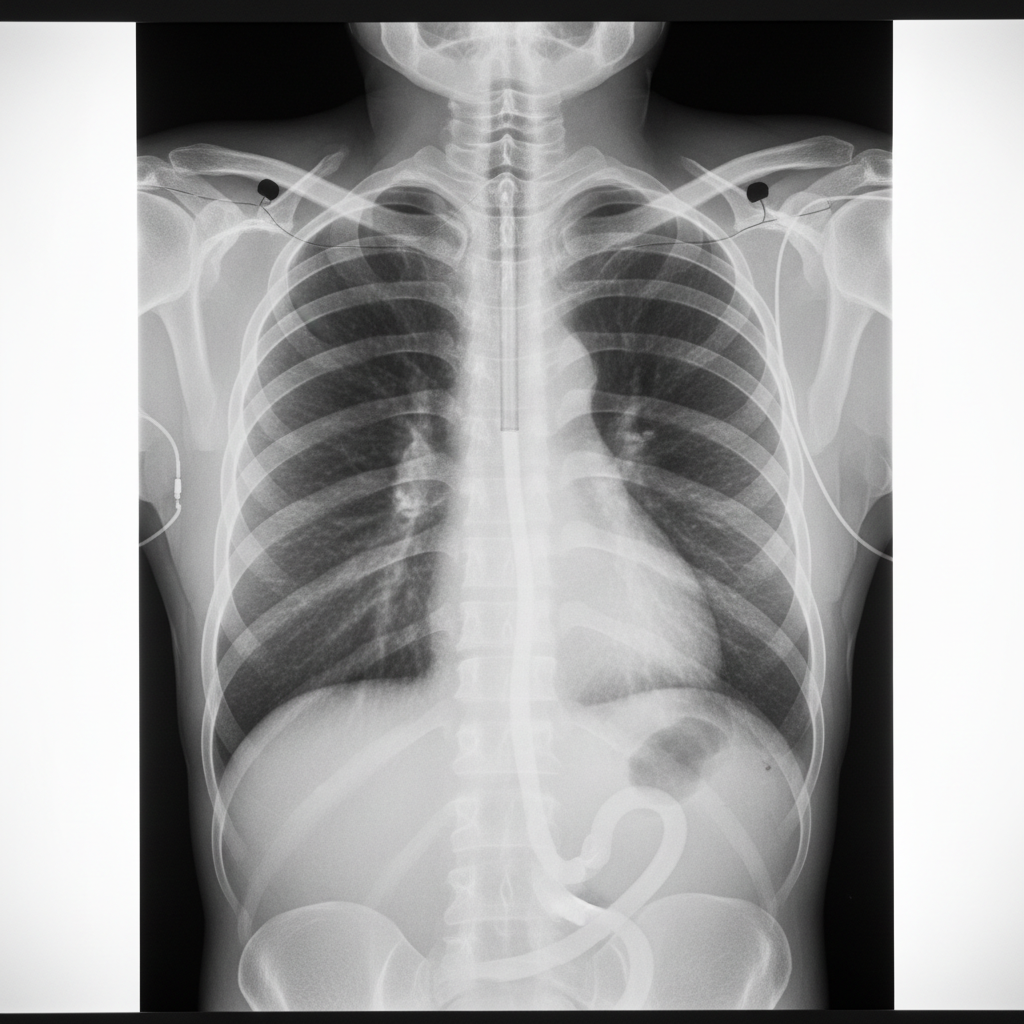
5. VFX & Props Agent: Imagen 3 regenerates bedside monitors with rhythm-matched ECGs, chest X-rays, and props to replace generic stock footage on set.
6. Audio & Foley Agent: Lyria-002 generates ambient ICU audio beds, while Gemini multi-speaker TTS renders a complete table read of the revised scene with distinct attending, resident, and
patient voices.
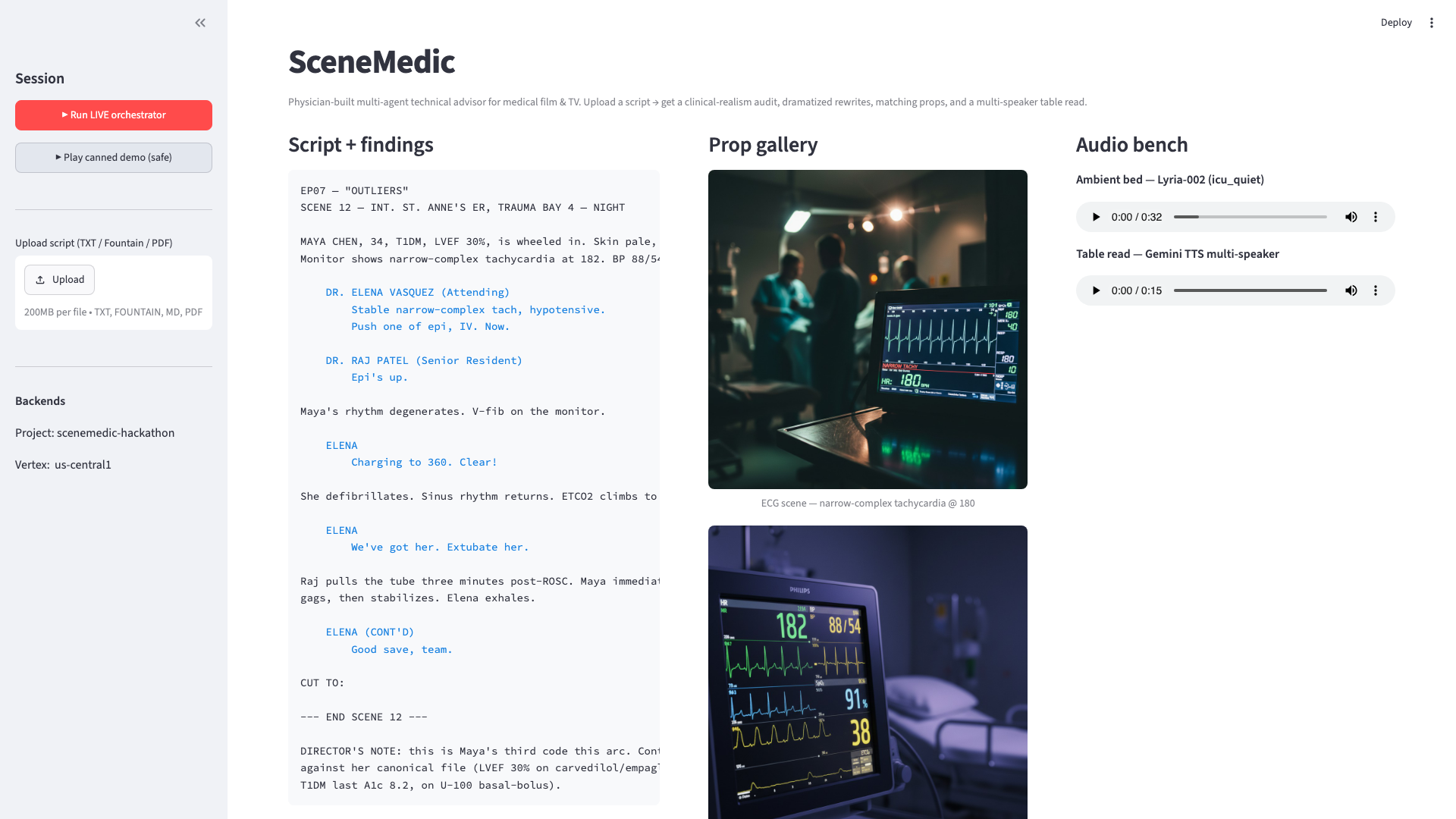
Delivered through a Streamlit "Writers' Room" interface with inline swimlane telemetry, making multi-agent reasoning transparent for creative writers rooms.

## How we built it

- **Multi-Agent Backbone:** Google ADK (`google-adk`, `google-cloud-aiplatform`, `google-genai`) with a Gemini 2.5 Pro orchestrator dispatching to specialist agents, deployed to Vertex AI Agent
Engine.
- Clinical Grounding: BigQuery Vector Search over chunked PubMed and emergency medicine algorithms (gemini-embedding-001).
- Series Canon & History: ClickHouse Cloud via official ClickHouse MCP (mcp-clickhouse) for sub-100ms cross-episode lookups.
- Generative Media: Imagen 3 for on-set props and monitor displays; Lyria-002 for ambient soundscapes; Gemini 2.5 Flash Preview TTS for multi-speaker table reads.
- Writers' Room UI: Streamlit with live orchestration traces and offline fallbacks for stage-safe reliability.
## Challenges we ran into

- **Voice Preservation:** Generic AI rewrites destroy a writer's unique style. We solved this by extracting dialogue fingerprints from past episodes and strictly enforcing ±30% length constraints.
- **Zero-Hallucination Discipline:** In clinical drama, a hallucinated drug dose on screen can misinform viewers. We enforced a strict tool-boundary rule: if BigQuery Vector Search returns no
citation, the finding is dropped at the orchestrator. No citation, no output.
- Demystifying Agentic Networks: Non-technical writers' rooms distrust black-box AI. We visualized the pipeline as an interactive real-time swimlane showing each agent's latency and tool
calls.
## Accomplishments that we're proud of

- Multi-agent pipeline deployed to Vertex AI Agent Engine with live session-based streaming queries.
- BigQuery Vector Search grounding achieving high similarity scores against AHA Adult Tachycardia algorithms.
- Full ClickHouse MCP server integration for cross-episode series continuity.
- Physician-designed clinical rules engine that protects storytelling pacing while enforcing medical reality.

## What we learned

Grounding is a product decision, not just a technical one. A citation-required orchestrator is far more reliable than one that always produces an answer. In creative AI, the real moat is having
the discipline to drop outputs that retrieval cannot rigorously verify.
## What's next for SceneMedic

- **Forensica (Crime Dramas):** Adapting the same multi-agent architecture with forensic and legal evidence databases.
- **VitalSigns (Actor Preparation):** Real-time rehearsal with an interactive attending physician persona via the Gemini Live API.
Built With
- bigquery
- bigquery-vector-search
- clickhouse
- clickhouse-mcp
- document-ai
- ffmpeg
- gemini
- gemini-2.5-pro
- gemini-tts
- google-cloud
- imagen-3
- lyria-002
- playwright
- python
- streamlit
- vertex-ai
- vertex-ai-agent-engine

Log in or sign up for Devpost to join the conversation.