Inspiration
The inspiration for SceneCourt came from a simple challenge: bringing a screenplay to life requires more than just writing it. A scene can look good on paper but still need feedback on its storytelling, performance, character interactions, and real-world accuracy.
Getting these different perspectives usually means relying on multiple people and a lot of time.
We wanted to create a way for writers to access these perspectives in one place. This led to SceneCourt — an AI-powered creative room where specialized agents take on the roles of a Director, Actor, and Judge, while Parallel helps provide relevant real-world context.
Our goal was not to replace human creativity, but to give writers a faster and more structured way to challenge, refine, and strengthen their ideas before they reach the screen.
What it does
SceneCourt is an AI-powered multi-agent creative workflow that analyzes screenplay scenes from multiple perspectives.
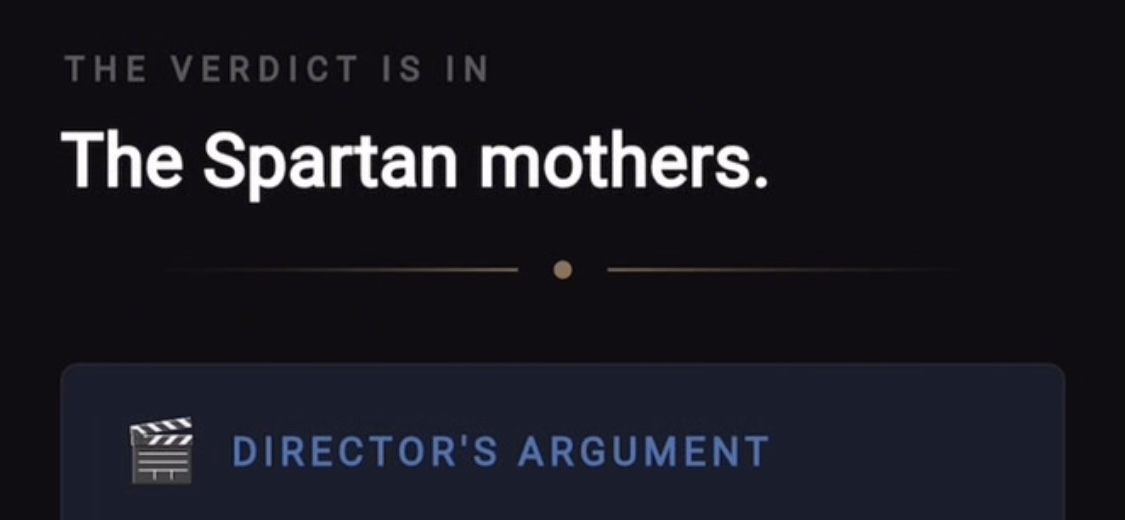
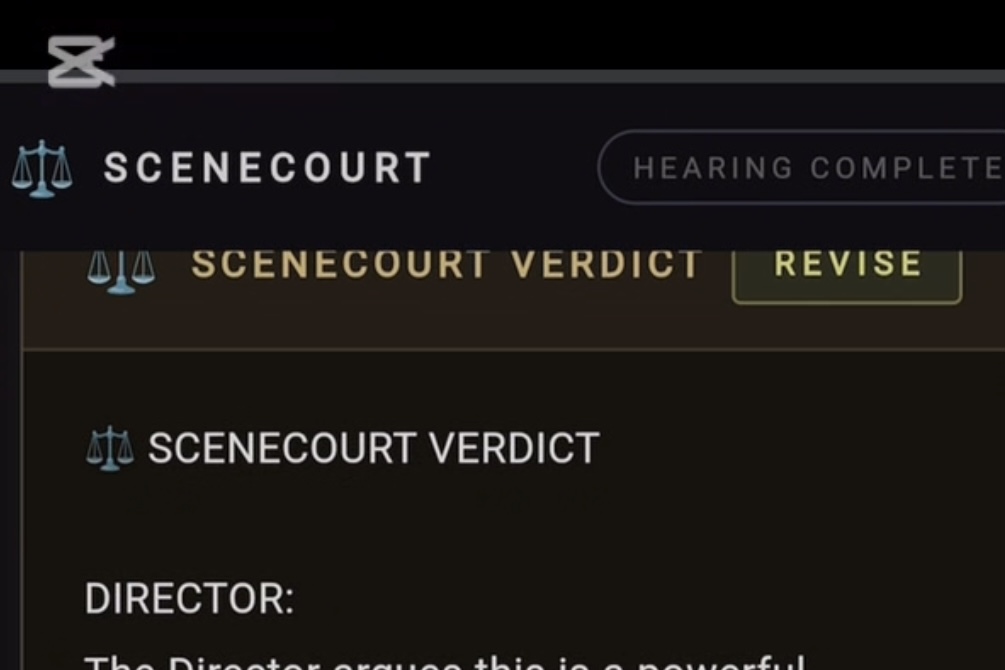
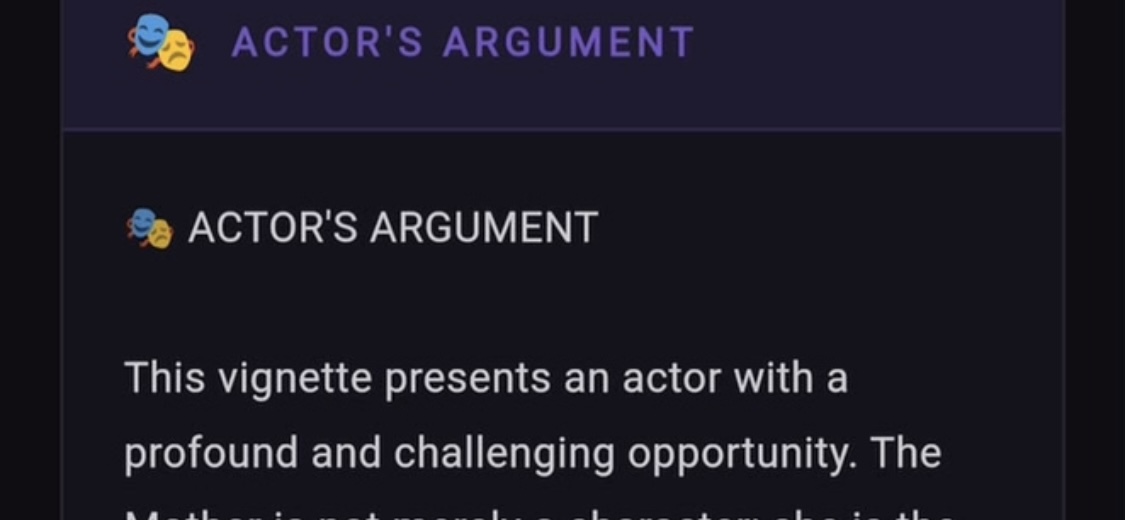
A writer submits a scene, and specialized AI agents take on the roles of a Director, Actor, and Judge. The Director focuses on storytelling and production, the Actor evaluates performance and character interactions, and the Judge brings these perspectives together to deliver a final verdict with actionable recommendations.
Parallel adds real-world research and context to help ground the analysis.
Together, these agents turn a screenplay scene into structured, practical feedback that writers can use to refine their stories.
How we built it
SceneCourt was built as a multi-agent AI application using Google Agent Development Kit (ADK) and Gemini, with each agent assigned a specialized role in the creative workflow.
A Director Agent analyzes storytelling and production, an Actor Agent evaluates performance and character interactions, and a Judge Agent synthesizes the feedback into a final verdict.
The backend was built with Python and FastAPI, while the user interface was developed with Flutter and Dart.
We integrated Parallel to provide real-world web research and context during scene analysis. The agents are orchestrated as a sequential workflow so that each perspective contributes to the final evaluation.
Challenges we ran into
One of our biggest challenges was getting the different AI agents to work together reliably as a single workflow. We had to carefully structure the communication between the Director, Actor, and Judge so that each agent built on the previous agent’s output.
We also faced challenges integrating Parallel into the workflow while keeping the research relevant to the screenplay being analyzed.
On the technical side, connecting the Flutter frontend to the Python/FastAPI backend required troubleshooting API routes, CORS, and local networking issues.
Working through these challenges helped us create a more reliable and cohesive multi-agent experience.
Accomplishments that we are proud of
We are proud of turning an idea into a working multi-agent application that can analyze a screenplay from multiple creative perspectives.
We successfully built a workflow where the Director, Actor, and Judge agents work together to produce structured and actionable feedback, rather than a single generic AI response.
We are also proud of integrating Parallel for real-world research and context, giving the system an additional layer of grounded analysis.
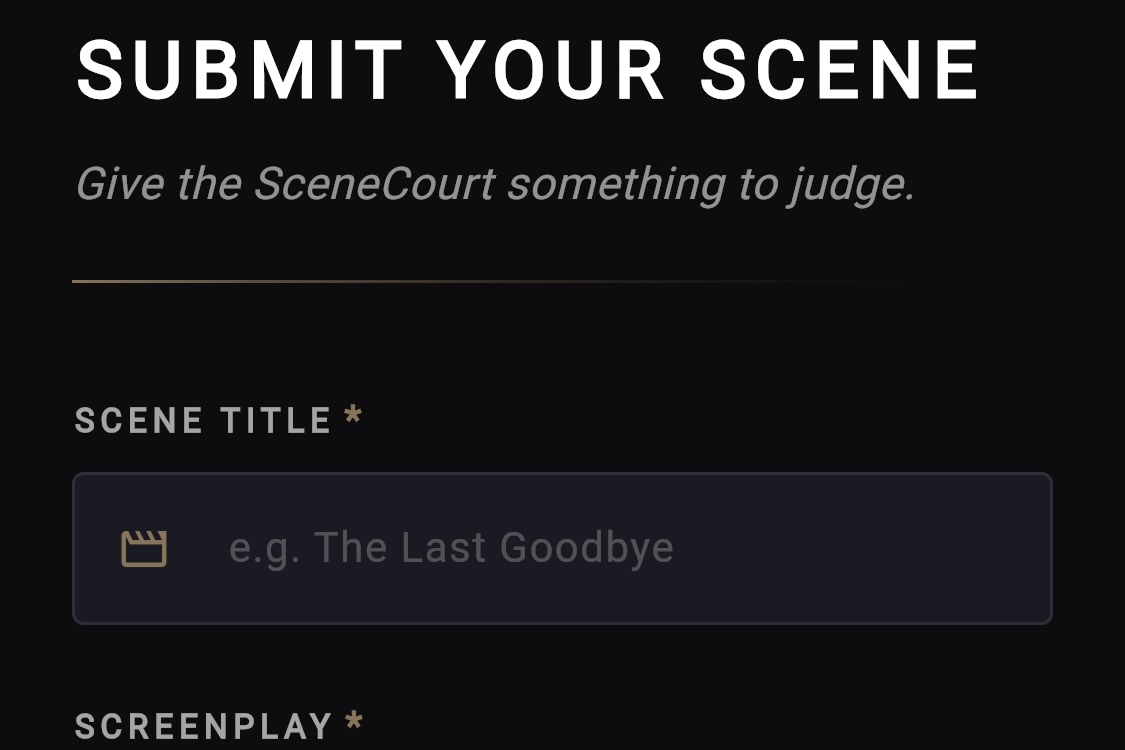
Most importantly, we built a complete user experience from submitting a scene through the Flutter interface to receiving the final verdict making SceneCourt a practical tool rather than just a prototype concept.
What we learned
Building SceneCourt taught us that effective AI applications are not just about using a powerful model, but about designing the right workflow around it.
We learned how to design and orchestrate specialized AI agents, giving each agent a clear role while ensuring their outputs work together toward one goal.
We also gained practical experience integrating Parallel for real-world research, connecting a Flutter frontend to a Python/FastAPI backend, and troubleshooting the challenges that come with building a complete application.
Most importantly, we learned how combining specialized agents, external context, and a well-designed user experience can turn a simple idea into a useful AI-powered product.
What's next for Scenecourt-agent
We see SceneCourt growing into a complete AI creative workspace for writers, filmmakers, and production teams.
Next, we want to expand the agent team with roles such as a Cinematographer, Editor, and Producer, giving creators even more perspectives on their work.
We also plan to improve the real-world research capabilities, make feedback more personalized, and allow writers to track how their scenes evolve over time.
Our long-term goal is to make SceneCourt a collaborative creative assistant that helps creators challenge ideas, discover opportunities for improvement, and develop stronger stories before production.
Built With
- dart
- fastapi
- flutter
- gemini
- generative-ai
- google-adk
- google-cloud
- multi-agent-ai
- parallel
- python
- screenwriting


Log in or sign up for Devpost to join the conversation.