-
-
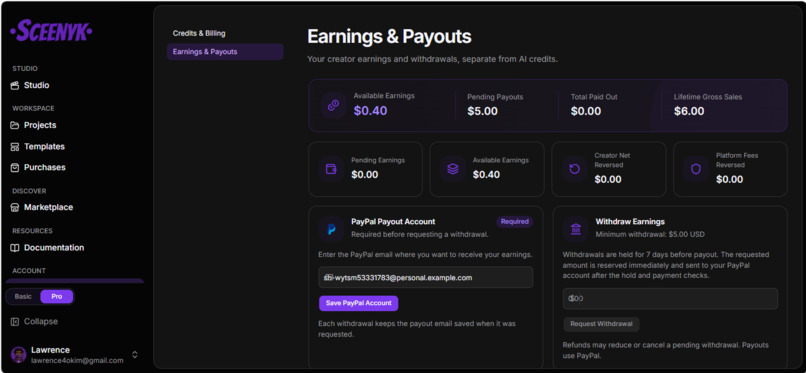
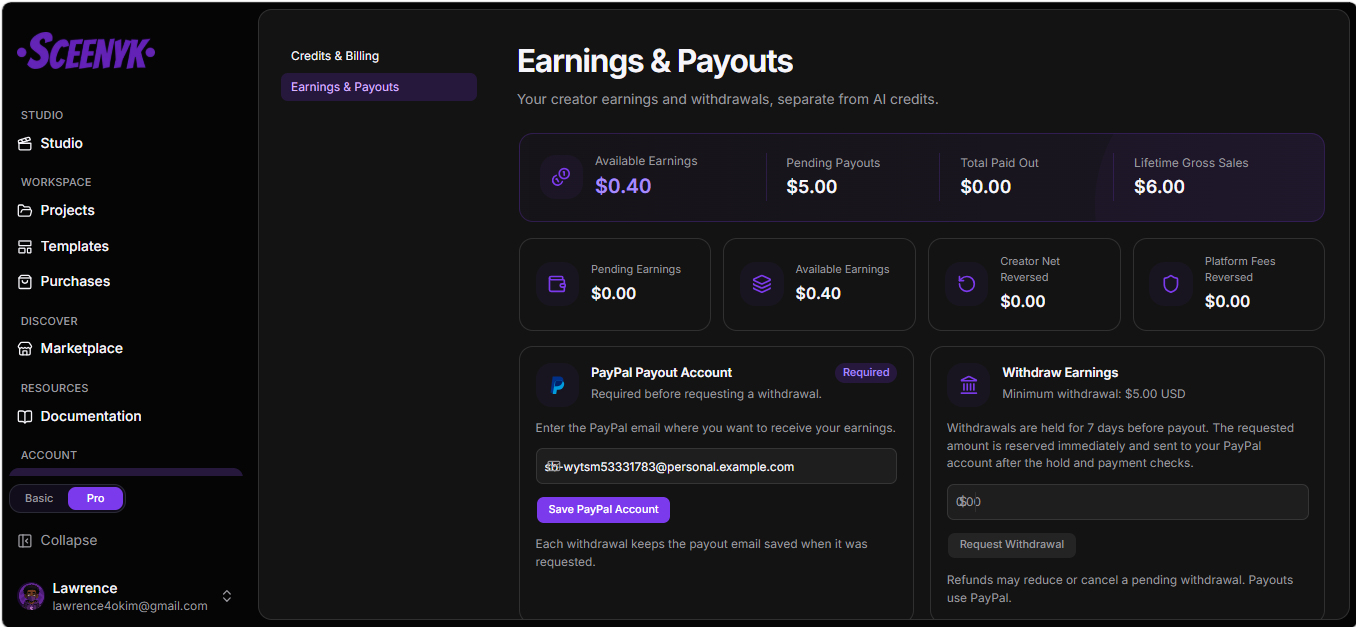
you can see your earnings when your work is bought. payout request is made and is sent to your paypal account after 7 days
-
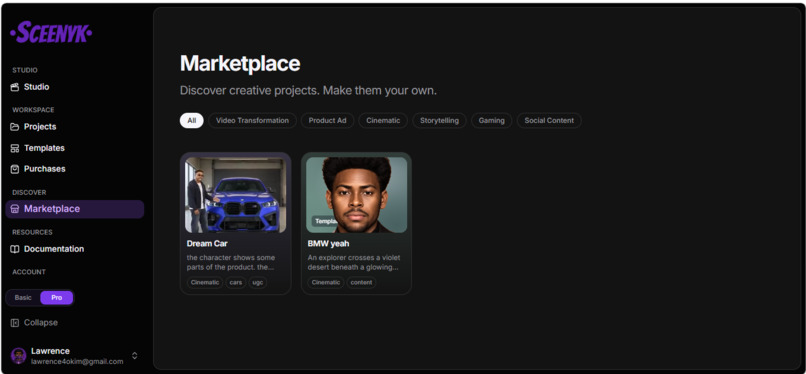
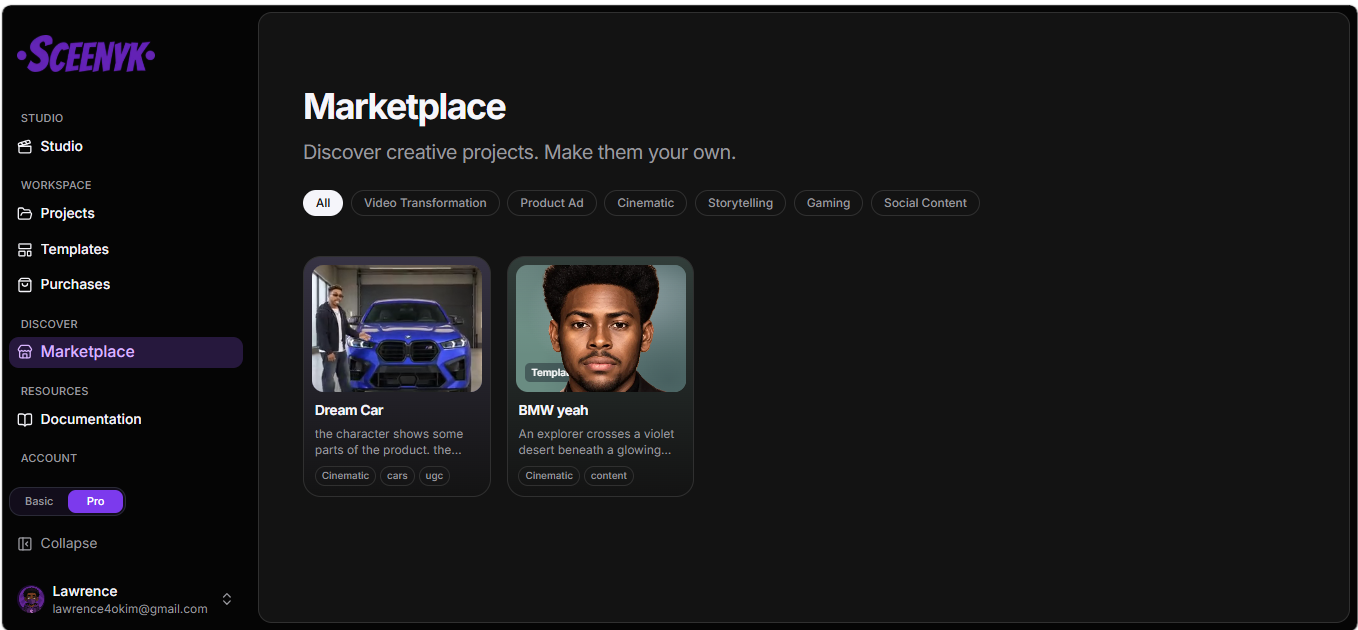
marketplace - where you can post your work for other to view and pay you to use your prompt
-
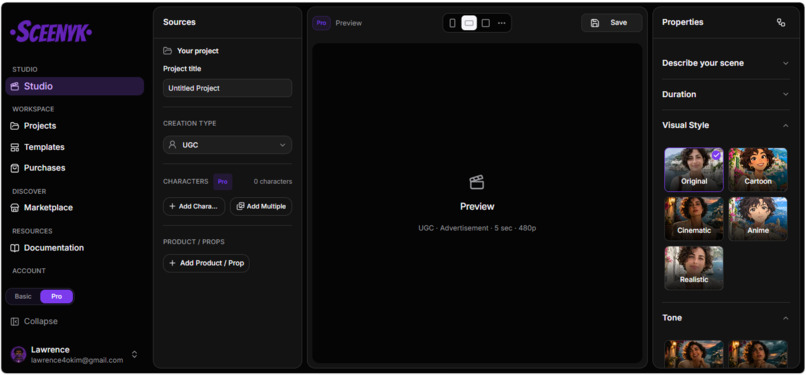
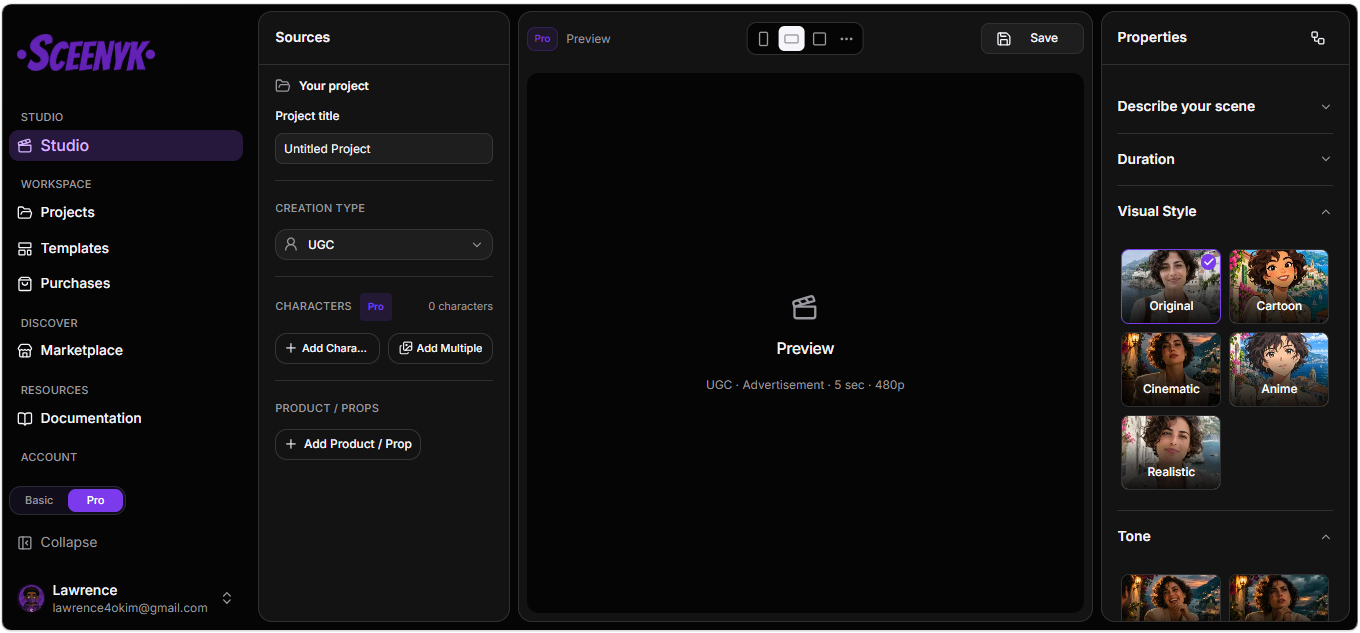
the studio page - for creating new projects
-
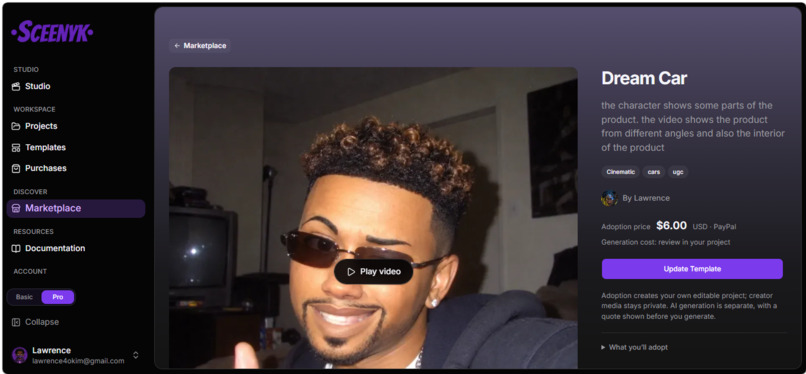
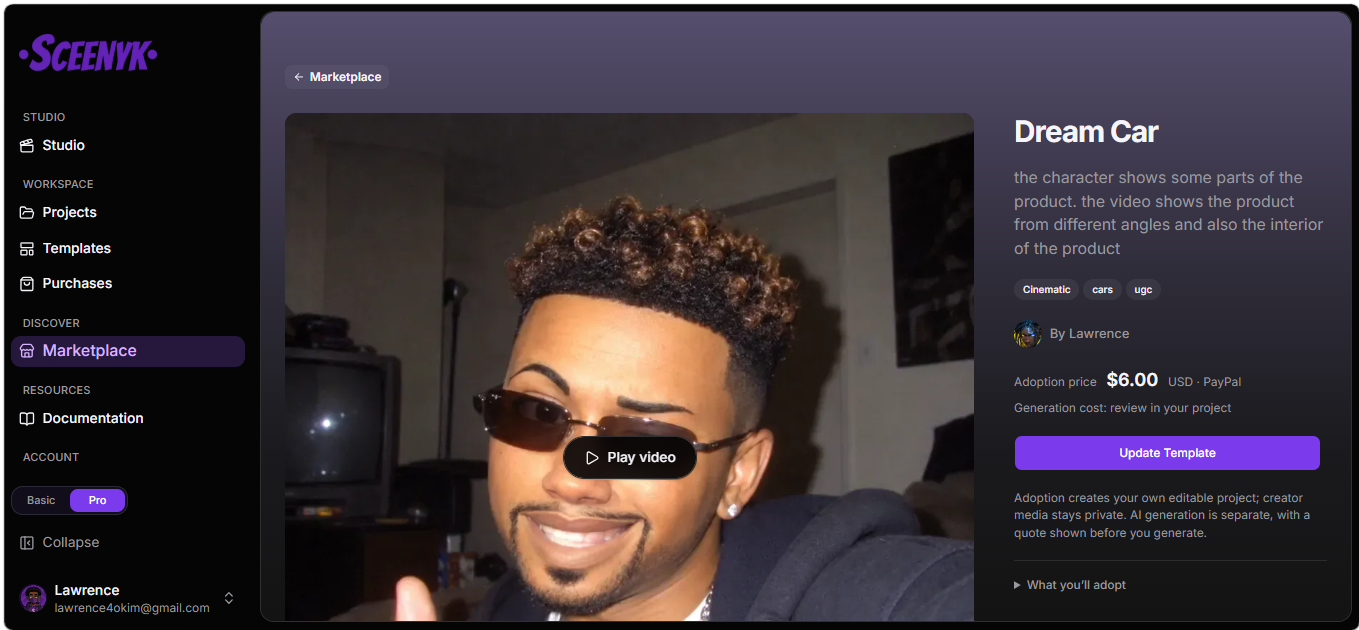
a deeper look at a selected template on the marketplace
-
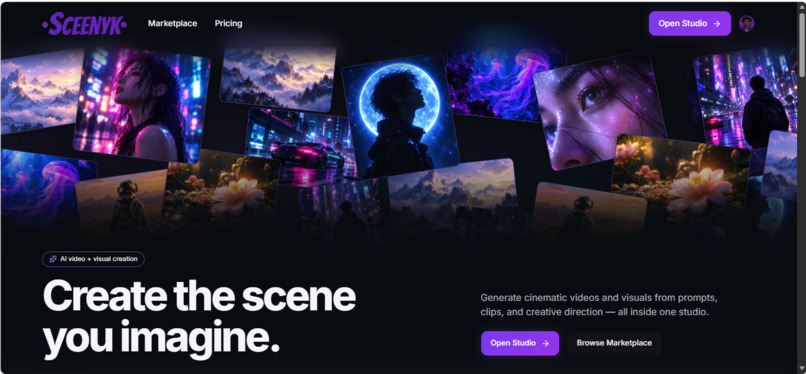
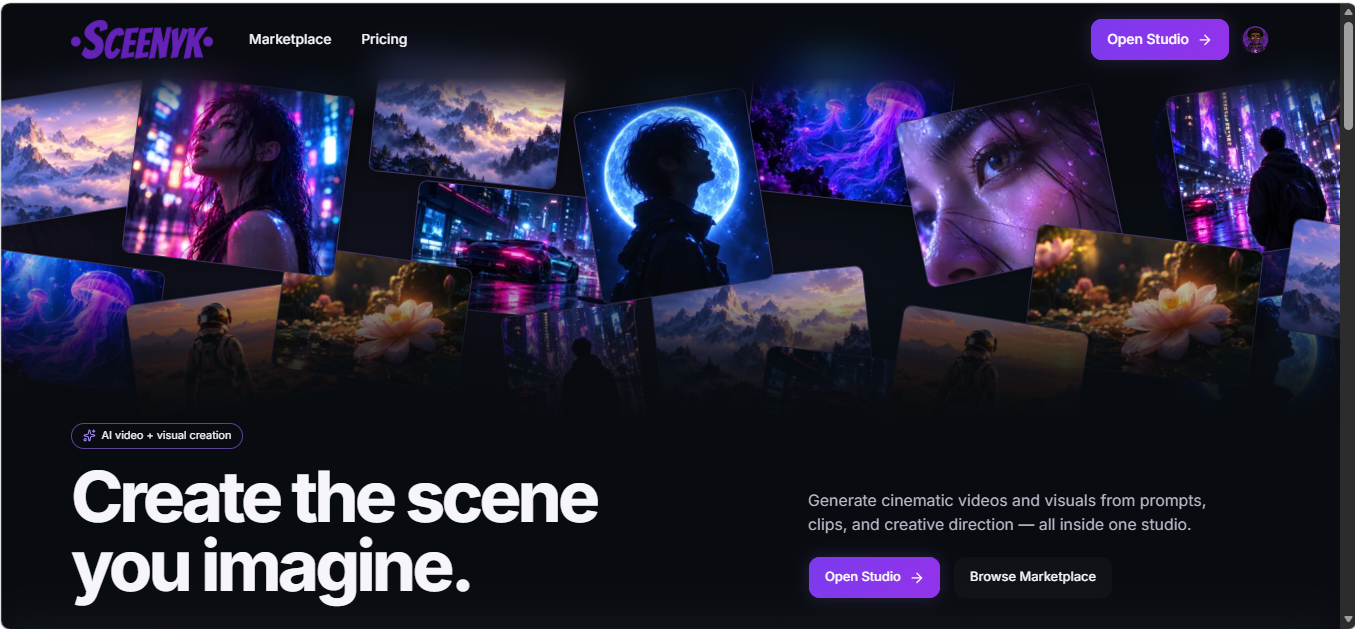
the landing page
Inspiration
I've always wanted to become a content creator, making videos for YouTube, TikTok, and other platforms. But getting started was always a challenge. Creating content consistently takes time, planning, creativity, and effort.
When AI-generated videos started becoming popular, I saw an opportunity. As a developer, I wondered: What if I could build something that makes video creation almost effortless?
My original idea was to build a personal tool where I could provide a few images, describe what I wanted, and let AI handle the production.
Then I discovered the PayPal AI Hackathon through LinkedIn. That changed everything. Instead of building something just for myself, I decided to create a platform that other people could use, too.
But I wanted to go further. What if creators could also earn money from their creativity?
That idea became Sceenyk.
What it does
Sceenyk is an AI-powered video creation and creator marketplace platform.
Users can upload character and product images, describe their ideas, choose a visual style, and let AI turn those inputs into a finished video.
Instead of starting from scratch every time, users can also explore a marketplace of reusable video templates created by other people.
When someone finds a template they like, they can adopt it, replace the original images and creative details with their own, and generate a personalized version.
Creators can publish their templates on the marketplace and earn money when other users purchase them.
Sceenyk makes it easier to create content while giving creativity a way to generate income.
How we built it
I built Sceenyk using Next.js, React, TypeScript, and Supabase, with Clerk handling user authentication.
OpenAI powers parts of the creative process, including generating visual references and storyboards, while Higgsfield handles AI video generation.
The platform guides users through a complete workflow, from uploading references and developing scenes to reviewing storyboards, generating clips, and producing a final video.
I also built background processing using Docker and FFmpeg so video-generation and merging tasks can continue independently of the user's browser.
PayPal Sandbox powers the payment experience, including purchasing generation credits, buying marketplace templates, and supporting creator payouts.
Challenges we ran into
One of my biggest challenges was building a complete video-generation workflow rather than a simple AI prompt interface.
I had to work through several problems, including keeping visual references consistent, managing long-running generation tasks, merging video clips, handling failed requests, and preserving users' progress.
Another major challenge was connecting the credit system and marketplace payments without allowing duplicate charges or losing track of transactions.
Deploying the application while keeping background workers running reliably was also a valuable learning experience.
Each challenge pushed me to improve the platform's reliability and user experience.
Accomplishments that we're proud of
One of my biggest accomplishments is stepping outside my comfort zone. I'm primarily a front-end engineer, but building Sceenyk pushed me to explore back-end development and work with tools and technologies I had never used before.
I'm proud that I learned to work with Docker, FFmpeg, background workers, AI services, databases, and PayPal's payment systems. These experiences helped me understand how different parts of a full-stack application work together.
Another accomplishment is turning a personal idea into a functional Minimum Viable Product (MVP). I was able to build the basic workflow for AI video generation, alongside a marketplace where creators can share and sell reusable templates.
Sceenyk is still a work in progress. It doesn't yet produce exactly the results I originally envisioned, and there is still a lot I want to improve.
But what makes me most proud is how much I've learned throughout the process. I challenged myself, solved problems I had never faced before, and built something functional from an idea that initially existed only in my head.
What we learned
Building Sceenyk taught me that creating an AI-powered product involves much more than connecting to an AI model.
I learned how to coordinate multiple services, manage background jobs, design safer payment workflows, control generation costs, and build a smoother experience around complex AI operations.
Most importantly, I learned how to turn a personal problem into a product that could help other people.
What's next for Sceenyk
My vision is to make Sceenyk a place where anyone can become a content creator without needing advanced editing skills or expensive production equipment.
I want to expand its creative tools, improve video-generation and storyboard quality, and grow the creator marketplace so more people can share their ideas, help others create, and earn from their work.
Sceenyk started with one simple goal: make content creation easier. Today, it's growing into a platform where creativity can become an opportunity for everyone.
Built With
- clerk
- cloudflare
- docker
- ffmpeg
- higgsfield-ai
- javascript
- next.js
- node.js
- openai-api
- paypal-checkout
- paypal-payouts-api
- postgresql
- r2
- react
- shadcn/ui
- supabase
- tailwind-css
- typescript
- vercel
