Inspiration: The inspiration is to explore how AI agents can be combined with MuleSoft integration capabilities to solve real-world problems. Using Anypoint Code Builder, try to design, build, and deploy solutions where AI models, APIs, and automation flows interact intelligently. Passionate about Healthcare so thought of building a Healthcare Assistant that’s agentic (plans/acts), FHIR-native, and MuleSoft-first so you can implement it in Anypoint Code Builder (ACB) quickly.
What it does:
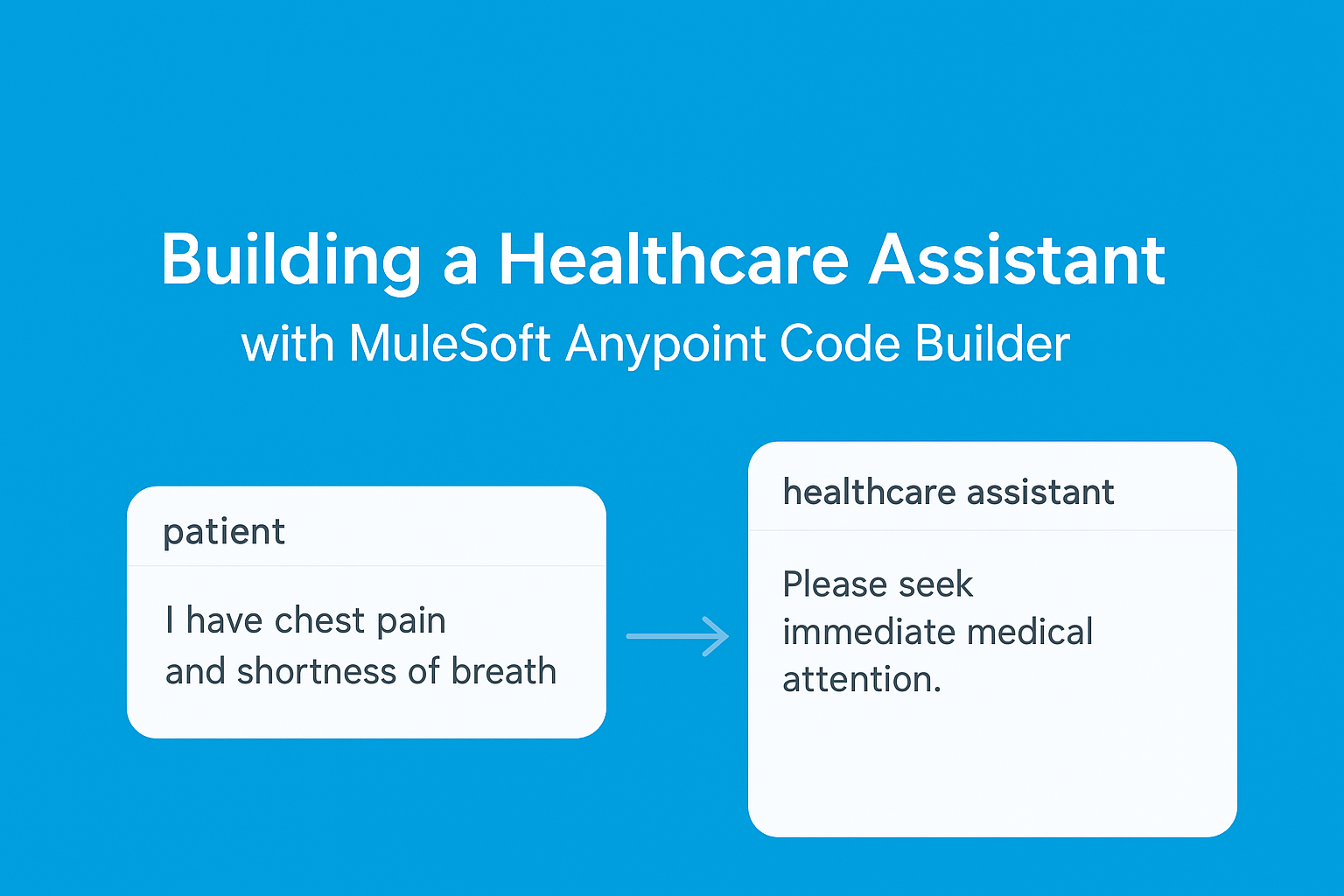
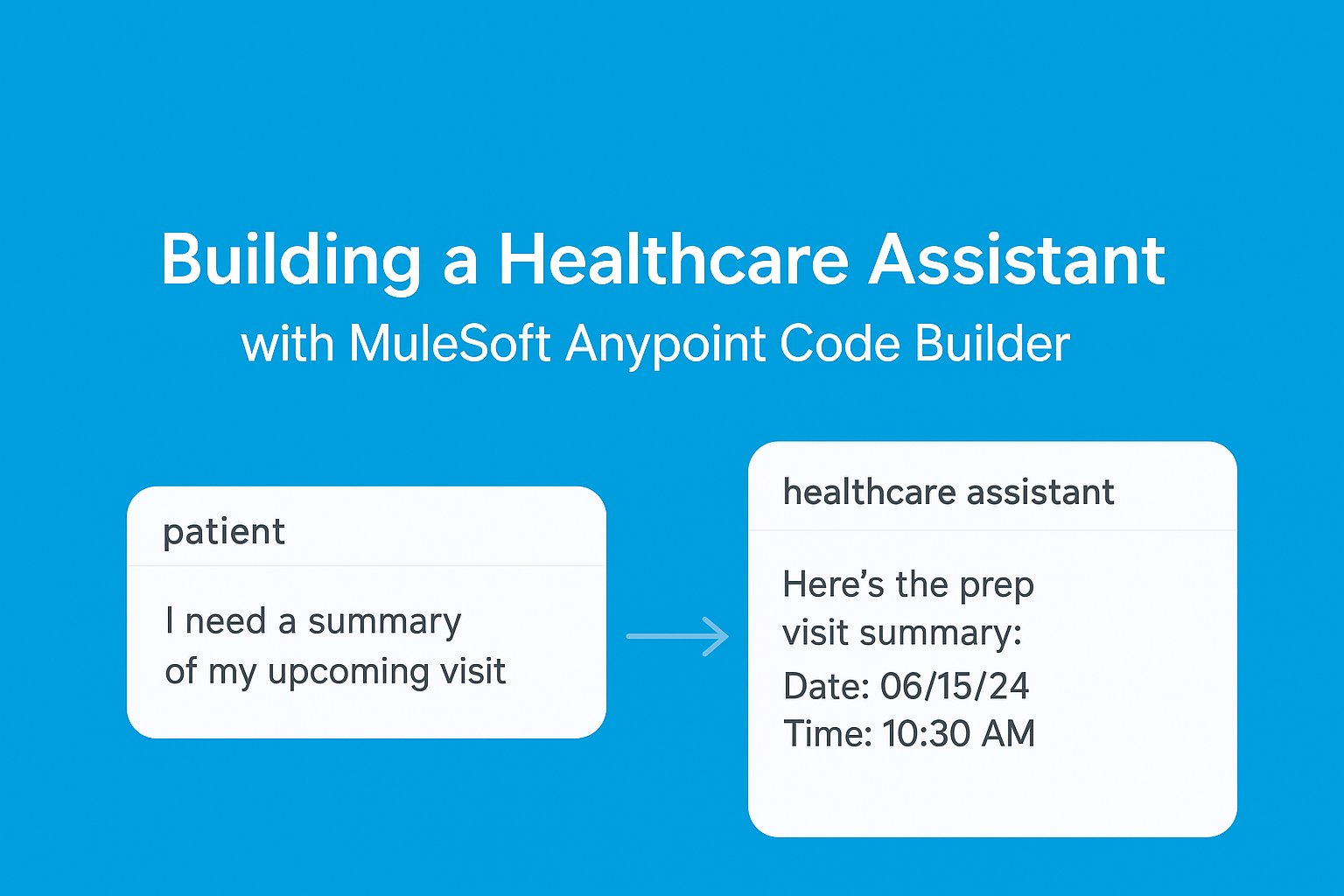
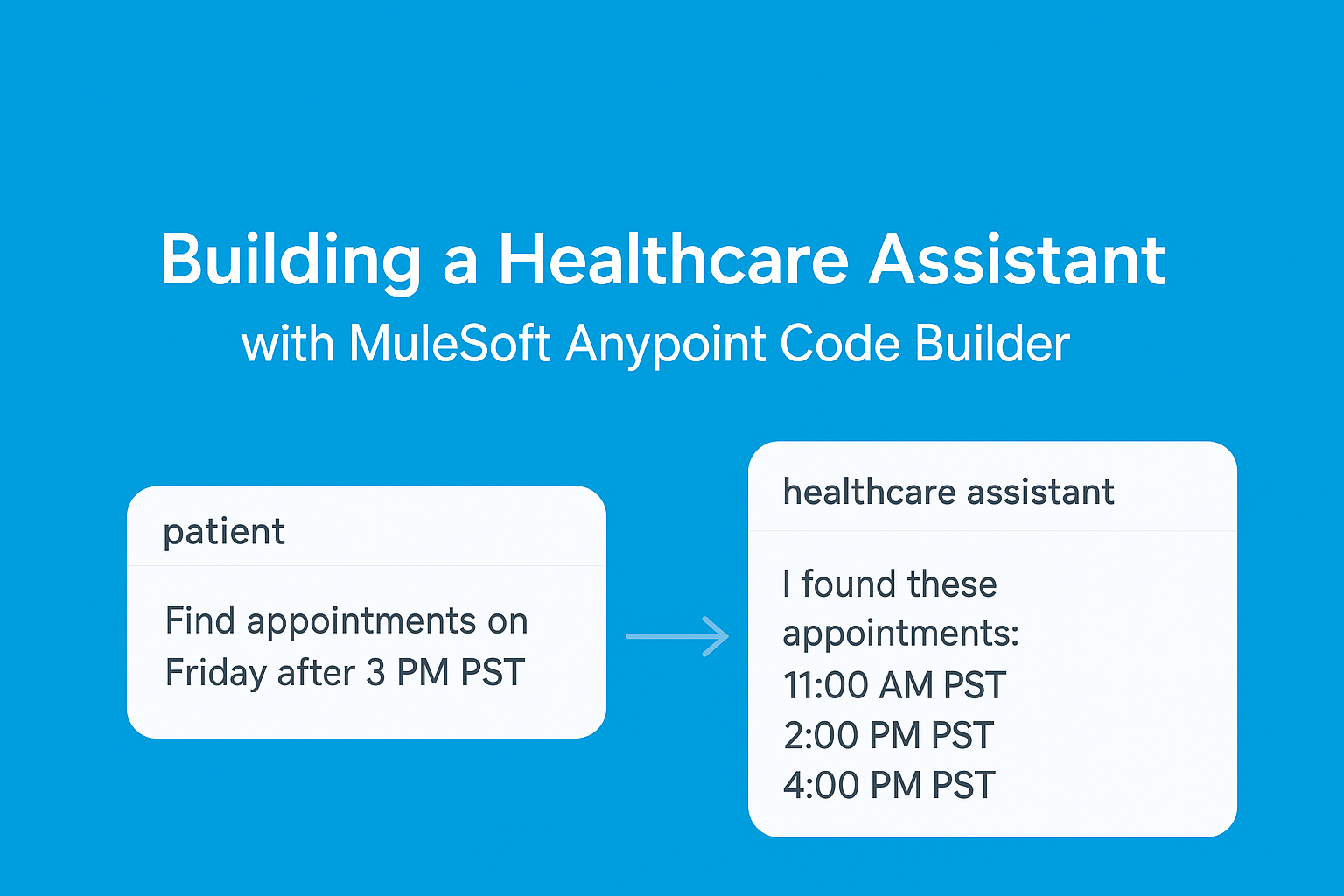
Patient chat: triage symptoms, answer FAQs, find appointments, prep visit summaries. Clinician copilot: fetches records (FHIR), summarizes charts, drafts SOAP notes, suggests orders for review. Agentic actions: the LLM decides which API/tool to call (retrieve meds, book slot, send prep SMS), with human-in-the-loop gates.
How I built it: Using following components:
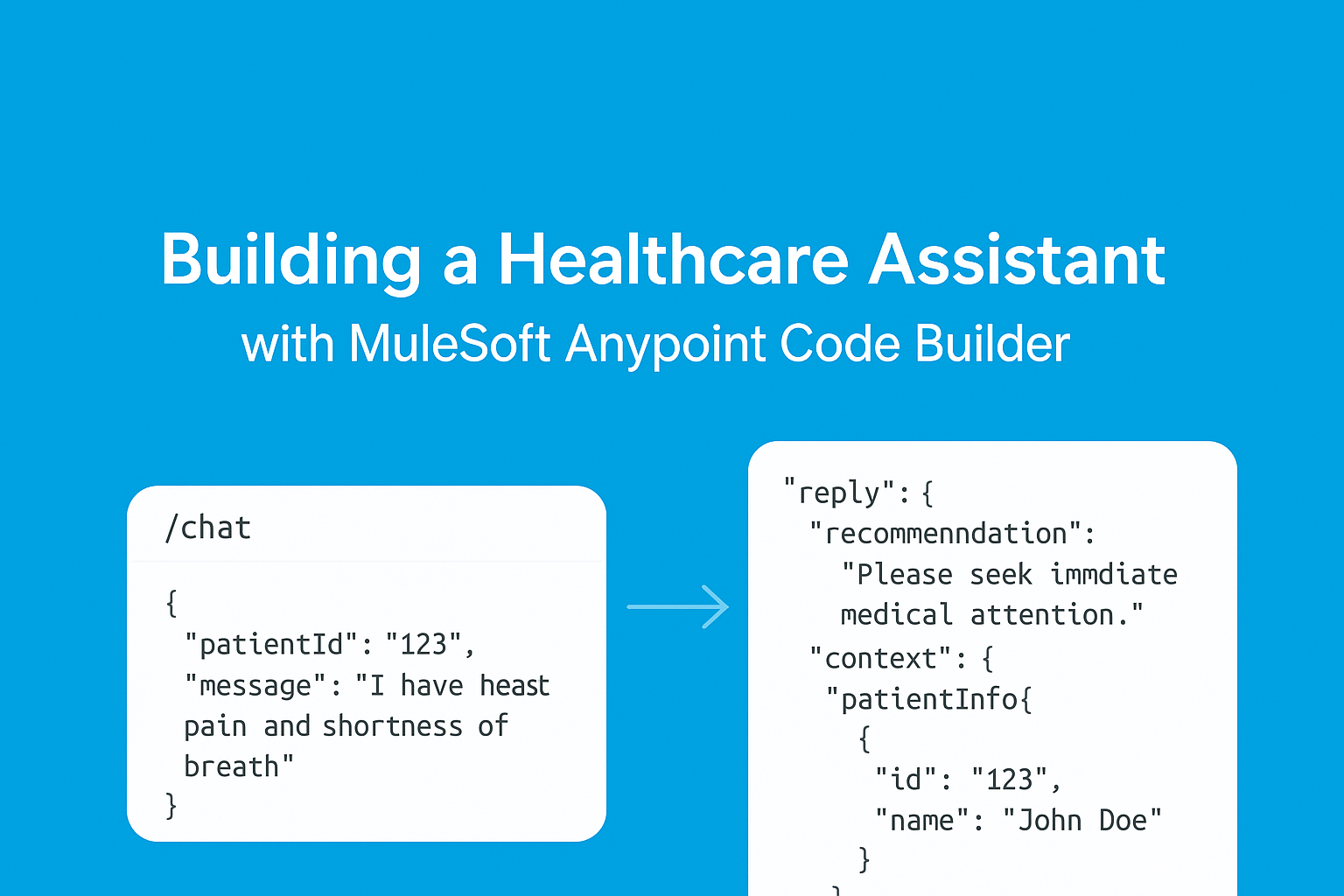
- Chat Orchestrator API (public) POST /v1/chat – message in → streaming reply out POST /v1/chat/{id}/events – tool-call callbacks, human-approval GET /v1/chat/{id} – transcript (PHI-aware redaction) 2.Internal Tool APIs (Mule Experience/Data) 3.Agent tools (function schemas) 4.Mule flows (ACB)


Log in or sign up for Devpost to join the conversation.