-
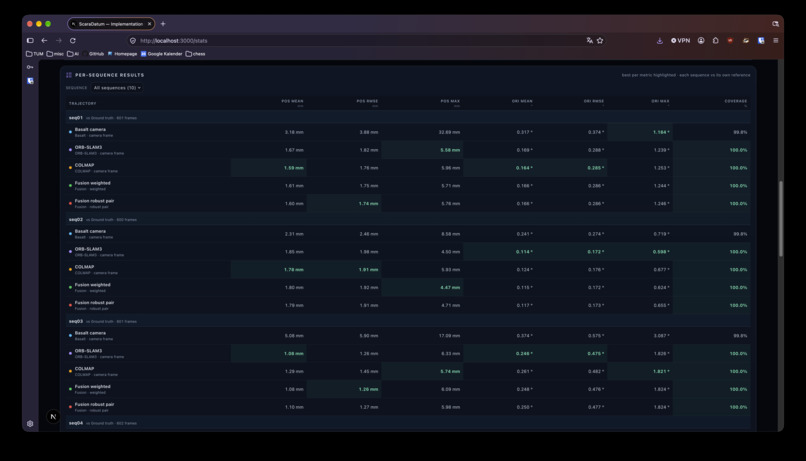
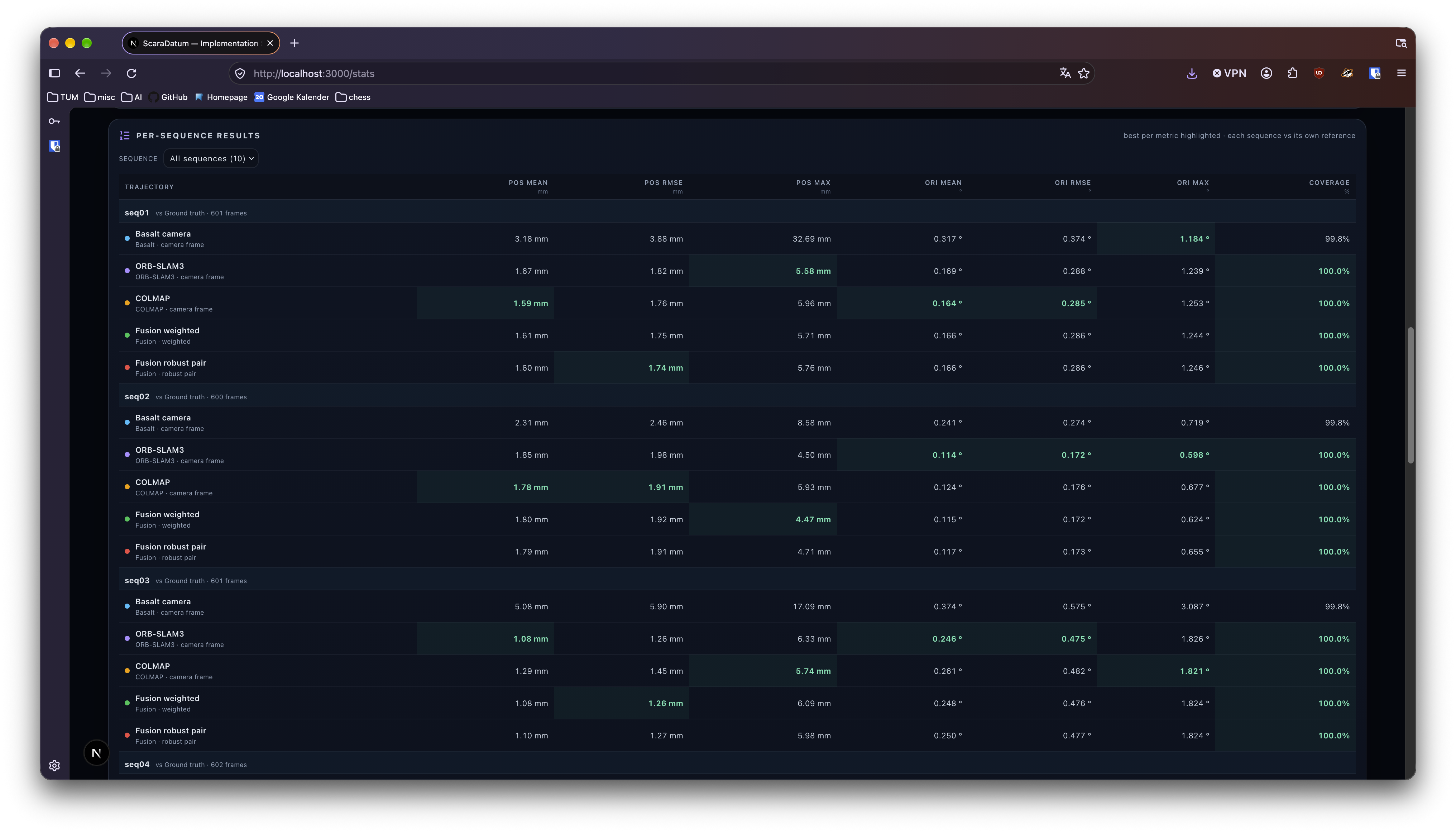
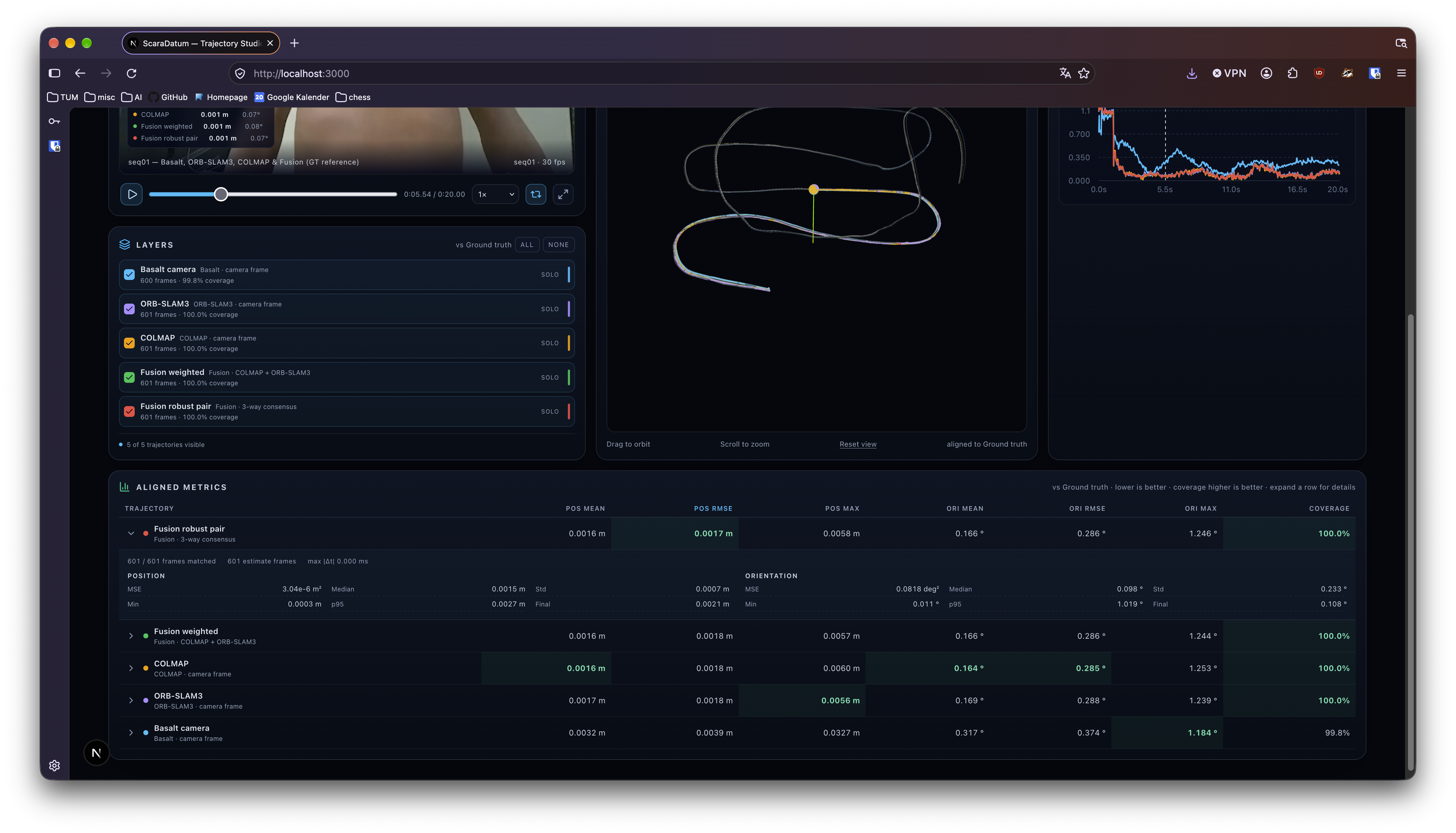
Comparison among different prediction methods per sequence
-
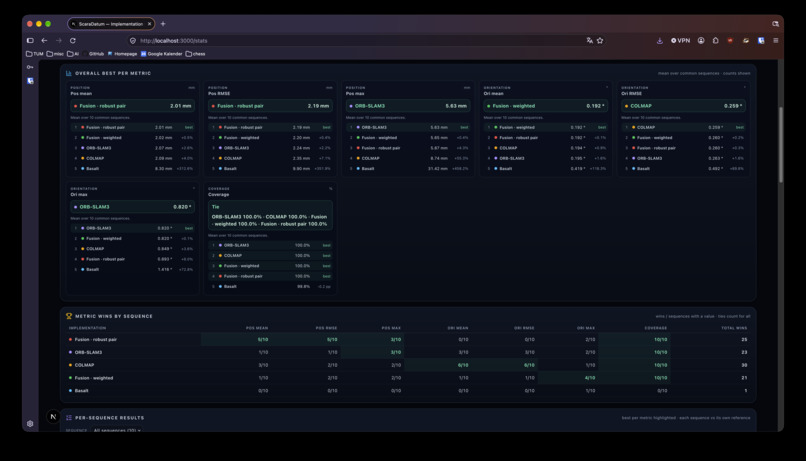
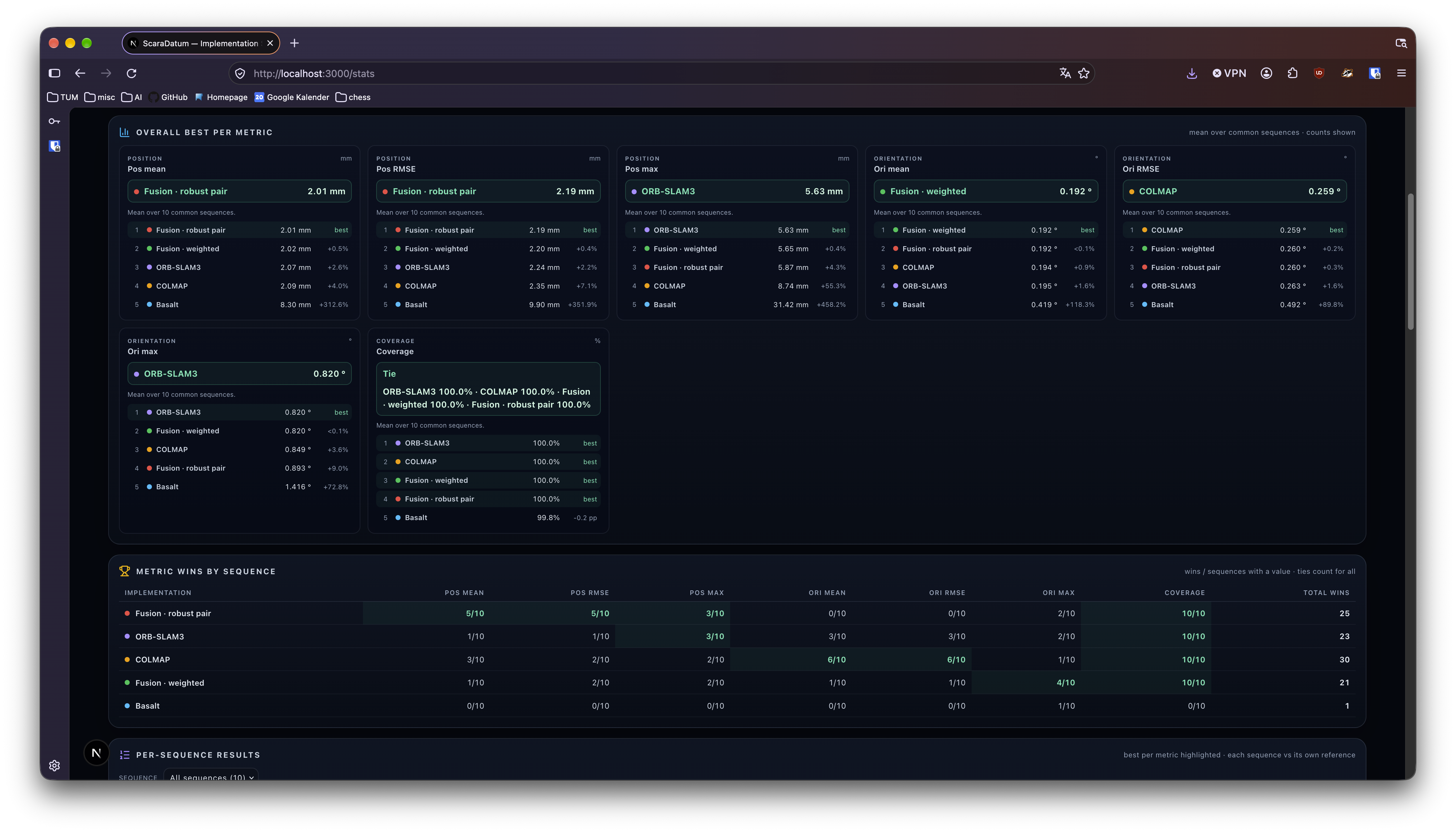
Overall best prediction method per metric
-
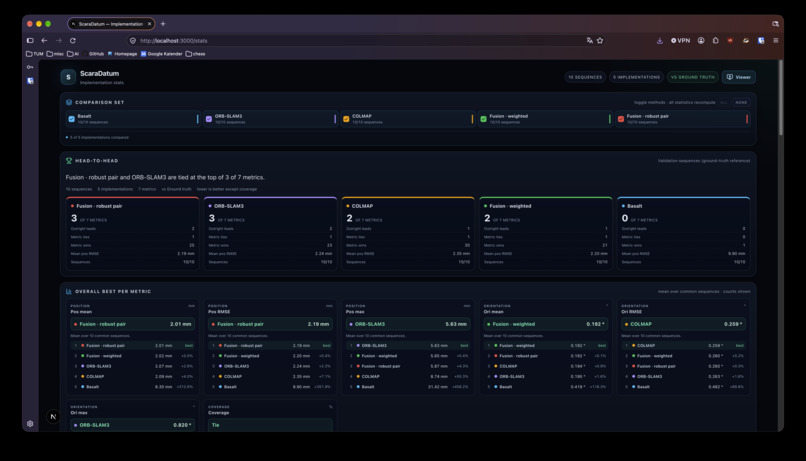
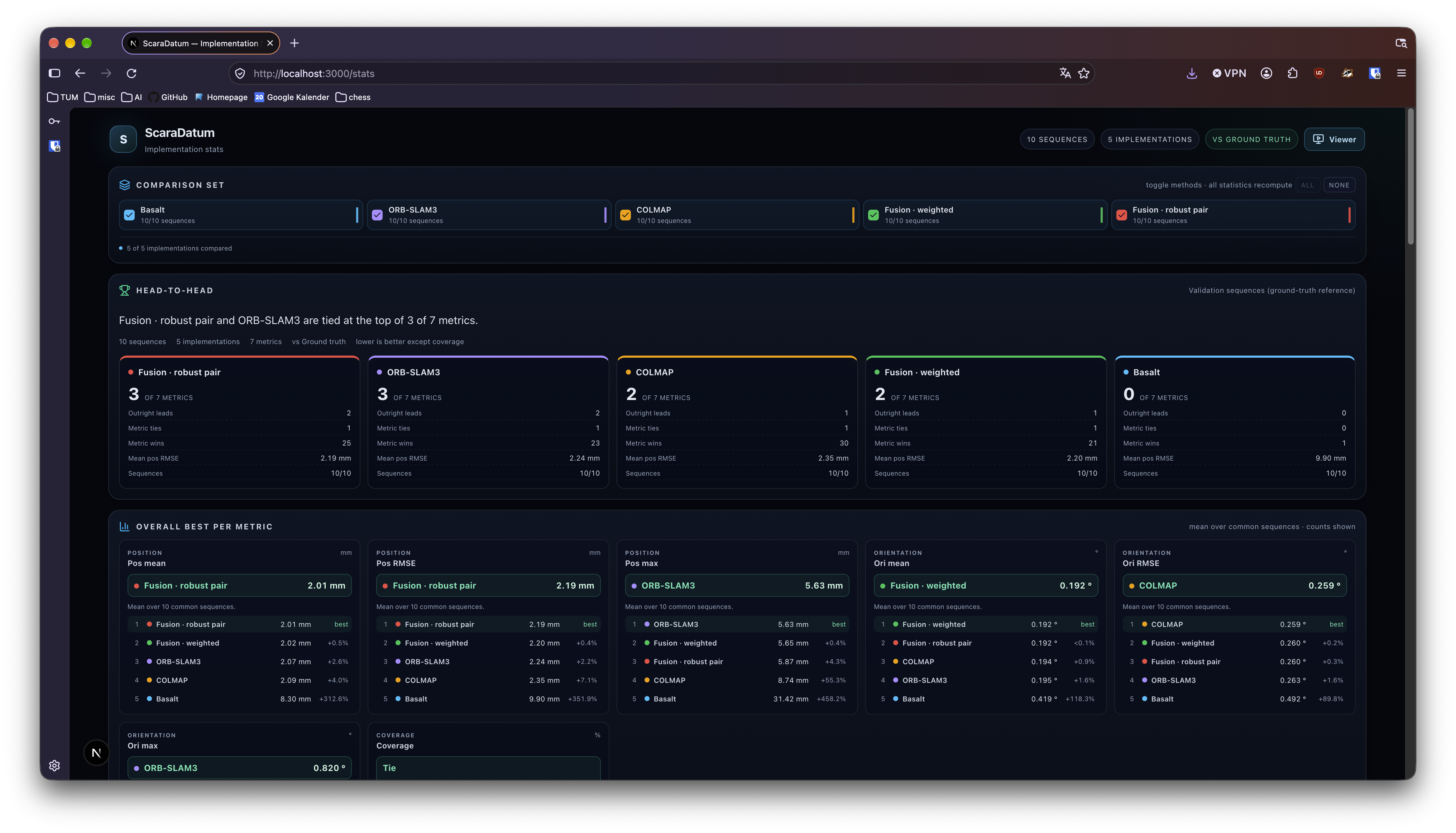
Overall ranking of tracking methods across all metrics
-
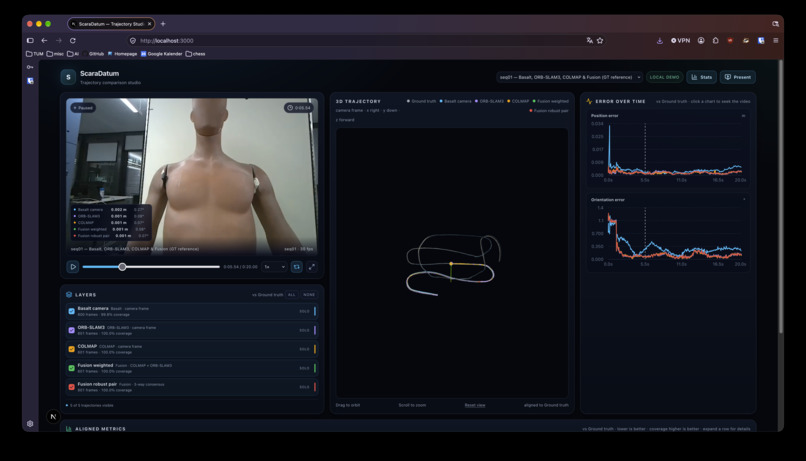
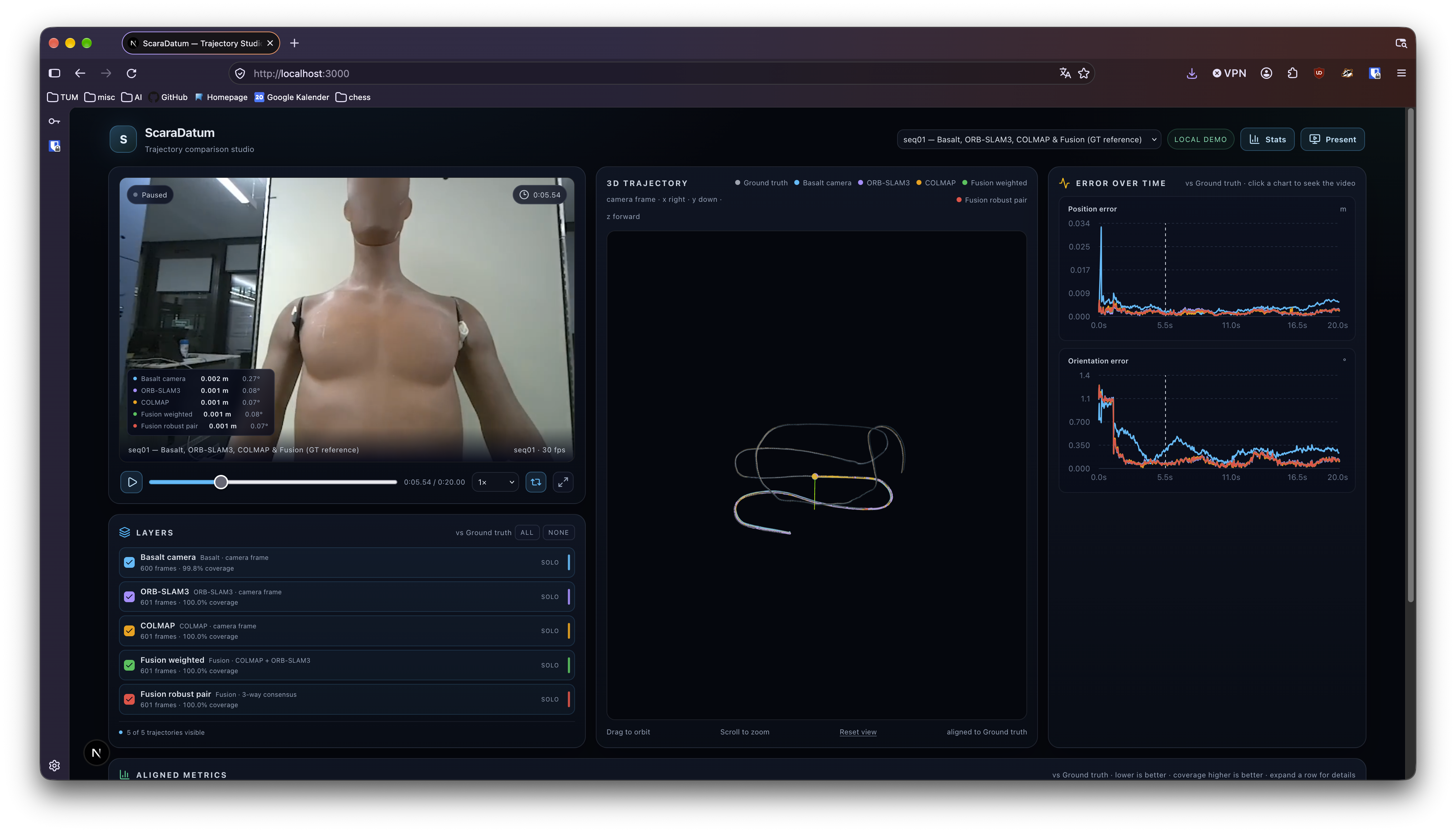
Video Player synced to live trajectory prediction
-
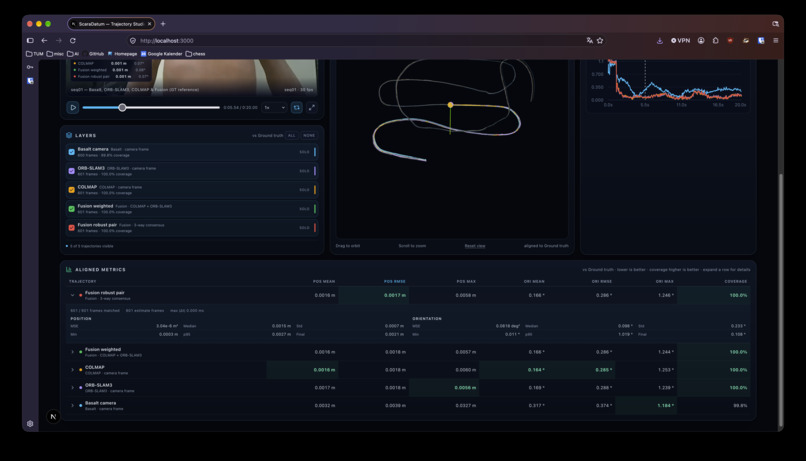
Comparing accuracy between different prediction methods
Inspiration
When the challenges were presented we were instantly hooked. Initially we were torn whether we actually wanted to pursue it, because on one hand it seemed super exciting but on the other hand it seemed super hard as well. However, we decided to trust our guts and give it a shot.
What it does
Scaradatum uses three different frameworks: Basalt, ORB-SLAM3 and COLMAP to evaluate trajectories recorded by a visual inertial camera. But we also built our own signals to improve the tracking and built debugging tools around it.
How we built it
We built a pipeline that takes the given data of the "ZED X Mini" and converts it into the EuRoC format, then hands it off to multiple popular VIO frameworks which predict slightly different trajectories. We then perform various transformations to properly align the data. For debugging and visualization purposes we built a next.js web-app that lets the user compare the accuracy of the different methods used to predict the trajectories.
Challenges we ran into
- Computing a trajectory based on the input of a stereo inertial camera is a common problem in the field of Visual-Inertial Odometry (VIO) and turns out to depend on a lot of mathematical prerequisites.
- Some VIO computations take a lot of time especially without access to a GPU.
Accomplishments that we're proud of
We were able to create a pipeline that generally predicts sub six millimeter accurate trajectories across all given samples. Additionally we learned a lot about a new field with little prior knowledge on just one weekend, while struggling with overcoming sleep deprivation in order to keep working.
What we learned
- VIO is hard
- Basics of VIO and strengths and weaknesses of different frameworks
- How to effectively use agentic coding
What's next for Scaradatum
Optimize, optimize, optimize ...
Built With
- basalt
- colmap
- orb-slam3
- python
- typescript
