-
-
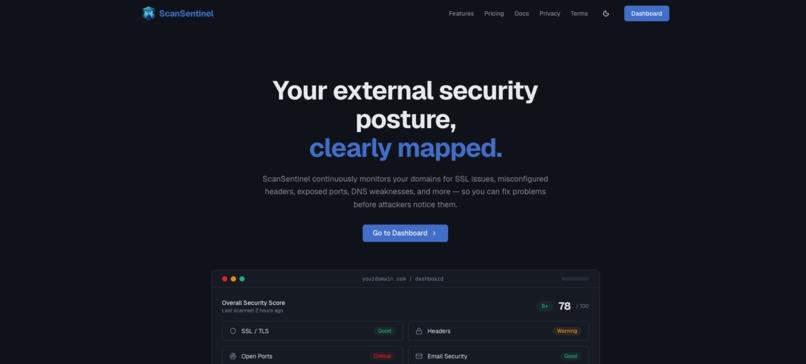
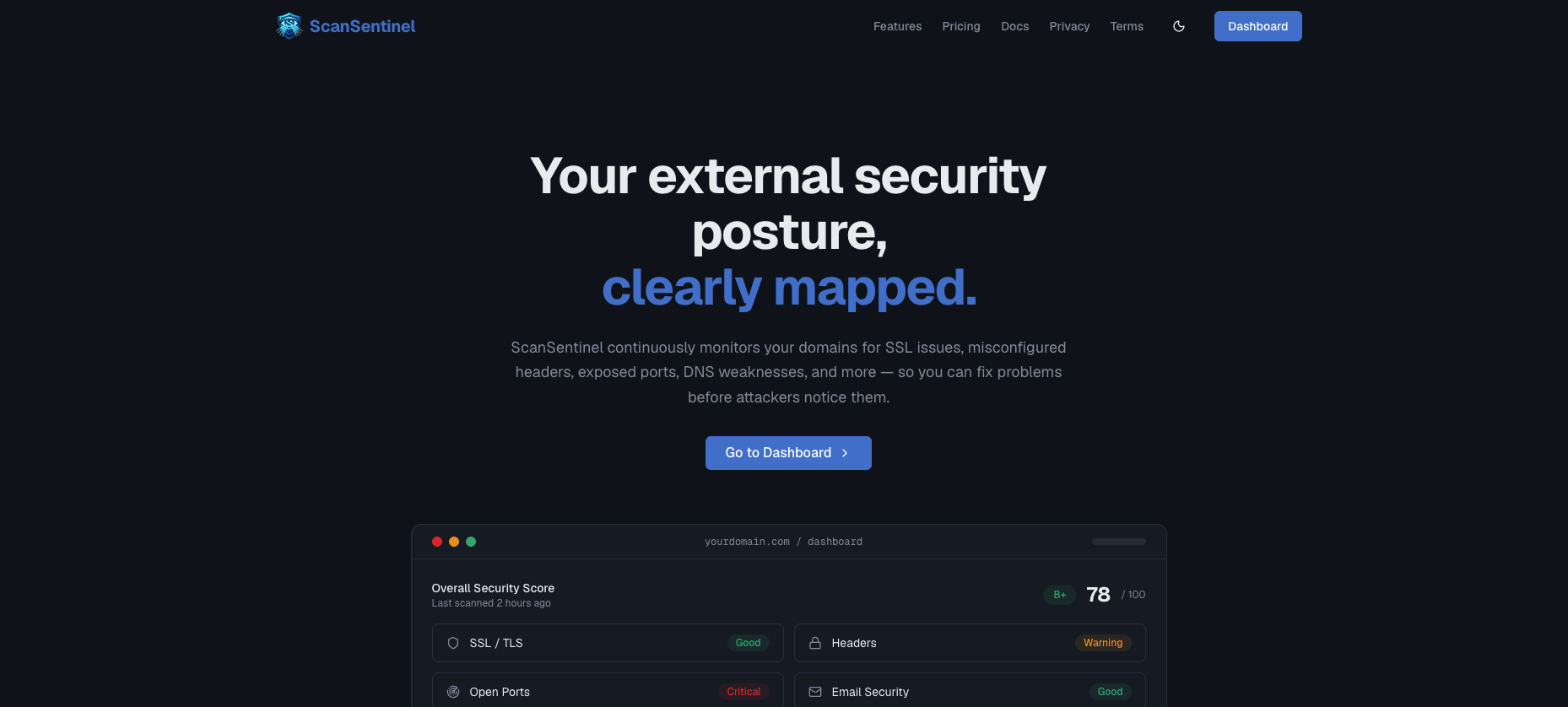
scansentinel
Inspiration
Security scanning tools can identify vulnerabilities, but many developers and small businesses struggle to understand what matters most, why it matters, and how to fix it.
I built ScanSentinel to bridge that gap: combining automated security intelligence with AI-powered analysis to make security findings easier to understand and act on.
What it does
ScanSentinel is an AI-powered security intelligence platform that helps organisations continuously monitor their external security posture.
The platform performs automated security checks and transforms technical findings into actionable insights. The AI Security Analyst helps explain risks, prioritise remediation steps, and provide clear guidance for improving security posture.
Key capabilities:
- Automated security scanning
- Security findings and risk scoring
- Multi-tenant SaaS architecture
- Background scanning with asynchronous workers
- AI-assisted security analysis powered by GPT-5.6
- Evidence-backed remediation recommendations
How I built it
ScanSentinel was built using a modern TypeScript-based SaaS architecture:
- Next.js App Router
- TypeScript
- Prisma ORM
- PostgreSQL
- BullMQ and Redis
- Docker Compose
- Clerk authentication
- OpenAI GPT-5.6 integration
The platform uses asynchronous workers to separate security scanning from AI processing. This ensures that AI analysis enhances the experience without affecting the reliability of the core scanning engine.
How I used Codex and GPT-5.6
Codex was used throughout development to analyse the existing architecture, design the AI Security Analyst integration, and accelerate implementation decisions.
GPT-5.6 powers the AI analysis layer by transforming structured security findings into understandable reports with prioritised recommendations.
Challenges
The biggest challenge was designing AI functionality that improves security workflows while maintaining reliability, privacy, and trust.
Security findings are treated as structured evidence rather than instructions, and AI output is validated before being presented to users.
What I learned
This project demonstrated how AI can augment developer and security workflows by turning complex technical information into practical decisions.
Built With
- api
- bullmq
- clerk
- css
- docker
- gpt-5.6
- next.js
- openai
- postgresql
- prisma
- react
- redis
- tailwind
- typescript


Log in or sign up for Devpost to join the conversation.