-
-
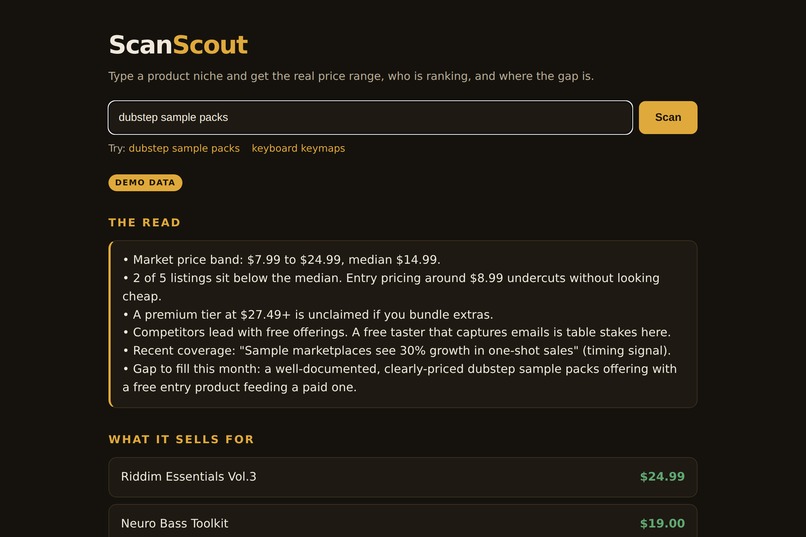
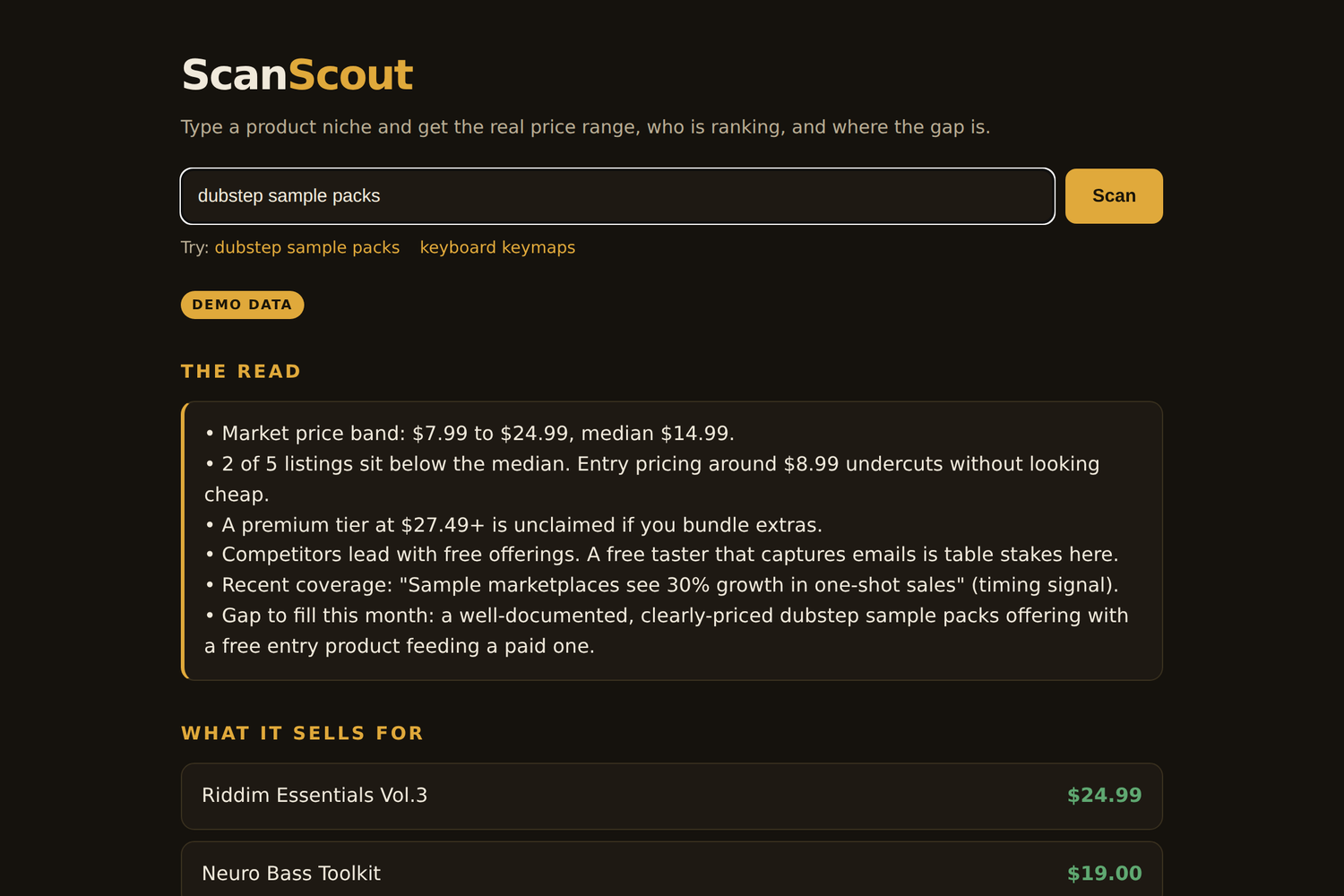
The read: price range, median, entry price and the open premium slot, pulled from three SerpApi engines.
-
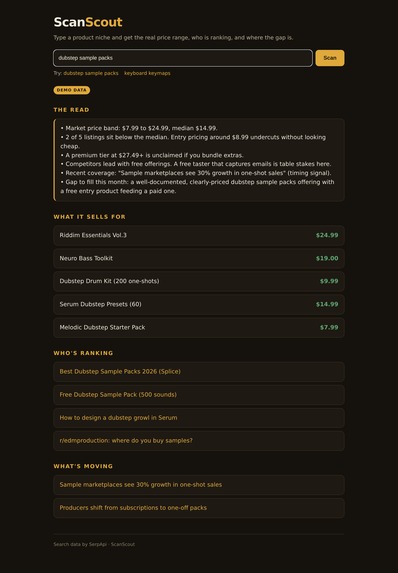
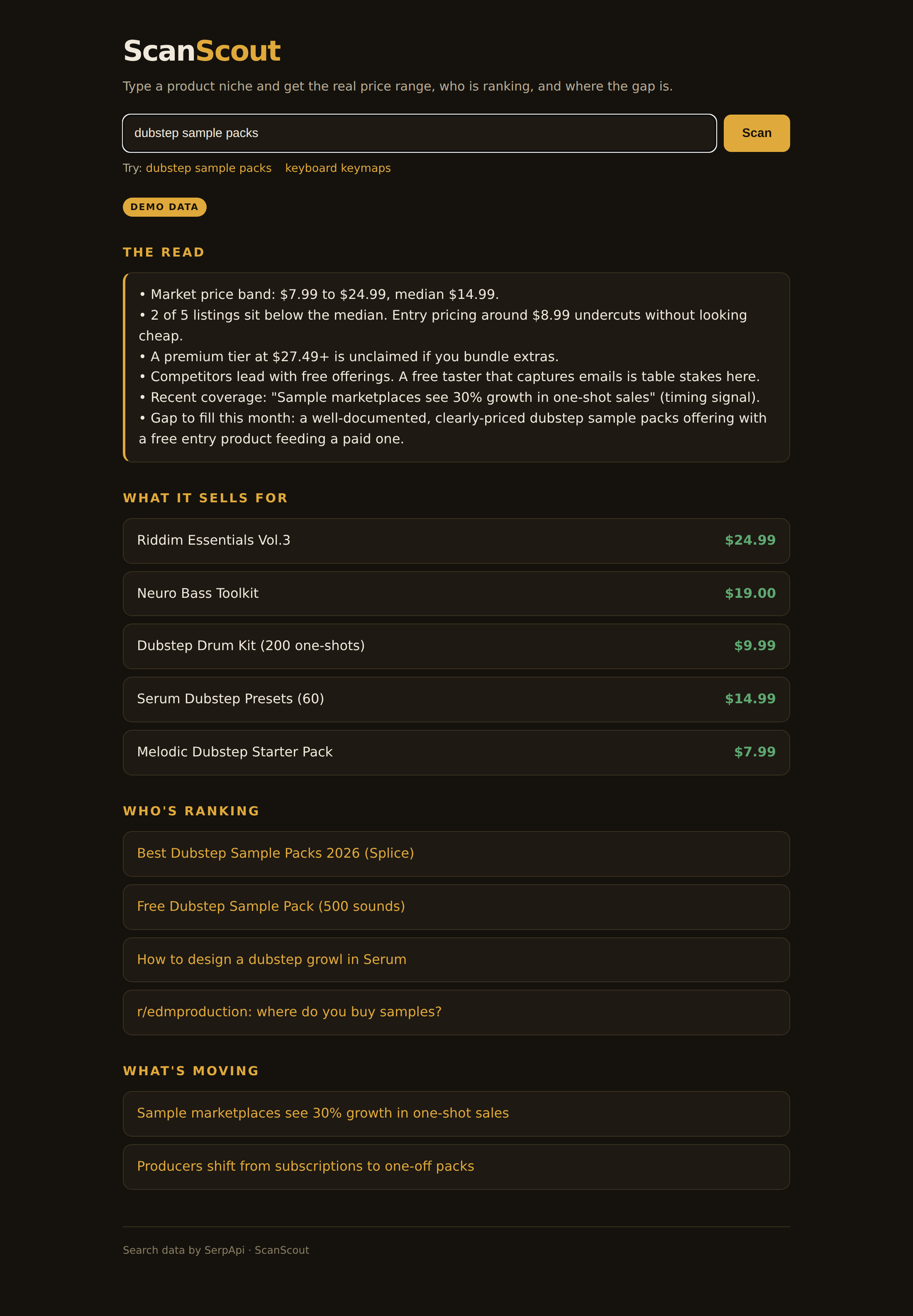
Full scan in demo mode: listed prices, who is ranking, and recent news. No API keys needed.
Inspiration
Every time I try to sell something online I end up with the same question: what is already out there, what does it sell for, and is there room for one more? I would open twenty tabs and guess. All of that data is public, it just is not in one place. SerpApi gives you a clean way to pull it, so I built the tool I wanted.
What it does
You type a niche, like "dubstep sample packs". ScanScout runs it through three SerpApi engines at the same time: Google Search for who is ranking, Google Shopping for real listed prices, and Google News for whether the space is moving. Then it gives you a read: the price range and median, an entry price that undercuts without looking cheap, a premium price point nobody is using yet, whether the competition leads with free offers, and one specific gap you could fill this month.
How I built it
Python and Flask in a single file with no database. Each scan fans out across the google, google_shopping and google_news engines. Prices get parsed with a forgiving regex and reduced to a range and a median, and the pricing suggestions come from that distribution. There is an optional LLM pass on top (OpenRouter) that writes a narrative summary, but if the key is missing the tool still gives a full answer from the statistical read instead of breaking.
Challenges I ran into
Making it useful without an LLM. The lazy version is to dump the results into a model and print whatever comes back. I wanted it to say something true even with no AI key at all, so the stats layer had to stand on its own: the median, how much of the field sits under it, and how much room there is above the top price. It also had to handle niches with zero priced listings, which is what you get for service businesses, and that needs a different answer.
Accomplishments that I'm proud of
It gives you a decision instead of a list. It also runs with zero setup. python app.py --demo uses bundled fixtures with no keys and no network, so it demos reliably and a judge can try it in under a minute.
What I learned
One SerpApi engine gives you search results. Three engines together give you a market. A price distribution only means something when you can see who is ranking next to it and whether the space is growing.
What's next for ScanScout
Saved scans so you can watch prices drift week to week, more engines (Google Trends for seasonality, eBay for resale floors), and CSV export.
Try it
pip install -r requirements.txt && python app.py --demo

Log in or sign up for Devpost to join the conversation.