-
-
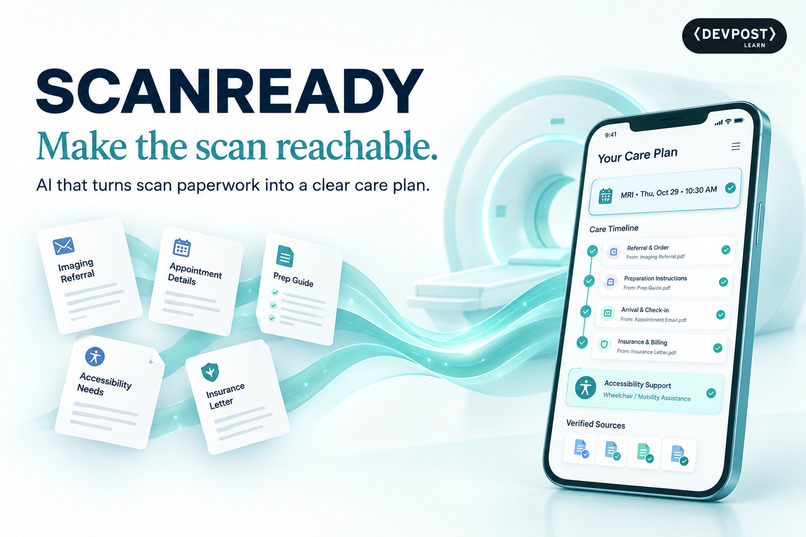
ScanReady - By Manan Yadav
-
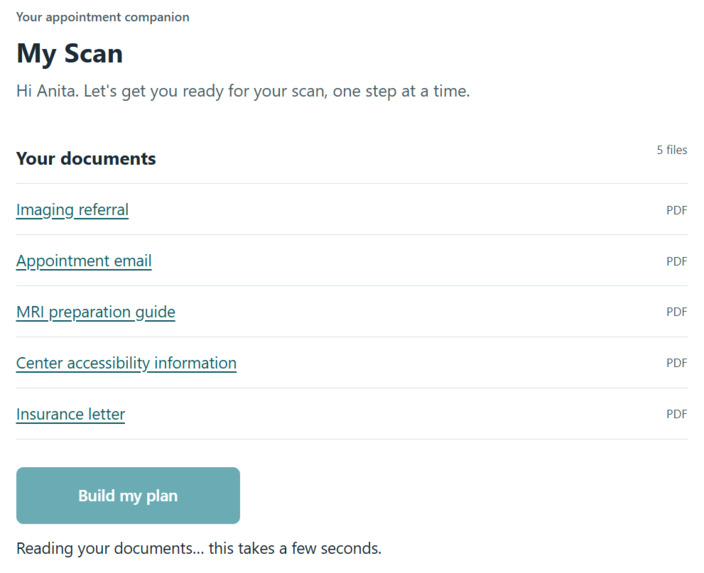
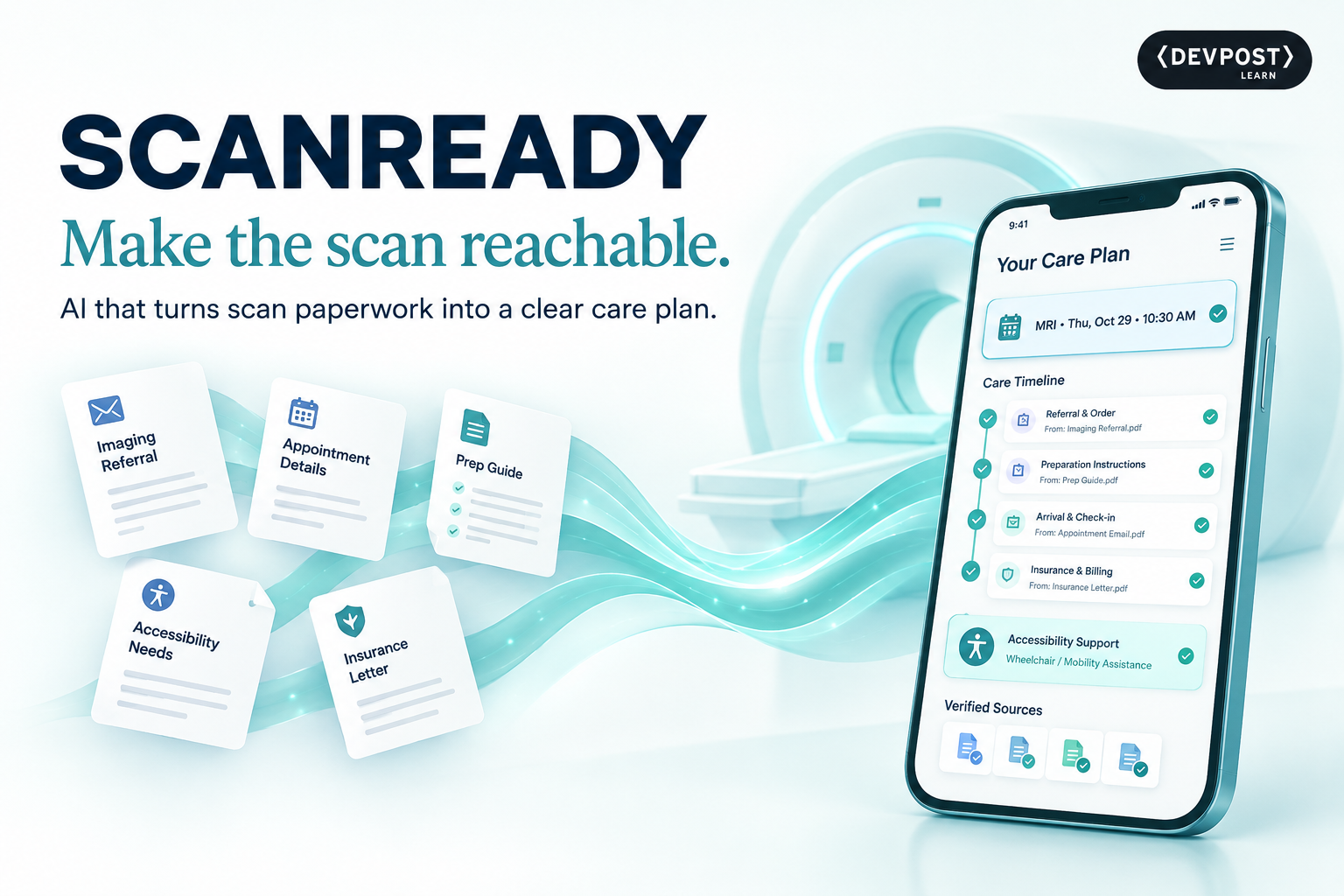
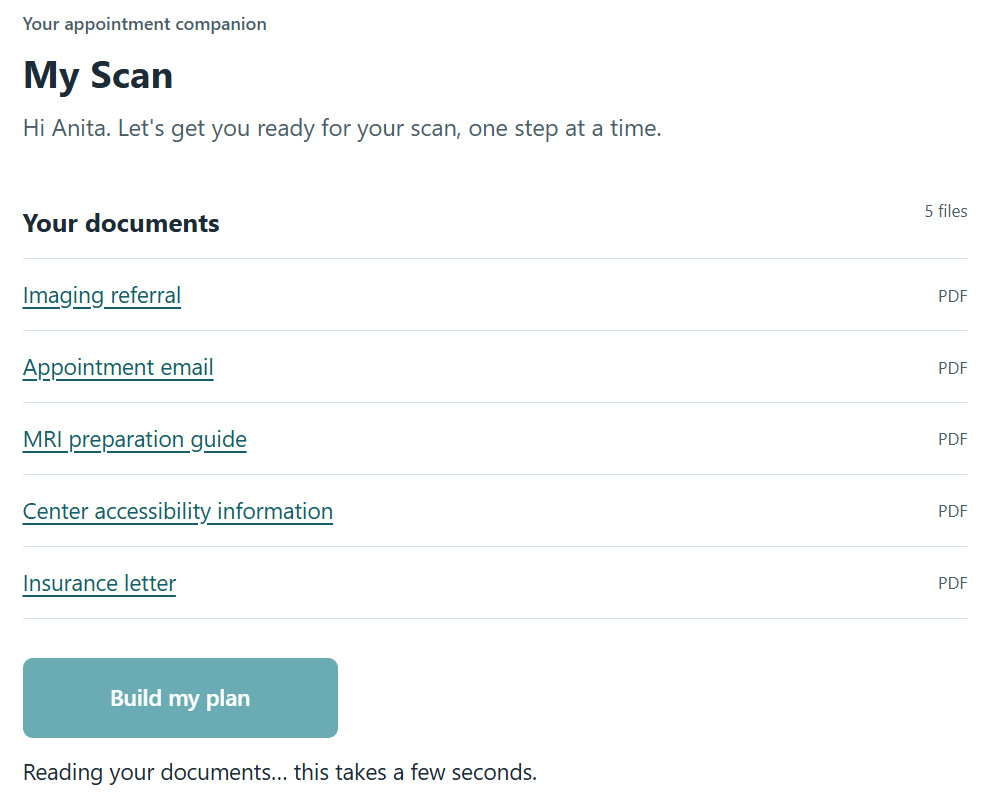
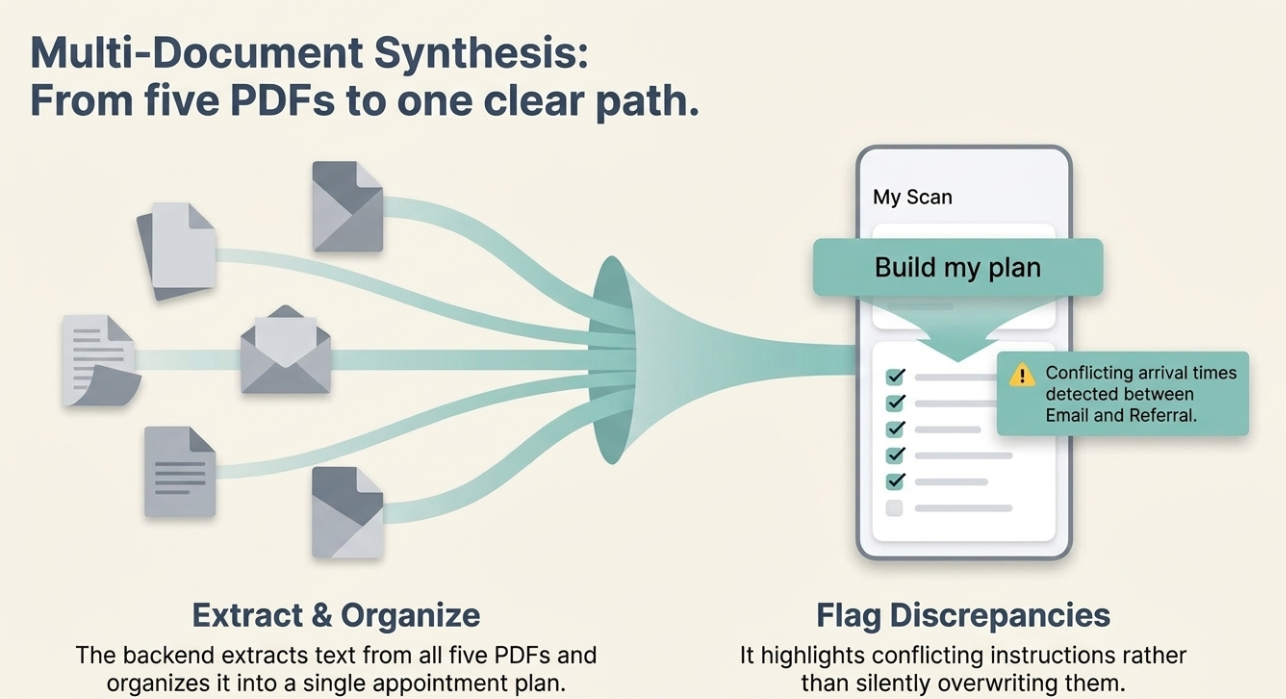
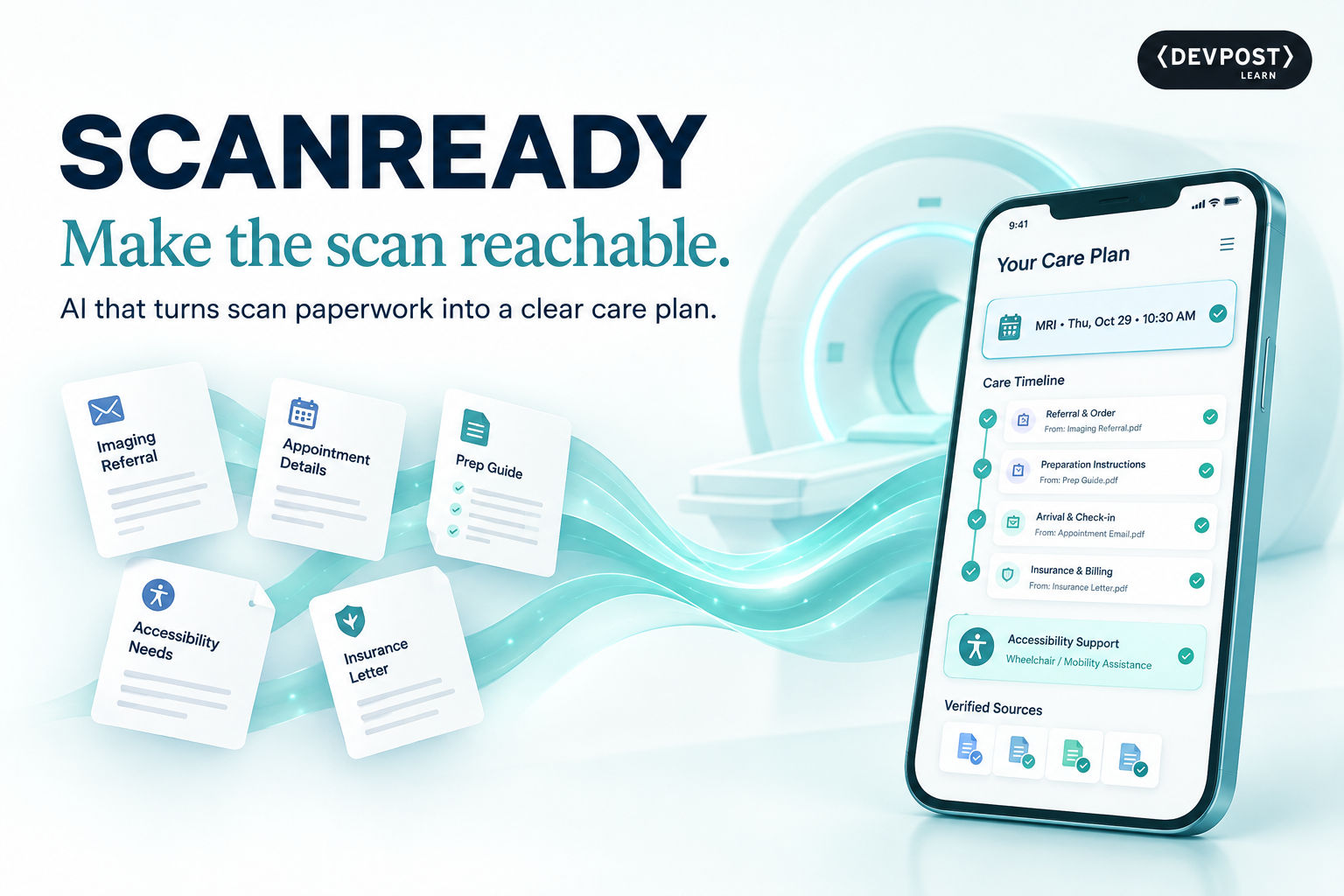
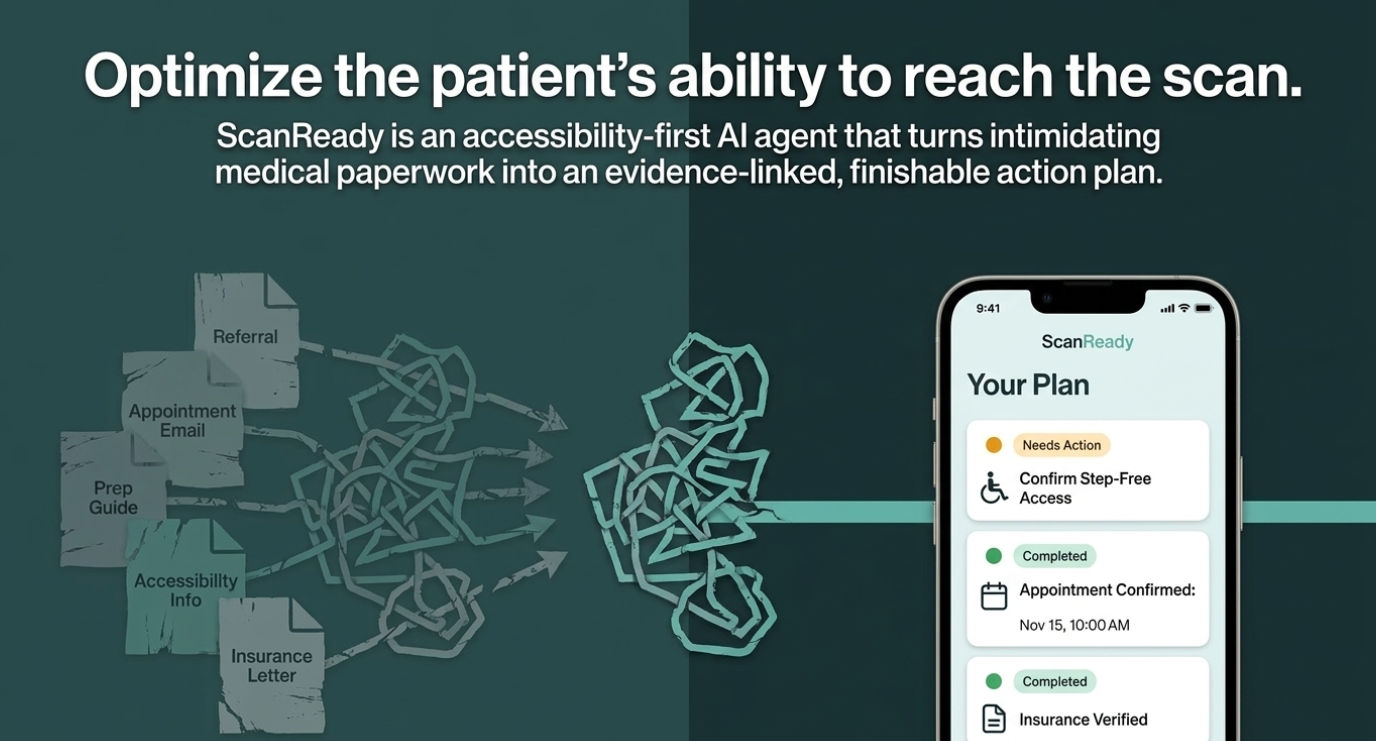
ScanReady ingests fragmented appointment documents into a single, organized care view.
-
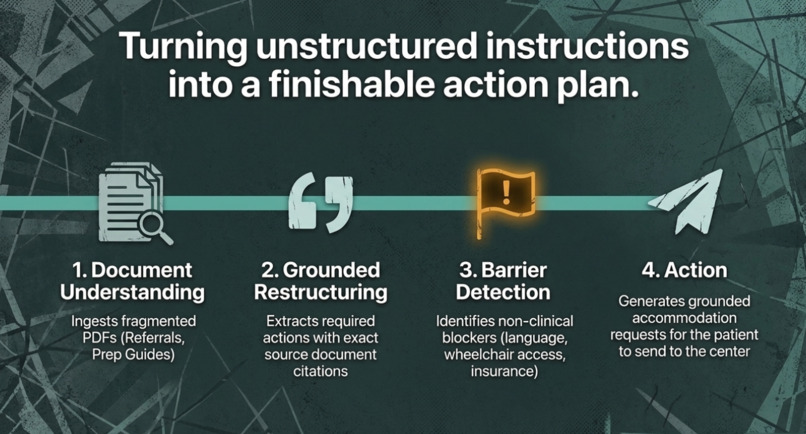
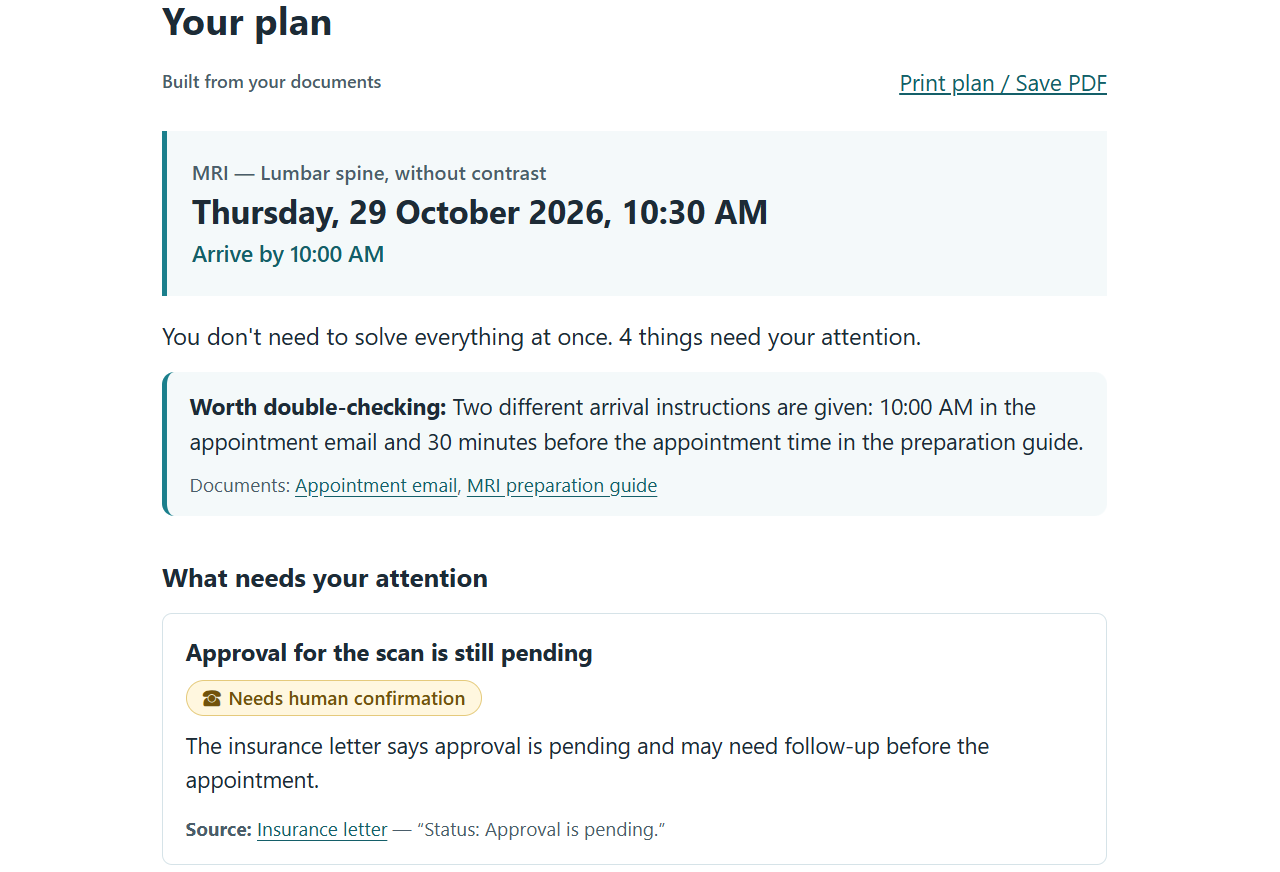
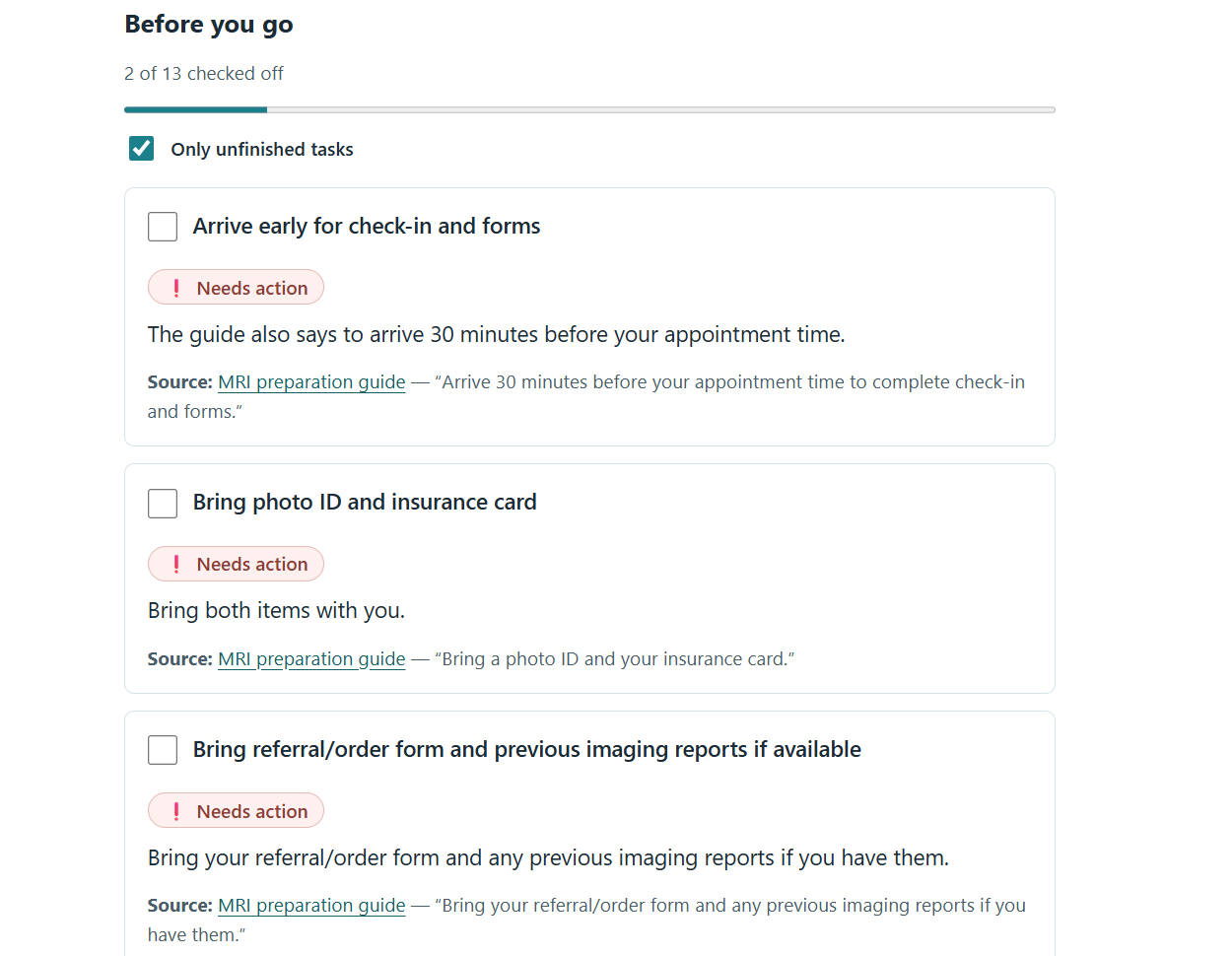
Every extracted action item includes verifiable source document badges and exact quoted text.
-
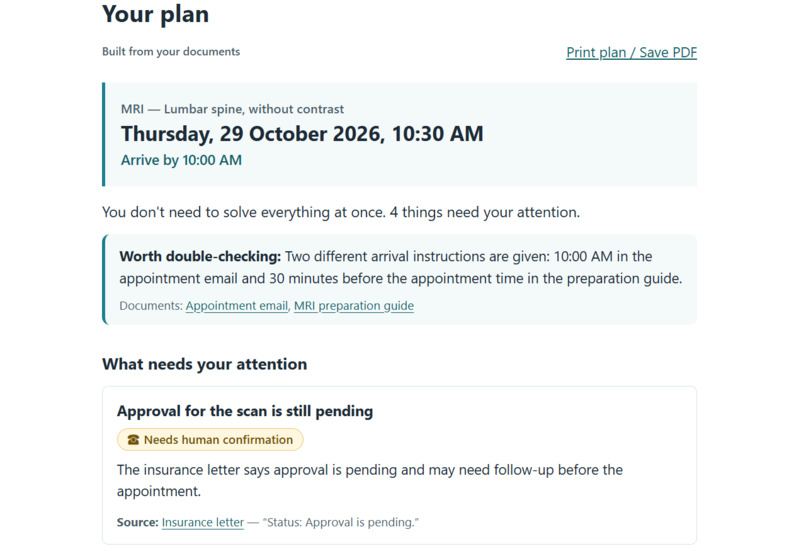
Step by Step Generated Plan
-
-
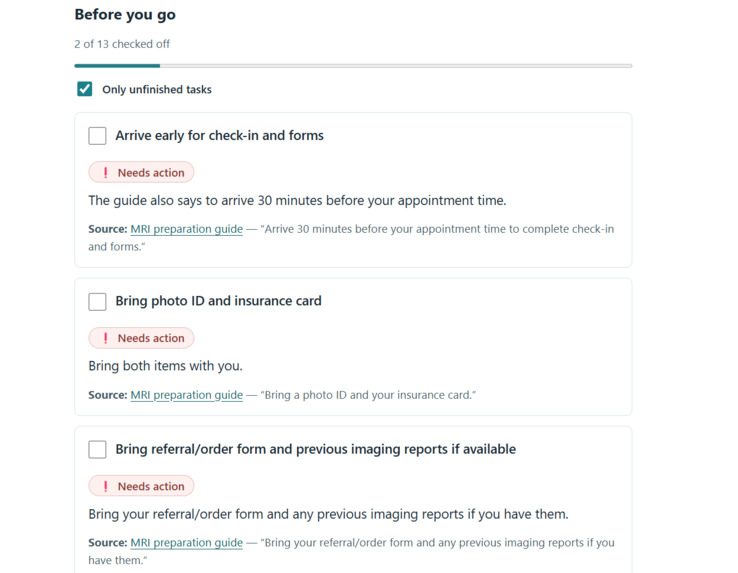
Checklist Completion to avoid last minute planning.
-
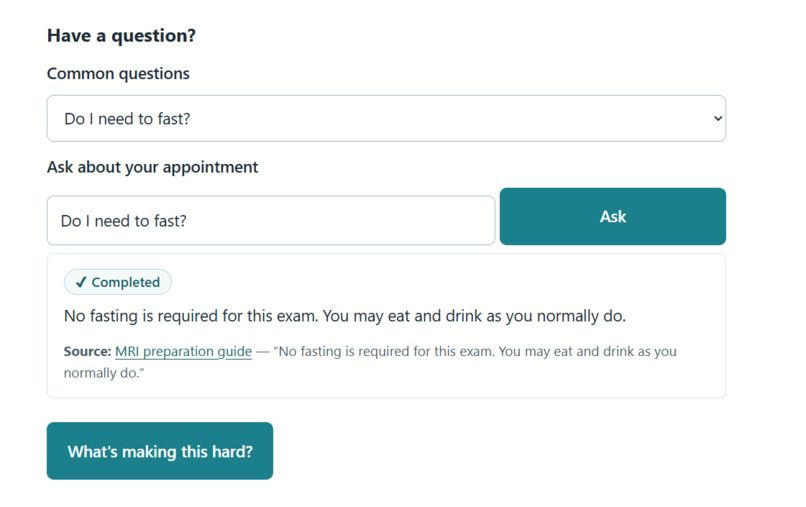
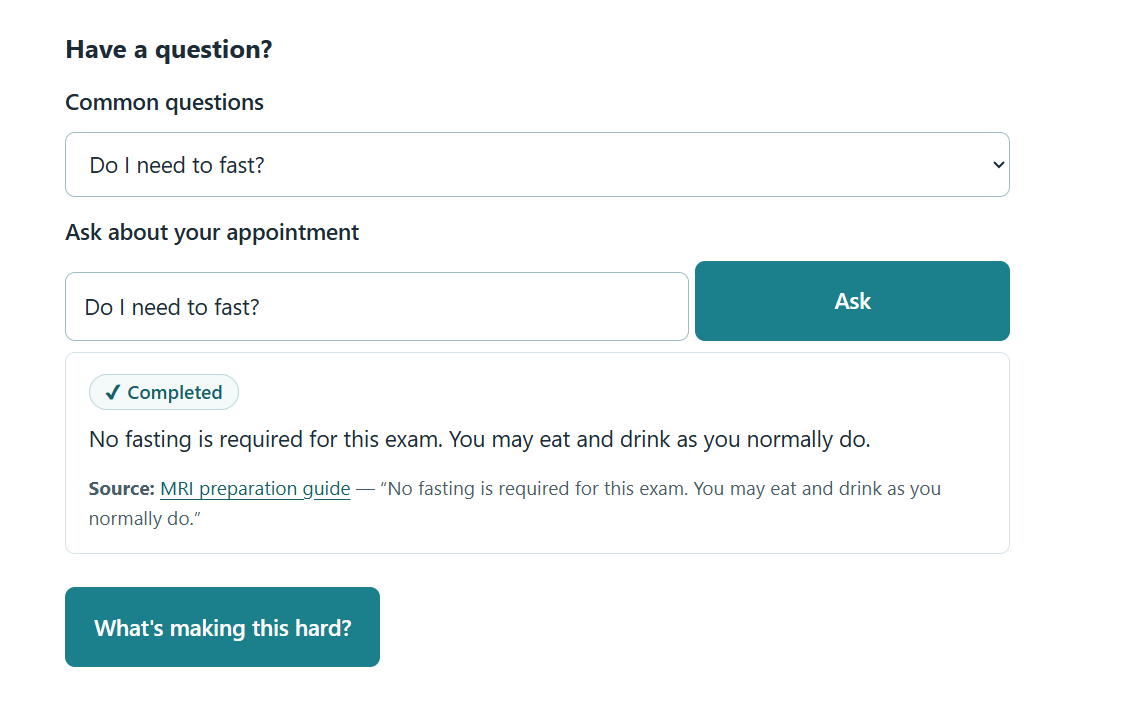
Scanready integrated Chatbot for diverse queries
-
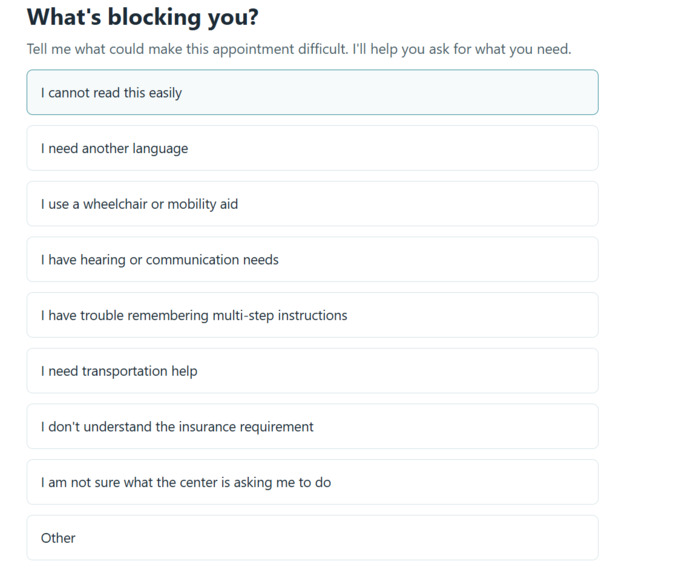
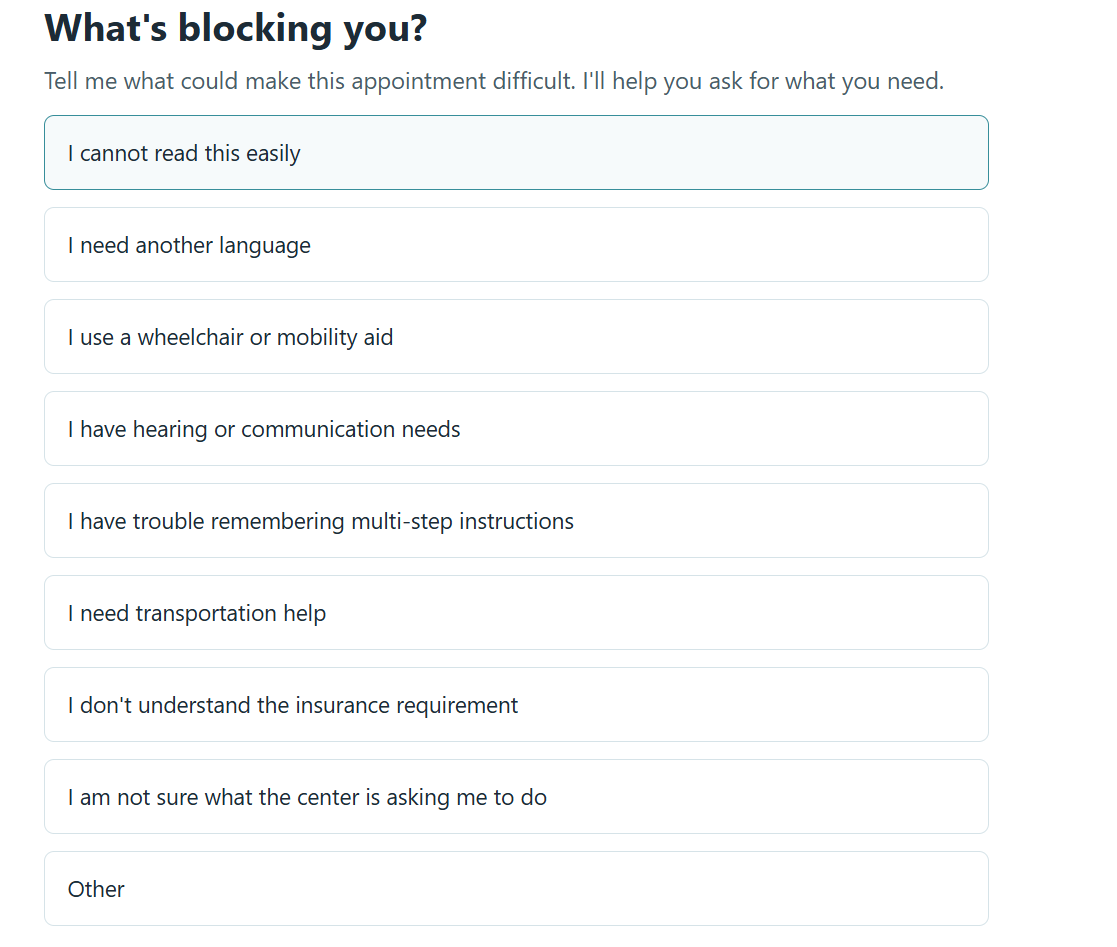
Preidentified Blockers listed to be chosen from.
-
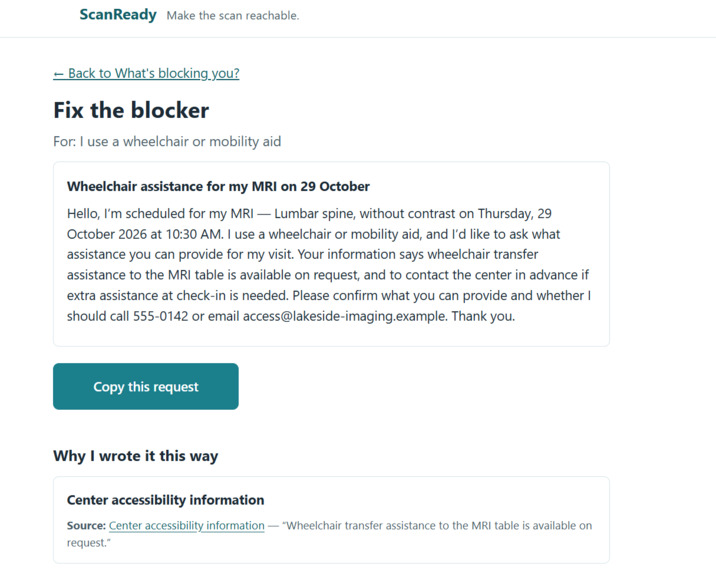
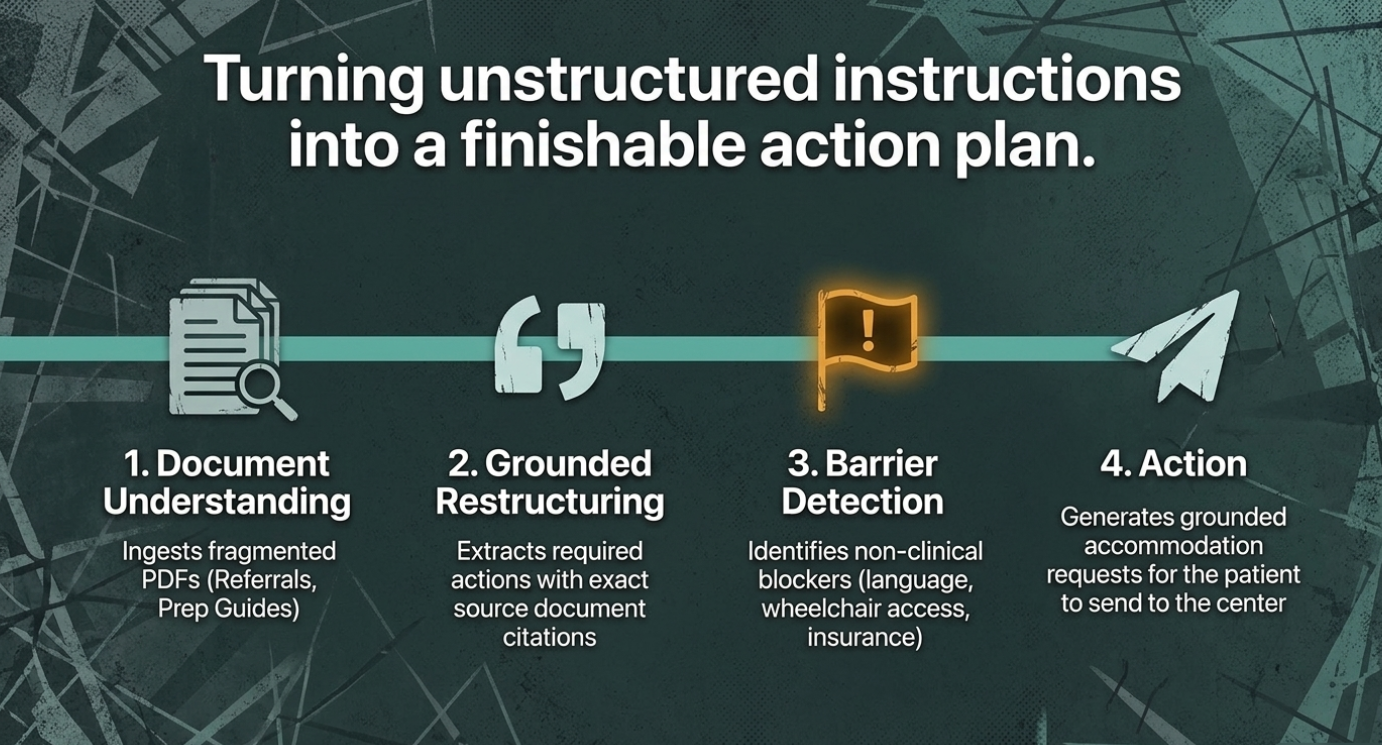
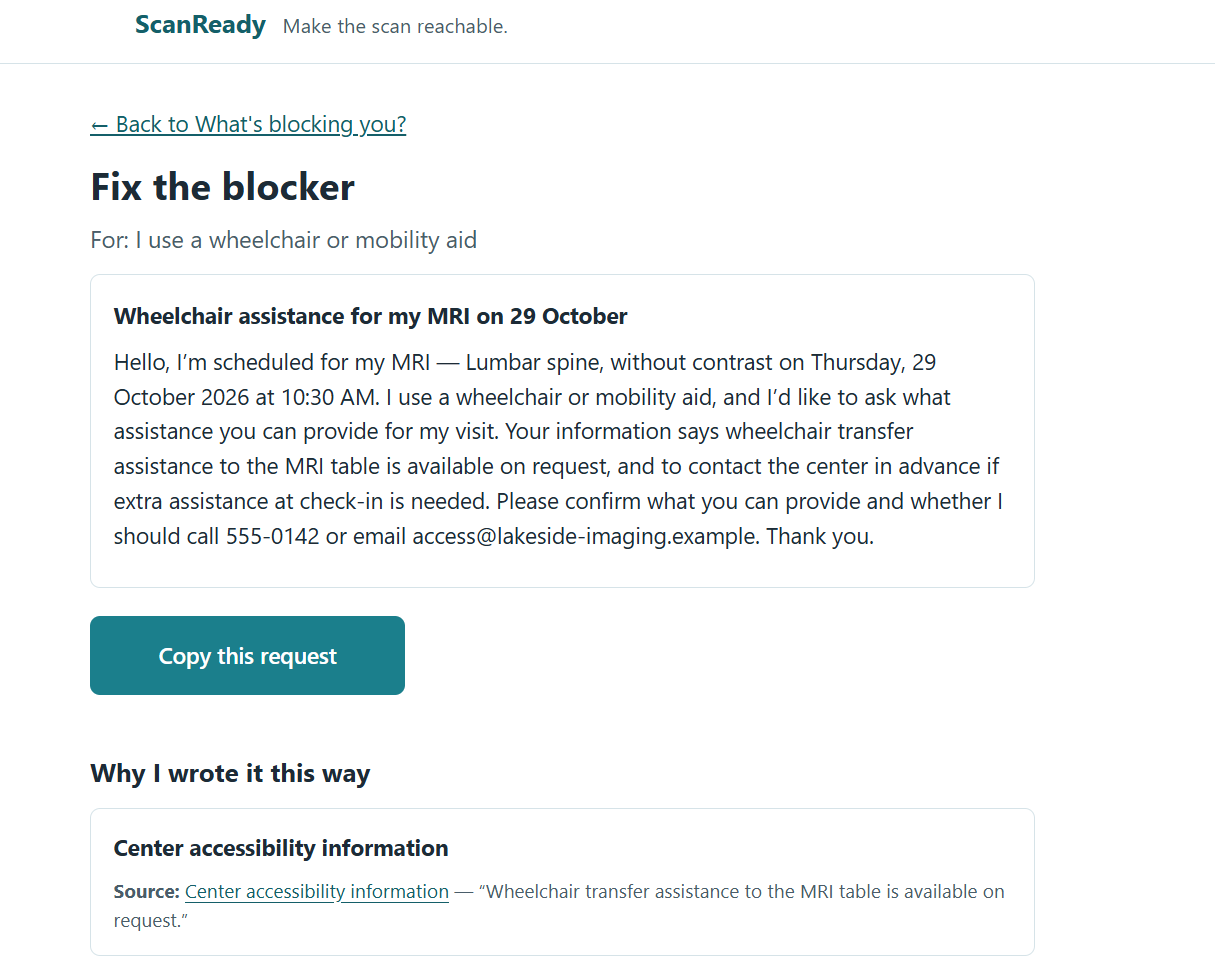
ScanReady detects non-clinical barriers and drafts formal accommodation requests to the imaging center.
-
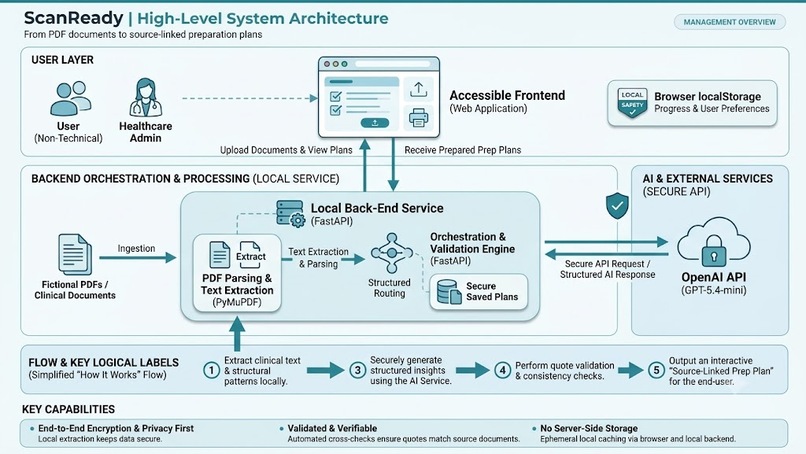
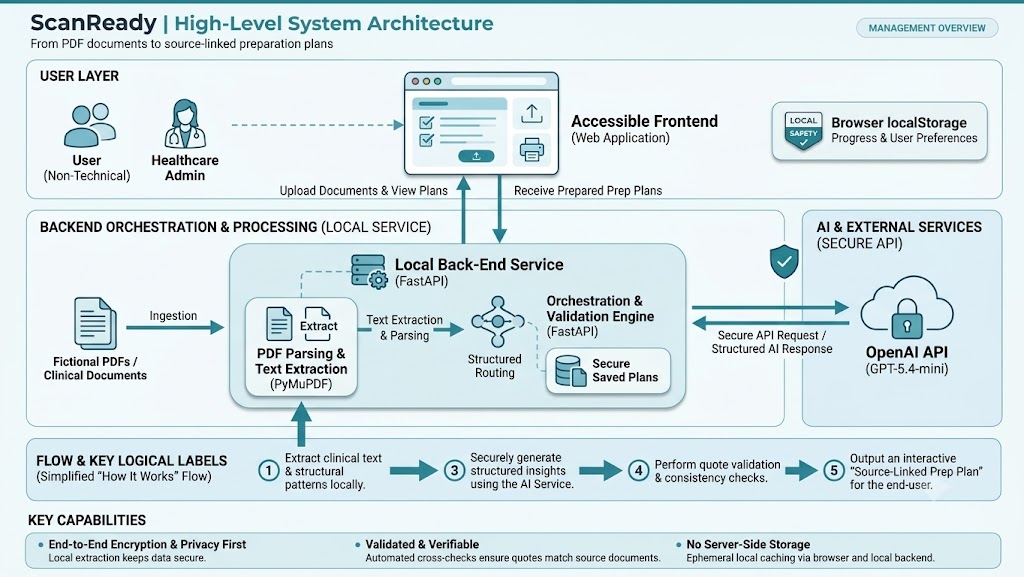
ScanReady technical architecture showing text extraction, LLM structured schema enforcement, and quote validation.
-
ScanReady
Inspiration
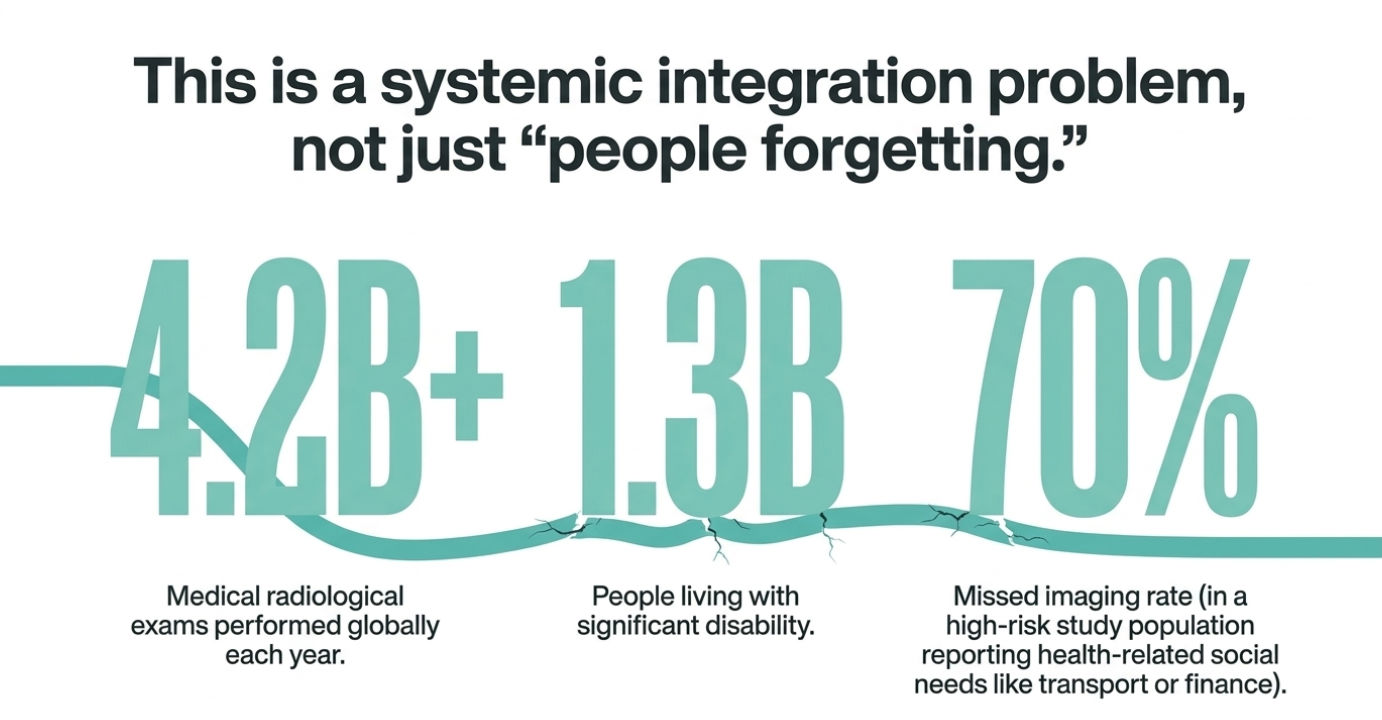
Diagnostic imaging is healthcare's most critical gateway to care, with over 4.2 billion medical radiological examinations performed globally every year. Yet receiving a referral is far from guaranteed access. Across the globe, 1.3 billion people live with significant disabilities and encounter severe physical, communicative, and administrative barriers when navigating healthcare.
Clinical imaging research reveals that 74.8% of missed outpatient radiology appointments are patient-initiated. Rather than simple forgetfulness, patients face daunting social and logistical hurdles: 13.5% miss appointments due to cost or insurance uncertainty, 6.4% due to transportation or parking issues, and 32.7% report health-related social needs. In high-risk oncology populations experiencing social needs, 82.9% report financial hardship, 40.2% face transportation obstacles, and 70% miss at least one subsequent scheduled imaging session.
As an AI/ML engineer working closely with healthcare workflows, I observed a stark operational paradox: while imaging equipment is ready, clinical orders are placed, and appointments are scheduled, patients routinely drop out because they are overwhelmed by everything surrounding the scan. Patients are handed 5+ fragmented documents - referral notes, appointment emails, preparation PDFs, accessibility guides, and insurance pre-authorization letters - and expected to execute 7 separate administrative steps independently.
ScanReady was inspired by the urgent need for a patient-side, accessibility-first AI guide. The inspiration crystallized around patients like Anita (age 40), who has limited English proficiency and mobility needs, facing a stack of conflicting instructions on her phone without support during work hours. A referral for diagnostic imaging is not access to diagnostic imaging - ScanReady bridges that gap.
What It Does
ScanReady acts as an intelligent, source-grounded access layer between the clinical referral and the diagnostic imaging appointment:
- Document Intake & Plan Extraction: Ingests appointment emails, preparation PDFs, referral slips, and accessibility guides, compiling them into a single, personalized care timeline (e.g., "MRI: Thursday 29 Oct, 10:30 AM").
- 100% Source Grounding: Every generated task and instruction links directly to its source document with an exact citation quote, eliminating unverified assumptions.
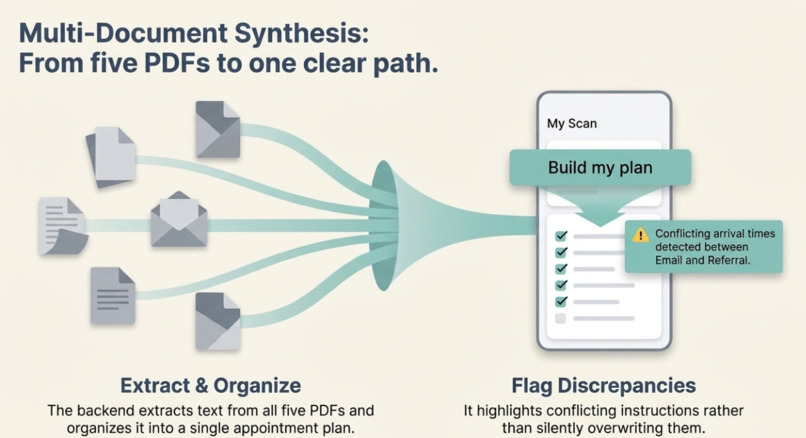
- Discrepancy Resolution: Detects conflicting instructions (such as differing arrival times across documents) and highlights them clearly instead of silently guessing.
- Blocker Detection & Request Generation: Identifies non-clinical barriers (wheelchair transfer needs, interpreter requests, transportation, insurance pre-authorization) and drafts formal, copyable accommodation requests to the imaging center.
- "Won't-Guess" Clinical Safety Architecture: If asked a clinical question not answered in the uploaded materials (e.g., medication rules or contrast safety), ScanReady explicitly refuses to guess and provides the exact question for the patient to ask their care team.
ScanReady transforms a chaotic pile of paperwork into a clear care journey with active status indicators ("2 blockers, 5 completed"), allowing anxious patients to complete their appointments independently and confidently.
How We Built It
ScanReady was engineered as a lightweight, single-process web application designed for accessibility, transparency, and deterministic safety:
- Frontend: Framework-free HTML, CSS, and plain JavaScript styled in a calm, high-contrast palette (soft teal
#1b7f8cand crisp white with Segoe UI typography). Built mobile-first with 18px base typography, keyboard navigation, screen-reader labels, status text-plus-icon indicators, and 200% zoom support. - Backend: Python 3.13 web service built with FastAPI and Uvicorn running locally on port 8010.
- Document Processing: PyMuPDF extracts structured text from uploaded PDF document bundles.
- AI Orchestration: OpenAI API (
gpt-5.4-mini) configured with Pydantic structured output schemas (Plan,Blocker,Request,Answer) for strict JSON response parsing. - Citation Verification Layer: Custom backend logic validates every generated quote against raw extracted document text, automatically stripping unverified claims before rendering.
- Fallback Cache: Includes
backend/cache/plan.jsonas a labeled fallback result to guarantee UI reliability if live API calls fail. - Development Methodology: Developed using the Devpost Learn AI Skill Pack across a 5-stage verified lifecycle (
start→scope→prd→spec→build→ship).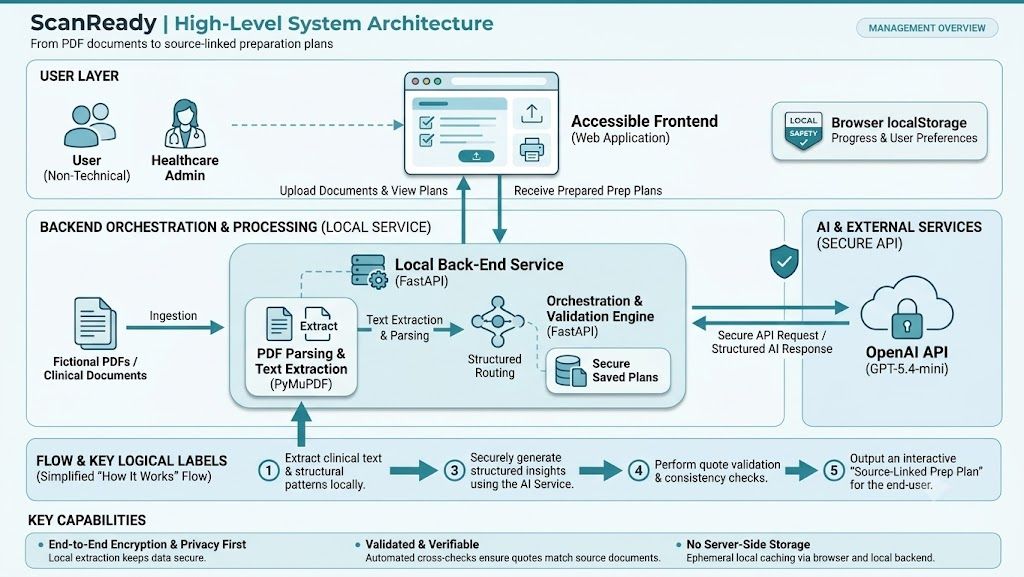 ---
Challenges We Ran Into
- Enforcing Zero-Hallucination Boundaries: Preventing LLMs from inventing plausible medical advice required establishing a hard safety guardrail. When documents lack explicit answers, forcing the model to emit a structured "won't-guess" payload with a care-team question required rigorous prompt engineering, system instructions, and Pydantic schema validation.
- Strict Citation Verification: Ensuring generated quotes existed verbatim in source PDFs required implementing backend string matching. Any LLM-generated quote that failed exact substring verification against extracted PDF text was automatically filtered out prior to rendering.
- Contradictory Document Handling: Handling conflicting documents (e.g., referral letter specifying one check-in time vs. appointment email stating another) required teaching the extractor to flag discrepancies explicitly rather than picking one arbitrarily.
Accomplishments That We're Proud Of
- 100% Traceable Action Plans: Built a system where every single action item points directly to verifiable source quotes from uploaded documents.
- Clinical Safety Shield: Successfully implemented and verified a guardrail that prevents dangerous clinical assumptions, passing test queries on medication and fasting rules.
- Accessibility-First Design: Created a calm, clutter-free interface featuring clear status labels (text + icons), 18px base typography, and single-action cards without a confusing chat-box interface.
- Clean 5-Slice Execution: Shipped a fully functioning proof of concept mapped cleanly to PRD specifications without scope bloat.
What We Learned
- The Unit of Intelligence: We learned that "the unit of intelligence is not the document; it is the patient's ability to complete the diagnostic journey."
- Grounding Outperforms Integration: Grounding AI on source text eliminates the need for complex hospital/FHIR integrations while drastically reducing patient anxiety.
- Plan-First Development: Following a plan-first workflow (
scope→prd→spec→build) prevented scope creep and ensured a focused, high-impact proof of concept.
What's Next for ScanReady
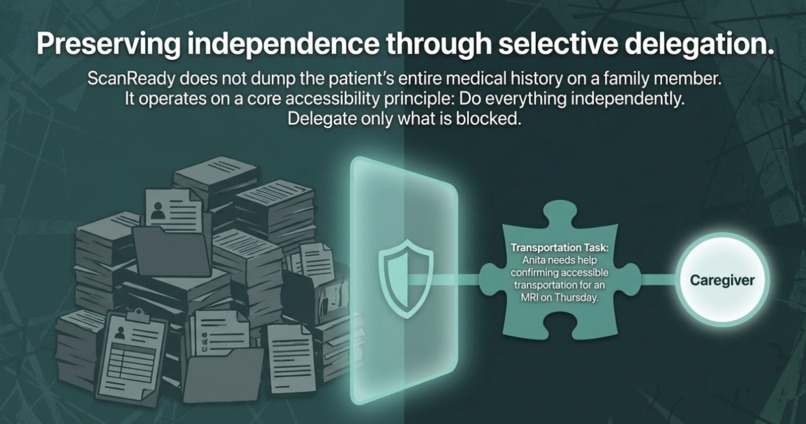
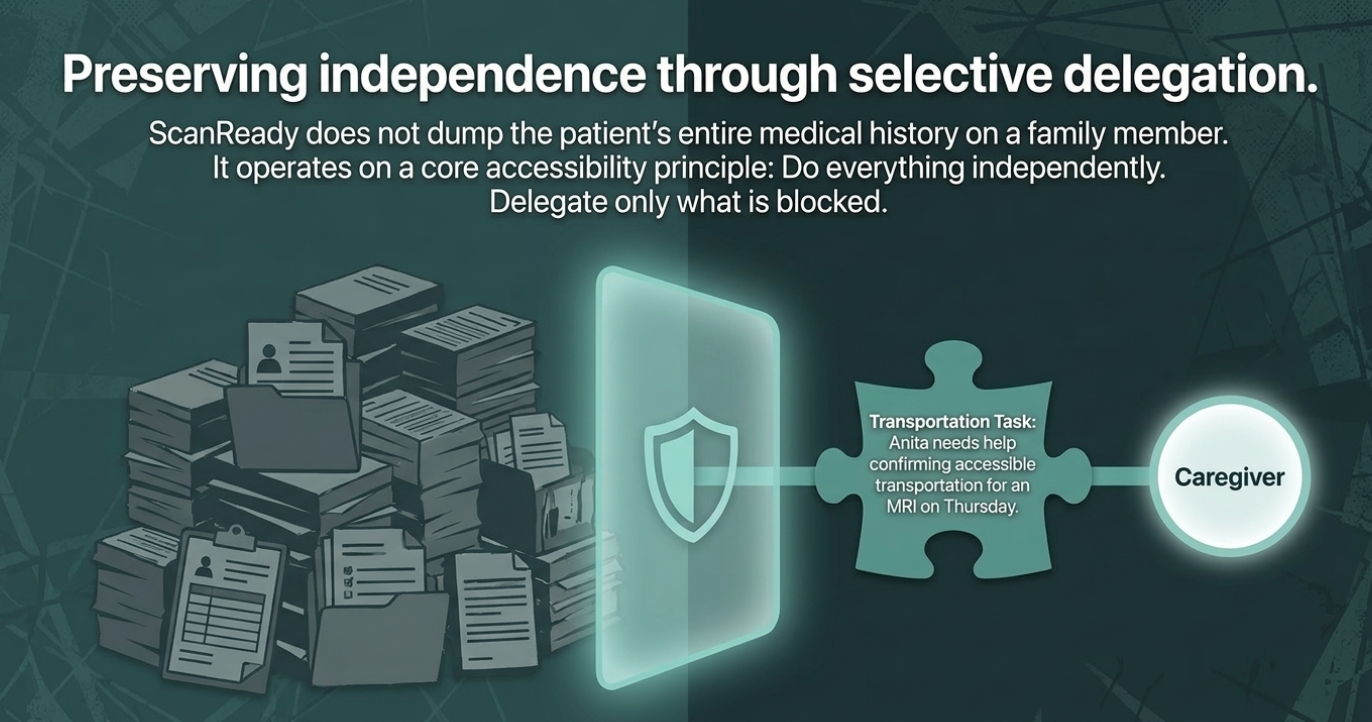
- Selective Task Delegation: Enabling patients to delegate single blocked tasks (e.g., transportation setup) to a caregiver while keeping full medical documents private.
- Multilingual Audio & Voice Navigation: Expanding plain-language summaries into spoken audio for low-literacy users.
- Direct Center Messaging: Integrating lightweight SMS/email submission for drafted requests.
- Multi-Appointment Care Journeys: Tracking multi-stage diagnostic pathways across multiple health centers over time.
Built With
- claude
- css
- devpost
- fastapi
- html
- javascript
- python
- render

Log in or sign up for Devpost to join the conversation.