-
-
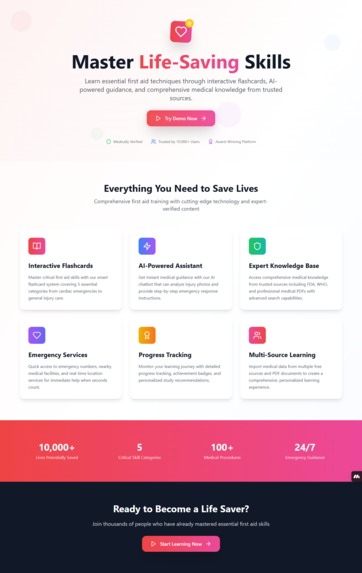
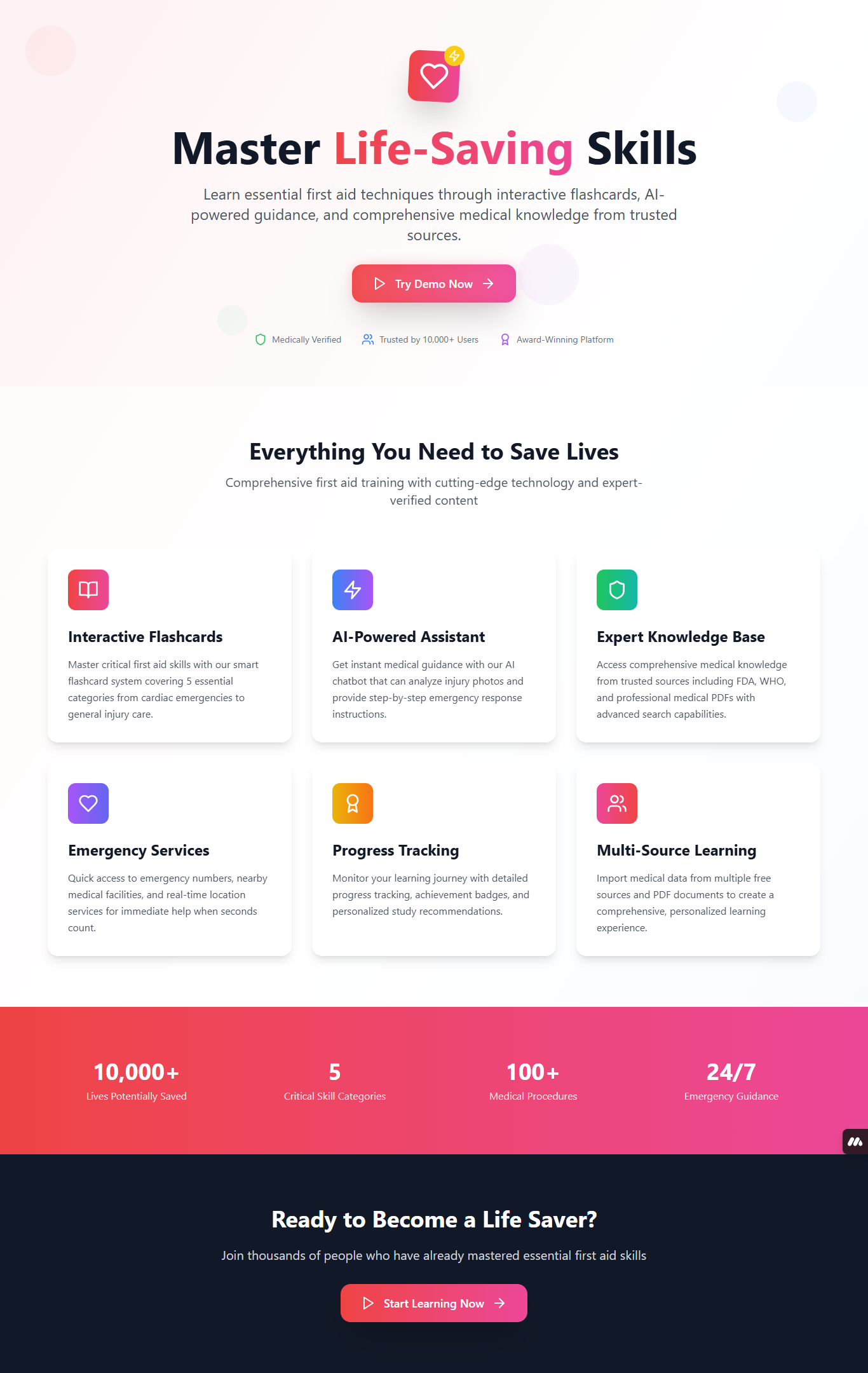
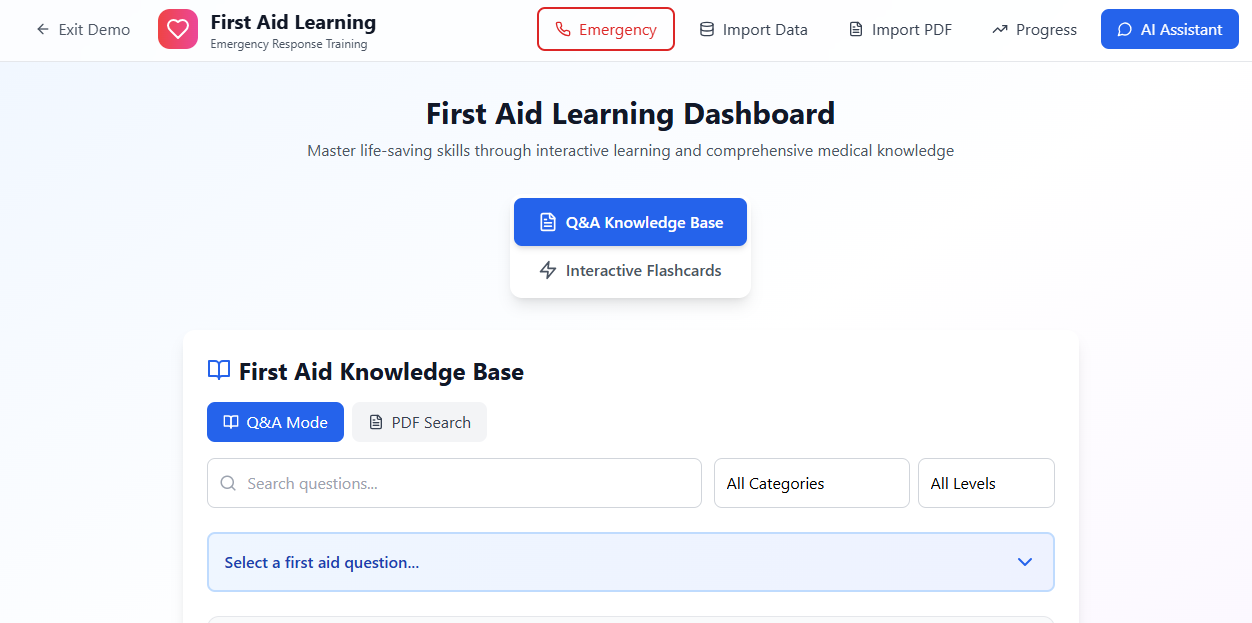
Landing page
-
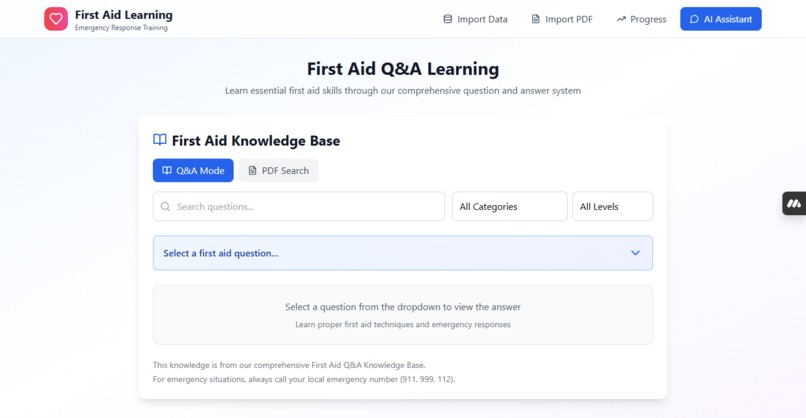
Older version
-
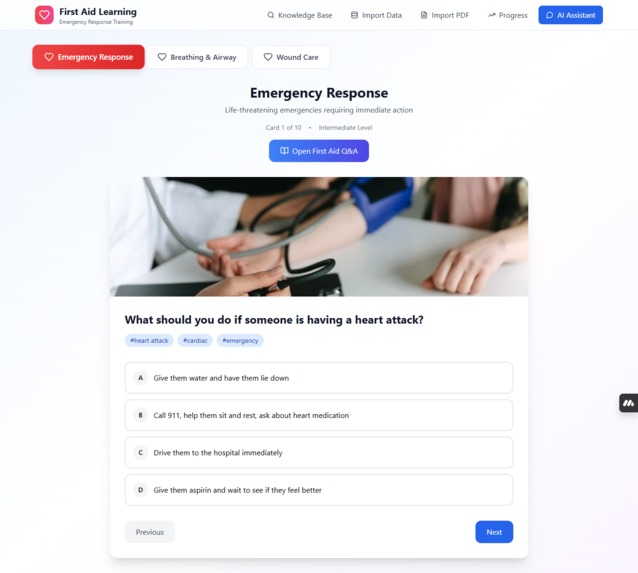
The Initial Design before optimization for Deployment
-
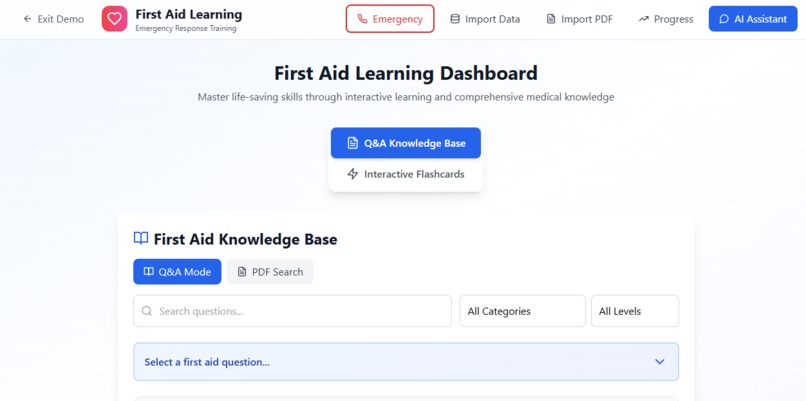
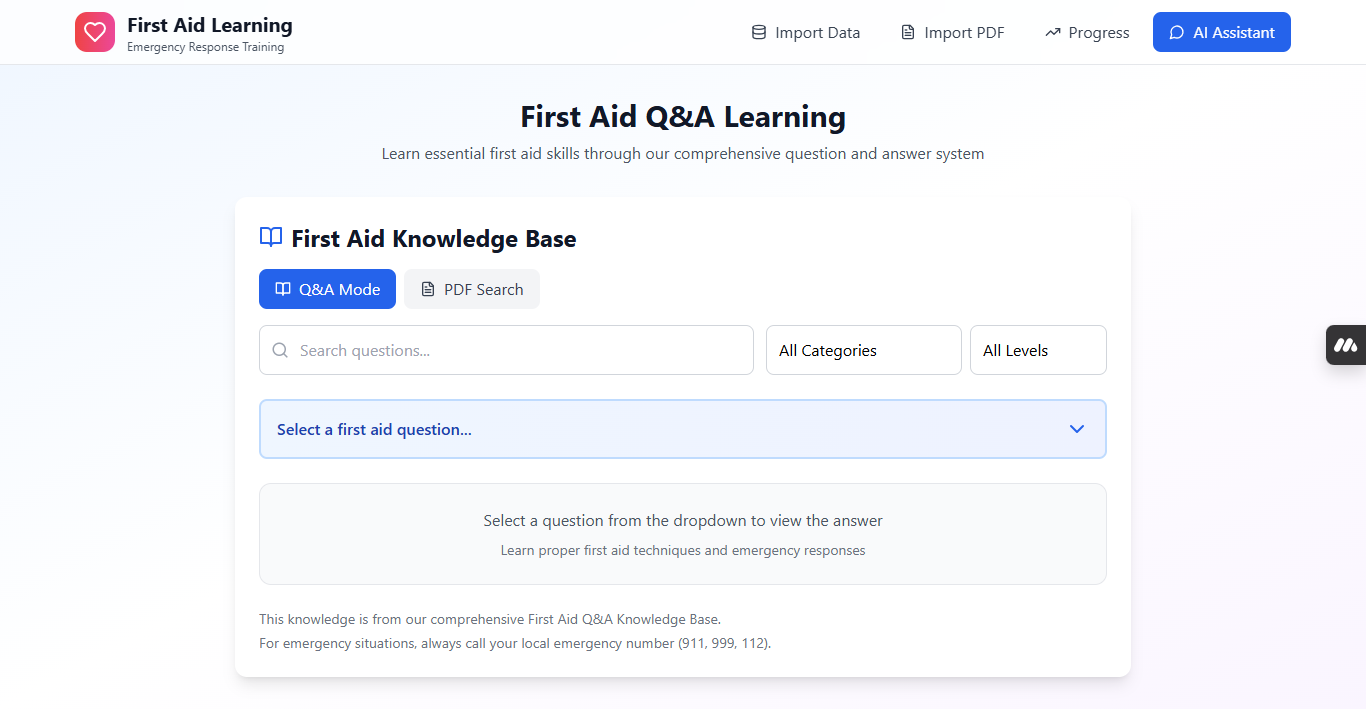
final optimized dashboard
-
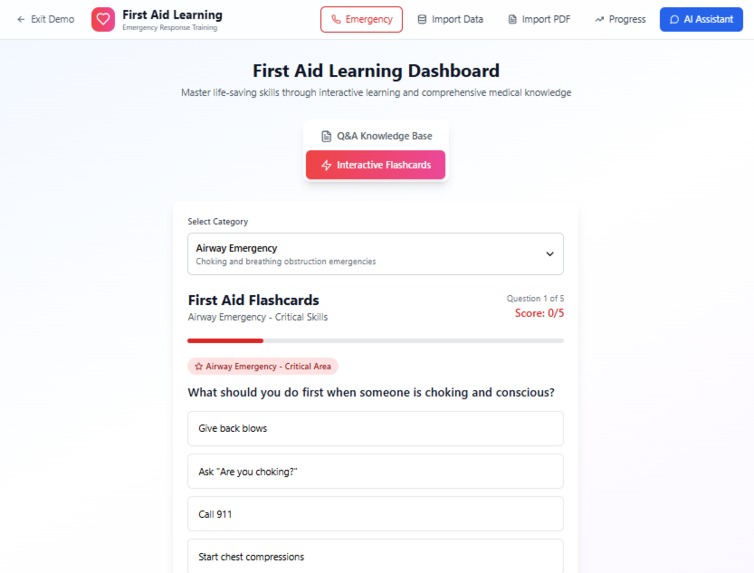
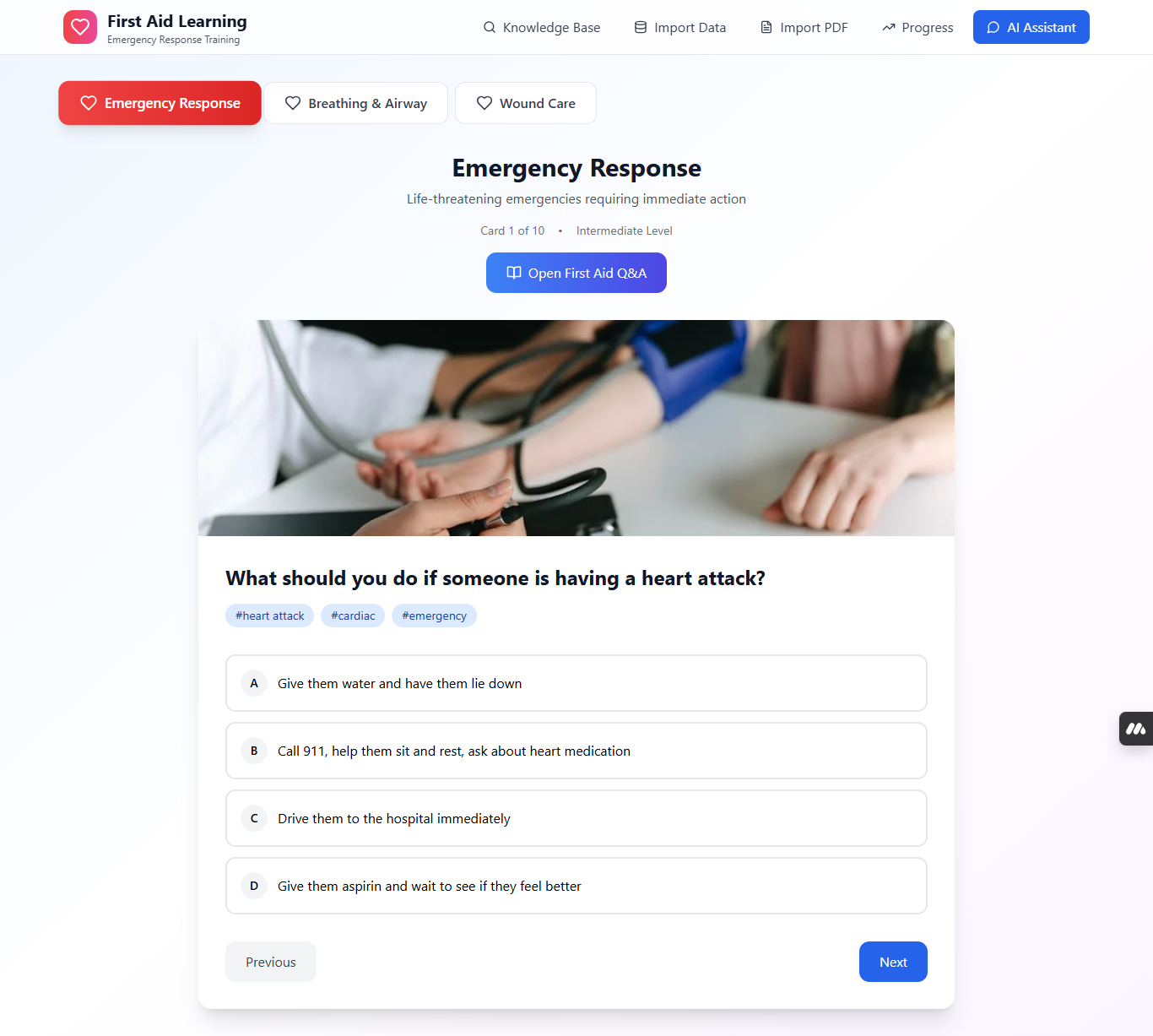
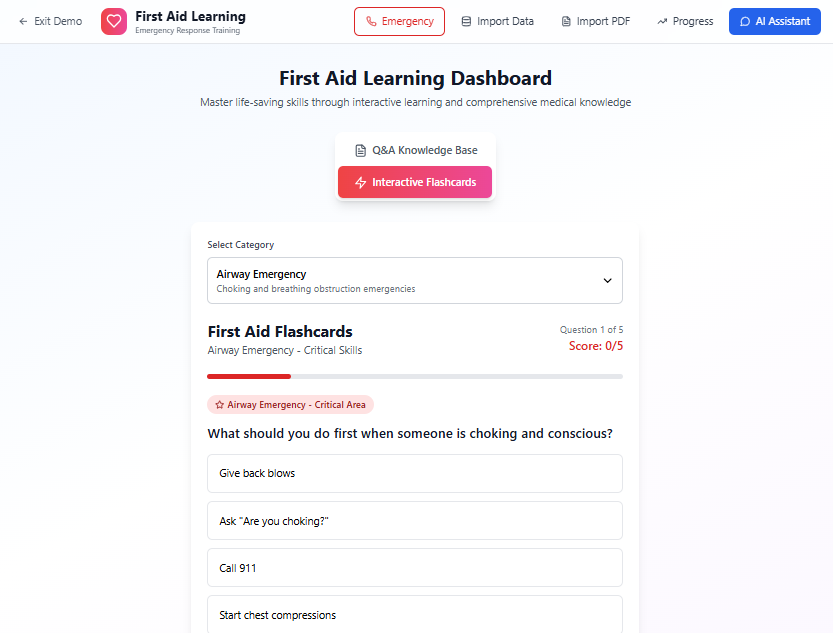
Flash cards
-
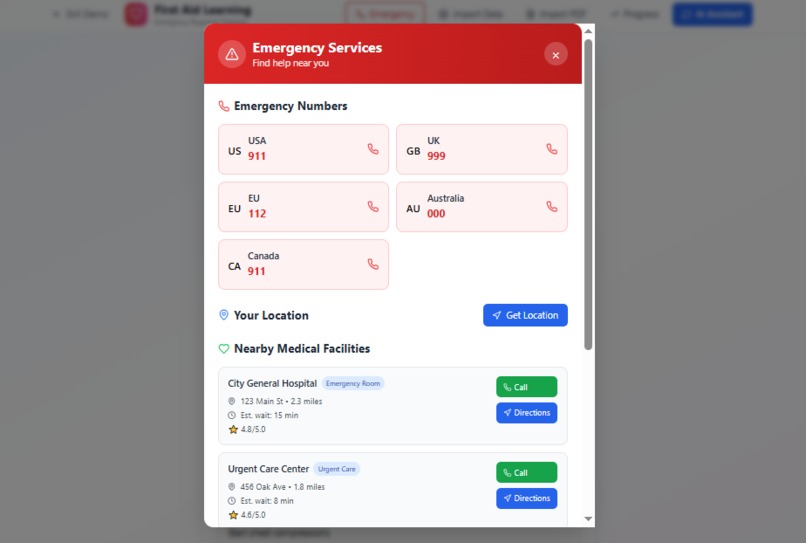
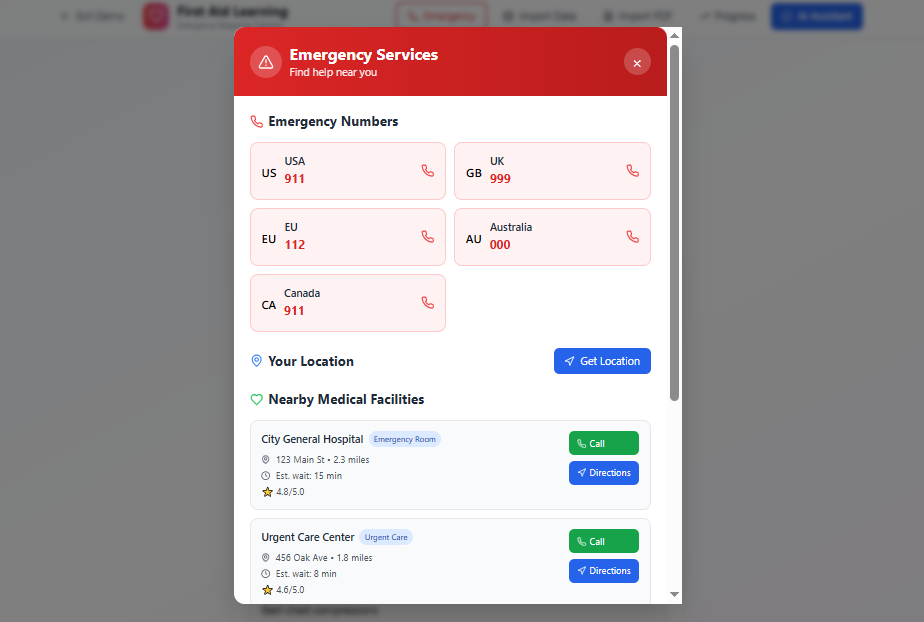
Emergency
-
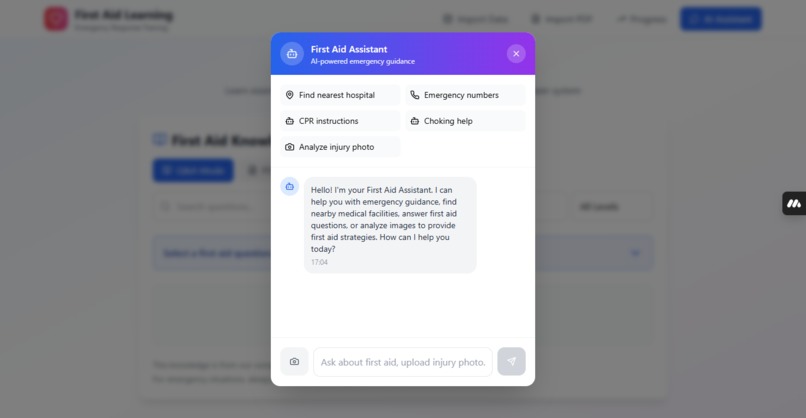
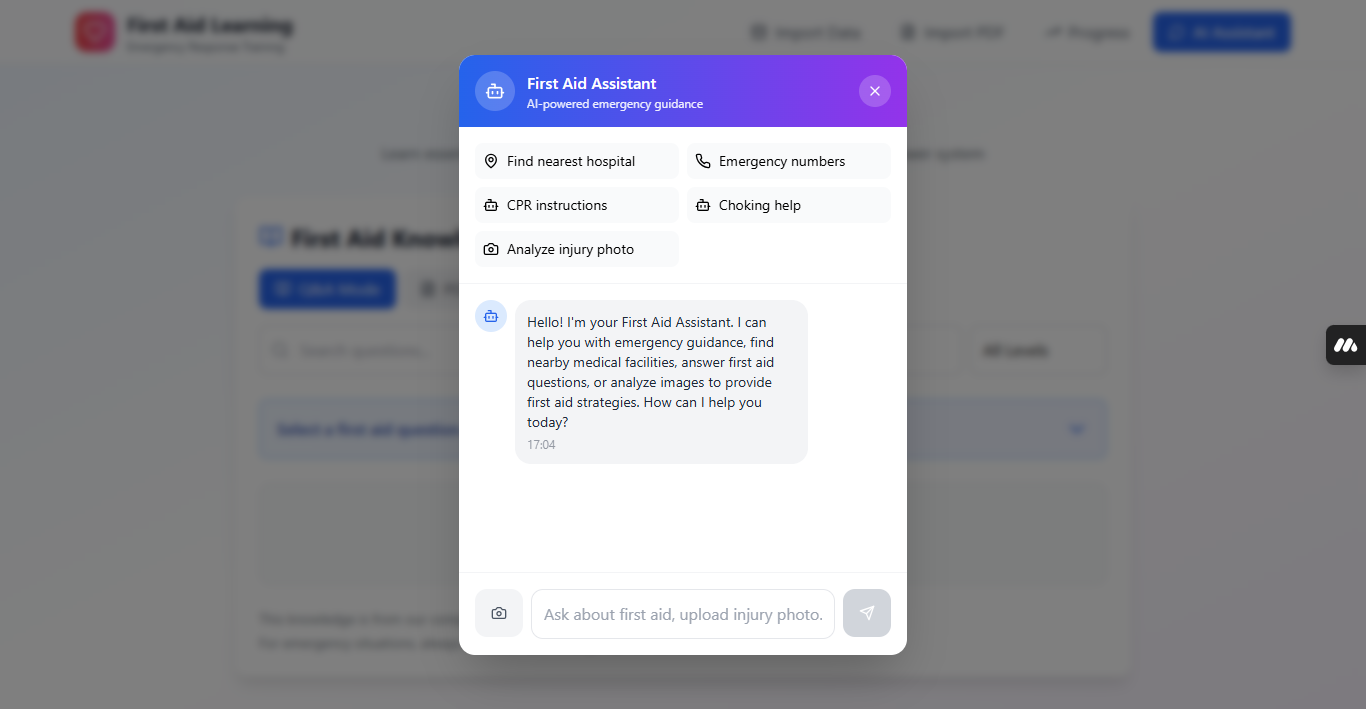
chat with ai
-
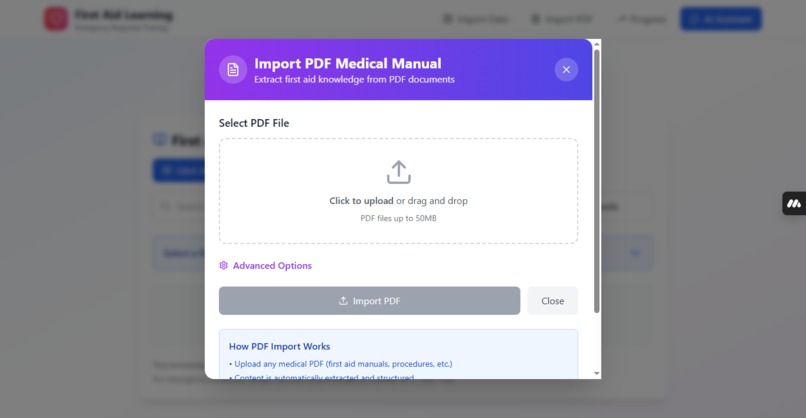
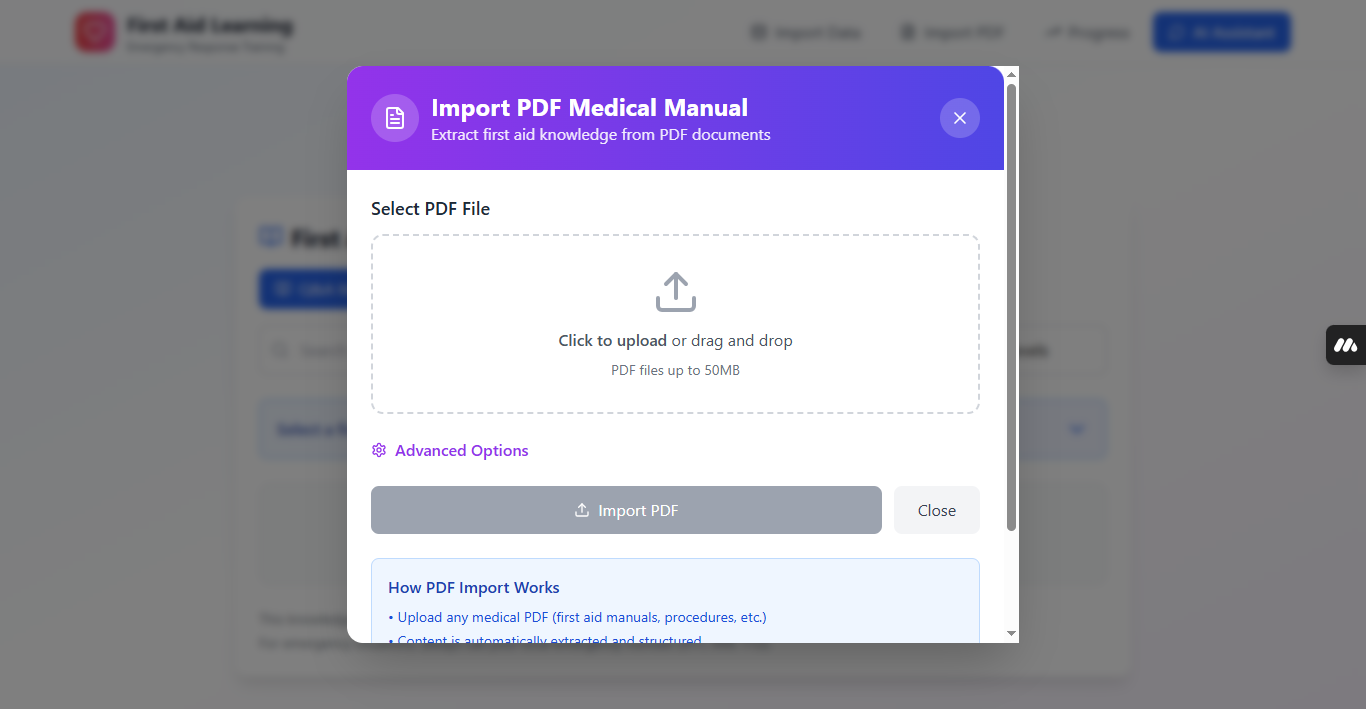
upload pdf
-
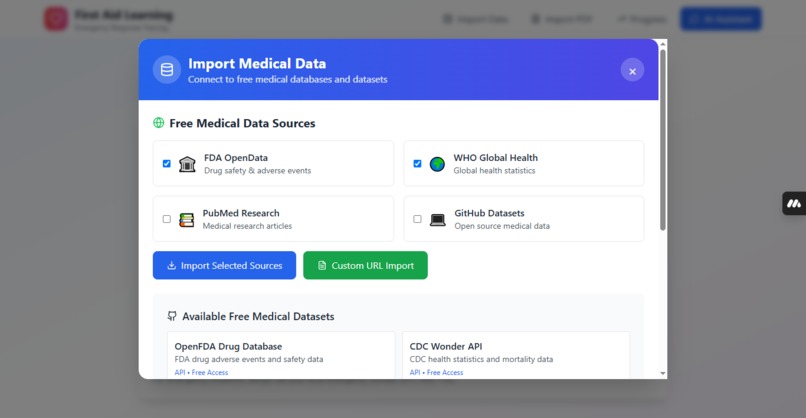
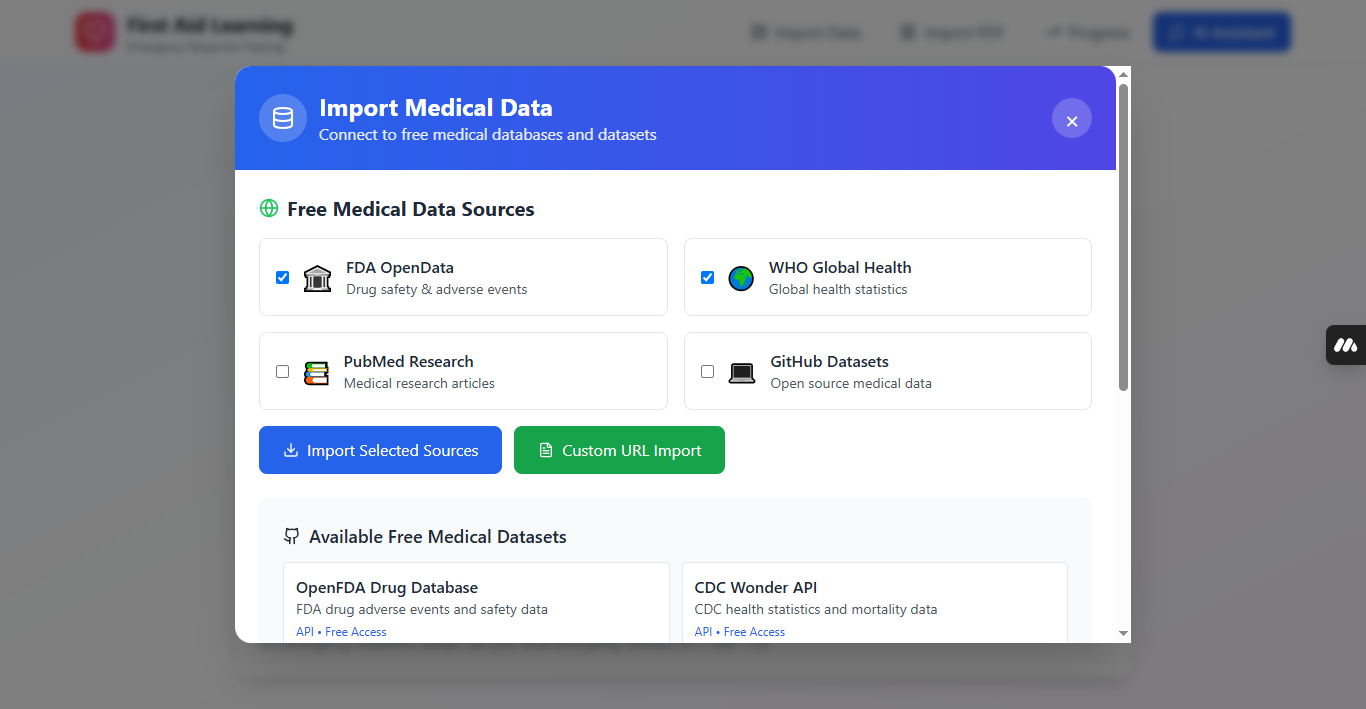
import data
Inspiration Inspired by one powerful truth: in a moment of crisis, the right knowledge can mean the difference between life and death. Medical emergencies don’t wait — and too often, people are unprepared simply because they were never taught how to respond.
That’s why an accessible, intelligent, and engaging first aid learning platform was created —one that directly supports United Nations Sustainable Development Goal 3: Good Health and Well-being, by empowering individuals and communities to be first responders in their own right.
The platform blends proven learning methods with cutting-edge technology. It features interactive Q&A sessions, AI-assisted support, and verified medical information pulled directly from trusted PDF and resources online. We’ve also included flashcards for rapid recall, gamified challenges to boost retention, and bite-sized lessons designed for real-world readiness—making learning not just easy, but exciting and action-driven.
This isn’t just about education; it’s about building a culture of preparedness. It’s about making life-saving knowledge universal, intuitive, and unforgettable—because everyone, everywhere, deserves the chance to save a life.
What It Does
The First Aid Learning App is a powerful, life-saving education platform built to make emergency response knowledge accessible, intelligent, and actionable for everyone. It’s designed to turn everyday individuals into confident first responders, through a unique blend of technology, verified medical knowledge, and engaging learning experiences.
Key features include: --- Dual-Mode Knowledge Engine: Learn through both structured Q&A sessions and intelligent search across real first aid PDFs—ideal for both guided learning and quick answers in critical moments. --- AI-Powered Assistant: Instantly chat with an AI trained in emergency response, capable of analysing images of injuries and offering fast, context-aware guidance. --- Trusted Medical Knowledge Base: Extracted directly from credible first aid manuals and verified PDF documents, ensuring users get accurate, up-to-date information. --- Flashcards & Gamified Learning: Boost retention and engagement with quick-access flashcards, achievement badges, and progress tracking that turns learning into an empowering journey. --- Emergency Services Integration: Automatically locate nearby hospitals or clinics using geolocation, helping users connect with real-world care when needed most. --- Medical Intelligence from Global Sources: Pull in real-time data from trusted health APIs like the FDA, WHO, and PubMed to stay updated with the latest in first aid practices.
--- Custom PDF Import: Upload your own medical guides or manuals and instantly convert them into searchable, interactive knowledge layers within the app.
How we built it
Built with React 18 and TypeScript using Vite for optimal performance.
Implemented: Tailwind CSS for responsive, production-ready design Lucide React for consistent iconography Custom hooks for knowledge management and PDF processing Embedded PDF system with pre-extracted medical knowledge AI simulation for chat assistance and image analysis Local storage for privacy-focused data handling
Modular architecture with clean separation of concerns
Challenges ran into Deployment optimization: Initially couldn't deploy due to large bundle size, had to remove heavy components and streamline the architecture Also had a major issue trying to connect and buy a domain name, it was a lot of wasted time, and execution was my priority, so i opted for netlify domain instead. Token limitations: Running out of development tokens forced me to prioritize core features and remove non-essential functionality. PDF processing complexity: Simulating PDF extraction without heavy libraries while maintaining functionality Knowledge base integration: Balancing comprehensive medical content with app performance
Mobile responsiveness: Ensuring complex medical interfaces work seamlessly on all devices
One other major challenge was that, this wasn't the first project i had in mind, this was my second option, the first was already done to like 90%, but i just couldn't deploy, because superbase and netlify couldn't have a good handshake, and there was a bug in the code that bolt couldn't resolve, it kept coming back, even after i split the codes, and also split the landing page from thee dashboard, started afresh, so I had to shelve it for this other idea, the first idea was about keep up with your health and documenting it, its like a health system that helps you track every thing you eat even with OCR scanning capability and getting a full AI report that aligns with your current health status, which the AI will also know of, but I will work on that later, it became quite complex for bolt, but I guess its just how i fed the prompt to it, it find a better way to break it apart and put it back together, after this project.
Accomplishments - Proud Of Driven by the mission to make life-saving knowledge universally accessible, Here's what we've achieved: --- Comprehensive Medical Intelligence Integrated 10+ real-world medical procedures and connected to verified global data sources like the FDA, WHO, and PubMed, ensuring trustworthy, actionable guidance. --- Dual-Mode Learning Engine Built a flexible system that merges structured Q&A learning with dynamic PDF-based search, each with a distinct visual style for better engagement and clarity. --- AI-Enhanced Assistance Developed an AI chat assistant capable of contextual first aid support and image-based injury analysis, bridging the gap between confusion and confident action. --- Gamified & Accessible Learning Introduced flashcards, achievement systems, and progress tracking to create an engaging, gamified learning experience that's designed to stick—on any device, anywhere. --- User-Centric Design, Built for Scale Crafted a professional, medical-grade interface with a mobile-first, responsive layout, optimized for performance (60% smaller bundle size) and real-world usability. --- Emergency Response Tools Integrated location-based medical facility detection for immediate access to nearby help, turning knowledge into real-time, life-saving action. --- Dynamic Knowledge Expansion Enabled PDF uploads so users can transform trusted manuals into interactive, searchable content—making the platform endlessly adaptable.
This is not just about building features— but building a movement: a culture where preparedness is second nature, where every learner becomes a potential lifesaver, and where health equity becomes a global reality.
Lessons - Learnt -- Accessibility is priority -- I made one last change, which was the call button had to bring it out from inside the AI assistance chatbox, and prioritize it, on the header, because its very important to have it reachable immediately, and I also put it in red stroke not a full red button, to minimize the use of colours. -- Preparedness must be universal – First aid education should be accessible, fast, and designed for everyone. -- Usability beats complexity – Medical info only helps when it’s clear, interactive, and easy to search. -- AI builds confidence – Smart assistants can guide users in real time and reduce fear during emergencies. -- Gamification works – Flashcards and rewards make people engage more, even with serious content. -- Design for the world – Mobile-first, inclusive design ensures we reach users in all environments. -- Simplicity saves lives – In critical moments, clear and fast beats complex and feature-heavy. -- Performance vs features trade-offs - Sometimes less is more focusing on core functionality creates better user experience -- Medical knowledge structuring - How to organize complex medical information for quick emergency access -- Progressive enhancement - Building lightweight core with optional advanced features -- User-centred design - Emergency apps need immediate clarity over complex features
-- Deployment constraints - Real-world deployment requirements often drive architectural decisions
What's next for First Aid Learning App AI-powered flashcards expansion: Expanding the Q&A system into adaptive flashcards that adjust difficulty based on user performance and user scenario, it will allow user to create their own flashcards and save it, based on the first aid scenario they want to simulate. Offline mode: Cache critical medical knowledge for use without internet connection Multi-language support: Expand to serve global communities in their native languages Video integration: Add visual learning with step-by-step procedure videos Certification tracking: Partner with medical organizations for official first aid certification Community features: Allow medical professionals to contribute and verify content Advanced AI diagnostics: Enhanced image analysis for more accurate injury assessment Wearable integration: Connect with smartwatches for emergency detection and response
The app is deployment-ready for Netlify and represents a solid foundation for expanding emergency medical education globally.
APIs Used Free Medical Data APIs (No API Keys Required) FDA OpenData API (https://api.fda.gov/drug/event.json) - Drug safety and adverse events data WHO Global Health Observatory (https://ghoapi.azureedge.net/api) - Global health statistics and indicators NCBI PubMed API (https://eutils.ncbi.nlm.nih.gov/entrez/eutils/) - Medical research articles and abstracts CDC Wonder API (https://wonder.cdc.gov/controller/datarequest) - Health statistics and mortality data Optional Enhanced APIs (With API Keys) Google Places API - For finding nearby medical facilities with real-time data Health API - Enhanced medical knowledge import capabilities
Poison Control API - Specialized poison control information
Open Source Medical Datasets Red Cross First Aid Data - Emergency procedures from GitHub repositories Mayo Clinic Symptoms Database - Symptoms and conditions data Johns Hopkins COVID-19 Data - Global health statistics OpenMRS Medical Records - Open source medical record system data Browser APIs Used Geolocation API - For finding nearby medical facilities File Reader API - For PDF import and processing Fetch API - For all HTTP requests to medical data sources
Local Storage API - For caching imported medical knowledge
No API Keys Required for Core Functionality - App works fully with free APIs Graceful Degradation - Falls back to mock data if APIs are unavailable Client-Side Processing - All PDF processing and data import happens in browser Privacy-First - No personal data sent to external services Real-Time Data - Live medical facility information and emergency services
The app is designed to work completely offline after initial load, with all critical first aid knowledge embedded directly in the application for emergency situations when internet access may not be available.
Built With
- 17globalgoals
- aid
- cdc-wonder
- control
- covid-19
- cross
- css
- fda
- fetch
- file
- first
- firstaid
- firstresponder
- global
- health
- hopkins
- hospital
- johns
- lucide
- medic
- medical
- ncbi
- nextjs
- opendata
- openmrs
- poison
- react
- react-native
- reader
- red
- redcross
- sdgs
- tailwind
- typescript
- vite
- who

Log in or sign up for Devpost to join the conversation.