-
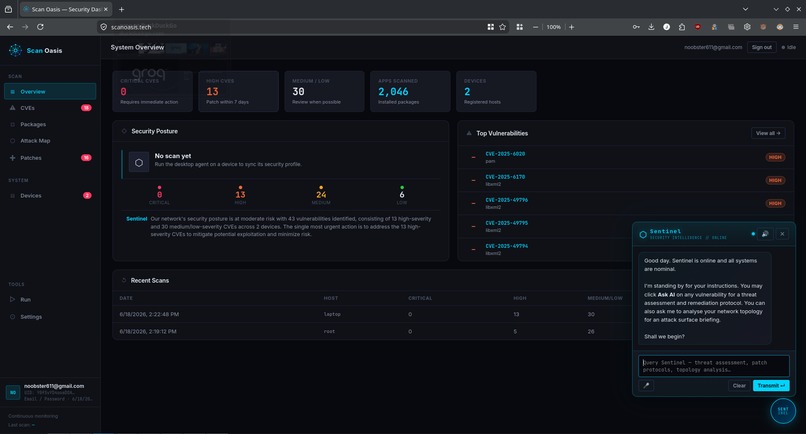
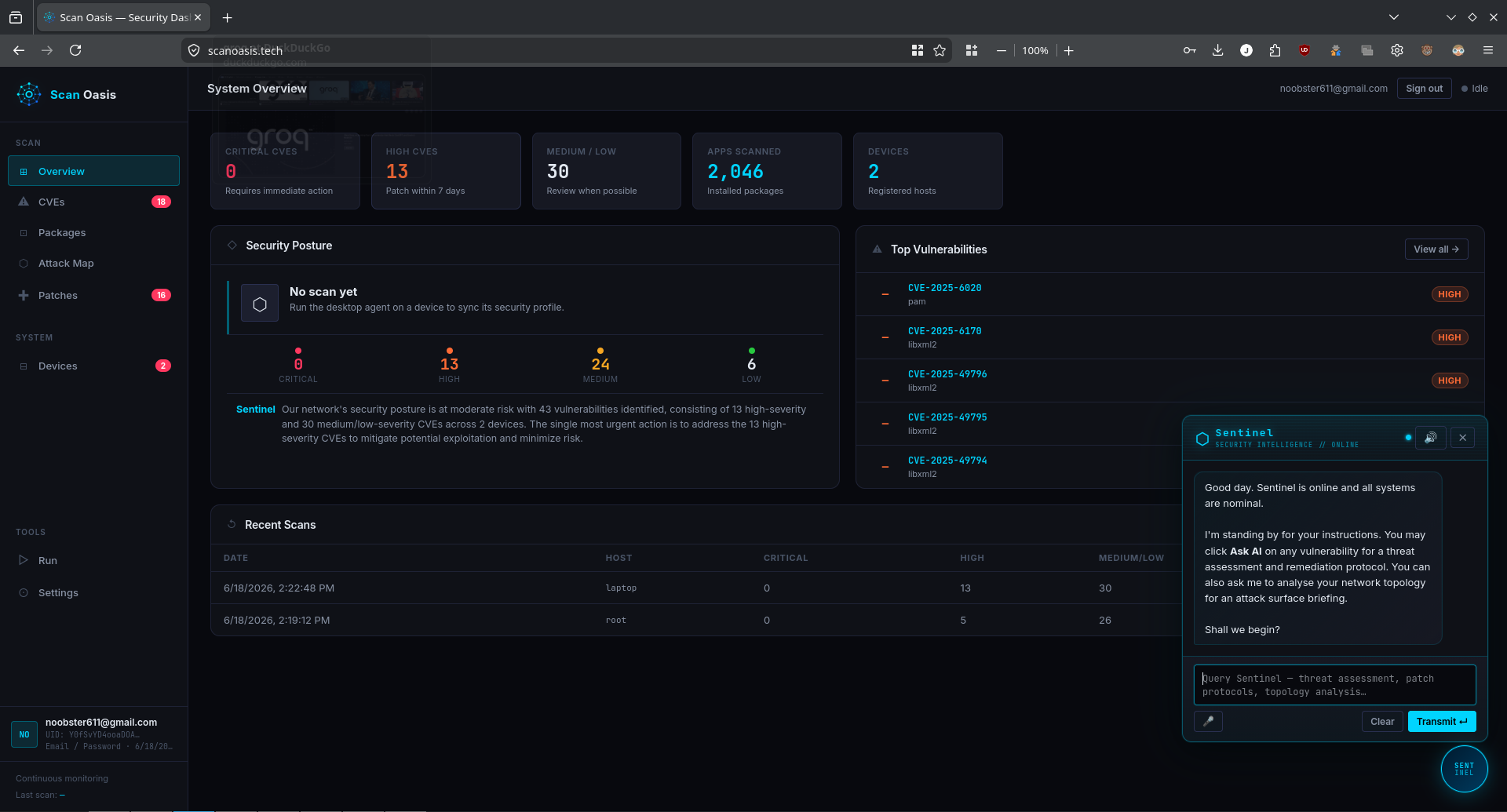
Dashboard
-
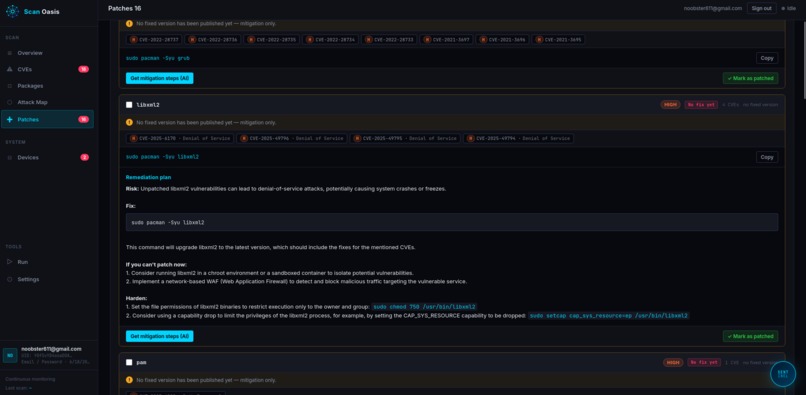
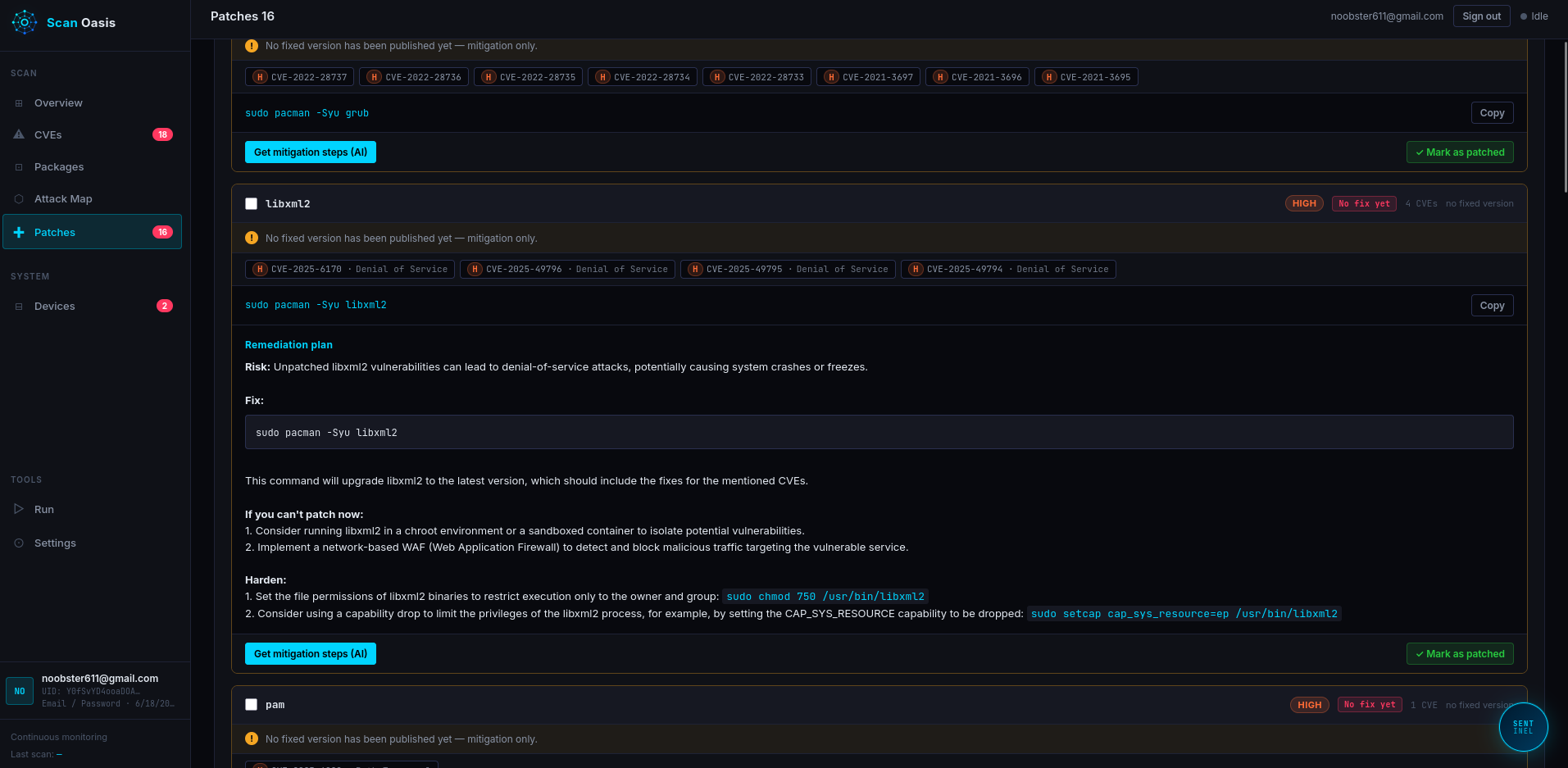
CVE lookup with mitigation steps provided by Groq.
-
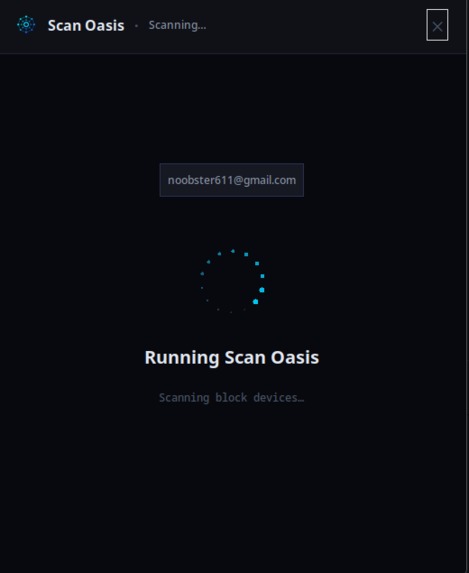
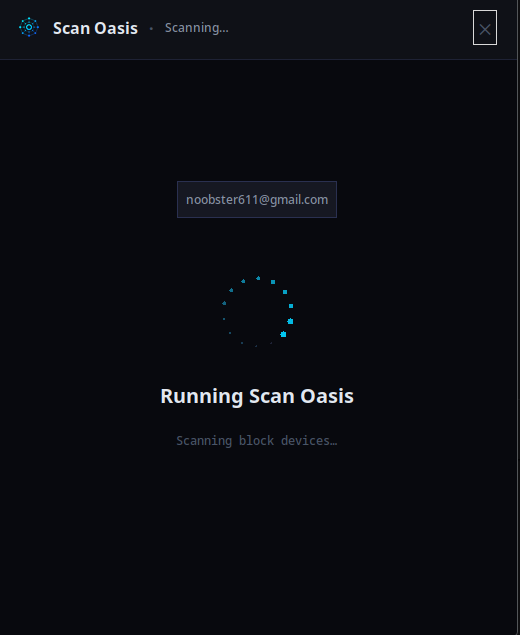
Native tkinter app with py
-
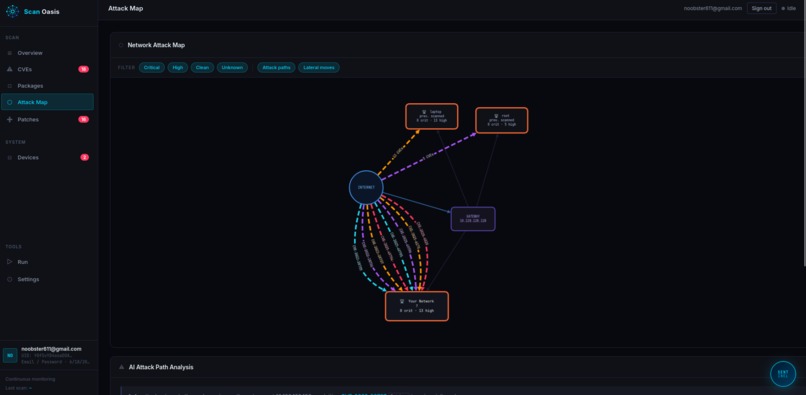
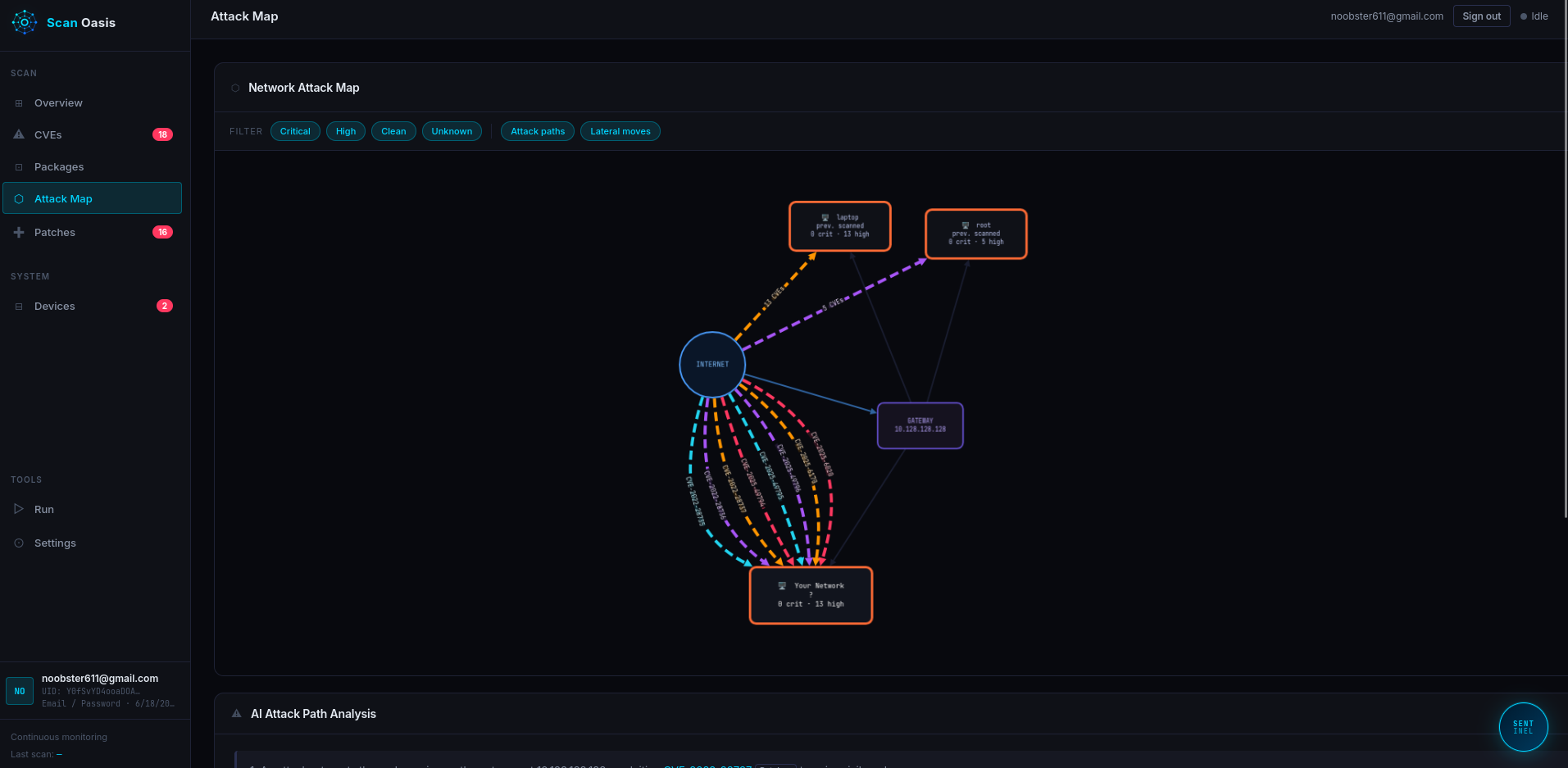
Topographic interface with CVE linkages
Inspiration
Home and small-office networks are full of devices nobody's tracking — laptops, phones, printers, IoT gadgets, that one skid running a raspberry pi homelab and most of them are running software with known vulnerabilities. Real security tooling is built for enterprises: expensive, complex, and overkill. We wanted something that could scan a whole network, find the actual CVEs on each device, and then explain the risk in plain language — so anyone, not just a security pro, could see what's exposed and what to fix first.
What it does
Scan Oasis is an AI-powered network and system security scanner.
- A lightweight desktop agent runs an nmap discovery sweep of your local network and a full system audit of the host (OS, packages, services, SUID files), then looks up real CVEs for every installed package.
- Everything syncs to a live web dashboard showing your devices, a ranked CVE list (by severity and vulnerability type), a patch to-do list, and an interactive network attack map.
- Sentinel, our AI assistant, reads your live CVE + topology data and walks through how an attacker could chain vulnerabilities into attack paths — and what single fix matters most. It even talks, with a custom text-to-speech voice.
# How we built it
## We built the entire thing using the Claude CLI (Claude Code) as our pair programmer.
- Backend: Python + Flask, deployed on a DigitalOcean droplet (gunicorn), reachable on a .tech domain.
- Desktop agent: Python + Tkinter GUI (plus a headless CLI version), using nmap for discovery and pure-stdlib CVE lookups against the Arch Security Tracker and OSV.
- Frontend: vanilla HTML/CSS/JavaScript with Cytoscape for the attack map topology.
- Data: Google Cloud Firestore -> the agent writes scan results directly, and the dashboard reads them live via realtime listeners.
- AI/voice: Groq for the LLM and Whisper speech-to-text, and a Piper text-to-speech server reached over Drake's Tailscale server at his house.
- Hosting was unlocked through GitHub Education, which gave us the DigitalOcean credits and the .tech domain.
Challenges we ran into
- Finding hosting. This was the big one, we didn't have a way to deploy anything until we discovered GitHub Education, which got us DigitalOcean credits and a free .tech domain.
- Deploying for the first time. Getting Flask running behind gunicorn, dealing with droplet storage wiping our agent tokens on every redeploy, and making a workflow without a million commands just to restart it.
- Using nmap on crowded hackathon Wi-Fi caused huge subnet meant scans that never finished, so we had to bound the scan and only surface meaningful devices, with a hard cap at 30 seconds to users are not bored..
- Making the dashboard run entirely off the cloud database (so the server never scans itself), and cleaning up AI output formatting so it reads professionally.
Accomplishments that we're proud of
- A real-time, multi-device security dashboard that updates and fills the topological interface like duplicating cells the instant the agent finds something.
- An AI attack-path analysis grounded in real data from the Arch repository and National databases every node and CVE on the map comes from an actual scan, not hallucinated.
- We got it live on a real domain, deployed on actual cloud infrastructure.
- A working voice assistant (Sentinel) on top of it all.
What we learned
- How to host a website for the very first time, from a Flask app on our laptops to a real server on a real domain.
- Working with a realtime cloud database (Firestore) and live data sync.
- Driving a full build with an AI coding agent.
- Where real vulnerability data comes from, and how to classify and prioritize it.
What's next for Scan Oasis
Leaning into network-admin features: scheduled/continuous scans with alerting when a new critical CVE or unknown device appears, fleet management across many machines, role-based access for teams, exportable reports, and guided/automated remediation. Longer term, deeper OS hardening checks (SELinux/AppArmor, permissions) and native Windows/macOS agents. Our last idea is to have Agentic AI running in the native GUI application to automatically fix the vulnerabilities presented from the algorithm and Sentinel's guidance.
Built With
- claude
- css
- digitalocean
- flask
- groq
- html
- javascript
- linux
- python
- tailscale
- tts

Log in or sign up for Devpost to join the conversation.