-
-
h
-
ahah
-
jjj
-
sghsu
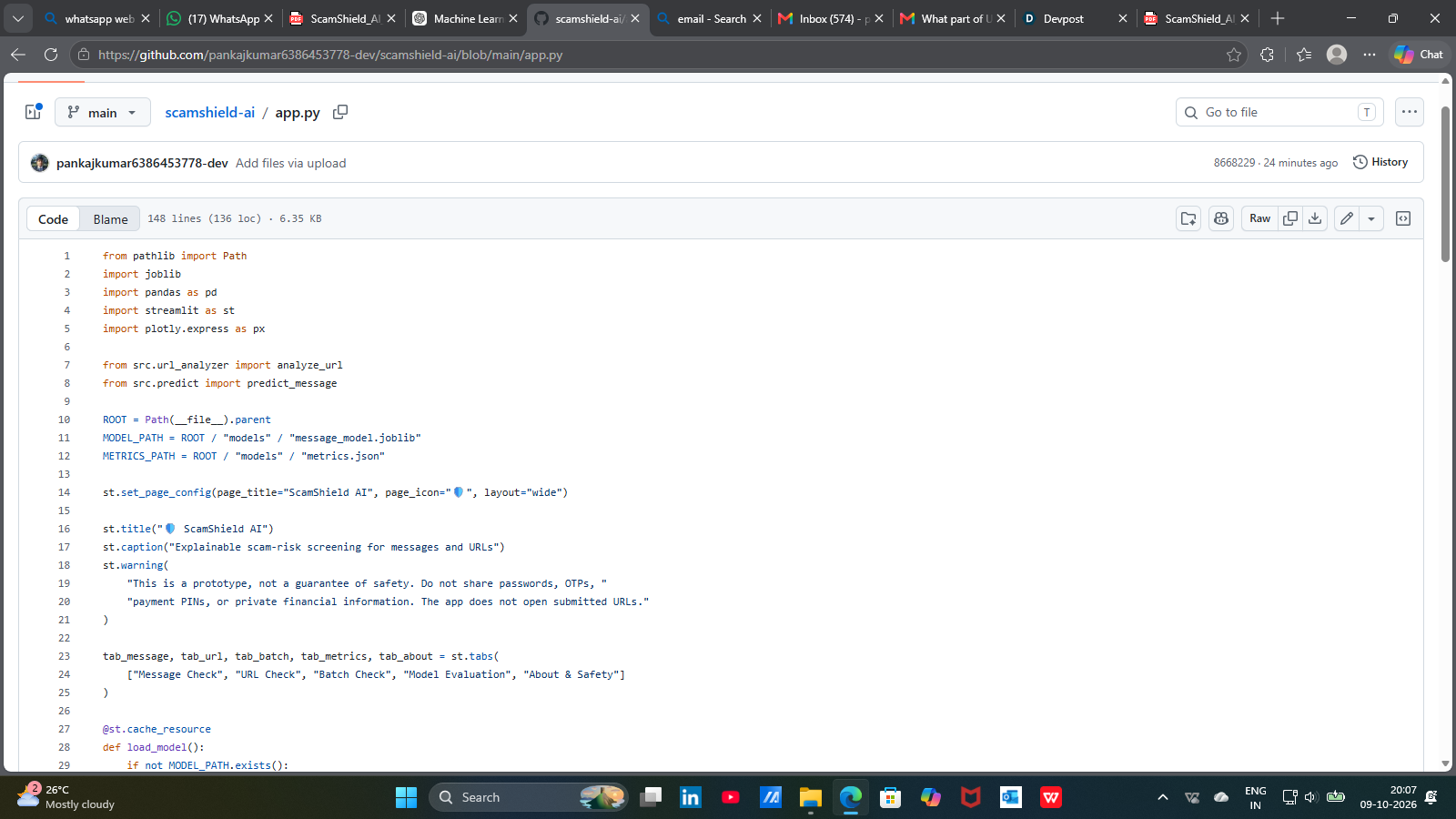
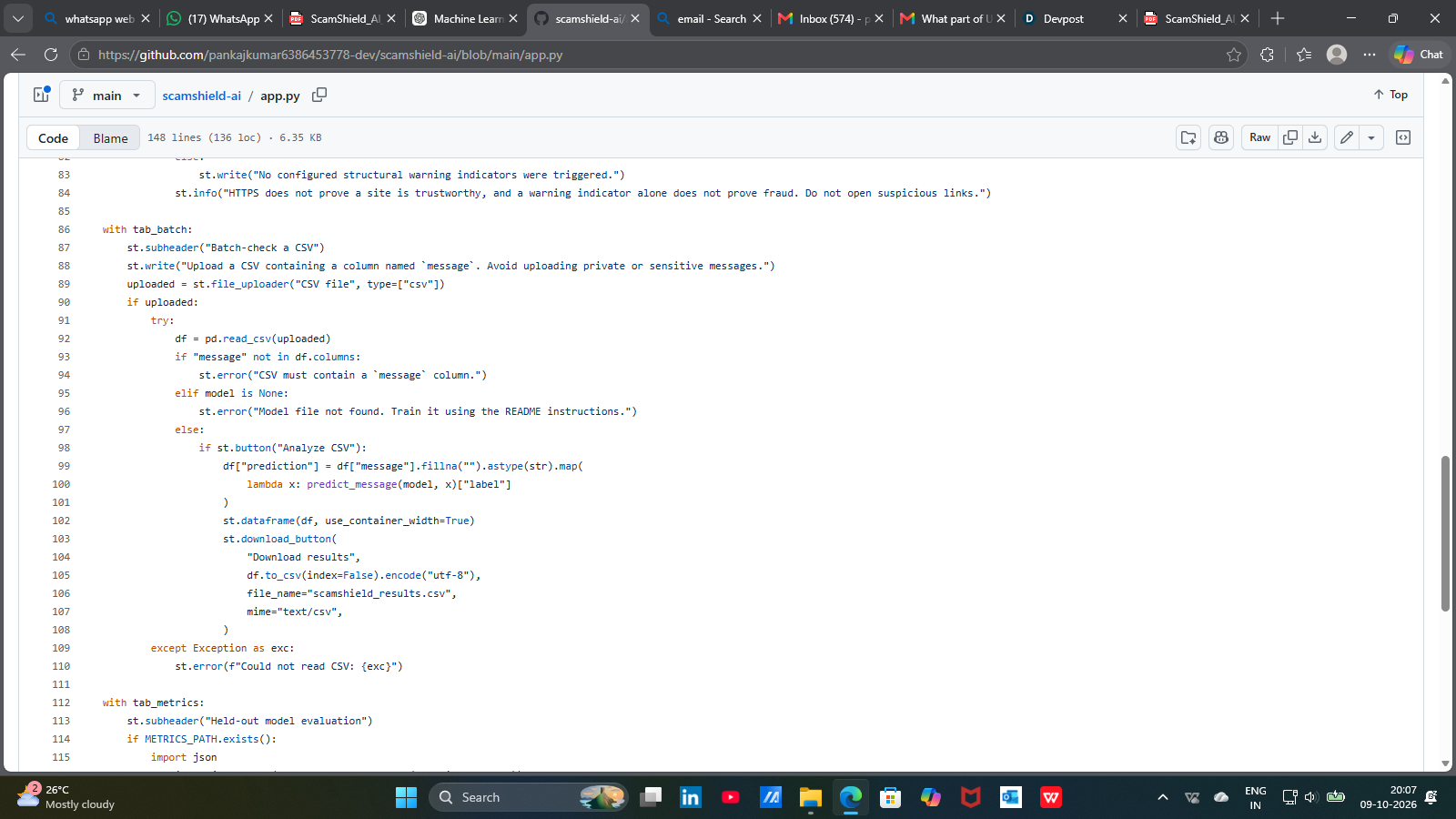
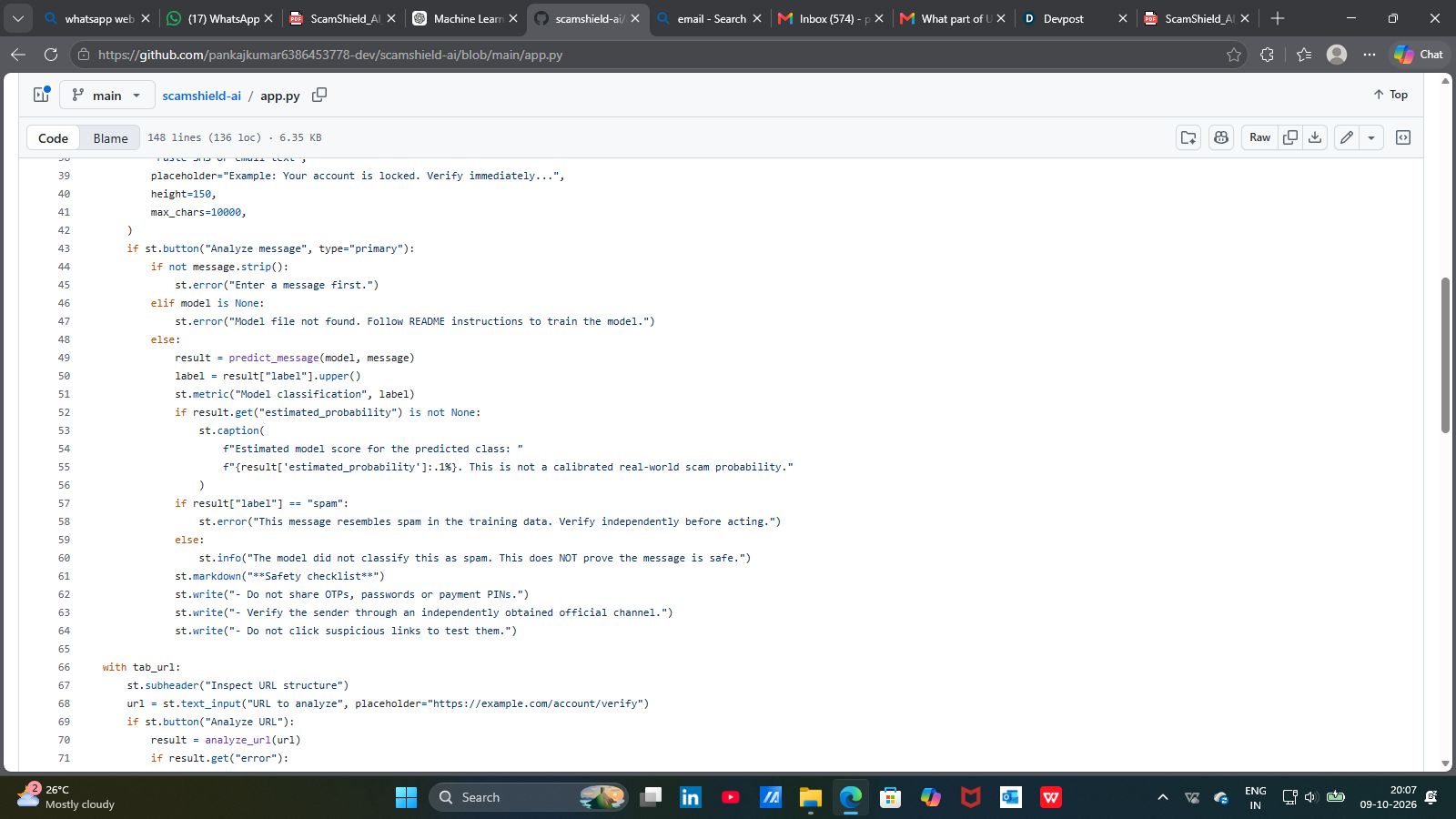
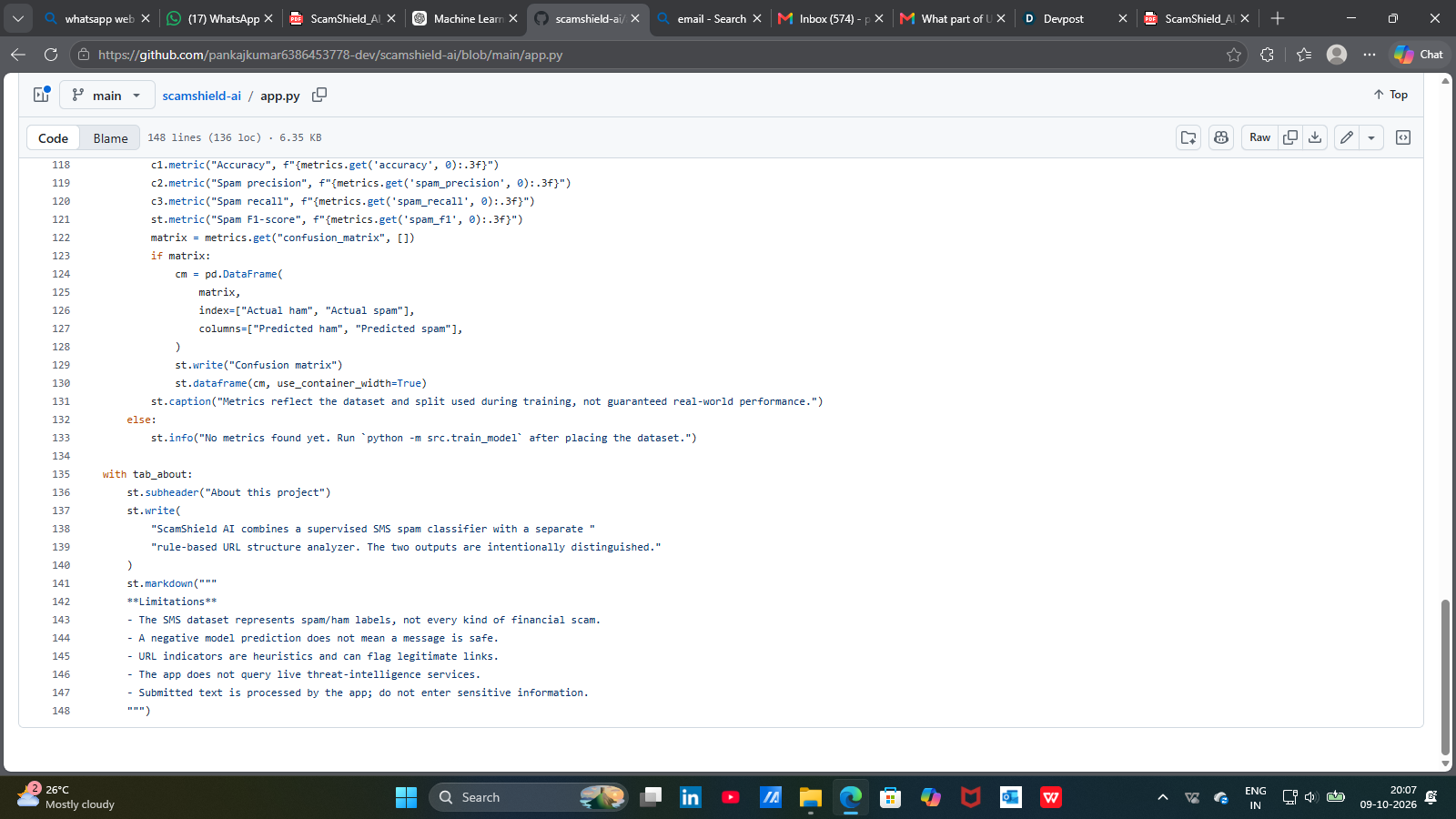
🛡️ ScamShield AI — Project Story
Detect the Signs. Think Before You Click. Stay Protected.
1. The Inspiration
In today's digital world, smartphones have become an essential part of our daily lives. We receive messages about bank accounts, delivery updates, prize offers, and important notifications every day. However, some of these messages are designed to deceive people into clicking suspicious links or sharing sensitive information.
Many people, especially those who are unfamiliar with online scams, may struggle to identify whether a message is genuine or fraudulent. One wrong click can potentially lead to financial loss, stolen personal information, or compromised accounts.
This inspired us to explore an important question: Can artificial intelligence help people identify suspicious messages and links before they become victims of online scams?
2. Our Idea
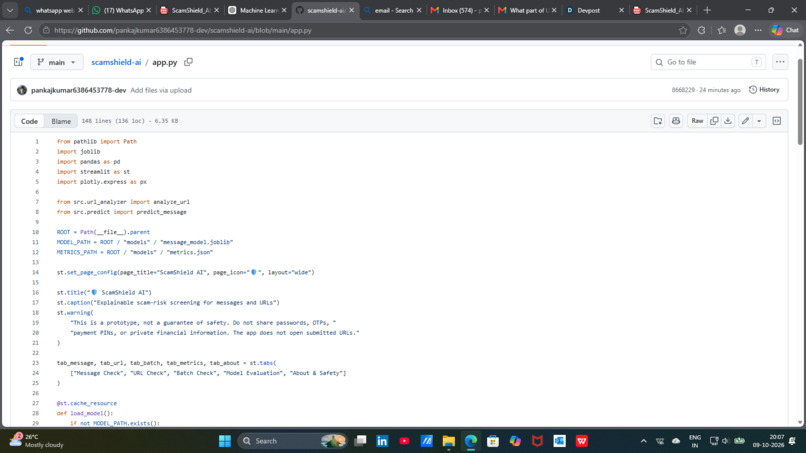
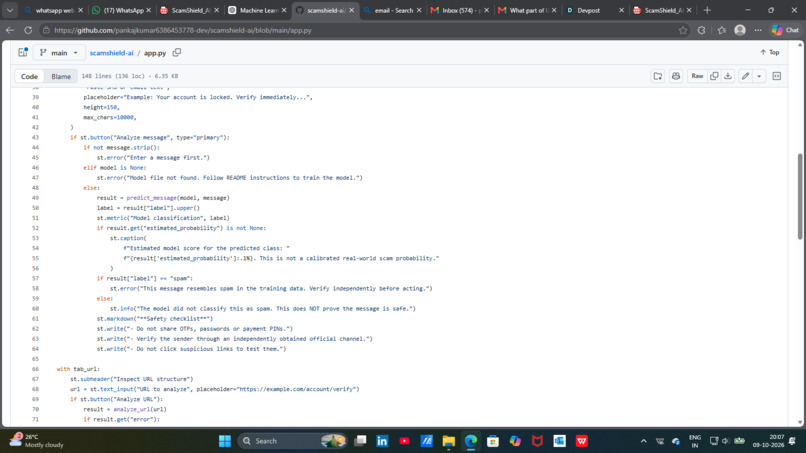
To explore this challenge, we developed ScamShield AI, a machine learning-based project designed to help users screen suspicious SMS messages and analyze potentially risky URLs.
Our vision was to create a simple, accessible tool that combines artificial intelligence and cybersecurity awareness in one place. Instead of requiring users to understand complex security systems, ScamShield AI provides an interactive dashboard where they can check messages and examine URLs.
3. How We Built ScamShield AI
We used Python, Scikit-learn, Natural Language Processing (NLP), and Streamlit to develop our prototype.
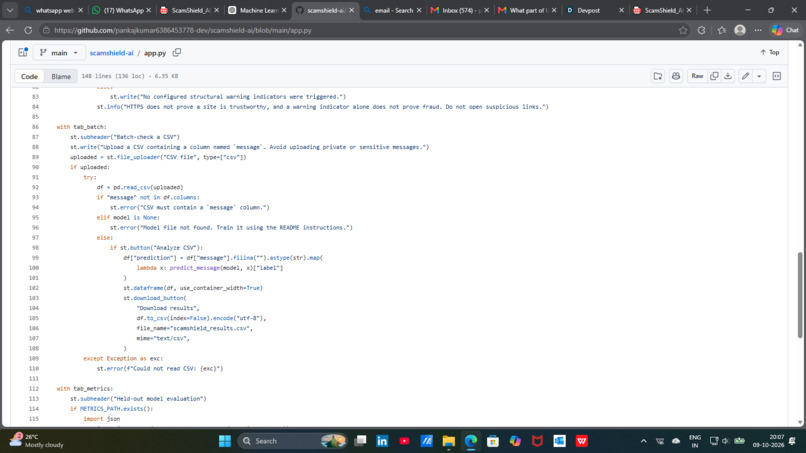
The SMS detection module uses a machine learning workflow to classify messages as spam or legitimate. The URL analysis module checks URL characteristics for patterns that may indicate risk. An interactive dashboard brings these features together, making the project easier to use and demonstrate.
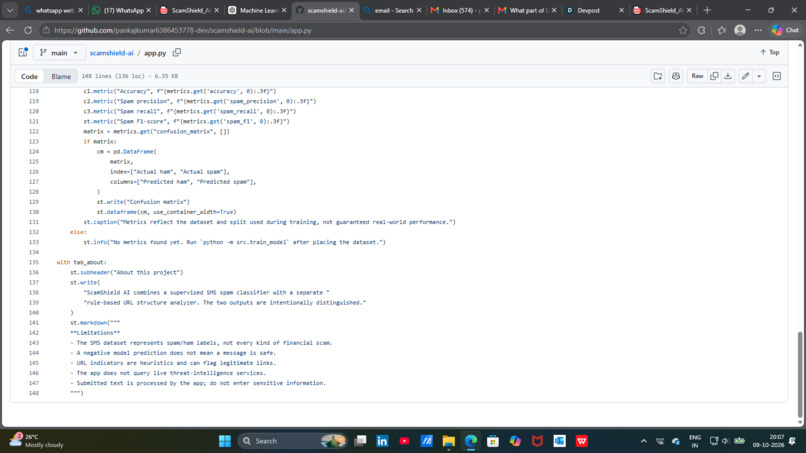
We also included batch message checking, model evaluation functionality, and automated tests to support development and testing.
4. The Challenges
One of the main challenges in scam detection is that fraudulent messages constantly change. Scammers can use convincing language, misleading links, and new techniques to avoid detection.
Another challenge is that suspicious-looking URLs are not always malicious, while harmful URLs may appear normal. This means that automated predictions must be treated carefully.
Our project addresses these challenges through a combination of machine learning-based text classification and rule-based URL analysis. We recognize that the prototype has limitations and that further training, evaluation, and improvements are needed to make it more reliable.
5. Our Mission
Our mission is to make digital safety easier to understand and more accessible. We want to encourage users to pause, inspect suspicious messages, and think carefully before clicking unfamiliar links.
ScamShield AI is not intended to replace professional cybersecurity tools. Instead, it demonstrates how AI can support awareness and help people make more informed decisions online.
6. Our Vision for the Future
In the future, we aim to improve the model using additional datasets, support multiple languages, integrate trusted threat-intelligence sources, and deploy the application for wider access. We also hope to make the system more transparent by explaining the indicators behind its predictions.
7. Conclusion
ScamShield AI began with a simple idea: use technology to help people recognize potential online threats. Through machine learning, URL analysis, and an accessible dashboard, our project demonstrates one way AI can contribute to cybersecurity awareness.
We believe that a safer digital world begins with awareness, responsible technology, and informed decisions.
ScamShield AI — Detect the signs. Think before you click. Stay protected.
Built With
- artificial-intelligence
- cybersecurity
- data-science
- data-visualization
- git
- logistic-regression
- machine-learning
- multinomial-naive-bayes
- natural-language-processing
- numpy
- pandas
- phishing-detection
- python
- scikit-learn
- spam-detection
- streamlit
- text-classification
- tf-idf
- url-analysis

Log in or sign up for Devpost to join the conversation.