Inspiration
Scam calls succeed because they create urgency, fear, and confusion before people have time to think.
I built ScamShield around a simple question: what if someone had a real-time safety assistant listening for those warning signs during a suspicious call?
The current project is a browser-based prototype that simulates realistic scam calls and shows how a future app could warn users before they share sensitive information or send money.
What it does
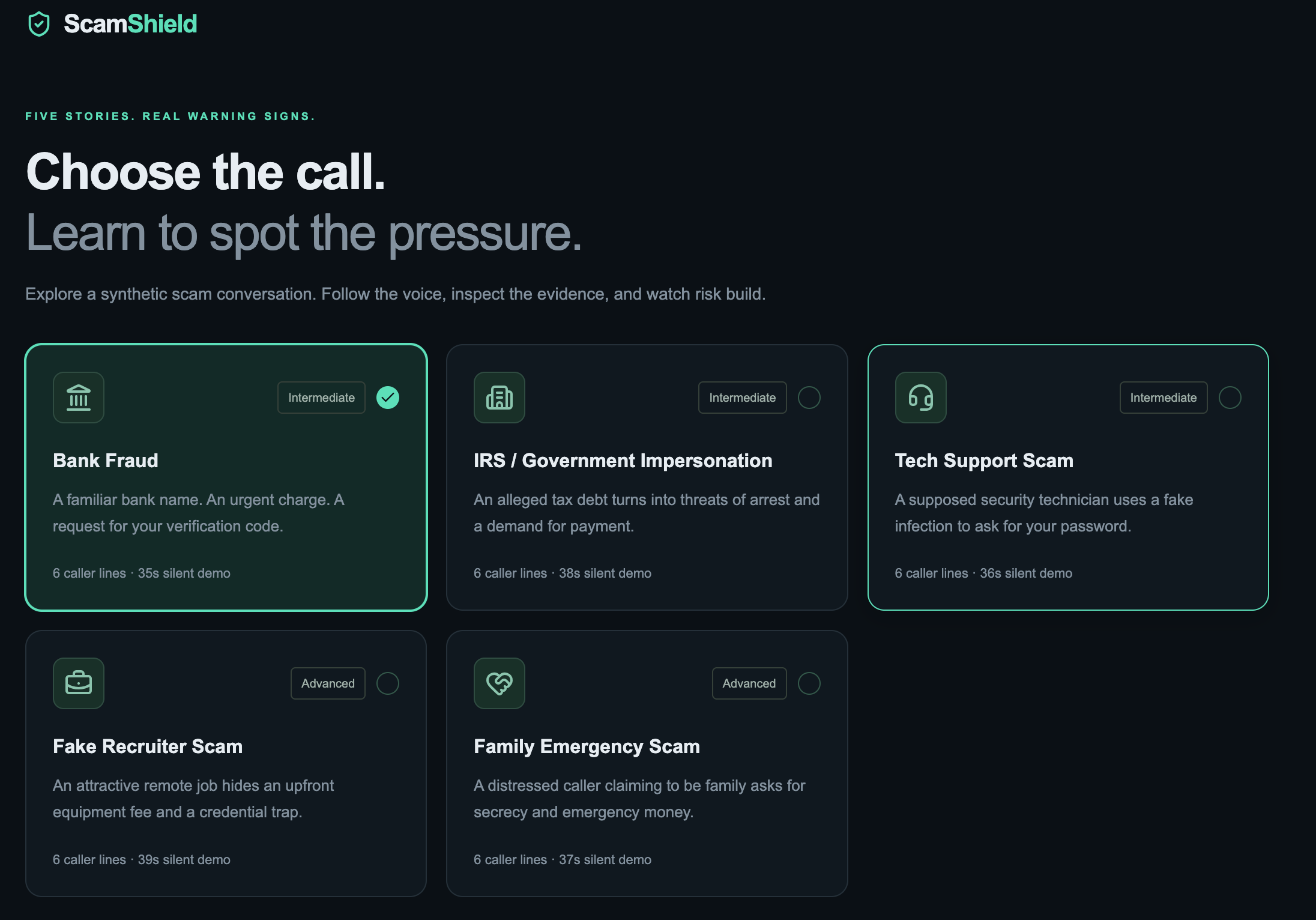
Users choose from scam scenarios such as:
- Bank fraud
- Government impersonation
- Tech support
- Fake recruiter
- Family emergency
During the simulated call, ScamShield:
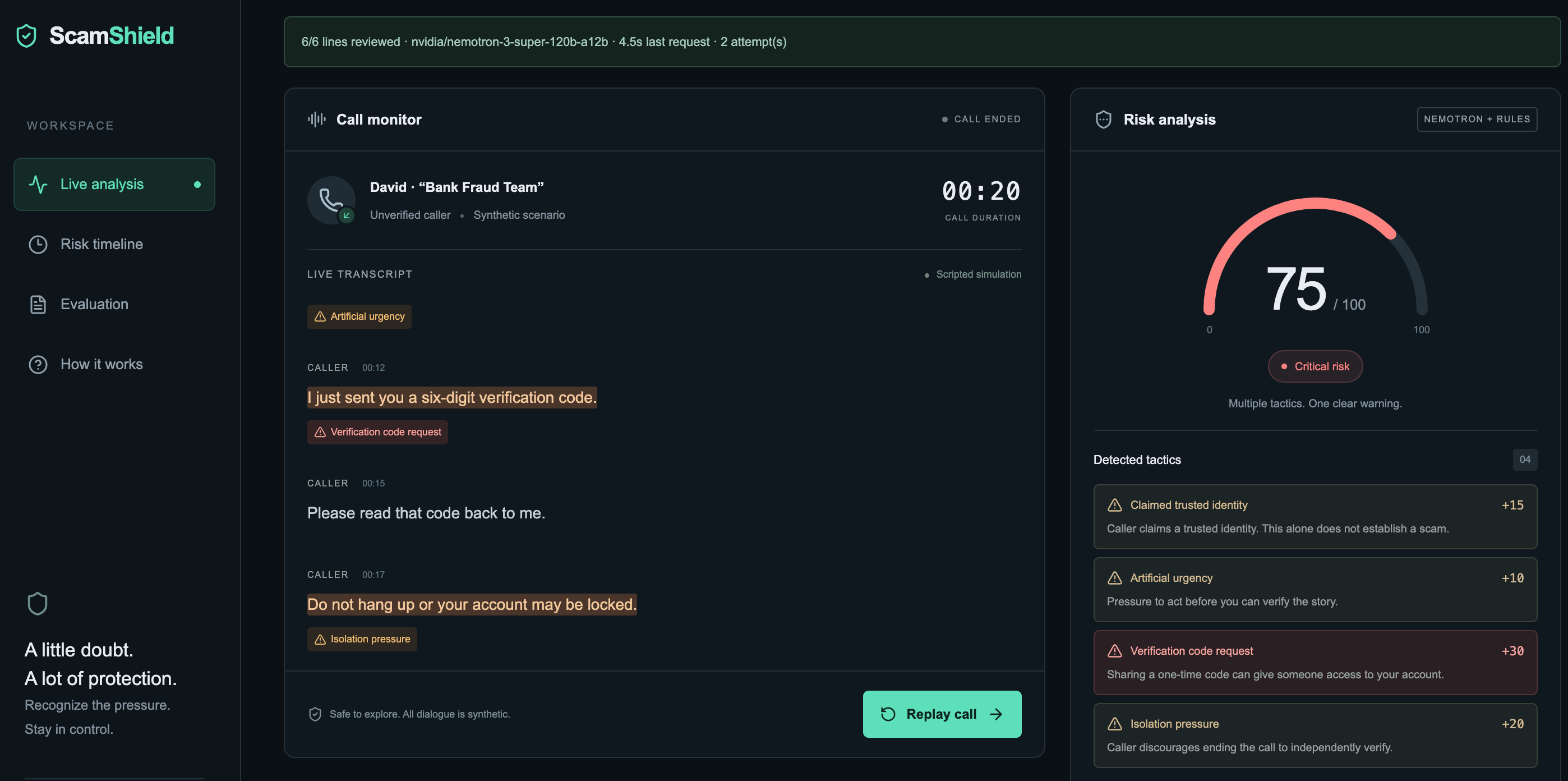
- shows a live transcript
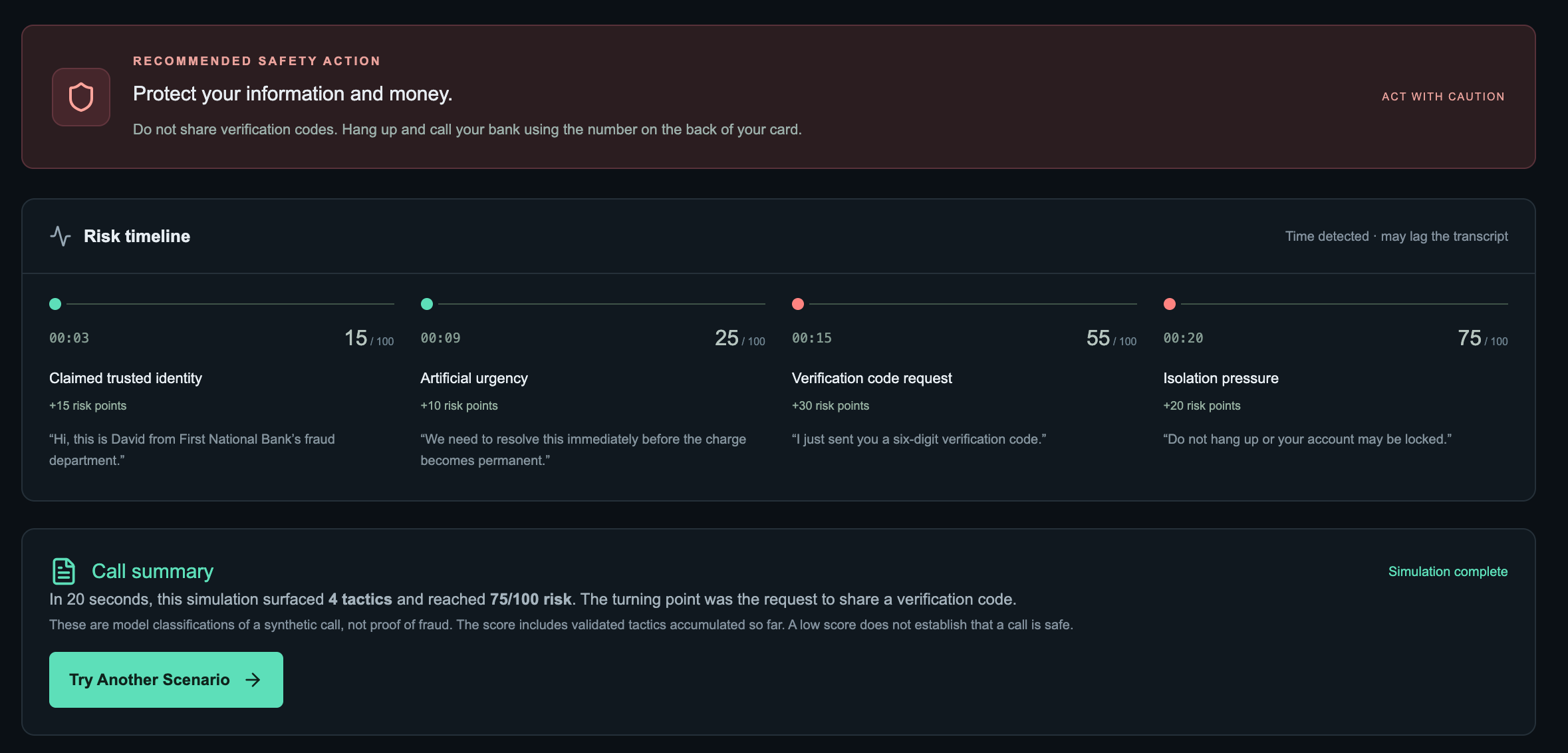
- detects social-engineering tactics
- updates a scam risk score
- highlights the exact suspicious statements
- explains what the user should do next
Instead of only saying “this looks like a scam,” ScamShield shows why.
How I built it
ScamShield is built with Next.js, React, TypeScript, and Tailwind CSS.
The core pipeline is:
Call → Transcript → Nemotron → Risk Engine → Warning
NVIDIA Nemotron acts as a structured classification layer, identifying tactics like urgency, impersonation, threats, OTP requests, and payment requests.
A separate deterministic TypeScript risk engine converts those detections into the displayed risk score.
ElevenLabs provides the voice for the simulated scam calls, making the experience feel much closer to a real phone conversation.
Challenges
The biggest challenge was making the AI useful without turning the project into another chatbot.
I separated responsibilities so Nemotron handles semantic understanding while the application handles scoring, warnings, and the user experience.
I also chose to simulate calls in the browser instead of building real phone infrastructure, which let me create a much more reliable hackathon demo while still showing how the concept could work in a real product.
What I learned
This project taught me how to build an end-to-end AI application, integrate model APIs, design structured LLM outputs, create deterministic scoring logic, build reusable React components, and deploy a polished web app.
The biggest lesson was that LLMs can be most useful when they are one component inside a larger system rather than the entire product.
What's next
The next step for ScamShield is turning the prototype into a true real-time call protection system with:
- live phone-call monitoring
- speaker identification
- SMS and email scam detection
- multilingual support
- larger-scale scam evaluation datasets
The goal is simple: help people recognize manipulation while it is happening, not after they have already been scammed.
Built With
- api
- css
- cybersecurity
- detection
- elevenlabs
- fintech
- fraud
- generative
- github
- javascript
- json
- llm
- nemotron
- next.js
- node.js
- nvidia
- react
- rest
- tailwind
- typescript
- vercel
- web

Log in or sign up for Devpost to join the conversation.