-
-
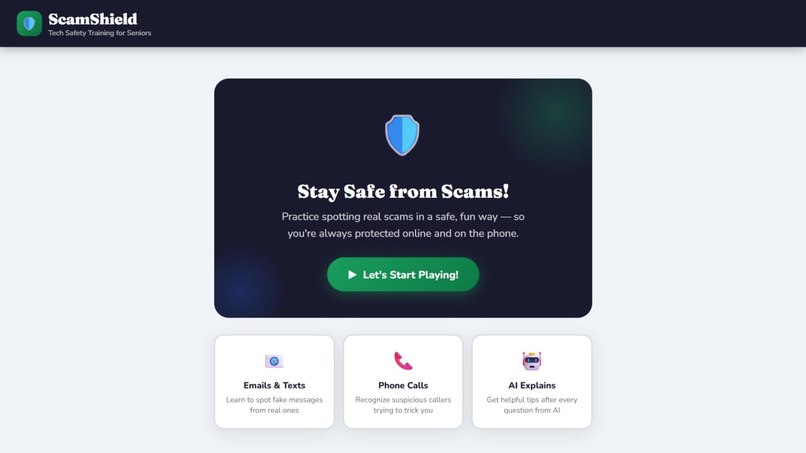
Home Page
-
-
-
-
-
-
-
-
Inspiration
ScamShield was designed and developed entirely by a solo developer using HTML, CSS, and JavaScript.
Despite being a solo project, it includes a complete interactive system with scenario-based gameplay, scoring logic, feedback mechanisms, and responsive UI design.
What it does
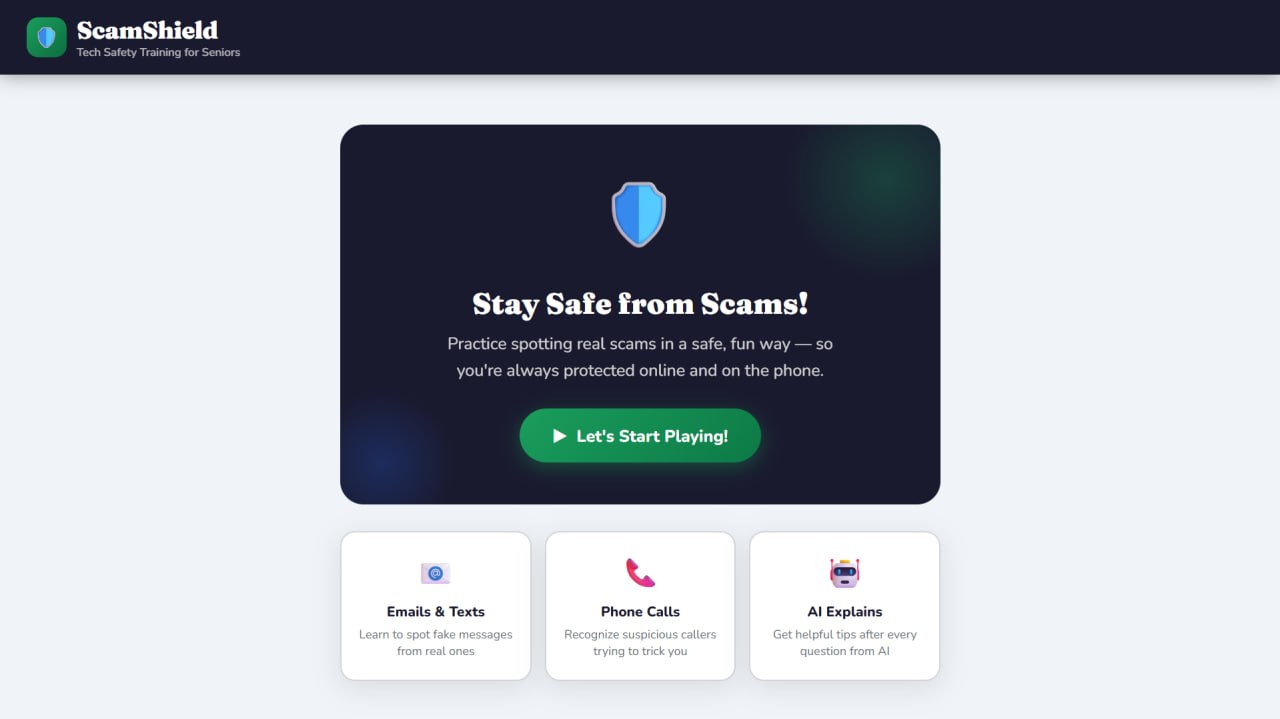
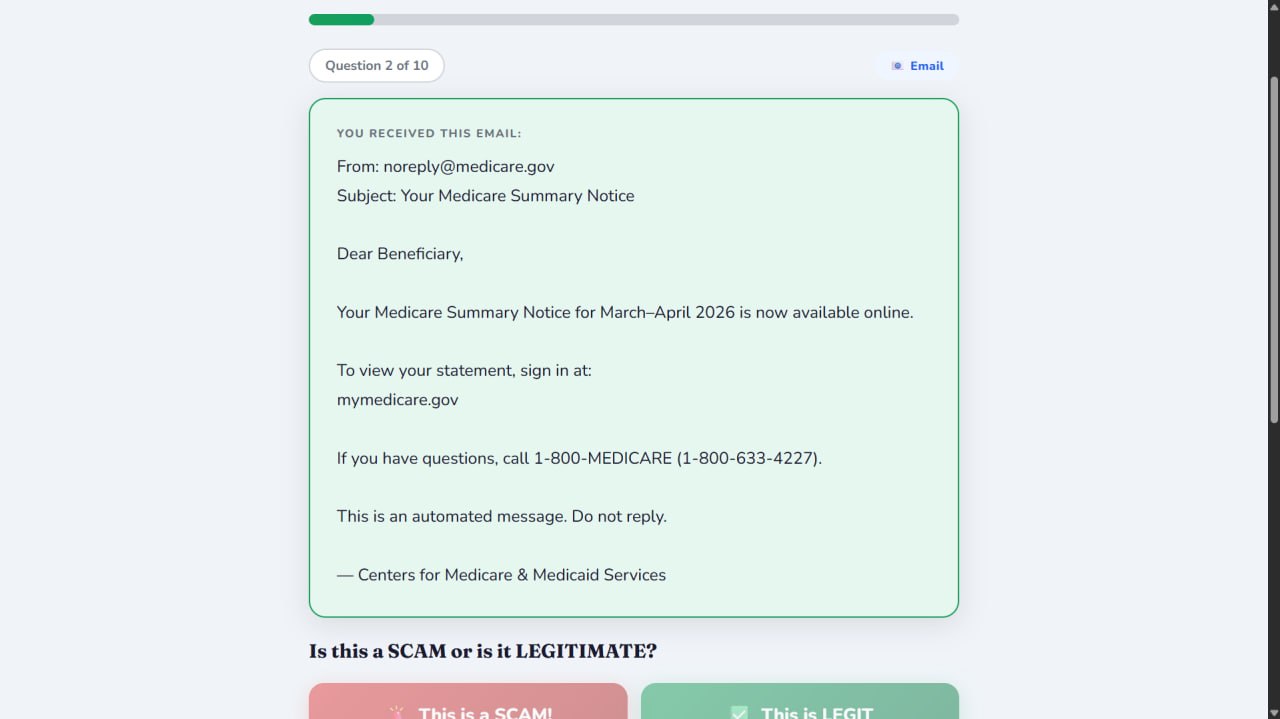
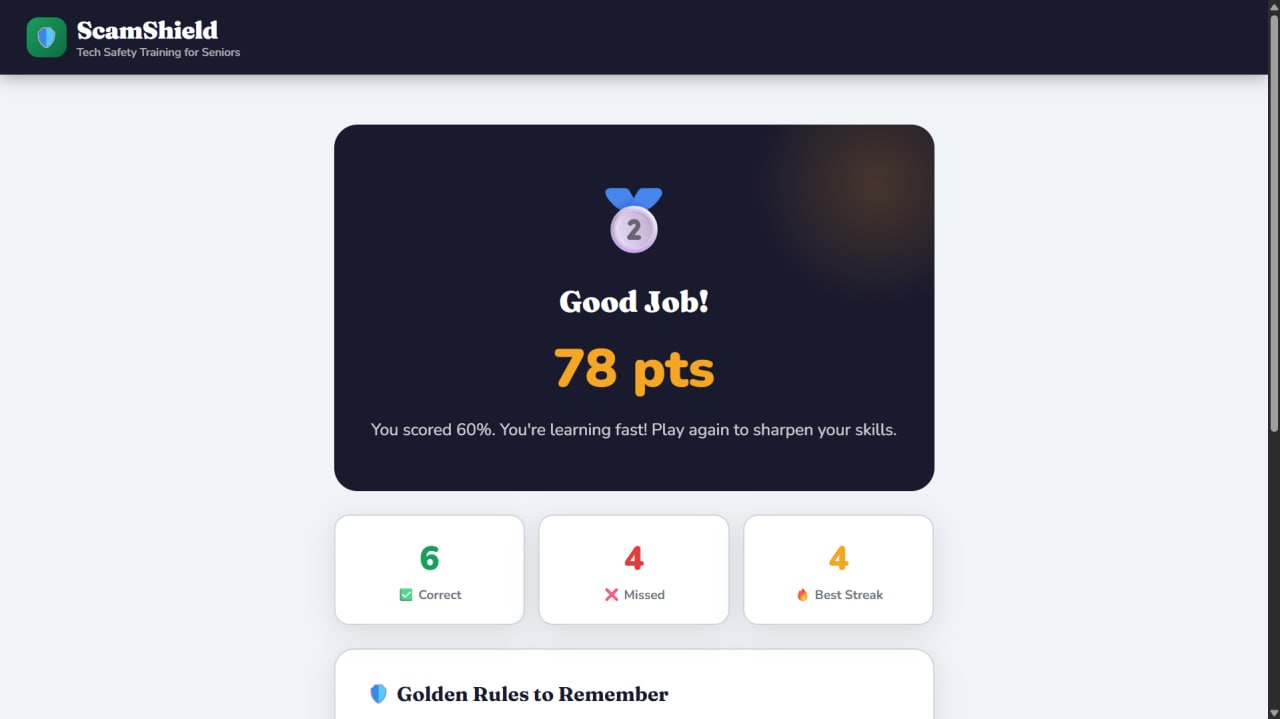
ScamShield is a gamified web application that helps users learn how to identify online scams in a safe and interactive environment.
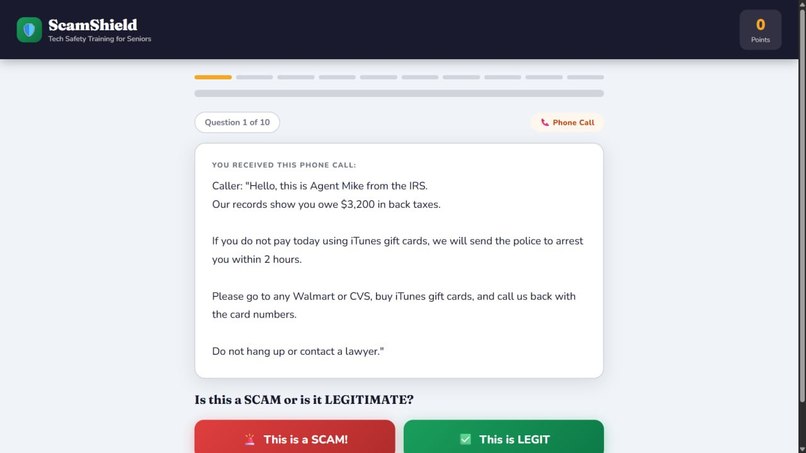
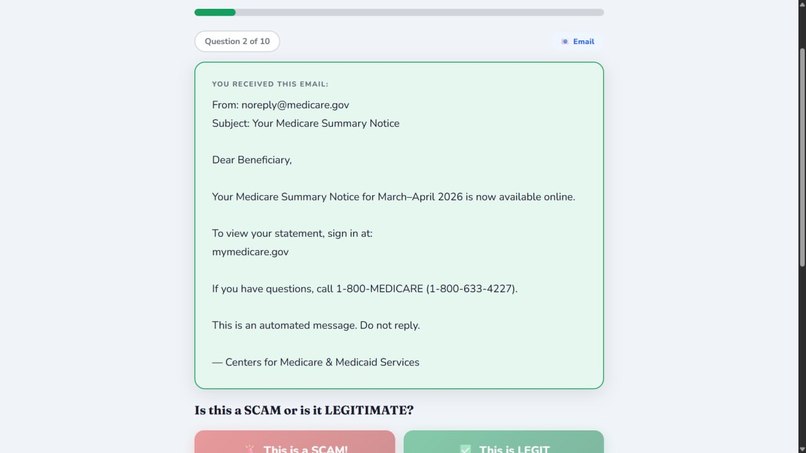
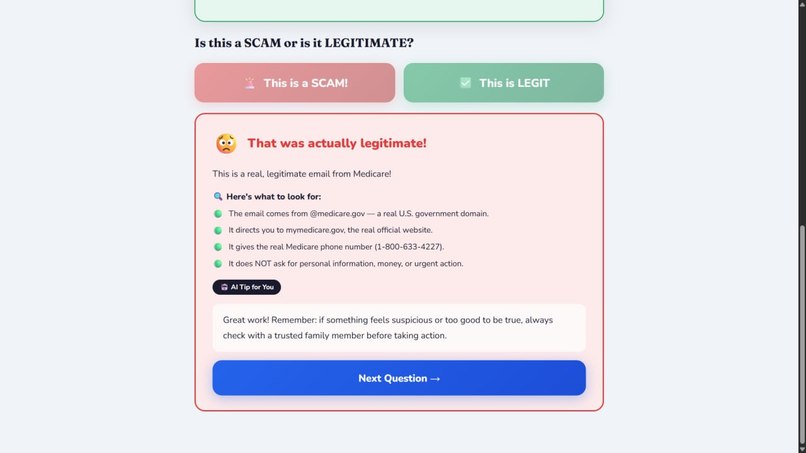
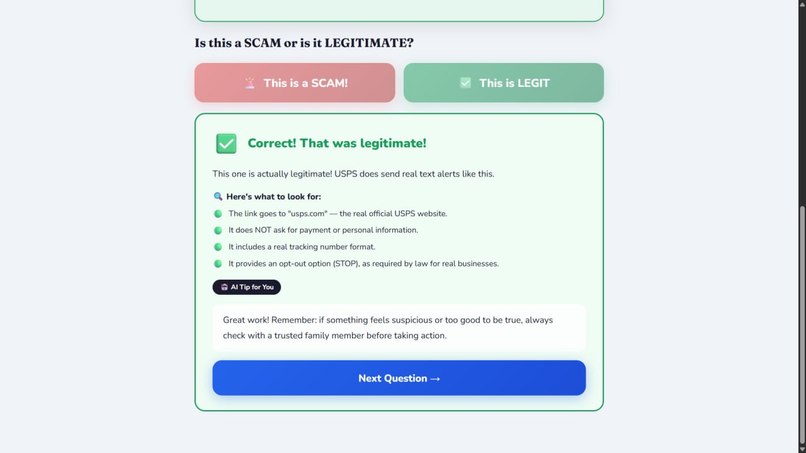
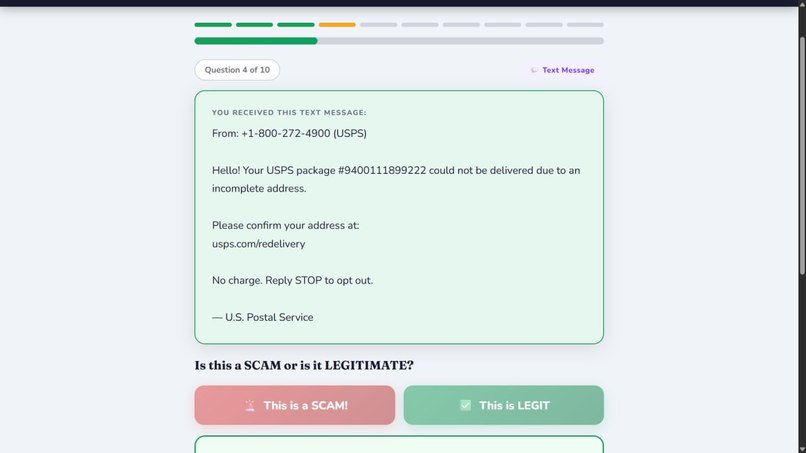
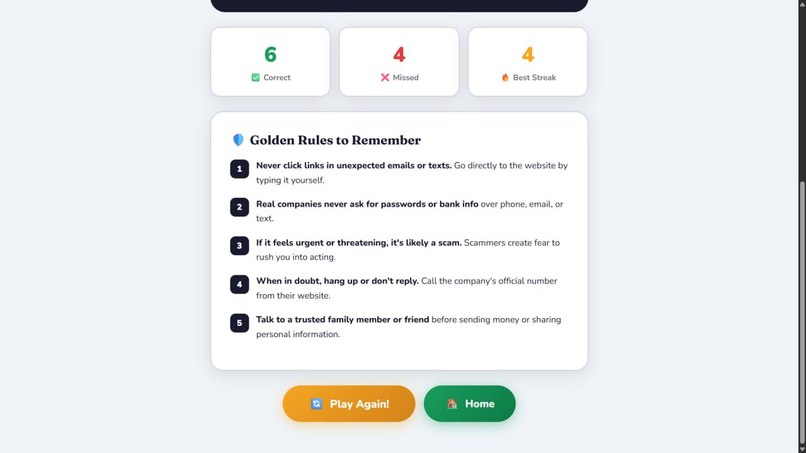
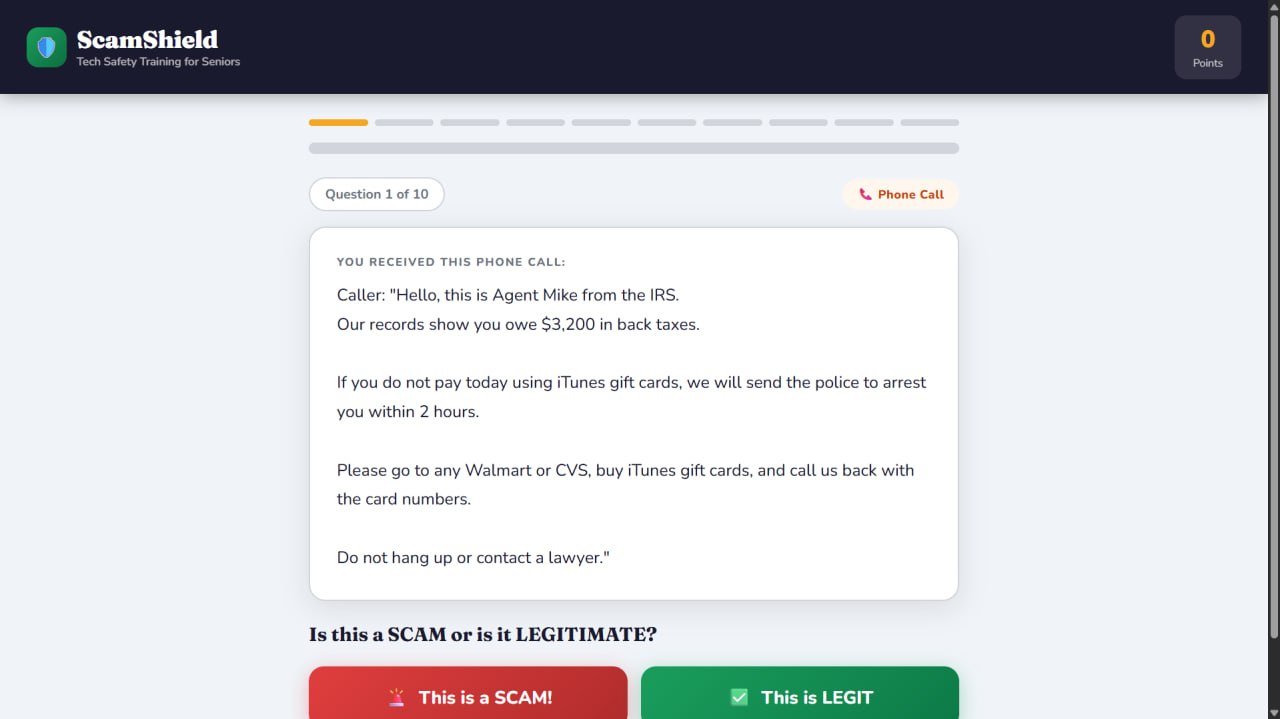
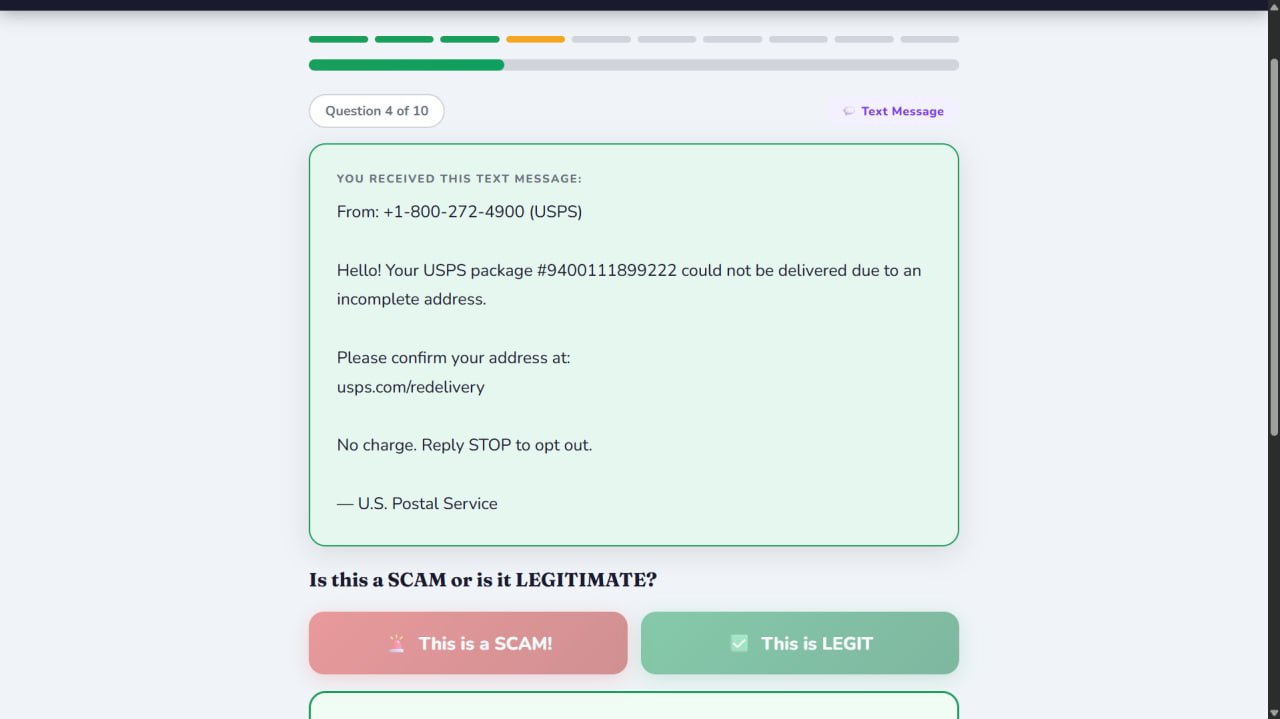
Users are presented with realistic scenarios such as emails, phone calls, text messages, and websites. They must decide whether each situation is a scam or legitimate.
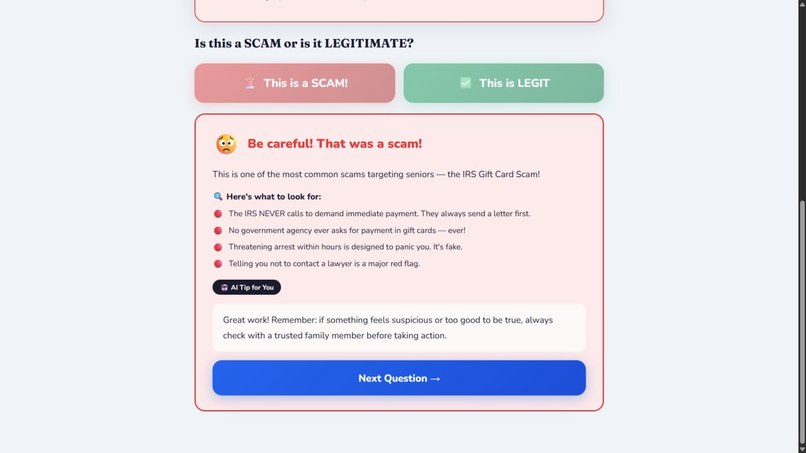
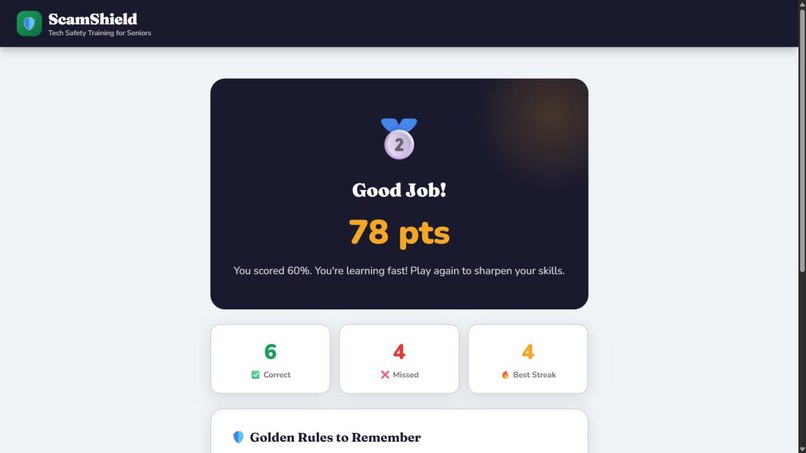
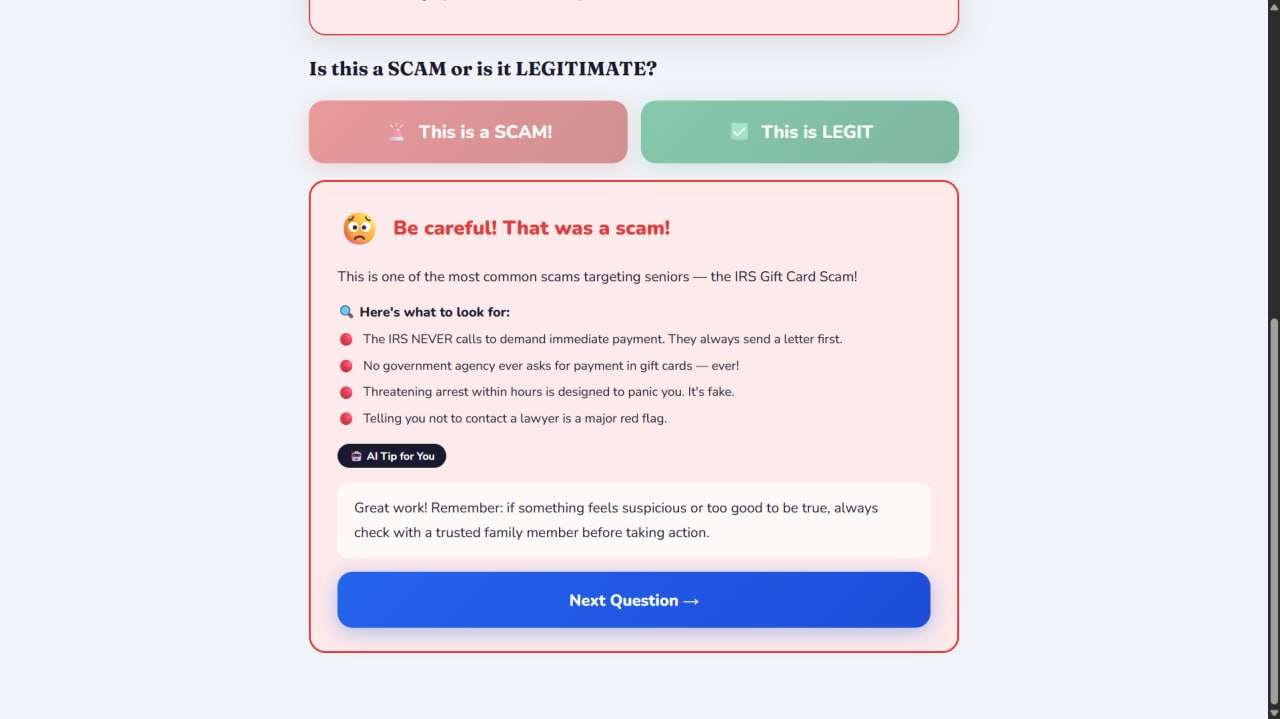
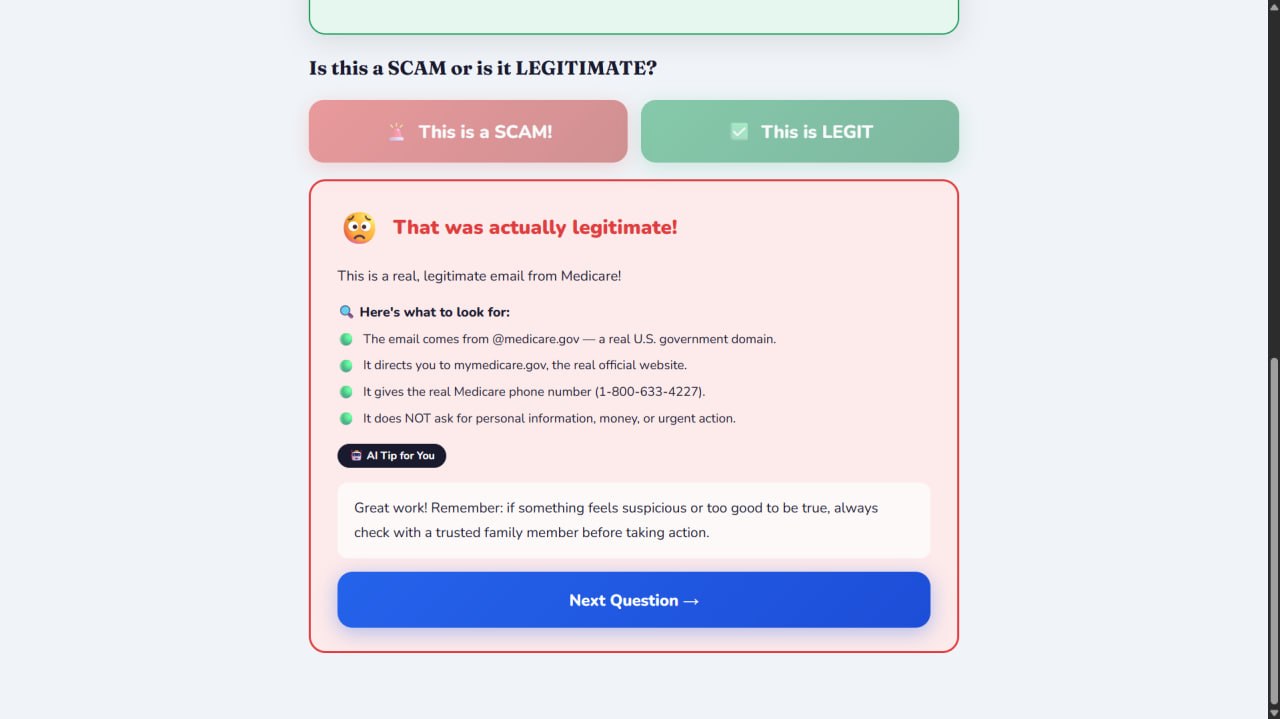
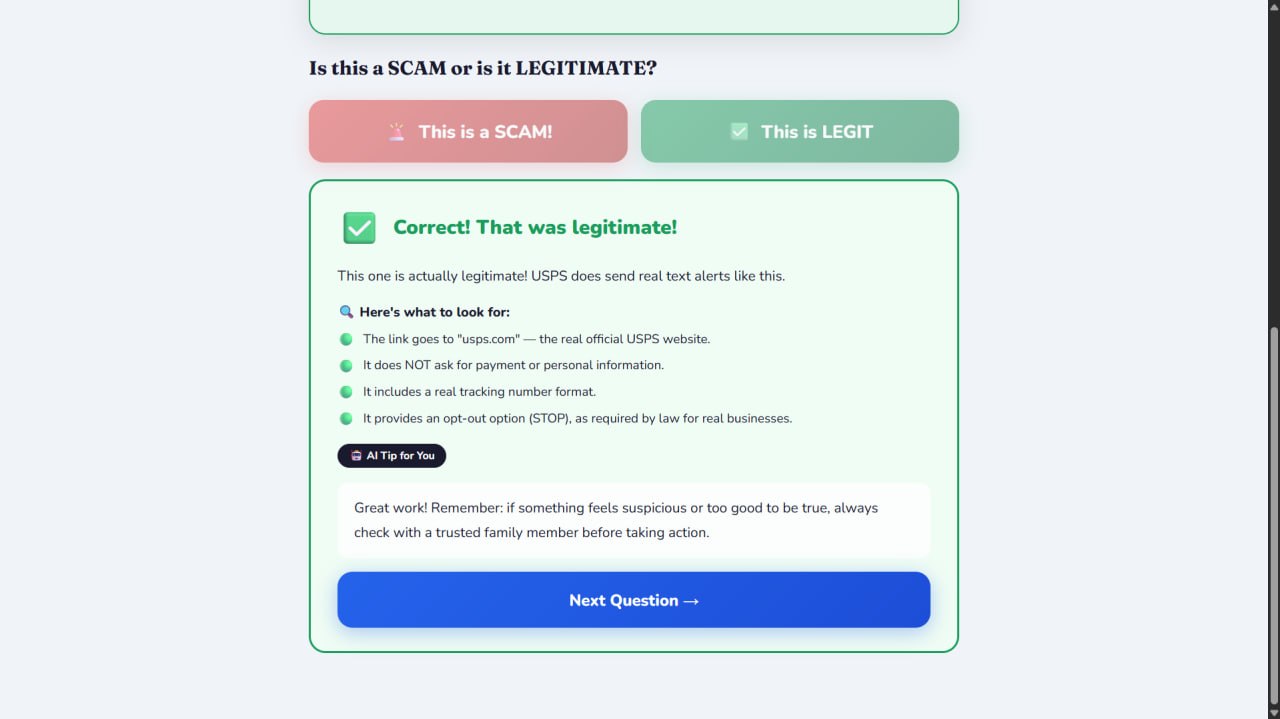
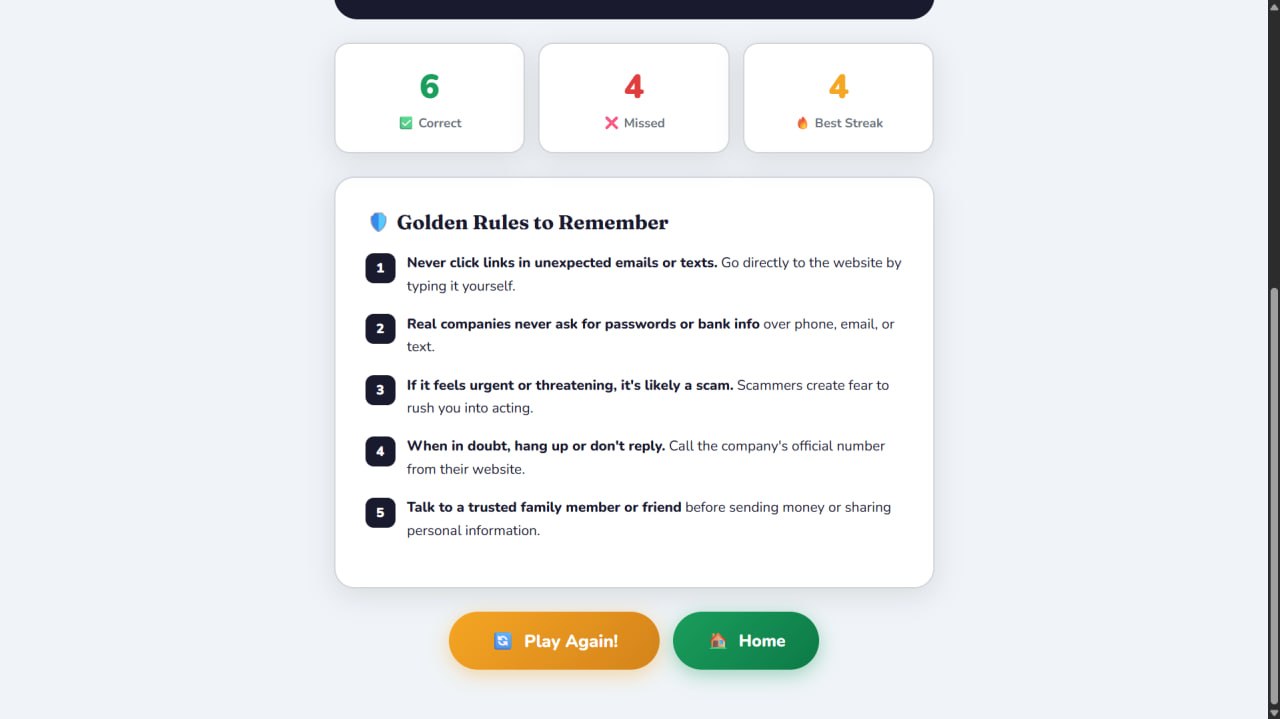
After each decision, the platform provides clear explanations, key warning signs, and helpful tips to reinforce learning. The scoring and streak system keeps users engaged while improving their awareness over time.
How we built it
ScamShield was designed and developed entirely by a solo developer using HTML, CSS, and JavaScript.
The application follows a modular structure where a scenario bank powers the gameplay. Each scenario contains realistic scam or legitimate situations across emails, calls, texts, websites, and social media.
Core features were implemented using JavaScript, including:
- Dynamic question rendering and state management
- Score, streak, and progress tracking system
- Instant feedback with explanations and visual highlights
- Scenario randomization for replayability
The user interface was built with a focus on simplicity and accessibility, using clean layouts, large buttons, and responsive design to ensure usability across devices, especially for older users.
Additional enhancements such as animations, progress indicators, and interactive feedback panels were added to improve engagement and make the learning experience more intuitive and enjoyable.
The project was completed within a limited hackathon timeframe, balancing functionality, usability, and visual design.
Challenges we ran into
As a solo developer, managing both design and development simultaneously was challenging, especially while maintaining a high-quality user experience.
Balancing functionality, usability, and visual design required careful planning and iteration.
Accomplishments that we're proud of
Building a fully functional and polished interactive platform as a solo developer was a major achievement.
From UI/UX design to logic implementation, every aspect of ScamShield was independently developed and integrated.
What we learned
We learned the importance of designing for real users, especially non-technical audiences like senior citizens. Simplicity, clarity, and accessibility are critical for effective learning.
We also strengthened our frontend development skills by building an interactive application with dynamic state management, feedback systems, and responsive design.
Additionally, we gained a deeper understanding of common scam patterns and how psychological tactics like urgency and fear are used to manipulate users.
What's next for ScamShield
We plan to expand ScamShield into a more advanced and accessible platform.
Future improvements include integrating real AI for smarter and more personalized feedback, adding voice-based scenarios for better accessibility, and introducing multiplayer or leaderboard features to increase engagement.
We also aim to deploy ScamShield as a scalable web platform so it can reach a wider audience and contribute to digital safety education globally.


Log in or sign up for Devpost to join the conversation.