-
-
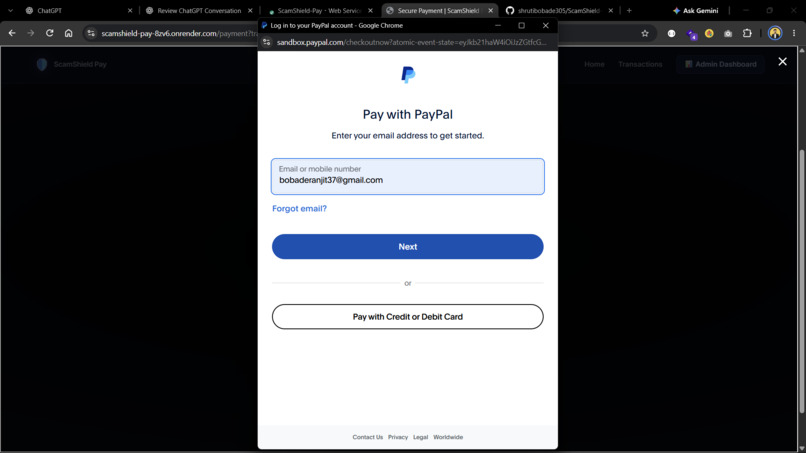
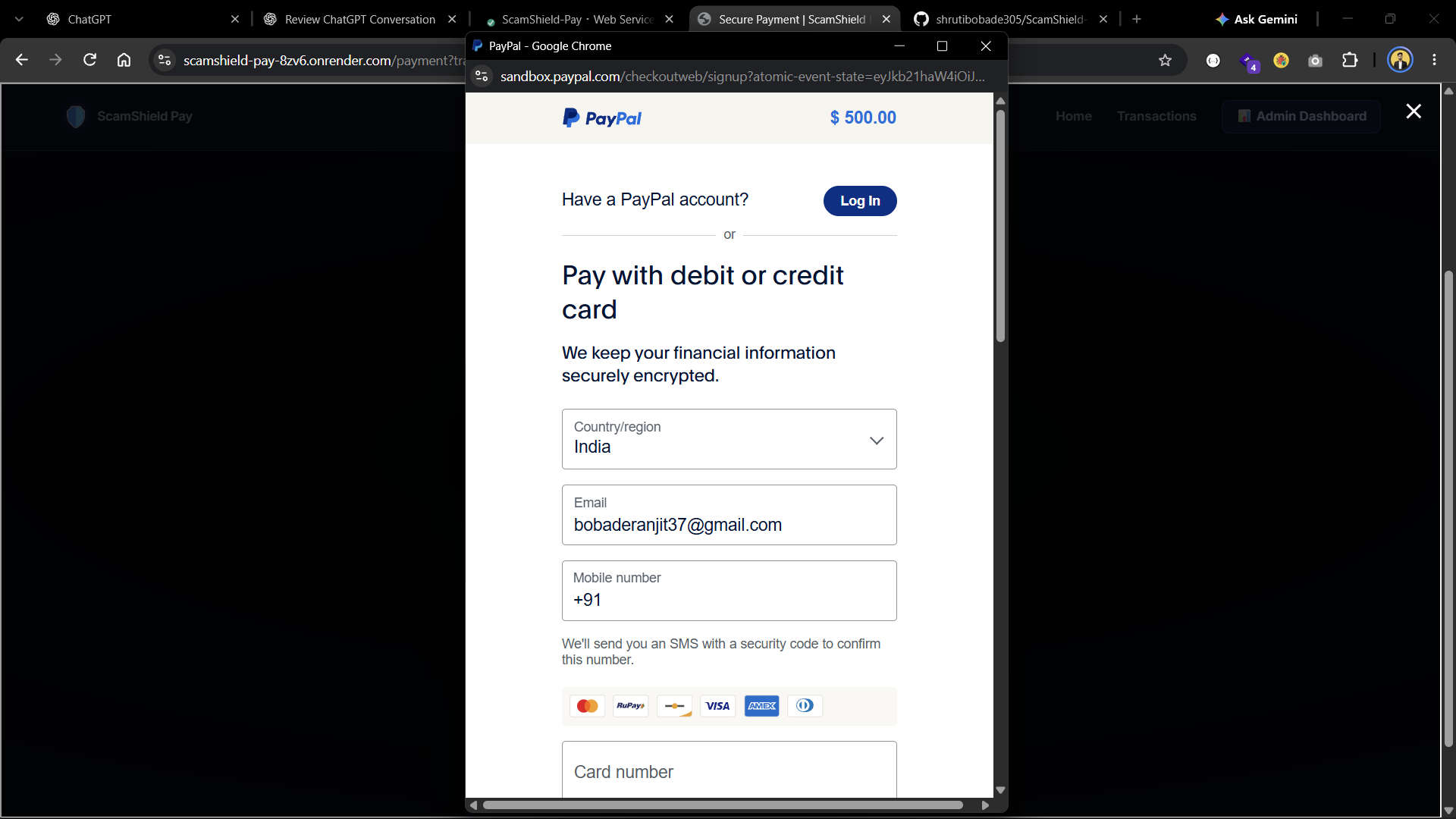
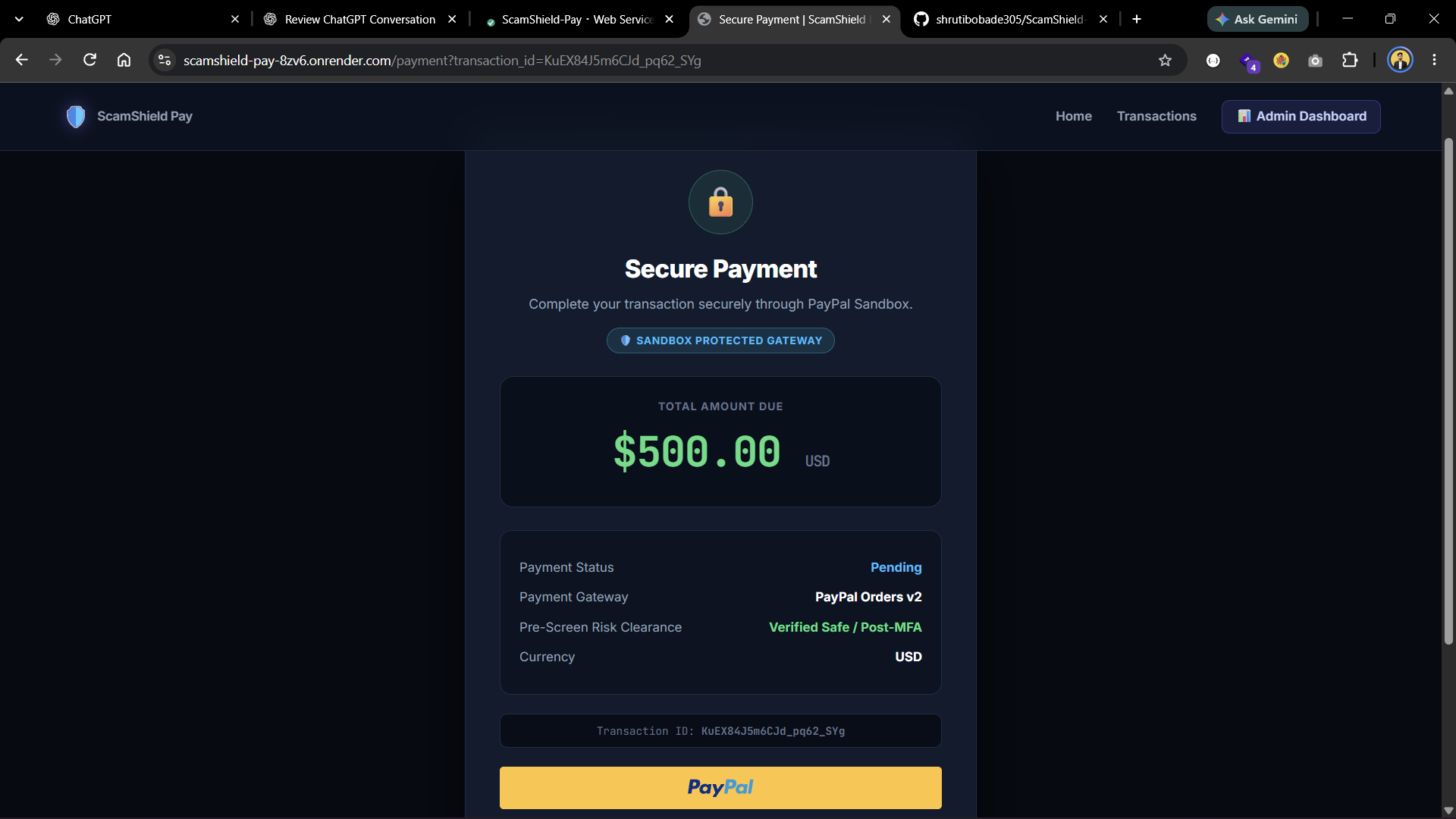
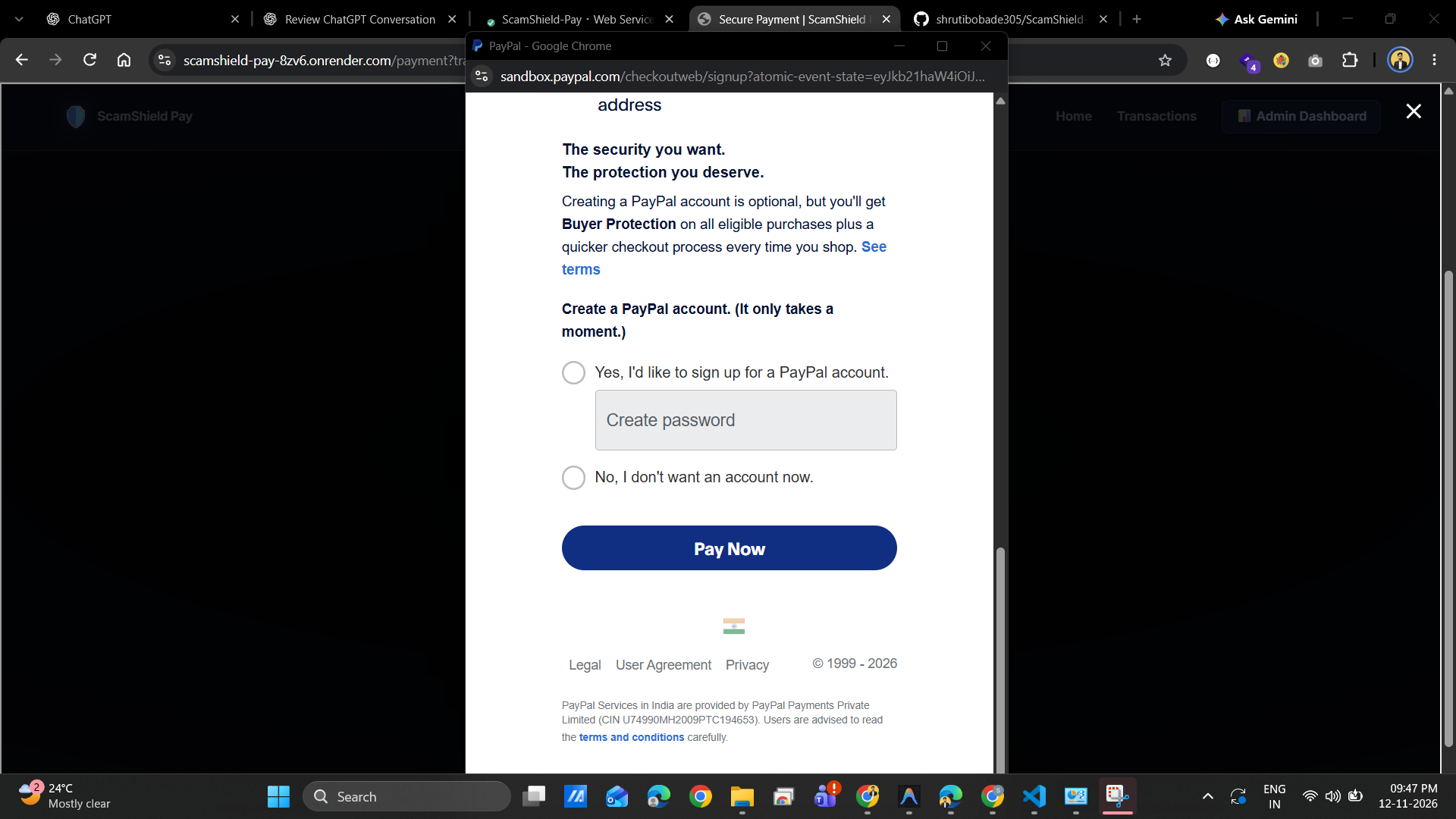
PayPal Sandbox checkout interface demonstrating secure payment authorization.
-
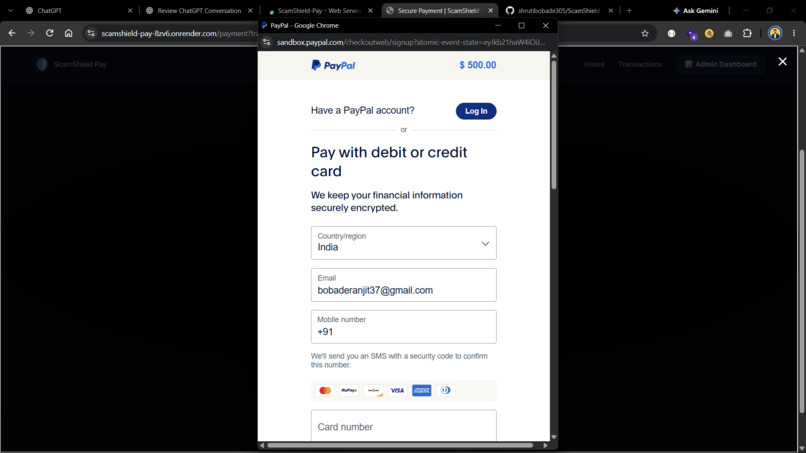
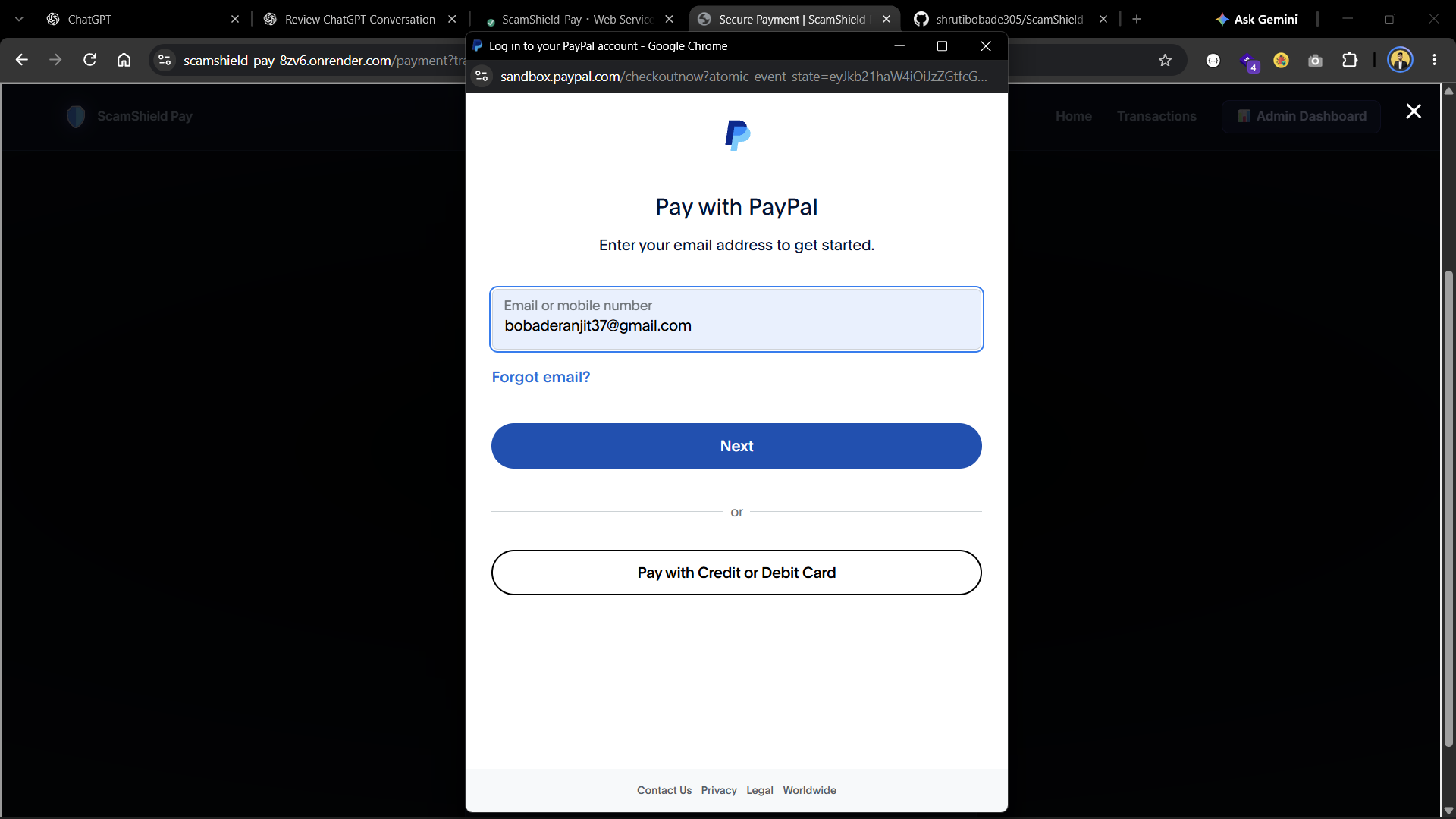
Complete the payment through PayPal Sandbox using its integrated checkout experience.
-
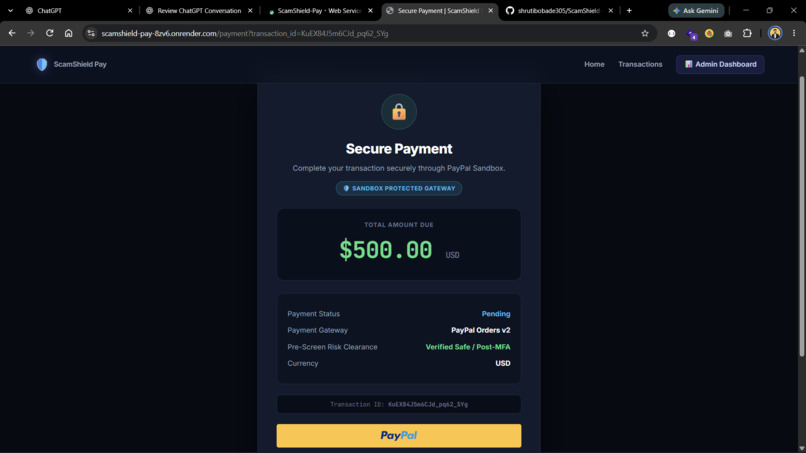
Review transaction details and payment amount before completing the PayPal Sandbox checkout.
-
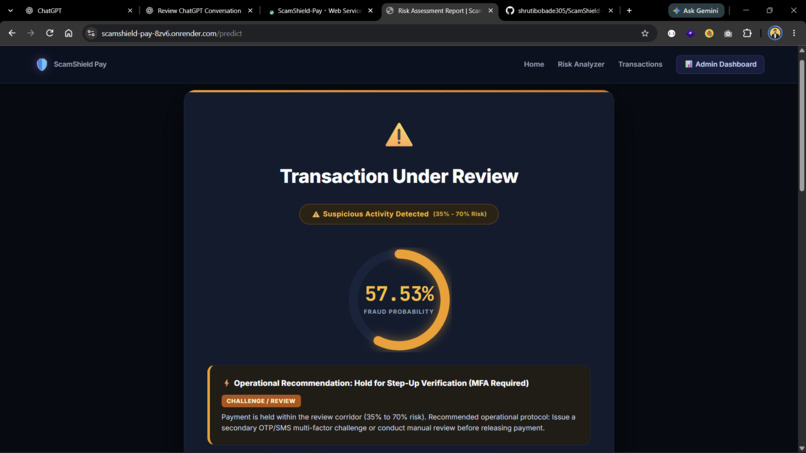
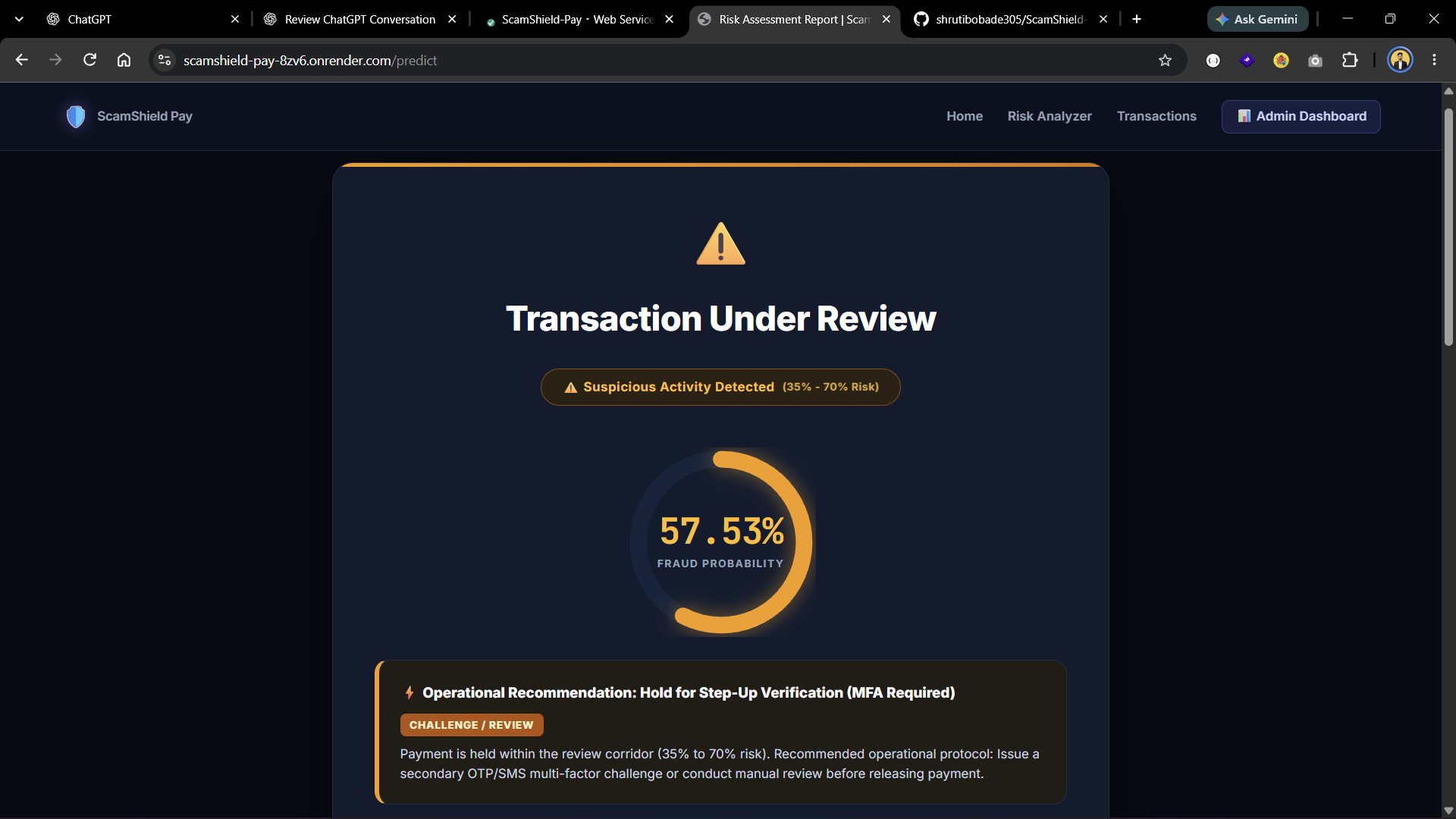
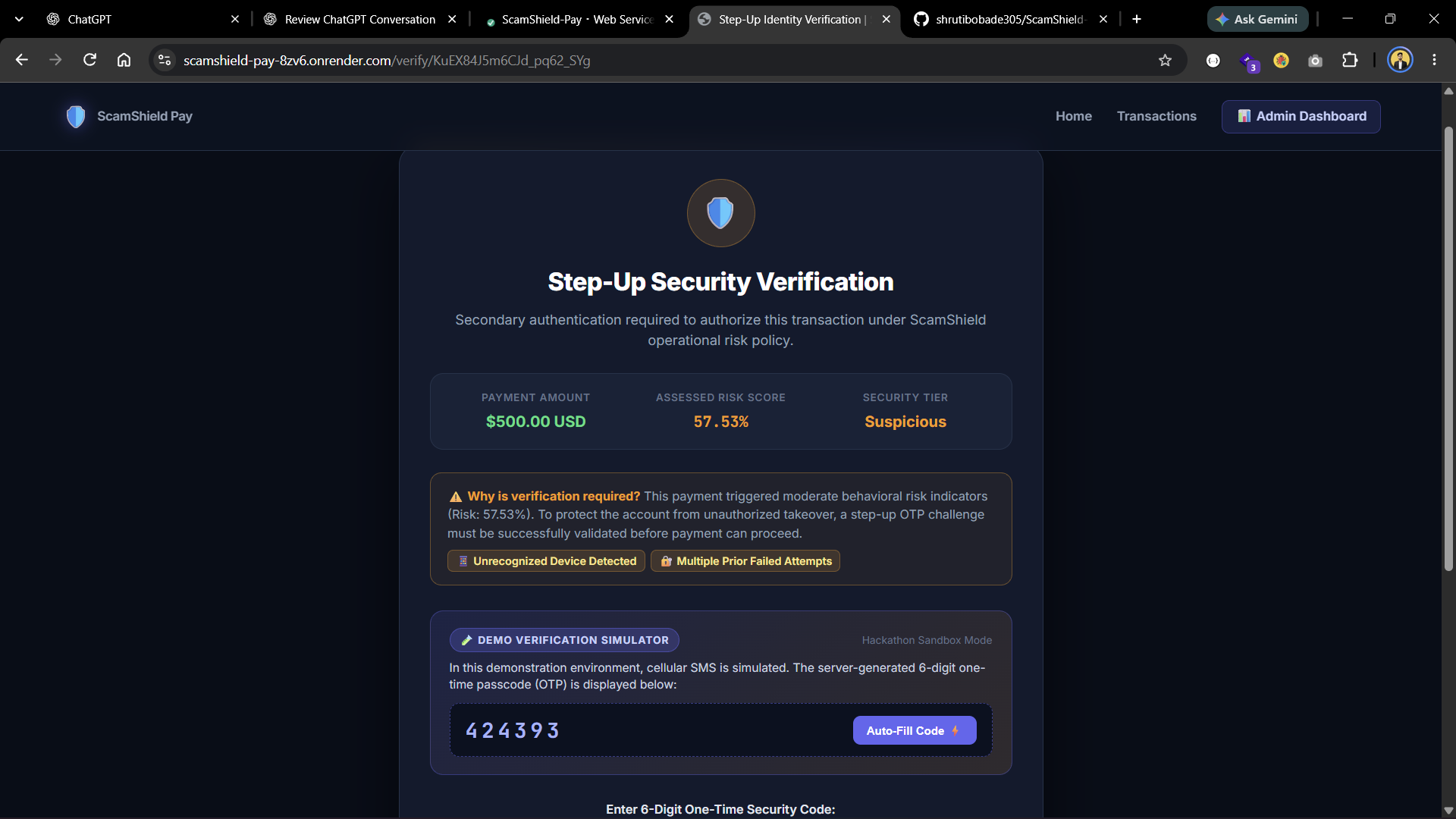
ScamShield Pay detects suspicious transaction patterns and highlights potential security risks.
-
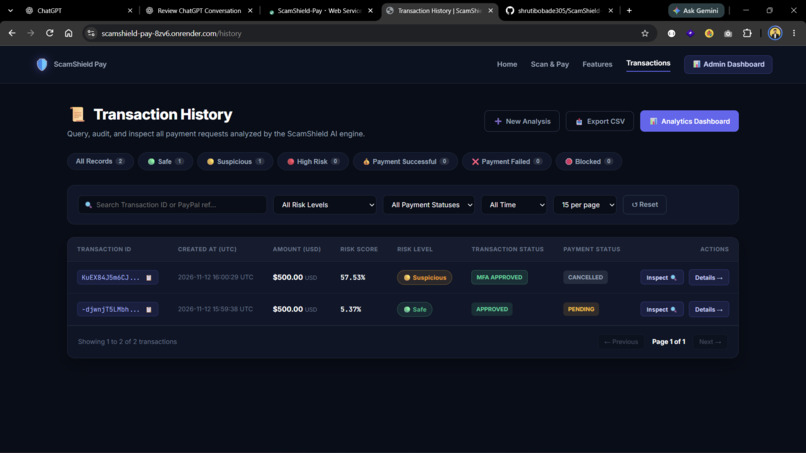
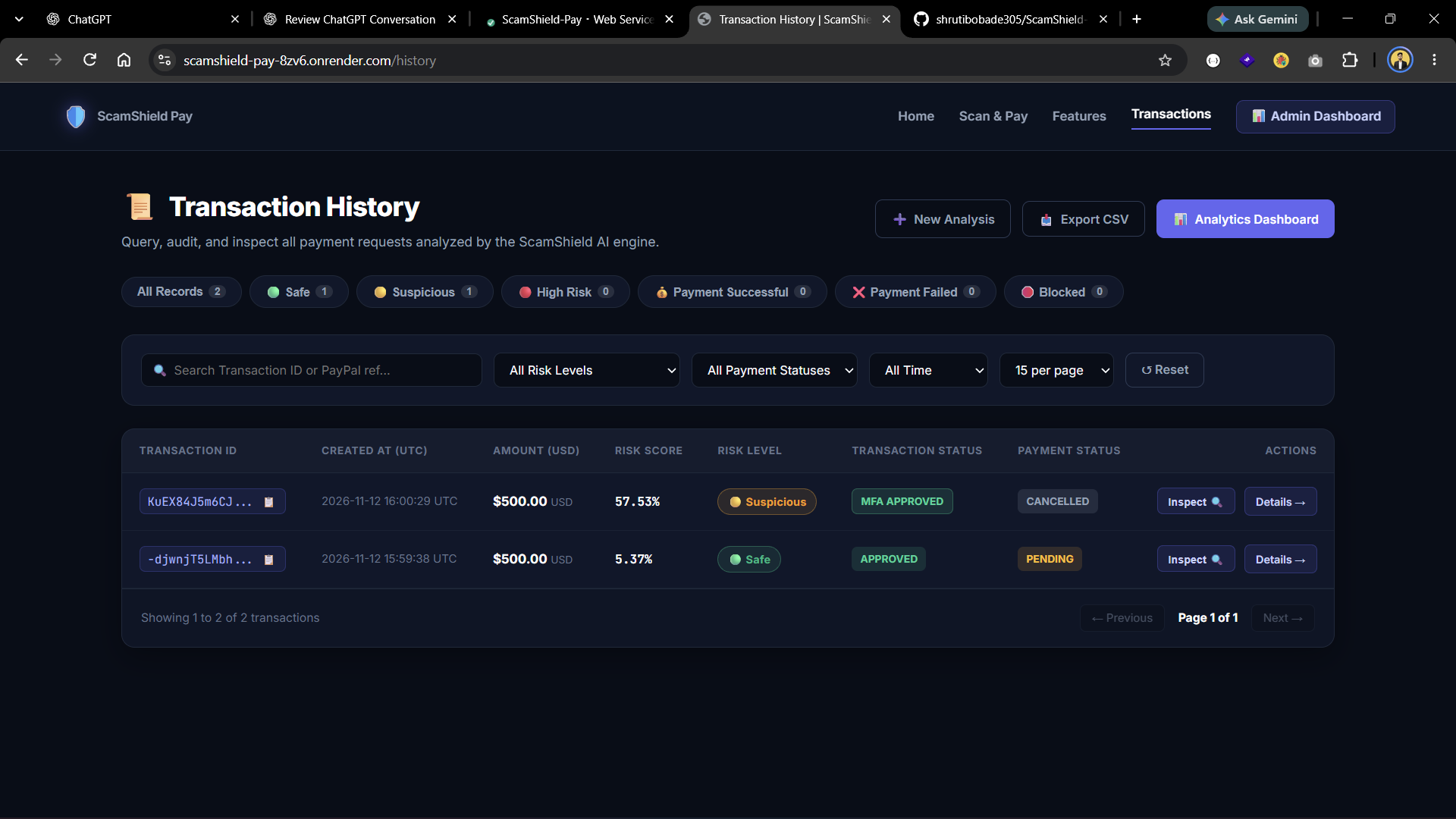
Demonstrating the payment authorization and processing workflow through PayPal Sandbox.
-
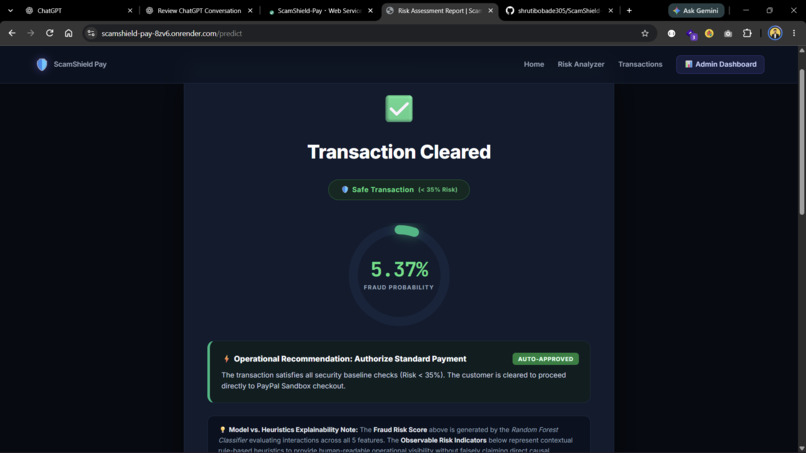
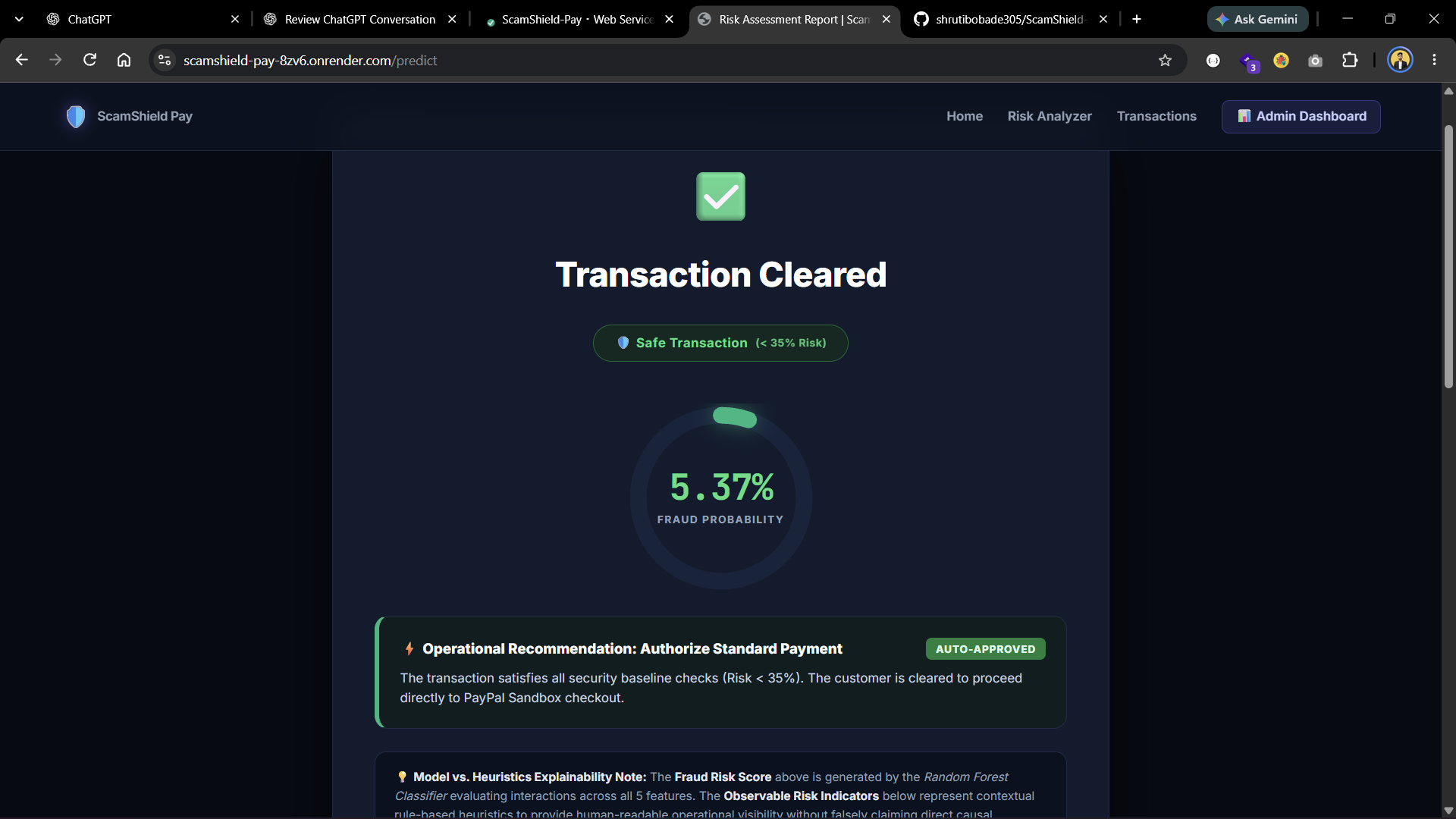
AI-powered risk analysis identifies a low-risk transaction and approves it for payment.
-
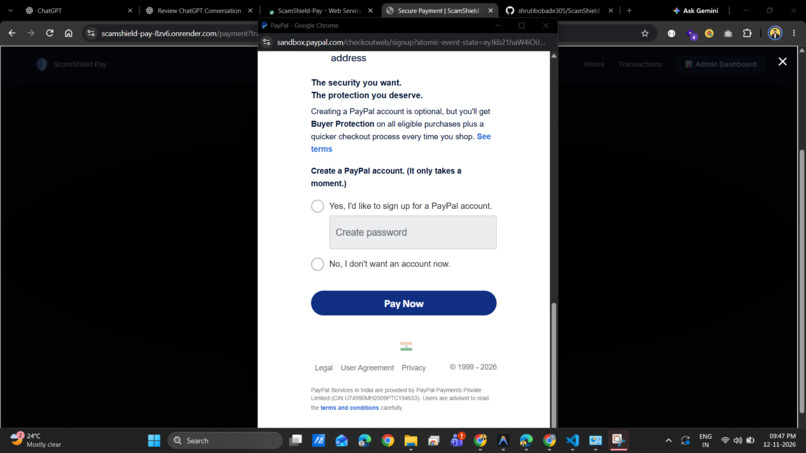
Authorize the transaction through PayPal Sandbox to complete the payment workflow.
-
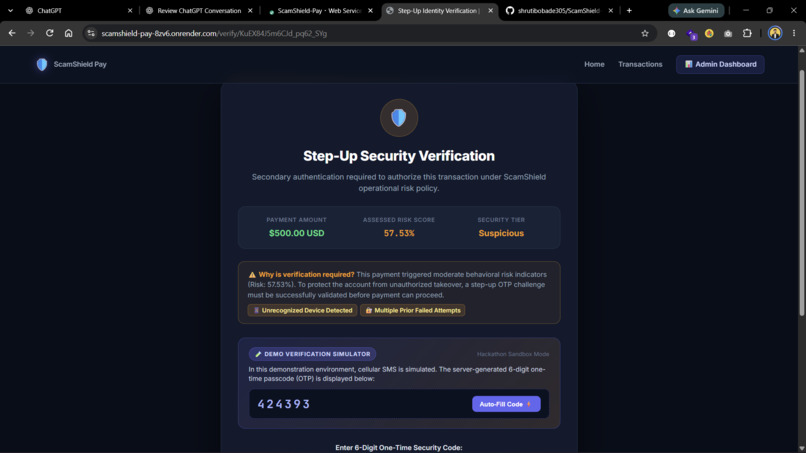
Secure payment experience powered by PayPal Sandbox integration for approved transactions.
-
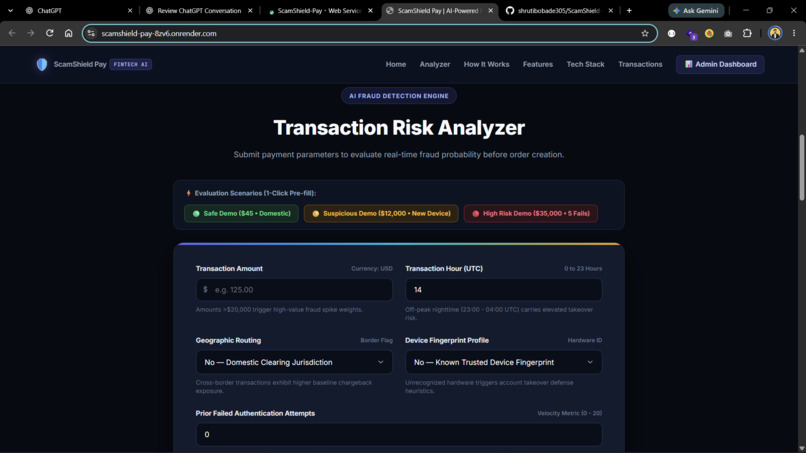
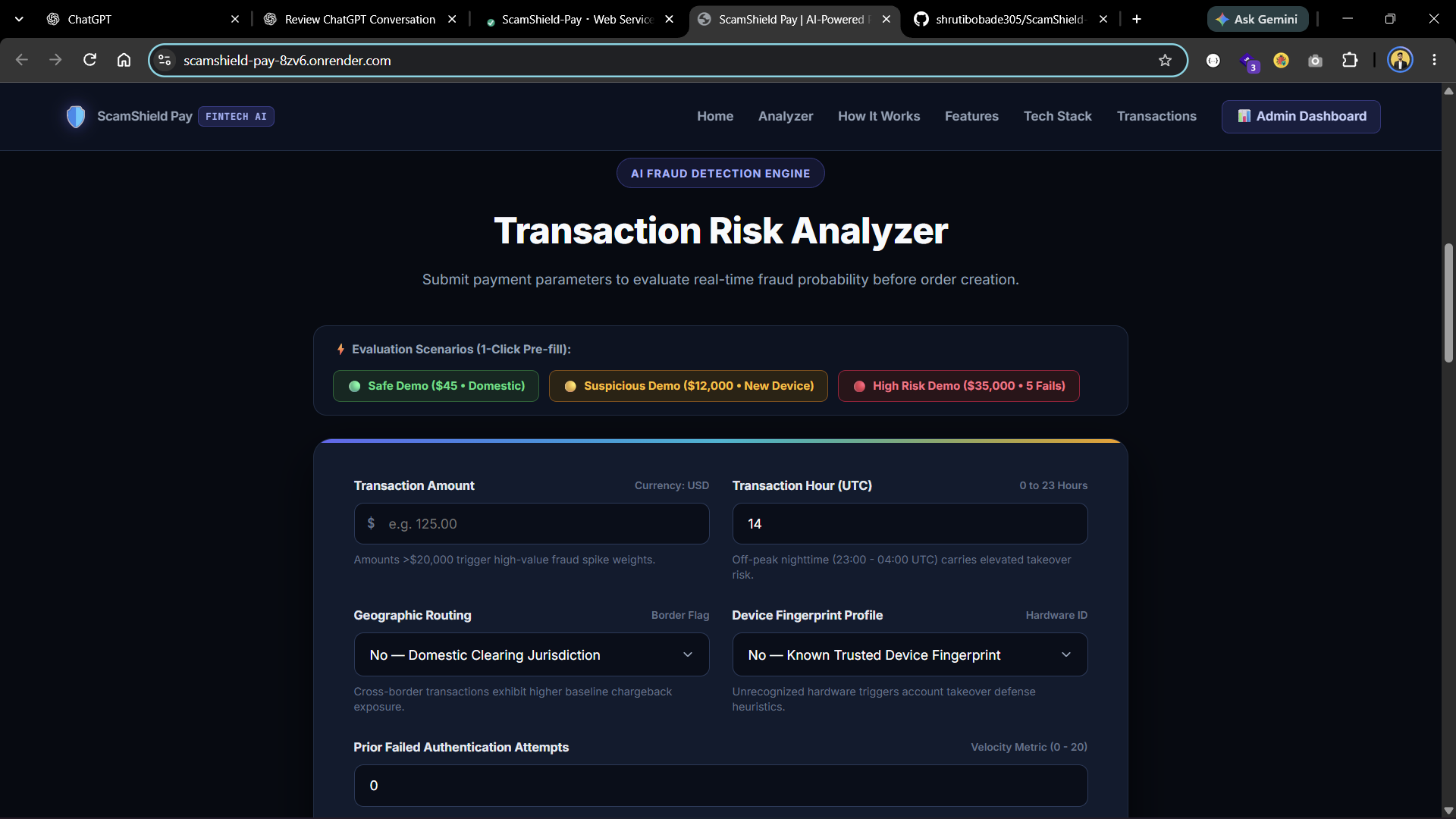
Analyze transaction details using machine learning to identify potential payment fraud risks.
-
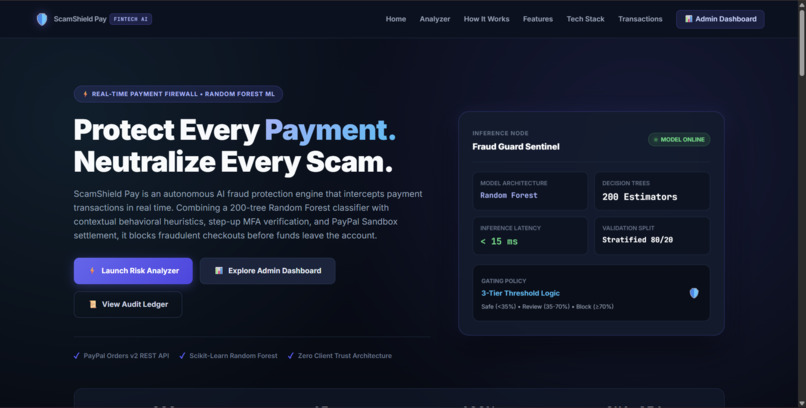
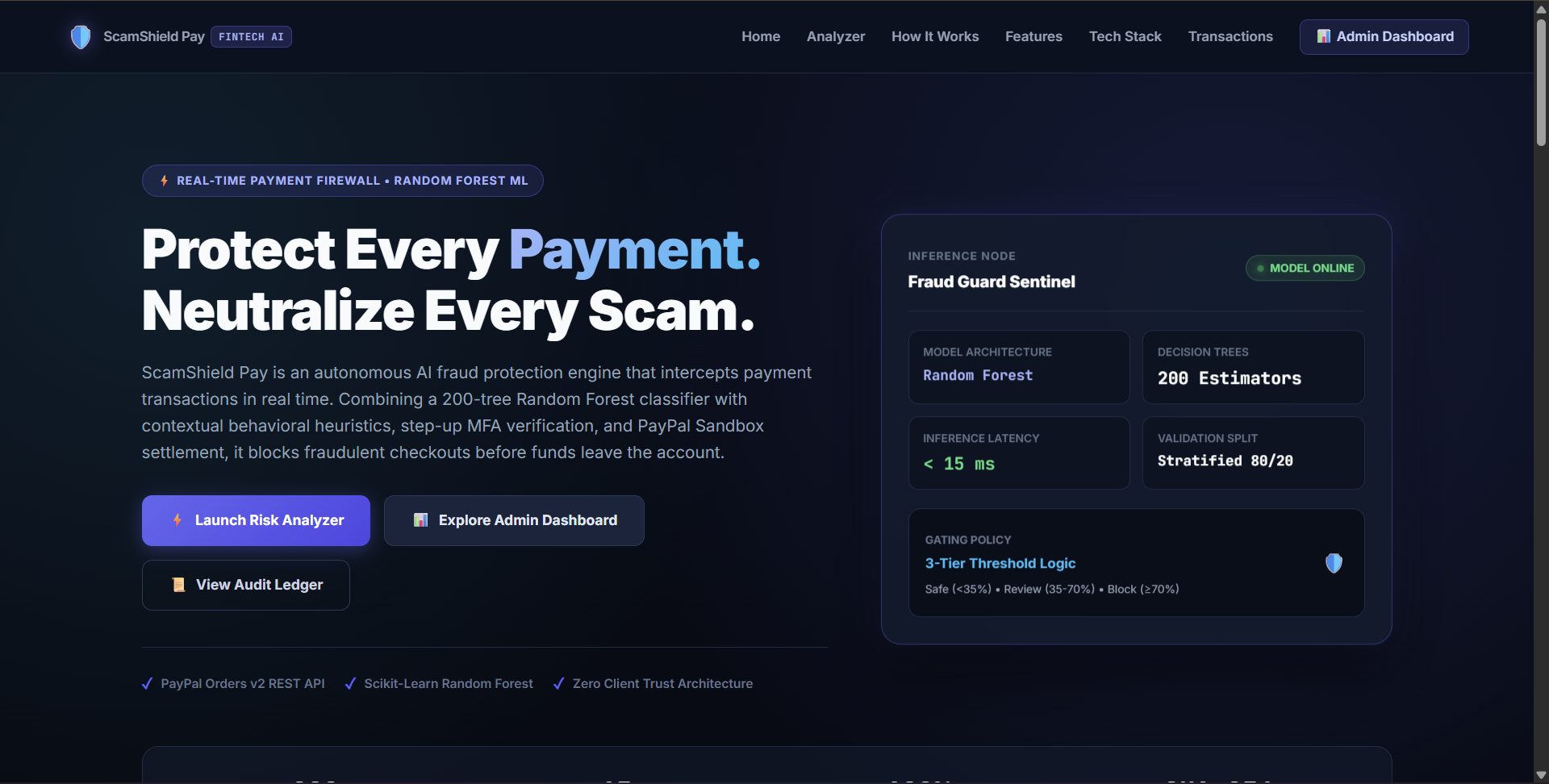
ScamShield Pay – AI-Powered Payment Protection Against Online Fraud.
Inspiration
Digital payments have become an essential part of our daily lives, but online payment fraud and suspicious transactions remain major concerns. We wanted to explore how Artificial Intelligence and Machine Learning could help identify potentially fraudulent transactions before a payment is completed.
This idea inspired us to build ScamShield Pay, an AI-powered payment protection system that adds an intelligent risk assessment layer to the payment process.
Our vision is to make digital transactions smarter, safer, and more trustworthy.
What it does
ScamShield Pay analyzes transaction details and predicts the possibility of fraudulent activity using a Machine Learning model.
Users enter transaction information such as:
- Transaction amount
- Transaction hour
- International transaction status
- New device status
- Number of failed payment attempts
The system analyzes these details and generates a fraud risk score.
Based on the score, transactions are classified into three categories:
- Safe: Low-risk transactions can proceed to payment.
- Suspicious: Transactions are flagged for additional attention.
- High Risk: Transactions are blocked from proceeding.
For payment processing, we integrated PayPal Sandbox to demonstrate the payment workflow after a transaction is approved.
How we built it
We developed ScamShield Pay using Python and Flask for the backend and HTML, CSS, and JavaScript for the frontend.
For fraud detection, we used Scikit-learn and trained a Random Forest Classifier using synthetic transaction data. The trained model analyzes transaction features and generates a probability-based risk score.
We integrated PayPal REST APIs and the PayPal JavaScript SDK to demonstrate payment order creation, buyer approval, and payment capture using Sandbox accounts.
We also implemented backend validation to verify transaction references and payment amounts before processing payment capture.
Technology Stack:
- Python
- Flask
- Scikit-learn
- Random Forest Classifier
- HTML, CSS, JavaScript
- PayPal REST API
- PayPal JavaScript SDK
Challenges we ran into
One of our biggest challenges was integrating Machine Learning predictions with the payment processing workflow.
We wanted to ensure that transaction risk was evaluated before payment and that only approved transactions could proceed.
Other challenges included:
- Preparing and generating synthetic transaction datasets.
- Training and integrating the ML model with Flask.
- Implementing different fraud risk classifications.
- Connecting PayPal Sandbox APIs.
- Validating transaction IDs and payment amounts on the backend.
- Managing API credentials and environment variables securely.
Overcoming these challenges helped us understand how AI, backend development, and payment integrations work together.
Accomplishments that we're proud of
We are proud to have transformed our idea into a functional web application combining Machine Learning-based transaction risk assessment with a PayPal payment workflow.
Our key accomplishments include:
- Successfully training and integrating a Random Forest model.
- Implementing automated transaction risk scoring.
- Creating Safe, Suspicious, and High Risk transaction classifications.
- Integrating PayPal Sandbox payment processing.
- Implementing backend transaction validation.
- Building an end-to-end prototype connecting AI predictions with payment processing.
What we learned
During this project, we gained practical experience in:
- Training Machine Learning models using Scikit-learn.
- Integrating ML predictions into Flask applications.
- Understanding probability-based fraud risk scoring.
- Developing backend APIs and validating transactions.
- Integrating third-party payment services.
- Managing sensitive credentials through environment variables.
- Connecting frontend, backend, Machine Learning, and payment systems.
We also learned that synthetic training data is useful for prototyping, but real-world fraud detection requires validated datasets, extensive testing
Built With
- api
- artificial
- copy
- css
- flask
- forest
- fraud
- html
- intelligence
- javascript
- joblib
- learning
- machine
- paypal
- python
- random
- rest
- scikit-learn

