-
-
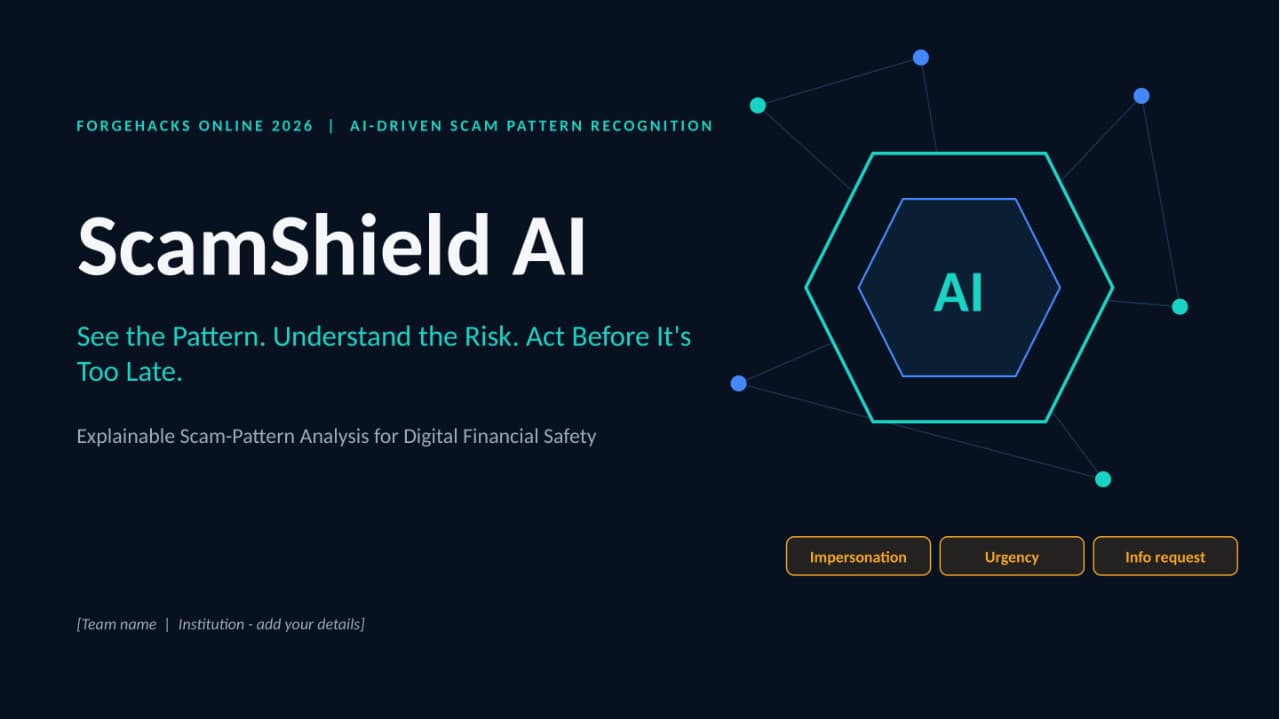
ScamShield AI: See the Pattern. Understand the Risk. Act Before It's Too Late.
-
ScamShield AI: An explainable scam-pattern analysis prototype for digital financial safety.
-
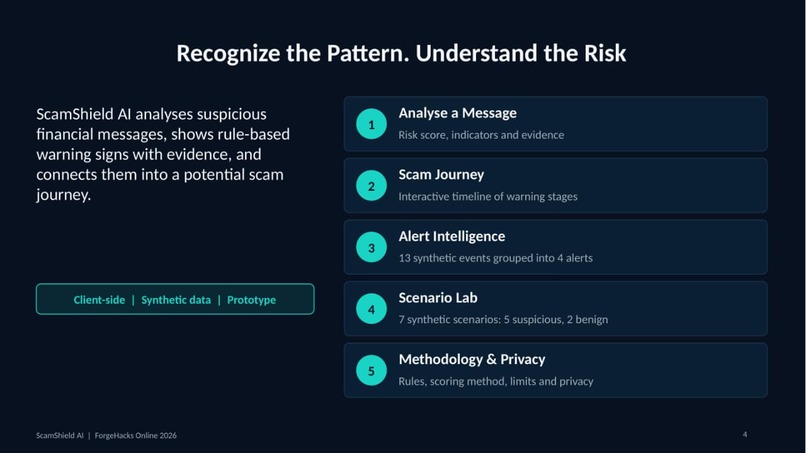
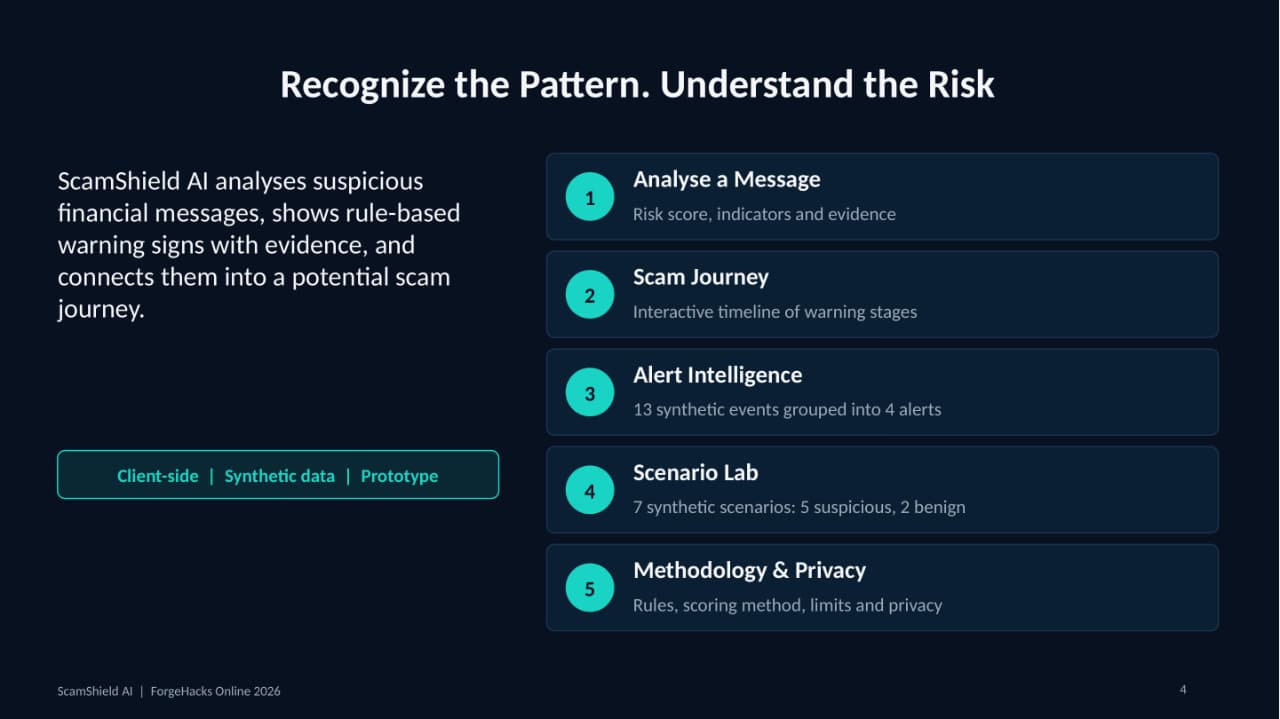
Explore ScamShield AI's message analysis, scam journey, alert intelligence, scenario lab, and privacy methodology.
-
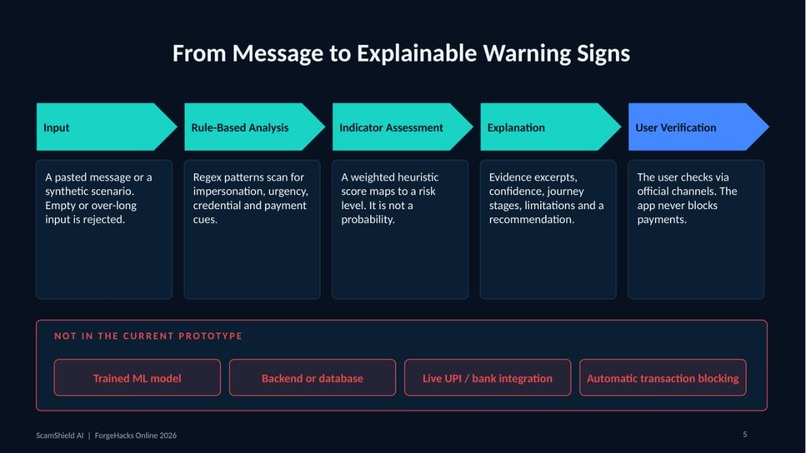
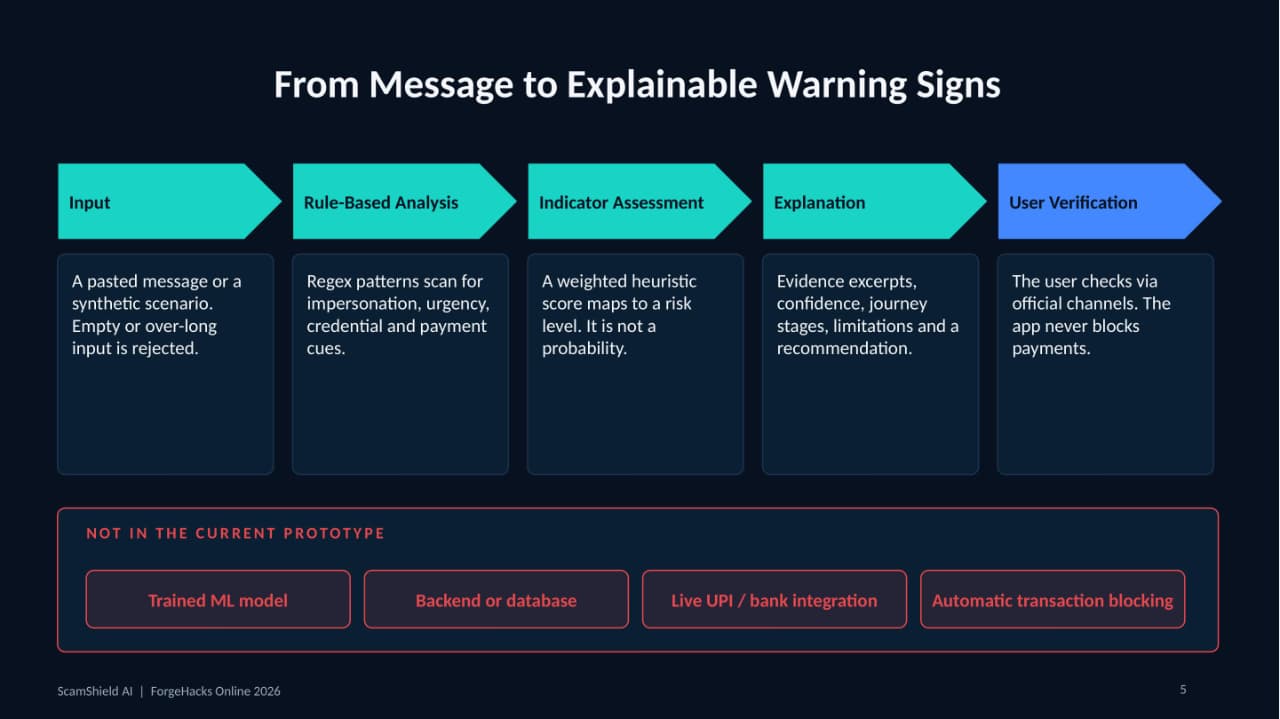
Follow the workflow from message input through rule-based analysis and risk explanation to independent user verification.
-
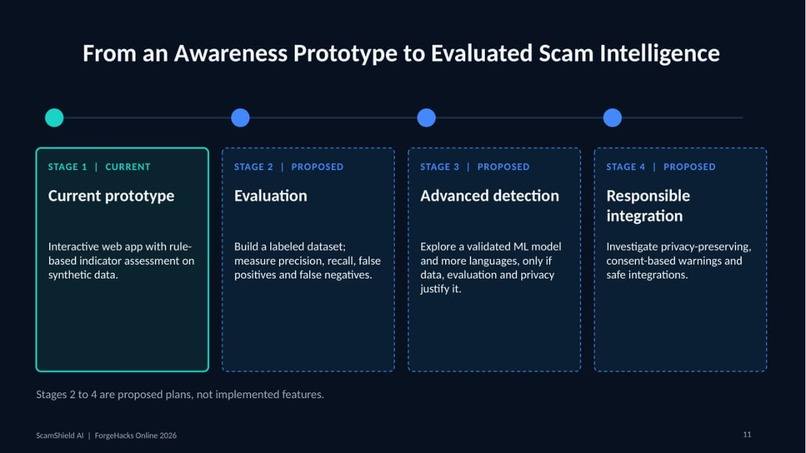
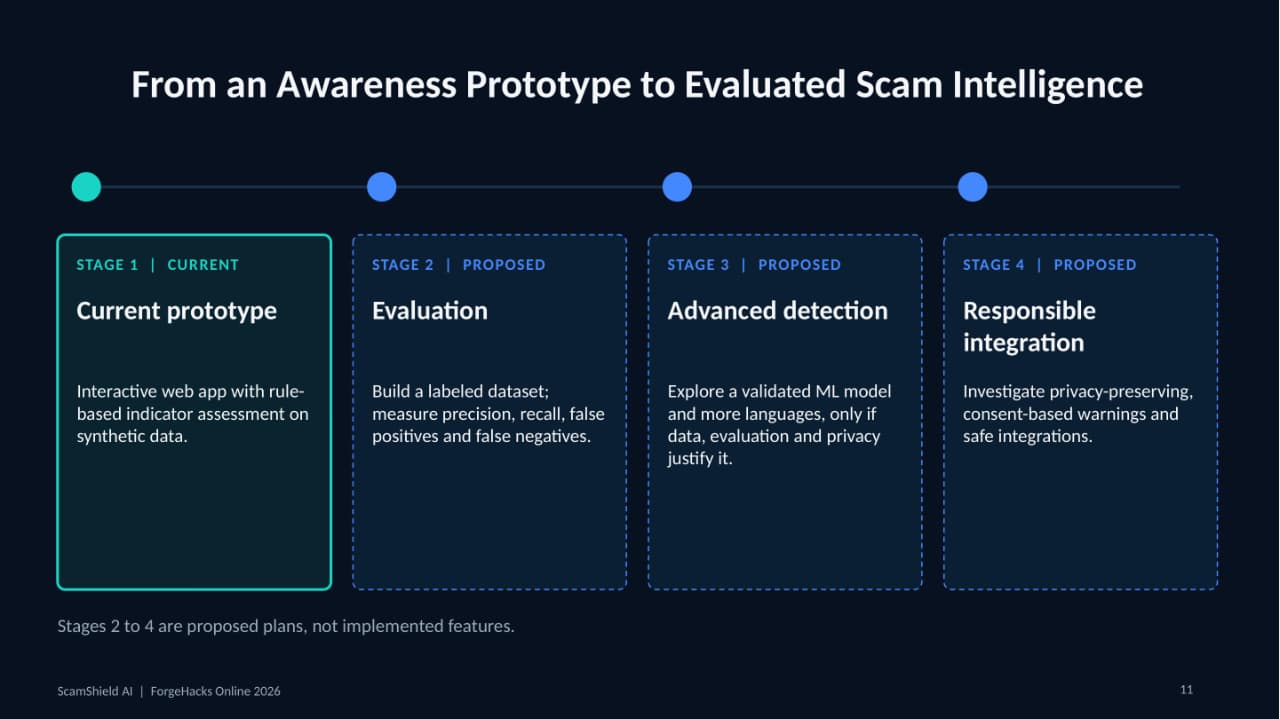
Our roadmap moves from rule-based analysis toward rigorous evaluation, potential advanced detection, and responsible integration.
-
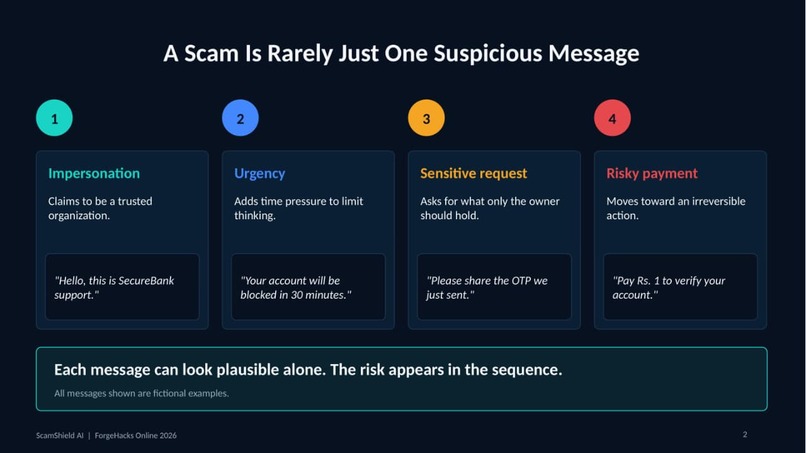
Explore how impersonation, urgency, sensitive information requests, and risky payments can form a suspicious scam journey.
-
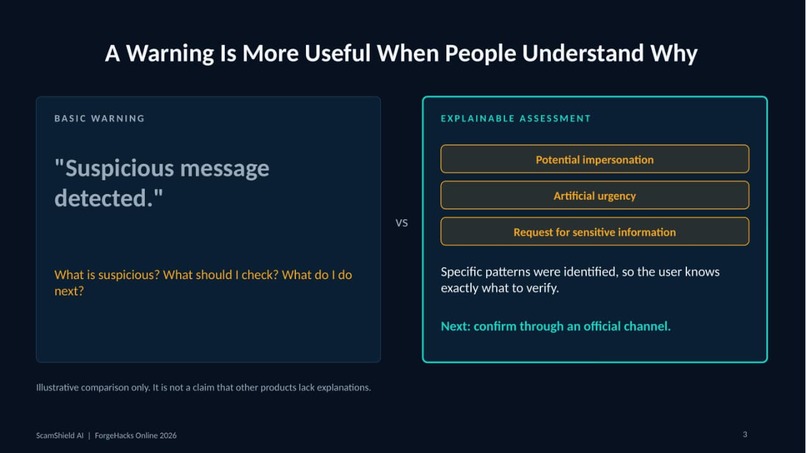
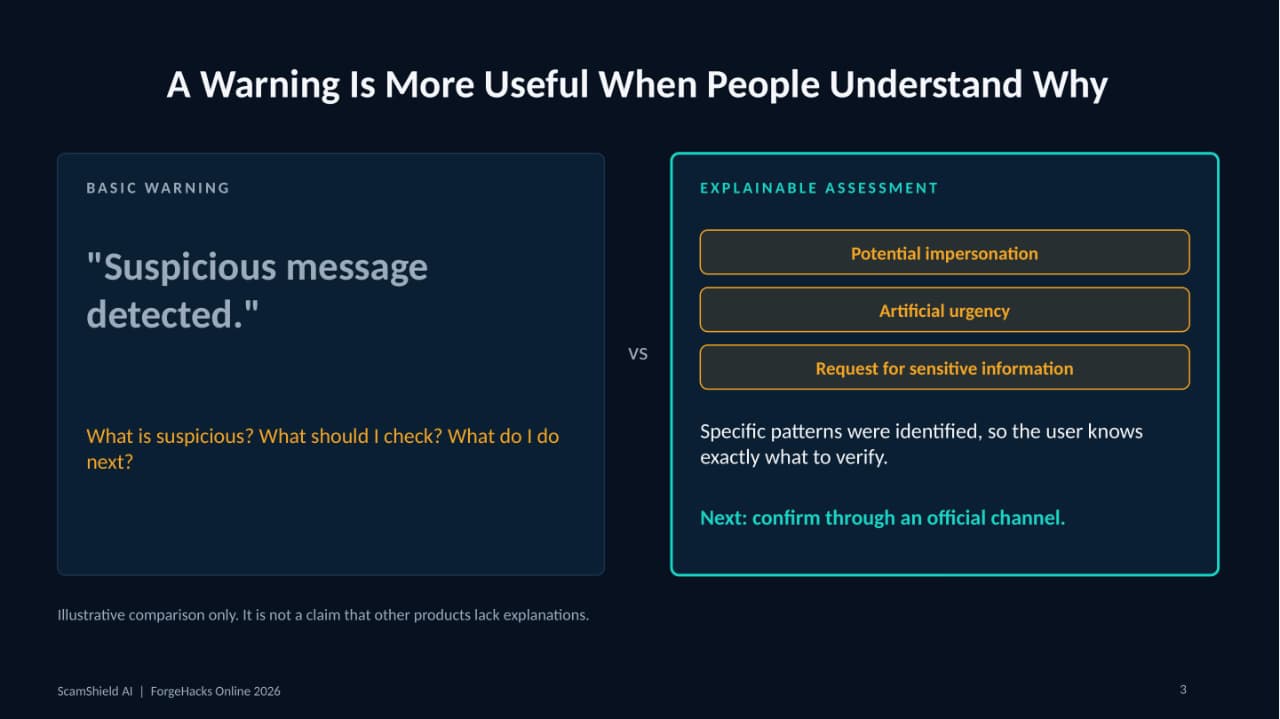
Move beyond generic warnings with explainable indicators that help users understand what to verify.
-
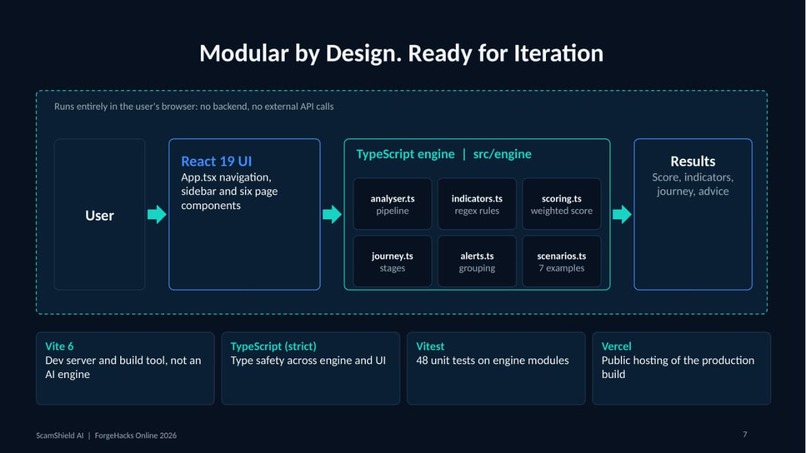
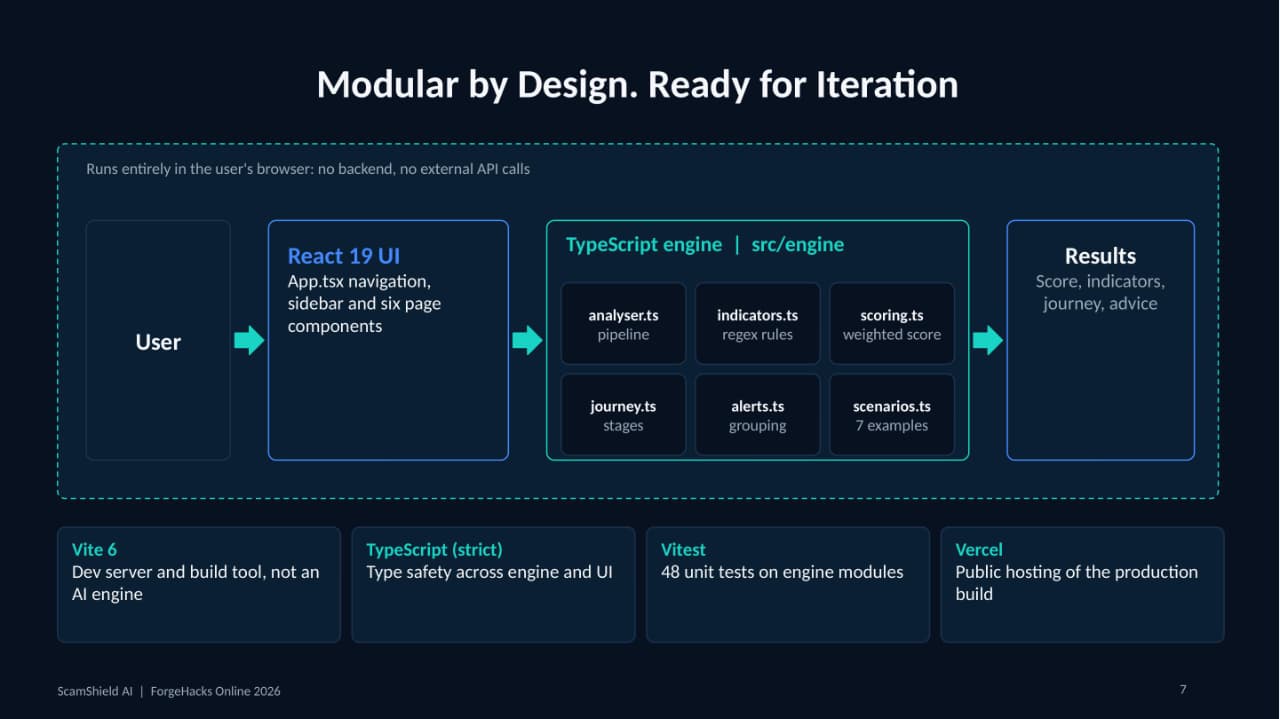
Built with React, TypeScript, and Vite, using a modular analysis engine, 48 unit tests, and Vercel deployment.
-
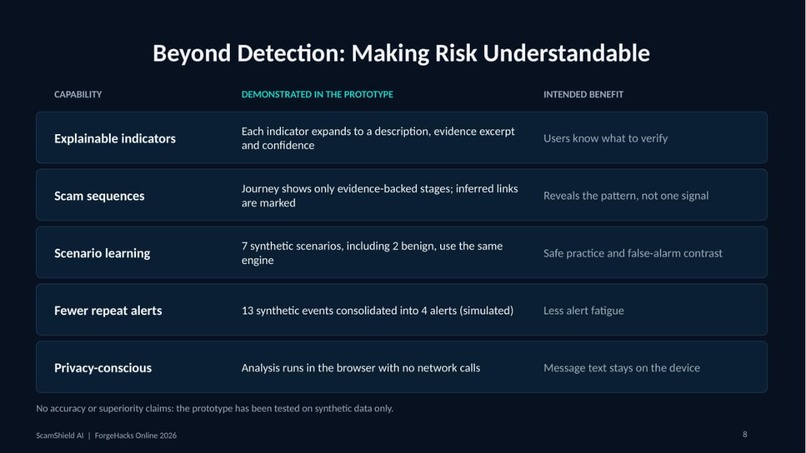
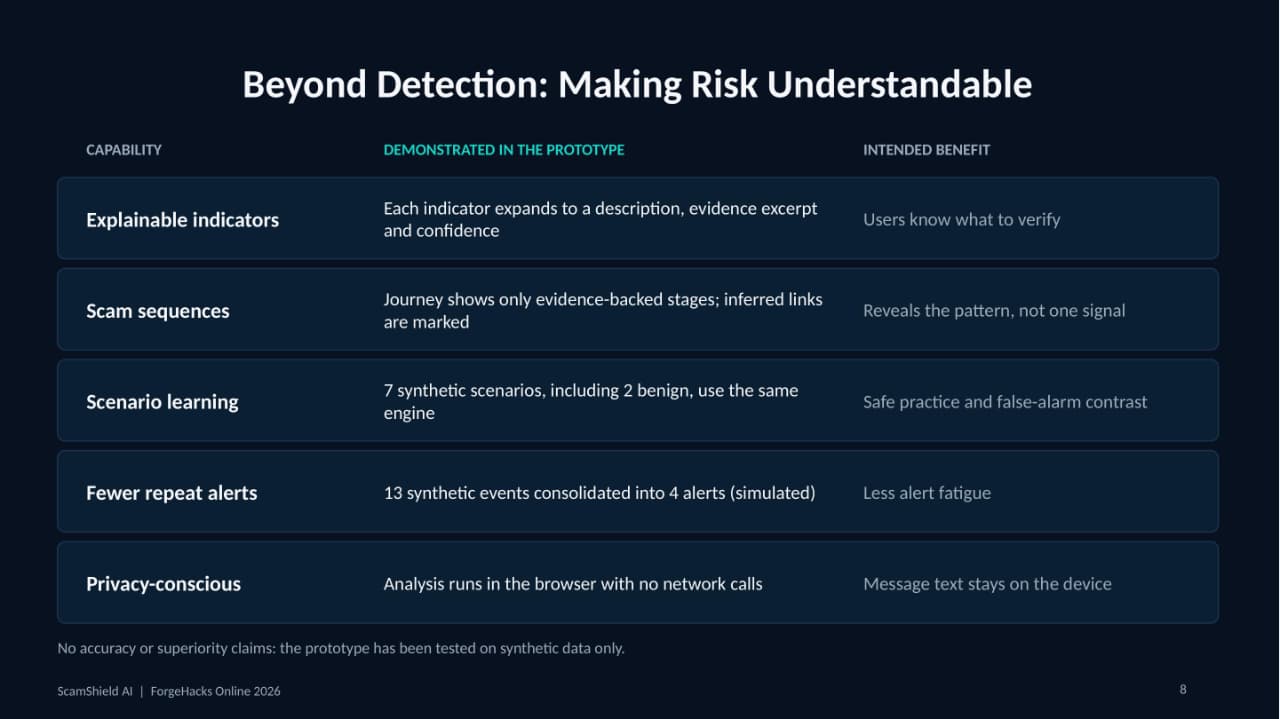
Explore explainable indicators, evidence-backed scam journeys, scenario learning, simulated alert grouping, and browser-based privacy.
-
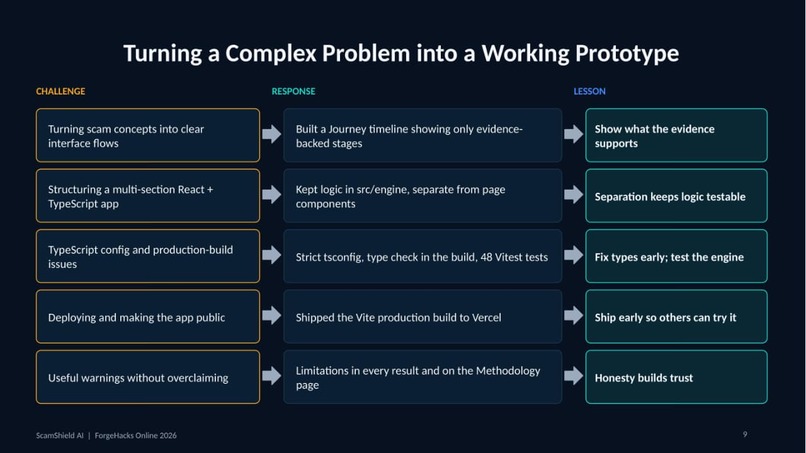
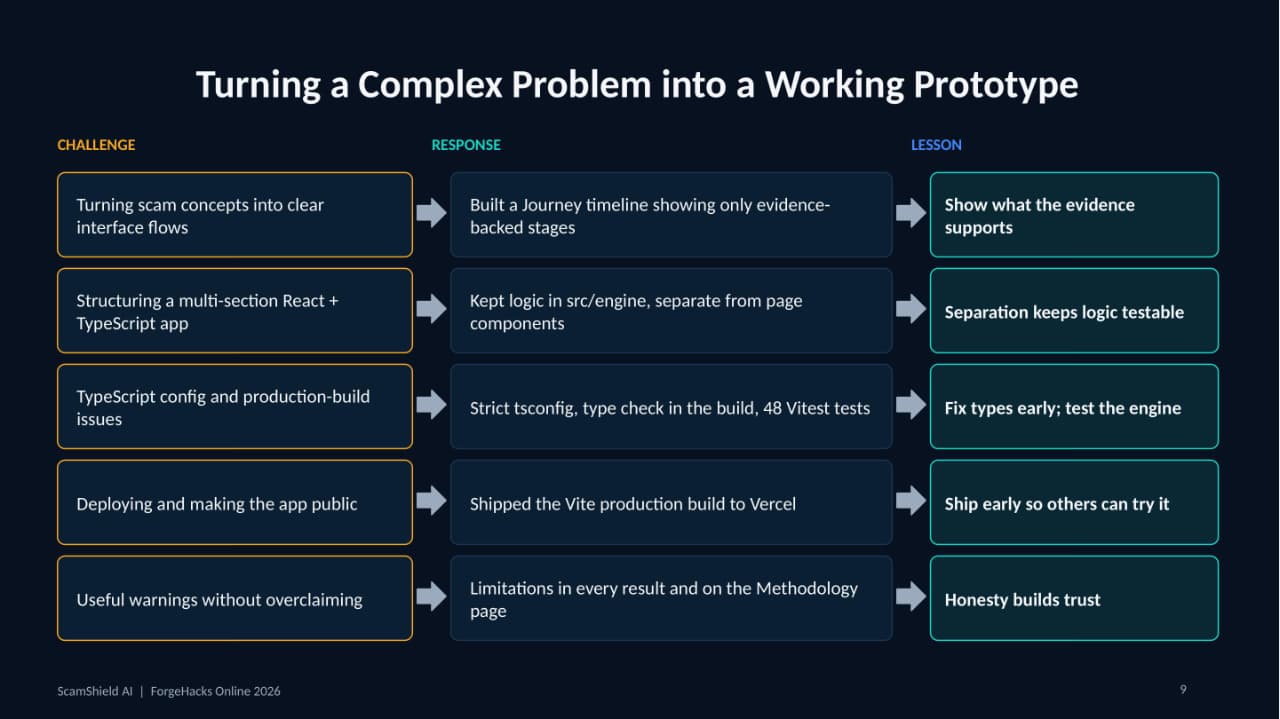
From interface design and TypeScript configuration to testing and deployment, each challenge shaped the working prototype.
-
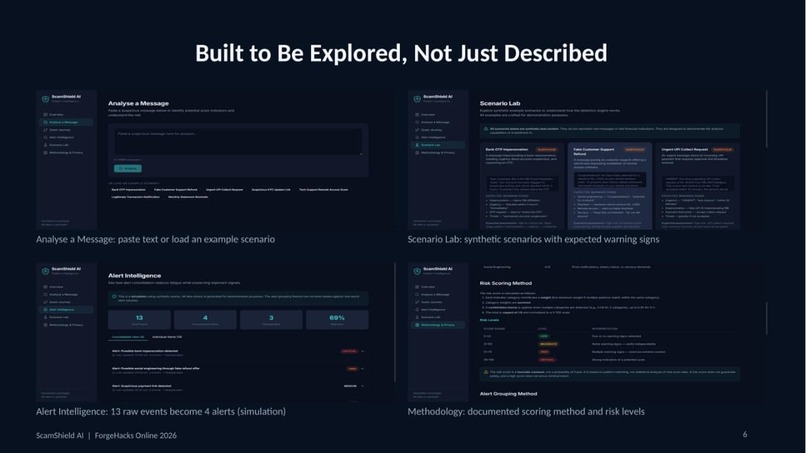
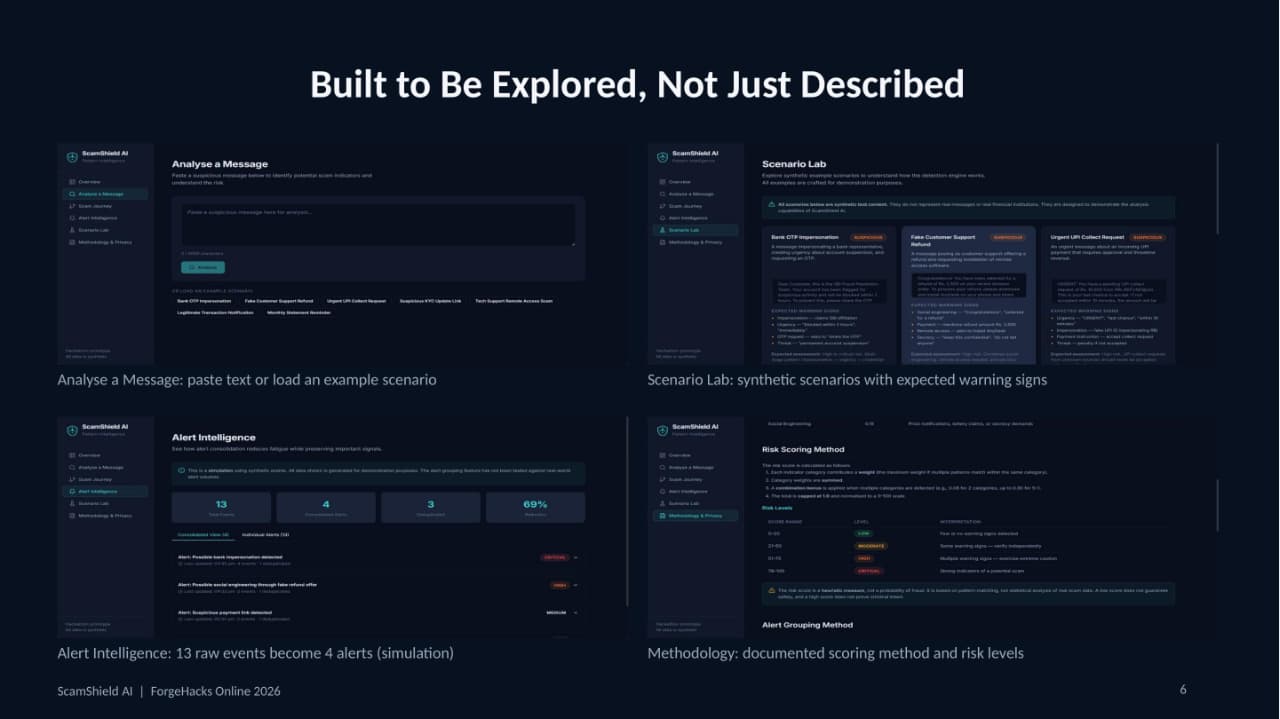
A closer look at the interactive prototype, including message analysis, synthetic scenarios, alert intelligence, and methodology.
-
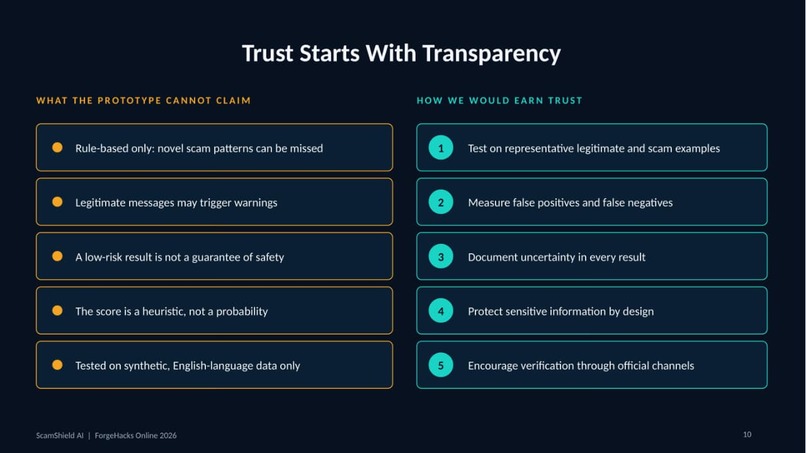
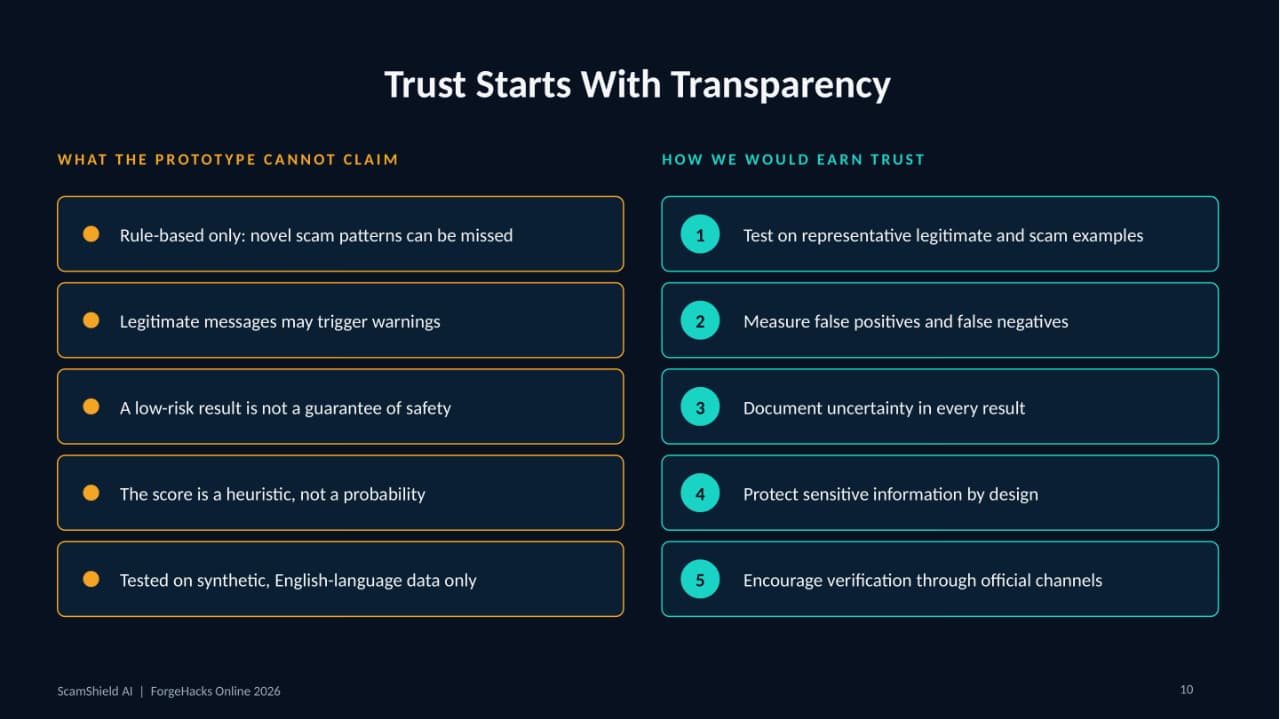
Understand the prototype's limitations and the importance of evaluation, uncertainty, privacy, and independent verification.

Inspiration
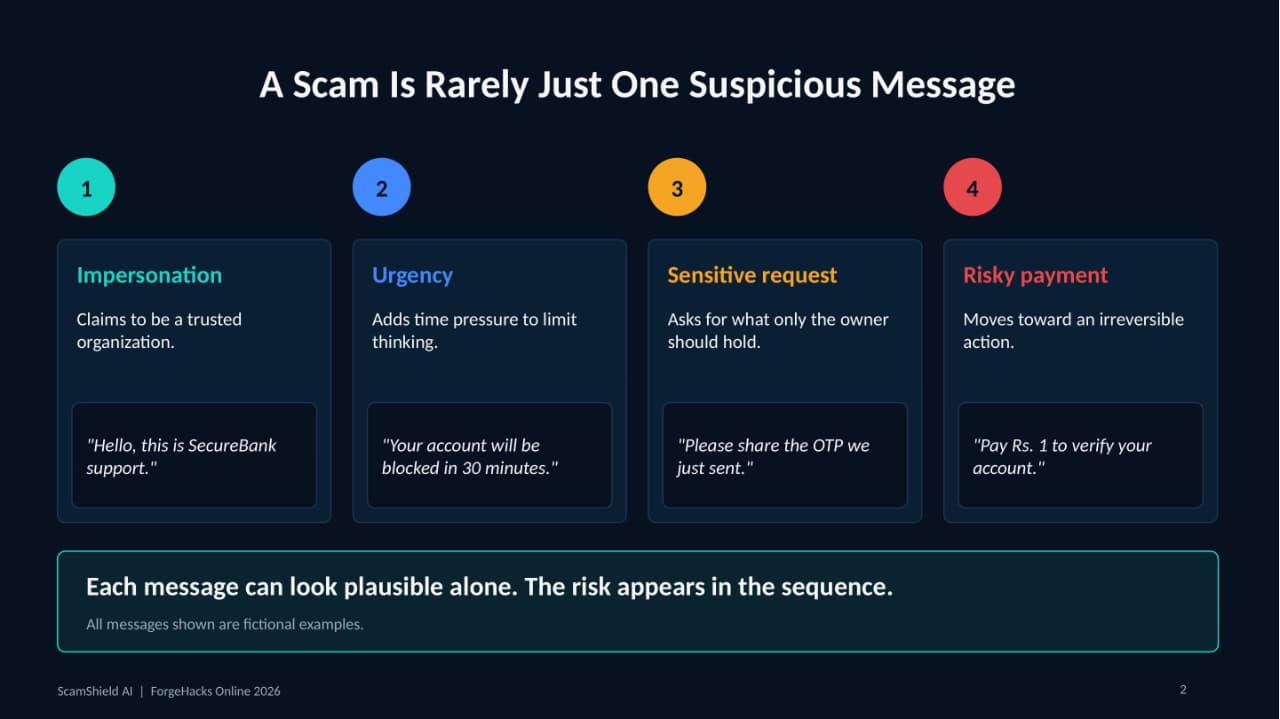
Online scams are becoming increasingly convincing. Fraudsters may impersonate trusted organizations, create a sense of urgency, request sensitive information, and eventually pressure people into making suspicious payments. A single warning sign may not always reveal the danger, but several warning signs together can tell a bigger story.
We were inspired to explore how AI-driven scam detection could help people recognize these patterns earlier and understand why a message might be suspicious, instead of simply labeling it as safe or dangerous.
What It Does
ScamShield AI is a web-based scam awareness and risk-analysis prototype designed around suspicious messages and financial scam scenarios.
The platform helps users:
- Analyse a Message: Examine suspicious messages for potential scam indicators.
- Understand the Scam Journey: Explore how impersonation, artificial urgency, requests for sensitive information, and suspicious payment instructions can connect.
- Explore Alert Intelligence: Understand risk indicators and the reasoning behind warnings.
- Experiment with Scenarios: Test different examples and observe how scam indicators affect the assessment.
- Learn About Privacy: Explore the project's approach to synthetic examples, privacy, and responsible use.
Rather than presenting a warning without context, ScamShield AI aims to make potential risks easier to recognize and understand.
How We Built It
We built ScamShield AI as a web application using React, TypeScript, and Vite.
React provides the interactive user interface, TypeScript helps keep the application code structured, and Vite supports development and production builds. We organized the application into focused sections so users can explore message analysis, scam patterns, alerts, and example scenarios.
The current prototype uses rule-based indicators to identify potential warning signs and explain the assessment. It is designed as an educational demonstration rather than a production banking security system. The examples use synthetic data, and the application does not claim to connect to live banking systems.
What We Learned
Building ScamShield AI helped us understand that scam detection involves more than spotting suspicious words. The context, sequence of actions, and combination of warning signs can all matter.
We also gained practical experience in building a frontend application, organizing a multi-section interface, using TypeScript, creating a production build, and deploying a web application so it can be accessed online.
Another important lesson was the value of explainable warnings. Helping users understand why something appears suspicious can make an alert more useful than a warning alone.
Challenges We Faced
One of our main challenges was turning a complex problem—recognizing patterns across different stages of a scam—into an interface that is simple enough for users to understand.
We also worked through TypeScript configuration and production deployment issues before getting the application running online. Testing the build and resolving deployment configuration problems helped us understand the difference between a project that works locally and one that can be accessed through a public website.
Balancing clarity, usability, and responsible claims about the prototype was another important consideration.
What's Next
Future improvements could include testing the detection rules against a larger collection of verified scam and legitimate-message examples, evaluating false-positive and false-negative rates, and exploring a validated machine-learning model.
We would also like to improve contextual risk scoring, support more scam patterns, and investigate safe integrations that could provide timely warnings without unnecessarily exposing users' sensitive information.
ScamShield AI is built around one simple idea: help people recognize the pattern, understand the risk, and think before they act.
Built With
- ai
- application
- artificial
- css
- cybersecurity
- detection
- explainable
- financial
- fraud
- html
- intelligence
- javascript
- prevention
- react
- scam
- security
- typescript
- ux
- vite
- web

Log in or sign up for Devpost to join the conversation.