





About the Project Inspiration Every day, millions of people receive deceptive text messages, phishing URLs, and manipulative offers. Standard spam filters simply tag messages as "likely spam" without providing context, leaving users unsure of why something is dangerous. We built ScamShield AI to change the paradigm from passive filtering to explainable threat intelligence—giving users actionable evidence, risk scoring, and safe response mechanisms before they fall victim.
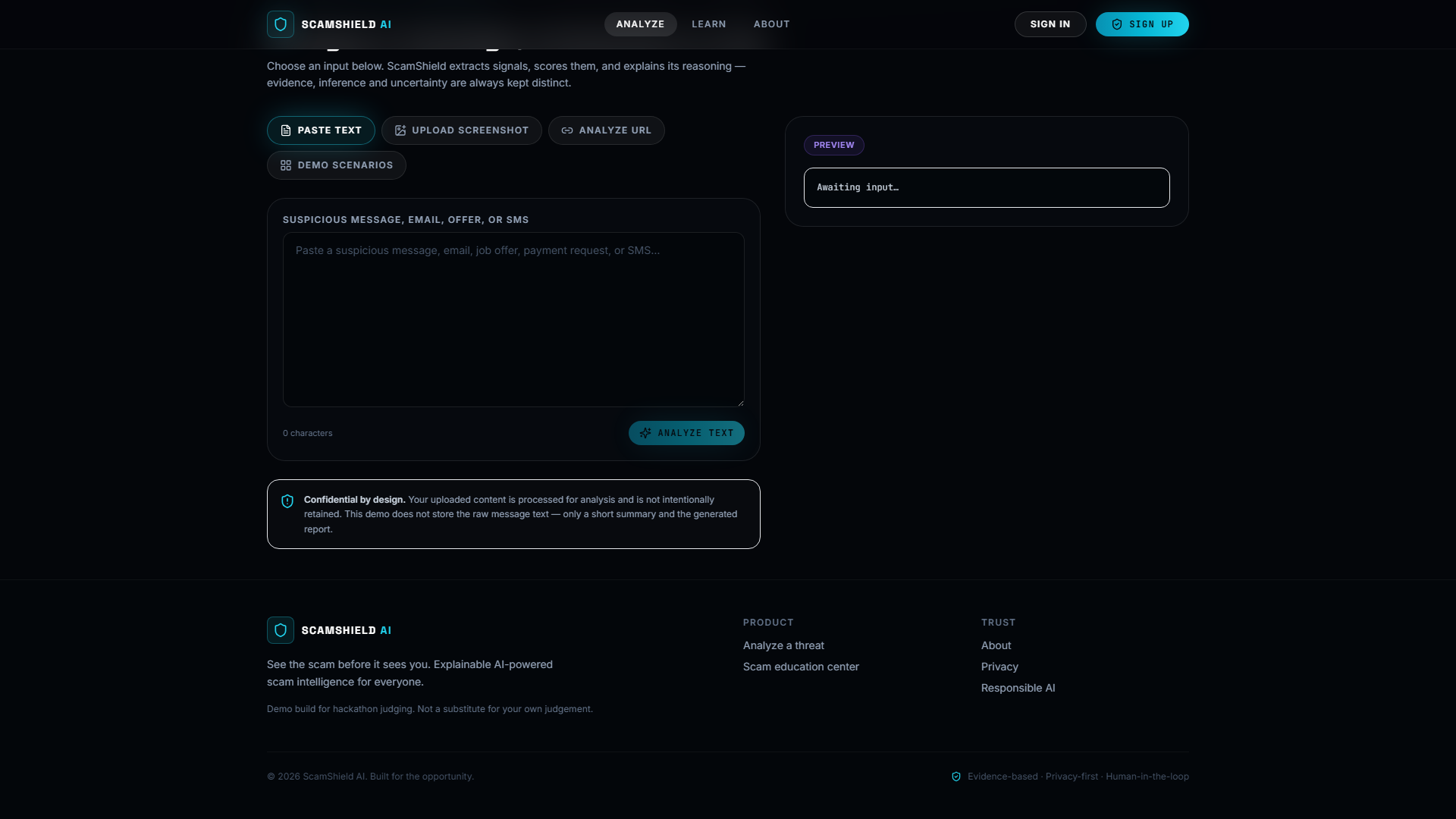
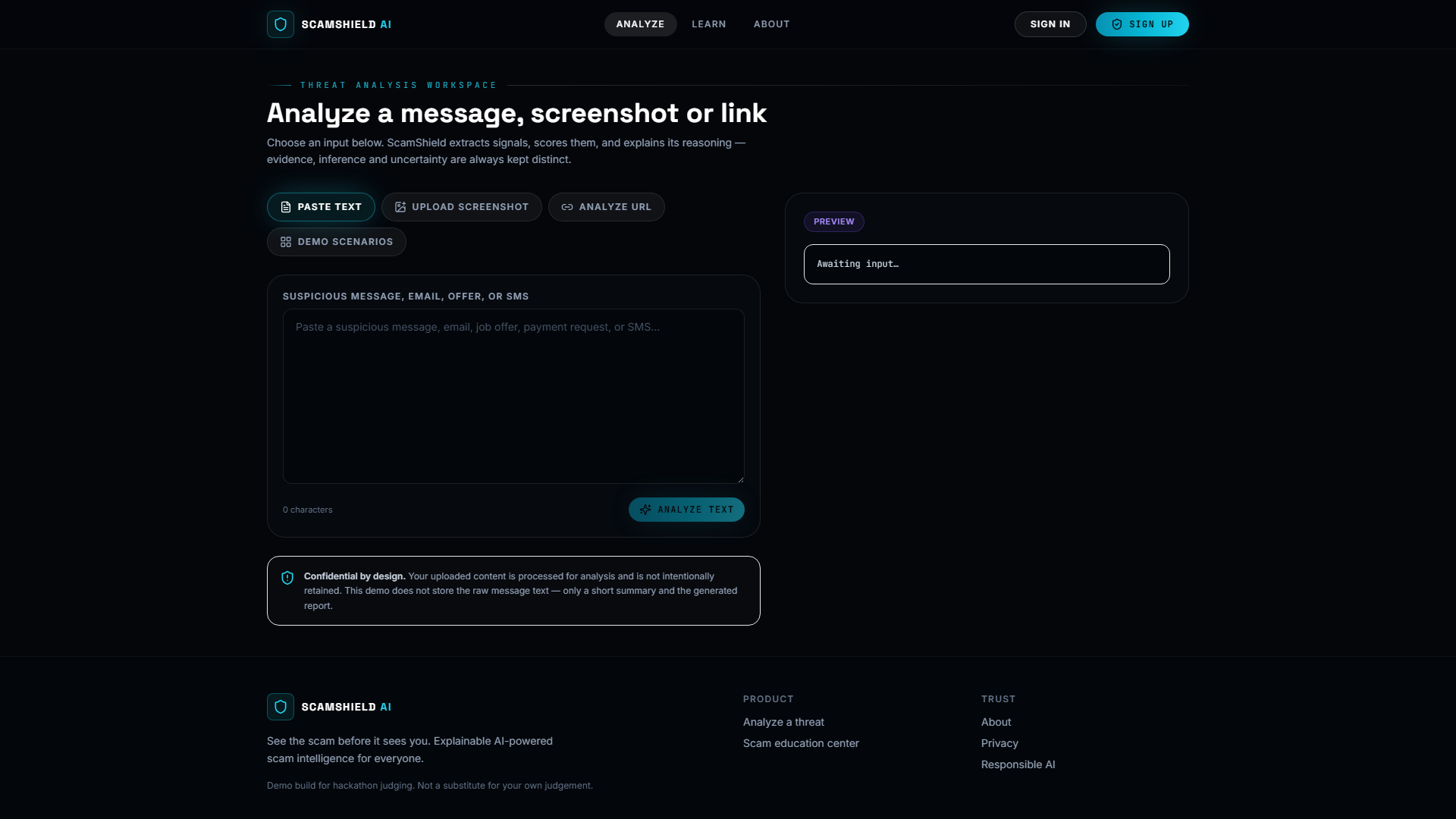
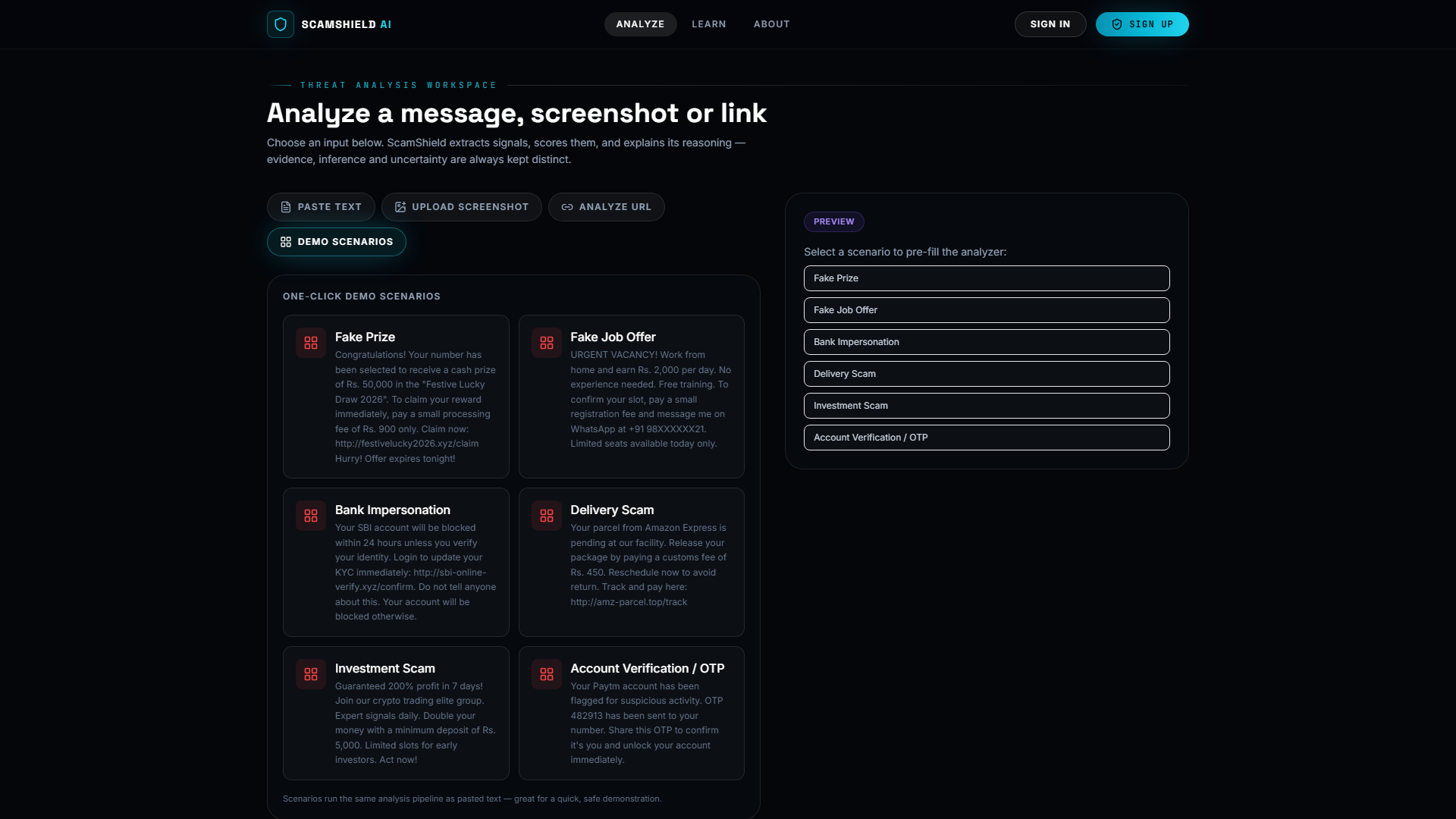
What it does ScamShield AI is an end-to-end security engine that transforms suspicious text, links, and screenshots into detailed threat reports in under 5 seconds.
Multi-Modal Threat Scanning: Accepts raw text, URLs, and image uploads/screenshots to extract linguistic patterns, suspicious domain structures, and visual manipulation cues.
Explainable Threat Reports: Calculates an aggregate Risk Score (0–100) broken down into specific threat vectors like Social Engineering, Link Risk, Urgency, and Financial Bait.
Attack-Chain Simulation: Simulates potential execution paths to demonstrate what could happen if a user interacts with the payload.
Safe Reply Generator: Generates polite, boundary-setting declines that protect user identity and avoid triggering further automated spam attacks.
How we built it Frontend: Built with React, Next.js, TypeScript, and Tailwind CSS using Framer Motion for real-time visualization components and Recharts for risk matrix rendering.
Backend Engine: Powered by Node.js and Express with dual-AI orchestration for fast schema validation, deterministic fallback logic, and parallel payload analysis.
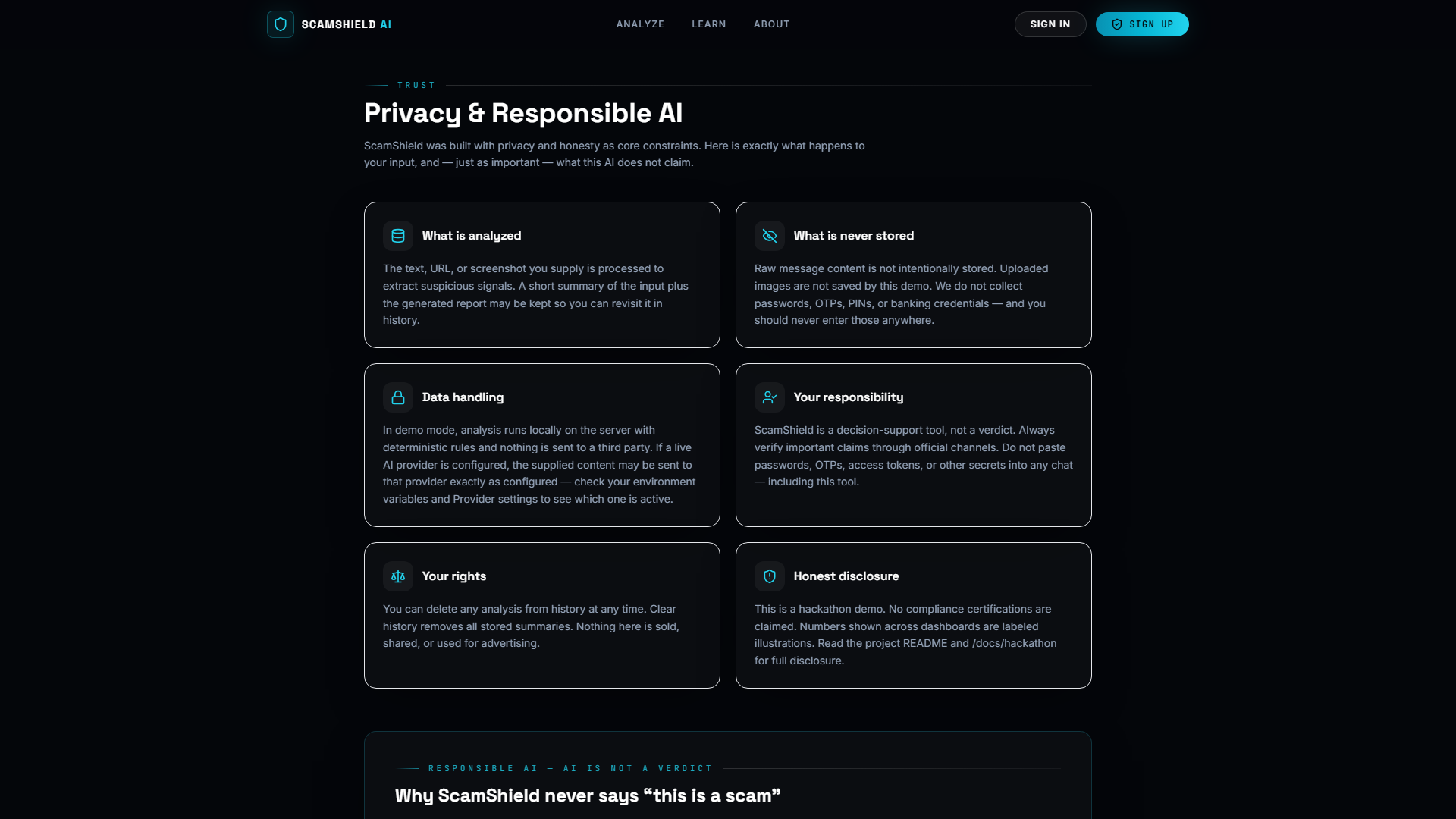
Detection Pipeline: Utilizes 16+ heuristic pattern matchers integrated with zero-trust security controls to ensure raw message payloads are never stored or logged.
Challenges we overcame Latencies in Multi-Modal Processing: Analyzing images, extracting text, and generating structured JSON reports sequentially created visual delays. We solved this by implementing parallel pipeline evaluation and streaming state updates to keep processing times strictly under 5 seconds.
JSON Schema Consistency: Ensuring the LLM consistently outputs strict, non-hallucinated UI schemas for complex threat reports required building custom system prompt guards and JSON validation middleware.
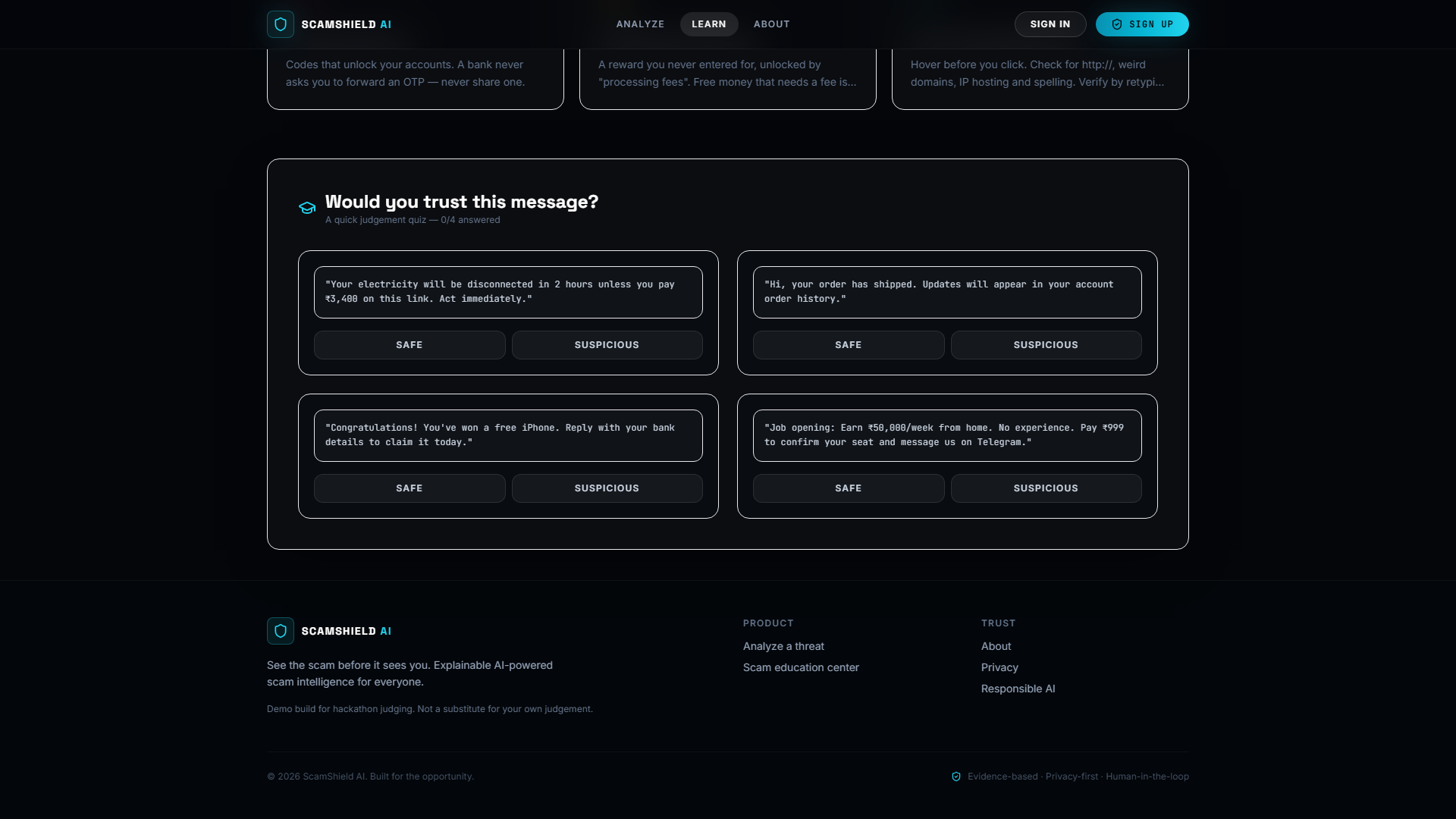
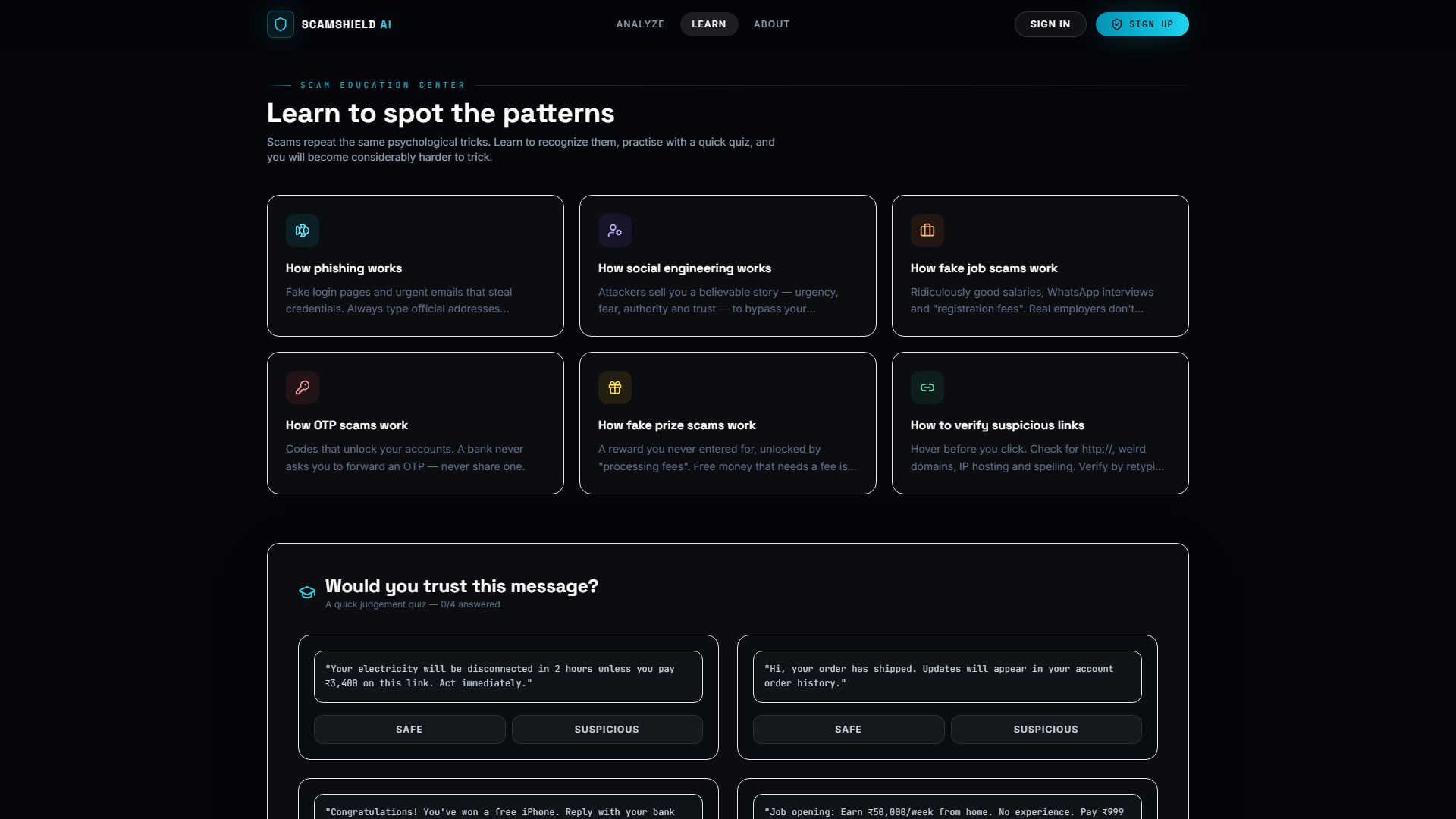
What we learned Building ScamShield AI highlighted the power of explainability in cybersecurity. Users make safer decisions when presented with clear evidence (e.g., matching known urgency patterns or flagged domains) rather than black-box safety warnings.
What's next for ScamShield AI Browser & OS Extensions: Expanding into direct browser toolbars and mobile SMS receiver extensions for passive background scanning.
On-Device Quantized Models: Deploying lightweight local LLMs directly to edge devices for 100% offline local threat analysis.
Built With
- css
- express.js
- framermotion
- node.js
- react
- sqlite
- tailwand
- three.js
- typescript
- vite


Log in or sign up for Devpost to join the conversation.