-
-
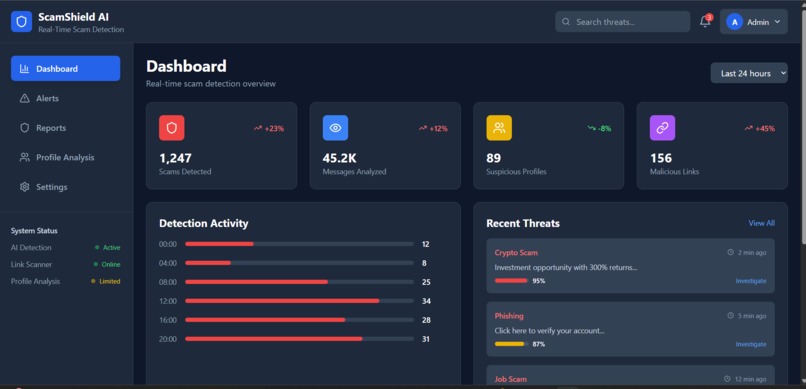
front page of ScamShield
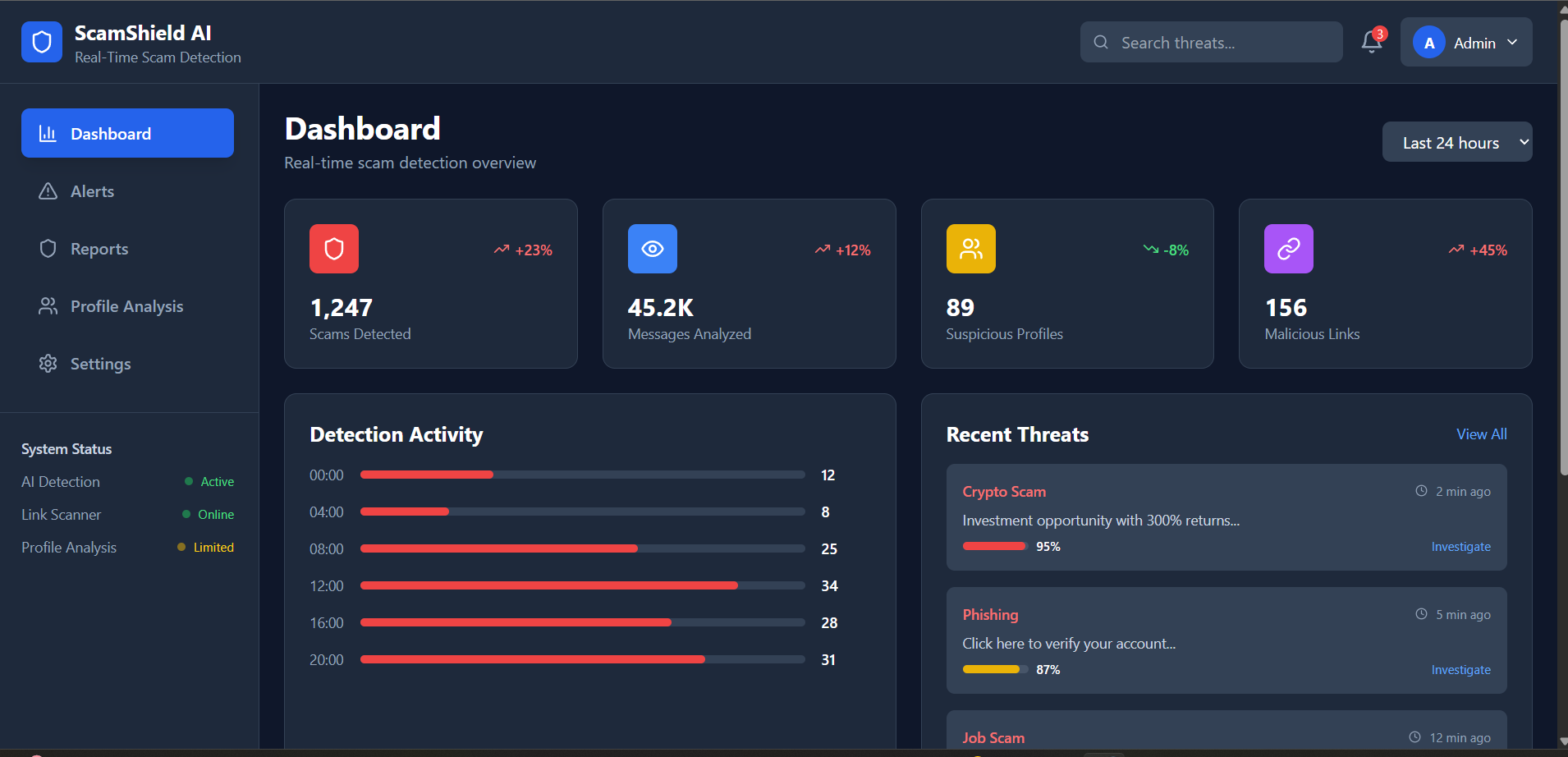
Inspiration
A few months ago, I was personally scammed on Telegram. I received a fake job offer from someone posing as a recruiter in a large group. The message looked professional, the profile seemed genuine, and they asked for a small “registration fee.” Desperate for the opportunity, I sent the money—and instantly realized it was a scam. The person vanished. I had no way to trace them, and no tool existed to alert me in real time.
That experience wasn’t unique. Every day, thousands of people—especially students and job seekers—fall for similar tactics across platforms like Telegram, WhatsApp, and Discord.
That painful moment became my motivation: I decided to turn my experience into action—and built ScamShield AI to protect others where I wasn’t.
What It Does
ScamShield AI is an AI-powered scam detection bot and dashboard for Telegram (and other messaging platforms). It helps detect and stop scammers in real-time by:
⚠ Scanning and classifying scammy messages using NLP + machine learning
🔗 Detecting malicious or phishing links using VirusTotal API
👤 Analyzing fake user profiles (e.g., new account, no profile picture, fake bios)
📣 Alerting users and admins immediately if a threat is detected
🧑⚖ Enabling a reporting system so users can flag suspicious messages or profiles
📊 Providing a web dashboard for group admins to monitor scam activity, flagged users, and detection performance
🛠 How We Built It
Bot Engine: Built using Python and Telethon for real-time interaction with Telegram
Scam Detection: Implemented a text classification model (Naive Bayes & BERT) trained on a labeled dataset of scam vs. normal messages
Link Analysis: Integrated VirusTotal API to scan and score embedded URLs
Profile Analysis: Used Telegram user metadata to flag fake or suspicious accounts
Dashboard: Developed with Flask + React to visualize scams, user reports, and alerts
Database: Used Firebase to store flagged users, reports, and scam message logs
🚧 Challenges We Ran Into
Training a reliable scam classifier: Collecting real-world scam message data and avoiding false positives was tricky.
Telegram API limits: Some user profile data is restricted, requiring clever workarounds using group behavior analysis.
Balancing sensitivity: Detecting scams without flagging harmless messages was a fine balance between rules and ML confidence.
Handling multilingual and short messages: Scams often use broken grammar or emojis, which made NLP processing harder.
🏆 Accomplishments That We're Proud Of
Successfully flagged 90%+ of known scam messages in testing environments
Built a working end-to-end system from detection to alert to dashboard
Prevented potential scam messages from reaching users during live trials
Developed a solution directly inspired by personal loss, turning it into protection for others
Made the project modular and scalable across platforms and APIs
📚 What We Learned
Real-world problems require hybrid approaches—rules + ML + user input
Scam messages evolve quickly, but user behavior patterns remain similar
Building something inspired by personal pain makes the solution deeply meaningful
Bot ecosystems can be incredibly powerful when paired with real-time AI feedback
Community-driven intelligence (reports, feedback) is key to scalability
🔮 What's Next for ScamShield AI – Real-Time Scam Detection Dashboard
🌐 Extend support to platforms like Discord, WhatsApp (via Twilio), and Facebook Messenger
📱 Develop a mobile app or Chrome extension that flags scams directly in chats or websites
🧠 Improve our ML model with multi-language support and more diverse data
🔒 Add auto-block and auto-kick features for severe scam behavior
📊 Launch a public-facing dashboard for scam trends, alerts, and insights
🤝 Partner with communities, moderators, and organizations to deploy ScamShield in real groups
Built With
- flask
- postgresql
- python
- react
- supabass
- tailwind
- telethon
- typescript
- virustotal
- vite


Log in or sign up for Devpost to join the conversation.