💡 Inspiration
Online scams targeting students and job seekers have become increasingly common. Many fake job offers and internship scams look professional, create urgency, and pressure users to pay fees or share sensitive information. We were inspired by real stories of students losing money simply because they didn’t know how to verify whether an offer was legitimate.
We wanted to build something that doesn’t just detect scams, but actually helps people make safer decisions in moments of uncertainty.
🛡️ What It Does
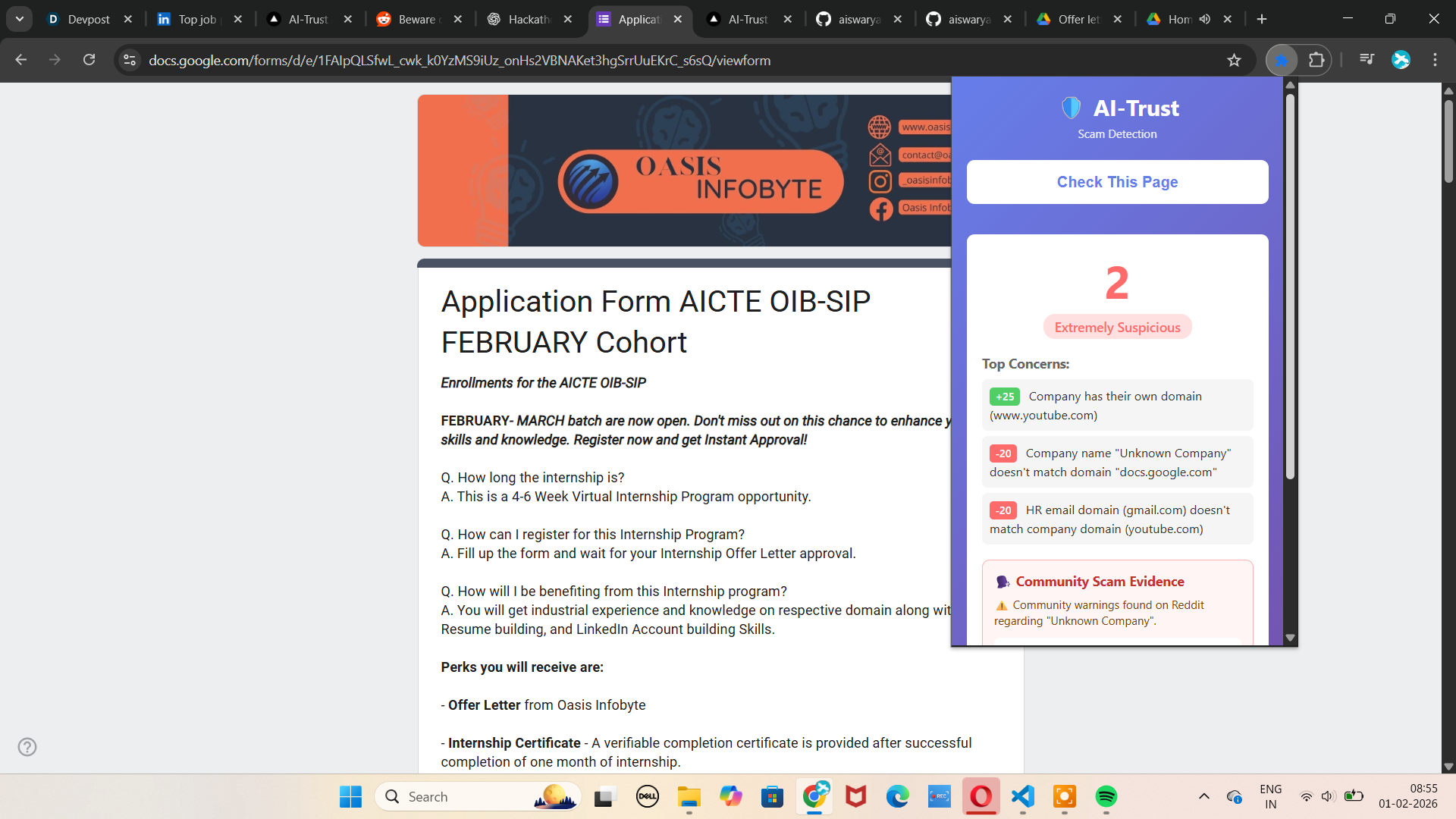
ScamShield AI is an AI-powered scam detection tool that analyzes job postings, emails, and suspicious messages to identify scam indicators.
It provides:
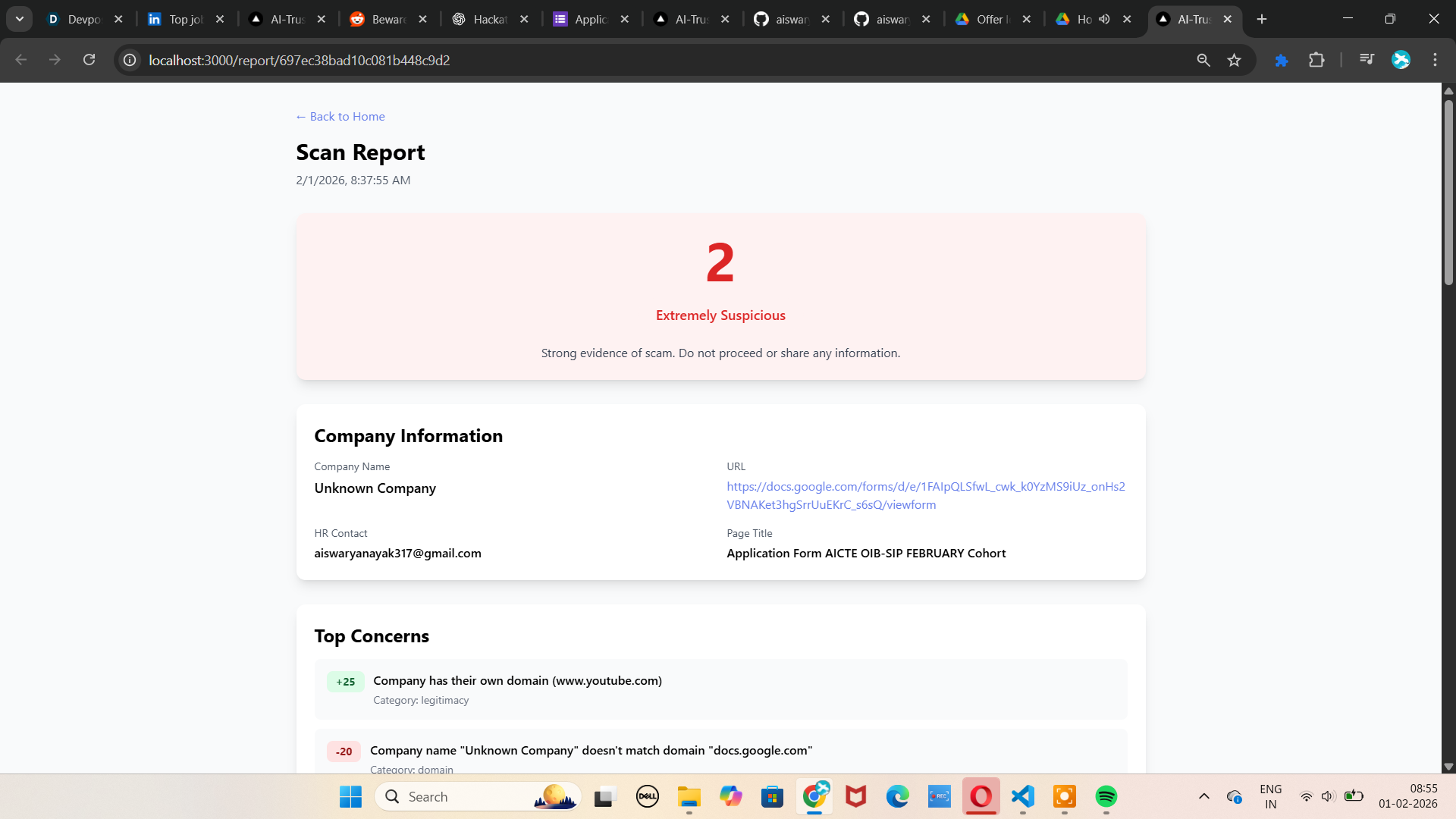
- A clear Trust Score (0–100) indicating risk level
- Simple explanations of why something is suspicious
- Community scam evidence from public discussions when available
- Recommended next steps so users know what to do immediately
Instead of overwhelming users with technical details, ScamShield AI focuses on clarity, transparency, and guidance.
⚙️ How We Built It
ScamShield AI combines multiple layers of detection:
- Rule-based scam signals (payment requests, urgency language, unrealistic offers)
- AI-powered text analysis for scam likelihood
- Domain and link safety checks
- Community-driven evidence using publicly available scam reports
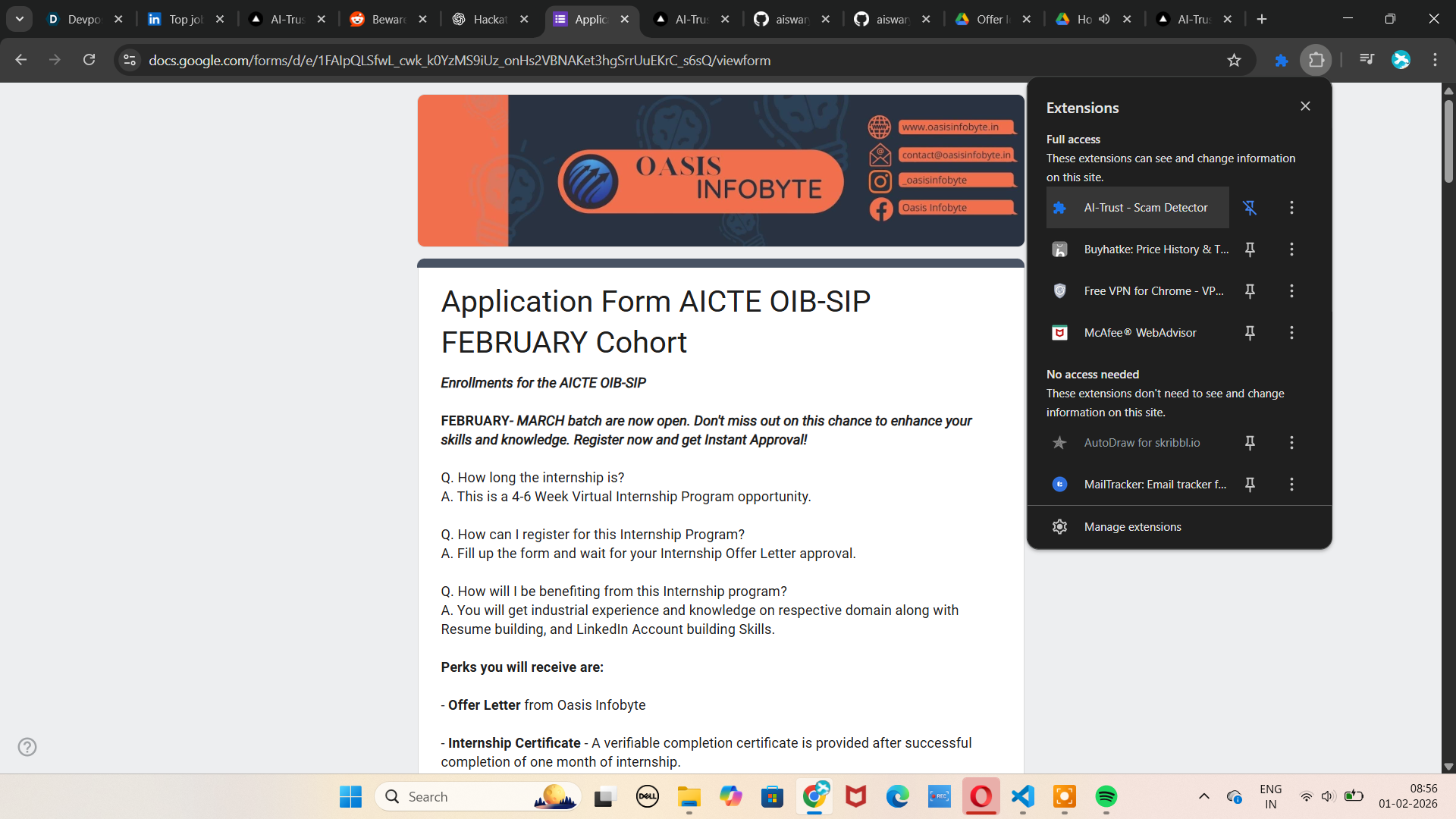
The system is designed to work both as a Chrome extension (for in-context scanning) and a web dashboard (for detailed reports), making scam detection accessible right where users browse.
🧠 What We Learned
- Explainability matters as much as accuracy when dealing with security tools
- Users trust systems more when they understand why a decision was made
- Combining AI with real-world community warnings creates stronger confidence
- Ethical design and safety disclaimers are essential in cybersecurity tools
This project helped us think deeply about responsible AI and user-centric security design.
🚧 Challenges We Faced
- Balancing detection accuracy with clear, non-alarmist explanations
- Ensuring the system works reliably even without external API access
- Presenting complex scam signals in a simple, readable way
- Designing a demo-friendly experience within a short hackathon timeframe
Each challenge pushed us to simplify and focus on what truly helps users.
🚀 What’s Next
With more time, we would:
- Add WhatsApp and SMS scam detection
- Support regional languages for wider accessibility
- Build a community reporting and verification system
- Expand scam education with interactive tips and alerts
Note: ScamShield AI provides guidance, not guarantees. Community discussions are public and may be unverified. Users should independently verify critical decisions.
Built With
- chrome-extension-(manifest-v3)
- express.js
- google-gemini-api
- google-safe-browsing-api
- javascript
- mongodb-atlas
- next.js-14
- node.js
- react
- tailwind-css
- typescript
- whois


Log in or sign up for Devpost to join the conversation.