ScamShield AI
The Problem
A scam message does not need to look obviously fake to cause real damage.
A single urgent text, suspicious link, fake account warning, or request for verification can pressure a user into clicking before they stop to think. For many people, the problem is not simply detecting a scam — it is understanding why something is suspicious.
That led to one simple question:
What if a security tool could explain the warning instead of just giving you one?
The Idea
ScamShield AI was built around that idea.
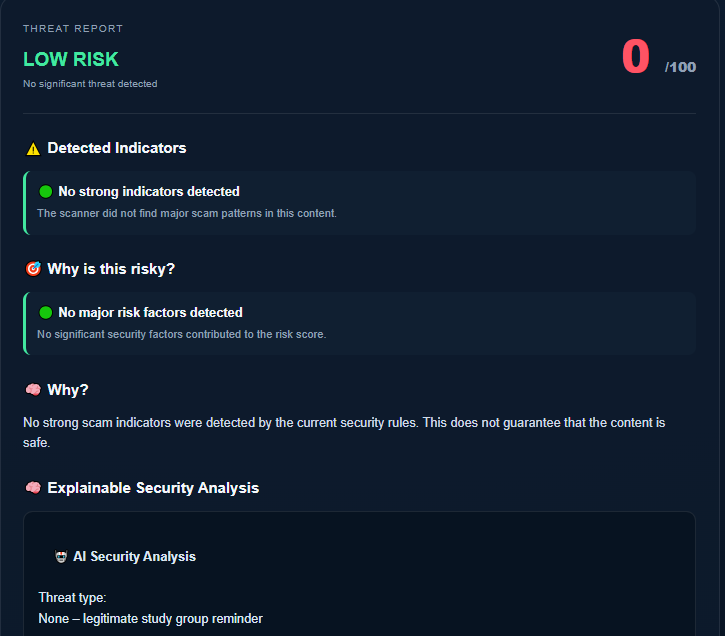
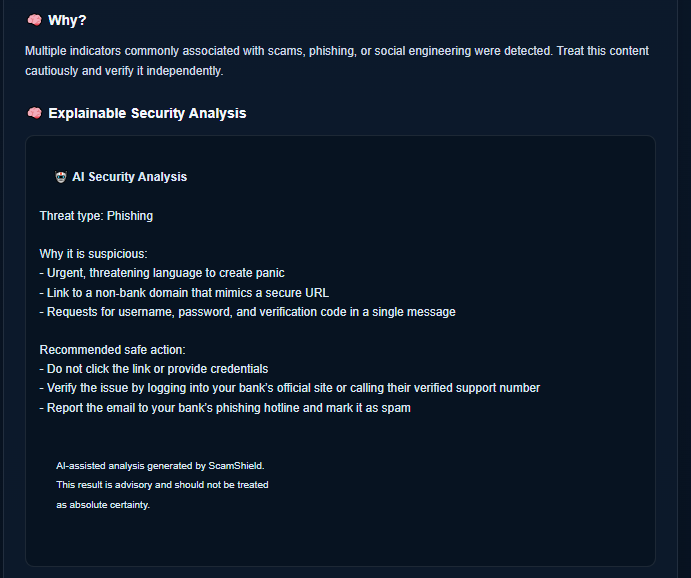
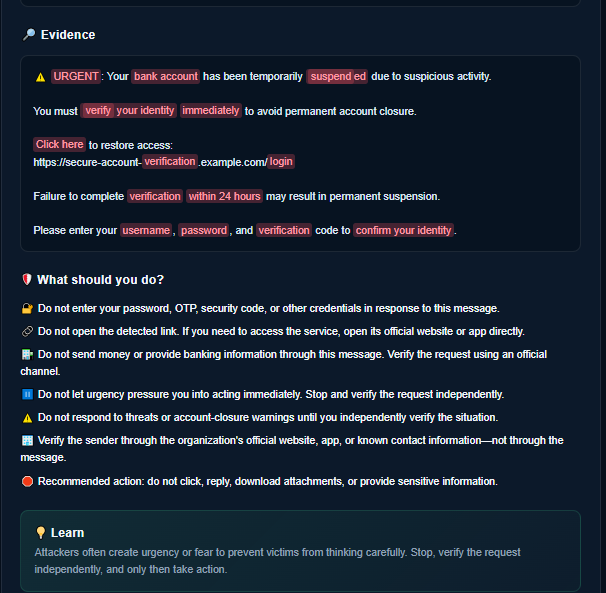
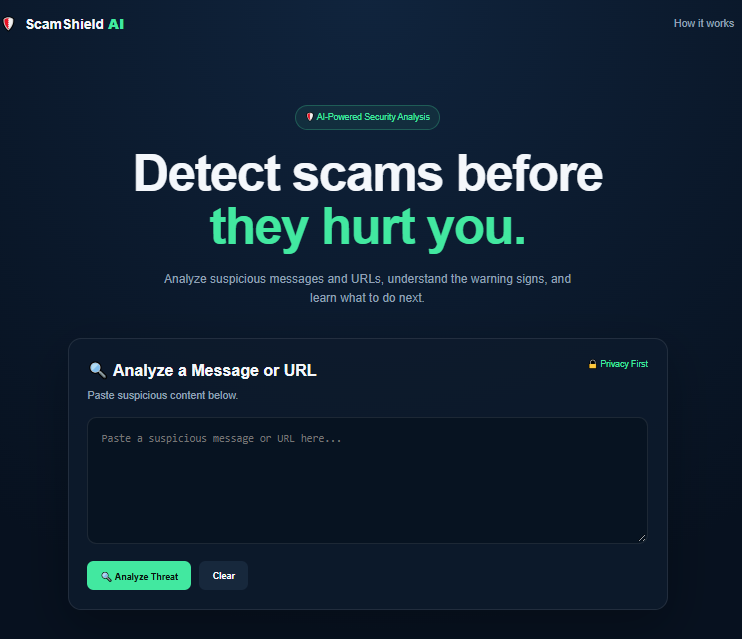
It is a defensive cybersecurity web application that analyzes suspicious messages and URLs, identifies security indicators, and turns those signals into an understandable risk assessment.
Instead of simply saying:
"This is a scam."
ScamShield aims to show:
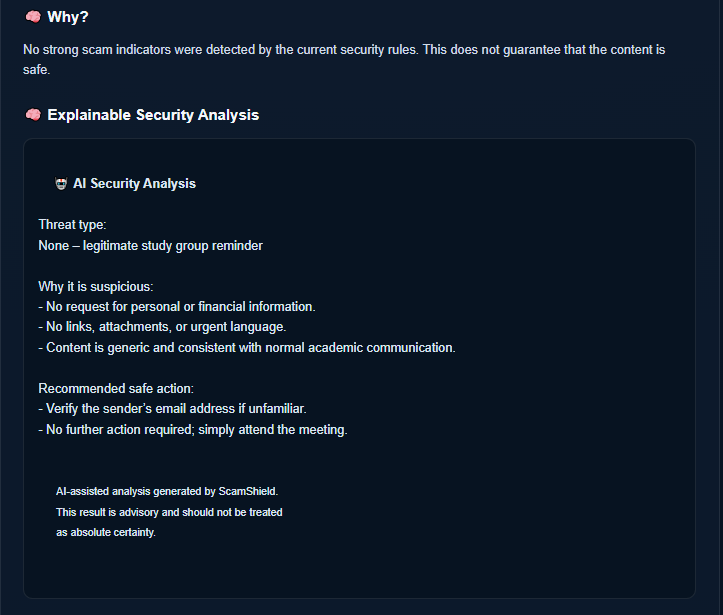
"Here are the warning signs, here is what we detected, and here is why you should be careful."
That explainability is the core of the project.
What We Built
ScamShield combines a web interface with a Python-based analysis API.
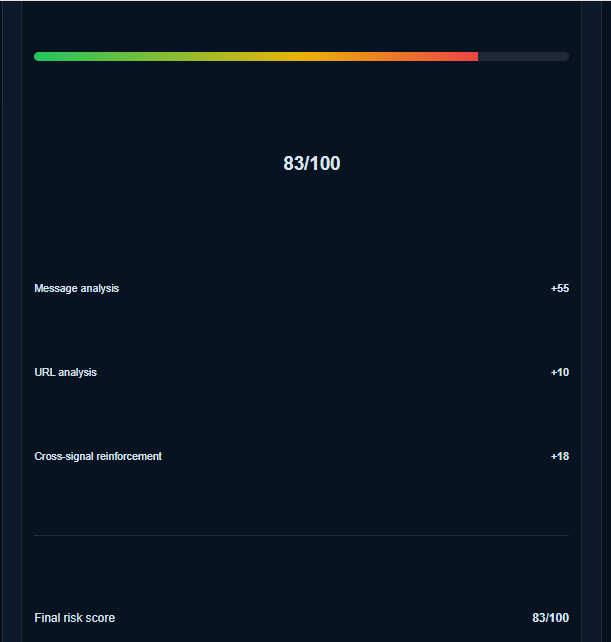
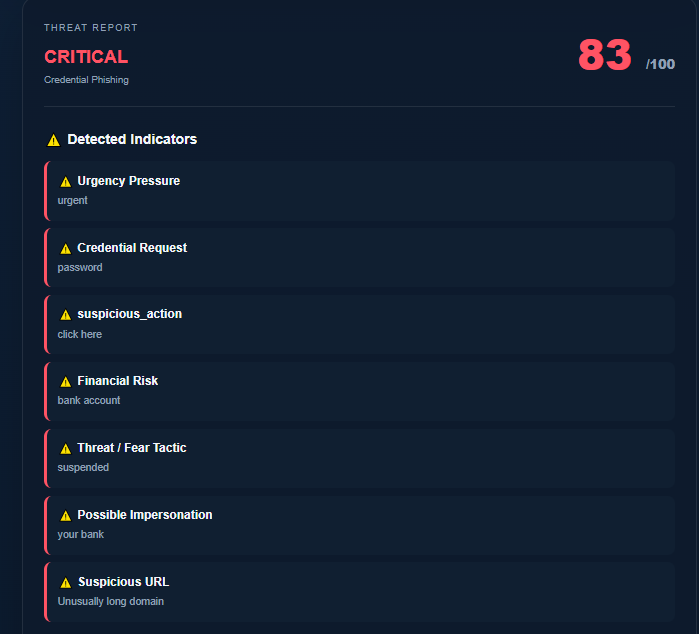
A user can submit suspicious content and receive a structured security assessment based on signals such as:
- suspicious language and patterns
- urgency or pressure tactics
- potentially dangerous links
- URL characteristics
- multiple combined security indicators
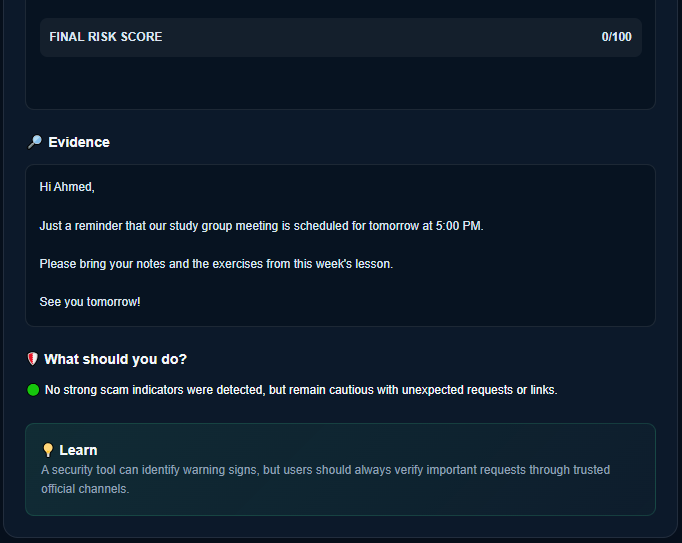
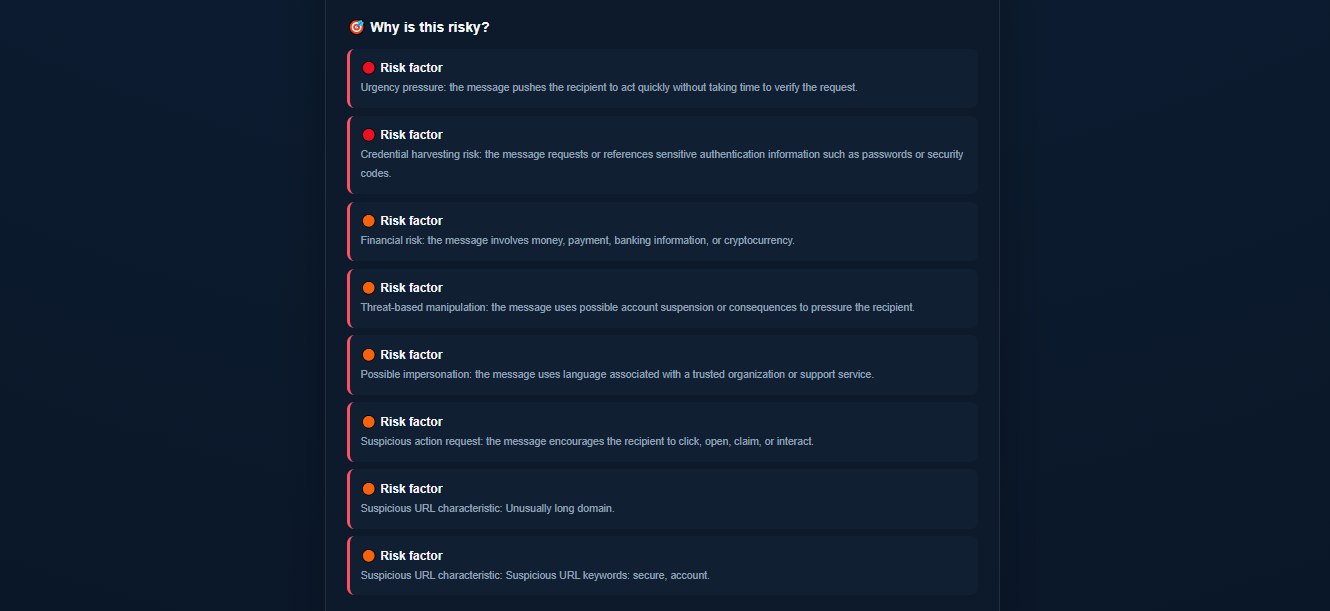
The result is presented as a clear threat report rather than an unexplained prediction.
The workflow is intentionally simple:
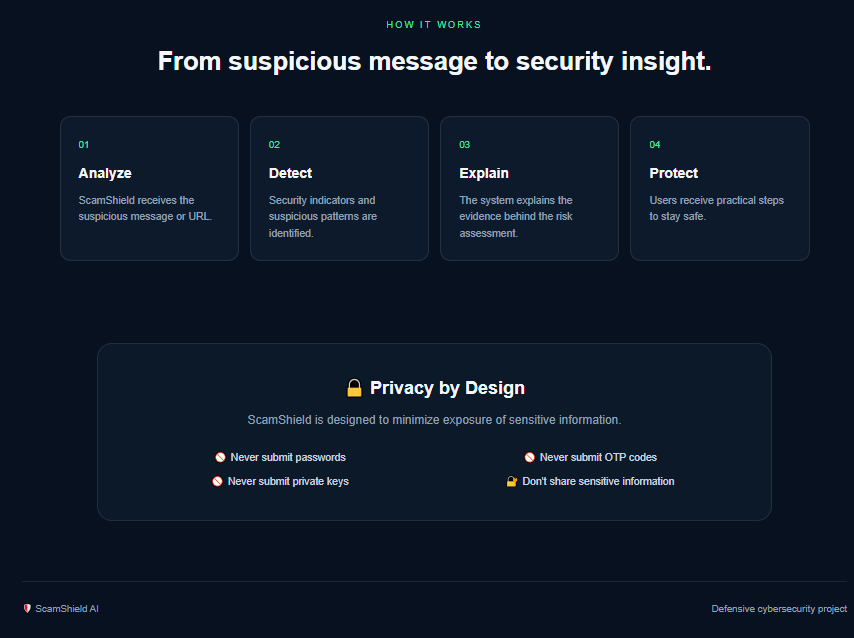
Input → Analyze → Detect Indicators → Assess Risk → Explain → Protect
The goal is to make cybersecurity analysis understandable enough for a normal internet user, not only for a security specialist.
Why Explainability Matters
A security score without context can still leave a user wondering:
"Why is this dangerous?"
ScamShield makes the reasoning visible.
This can help users recognize common warning signs and develop better security awareness instead of blindly trusting or ignoring an automated result.
The project therefore focuses on two goals at the same time:
Detection — identify potentially suspicious content.
Education — explain the signals behind the assessment.
How We Built It
The project was developed as a lightweight web-based cybersecurity prototype using:
- HTML for structure
- CSS for the interface and user experience
- JavaScript for the application logic and interaction
- Python for the security analysis API
- REST API communication between the frontend and backend
- GitHub for development and deployment
The analysis is intentionally explainable and based on security rules, message indicators, URL analysis, and combined signals rather than presenting an opaque automated decision as unquestionable truth.
Challenges
One of the biggest challenges was making the system useful without making it unnecessarily complicated.
A cybersecurity tool has to balance:
Accuracy, explainability, simplicity, and speed.
Another challenge was connecting the frontend and backend reliably while making the application work as a real public web prototype rather than only as a local development project.
We also had to think carefully about how security results are communicated. A frightening warning without evidence can confuse users, while an overly simple result can hide important information.
The solution was to make the analysis both actionable and explainable.
What We Learned
Building ScamShield AI taught us that cybersecurity is not only about detecting threats.
It is also about communicating risk clearly.
We learned how to connect a web frontend to a Python security API, analyze user-provided text and URLs, structure security indicators, handle real deployment issues, debug frontend/backend communication, and design results that a non-technical user can understand.
Most importantly, we learned that a good security tool should not only ask:
"Is this dangerous?"
It should also answer:
"Why?"
Impact
ScamShield AI is designed for one of the most common cybersecurity situations: a person receiving something suspicious and needing to make a decision quickly.
By combining detection with explanation, the project aims to help users slow down, recognize warning signs, and make safer decisions online.
This prototype can also serve as a foundation for future development, including larger datasets, machine-learning models, multilingual analysis, browser-based protection, real-time reputation services, and stronger evaluation against emerging phishing and scam techniques.
The Vision
ScamShield AI started with a simple idea:
Security should be understandable.
The long-term vision is not to replace human judgment with an unexplained AI decision.
It is to give people better information at the moment they need it most.
Detect the threat. Understand the reason. Make a safer decision.


Log in or sign up for Devpost to join the conversation.