-
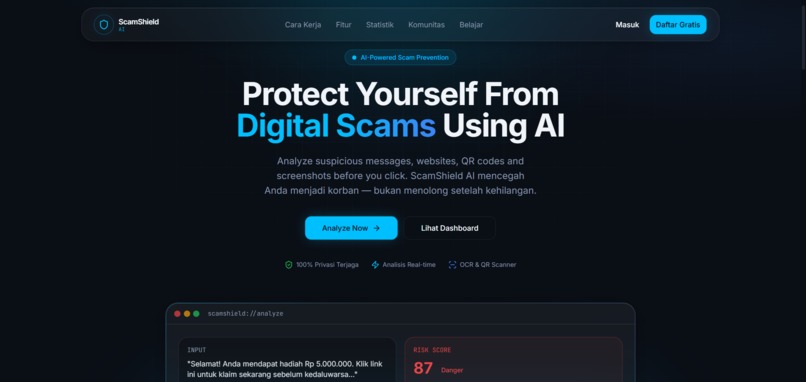
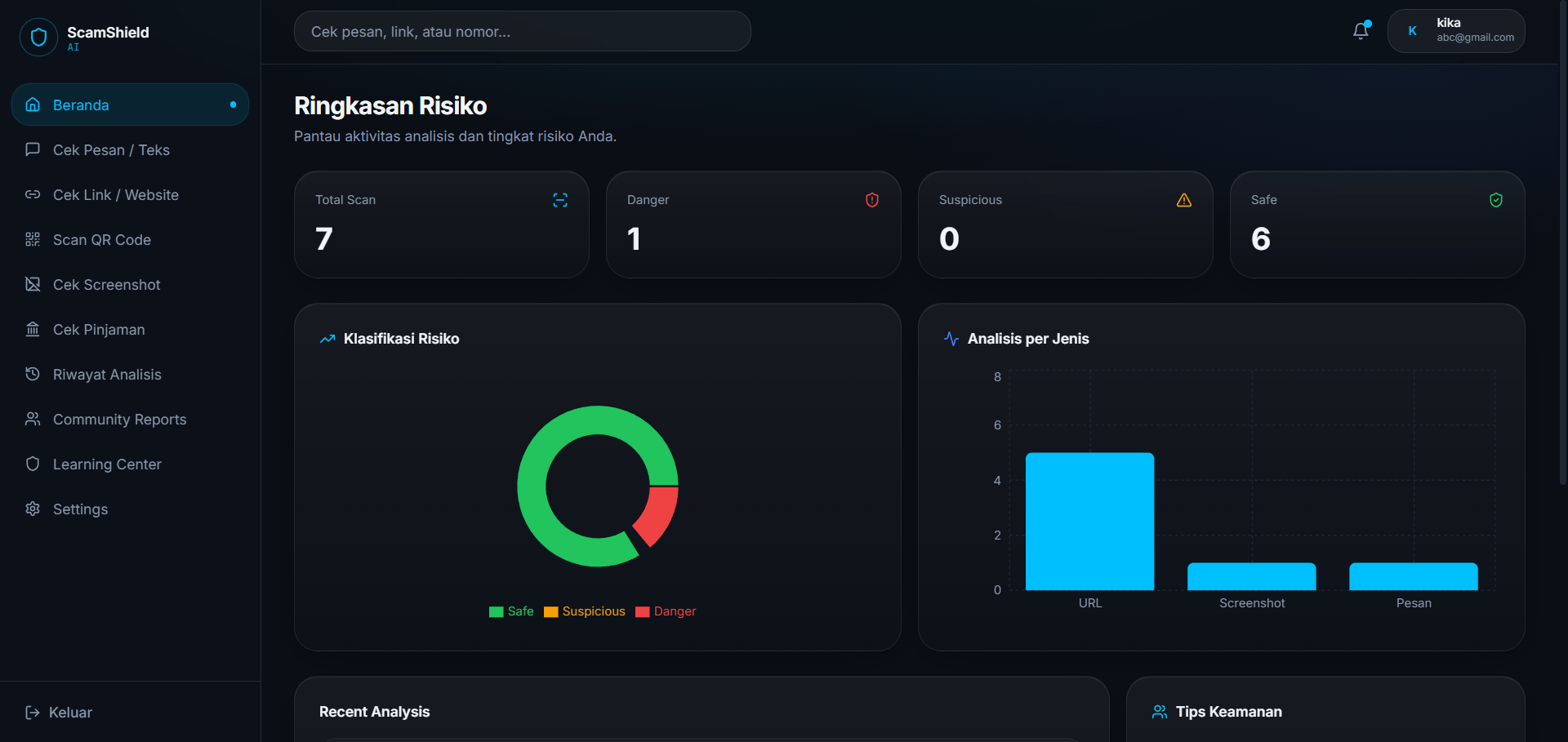
ScamShield AI's Main Menu
-
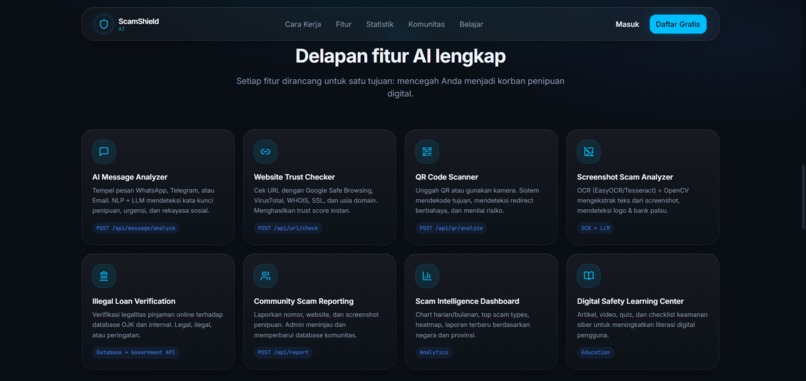
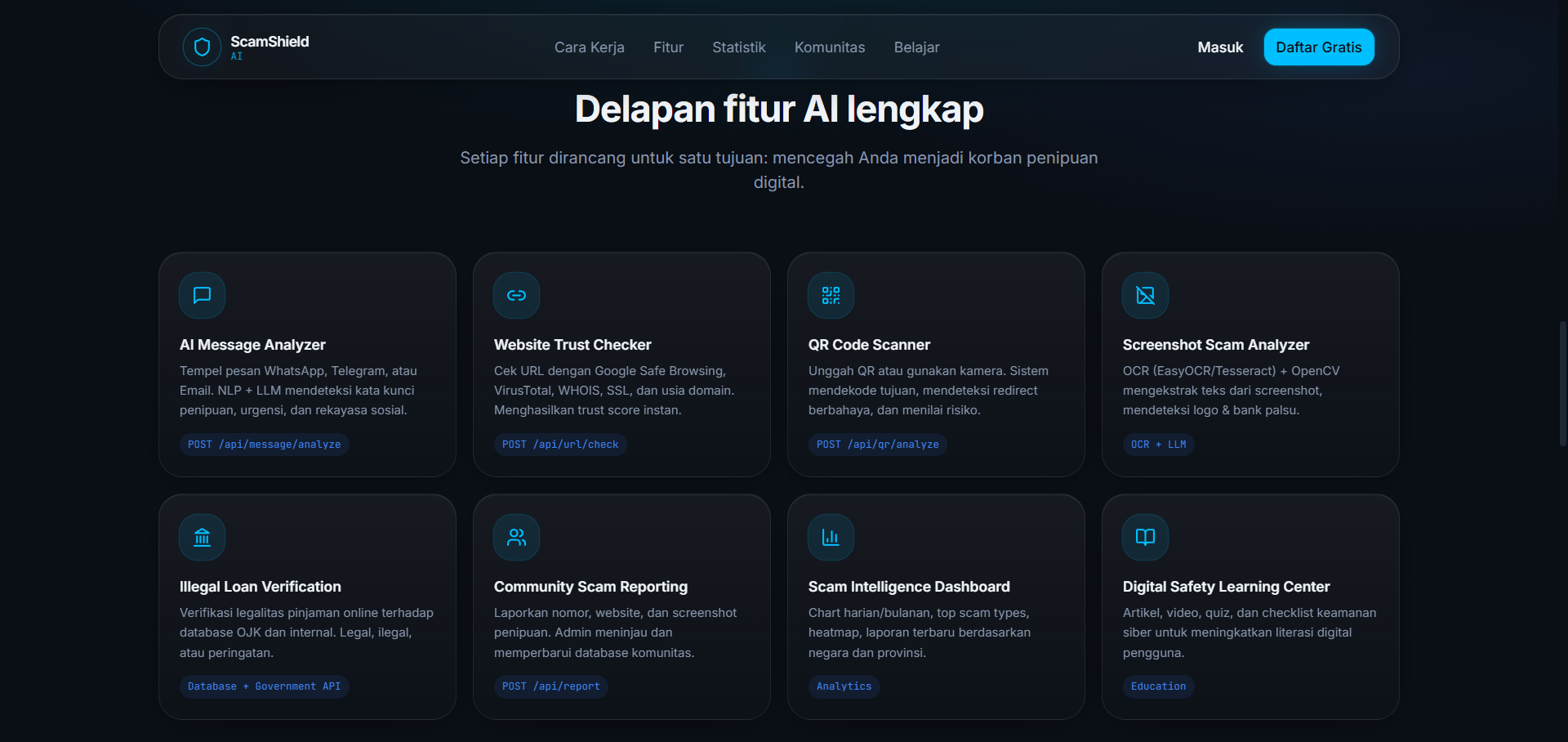
ScamShield AI's Feature
-
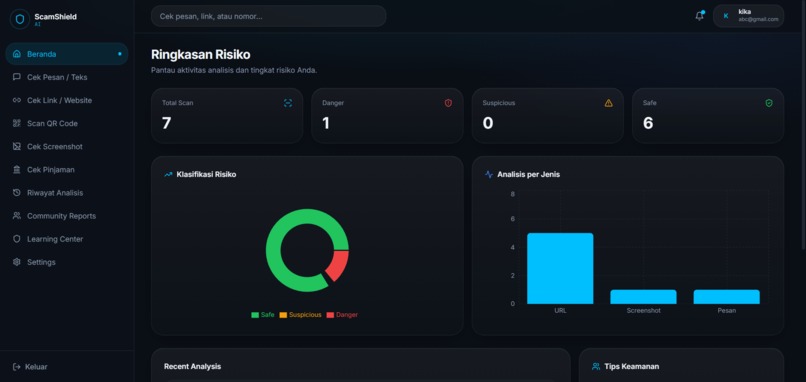
ScamShield AI's Home Page
-
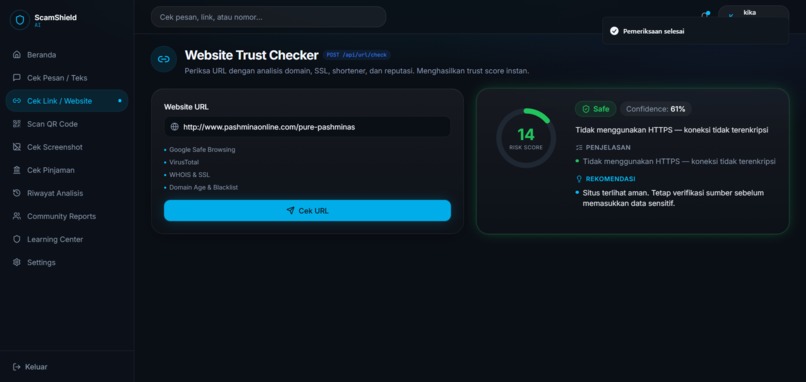
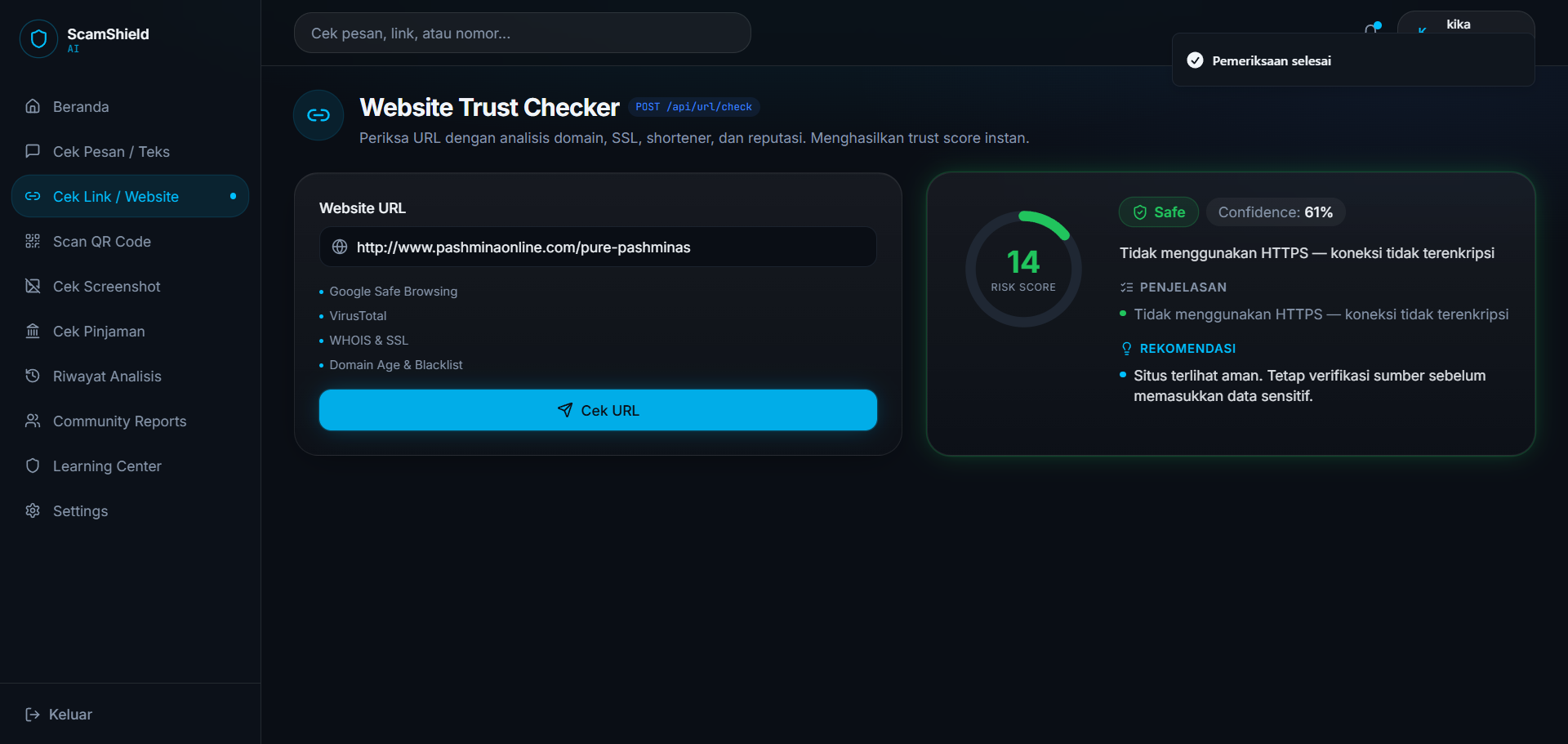
ScamShield AI's Website / URL Checker
-
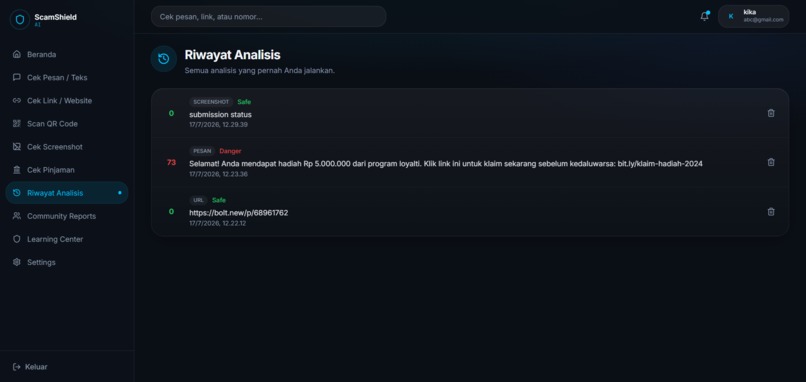
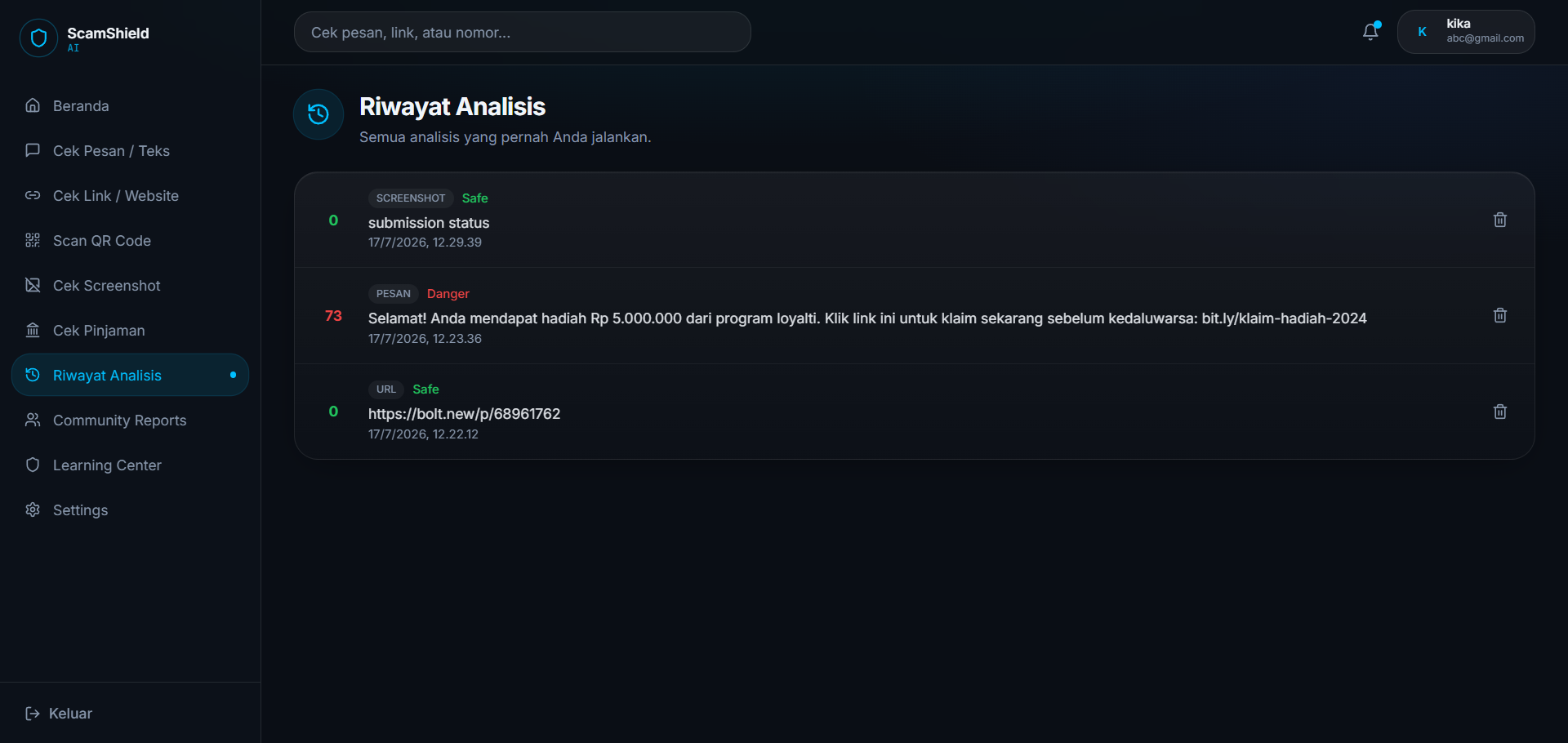
ScamShield AI's History
-
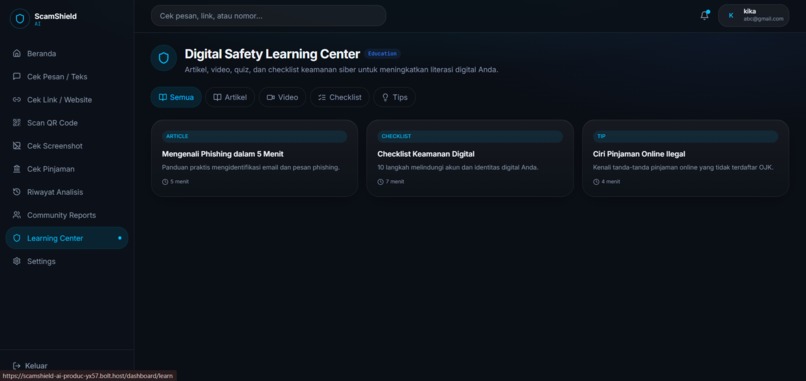
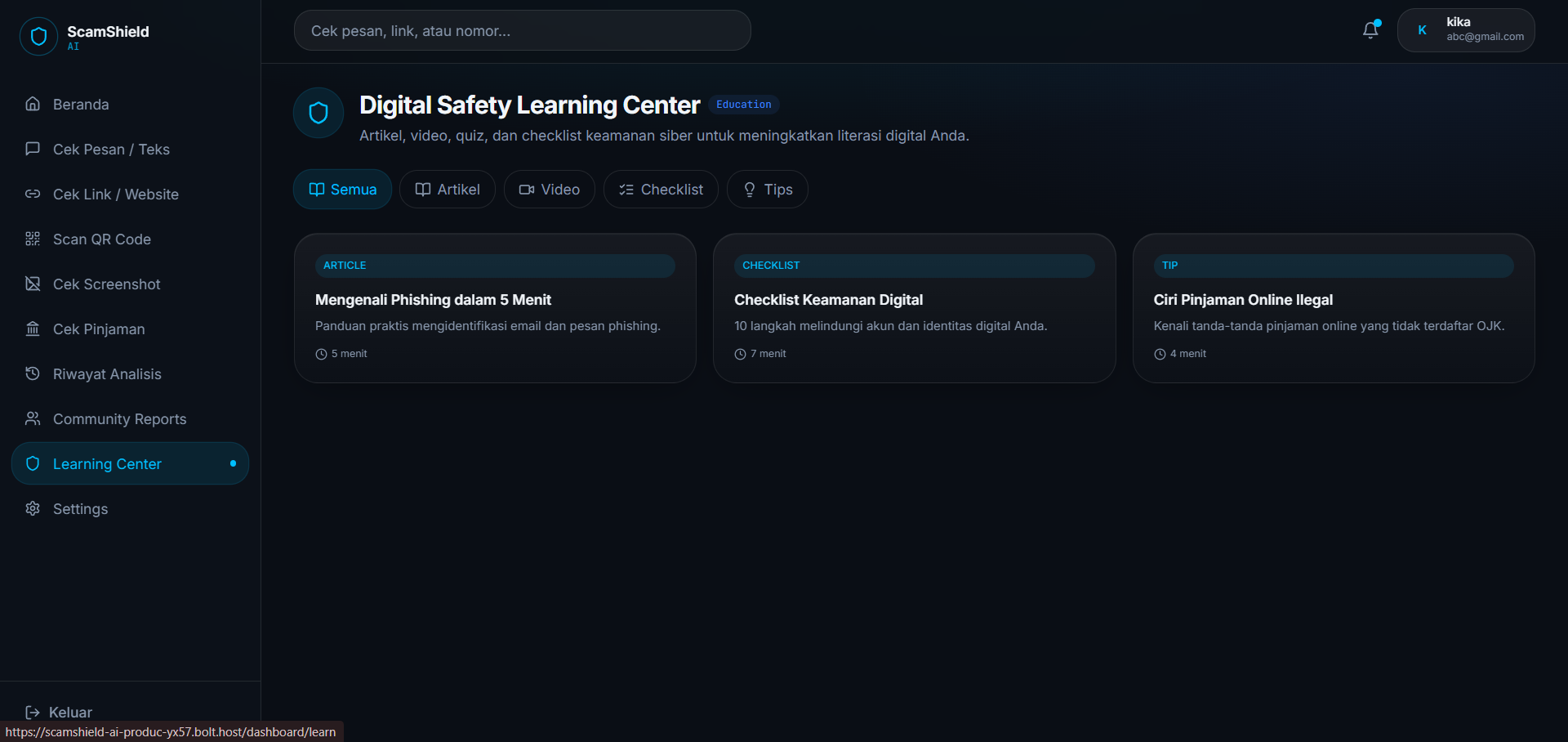
ScamShield AI's Learning Center
-
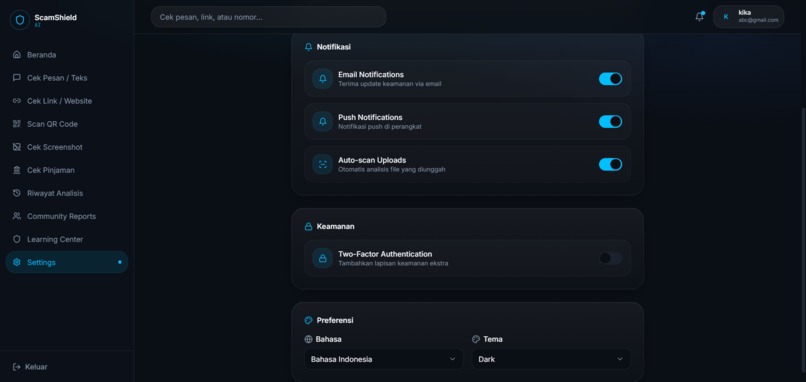
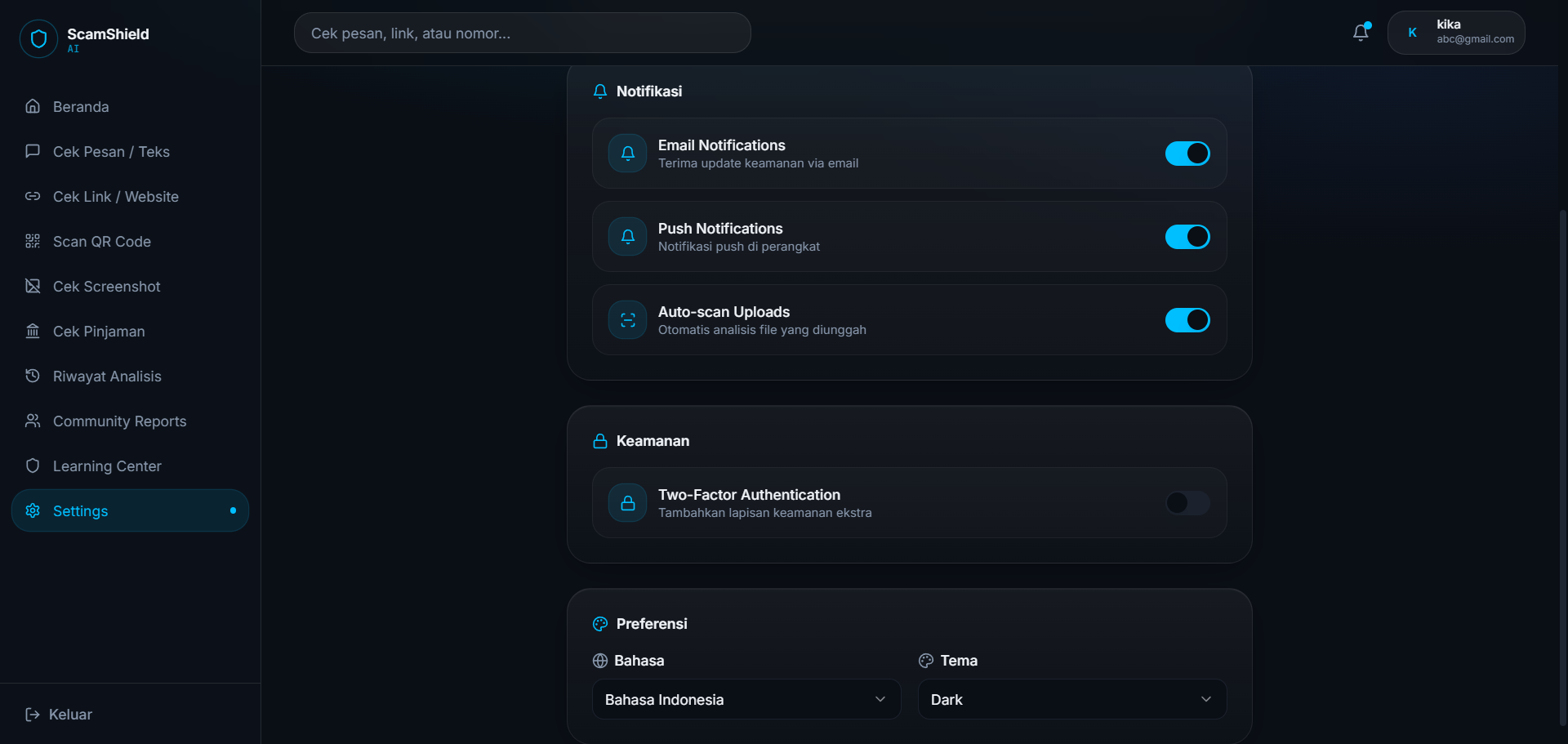
ScamShield AI's Setting
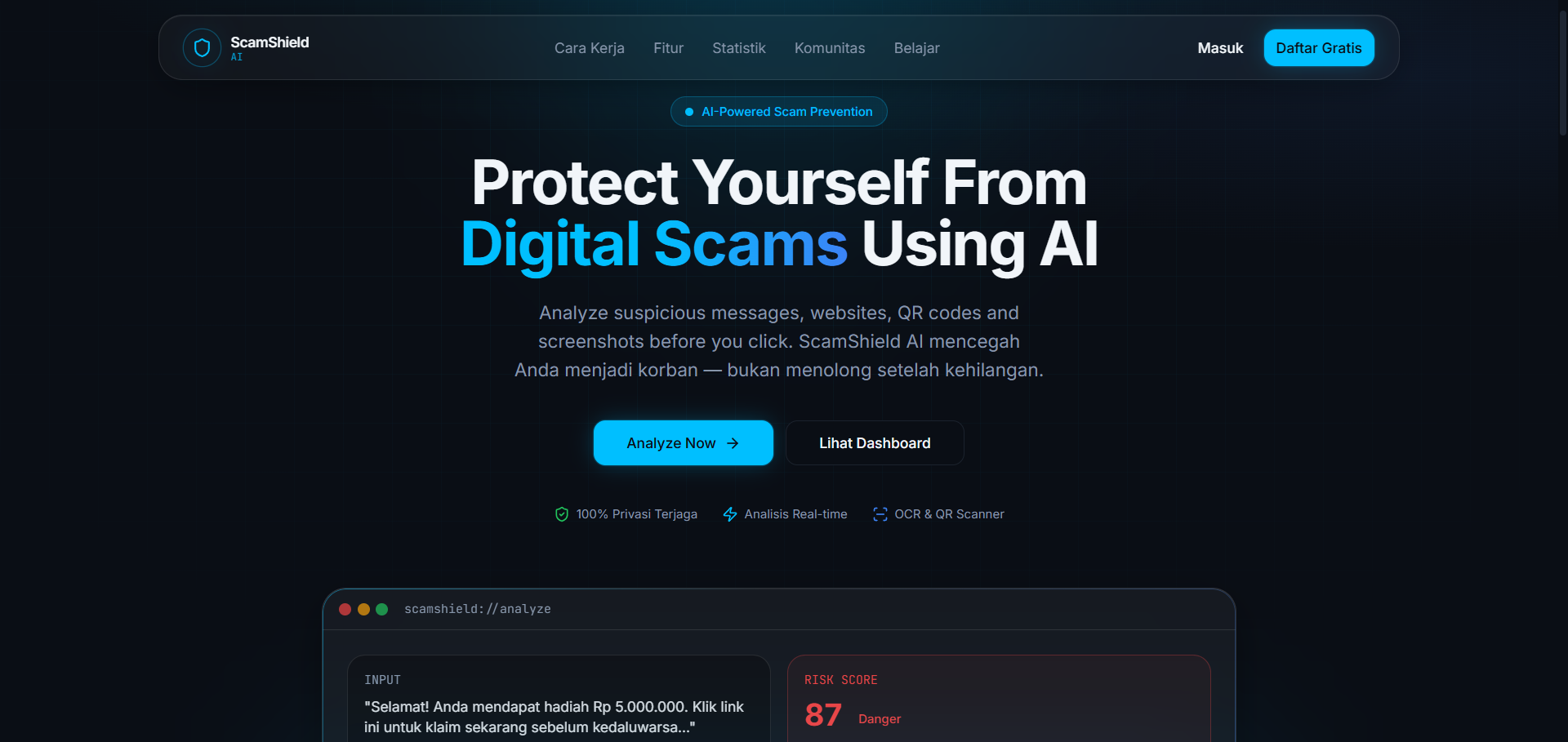
Inspiration
As digital services become part of everyday life, online scams have become increasingly common. Phishing messages, fake QR codes, fraudulent loan applications, and fake investment offers are becoming more convincing, making them difficult for ordinary users to identify.
We noticed that many cybersecurity tools are designed for technical users, while most people simply want to know one thing: "Can I trust this?" This inspired us to build ScamShield AI, an AI-powered assistant that helps users verify suspicious digital content before they interact with it. Instead of focusing on recovering from scams, our goal is to prevent them from happening in the first place.
What it does
ScamShield AI is an AI-powered digital safety assistant that helps users detect potential online scams through a simple and accessible interface. The platform focuses on making cybersecurity understandable for everyone, not only for technical users.
Users can:
- Analyze suspicious messages from SMS, email, or messaging applications.
- Check whether a website is legitimate or potentially dangerous.
- Scan QR codes before making payments.
- Verify whether an online lending platform is officially registered.
- Receive an AI-generated explanation of why certain content is considered suspicious.
- Report scams anonymously to help improve community awareness.
How we built it
We built ScamShield AI as a web application with an AI-assisted analysis pipeline. The frontend was developed using Next.js, React, TypeScript, and Tailwind CSS, while the backend exposes APIs for processing user requests.
For AI-powered analysis, we integrated Large Language Models to classify suspicious messages and generate explanations that are easy to understand. OCR is used to extract text from uploaded screenshots, while additional validation modules analyze URLs and QR codes before generating an overall risk score.
To demonstrate the concept within the hackathon timeframe, we also prepared a sample threat database containing phishing examples, malicious URLs, and fraudulent lending services.
Challenges we ran into
One of the biggest challenges was balancing detection accuracy with usability. Cybersecurity systems often produce technical outputs that are difficult for non-expert users to understand. Another challenge was integrating different AI components into a single workflow while keeping response times fast enough for a smooth user experience.
Because this is a hackathon prototype, obtaining reliable and diverse phishing datasets was also challenging. We addressed this by combining publicly available examples with curated sample data for demonstration purposes.
Accomplishments that we're proud of
We are proud that ScamShield AI goes beyond simply labeling content as "safe" or "dangerous." The platform provides explanations that help users understand why something is suspicious, making it both a detection tool and a learning platform.
We also successfully combined multiple verification methods—including text analysis, URL checking, QR code inspection, and scam reporting—into a single application with a simple user experience. Most importantly, we created a working prototype that demonstrates how AI can be used to improve everyday digital safety.
What we learned
Throughout this project, we learned that effective cybersecurity solutions are not only about advanced detection algorithms but also about communication.
Users need explanations they can trust and understand. We also gained practical experience integrating AI APIs into a web application, designing AI-assisted user workflows, and building interfaces that simplify complex security concepts.
Additionally, we learned the importance of limiting the scope during a hackathon so we could focus on delivering a functional MVP rather than attempting to build every planned feature.
What's next for ScamShield AI
There are several directions we would like to explore after the hackathon.
Our next steps include:
- Building a browser extension for real-time phishing detection.
- Integrating with messaging platforms to analyze suspicious messages directly.
- Expanding the threat intelligence database with real-time community reports.
- Collaborating with financial institutions and government agencies to verify scam information more accurately.
- Improving AI detection using specialized phishing classification models instead of relying only on general-purpose LLMs.
- Supporting multiple languages to make the platform accessible to a wider audience.
Our long-term vision is to develop ScamShield AI into a comprehensive digital safety platform that helps individuals and communities stay protected as online threats continue to evolve.

Log in or sign up for Devpost to join the conversation.