Inspiration
Online scams such as phishing messages, fake job offers, banking/KYC fraud, OTP scams and malicious links are increasing rapidly. Many users cannot easily identify whether a message or URL is genuine or suspicious.
We wanted to build a simple AI-powered system that could help users detect scams before they take action. This idea led to ScamShield AI — an explainable scam detection platform that analyzes messages, URLs and screenshots and provides an understandable risk assessment.
What it does
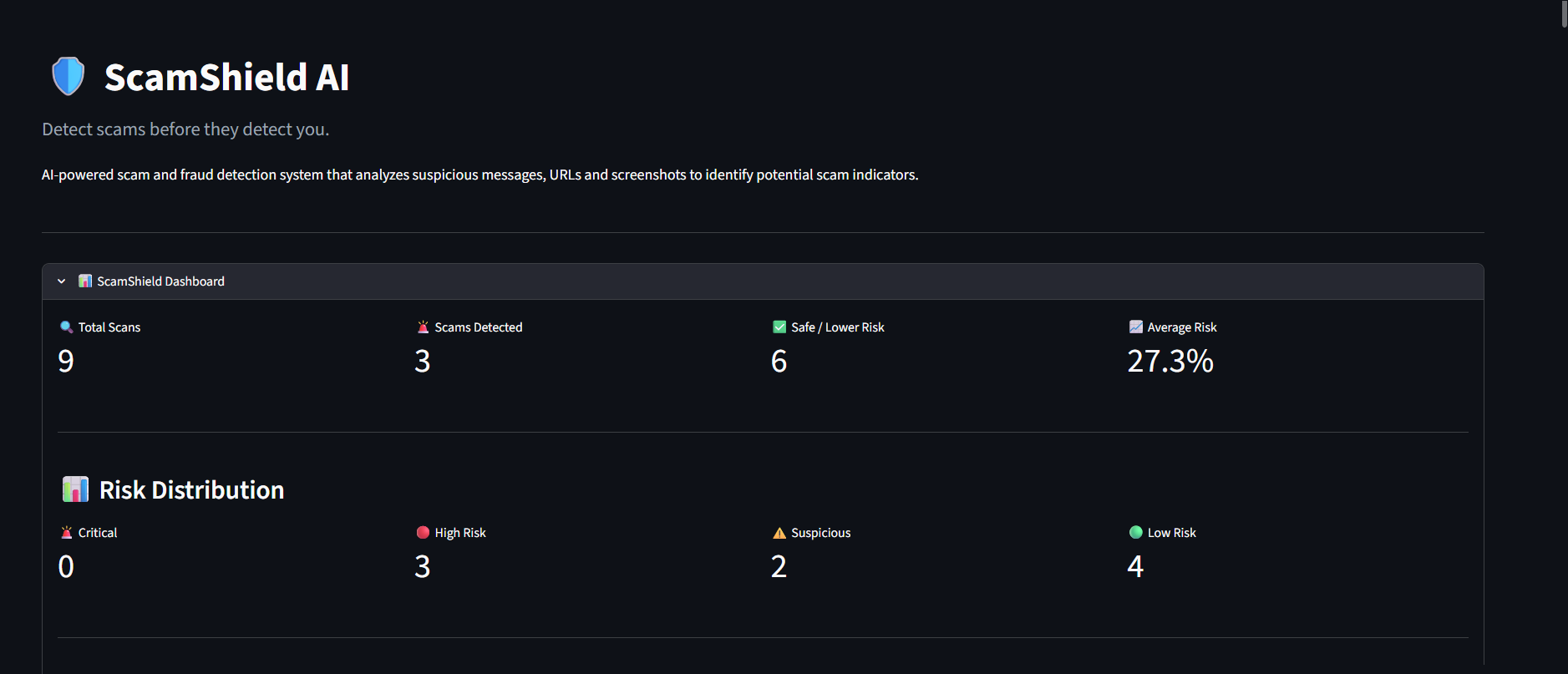
ScamShield AI is an AI-powered scam and fraud detection system that analyzes suspicious content and identifies potential scam indicators.
It can:
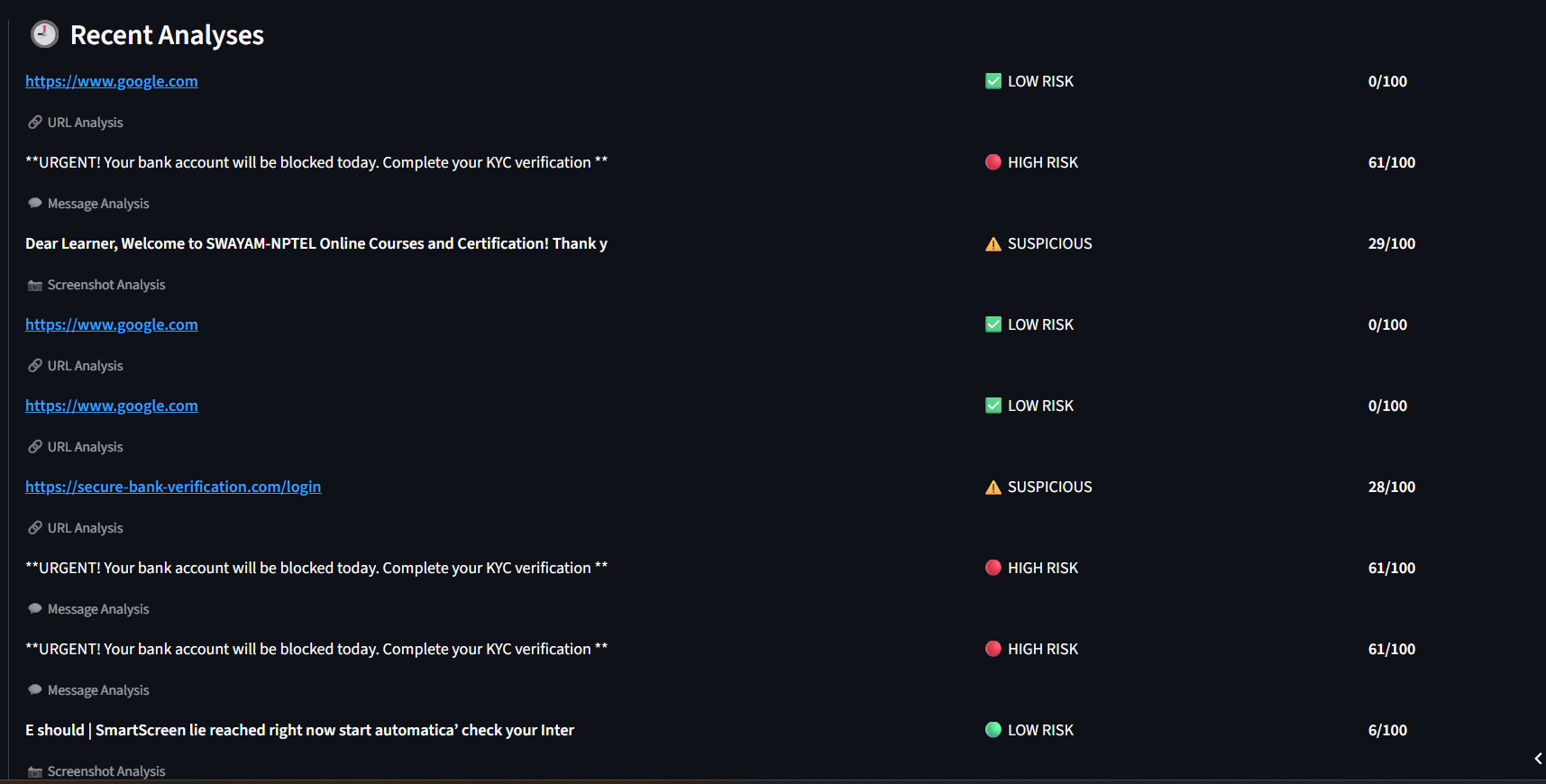
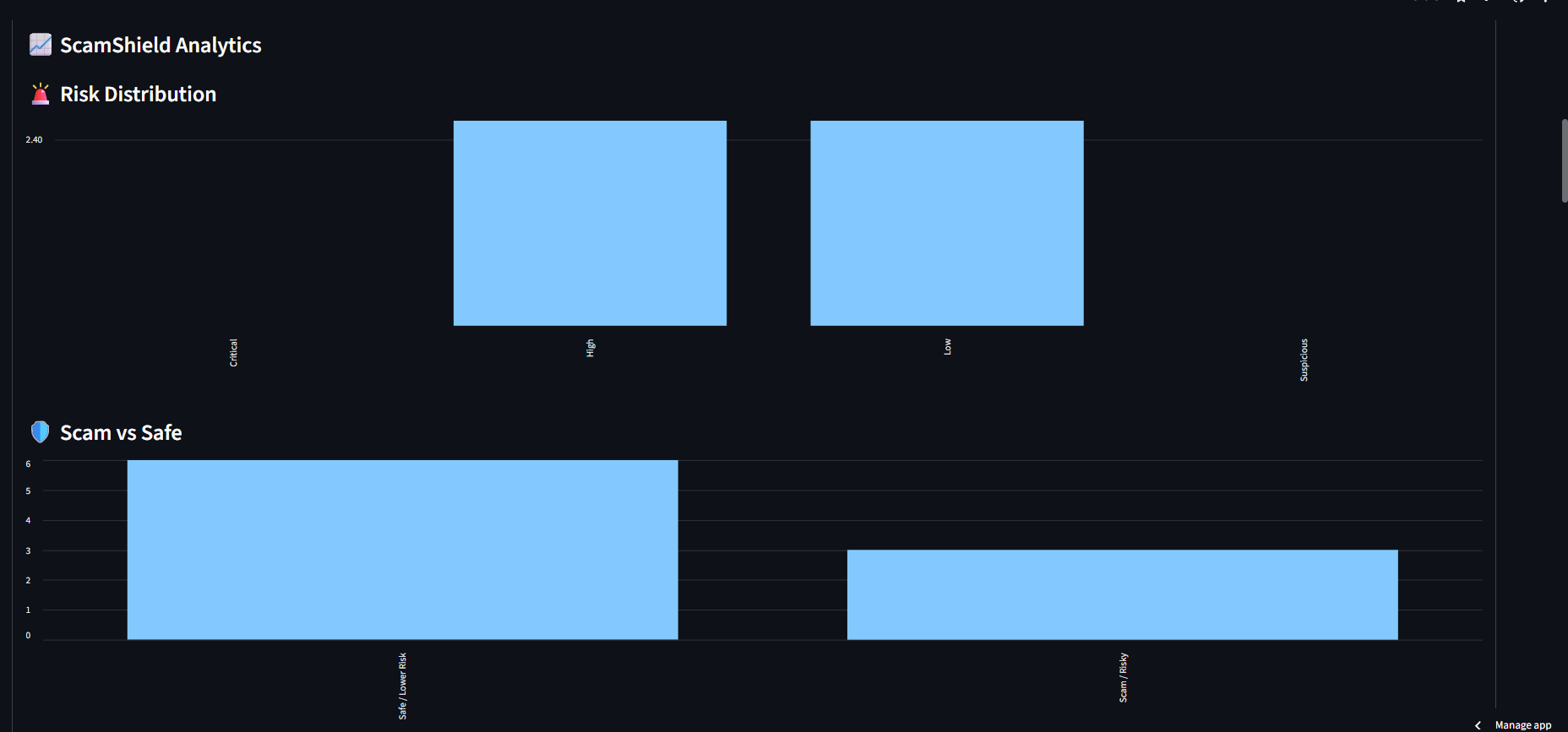
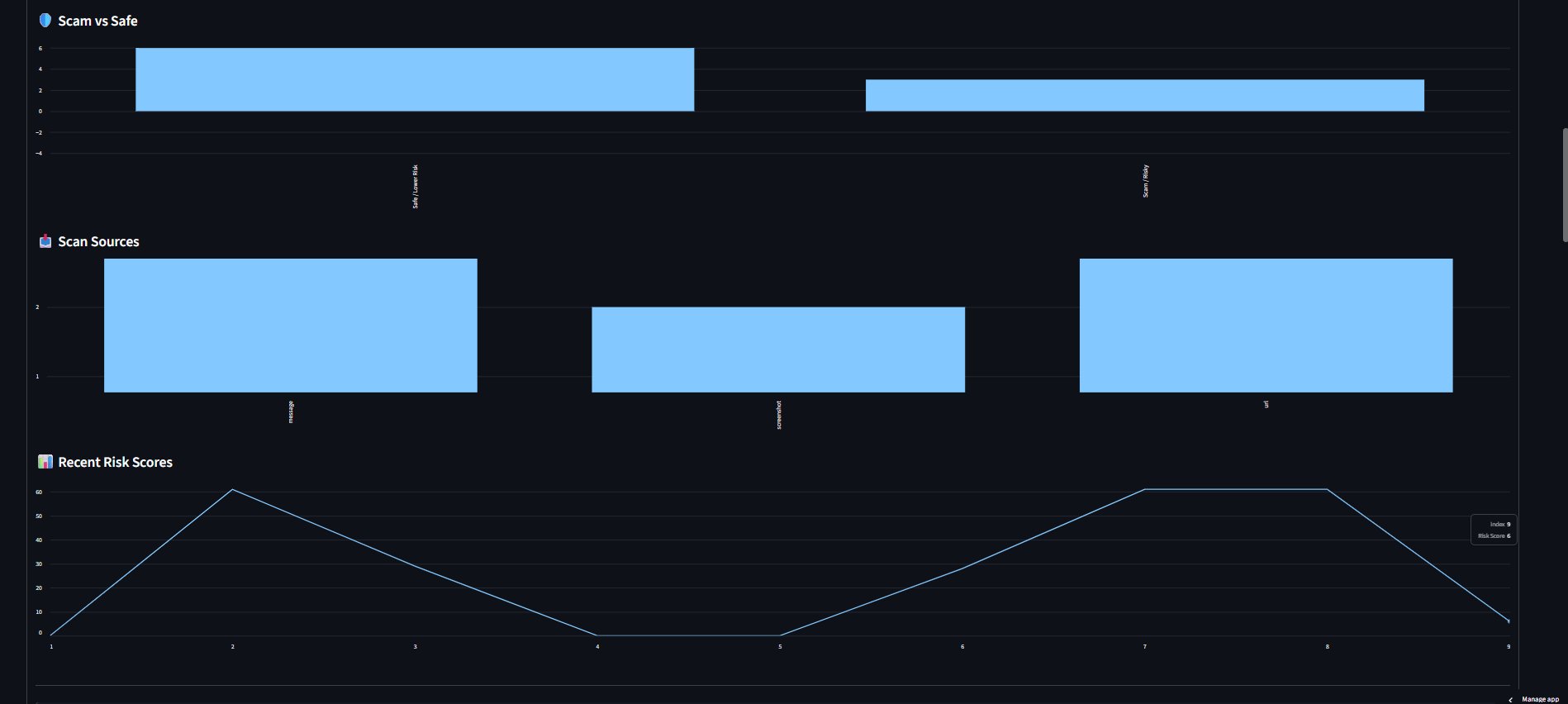
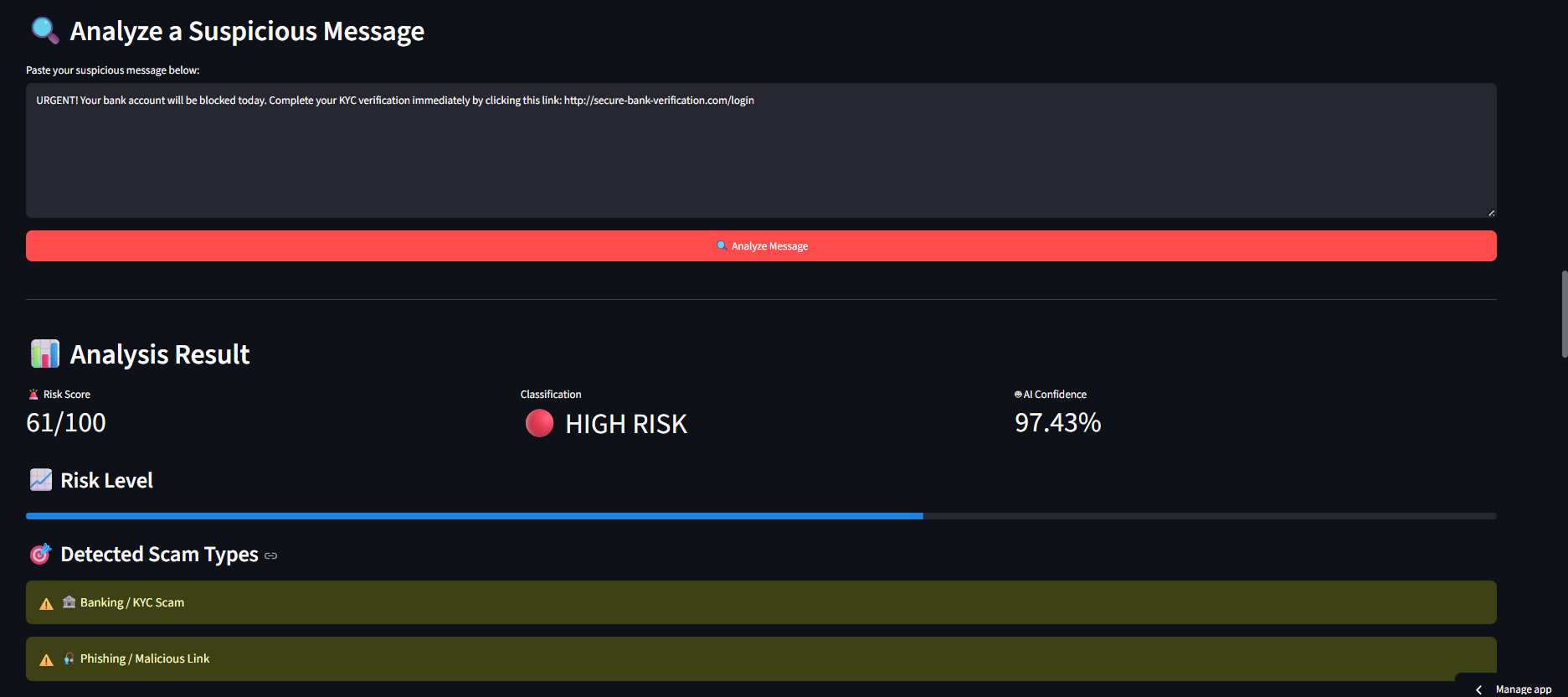
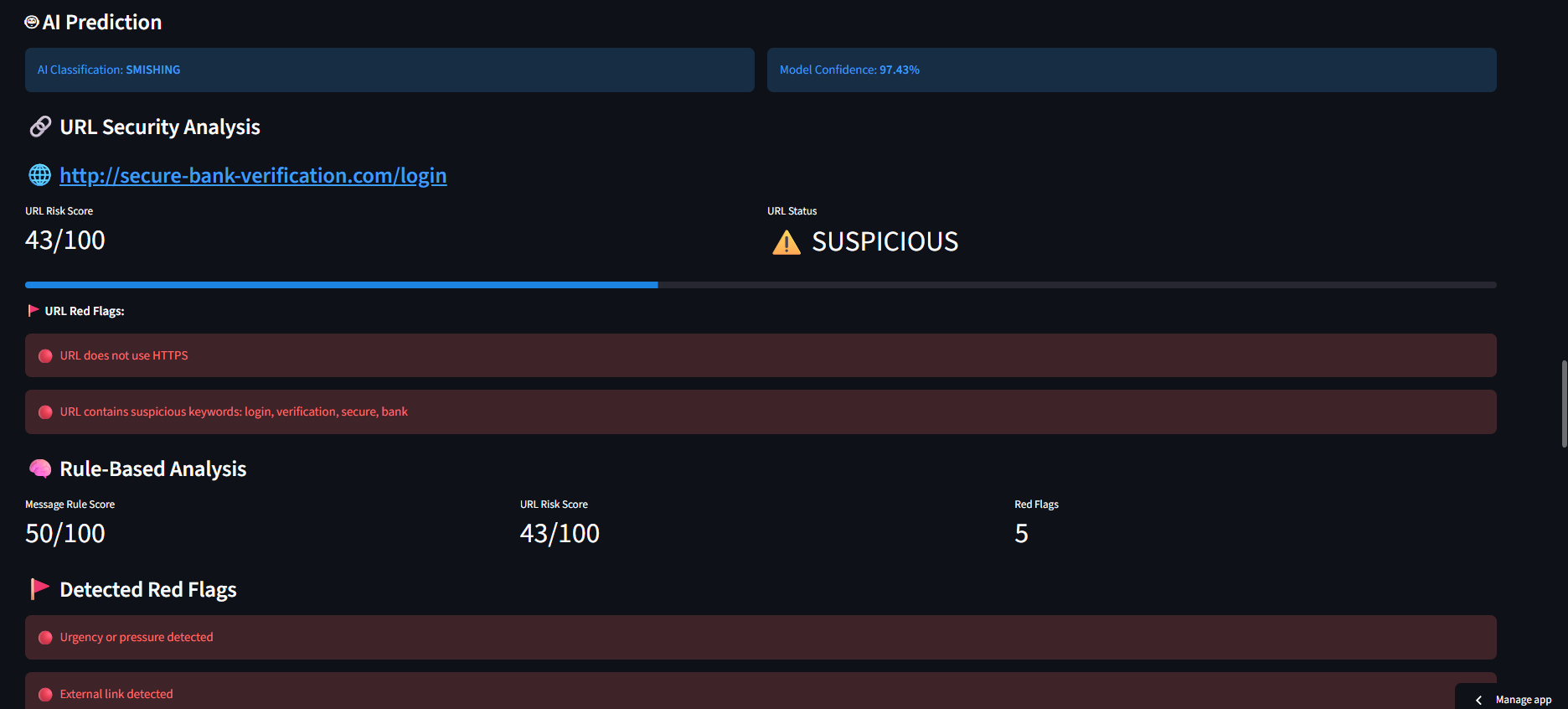
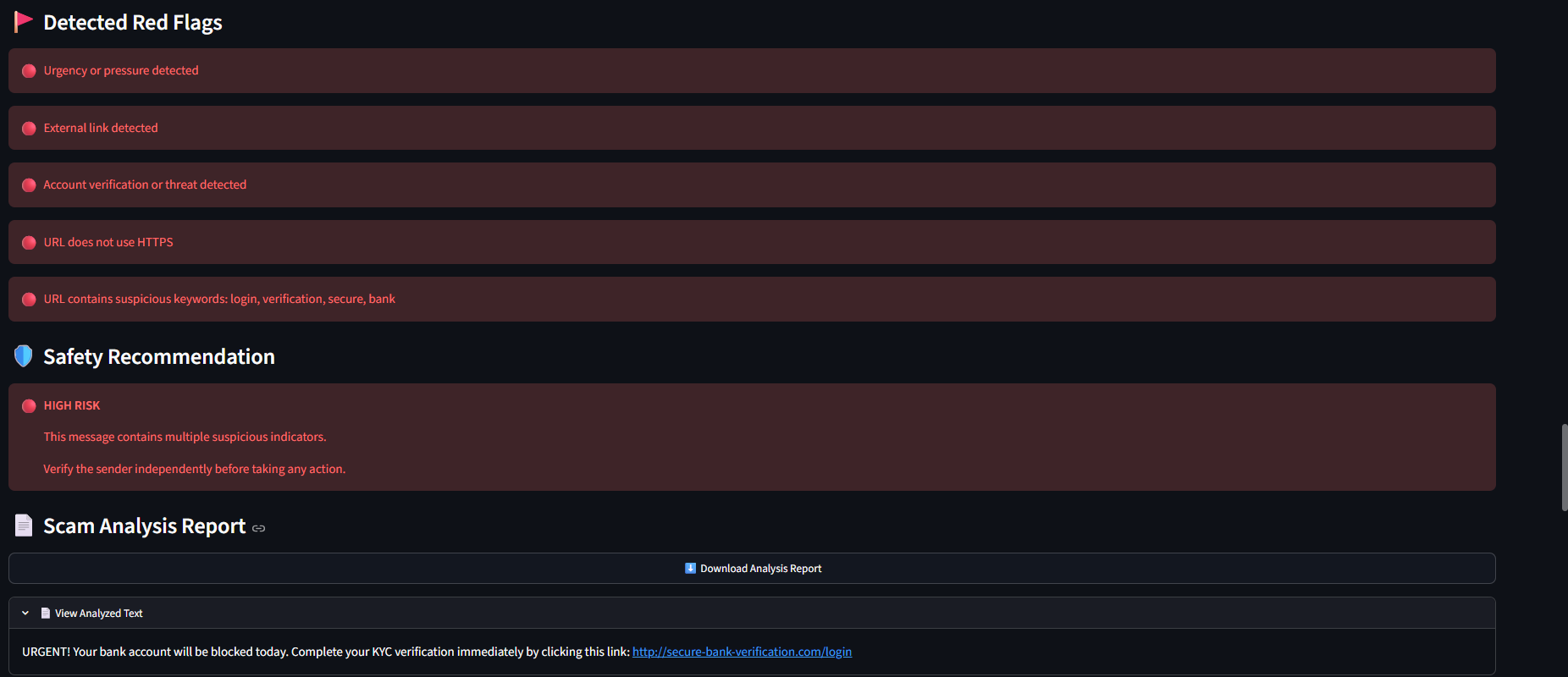
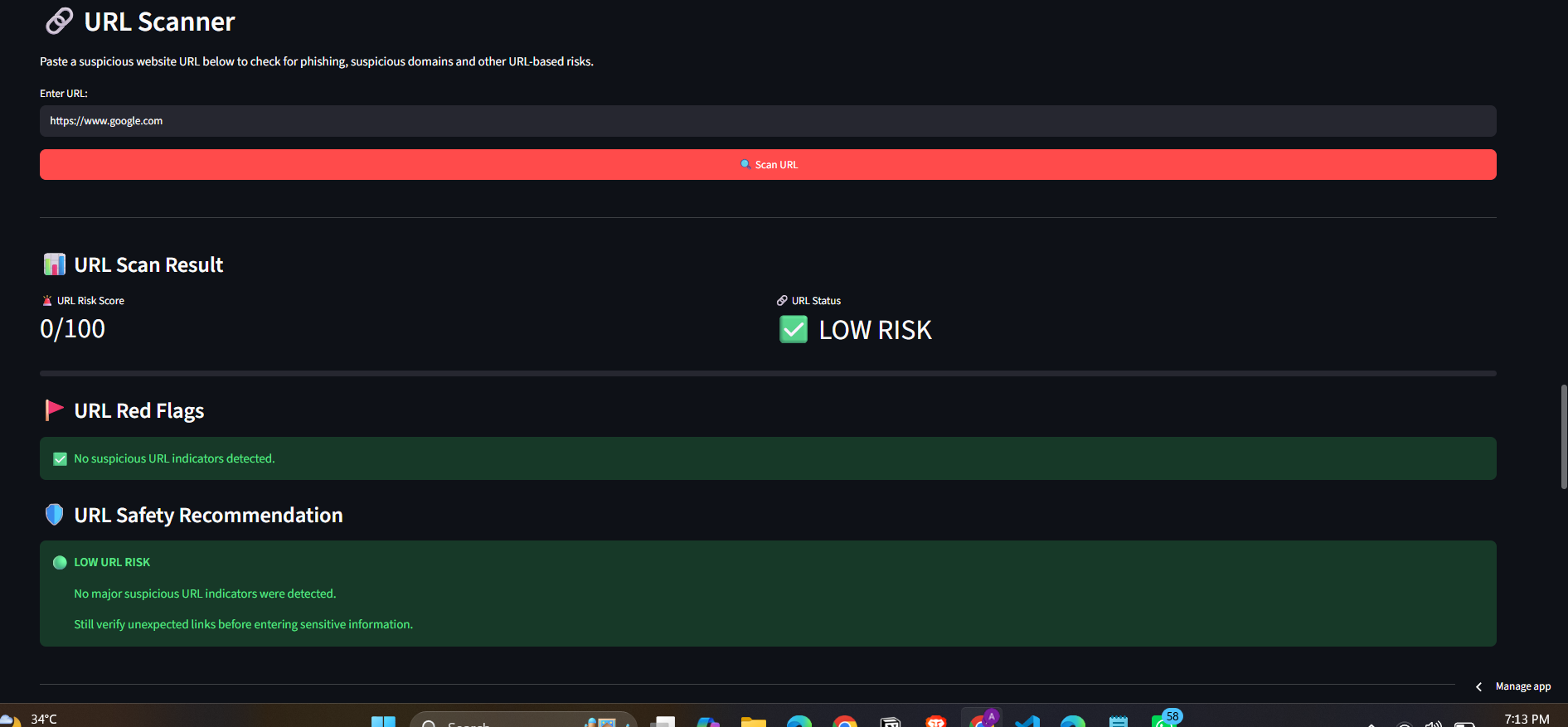
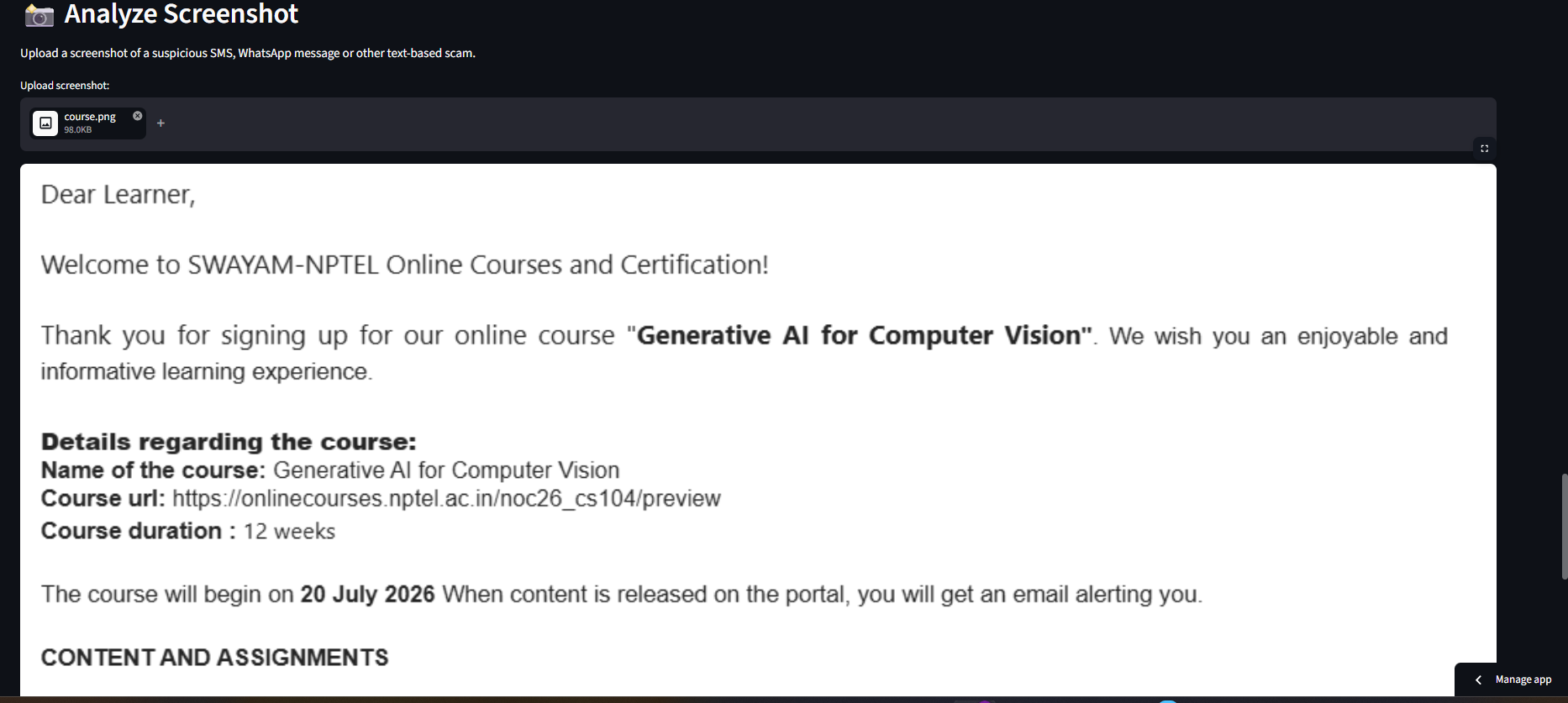
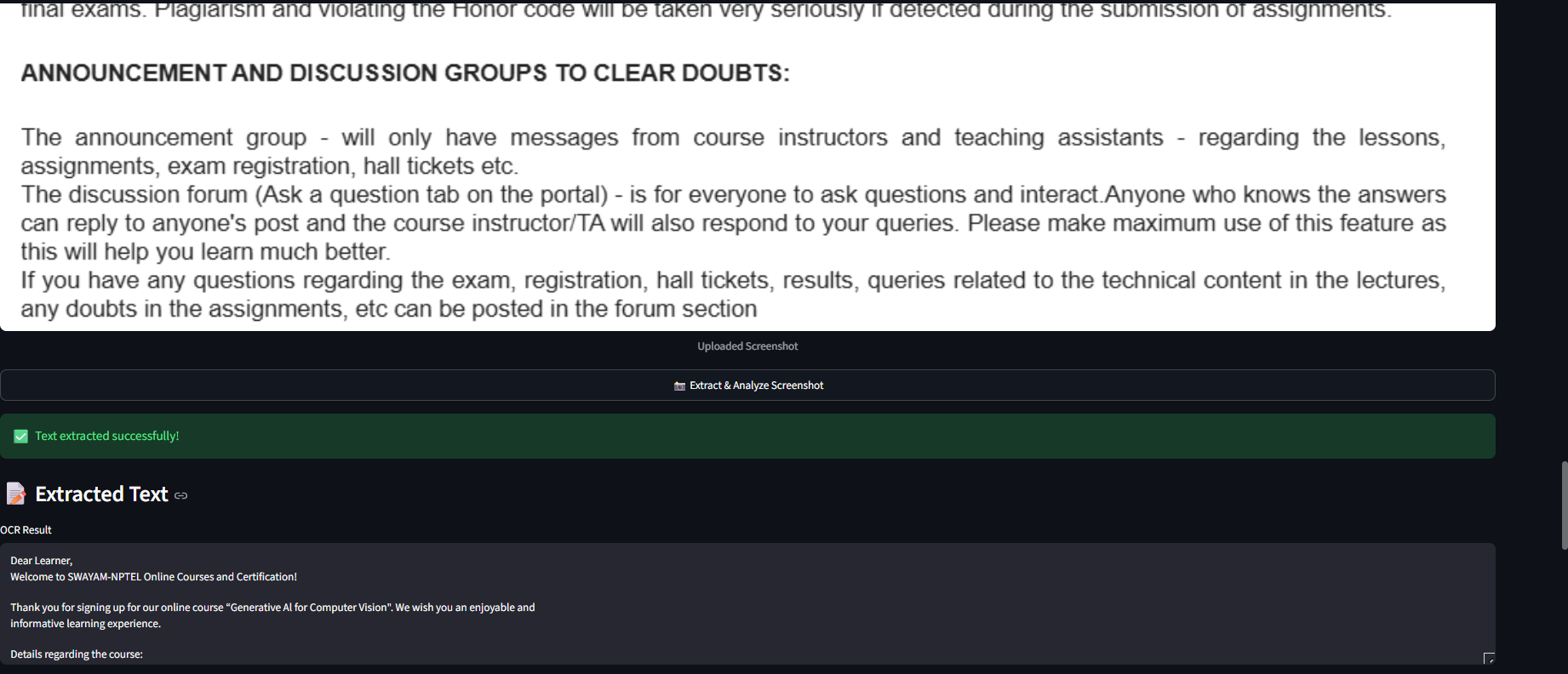
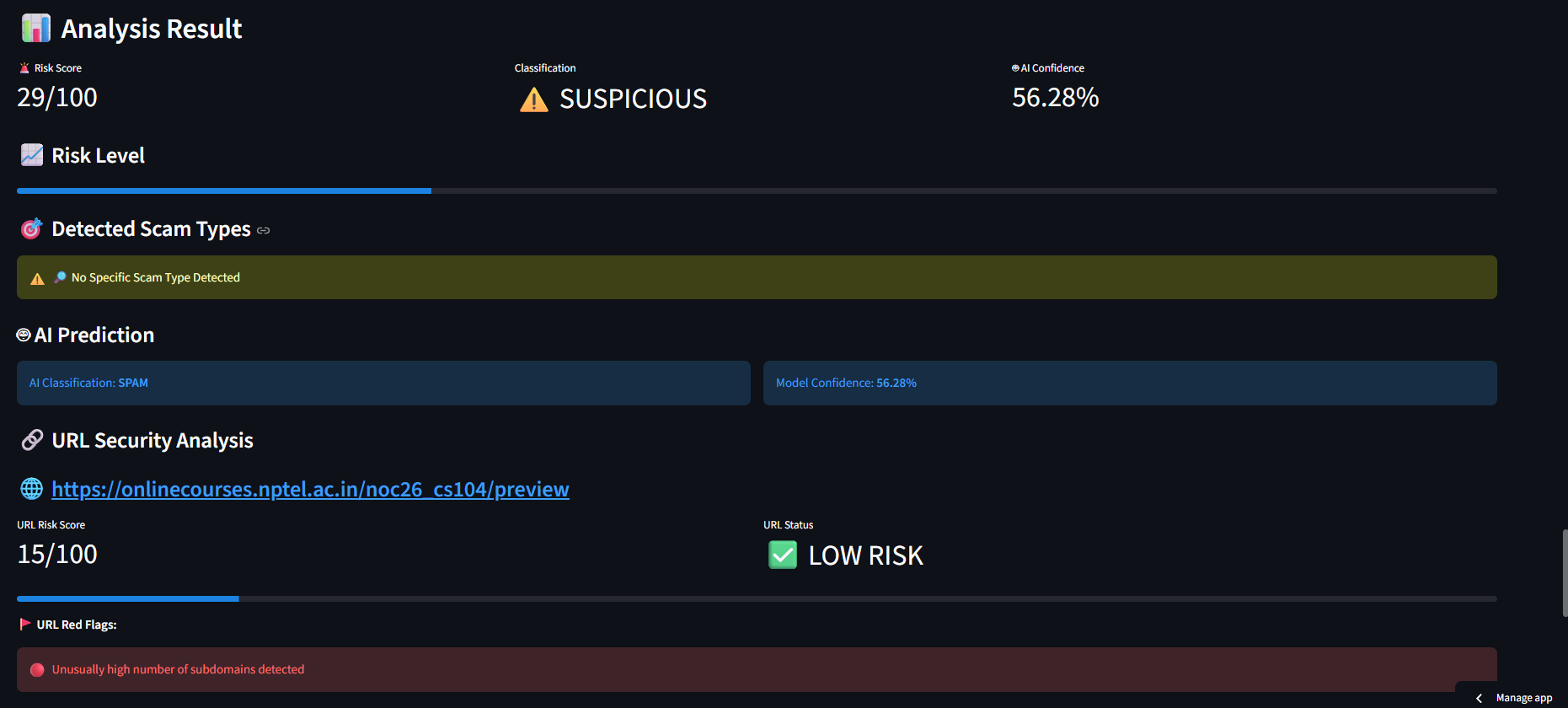
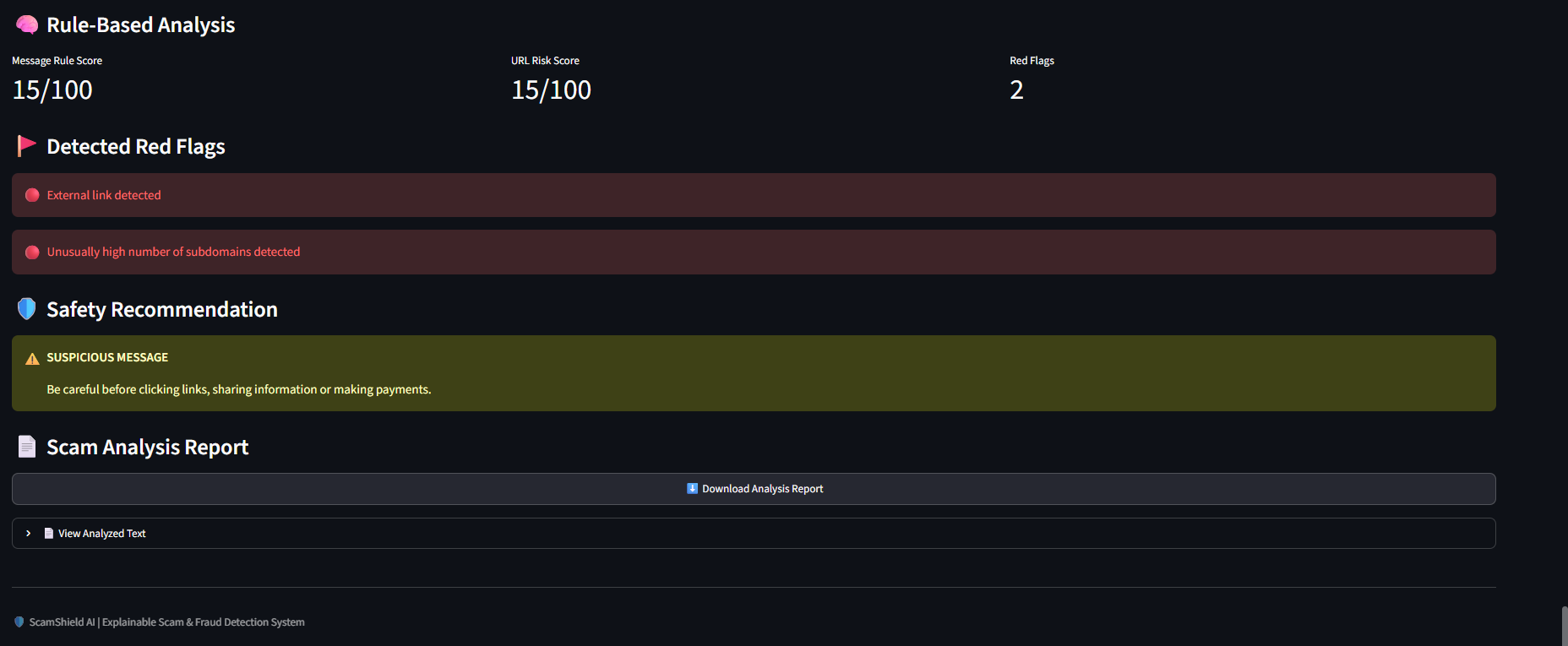
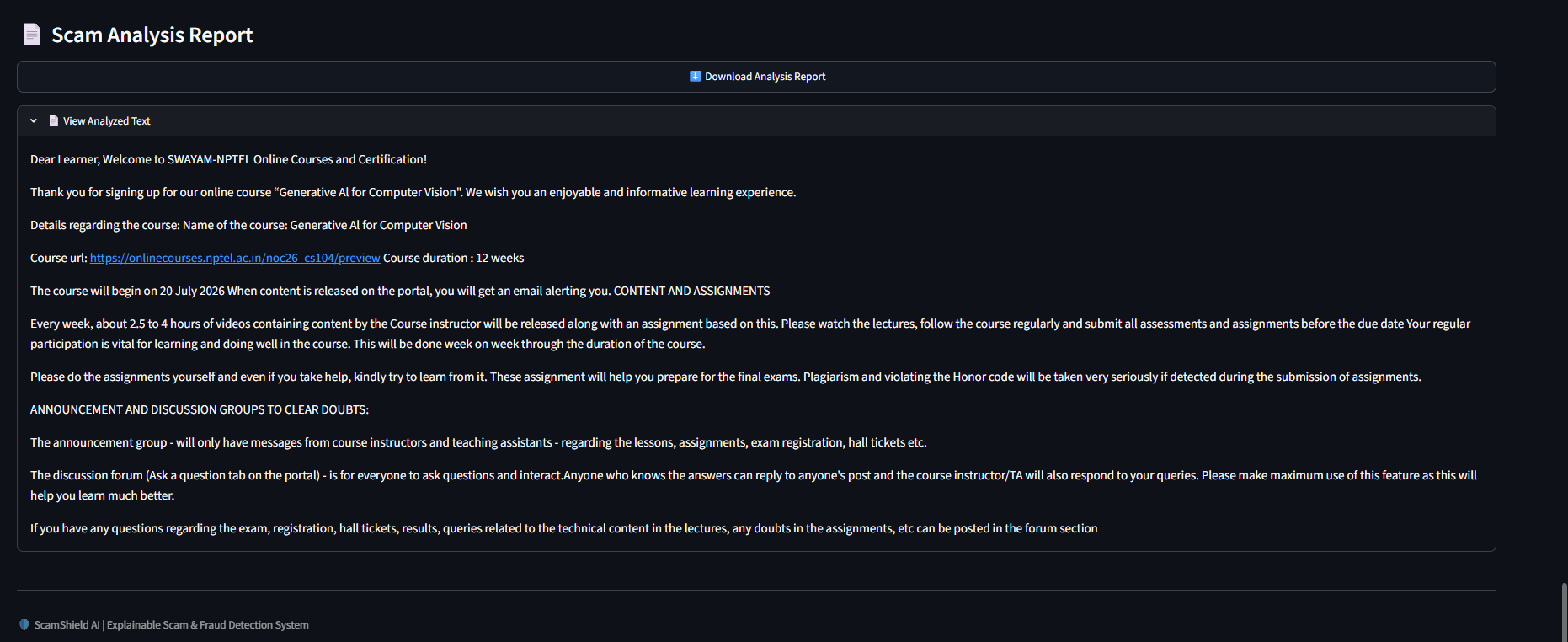
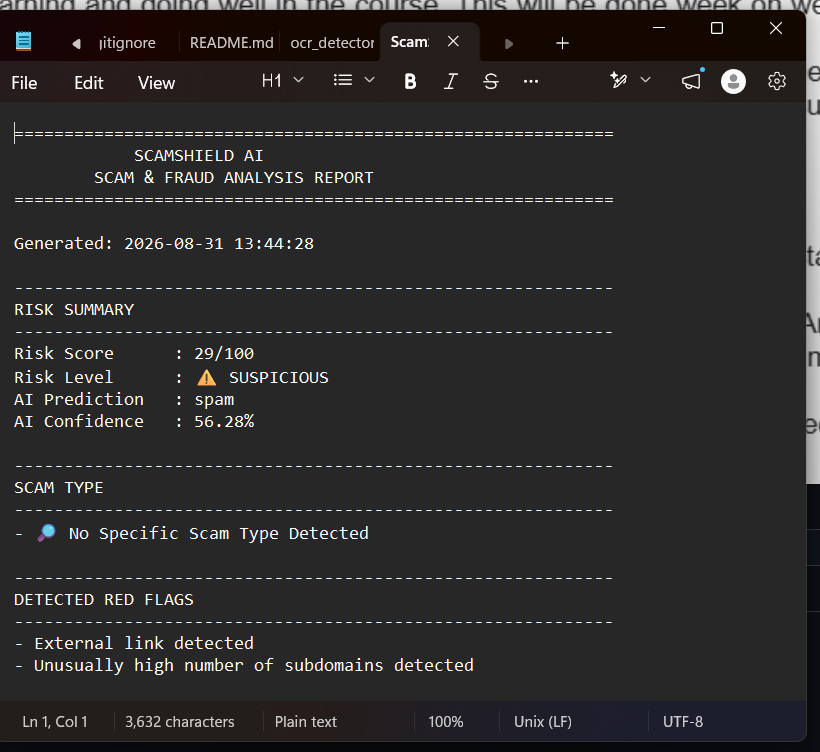
📩 Analyze suspicious SMS and text messages 🤖 Classify messages as HAM, SMISHING, or SPAM 📊 Generate an overall Risk Score 🎯 Show AI prediction and confidence 🚩 Detect suspicious indicators such as urgency, threats, payment requests and external links 🏦 Identify scam categories such as Banking/KYC, Phishing, Job Scam, OTP Scam, etc. 🔗 Scan URLs for suspicious keywords and URL-based risks 📸 Analyze screenshots of suspicious SMS/WhatsApp messages 🔎 Extract text from screenshots using Tesseract OCR 📈 Provide dashboard analytics and risk distribution 📝 Maintain analysis history 📄 Generate scam analysis reports 🛡️ Provide safety recommendations to users
How we built it
We built ScamShield AI using a combination of Machine Learning, NLP, OCR and rule-based analysis.
Technology Stack Python — Core development Streamlit — Web application and dashboard Scikit-learn — Machine Learning TF-IDF — Text feature extraction Machine Learning Classification Model — Scam message classification Tesseract OCR / Pytesseract — Screenshot text extraction Pandas & NumPy — Data processing Joblib — Model and vectorizer storage Matplotlib / Plotly — Analytics and visualization Git & GitHub — Version control and project management
The message detection pipeline converts text into TF-IDF features and uses the trained classification model to predict the message category. We then combine the ML prediction with rule-based indicators and URL analysis to calculate the final risk level.
Our trained model achieved approximately 98.16% accuracy during evaluation, with 98.22% precision, 98.16% recall and 98.18% F1-score on the evaluation dataset.
Challenges we ran into
During development, we faced several challenges:
Finding and preparing a suitable SMS scam dataset Handling the imbalance between HAM, SMISHING and SPAM classes Improving detection of different types of scam messages Designing a meaningful and explainable risk-scoring system Integrating URL analysis with message analysis Implementing screenshot-based scam detection Setting up Tesseract OCR on Windows Handling OCR errors and making the system work reliably with uploaded images Connecting multiple analysis modules into a single Streamlit application Maintaining scan history and generating reports Preparing the application for cloud deployment
Accomplishments that we're proud of
We are proud that ScamShield AI became a complete end-to-end scam detection system rather than only a machine learning model.
Major accomplishments include:
🎯 Achieved 98.16% evaluation accuracy 🤖 Built a multi-class scam detection model 🔗 Successfully integrated URL scanning 📸 Added screenshot-based scam detection 🔎 Integrated OCR for extracting text from screenshots 🚩 Developed explainable scam indicators 📊 Created an interactive analytics dashboard 🛡️ Added safety recommendations based on risk 📝 Implemented analysis history 📄 Added report generation 🌐 Prepared the project for web deployment 💻 Successfully tested the complete application locally
Most importantly, the system doesn't simply say "scam" or "not scam" — it explains why a message or URL may be risky.
What we learned
While developing ScamShield AI, we learned how to combine different technologies into a practical AI application.
We learned about:
Natural Language Processing TF-IDF feature extraction Multi-class classification Model evaluation Precision, Recall and F1-score Confusion matrices Dataset preprocessing Rule-based risk analysis URL security analysis OCR and image processing Streamlit application development Modular Python architecture Model serialization using Joblib Git and GitHub workflow Application deployment
We also learned that AI predictions become more useful when combined with explainable rules and actionable recommendations.
What's next for ScamShield AI
Our next goal is to make ScamShield AI more intelligent, scalable and useful in real-world situations.
Future improvements include:
📱 WhatsApp and SMS integration 🌐 Real-time URL reputation checking 🧠 More advanced NLP/Transformer-based models 🖼️ Improved OCR for low-quality screenshots 🌍 Support for multiple Indian languages 🔐 Real-time phishing and malicious-domain detection 📧 Email scam detection 📱 Mobile application 🔔 Real-time scam alerts 🧠 Continuous model improvement using new scam datasets ☁️ Full cloud deployment and scalable backend 📊 More advanced analytics and reporting
Our long-term vision is to build ScamShield AI into a real-time personal security assistant that can identify suspicious digital content before users become victims of online fraud.
Built With
- git
- joblib
- language
- learning
- machine
- matplotlib
- natural
- numpy
- ocr
- pandas
- plotly
- processing
- pytesseract
- python
- scikit-learn
- streamlit
- tesseract
- tf-idf

Log in or sign up for Devpost to join the conversation.