-
-
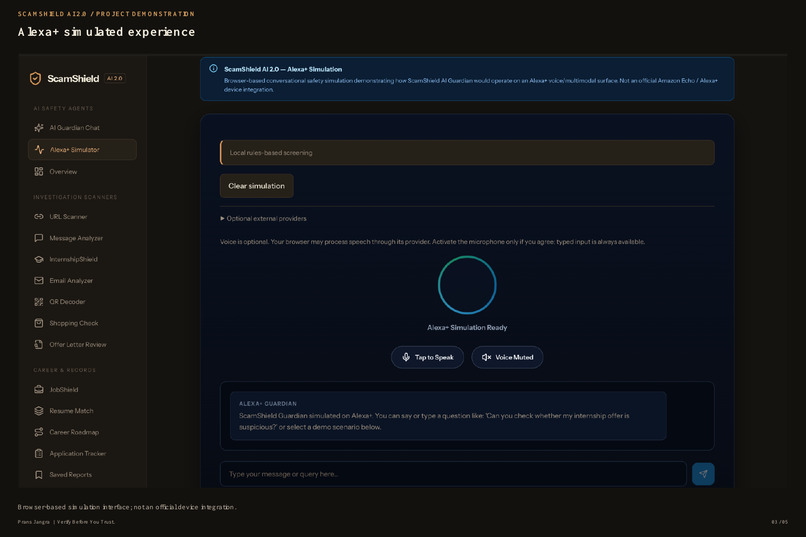
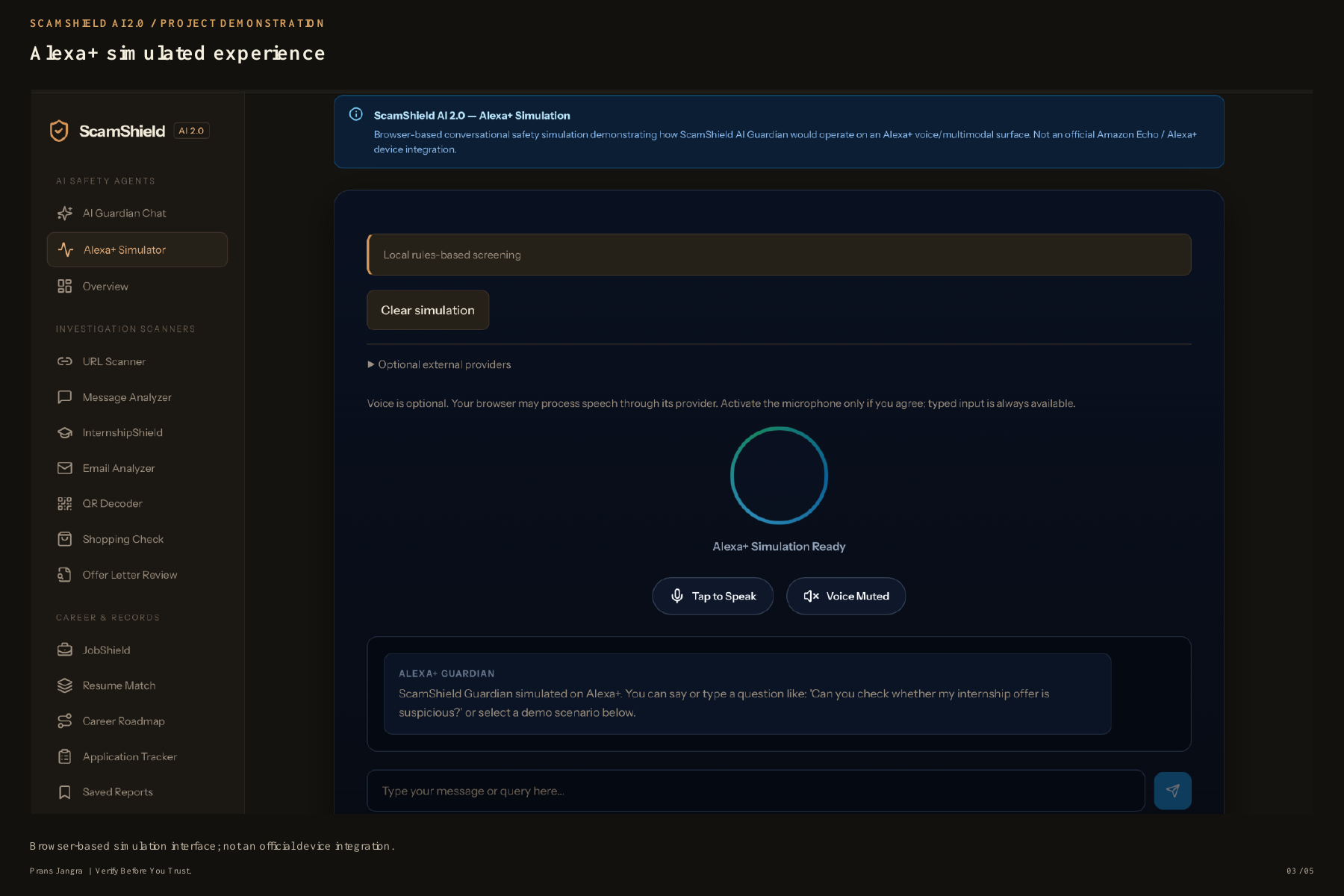
Browser-based Alexa+ simulation interface; not an official Amazon device integration.
-
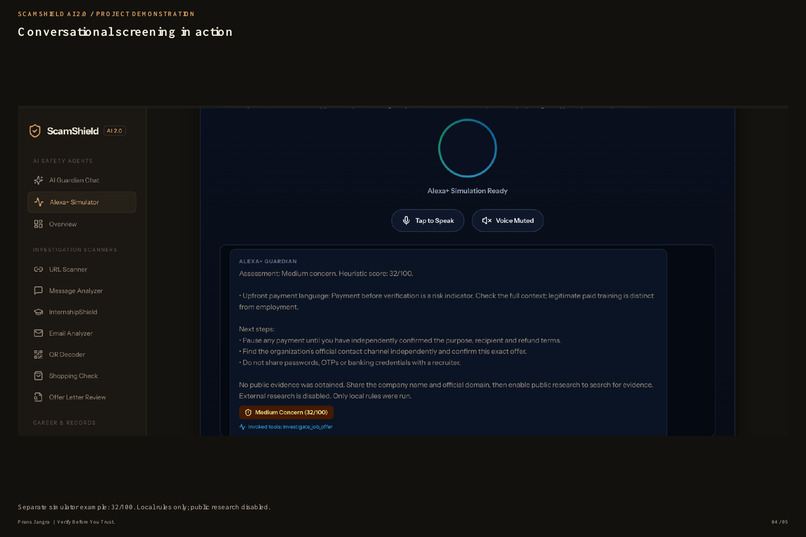
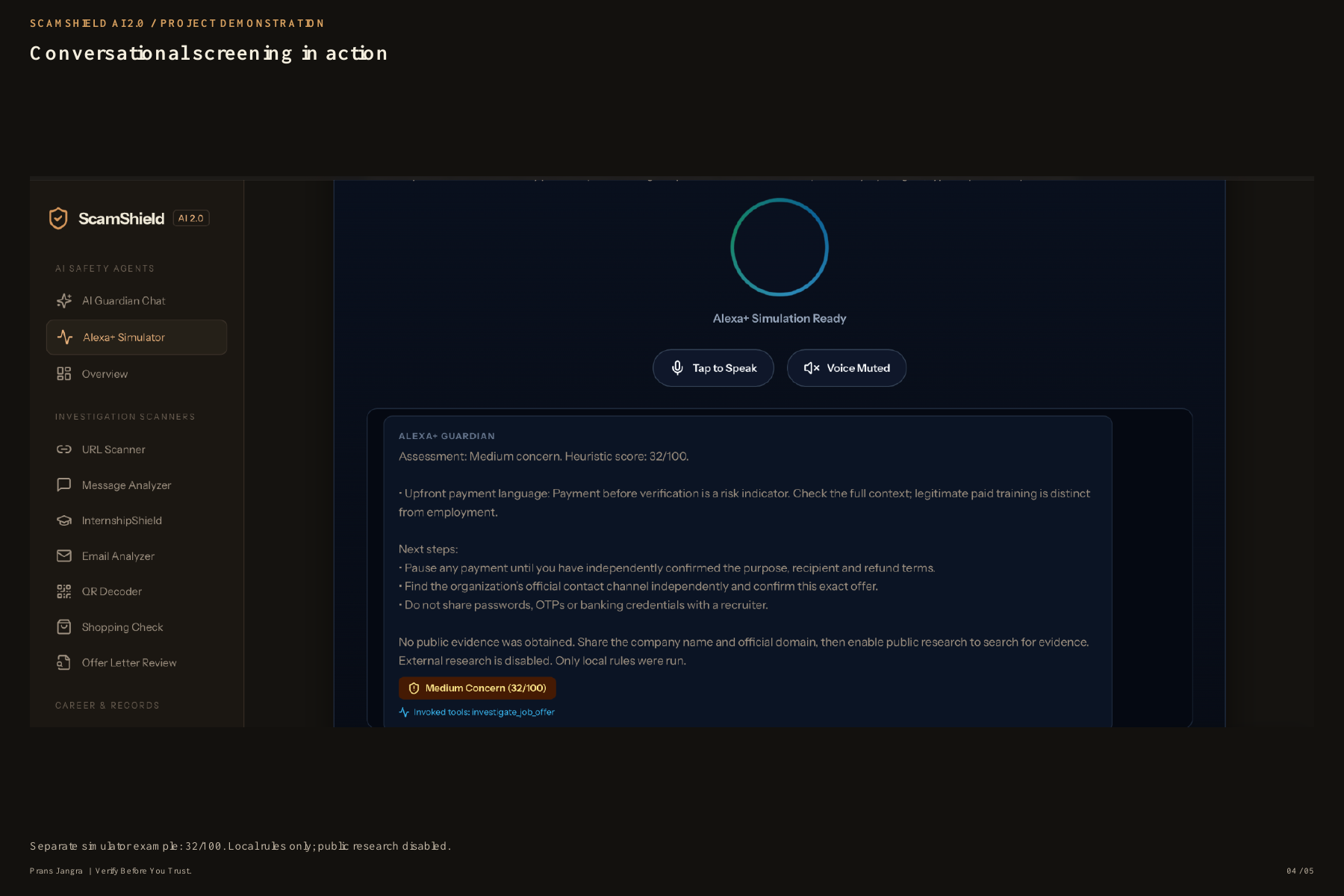
Simulator response: 32/100 heuristic score with safety guidance. Local rules only; public research disabled.
-
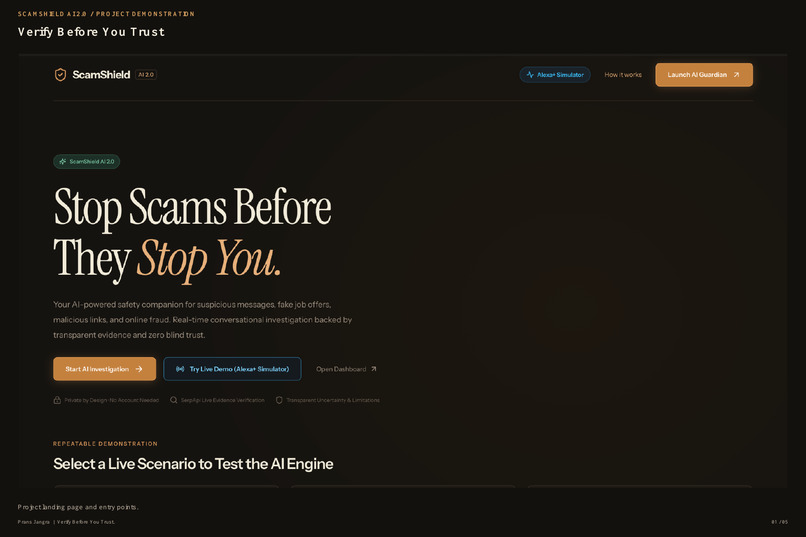
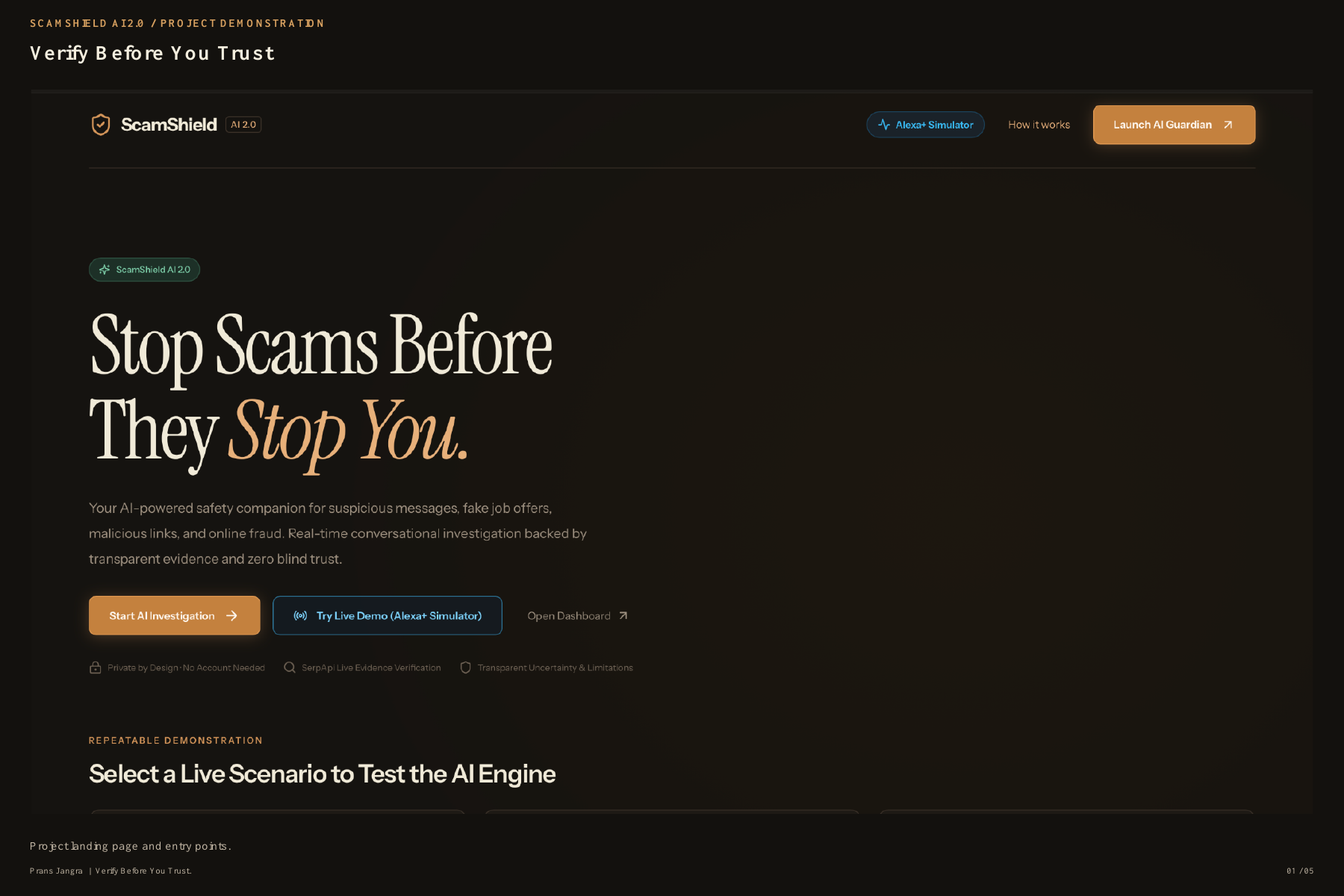
ScamShield AI — Verify Before You Trust.
-
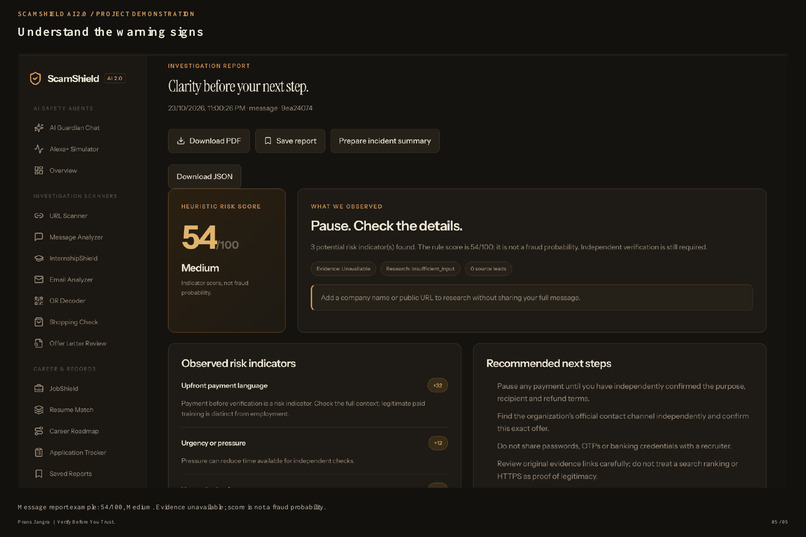
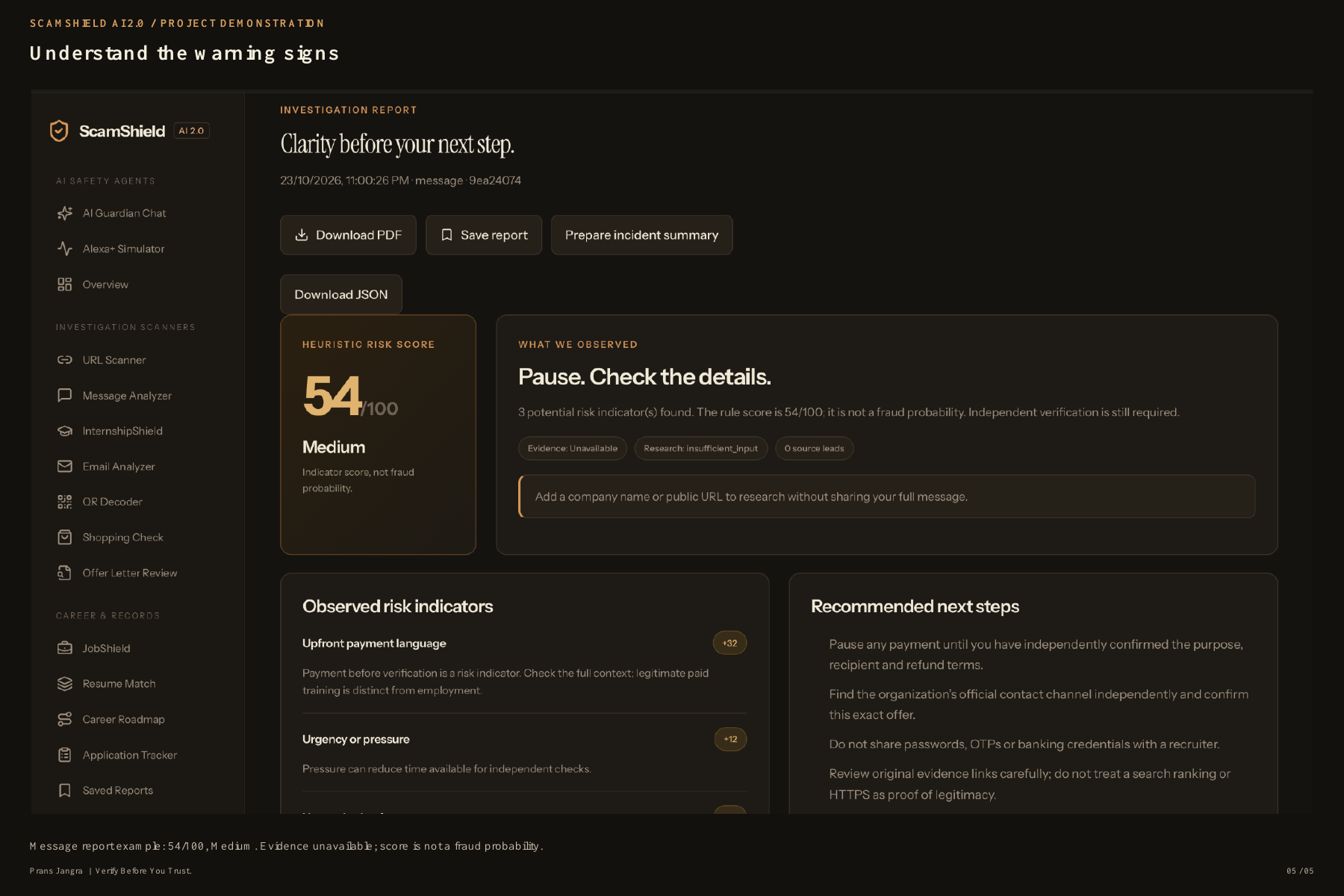
Separate message analysis: 54/100, Medium. Explainable warning signs; external evidence unavailable.
-
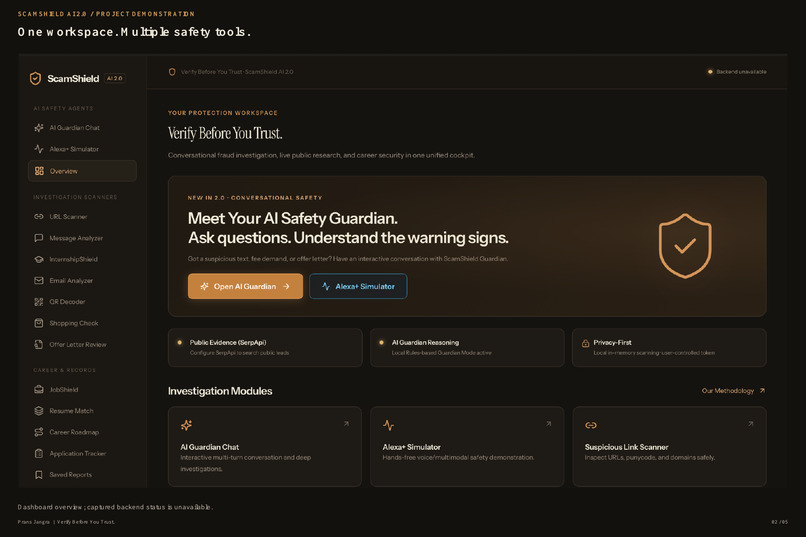
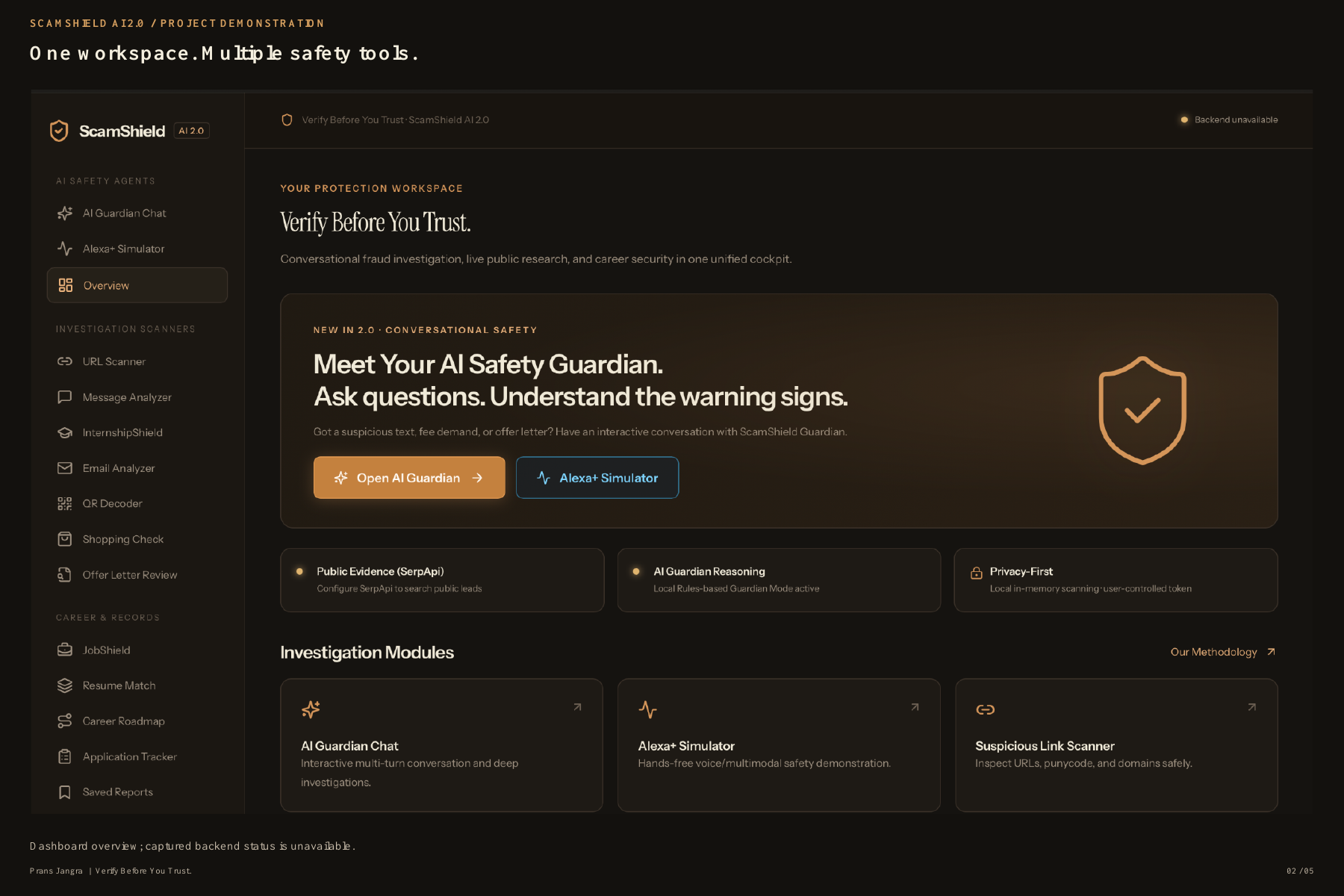
Unified dashboard for investigation scanners, conversational safety, and career tools.
Inspiration
As students exploring internships and jobs, we wanted a clearer way to examine unfamiliar offers. Messages can promise attractive stipends, demand registration fees, or pressure applicants to respond immediately. This inspired ScamShield AI: a project that helps users understand warning signs before taking action.
What it does
ScamShield AI brings different safety workflows into one dashboard, including URL Scanner, Message Analyzer, InternshipShield, Email Analyzer, QR Decoder, Shopping Check, and Offer Letter Review.
The dashboard also includes career sections such as JobShield, Resume Match, Career Roadmap, Application Tracker, and Saved Reports.
Our demonstrated workflow analyzes a fictional internship message and produces a report with visible risk indicators, their weights, recommended next steps, extracted details, and an investigation trace.
A browser-based Alexa+ Simulator explores how users could ask safety questions through a conversational interface. It is a simulation, not an official Amazon device integration.
How we built it
We organized the project around a clear workflow: submit content, identify warning signs, present the assessment, and suggest verification steps.
The demonstrated rule-based report assigns visible weights to detected indicators. External AI and public research are additional parts of the project that require working provider access and configuration.
The application exposes the status and limitations of an investigation so users can distinguish detected warning signs from independently verified facts.
Challenges we ran into
One challenge was handling uncertainty. Upfront payment requests and urgent language need context; a warning sign alone does not prove fraud.
We also encountered external service limitations. In the recorded analysis, the AI provider rejected the request. No company name or public URL was extracted, so public research could not proceed.
The application still returned a rule-based report and made those limitations visible.
Accomplishments that we're proud of
We demonstrated a complete message-to-report workflow and made the score explainable through visible indicators and weights.
We also created a unified dashboard and an Alexa+ simulation interface to explore conversational digital safety.
What we learned
We learned that useful safety guidance requires clear explanations and honest handling of uncertainty.
We also learned the importance of provider error handling and making a distinction between claims extracted from a message and facts verified through external sources.
What's next for SCAMSHIELD AI
Our immediate priorities are resolving the AI configuration issue, testing public research, and evaluating the system against more legitimate and fraudulent examples.
We also plan to improve the conversational simulation, add multilingual support, and explore a supported Alexa integration.
Our goal is to help users understand what to check before deciding whom to trust.
Built With
- css
- fastapi
- httpx
- lucide
- opencv
- pillow
- playwright
- pydantic
- pymupdf
- python
- react
- recharts
- reportlab
- router
- sqlalchemy
- tailwind
- typescript
- uvicorn
- vite


Log in or sign up for Devpost to join the conversation.