-
-
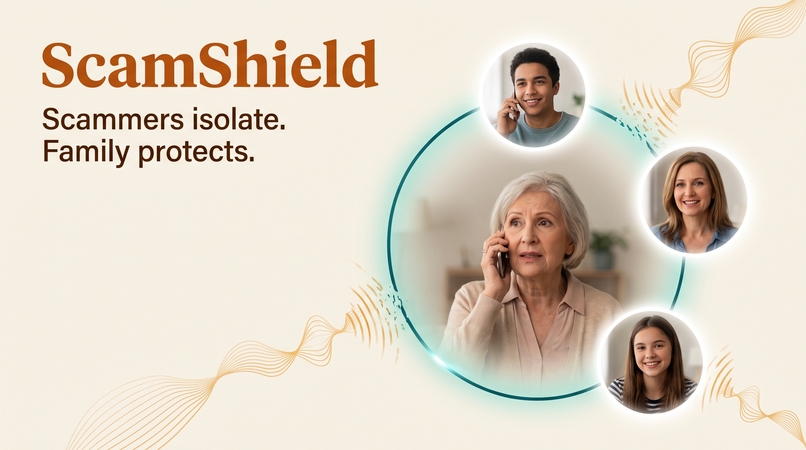
Project Thumbnail
-
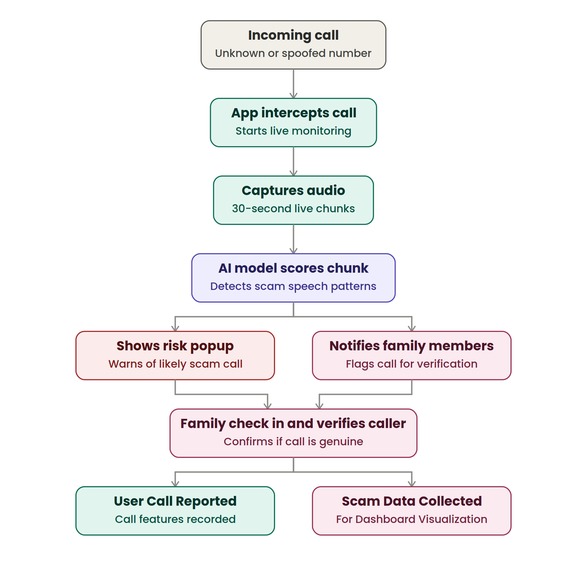
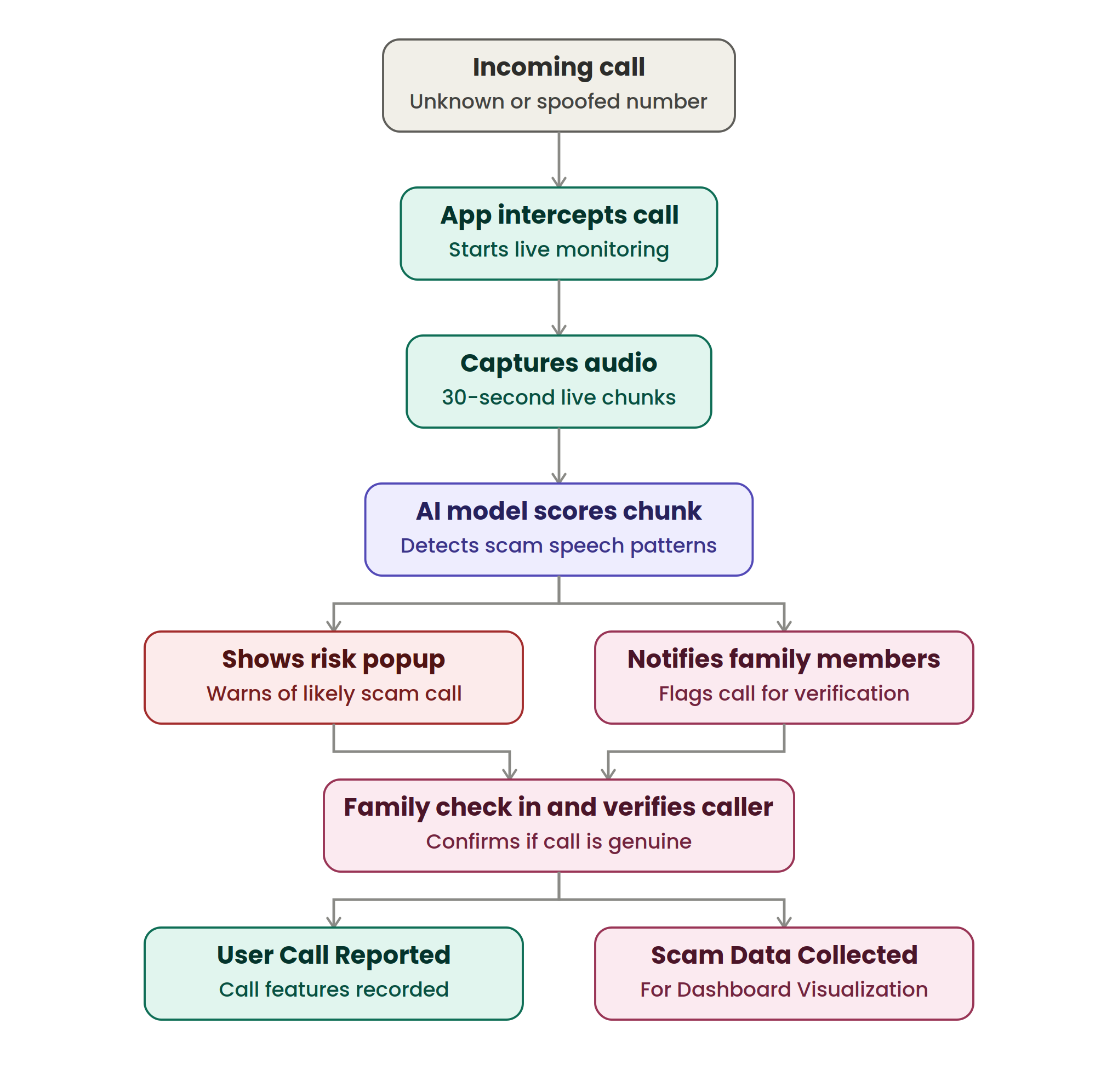
ScamShield-AI Flowchart
-
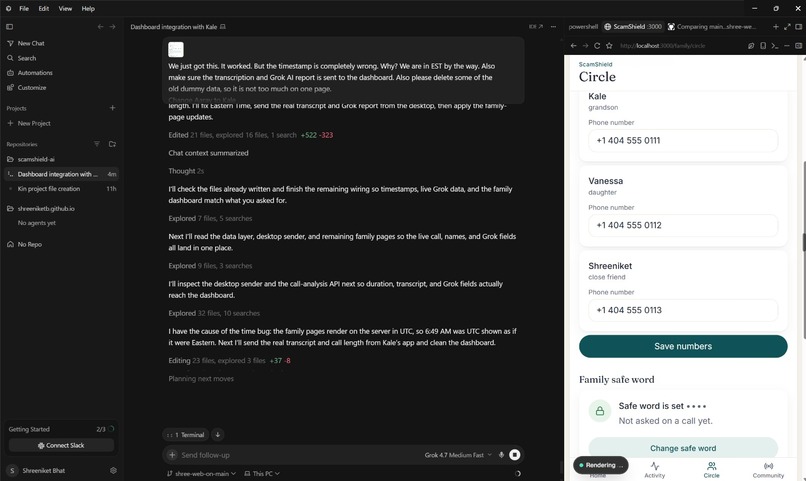
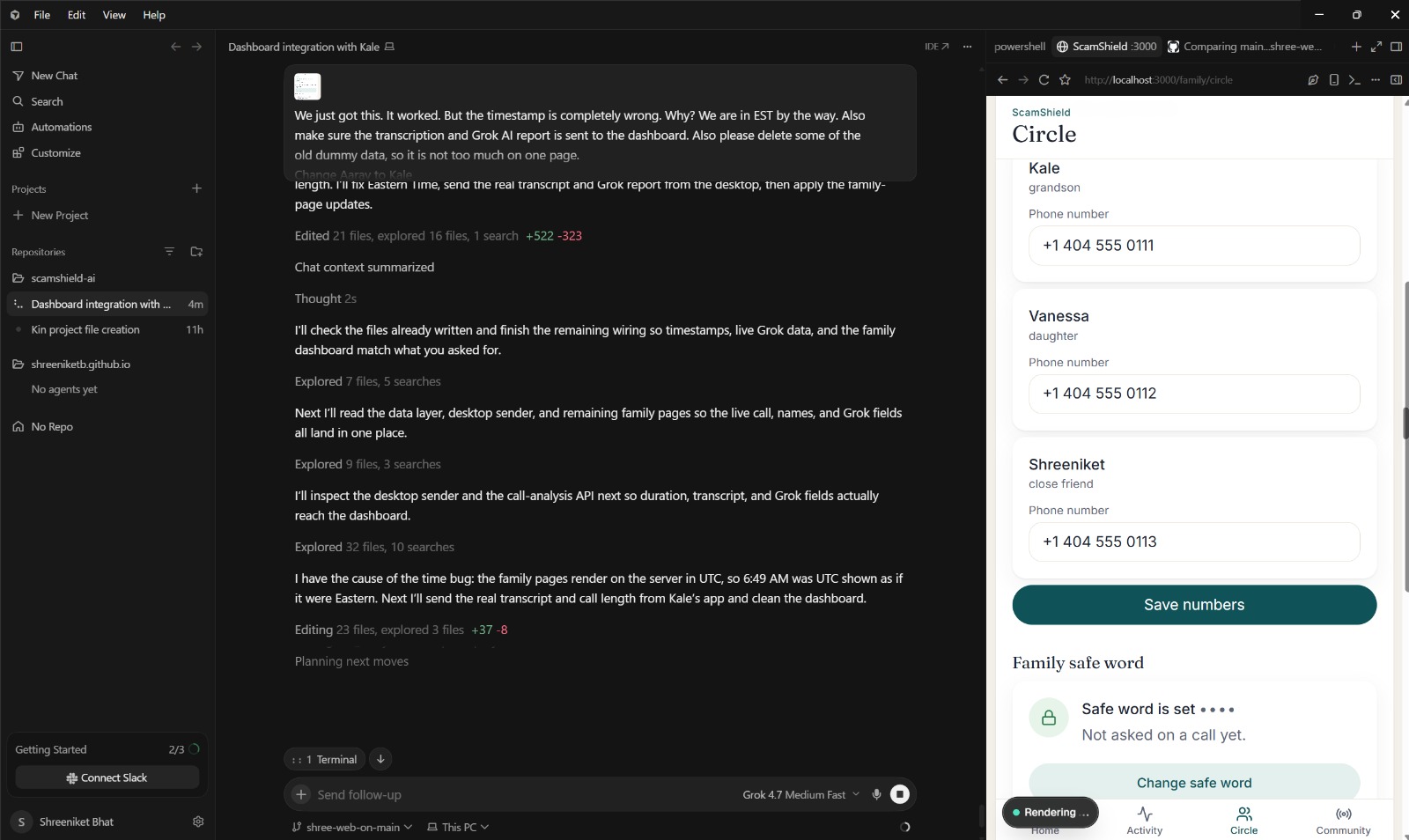
Grok Cursor for Full Stack Web and Desktop App Development
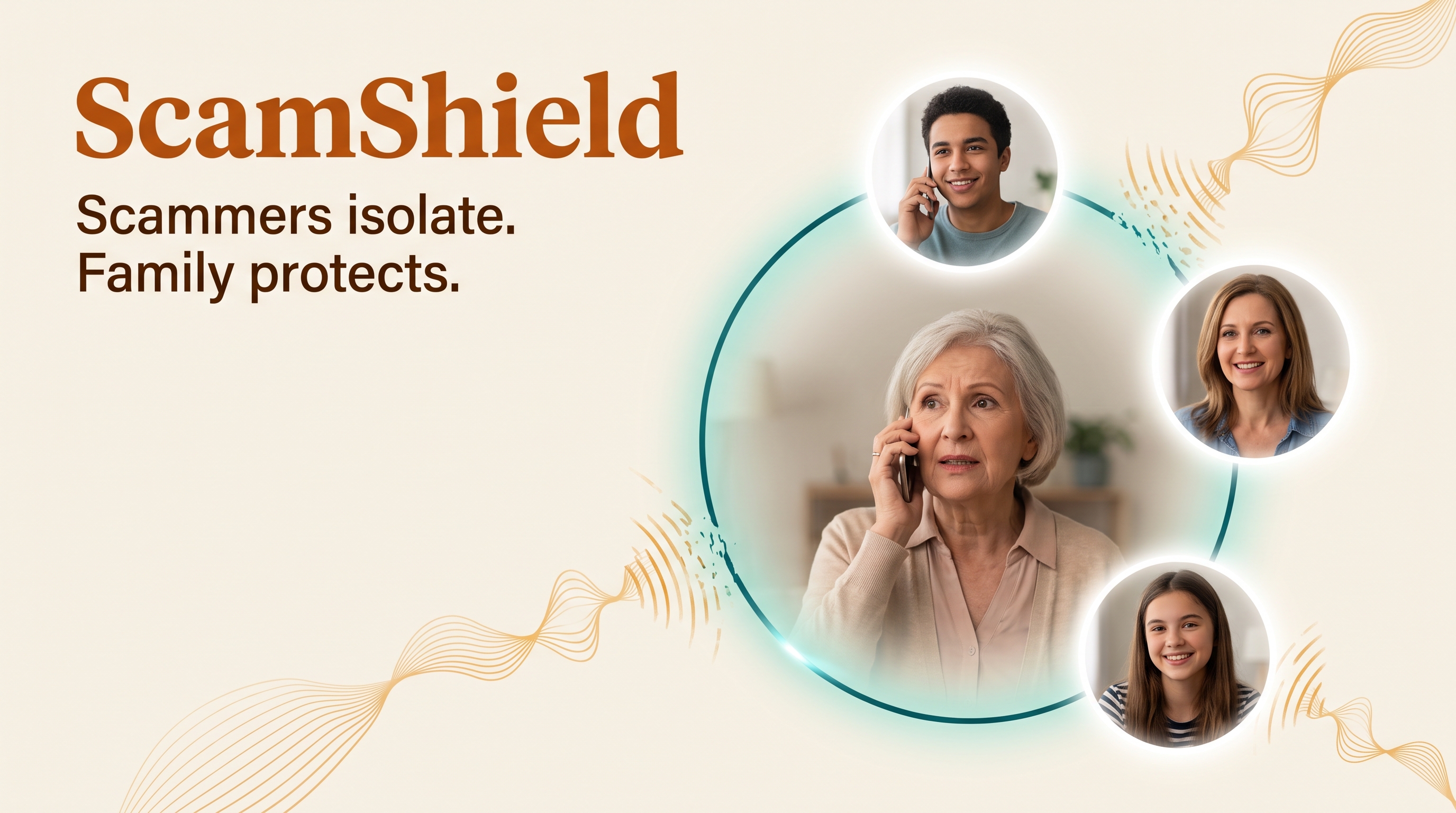
Inspiration
Scammers are increasingly using AI voice cloning and high-pressure tactics to target older adults. Traditional call-blocking apps are obsolete because bad actors constantly spoof local numbers. Once a vulnerable family member answers the phone, they are entirely alone against sophisticated coercion tactics, false urgency, and financial demands.
We realized that true security isn't just a firewall but it is a community. We built ScamShield-AI to shift the burden of protection from an isolated individual to a shared family responsibility, creating a natural touchpoint for human connection precisely when it is needed most.
What it does
ScamShield-AI monitors calls from unknown or unverified numbers, analyzes the live conversation in 20-second chunks, and scores each chunk for scam risk. If the risk crosses a threshold, it does two things at once: Shows an on-call popup warning to the person on the phone Notifies family members in parallel, with enough context to independently verify the caller. No waiting for the call to end. No relying on one person's judgment while they're under pressure.
How we built it
We used Grok to feed the temporal analysis of 20-second chunks to get information about the call used receive. Then we created AI voice detector which uses deep learning models, including graph attention mechanisms, to analyze subtle patterns in the raw speech signal. The models learn artifacts in frequency, temporal structure, and other acoustic characteristics that can distinguish synthetic speech from a real human voice. Each model produces a confidence score, and we can combine those scores to make the final AI-versus-human prediction more robust.
Challenges we ran into
Alarm fatigue: Early versions flagged legitimate urgent calls (pharmacy callbacks, etc.). Got the false-positive rate down through threshold and scoring iteration. Fast, lightweight family alerts: The verification loop only works if it's instant and low-friction, not another notification to ignore. Privacy of live audio: Processing a live call raises real consent and data-retention questions, especially for a vulnerable user group.
Accomplishments that we're proud of
A working real-time pipeline that scores a call while it's still happening, not after. A dual-alert design that treats the family, not just the individual as the safety net. Meaningfully cutting false positives without losing sensitivity to real scam patterns. Designing the whole flow to be calm and legible for an older-adult user, not alarming or jargon-heavy.
What we learned
Real-time detection beats retrospective analysis for anything time-sensitive. The most valuable output isn't always the model's score, it's getting a second, trusted set of eyes involved fast. Smoothing noisy signals over time is often more important than a single "smarter" prediction.
What's next for ScamShield-AI
On-device model inference to reduce latency and address audio-privacy concerns. Expanding the scam-pattern training set across more languages and accents. A "verified safe" contact list so calls from known trusted numbers skip scoring entirely.


Log in or sign up for Devpost to join the conversation.