-
-
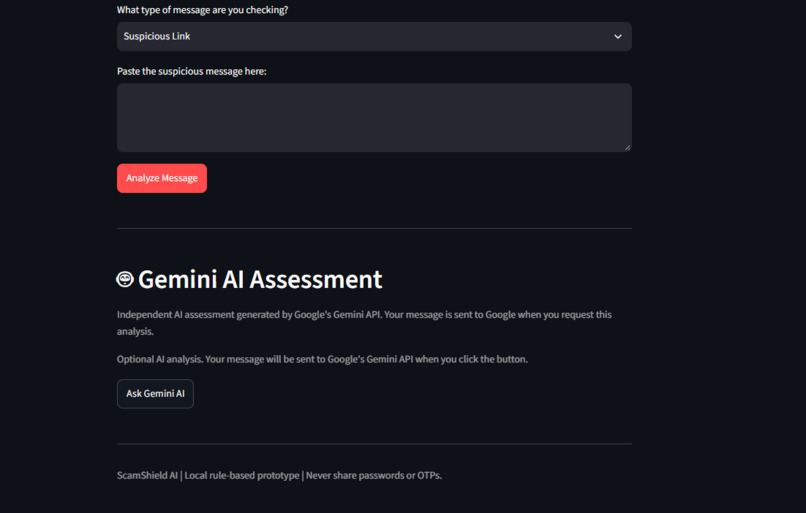
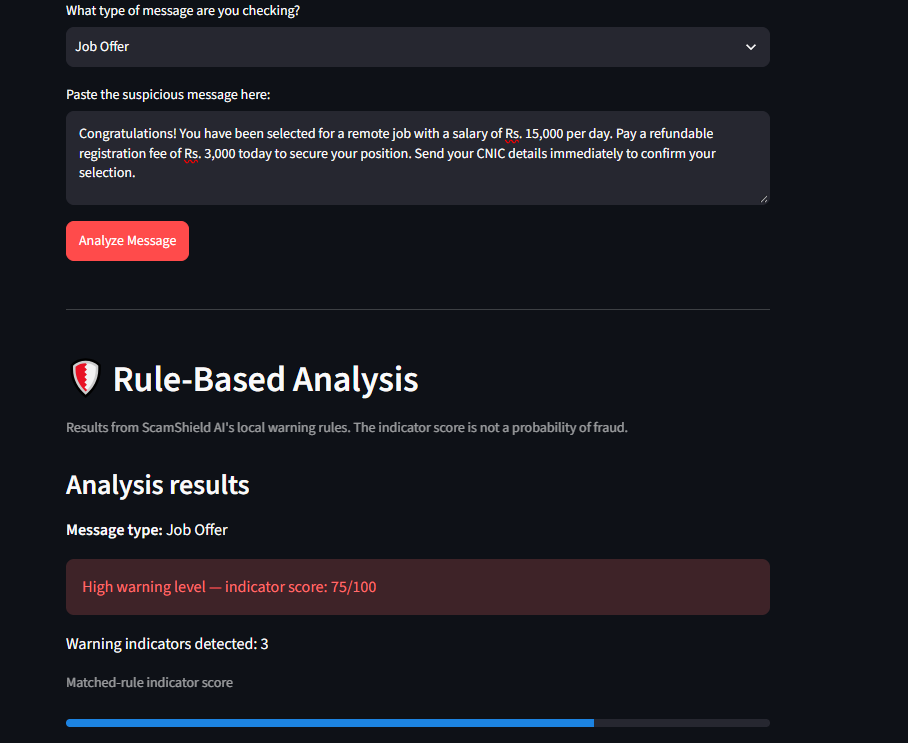
Select a message type and enter suspicious content for analysis.
-
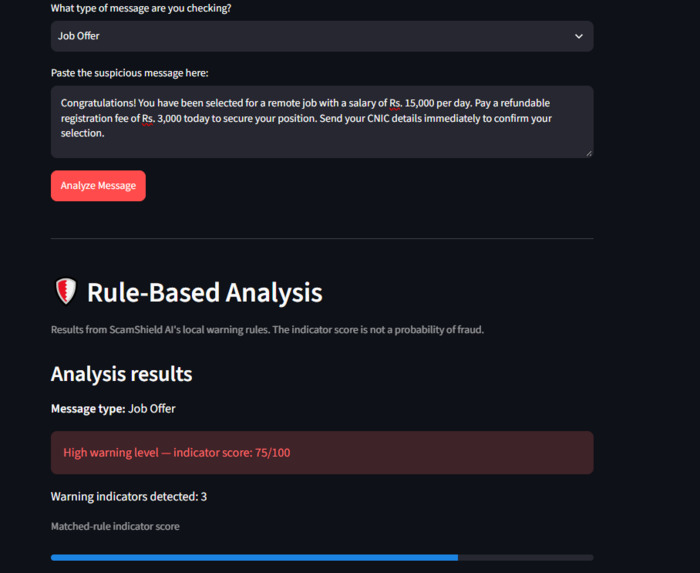
Detects scam warning signs and displays a 75/100 indicator score.
-
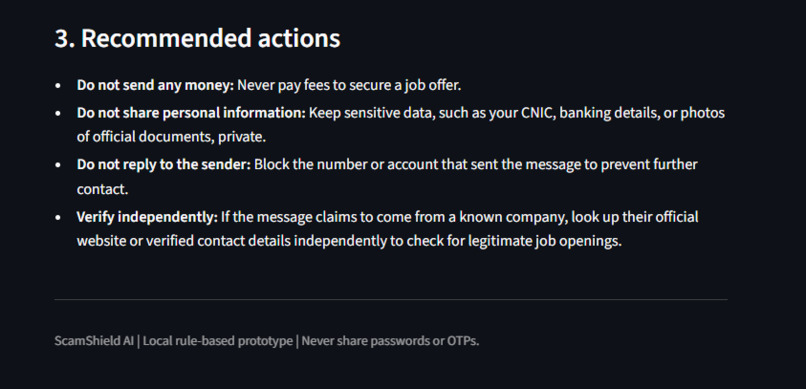
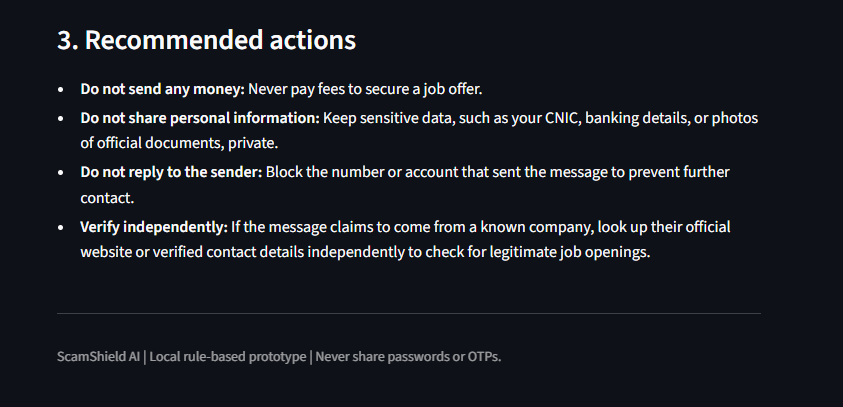
Offers steps to help users avoid scams and protect personal information.
-
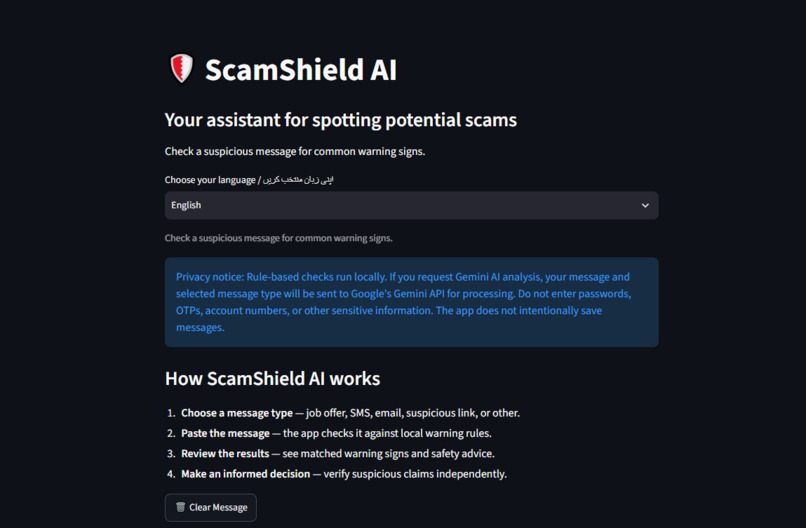
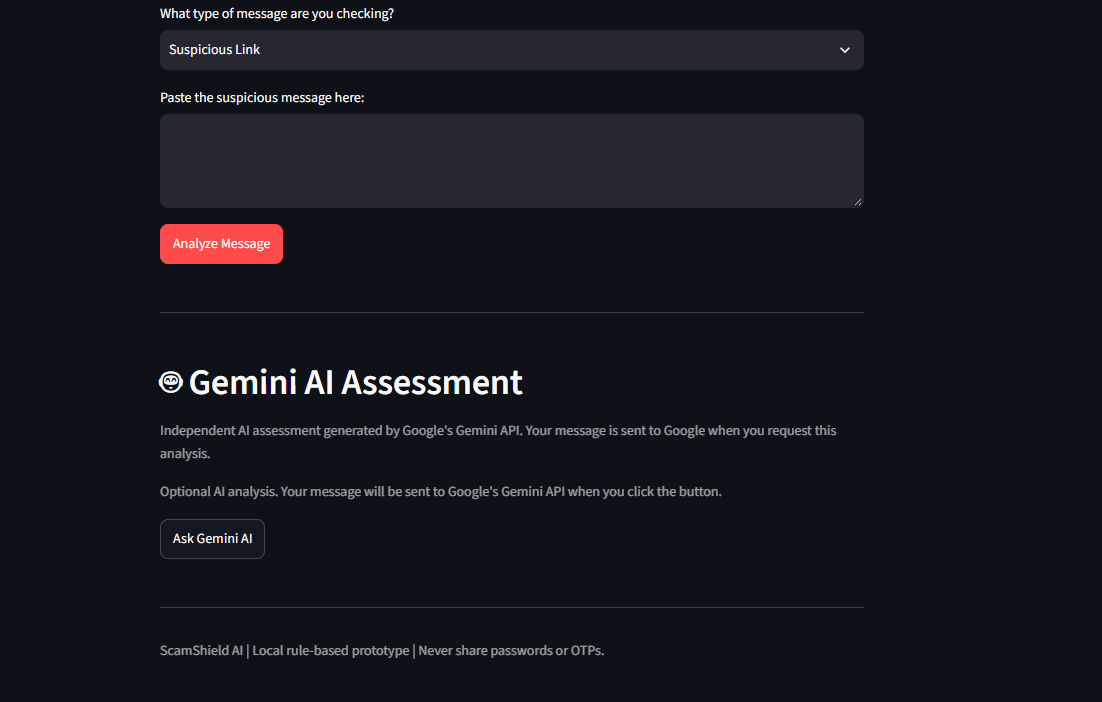
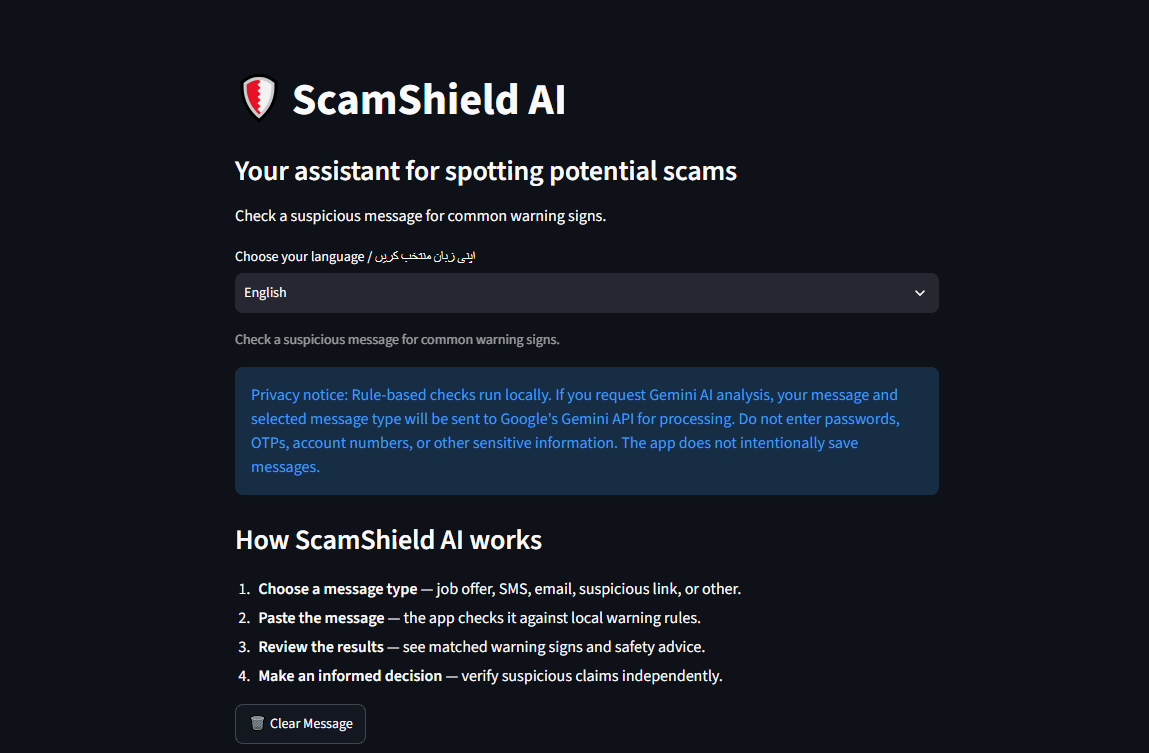
ScamShield AI interface with privacy notice and simple usage instructions.
-
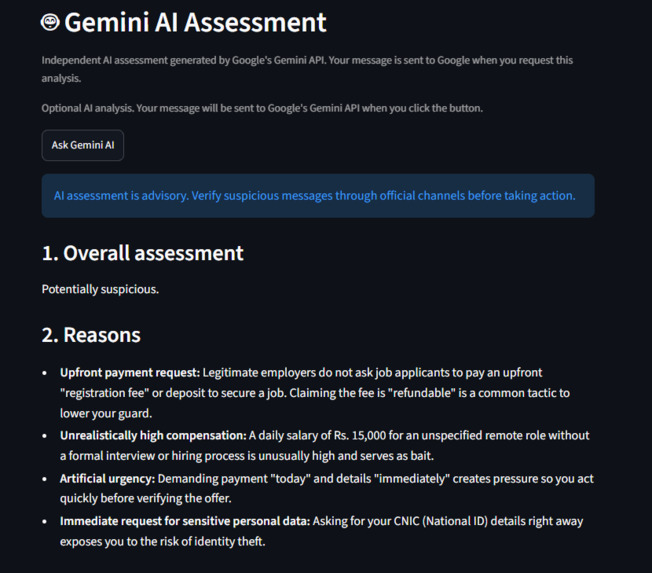
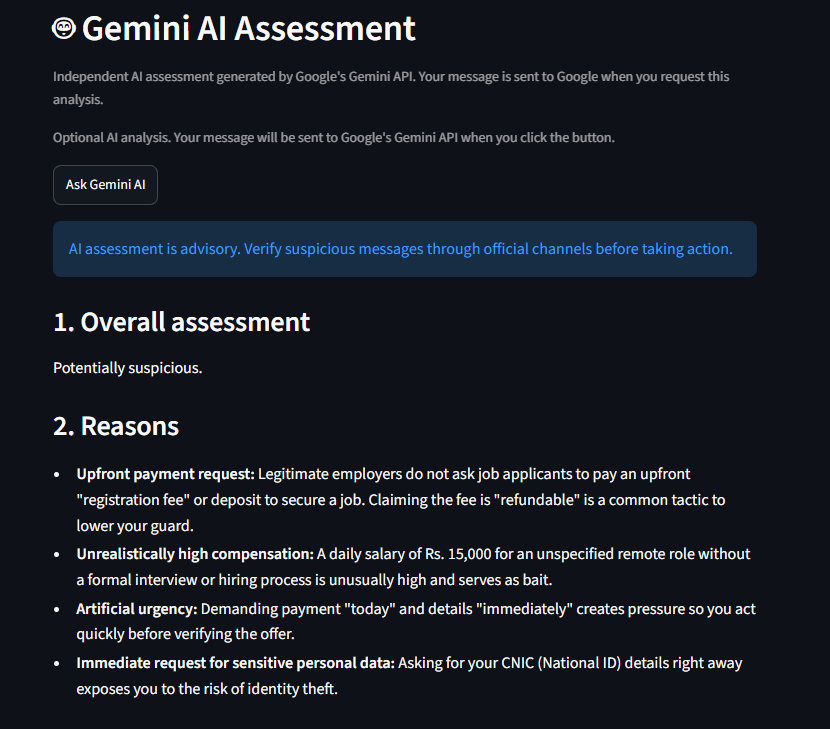
Uses Google Gemini to explain why a suspicious job offer may be risky.
-
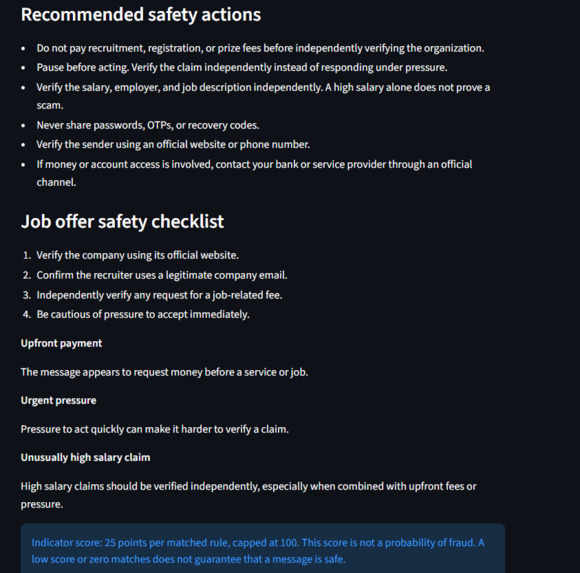
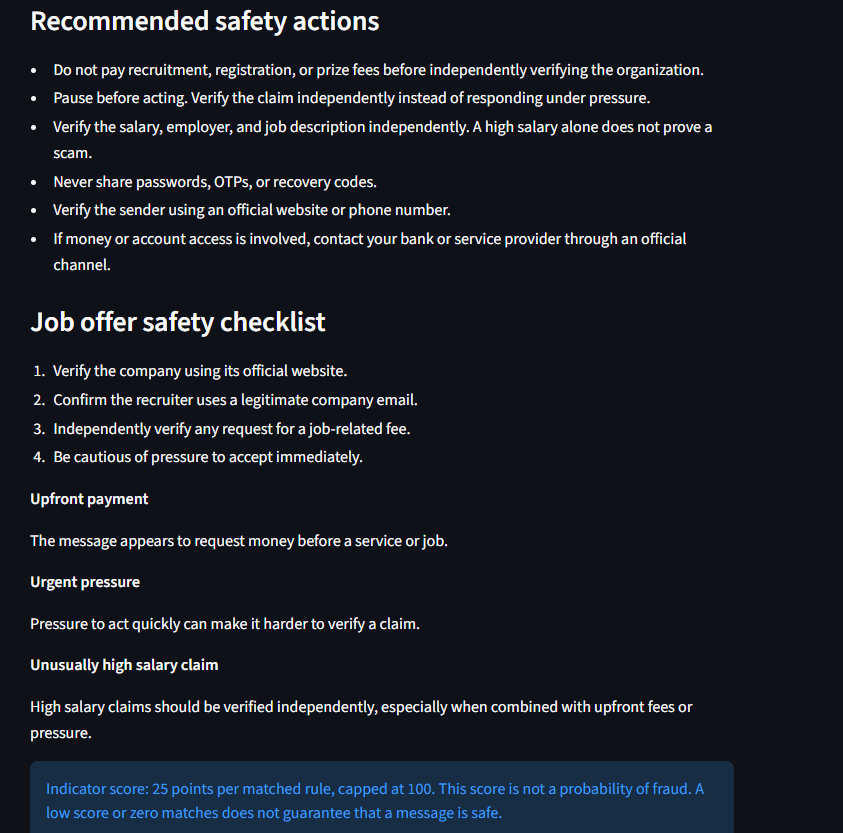
Provides practical safety advice and a job-offer verification checklist.
About ScamShield AI
Inspiration
Online scams are becoming increasingly difficult to recognize. Suspicious job offers, fake rewards, urgent requests for money, and messages asking for sensitive information can put people at risk. I wanted to build a simple tool that helps users identify common scam warning signs and make safer decisions.
What It Does
ScamShield AI is a web application that analyzes suspicious messages and provides warning indicators, an indicator score, and practical safety recommendations. It combines rule-based detection with optional Google Gemini AI analysis to provide additional context and explain why a message may be suspicious.
How I Built It
I built ScamShield AI using Python and Streamlit. The rule-based system checks messages for common warning signs, such as requests for upfront payments, urgent language, requests for passwords or OTPs, suspicious links, and unrealistic salary claims.
I also integrated the Google Gemini API to provide an optional AI assessment. Users can select a message category, enter a message, review the matched rules, and request additional AI-powered analysis.
Challenges I Faced
One challenge was integrating the AI API with the application and configuring the API key securely. I also worked on making the interface easy to use, presenting the results clearly, and deploying the application so people can access it online. Another important challenge was communicating the results responsibly without suggesting that any detection method can identify every scam.
What I Learned
Through this project, I gained practical experience with Python, Streamlit, rule-based detection, API integration, environment secrets, debugging, and web application deployment. I also learned the importance of privacy, responsible AI, and explaining the limitations of automated analysis.
What's Next
I plan to improve ScamShield AI by expanding its detection rules, testing it with more message examples, improving its user experience, and exploring additional ways to help people recognize online scams.
Important:ScamShield AI is an educational safety-support tool. Its results are advisory and cannot guarantee that a message is safe or fraudulent. Users should verify suspicious communications through official channels.


Log in or sign up for Devpost to join the conversation.