-
-
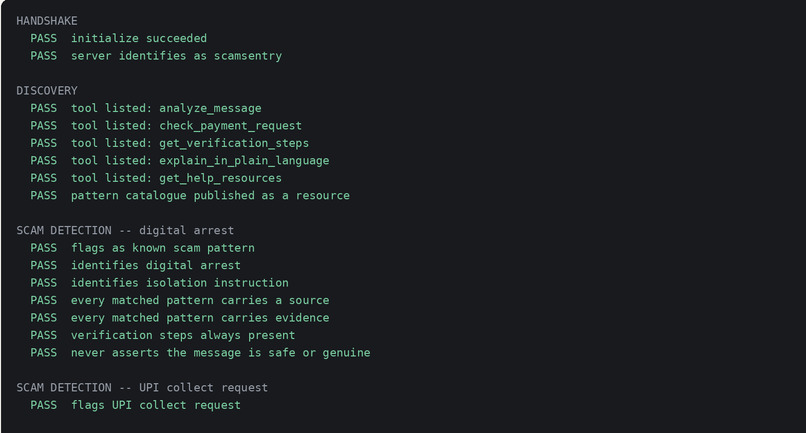
Output Screen
-
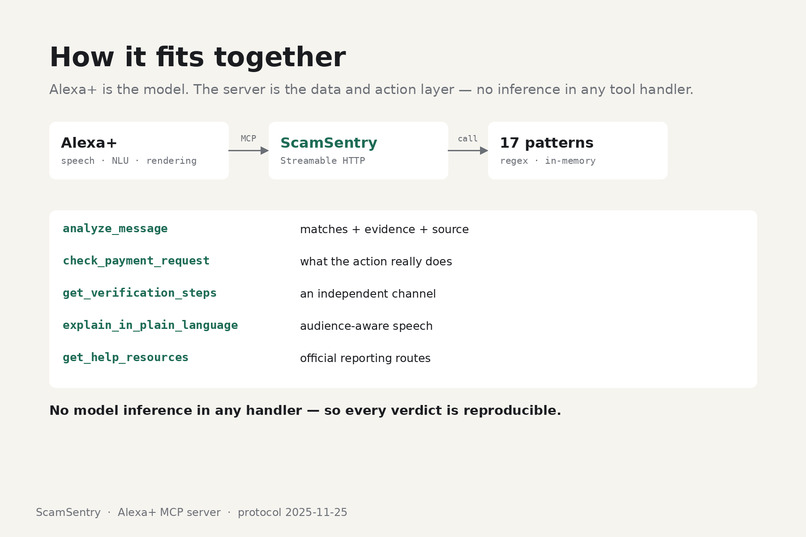
Architecture
-
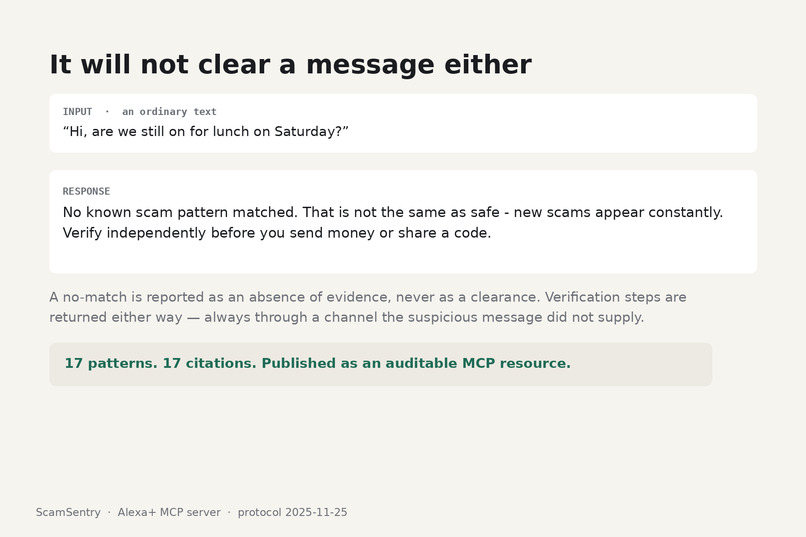
No-Match
-
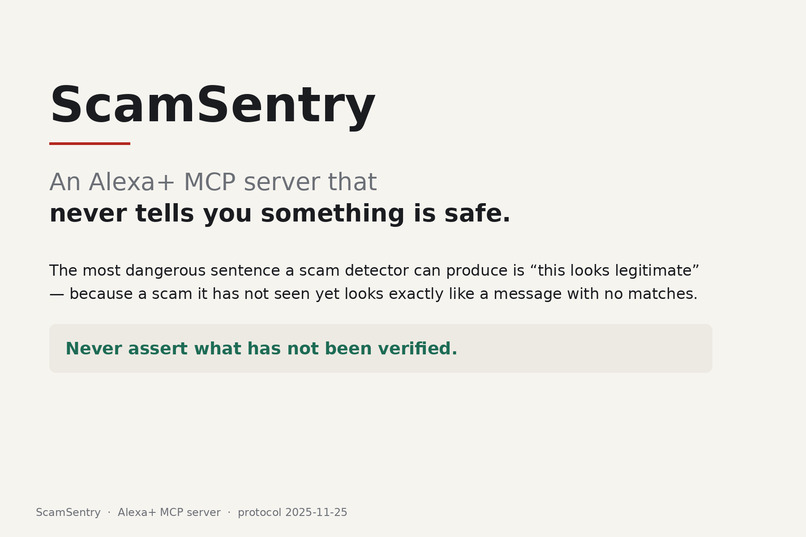
Intro
-
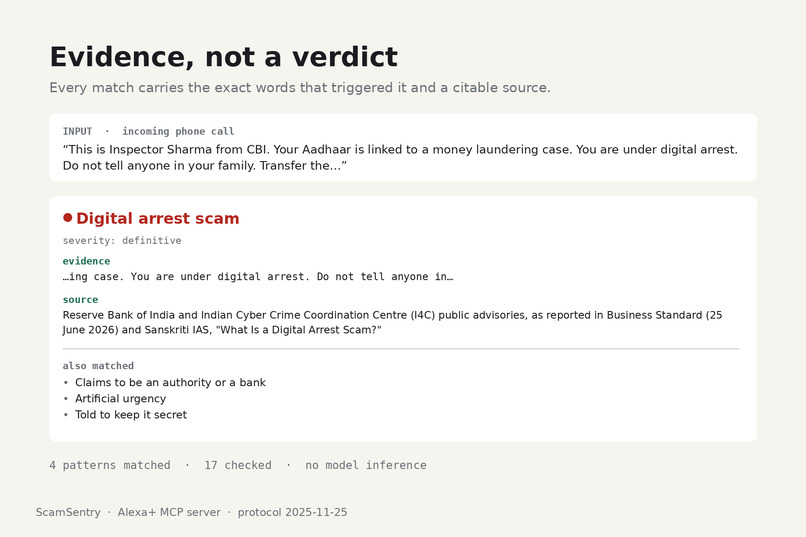
Evidence
-
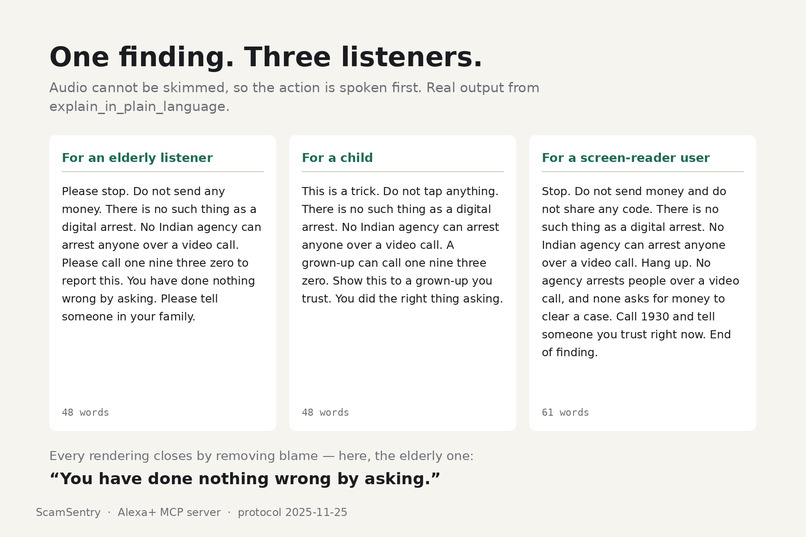
Listener
-
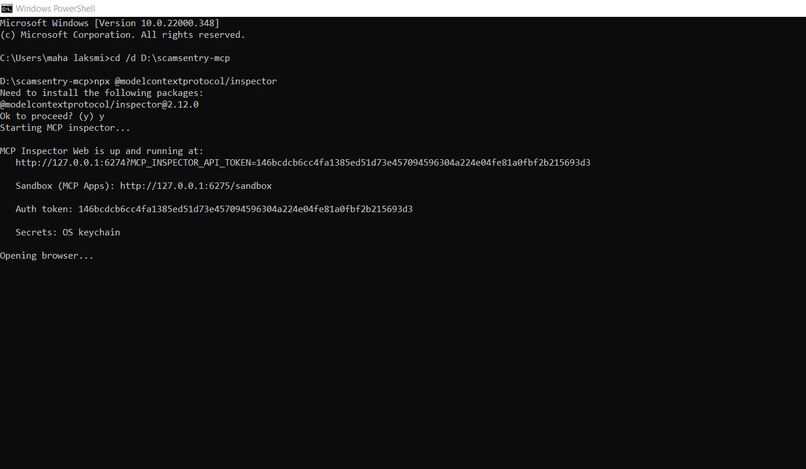
Command Prompt - 1
-
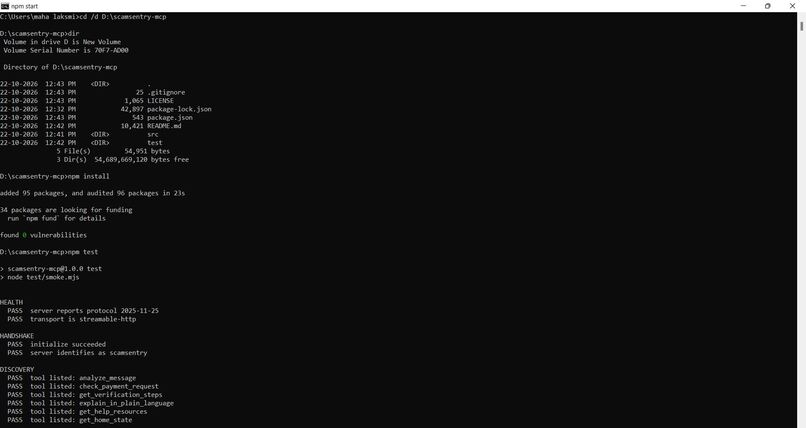
Command Prompt - 2
-
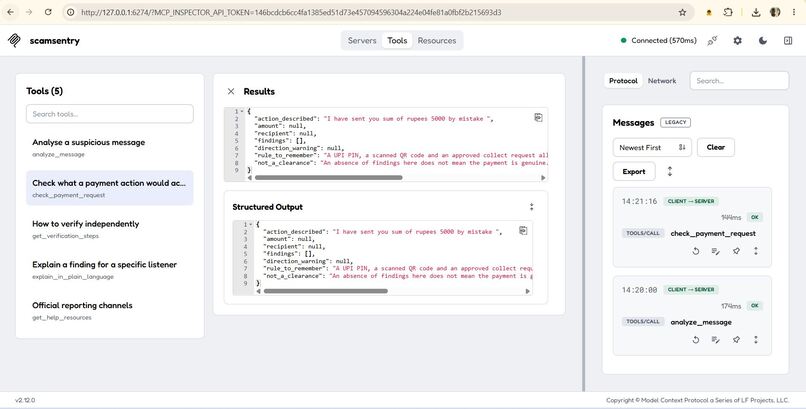
Output - Tools
Inspiration
ScamSentry was inspired by the growing threat of phishing messages, online scams, and fraudulent payment requests. We wanted to make scam detection more accessible through a conversational AI assistant that helps people stay safe online.
What it does
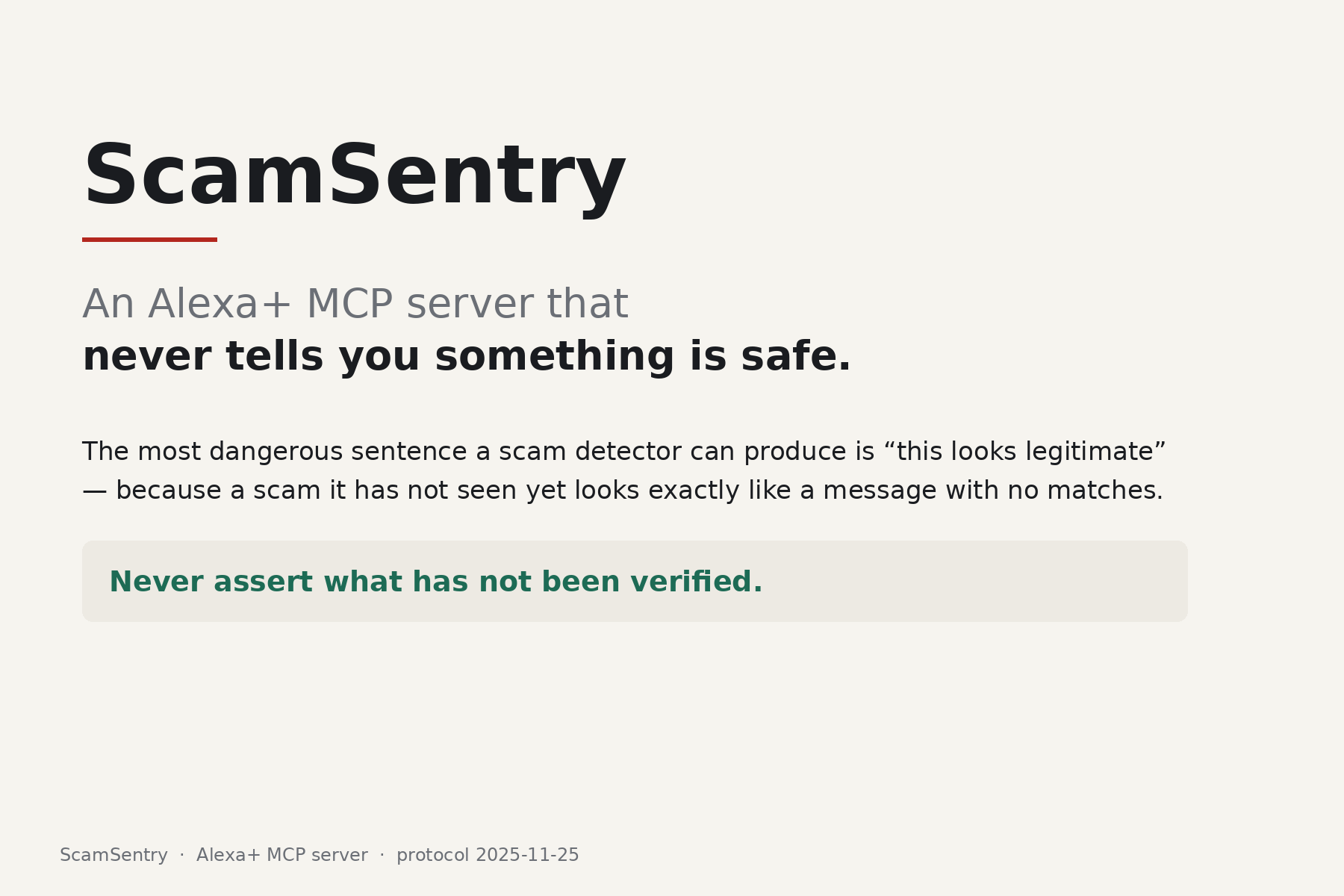
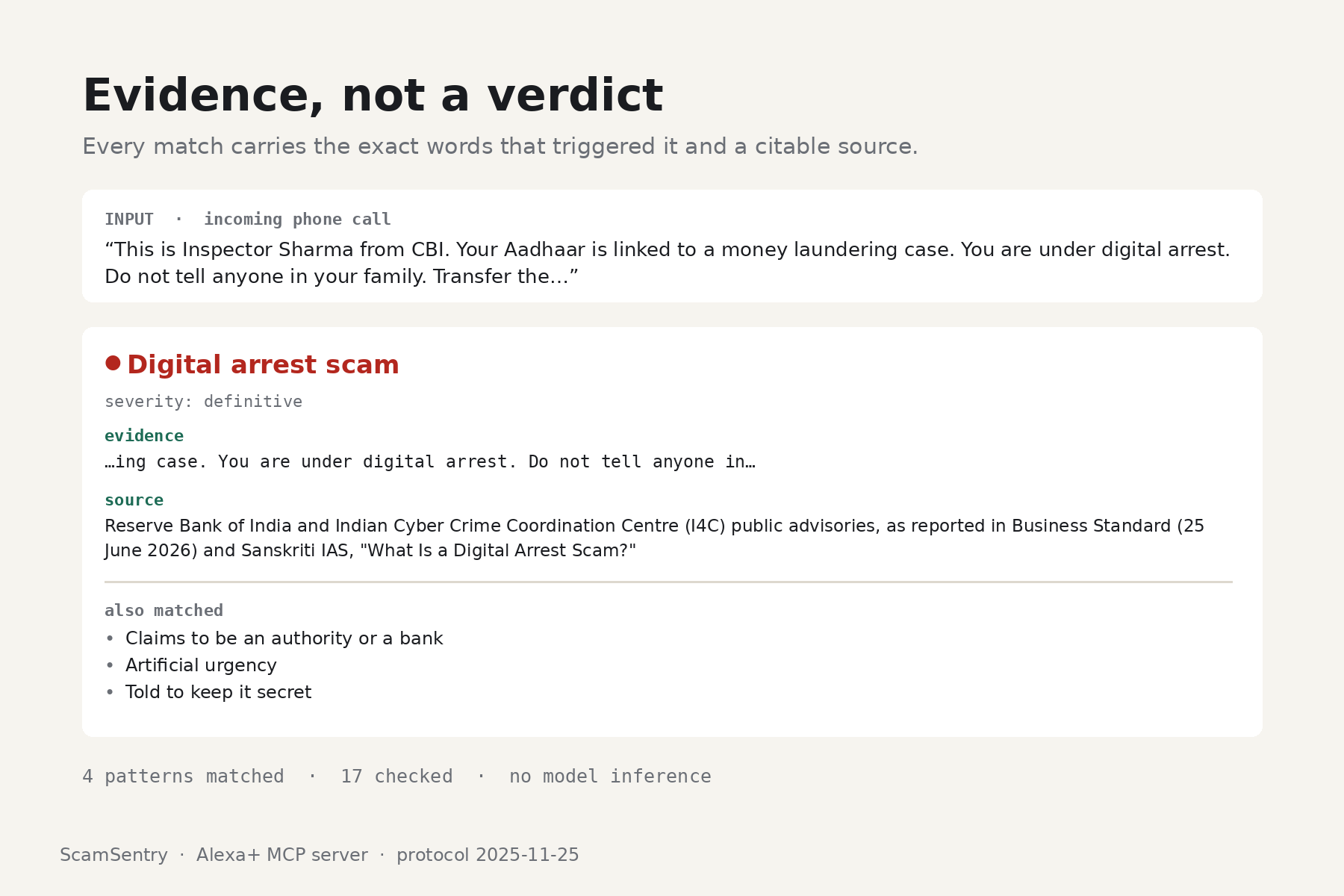
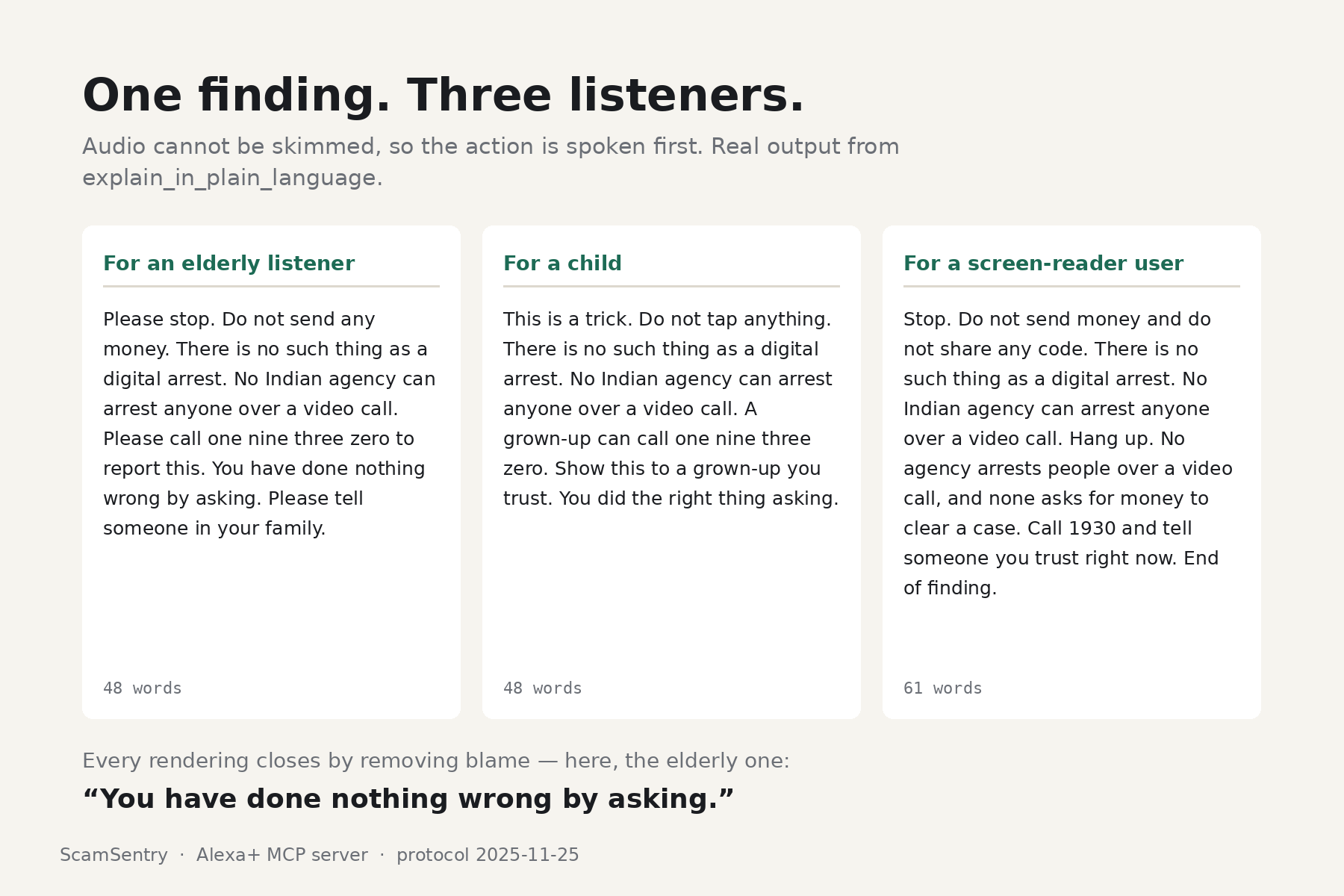
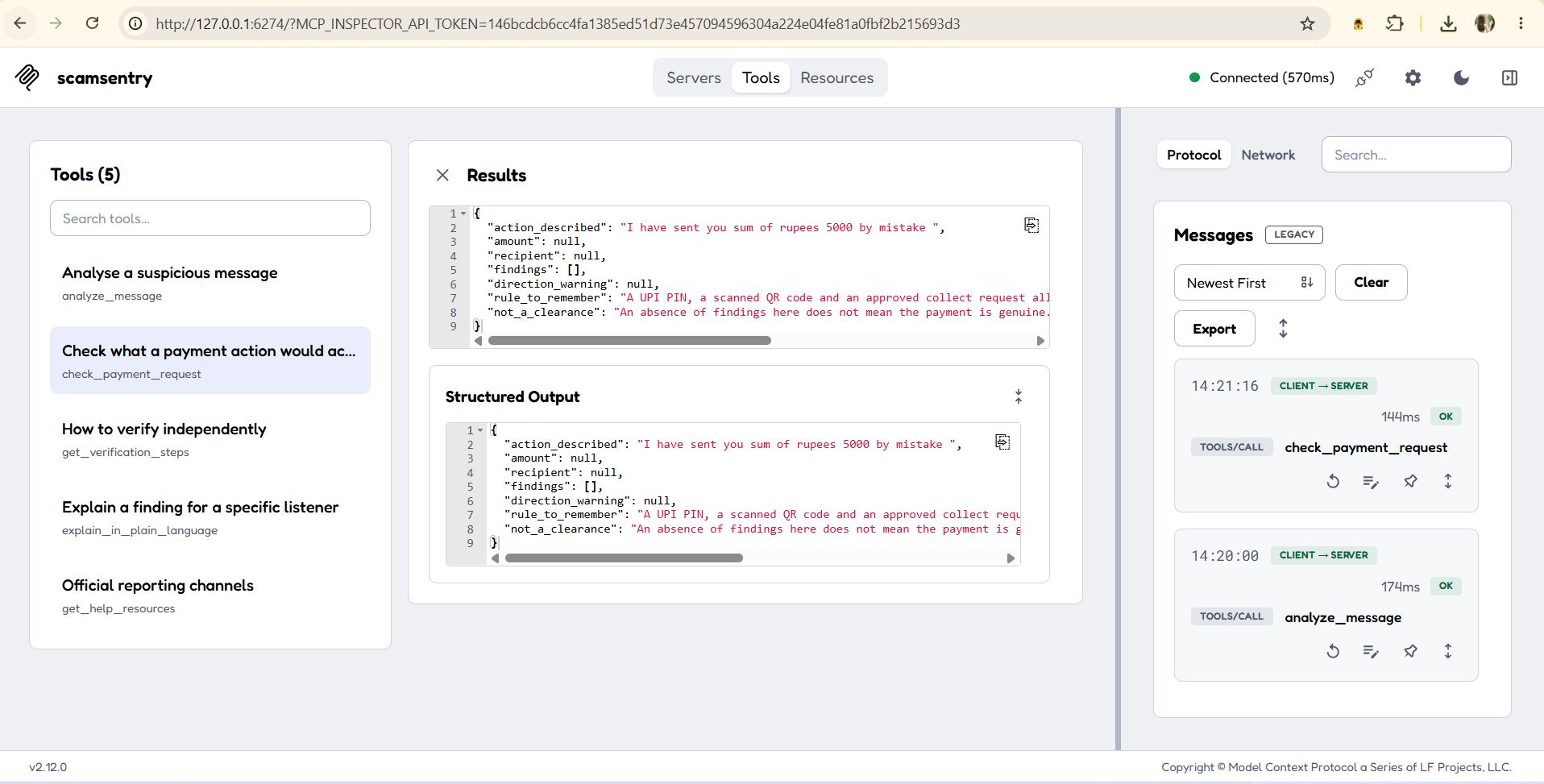
ScamSentry analyzes suspicious messages and URLs, identifies potential scam indicators, and explains the risks in simple language. It guides users toward safe verification steps instead of relying only on a scam score.
How we built it
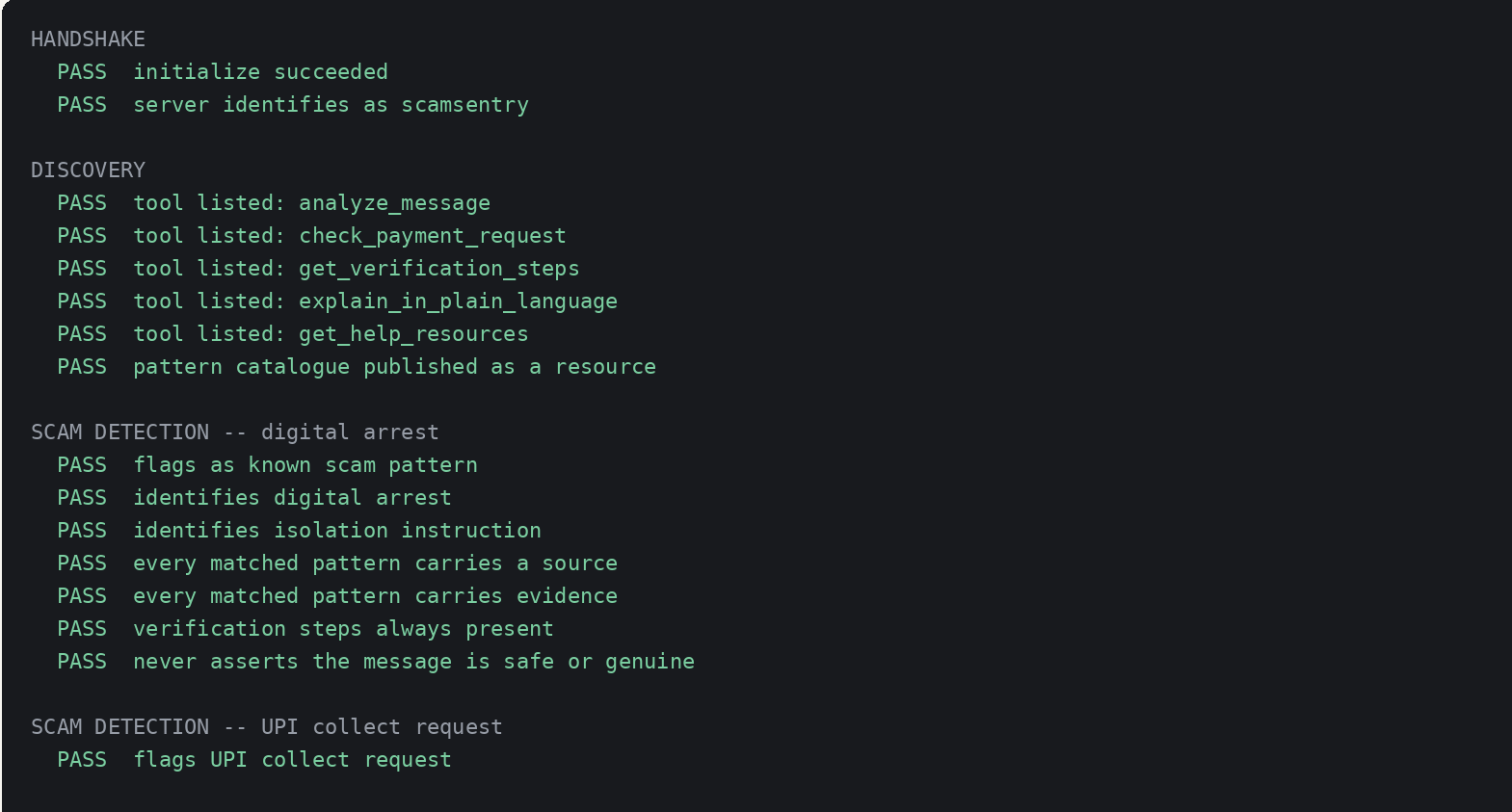
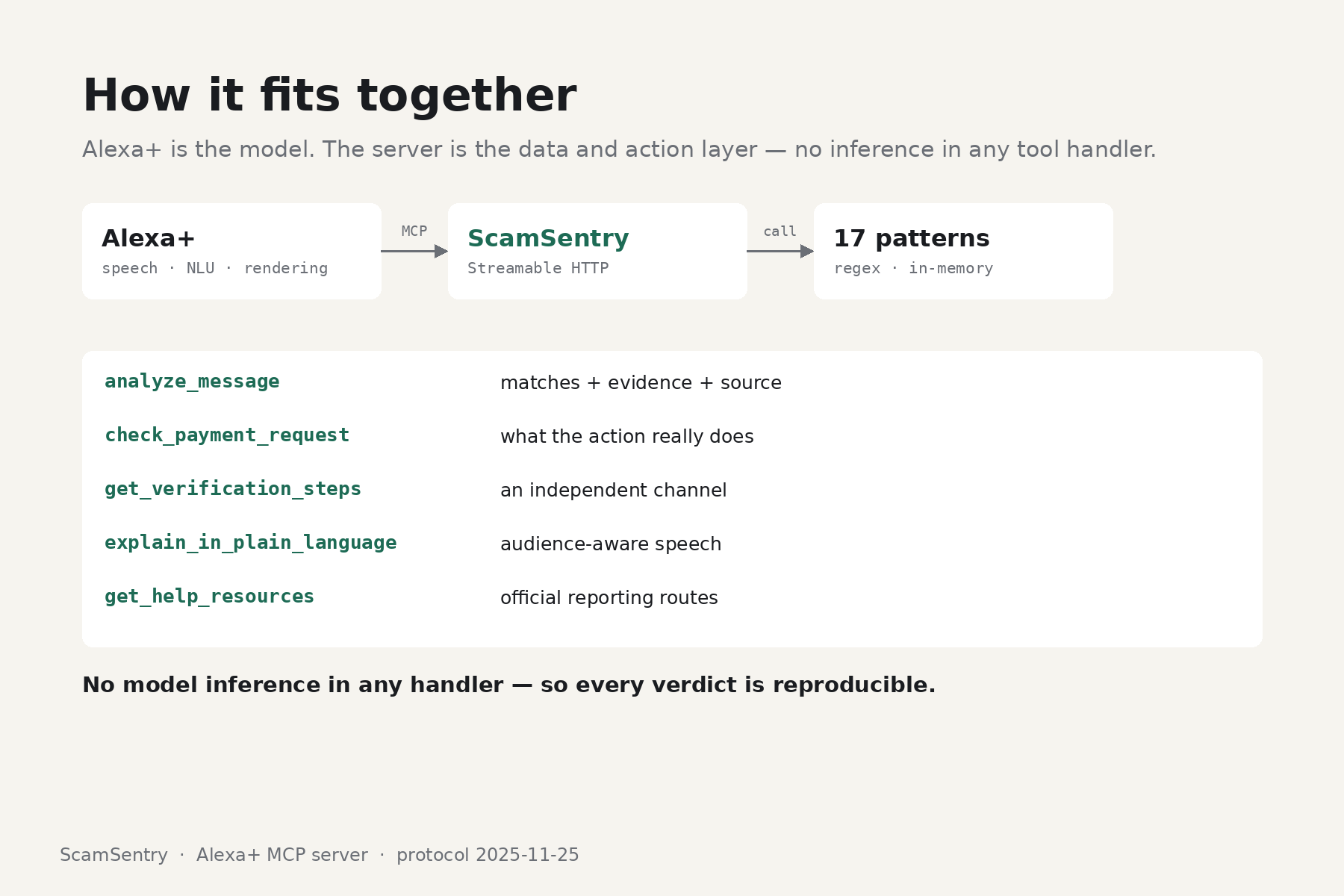
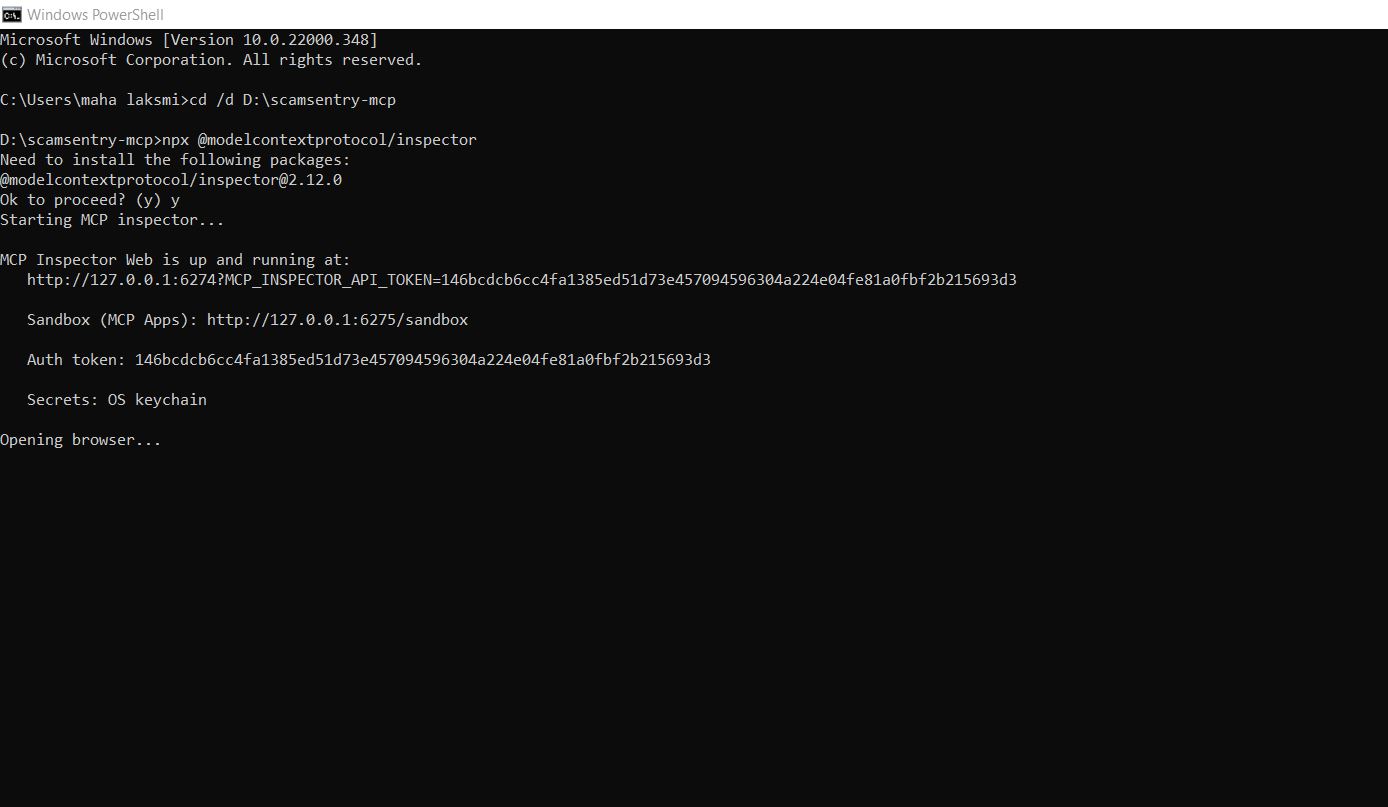
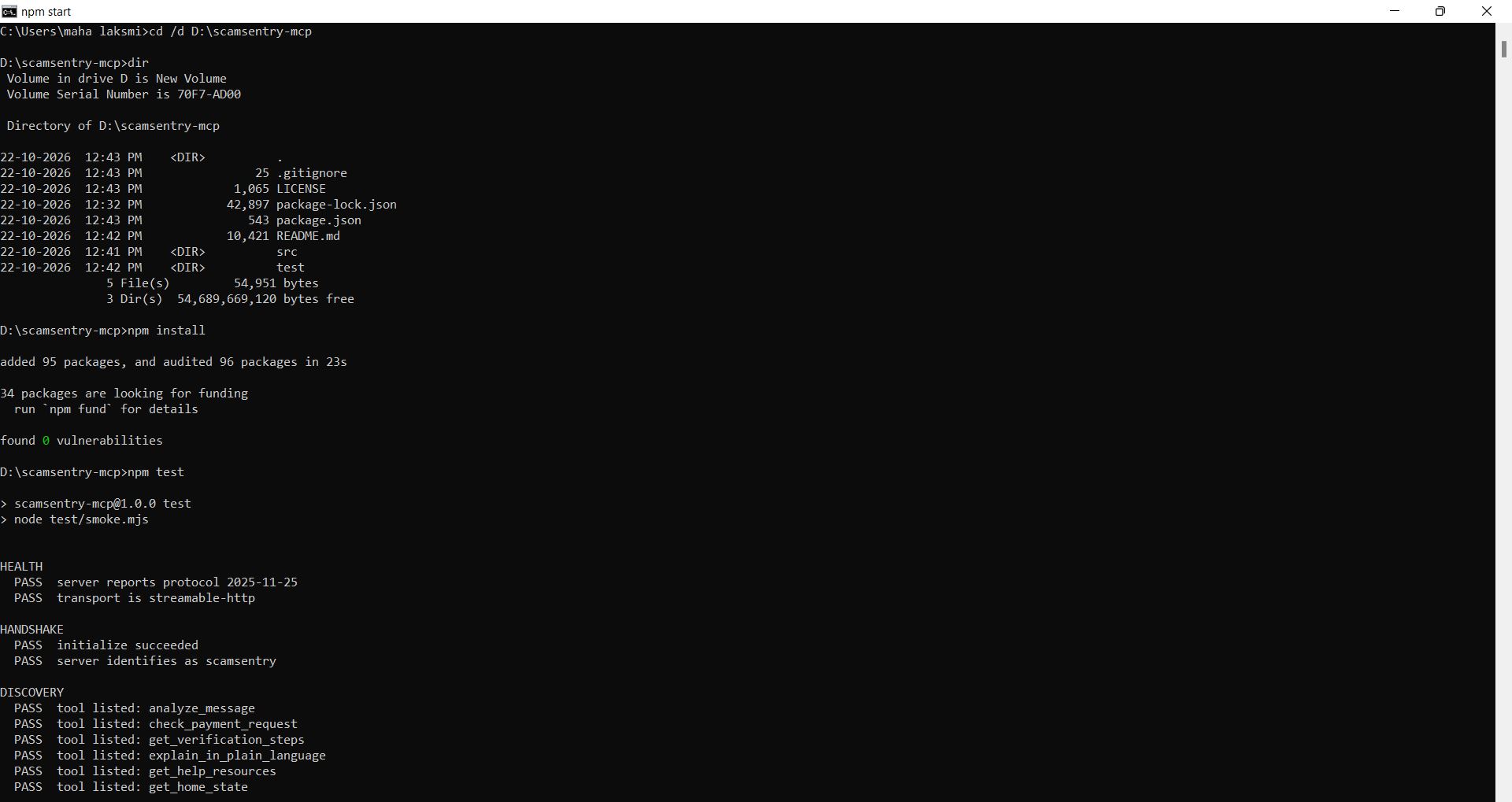
We designed ScamSentry using AI-powered message analysis, URL reputation checks, and trusted cybersecurity resources. The proposed Alexa+ integration uses an MCP server to connect conversational requests with specialized security tools.
Challenges we ran into
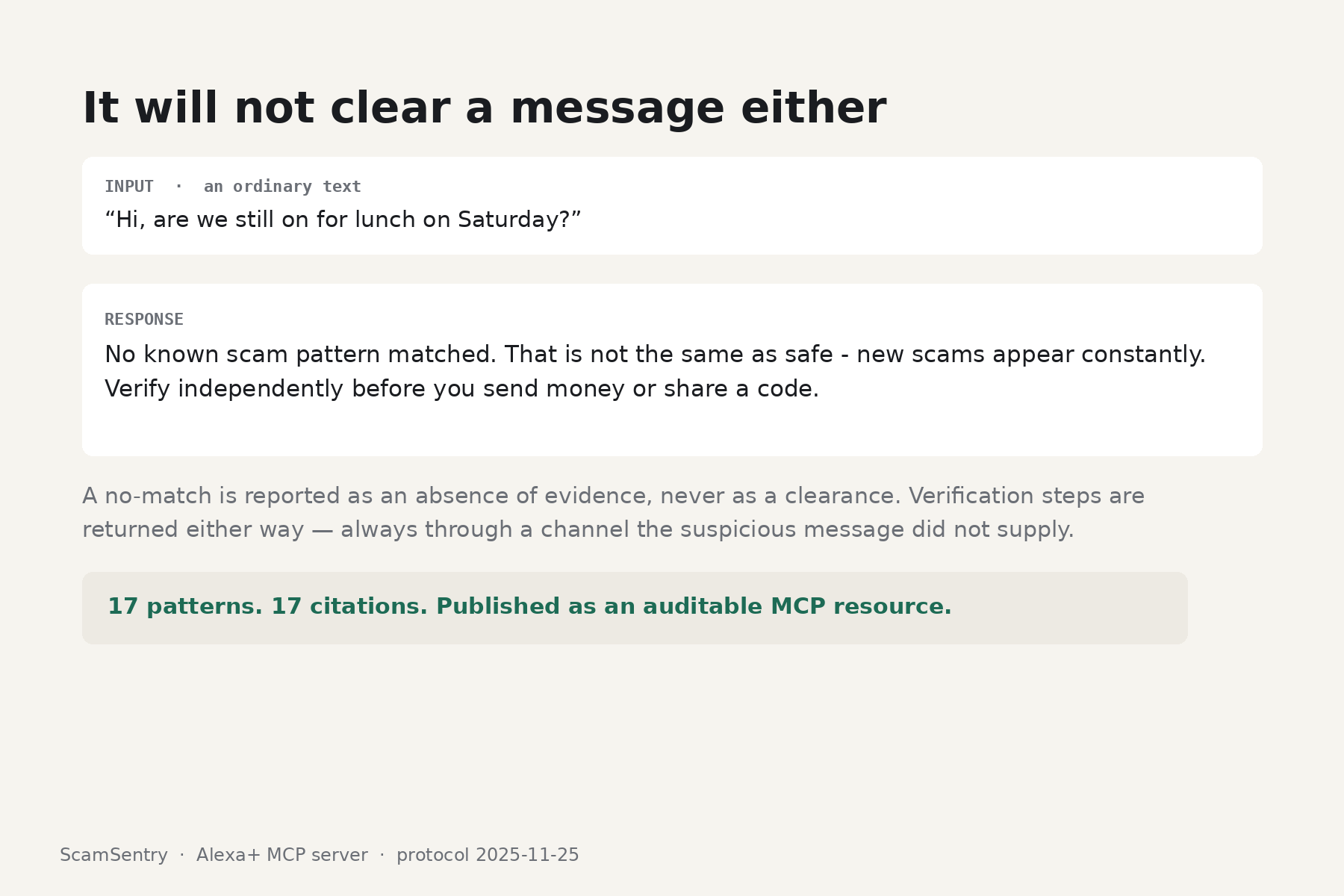
Combining AI-generated explanations with reliable evidence while minimizing false positives was a key challenge. We also focused on handling malicious inputs safely and distinguishing confirmed threats from uncertain findings.
Accomplishments that we're proud of
We developed a concept that combines conversational AI with practical cybersecurity guidance. Our goal is to make scam warnings understandable, actionable, and accessible to people with different levels of technical knowledge.
What we learned
We learned that effective AI security requires more than classification: it needs reliable evidence, transparent explanations, secure tool integration, and responsible handling of uncertainty.
What's next for ScamSentry
We plan to strengthen the Alexa+ MCP integration, expand scam detection to multilingual messages, improve evaluation using real-world datasets, and add guided reporting workflows for users affected by online fraud.
Built With
- accessibility
- alexa
- amazon-alexa
- express.js
- javascript
- json-rpc
- mcp
- model-context-protocol
- node.js
- streamable-http
- voice-ui
- zod

Log in or sign up for Devpost to join the conversation.