Inspiration
ScamSentinel was inspired by how common and difficult online scams have become. I noticed that many people regularly encounter suspicious emails, messages, or links but are unsure how to judge whether they are safe. Scams often succeed not because users are careless, but because attackers use psychological pressure such as urgency, fear, or impersonation. I wanted to build a tool that helps users recognize these tactics in the moment and learn how to respond more safely.
What it does
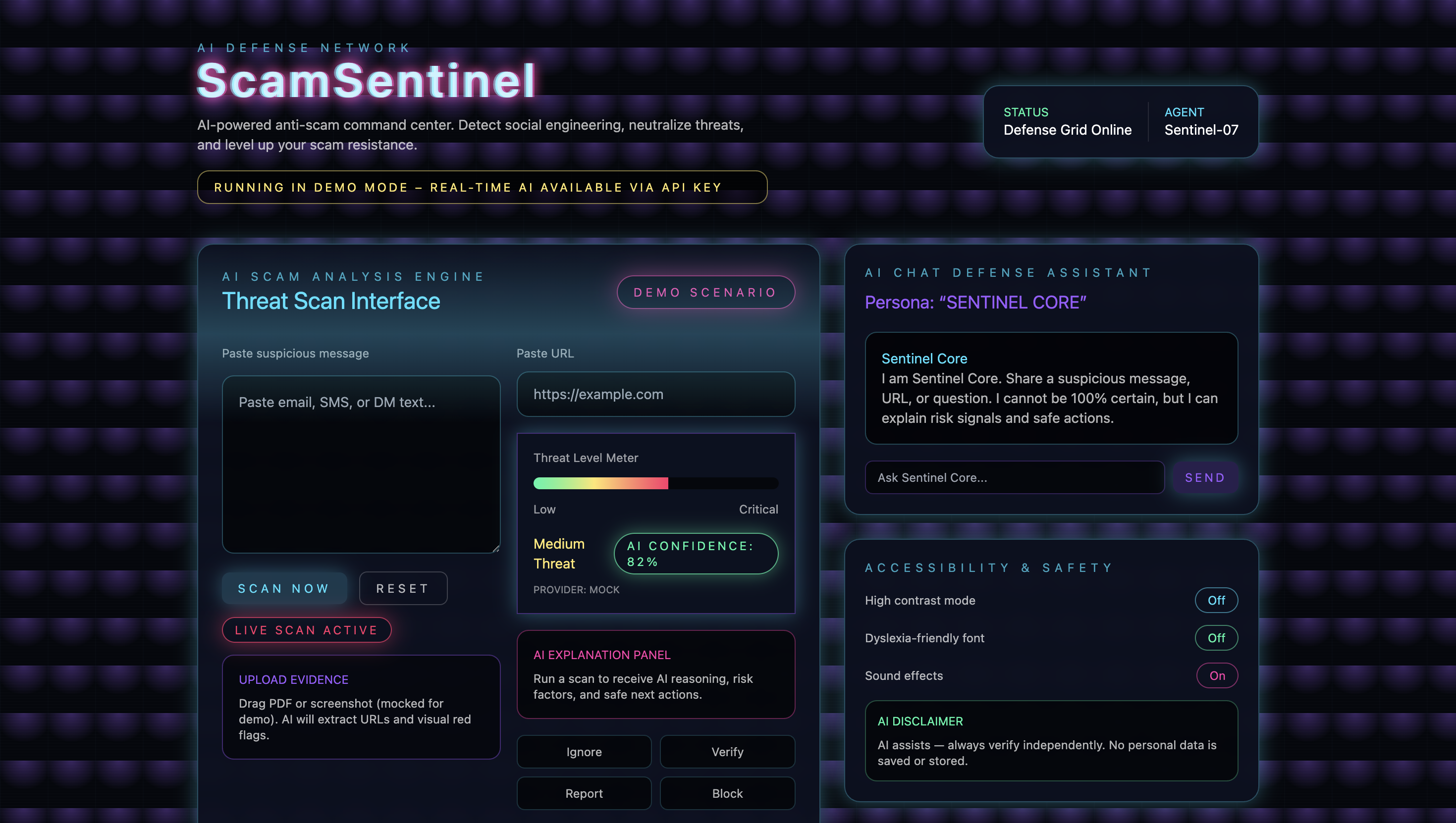
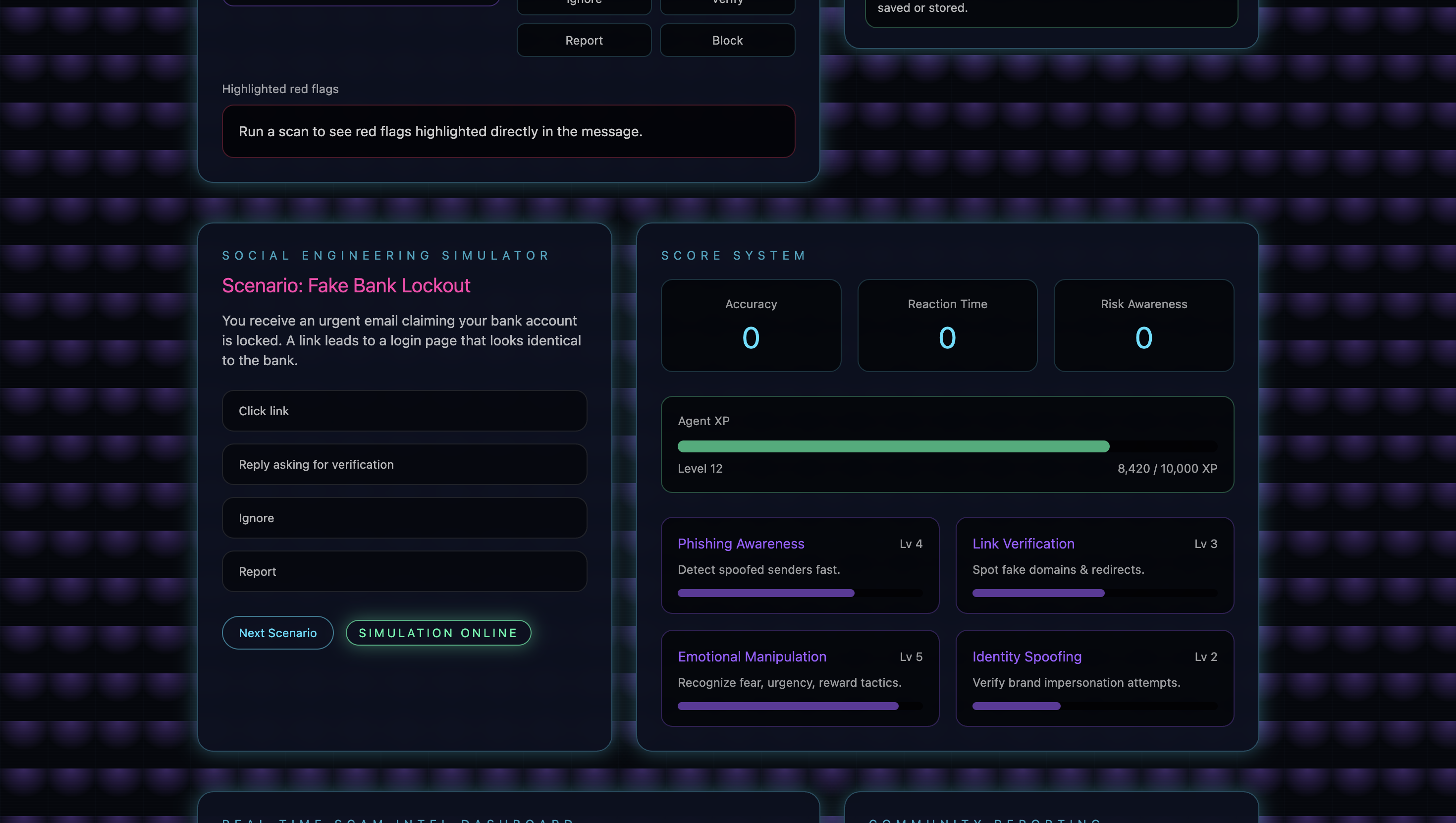
ScamSentinel is an interactive web platform that helps users identify and understand online scams and social engineering attacks. Users can paste suspicious messages or links to receive a risk assessment, highlighted red flags, and clear guidance on safer next steps. The platform also includes a simulation mode where users can practice spotting scams in realistic scenarios and receive immediate feedback. Over time, ScamSentinel helps users build awareness and confidence rather than relying on simple warnings.
How I built it
I built ScamSentinel as a web-based application using React and Next.js, with Tailwind CSS for styling and a cyberpunk-inspired design. I used Cursor AI as a development assistant to rapidly prototype features and iterate on the user experience. The scam analysis logic focuses on identifying common social engineering patterns such as urgency, impersonation, and requests for sensitive information. For the hackathon, the project runs in a safe demo mode that simulates AI analysis while keeping the architecture ready for real-time AI integration.
Challenges I ran into
One of the main challenges was balancing realism with responsibility. I wanted ScamSentinel to feel intelligent and helpful without presenting AI results as absolute truth. Working solo also meant managing design, logic, and user experience within a limited timeframe. Ensuring the project was stable, understandable, and ethically designed for a live demo required careful prioritization.
Accomplishments that I'm proud of
I’m proud of building a complete, polished project as a solo developer that goes beyond simple scam detection and focuses on user education. The interactive simulation mode, clear explanations, and thoughtful design make ScamSentinel accessible to non-technical users. I’m also proud of implementing a privacy-conscious demo architecture that demonstrates how real-world AI systems can be built responsibly.
What I learned
Building ScamSentinel taught me that cybersecurity is as much about human behavior as it is about technology. I learned the importance of transparency, user trust, and ethical AI design, especially when creating tools that influence user decisions. I also gained valuable experience designing and delivering a full product independently under tight hackathon constraints.
What's next for ScamSentinel
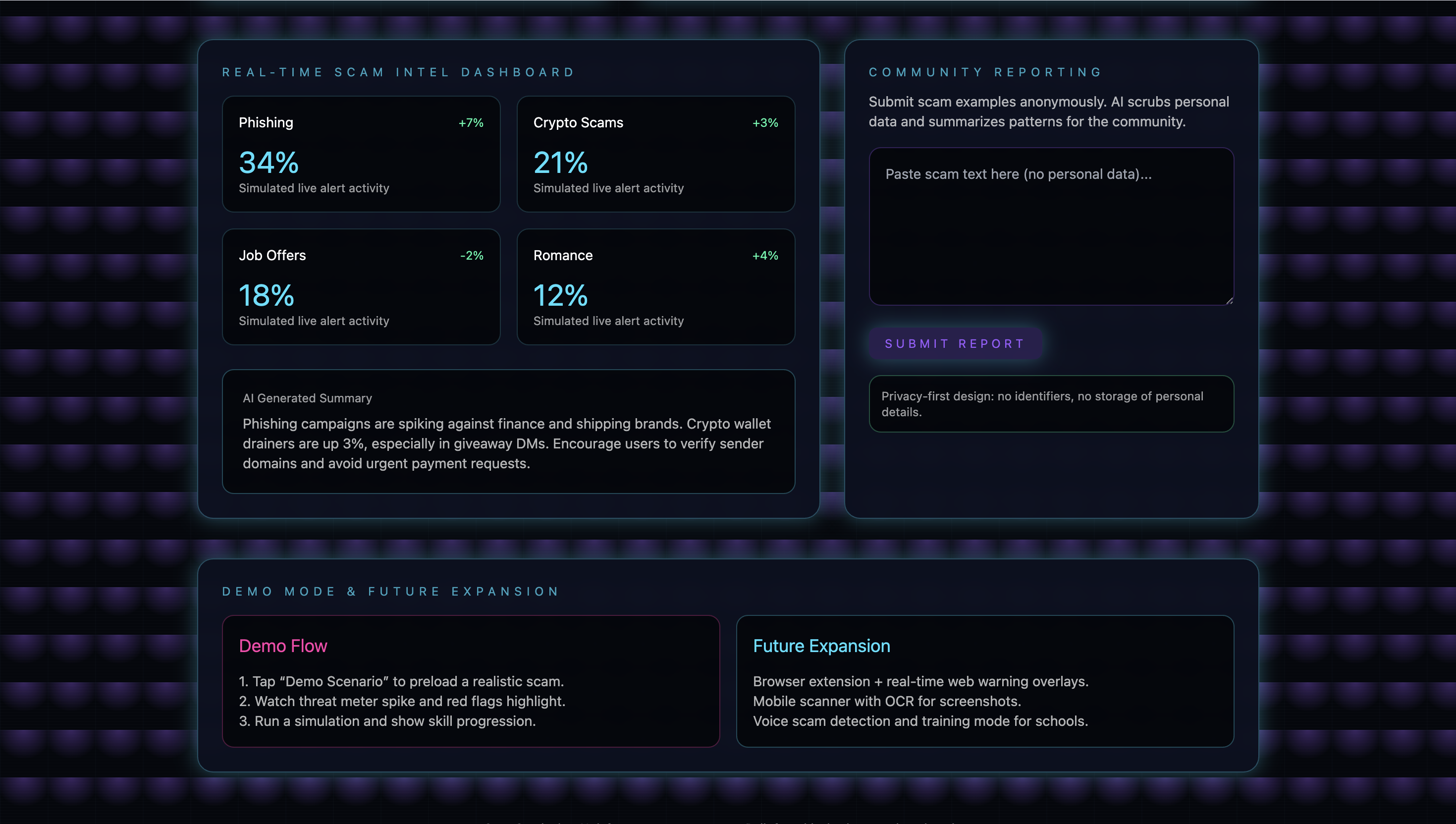
With more time, ScamSentinel could evolve into a browser extension or mobile app to protect users directly where scams occur. Future improvements include screenshot and image analysis, voice scam detection, and educational versions for schools and universities. The long-term goal is to empower users to become more informed, confident, and resilient against social engineering attacks.
Built With
- css
- cursor-ai
- html
- javascript
- next.js
- react
- tailwind-css
- typescript

Log in or sign up for Devpost to join the conversation.