-
-
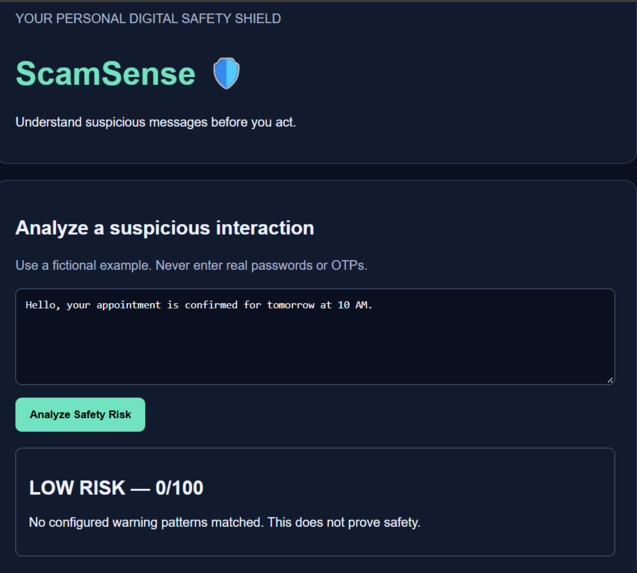
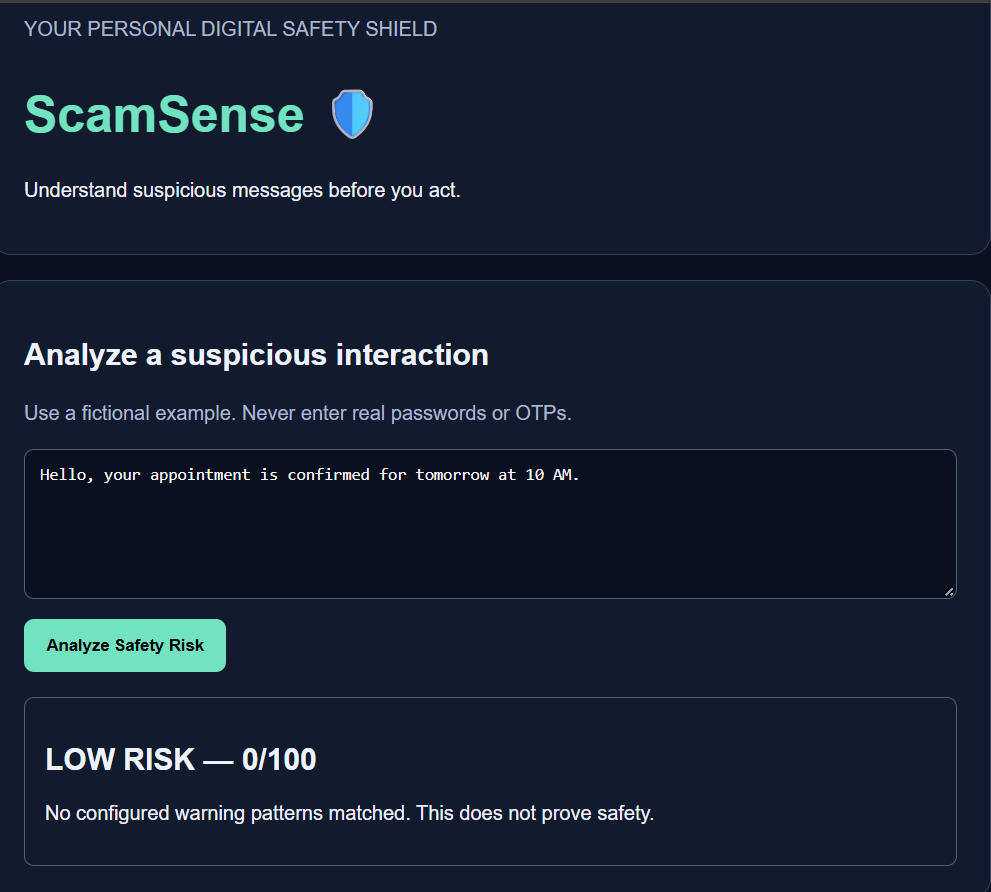
ScamSense dashboard for suspicious message analysis and risk scoring.
-
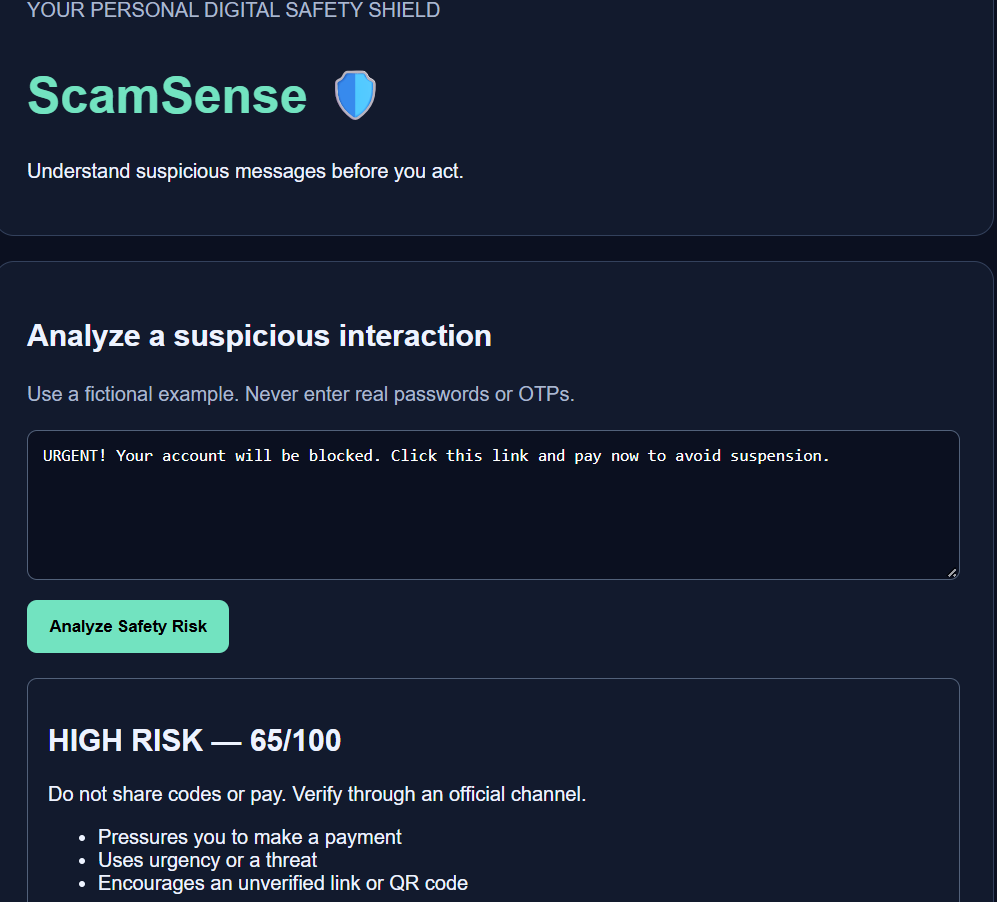
ScamSense dashboard for suspicious message analysis and risk scoring.
-
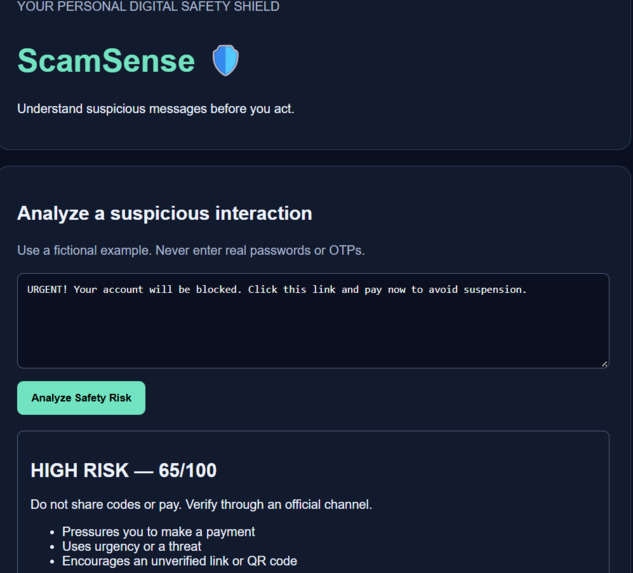
Message Analysis — Users can enter suspicious messages into ScamSense to identify potential warning signs and assess their safety risk.
-
Message Analysis — Users can enter suspicious messages into ScamSense to identify potential warning signs and assess their safety risk.
ScamSense: Your Personal Digital Safety Shield
Inspiration
Suspicious messages, urgent requests for money, and attempts to obtain OTPs or passwords can put people at risk. We wanted to explore a simple way to help users recognize warning signs before responding to a potentially dangerous interaction.
What it does
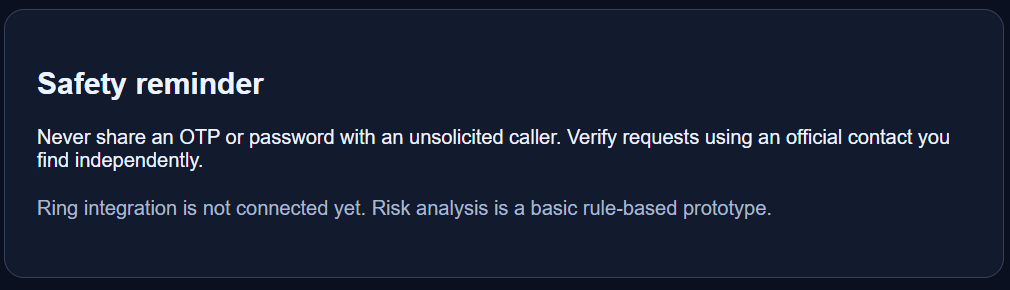
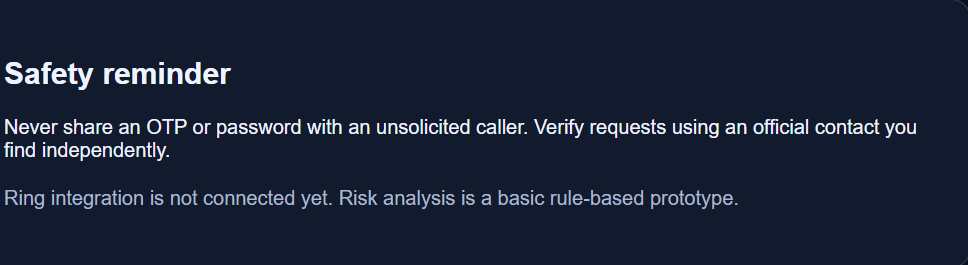
ScamSense is a web-based digital safety prototype. Users can enter suspicious message text, and the application checks for configured warning patterns, calculates a risk score from 0 to 100, and displays a low, medium, or high risk category. It also reminds users that a low score does not guarantee safety.
How we built it
We built the current prototype using Python, Flask, HTML, CSS, and JavaScript. The Flask backend processes the submitted text and applies rule-based checks to identify warning signs such as requests for OTPs, pressure to make payments, threats of account blocking, and suspicious links.
Challenges we faced
One challenge was connecting the dashboard interface to the Python backend and presenting the analysis results clearly. We also explored the Ring Developer resources to understand how simulated Ring events could be incorporated into the project.
What's next
Our next steps are to validate the risk rules with test cases, improve the analysis, and implement and test a Ring Playground integration. The current version does not yet have a verified live Ring integration.
Built With
- api
- css
- cybersecurity
- flask
- html
- javascript
- python
- web-application

Log in or sign up for Devpost to join the conversation.