-
-
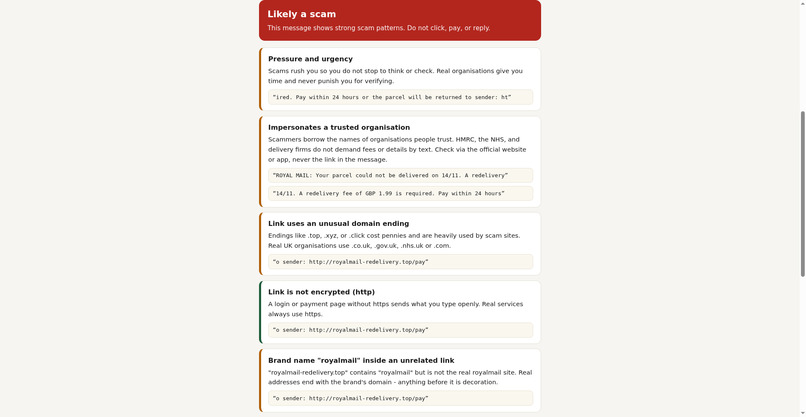
-
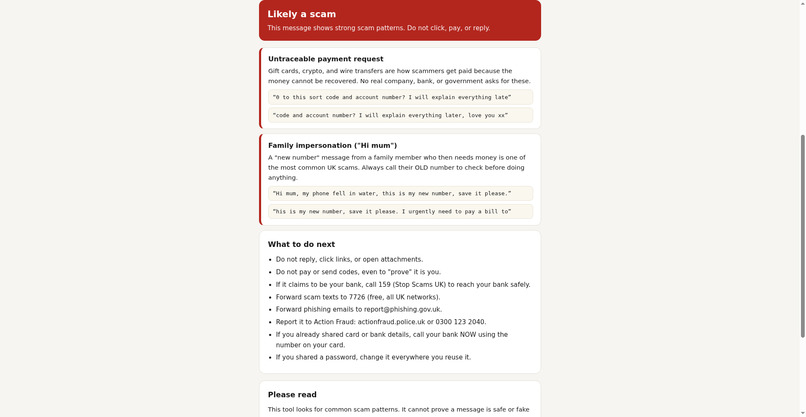
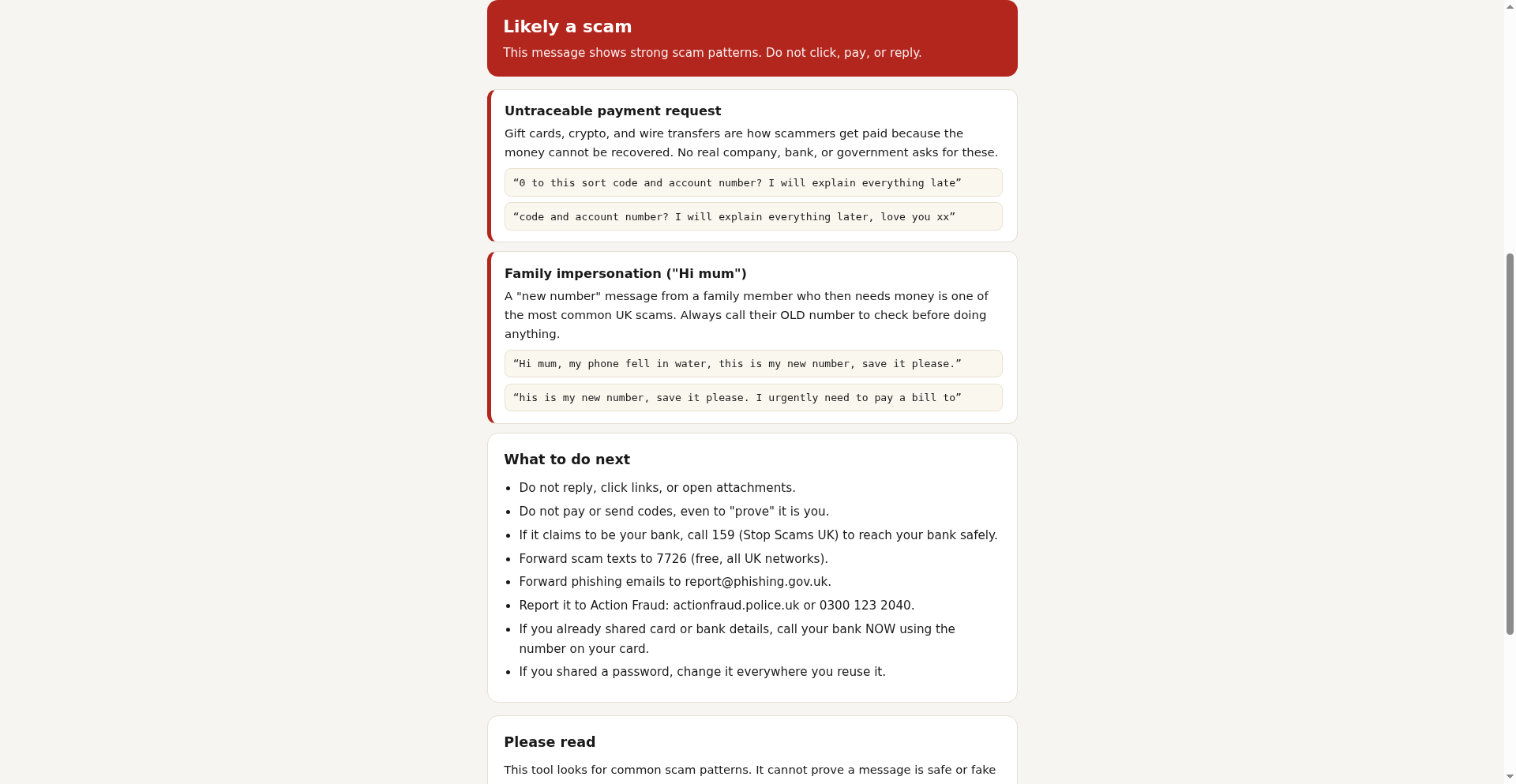
Synthetic 'Hi mum' new-number scam: each flag shows the exact words that tripped it
-
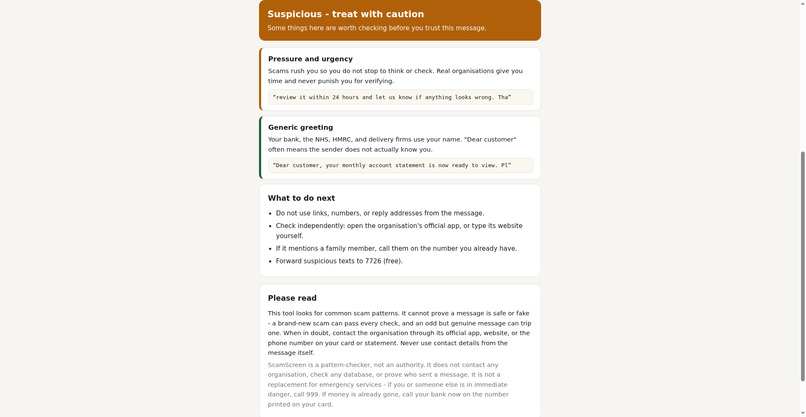
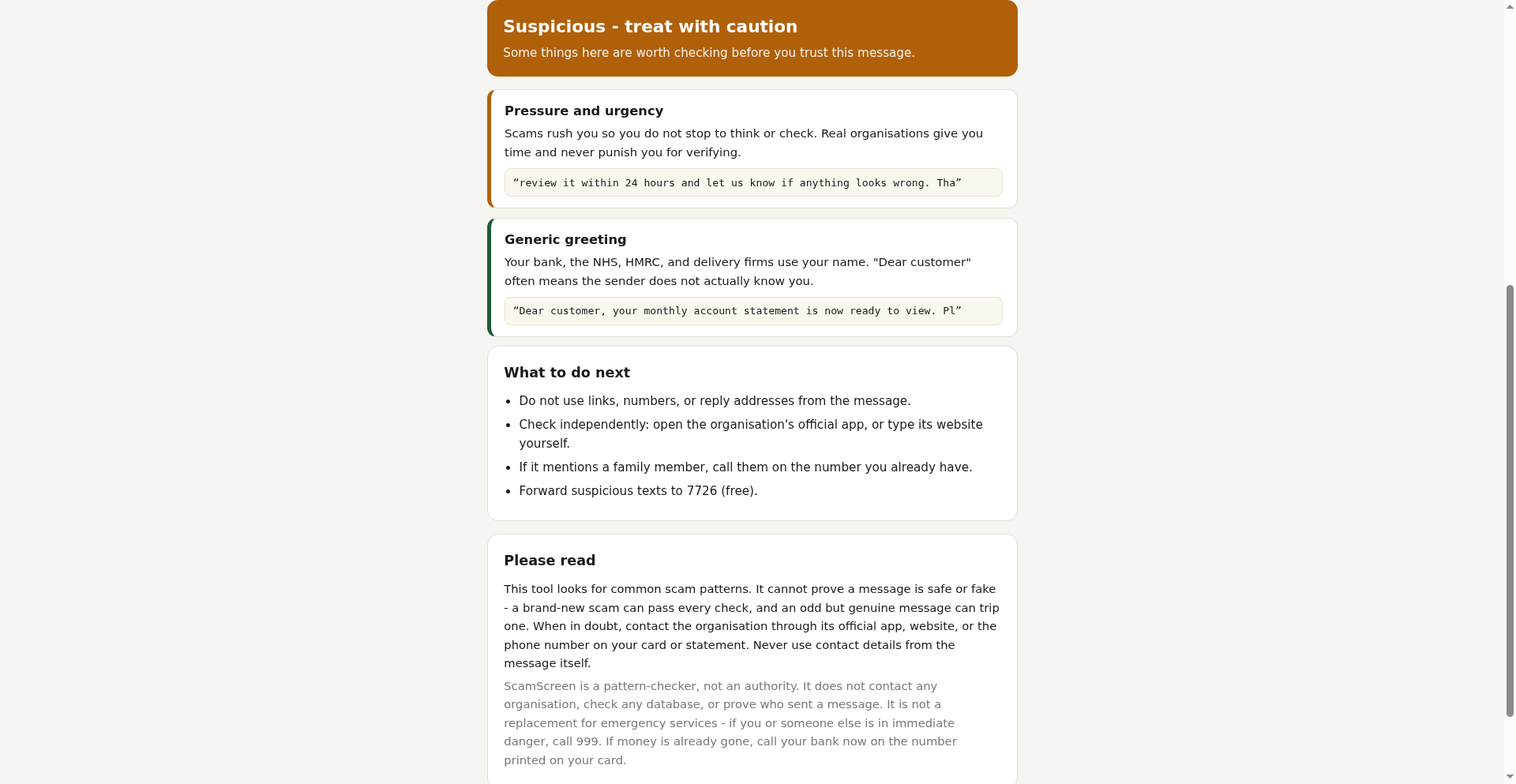
A borderline message gets 'Suspicious - treat with caution', with careful next steps
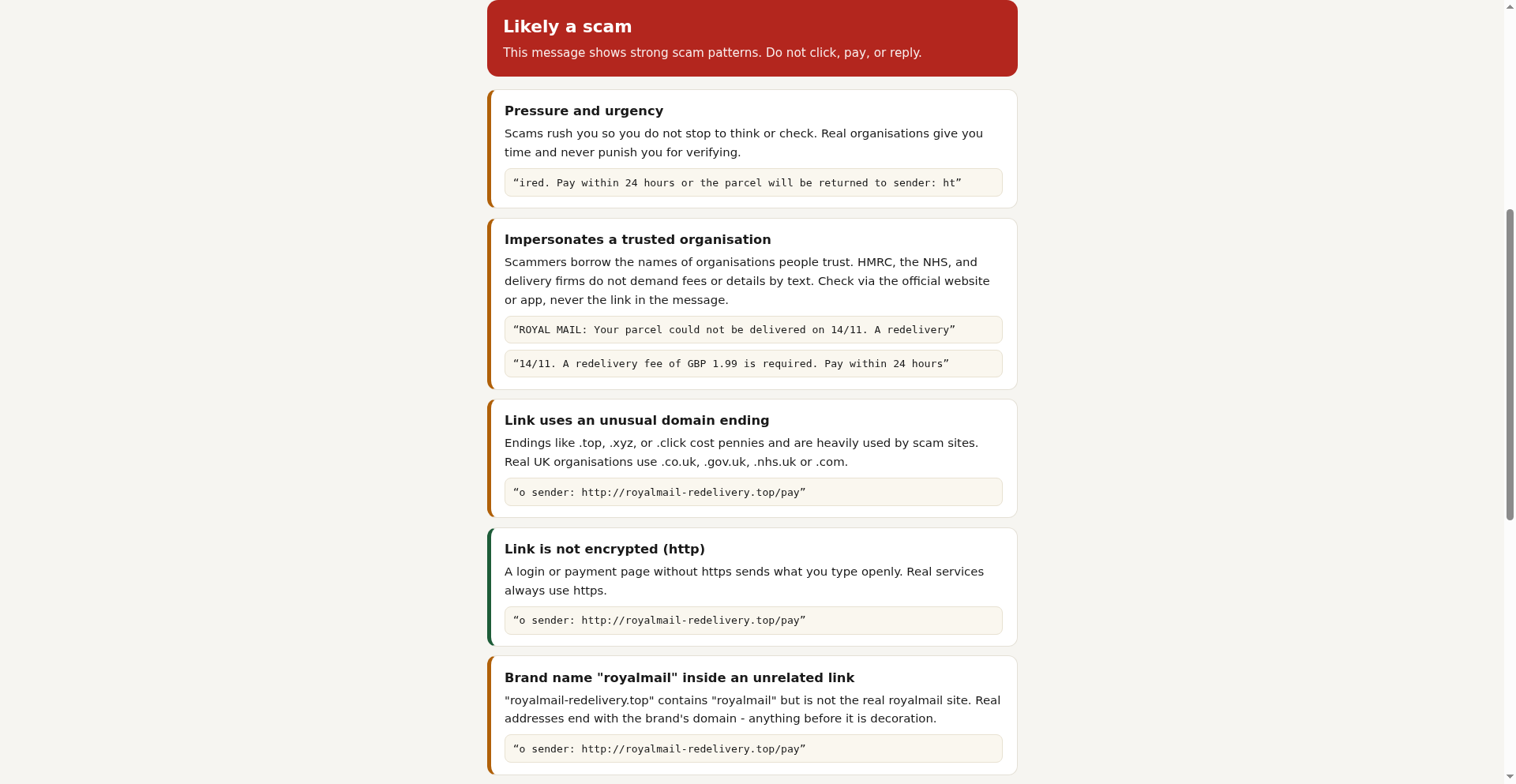
Inspiration
Scam texts and emails work because they look ordinary to non-technical people: a Royal Mail redelivery fee, an HMRC rebate, a "Hi mum, I lost my phone" message. The standard advice - "watch for red flags" - assumes people already know what those flags are. My grandmother does not. ScamScreen's job is to say the quiet part out loud: name each flag, show the exact words that tripped it, and explain in plain English why it matters.
What it does
Paste any suspicious text, email, or DM. ScamScreen gives you:
- A clear verdict - Likely a scam, Suspicious - treat with caution, or No red flags found.
- Every red flag, named and explained - pressure and urgency, gift-card/crypto/wire-transfer payment asks, password and one-time-code fishing, "verify your account" bait, too-good-to-be-true offers, "Hi mum" family impersonation, generic greetings, and impersonation of trusted UK organisations.
- Link forensics - raw IP addresses, punycode disguises, URL shorteners, unusual domain endings (.top, .xyz, .click...), unencrypted http, and lookalike domains that sit one letter off a real brand (an edit-distance check on each domain label, so
paypa1-secure.comandroyalmail-redelivery.topboth get caught). - The exact evidence - every flag shows the words from the message that tripped it. No black box.
- What to do next - tailored steps: forward scam texts to 7726, phishing emails to [email protected], call 159 to reach your bank safely, report to Action Fraud, and what to do RIGHT NOW if details or money are already gone.
Three clearly-labelled synthetic examples are built in so people can try it safely.
How I built it
A zero-dependency static site. The rule engine (public/src/rules.mjs) is a transparent set of weighted pattern rules plus a link analyzer; the UI renders the verdict, flag cards with evidence, and next steps. There is no framework and no build step - node run.mjs serves it locally, and the demo is deployed as a static site on Vercel.
Trust and responsible design (the part I care about most)
- 100% on-device. The entire analysis runs in the browser's JavaScript. There is no backend, no account, no analytics - nothing you paste is sent anywhere. Pasting a scam message into a website should never mean handing it to someone else.
- No false certainty. ScamScreen never says a message is "safe". Its best verdict is "No red flags found", always paired with an explicit note that a brand-new scam can pass every check and an odd genuine message can trip one - and that you should verify through official channels.
- Not a replacement for emergency services or official advice. The disclaimer says so in plain words, with 999 for emergencies and "call your bank on the number on your card" if money is already gone.
- Only synthetic examples. The demo messages are invented; no real organisations were contacted or imitated in testing.
Challenges I ran into
- Lookalike domains are sneakier than string matching. My first pass compared whole hosts against brand names and missed
paypa1-secure.comcompletely. The fix: split into labels, strip hyphens, and run an edit-distance check per label, distinguishing "one letter off the real domain" (lookalike) from "brand name stuffed into an unrelated domain" (brandstuff) - they are different tricks and the tool explains them differently. - Staying honest. It would be easy to print "Safe" in green. The harder, right choice was designing the whole verdict language around "we found nothing" rather than "you are safe".
- Writing for frightened people. Every explanation had to be short, calm, and actionable - no jargon like "phishing payload".
Accomplishments that I'm proud of
- Catches the scams UK people actually get (delivery fees, HMRC rebates, "Hi mum", bank verification) in live tests, while real paypal.com, gov.uk, and Amazon links score zero flags.
- The privacy story is architectural, not a promise: with no backend, there is nothing to leak.
- Zero dependencies: anyone can read the entire rule engine and see exactly why a verdict happened.
What I learned
Safety tooling for real people is mostly a writing and trust problem dressed as a technical one - the regex is easy, being worthy of a scared person's trust is the work.
What's next for ScamScreen
- Email-header mode (paste full headers to check reply-to and sender alignment), a shareable "check this for a parent" flow for carers, more languages, and an optional, clearly-labelled community blocklist of reported domains - kept opt-in and explained, never silently phoning home.
Built With
Vanilla JavaScript (ES modules), zero npm dependencies, Vercel static hosting.
Try it out
- Live demo: https://scamscreen-sigma.vercel.app
- Source code (MIT): https://github.com/vaibhav4046/scamscreen
Built With
- vercel
