Inspiration
Students and job seekers often receive internship offers, job notifications, and scholarship messages that may contain misleading claims, suspicious payment requests, or fake recruitment details. It can be difficult to distinguish trustworthy opportunities from suspicious ones, especially when people are under pressure to respond quickly.
This inspired us to build ScamSathi AI — Intelligent Scam Verification Agent, an AI-powered tool designed to help users investigate suspicious messages, understand potential warning signs, and make safer decisions using available evidence.
What it does
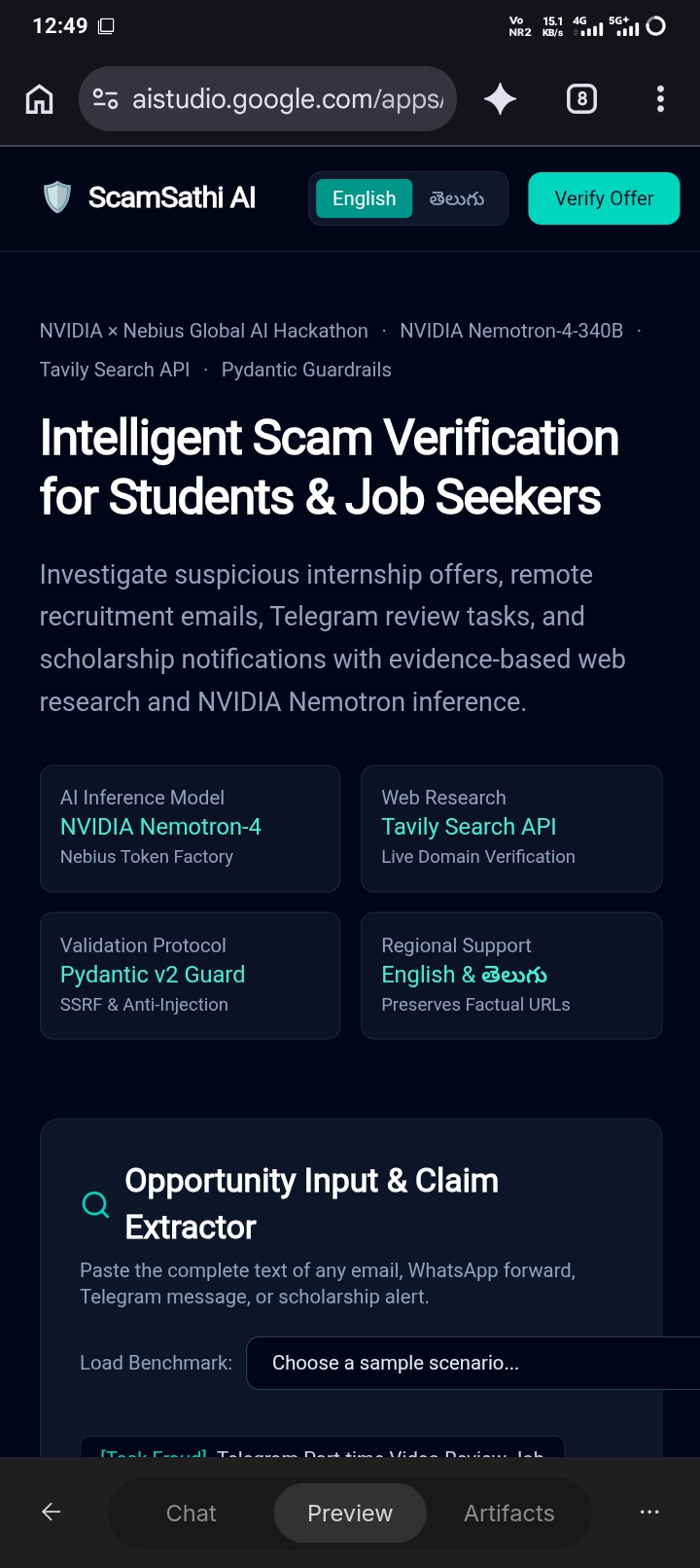
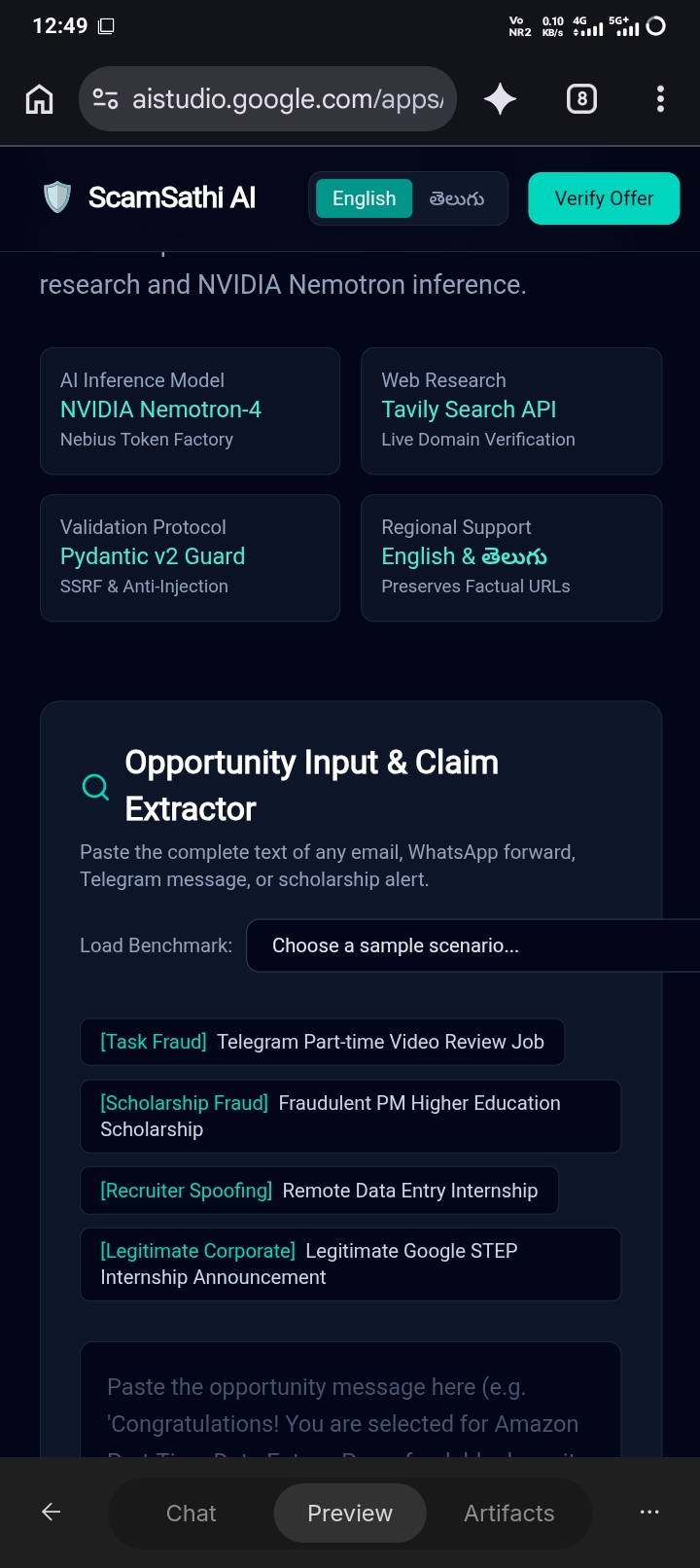
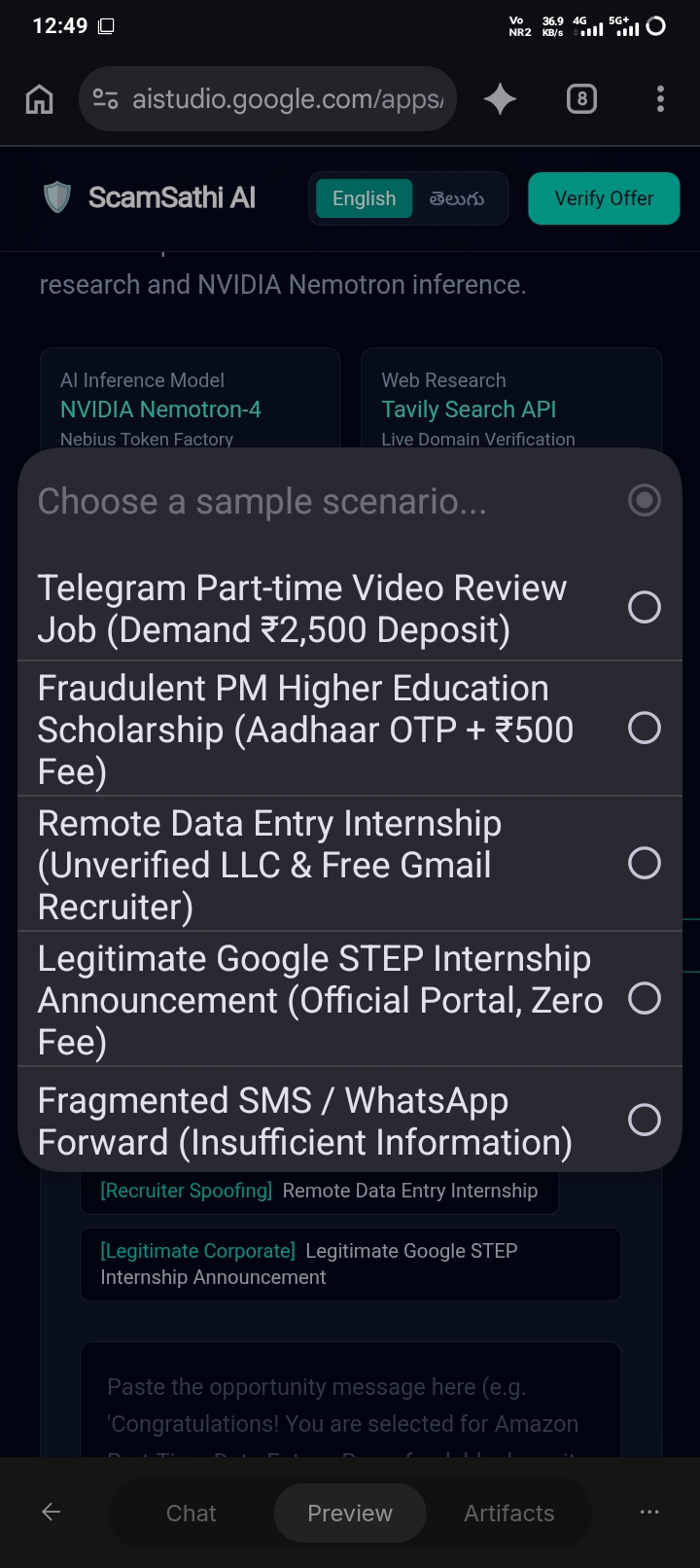
ScamSathi AI is designed to help students and job seekers investigate suspicious job offers, internships, scholarship announcements, and recruitment messages.
The planned investigation workflow combines:
- AI-powered analysis: NVIDIA Nemotron interprets submitted messages and identifies potential warning signs.
- Web research: Tavily helps discover relevant public information and supporting sources.
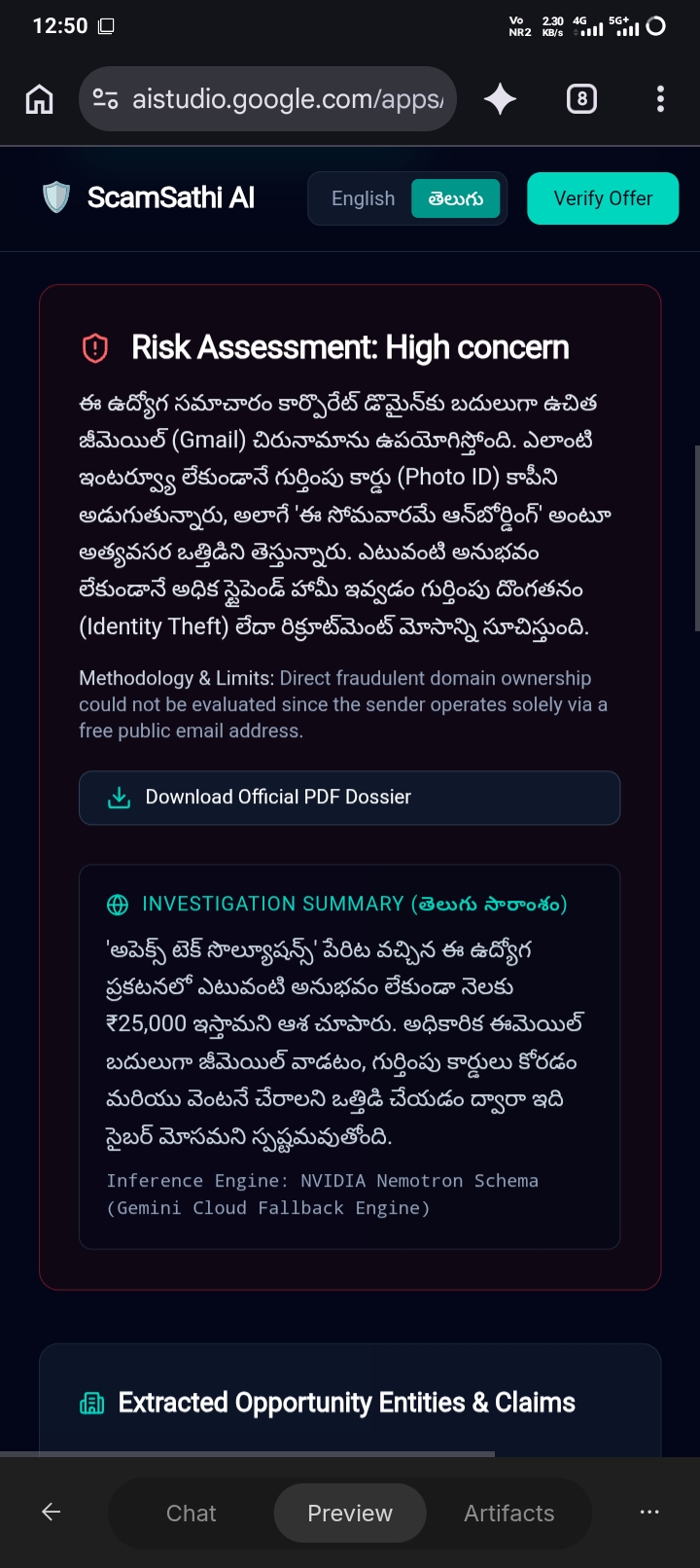
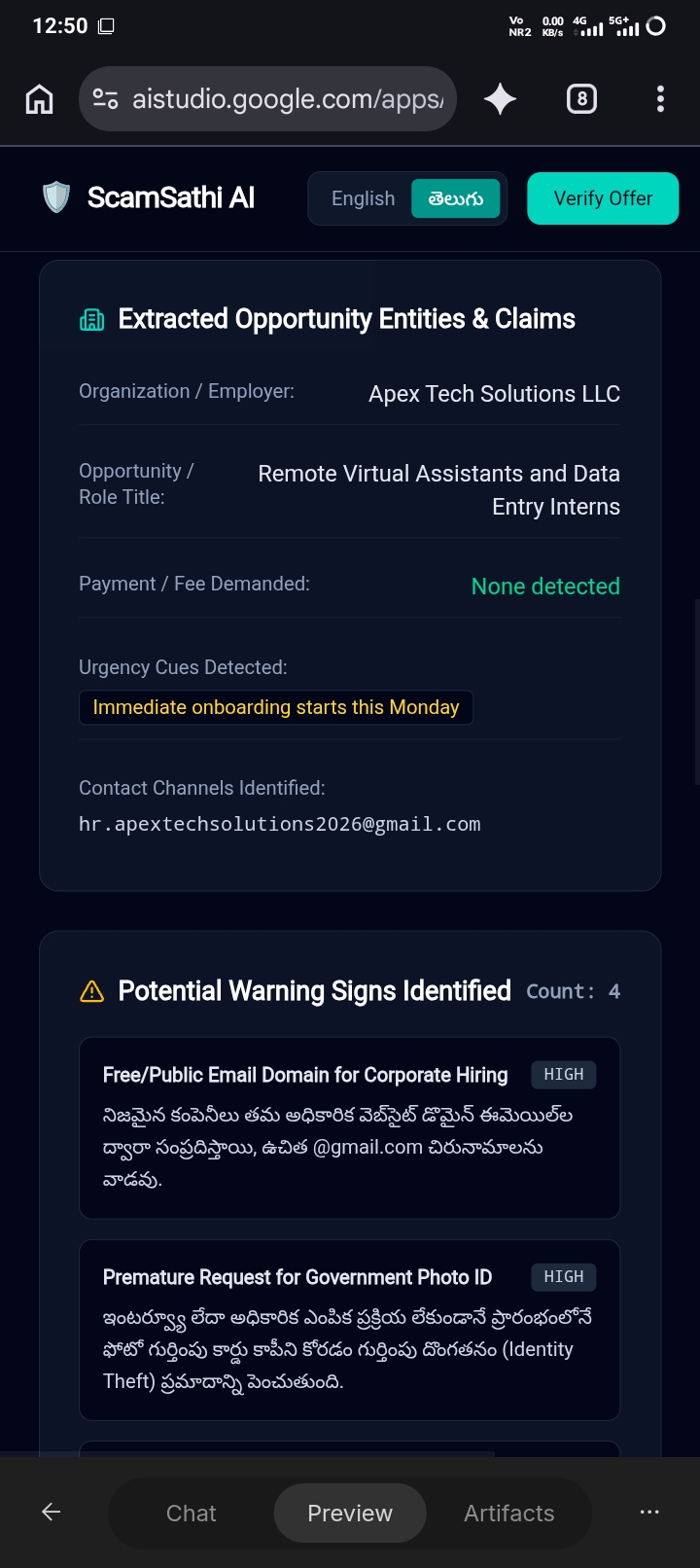
- Evidence-based explanations: Findings distinguish available evidence from unverified claims.
- Safer next steps: Users receive practical recommendations for independently verifying opportunities before sharing sensitive information or making payments.
The goal is not to label every message as genuine or fraudulent automatically, but to help people understand the evidence and make informed decisions.
How we built it
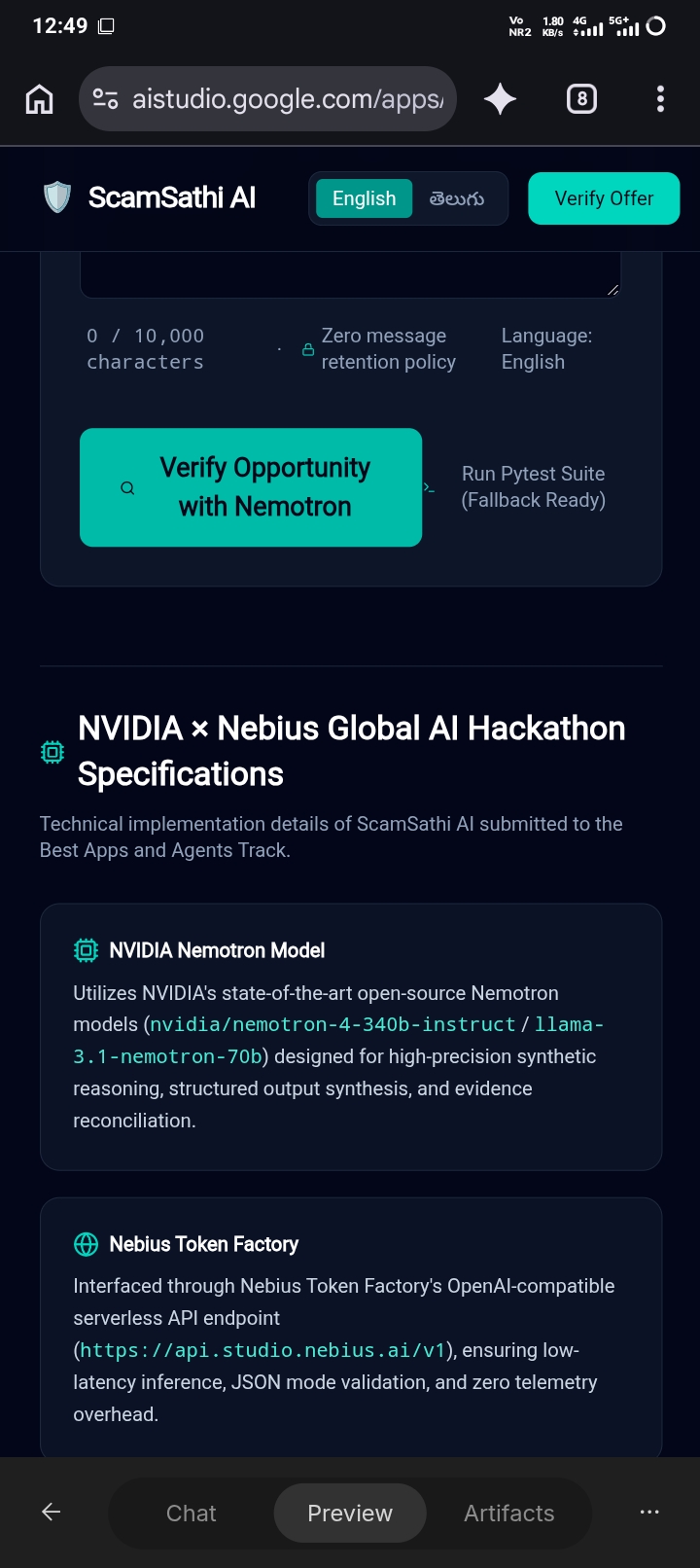
The project is designed around Python and Streamlit, with NVIDIA Nemotron accessed through Nebius Token Factory for language-model inference and Tavily for web research.
The application workflow consists of input validation, claim extraction, evidence retrieval, AI-powered analysis, and report generation. The architecture is intended to keep the interface simple while making the reasoning and supporting sources understandable to users.
API credentials are managed through environment variables, and the project emphasizes privacy, safe handling of submitted content, and transparent reporting of uncertainty.
Challenges we faced
One of the main challenges is ensuring that AI-generated conclusions are grounded in actual evidence rather than assumptions. Search results may be incomplete, outdated, or contradictory, and the absence of information does not prove that an opportunity is fraudulent.
Another challenge is protecting the application against misleading instructions embedded in submitted messages or retrieved web pages. Reliable output validation, error handling, API limits, and clear communication of uncertainty are important parts of the design.
What we learned
This project helped us explore how open-source AI models can be integrated into a practical application using hosted inference infrastructure. It also reinforced the importance of combining language-model reasoning with external evidence, validating model outputs, and designing AI tools responsibly.
Impact
ScamSathi AI aims to make online opportunity verification more accessible to students and job seekers. By presenting warning signs, evidence, and practical verification steps in an understandable format, it seeks to encourage safer digital decisions and greater awareness of recruitment-related scams.
Our vision is to make verification a simple habit: Pause, investigate, and verify before you trust.


Log in or sign up for Devpost to join the conversation.