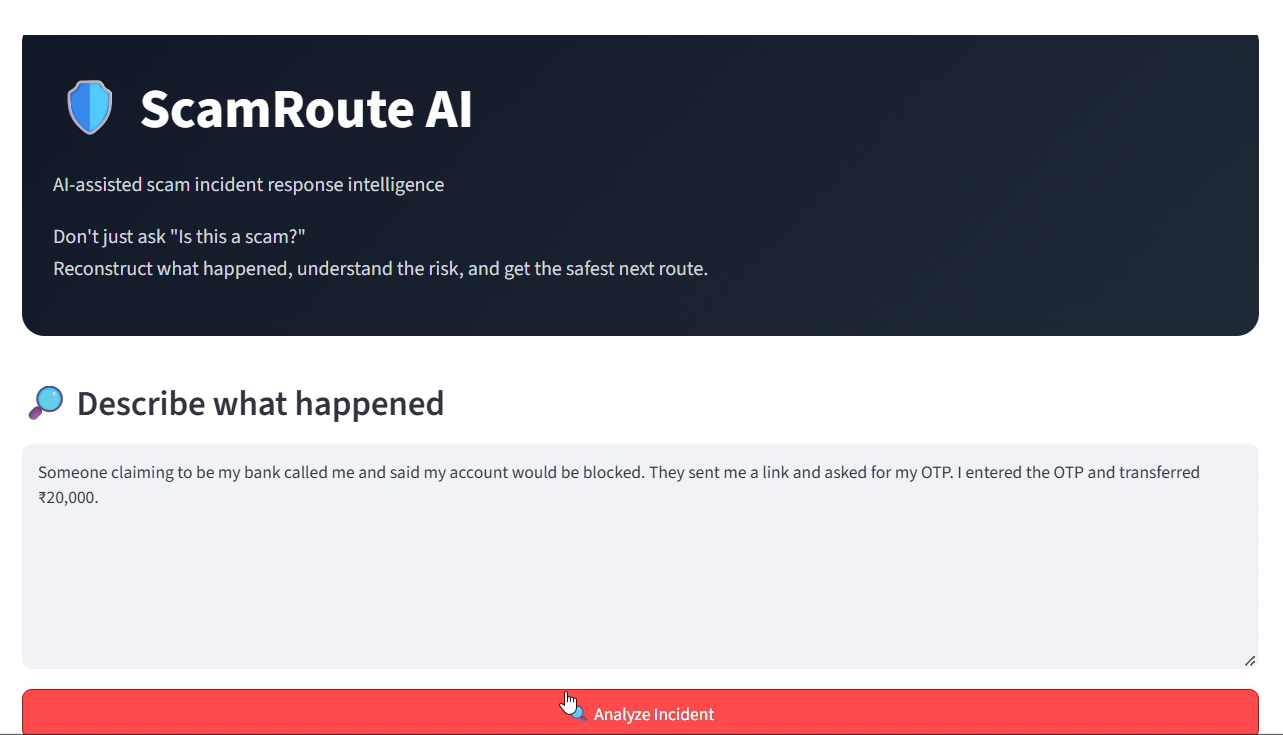
ScamRoute AI is an AI-assisted scam incident response tool designed to help people understand suspicious calls, messages, links, and fraud attempts and decide what to do next.
The idea came from a simple problem: when someone encounters a scam, identifying that something is suspicious is only the first step. They also need to understand what information may have been exposed, what risks are involved, and what actions should be taken immediately.
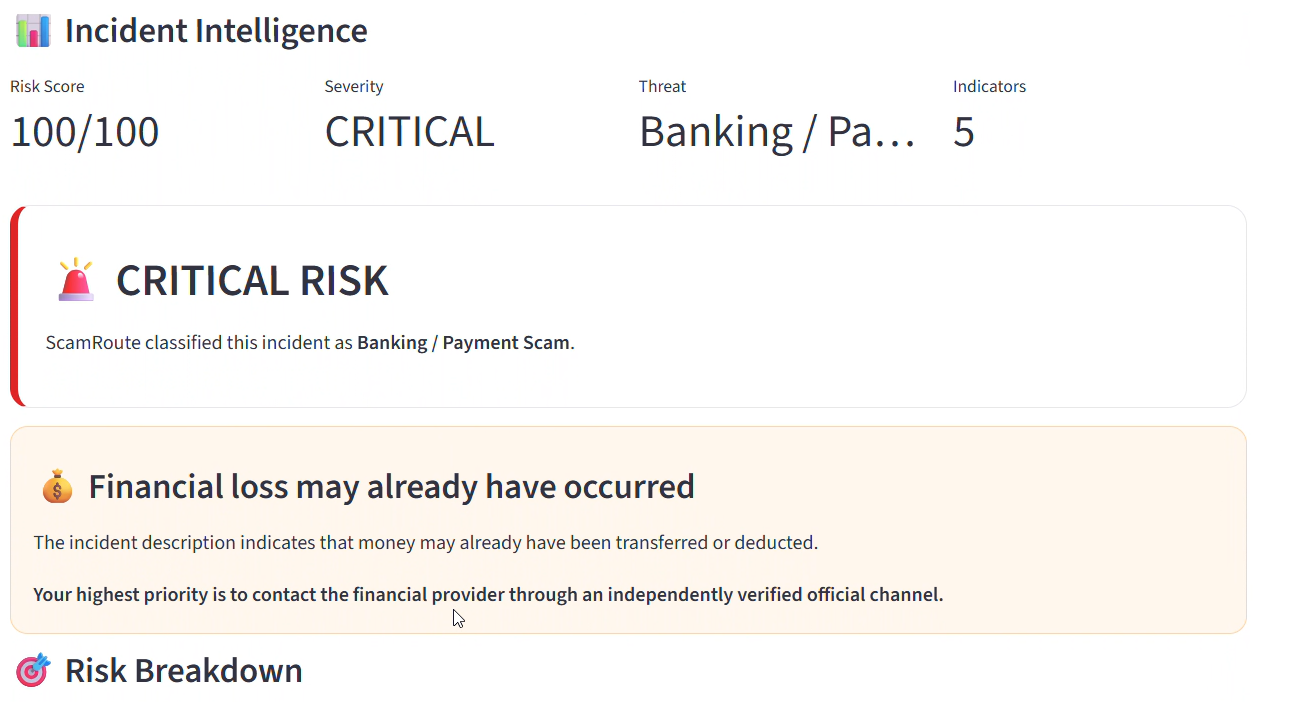
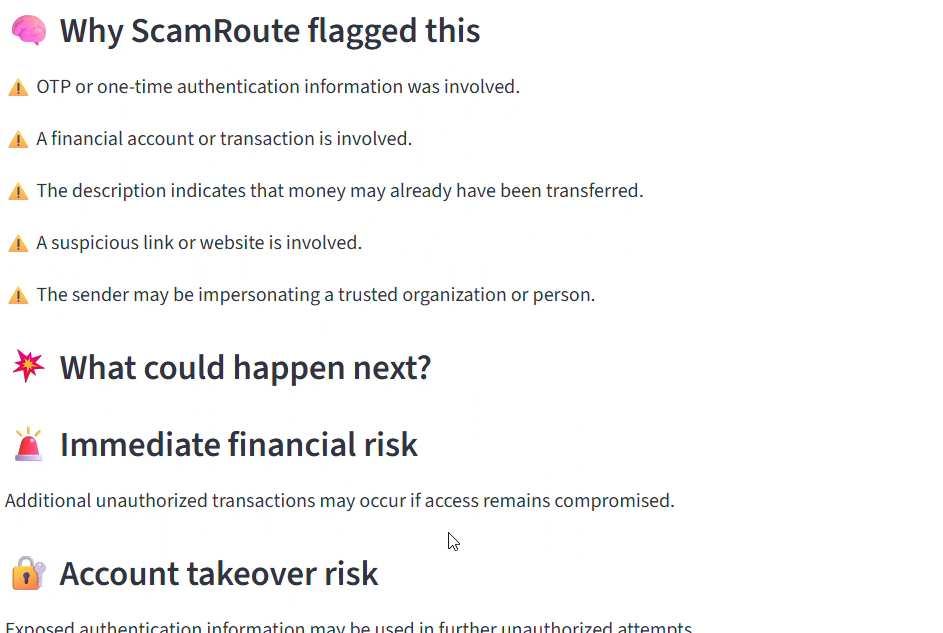
ScamRoute AI takes an incident description from the user and analyzes it for indicators such as impersonation, OTP requests, suspicious links, financial loss, remote-access requests, personal-data requests, and other common scam patterns. It then provides a risk score, severity level, threat classification, affected risk areas, a possible attack chain, and practical response guidance.
The application was built with Python and Streamlit, with OpenAI used for AI-assisted analysis. The interface is designed to keep the response understandable rather than overwhelming the user with technical security terminology.
One of the main challenges was making the system useful beyond simply labeling an incident as a scam. The project therefore focuses on connecting detected indicators to consequences and recommended actions. Testing different scenarios such as banking scams, job scams, QR/UPI scams, and remote-access attempts helped refine the response flow.
Through this project, we learned how to combine AI-assisted analysis with structured rule-based risk assessment to create a practical cybersecurity application. The goal is to provide users with a clear first-response path when they are unsure whether an interaction is safe.
Built With
- ai
- openai
- python
- streamlit

Log in or sign up for Devpost to join the conversation.