-
-
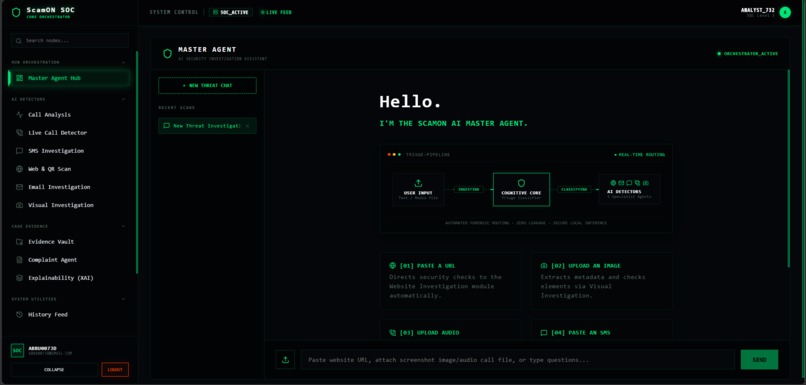
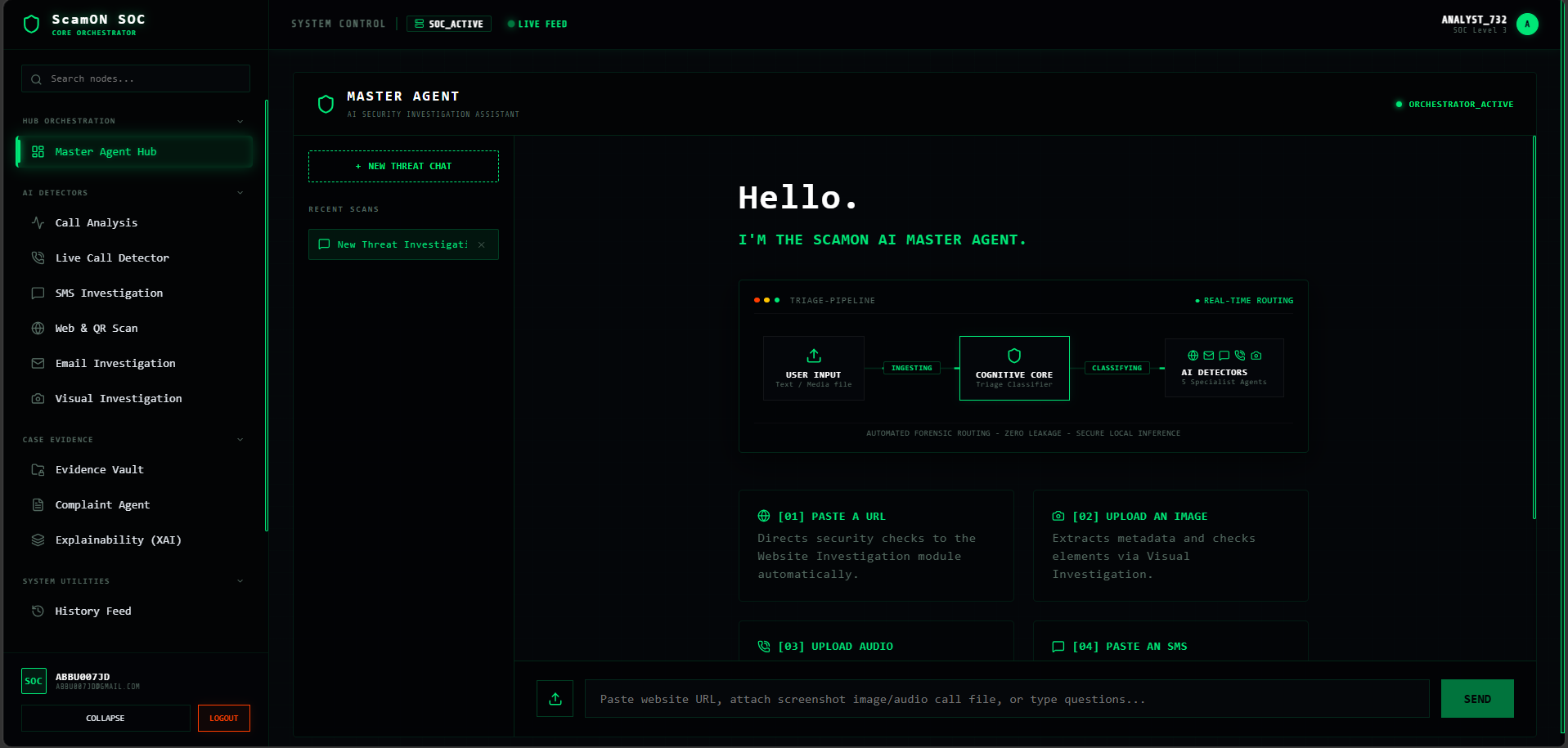
Master Agent: Understands user requests, identifies threats, and routes them to the appropriate AI agent for investigation and response.
-
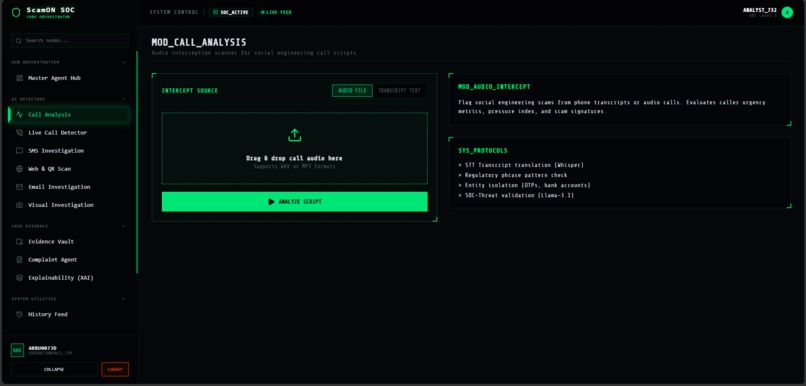
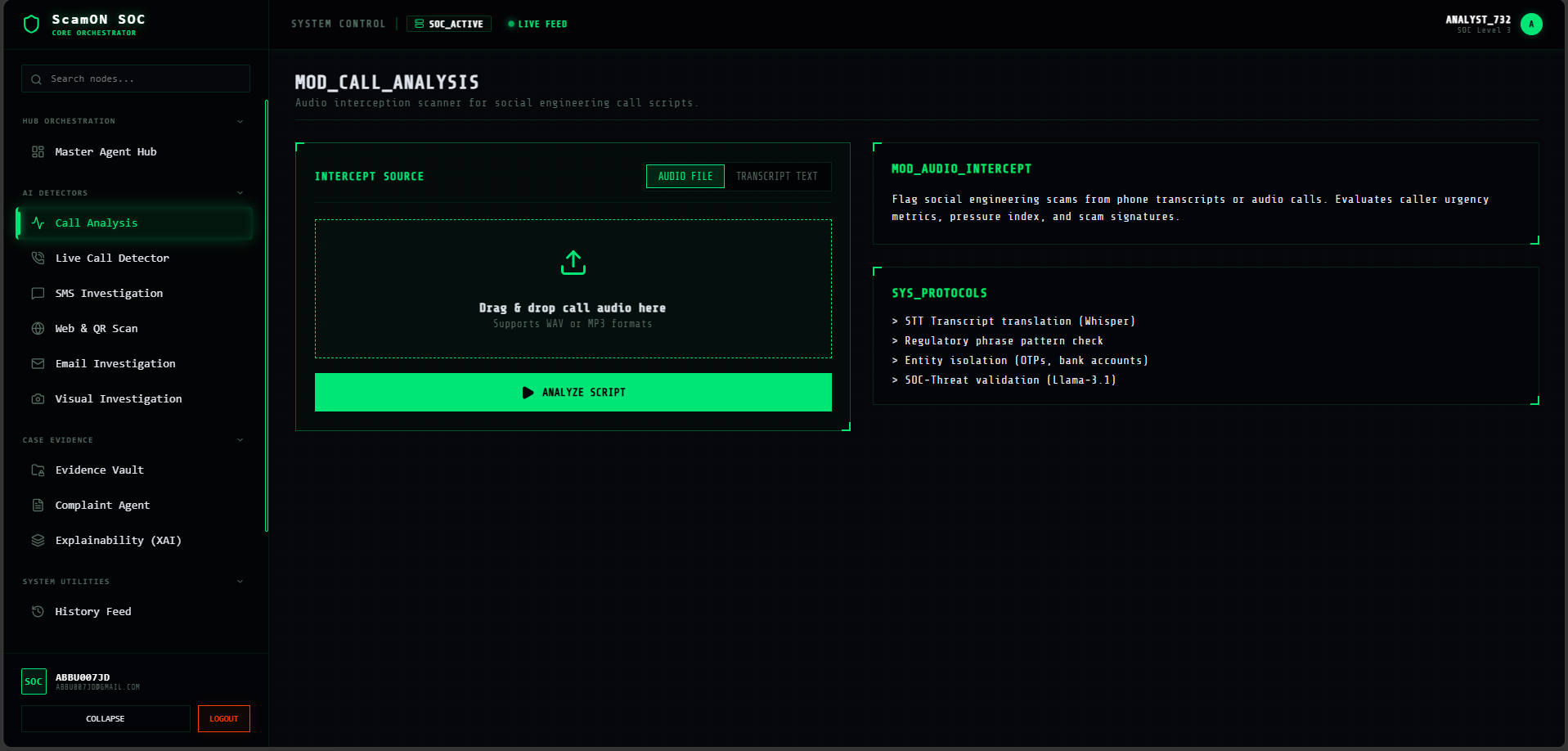
Audio Agent: Analyzes audio for speech, scam patterns, suspicious conversations, and potential threats.
-
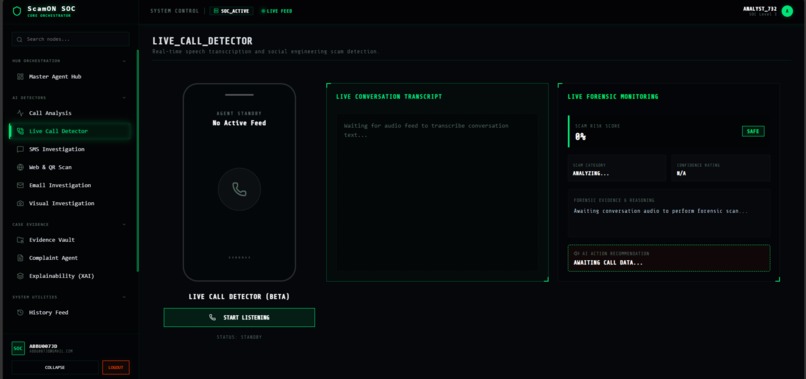
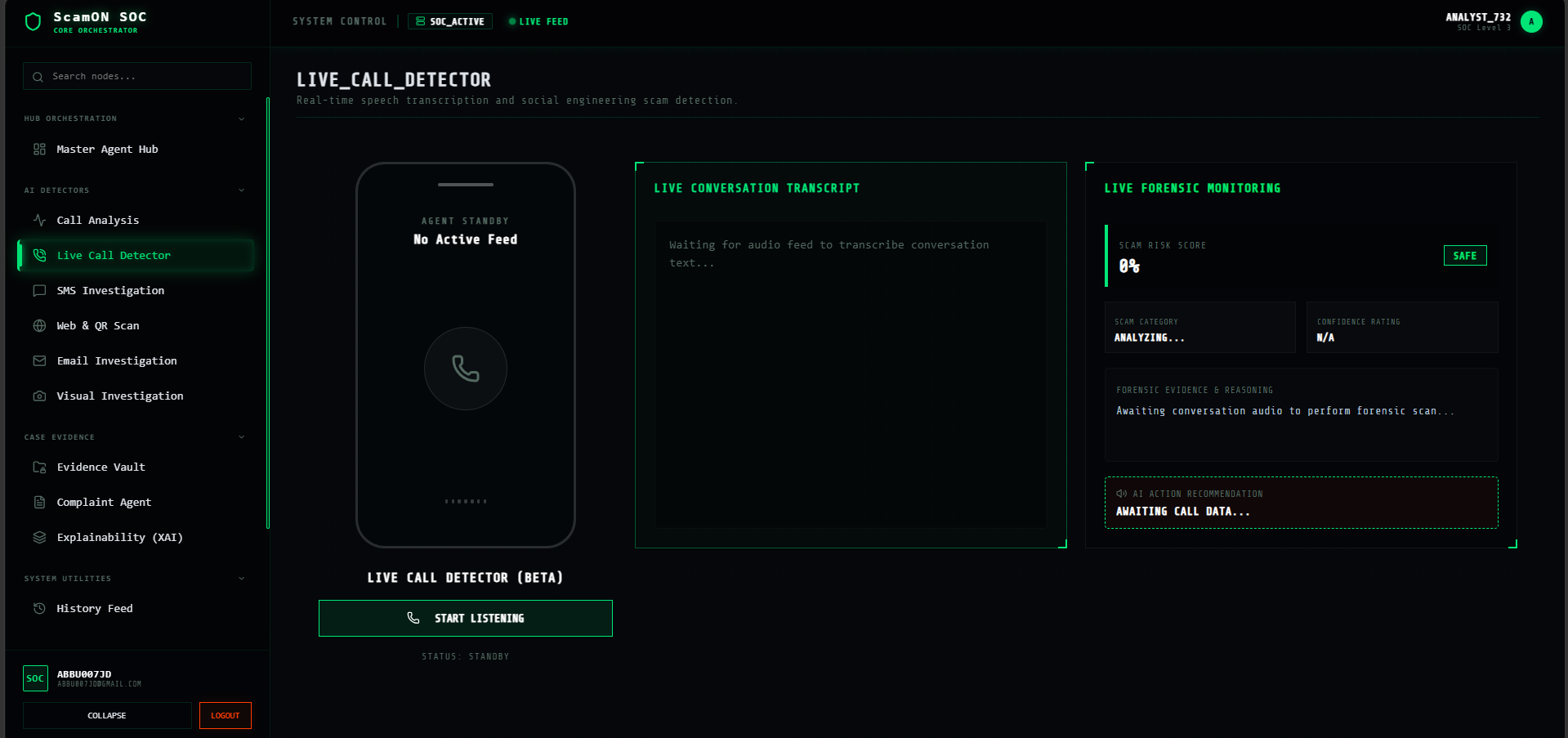
Live Call Agent: Transcribes calls in real time and detects scam patterns, social engineering, and suspicious conversations.
-
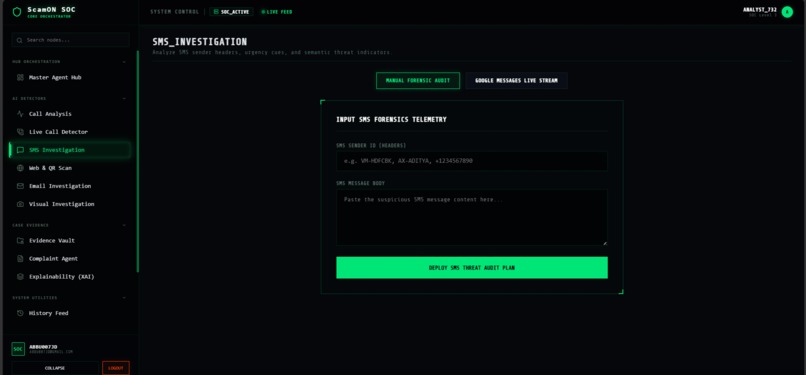
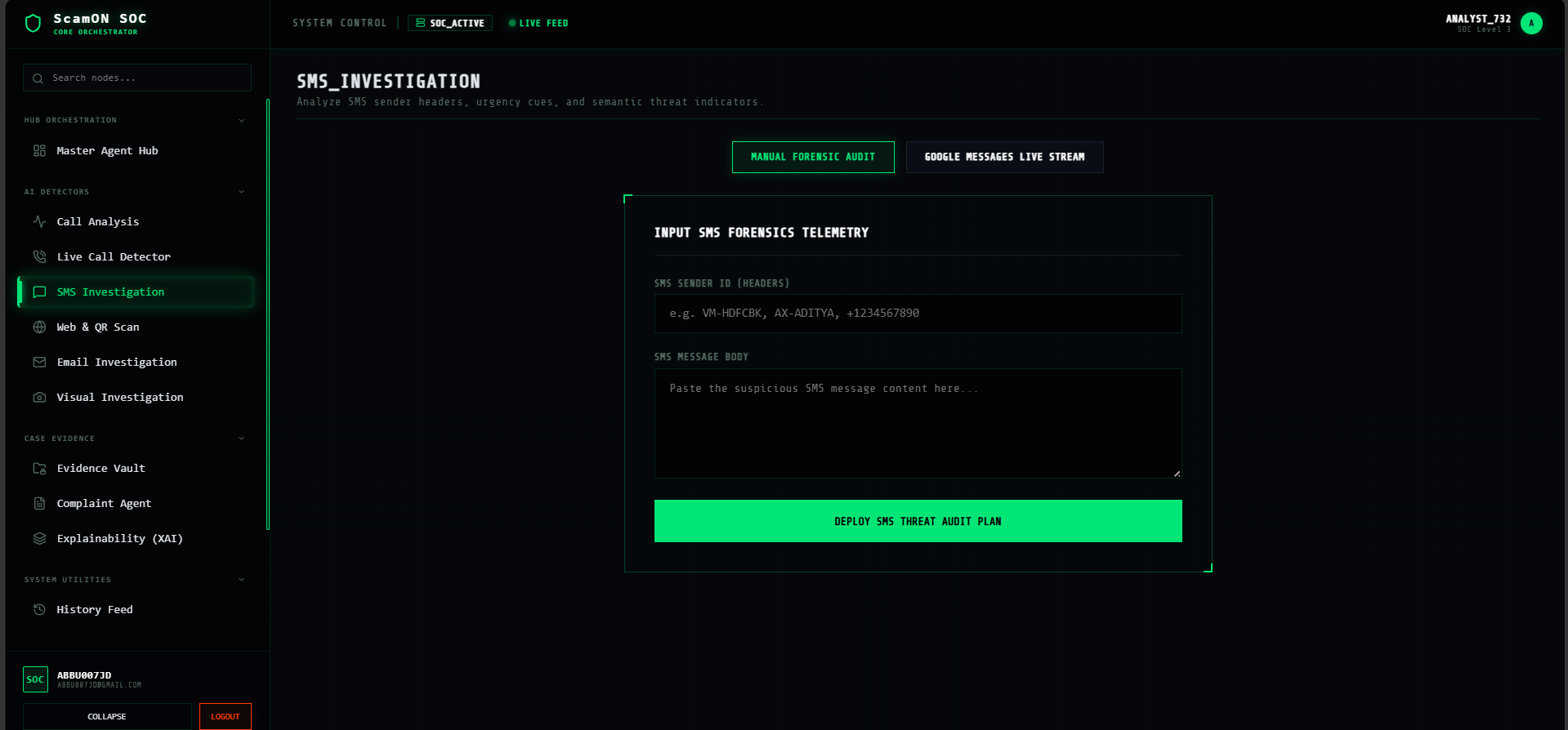
SMS Agent: Analyzes text messages to detect phishing, fraud, malicious links, OTP scams, and suspicious content.
-
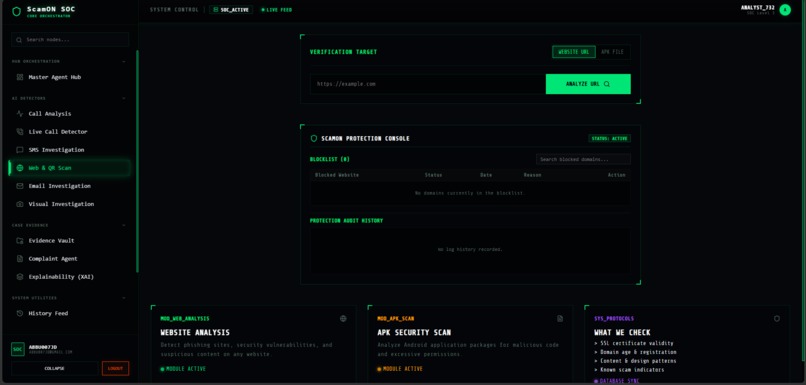
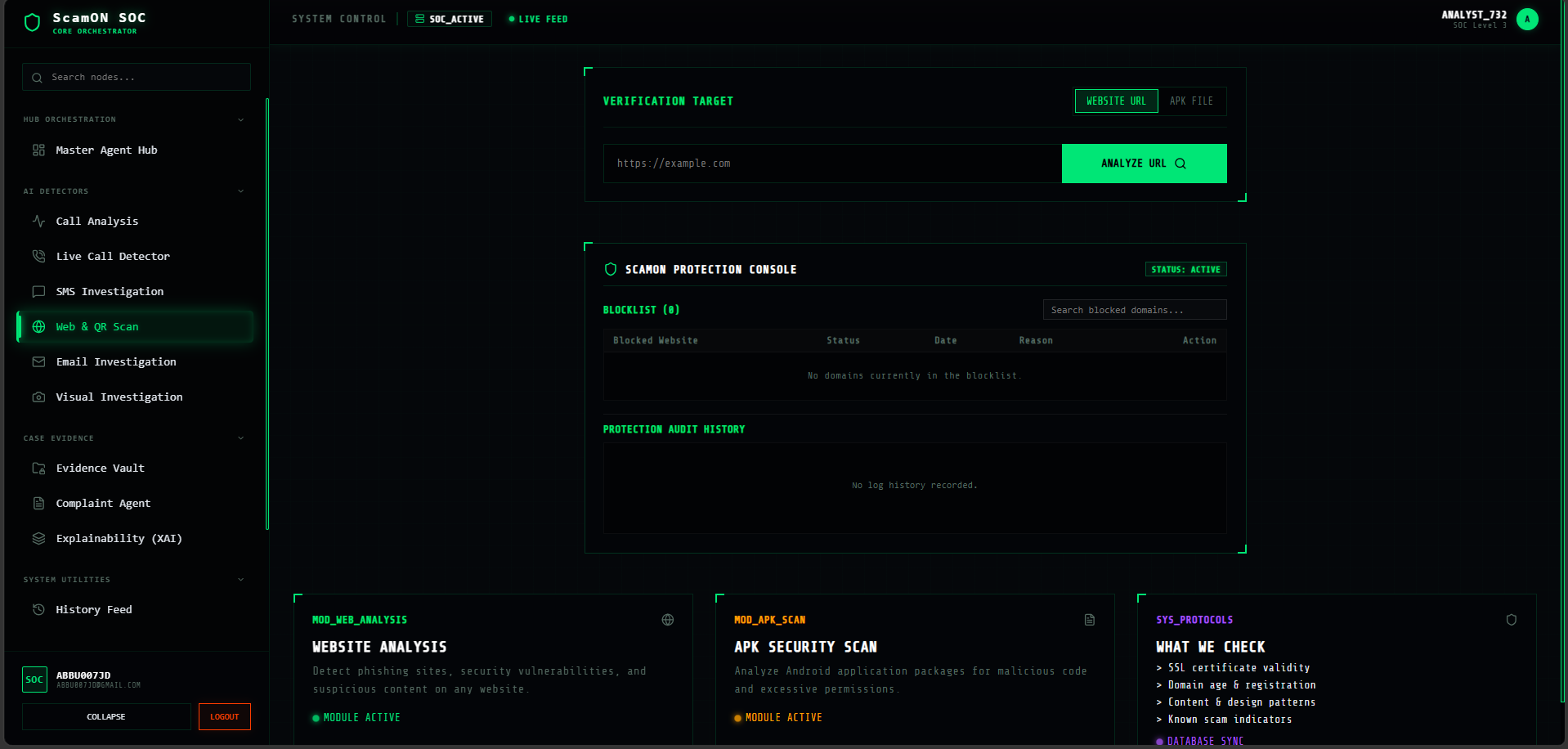
Website Agent: Analyzes URLs for phishing, malicious links, domain risks, and suspicious website behavior.
-
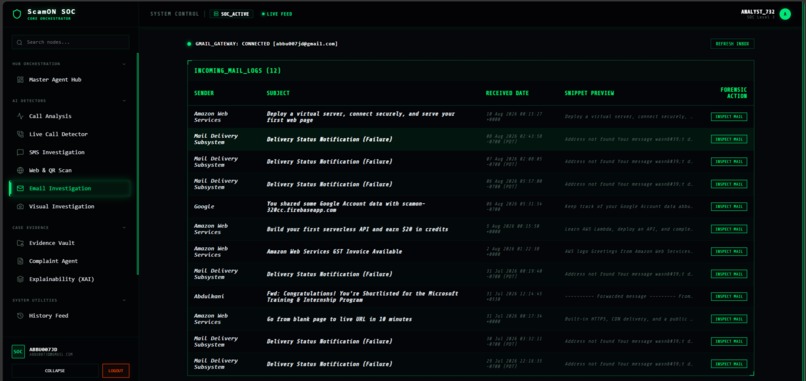
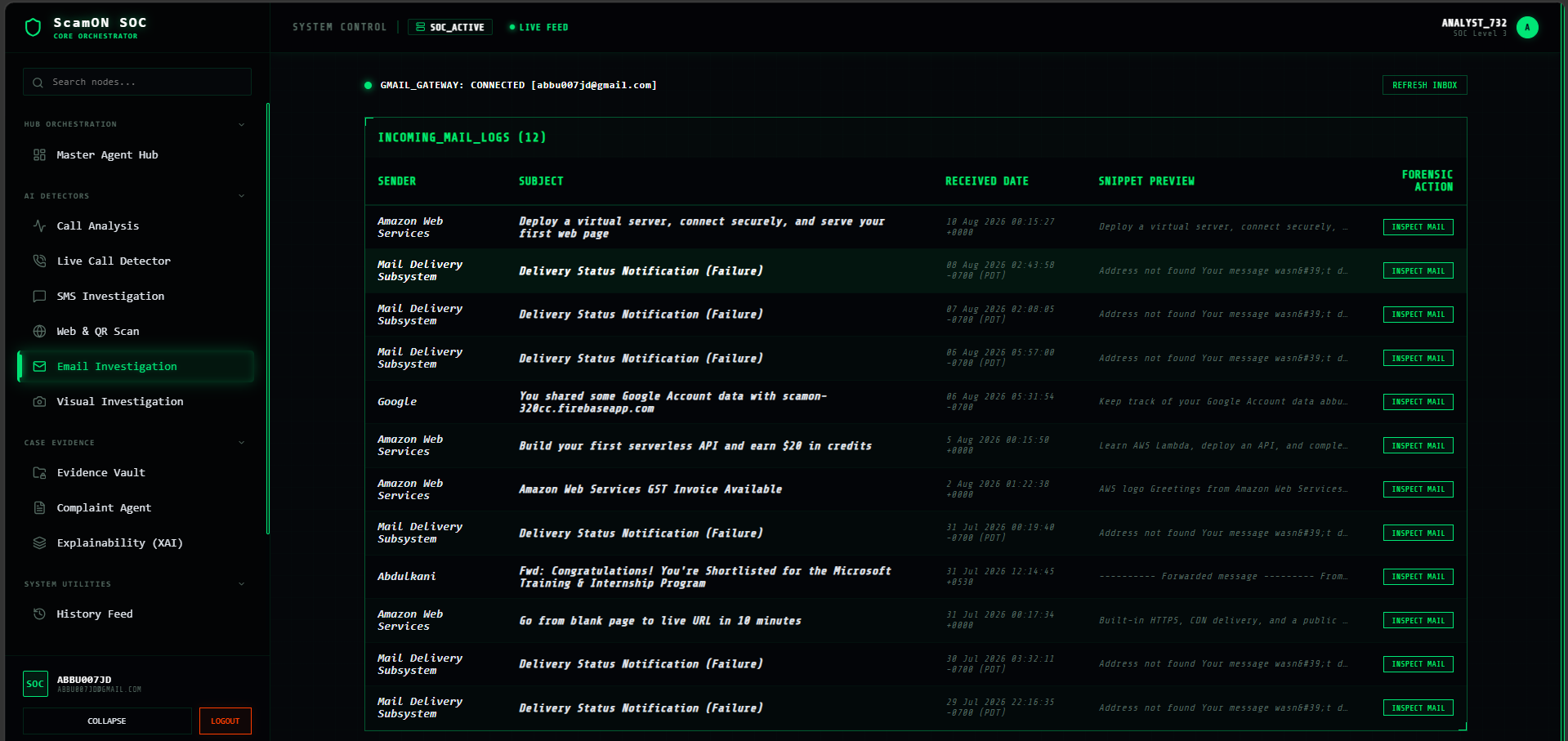
Email Agent: Analyzes emails for phishing, spoofing, malicious links, attachments, and authentication risks.
-
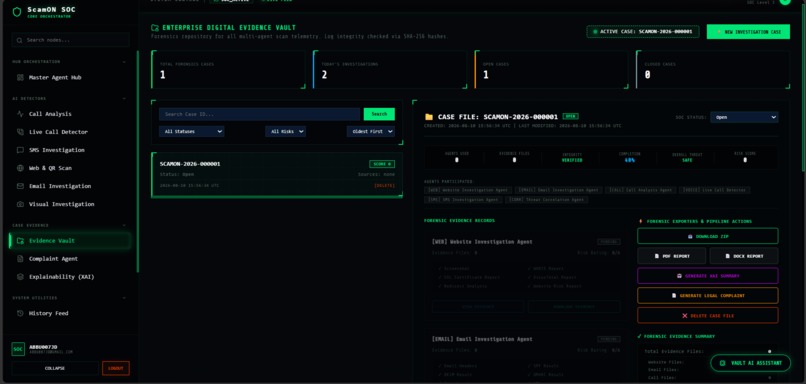
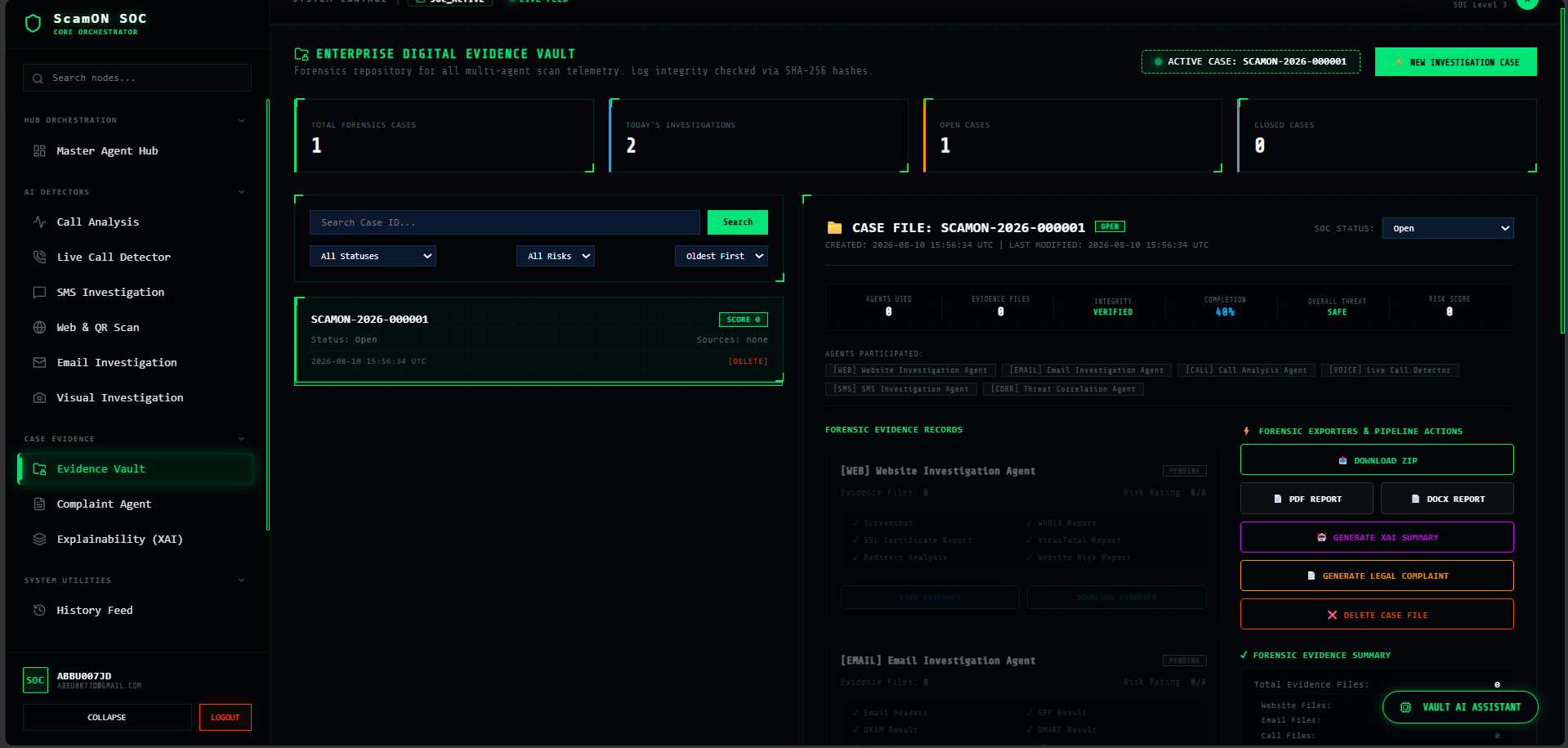
Evidence Agent: Collects, organizes, and securely stores digital evidence from investigations for traceable analysis.
-
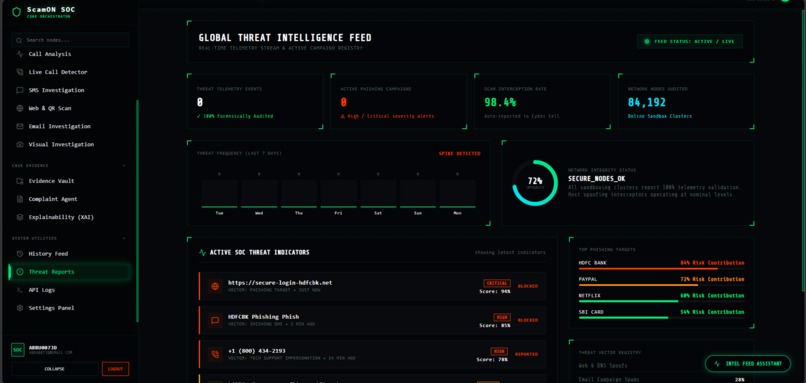
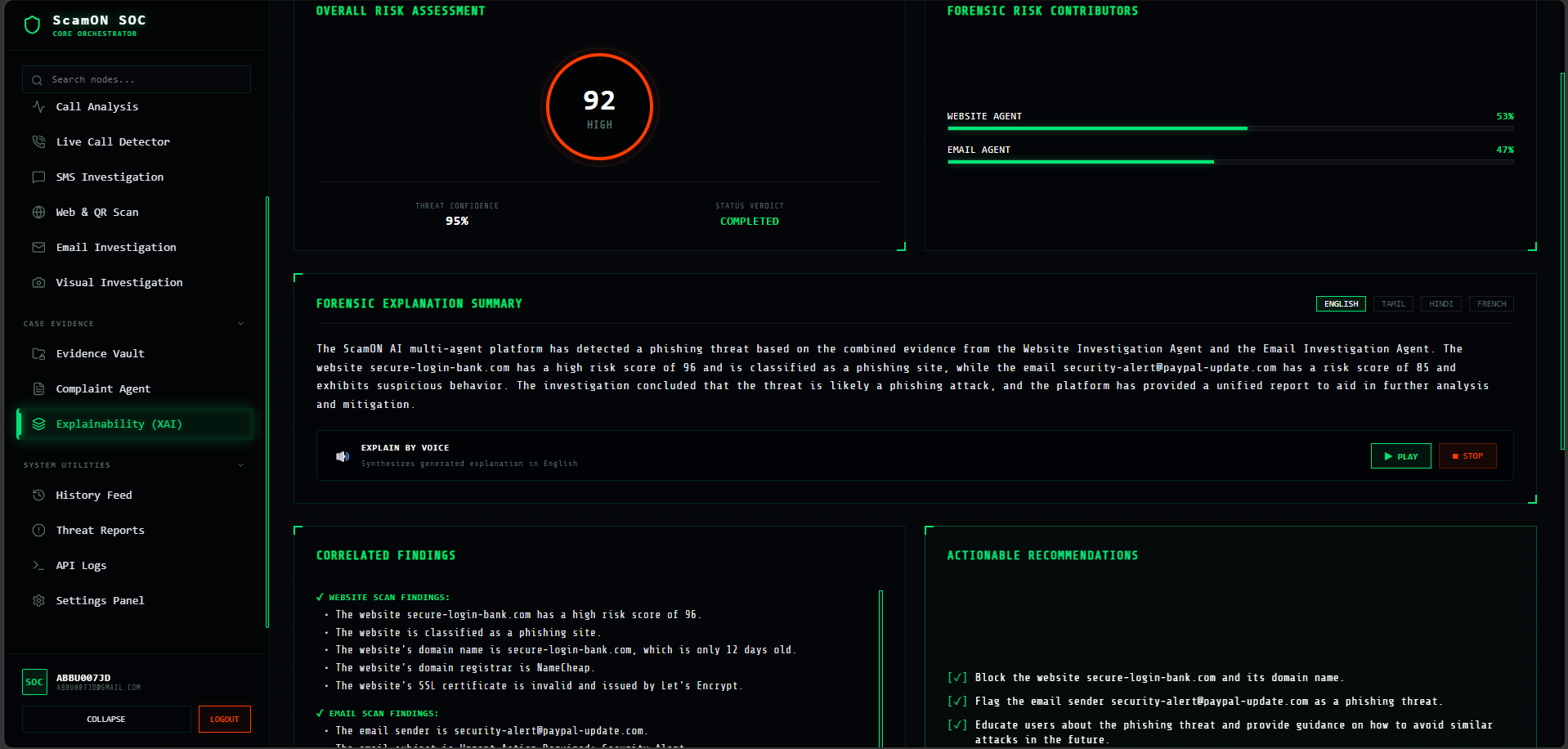
Threat Correlation Agent: Correlates findings from multiple agents to identify connected threats and generate a unified risk assessment.
-
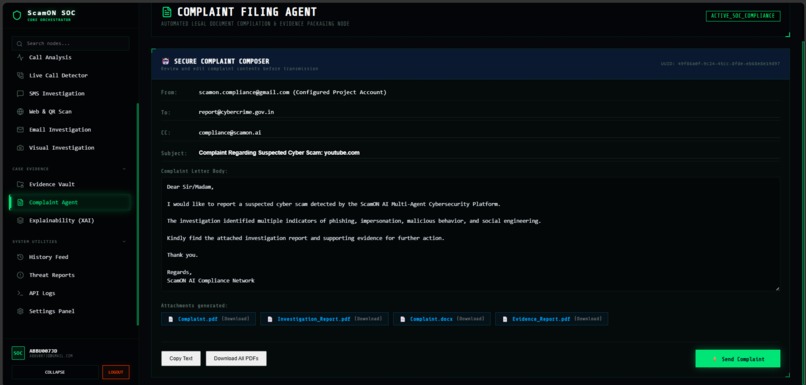
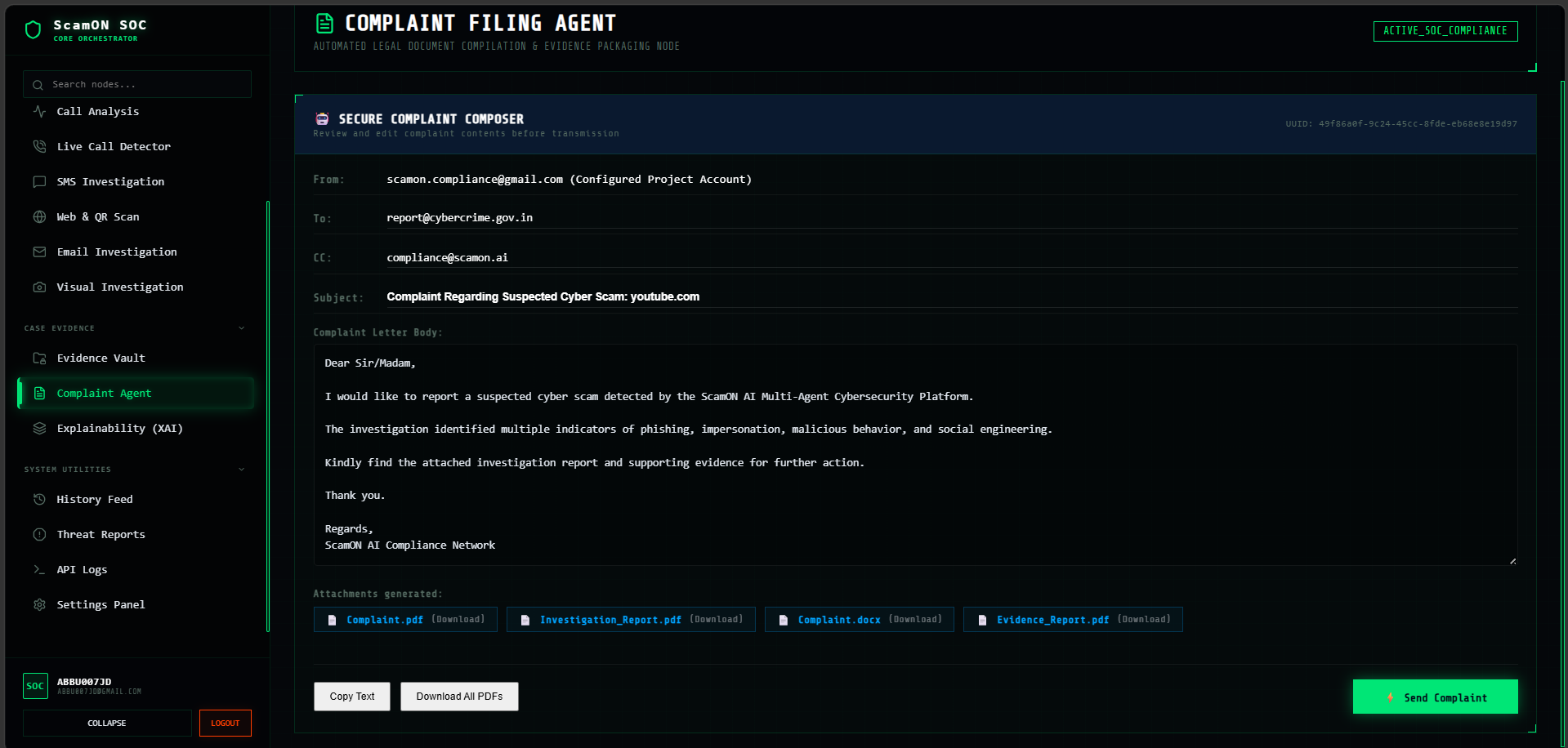
Complaint Agent: Generates structured cybercrime complaints using verified investigation findings and collected evidence.
-
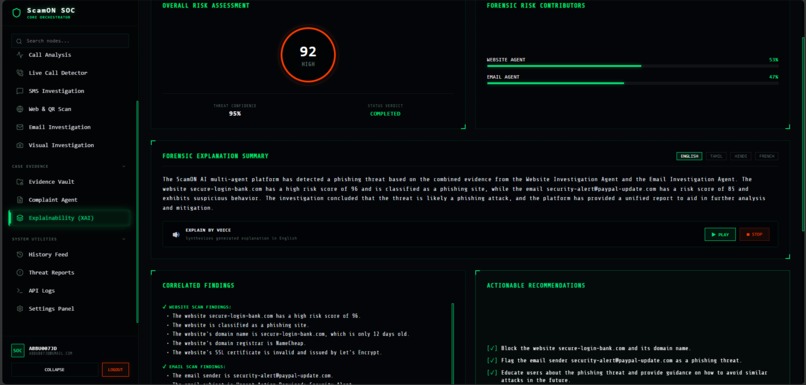
Explainability (XAI) Agent: Explains AI decisions, detected threats, supporting evidence, and risk factors in a clear, understandable way.
Inspiration
Cyber scams are no longer limited to emails or websites. People are targeted through phishing links, SMS messages, phone calls, QR codes, and images, often requiring multiple tools to investigate a single incident. This inspired us to build ScamON SOC as a unified AI-powered cybersecurity platform.
What We Built
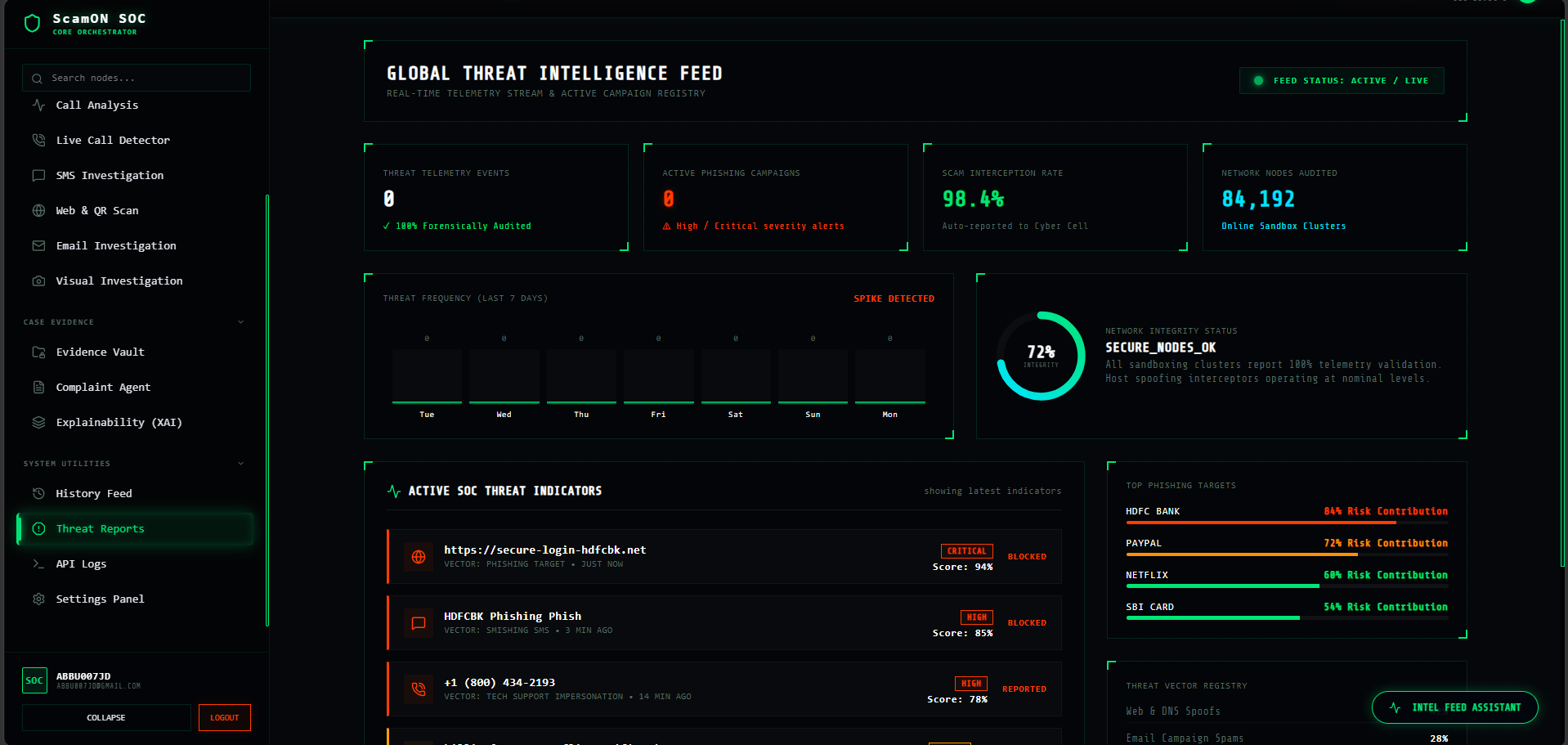
ScamON SOC uses a Master Agent to understand the user's input and route it to specialized agents for Website, Email, SMS, Voice, Call, and Visual Investigation. The agents analyze threats, collect evidence, correlate findings, and provide explainable results through XAI. The platform also includes an Evidence Vault, Threat Reports, History, and Complaint Generation.
How We Built It
We designed ScamON SOC using a modular multi-agent architecture where each specialized agent handles a specific type of threat. The Master Agent acts as the orchestrator, while the investigation agents perform domain-specific analysis. We also focused heavily on creating an intuitive SOC-style interface so users can investigate threats without needing to understand the underlying security tools.
Challenges We Faced
Building the prototype involved many challenges, including integrating multiple independent agents, maintaining reliable communication between agents, handling different types of user inputs, implementing real-time call analysis, integrating email and SMS data, and managing evidence across investigations. We also faced several UI and integration issues during development and continuously tested and refined the system.
What We Learned
This project helped us understand how multi-agent systems can be applied to real-world cybersecurity problems. We learned about agent orchestration, AI-based threat analysis, explainability, digital evidence management, API integration, and designing complex AI systems with a simple user experience.
Impact
ScamON SOC aims to make scam investigation faster, simpler, and more understandable by bringing multiple security capabilities into one intelligent platform. Instead of switching between different tools, users can provide an input and let the Master Agent coordinate the appropriate investigation.

Log in or sign up for Devpost to join the conversation.