-
-
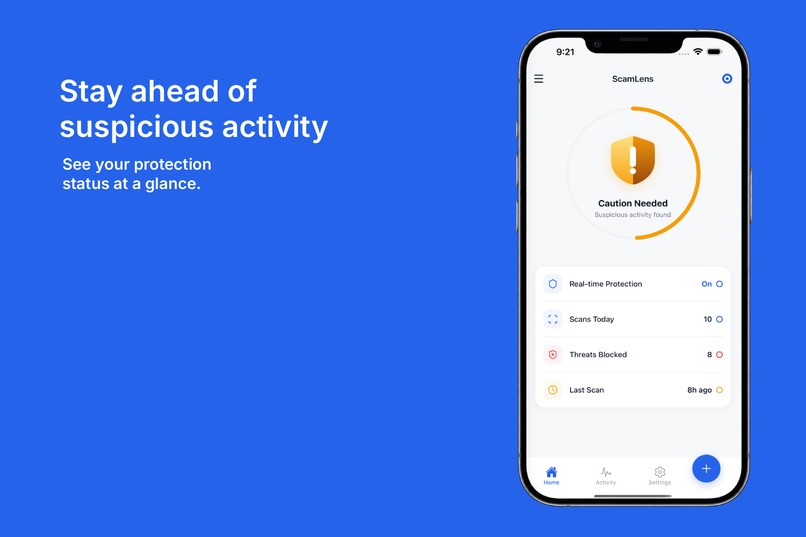
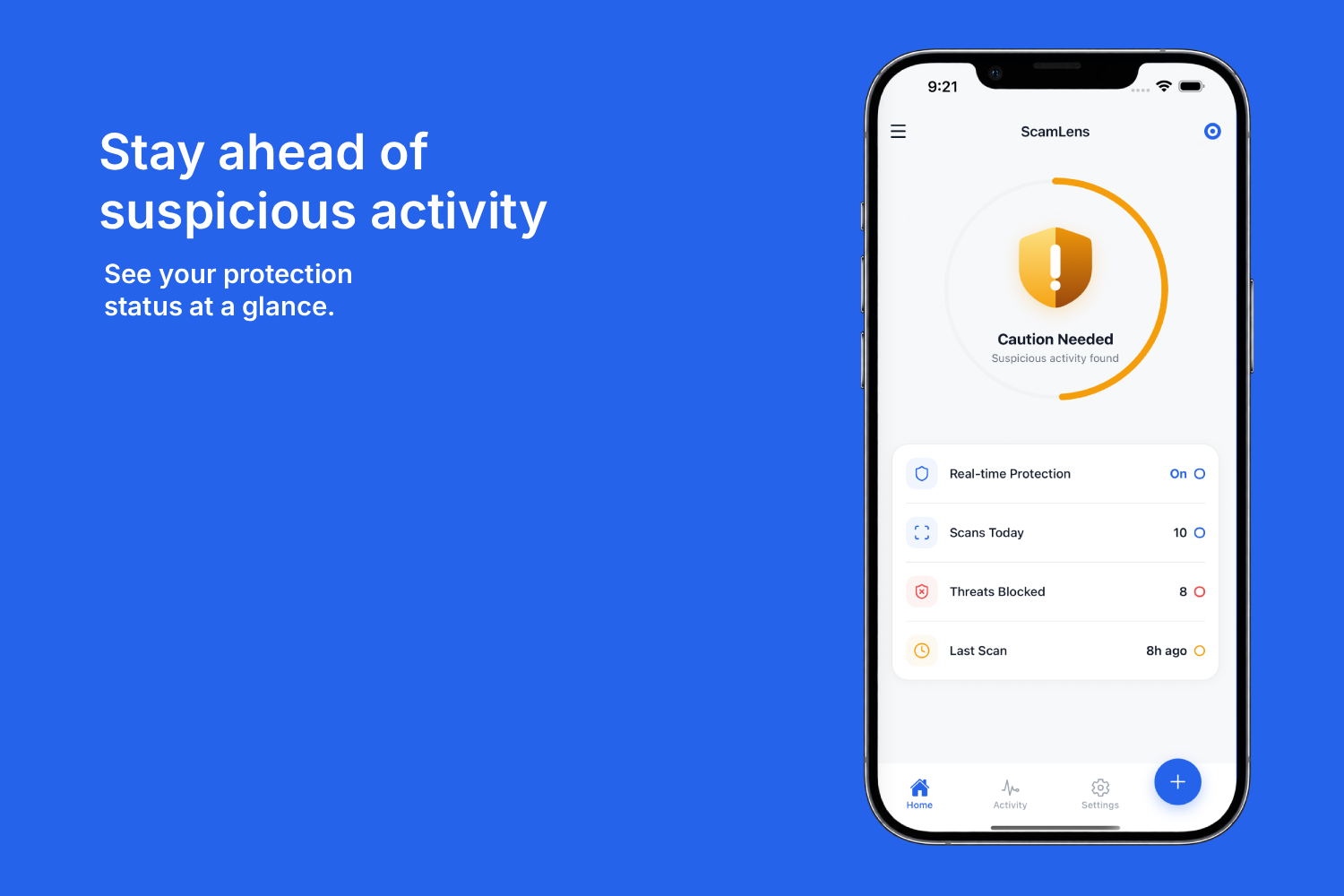
See your protection status at a glance.
-
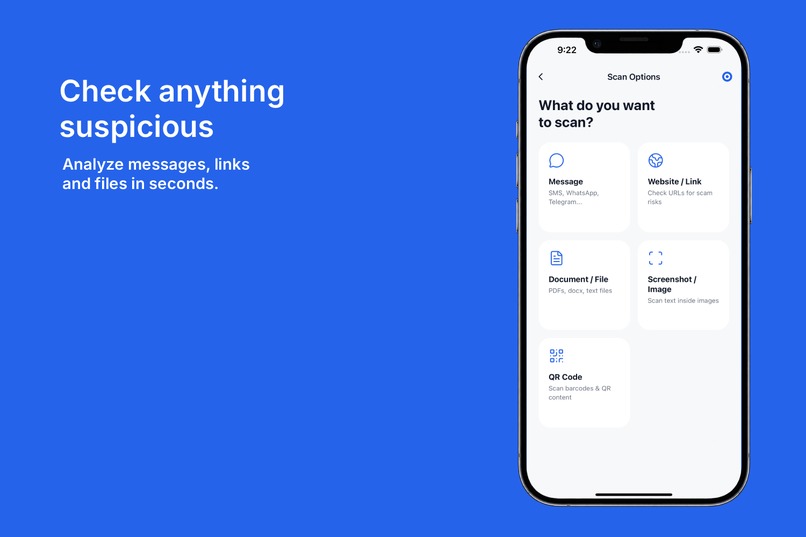
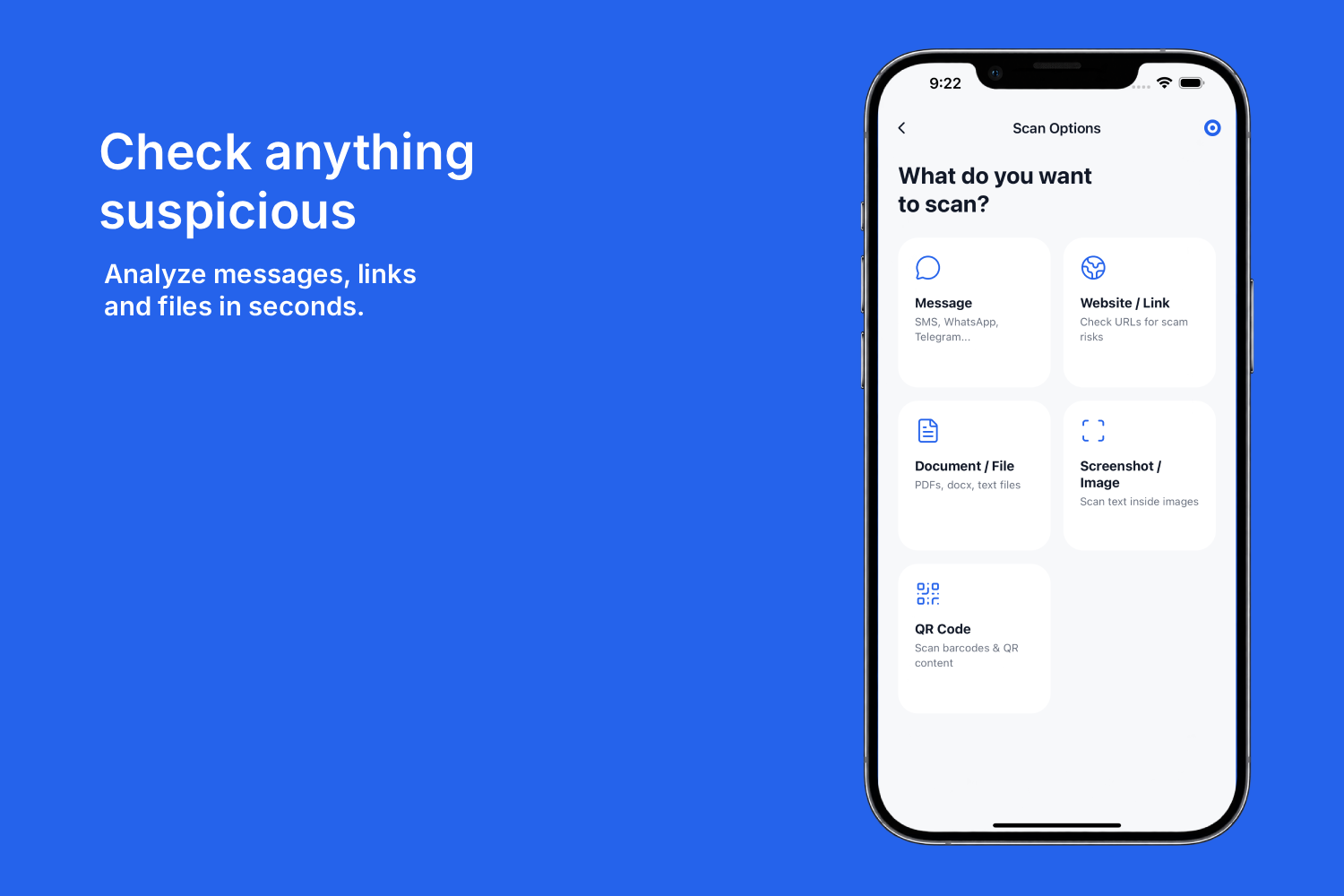
Analyze messages, links and files in seconds.Get a clear risk assessment before taking action.
-
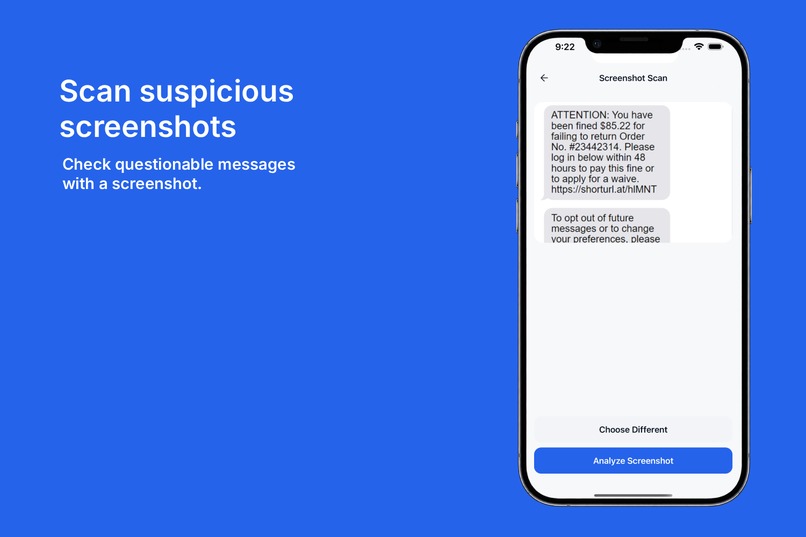
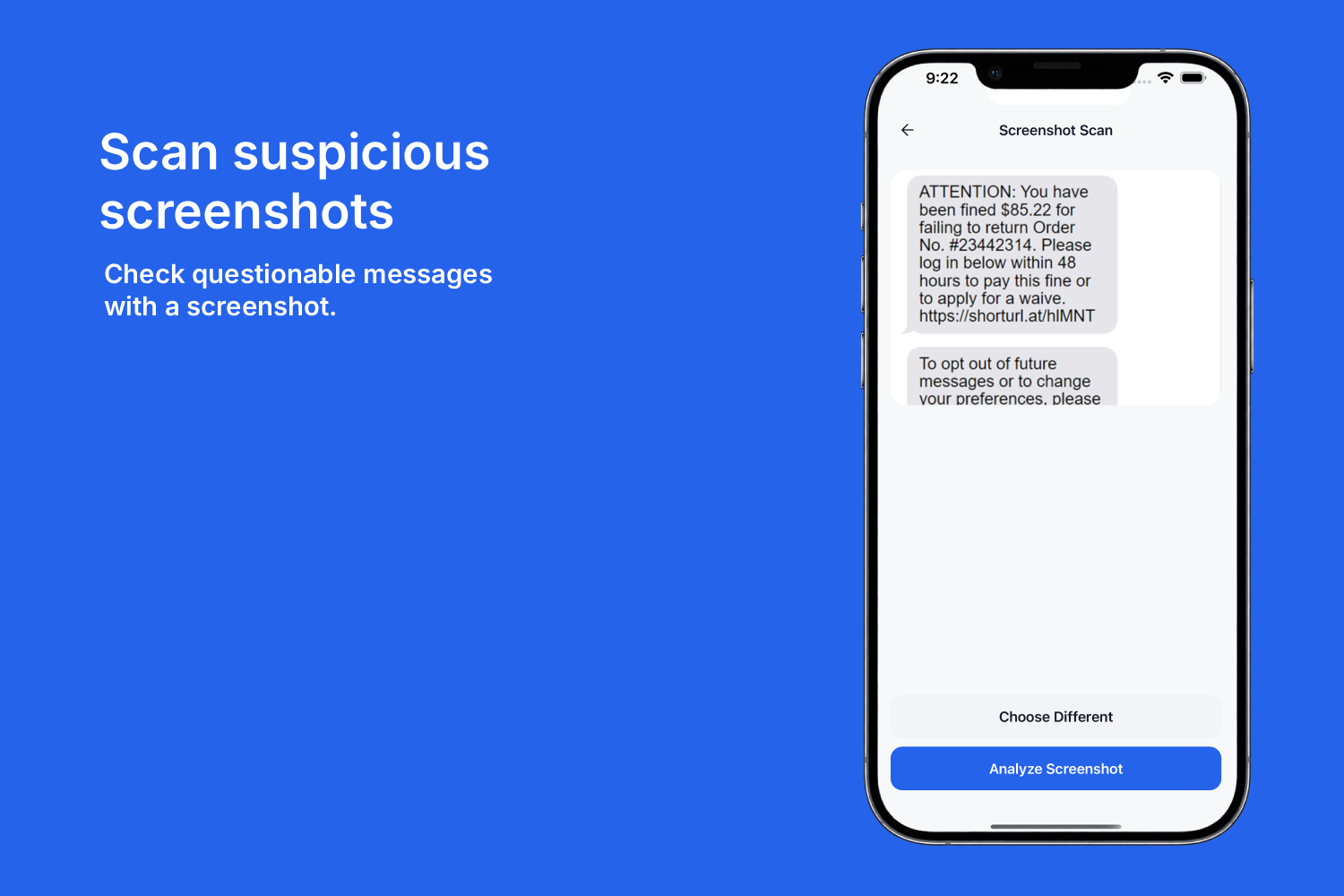
Upload a screenshot to check messages, links and other suspicious content.
-
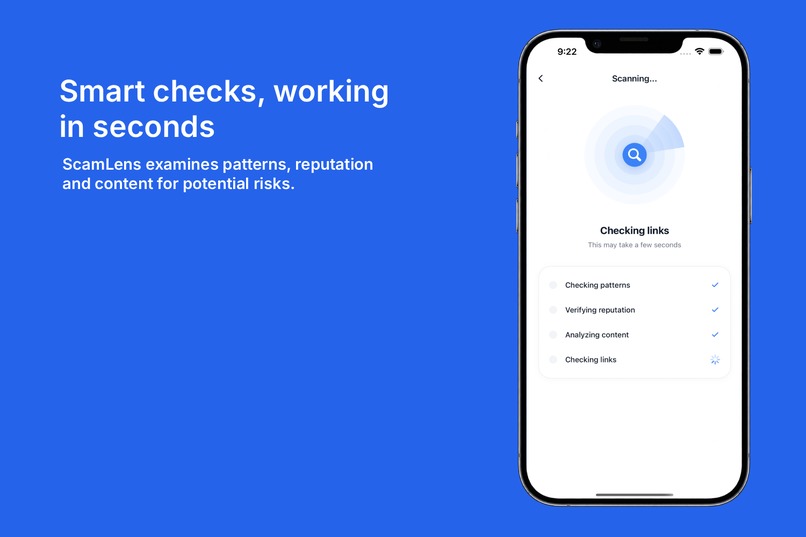
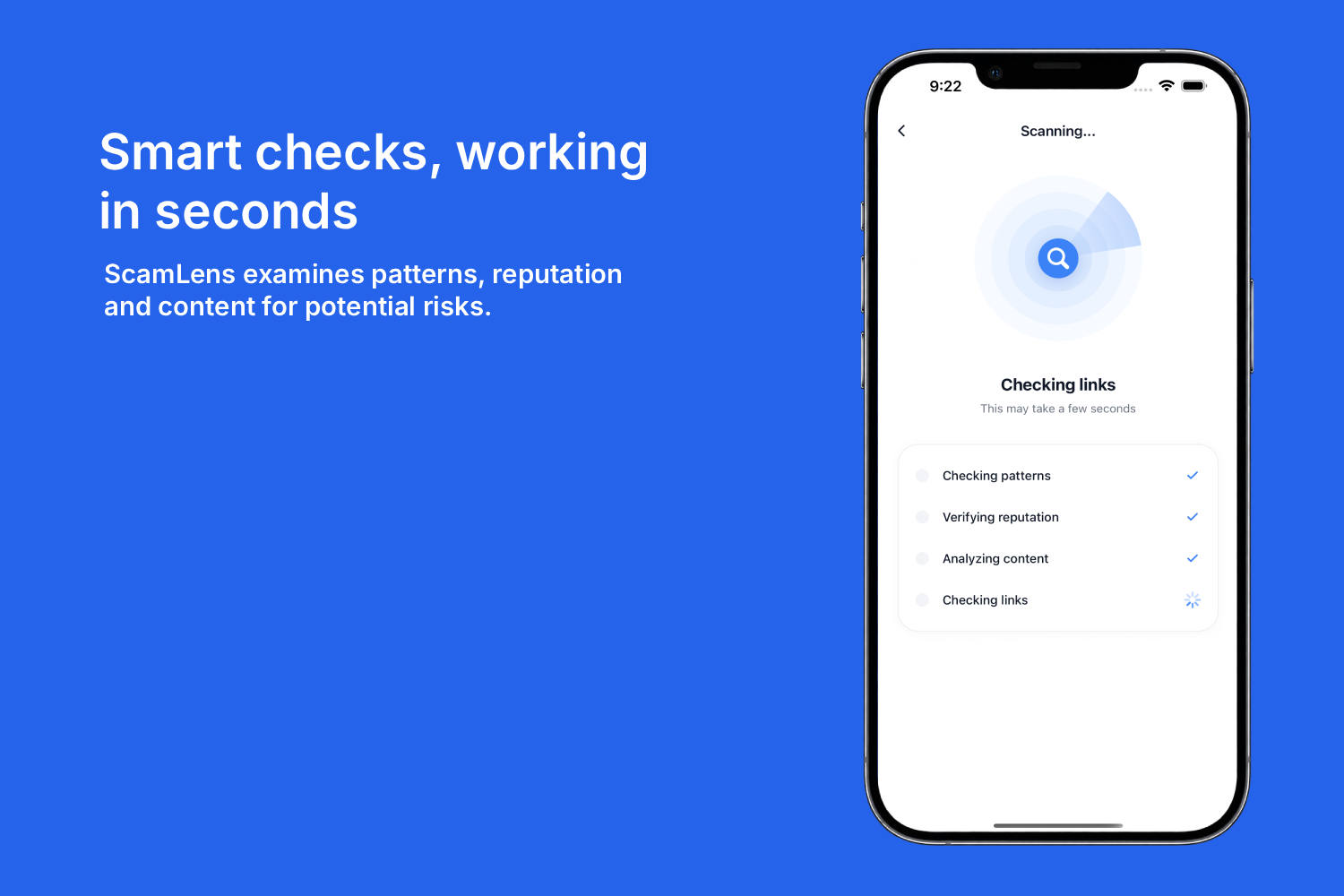
ScamLens examines patterns, reputation and content for potential risks.
-
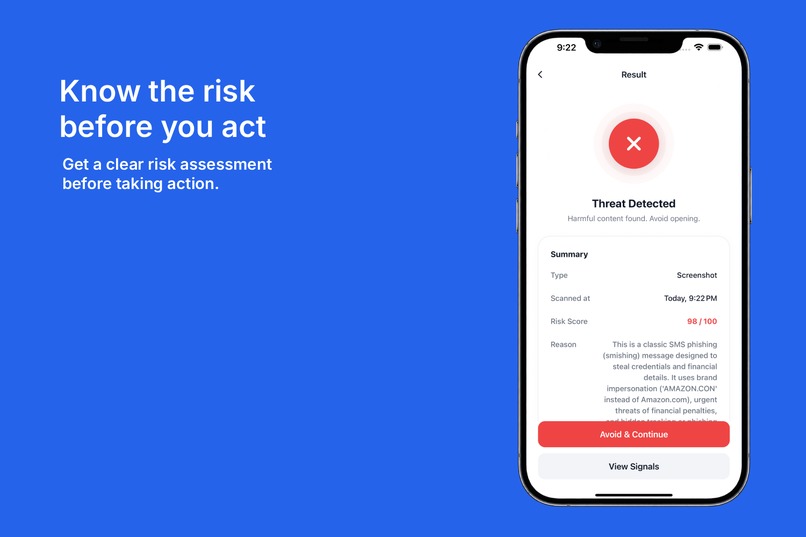
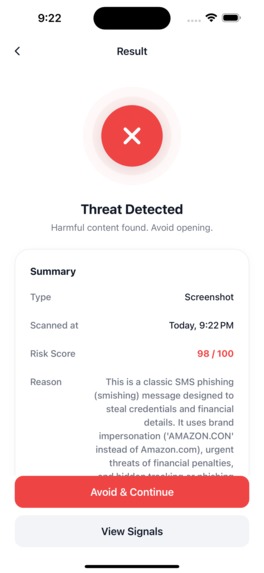
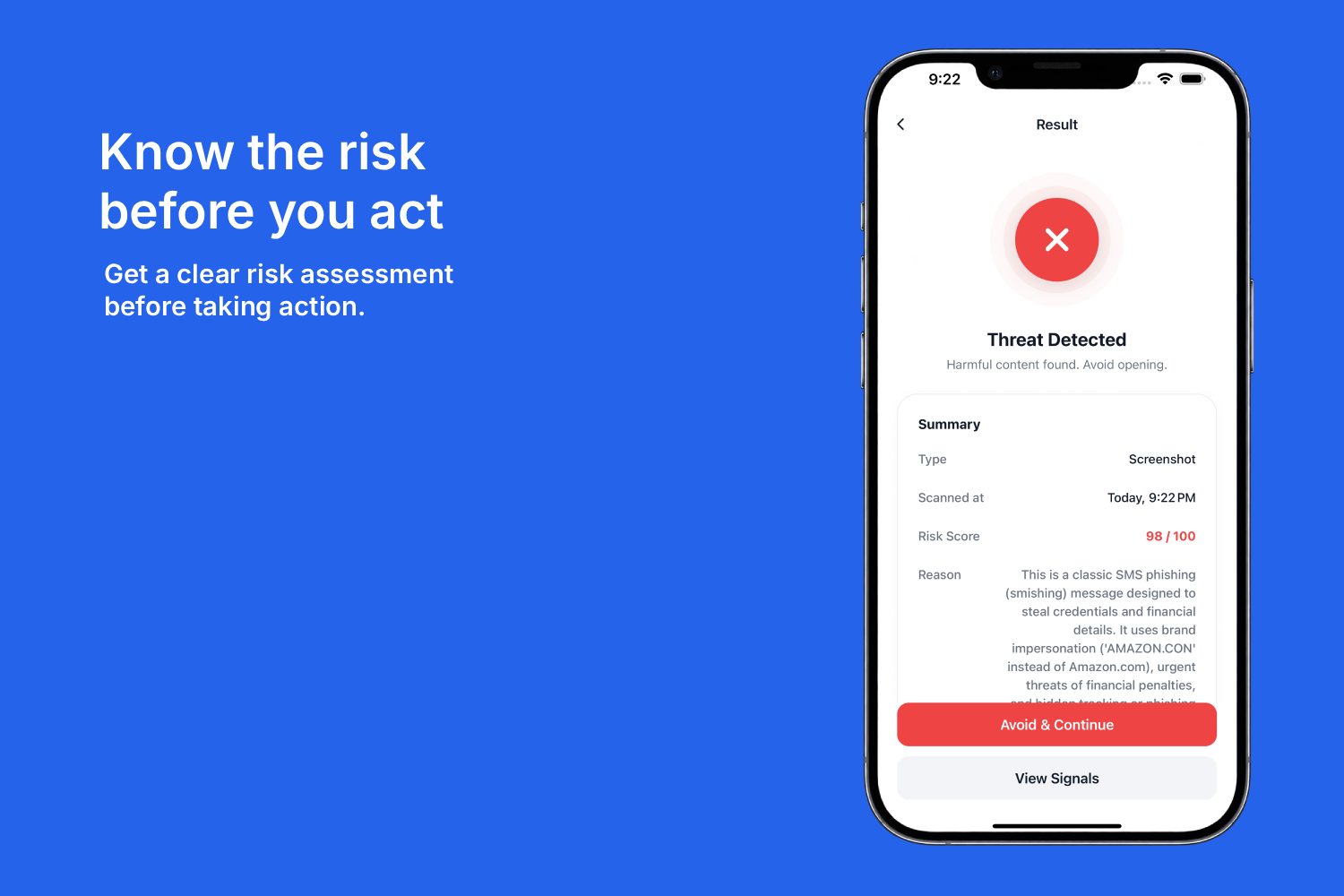
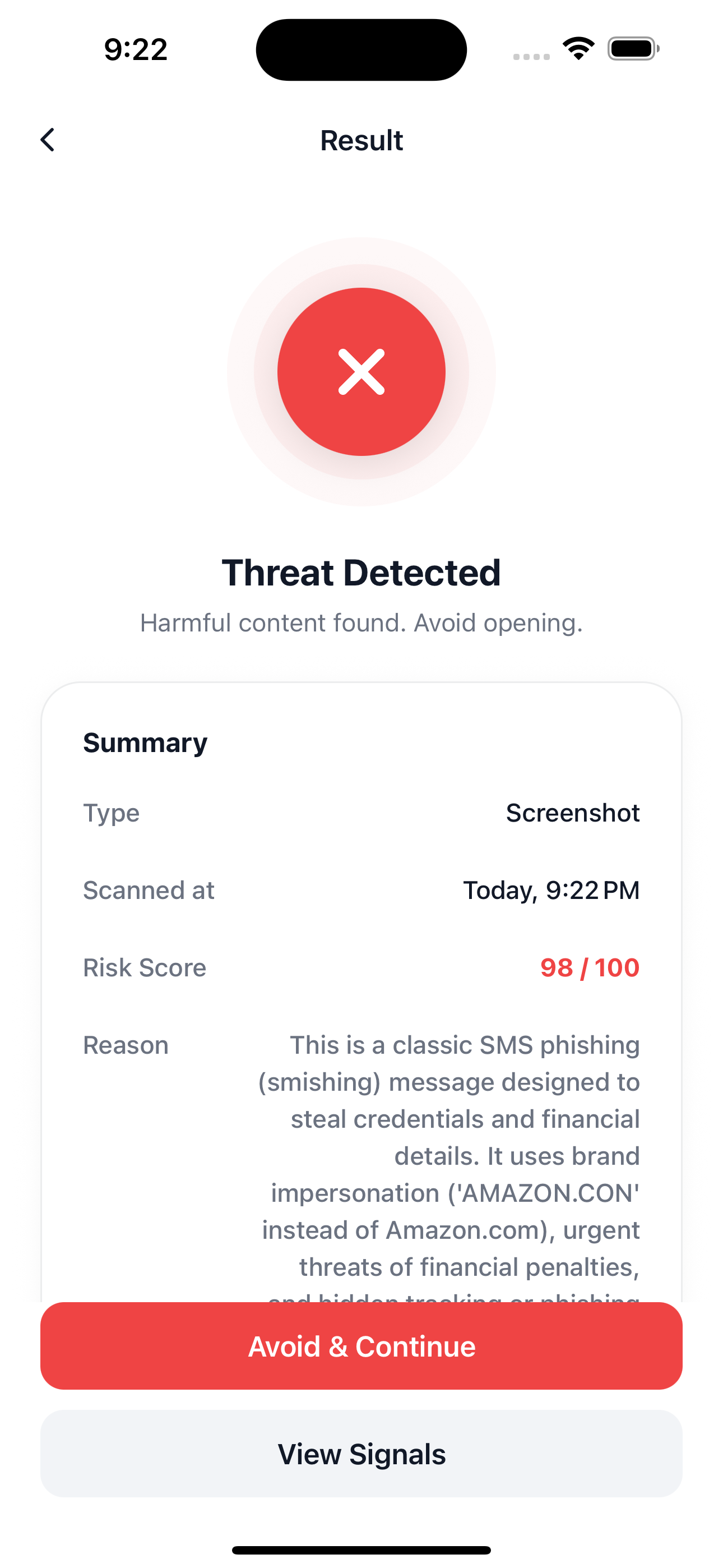
Get a clear risk assessment before taking action.
-
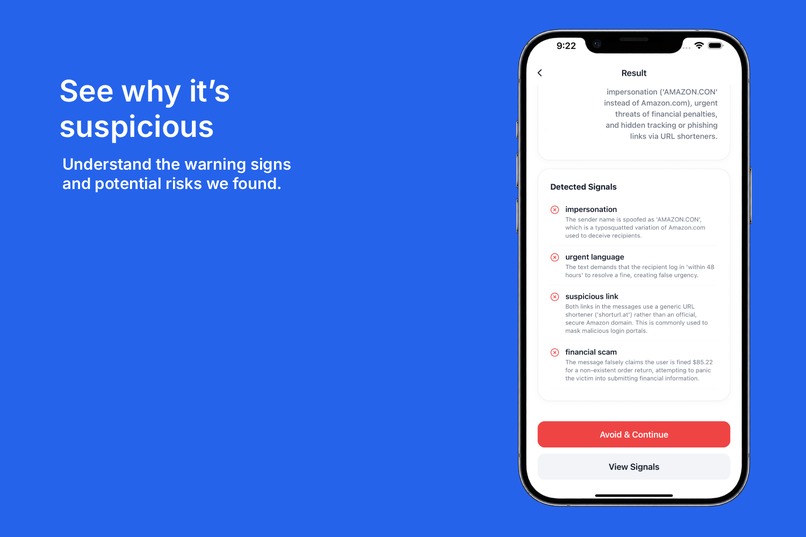
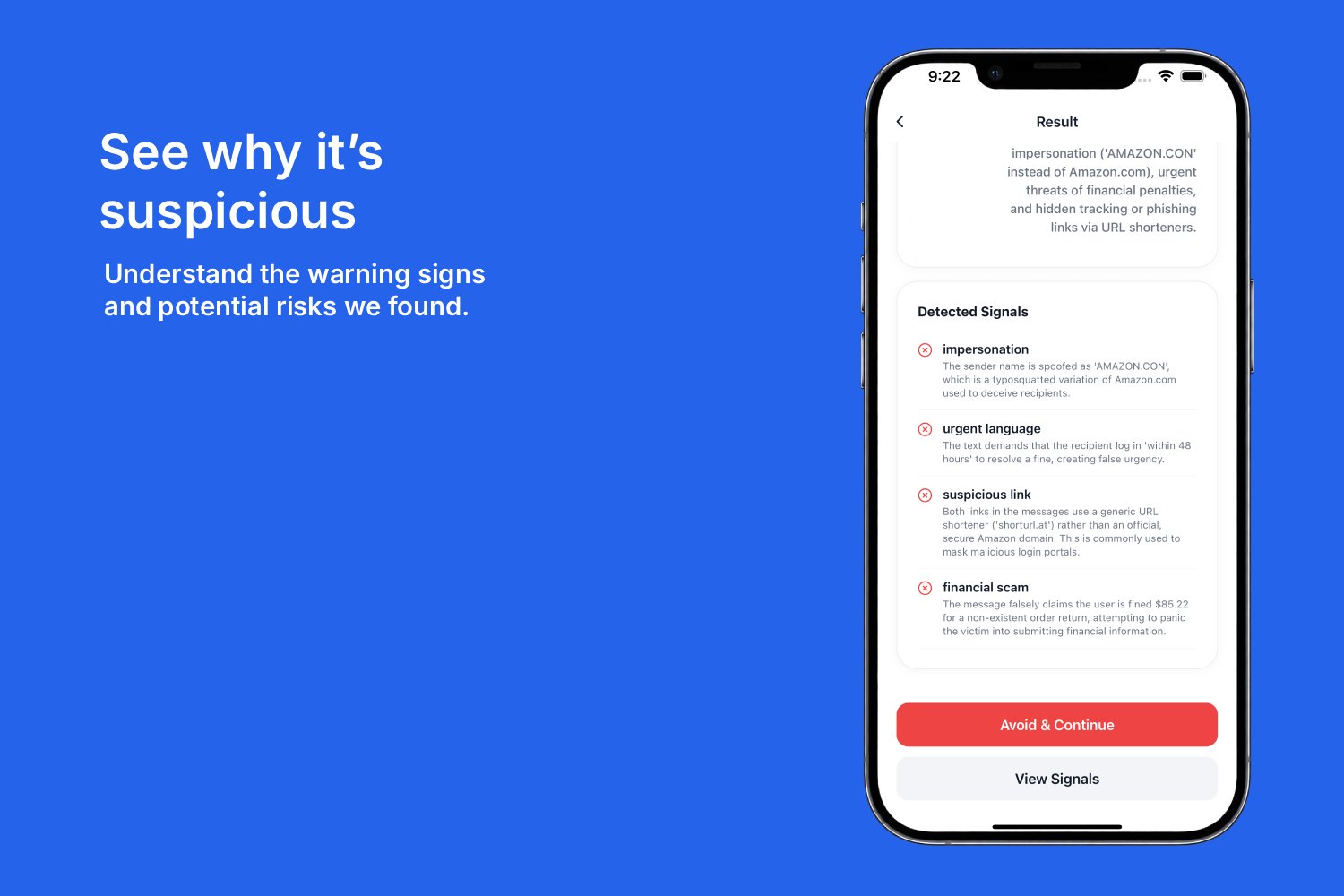
Understand the warning signs and potential risks we found.
-
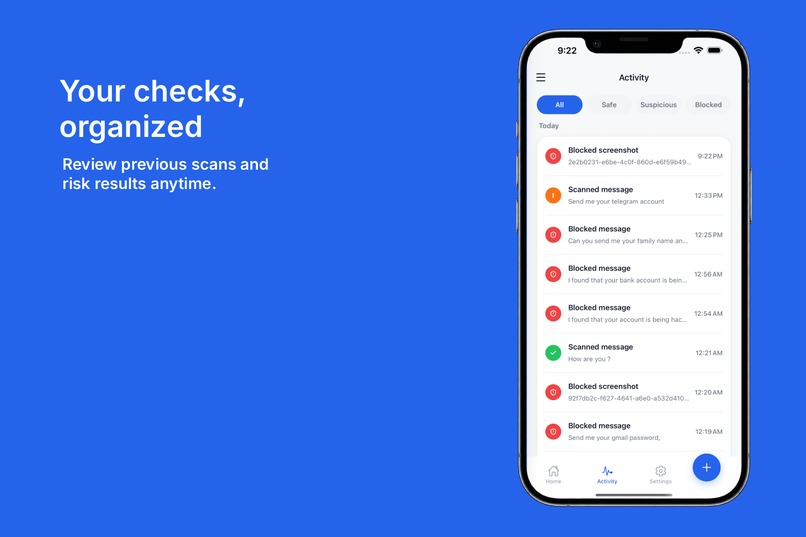
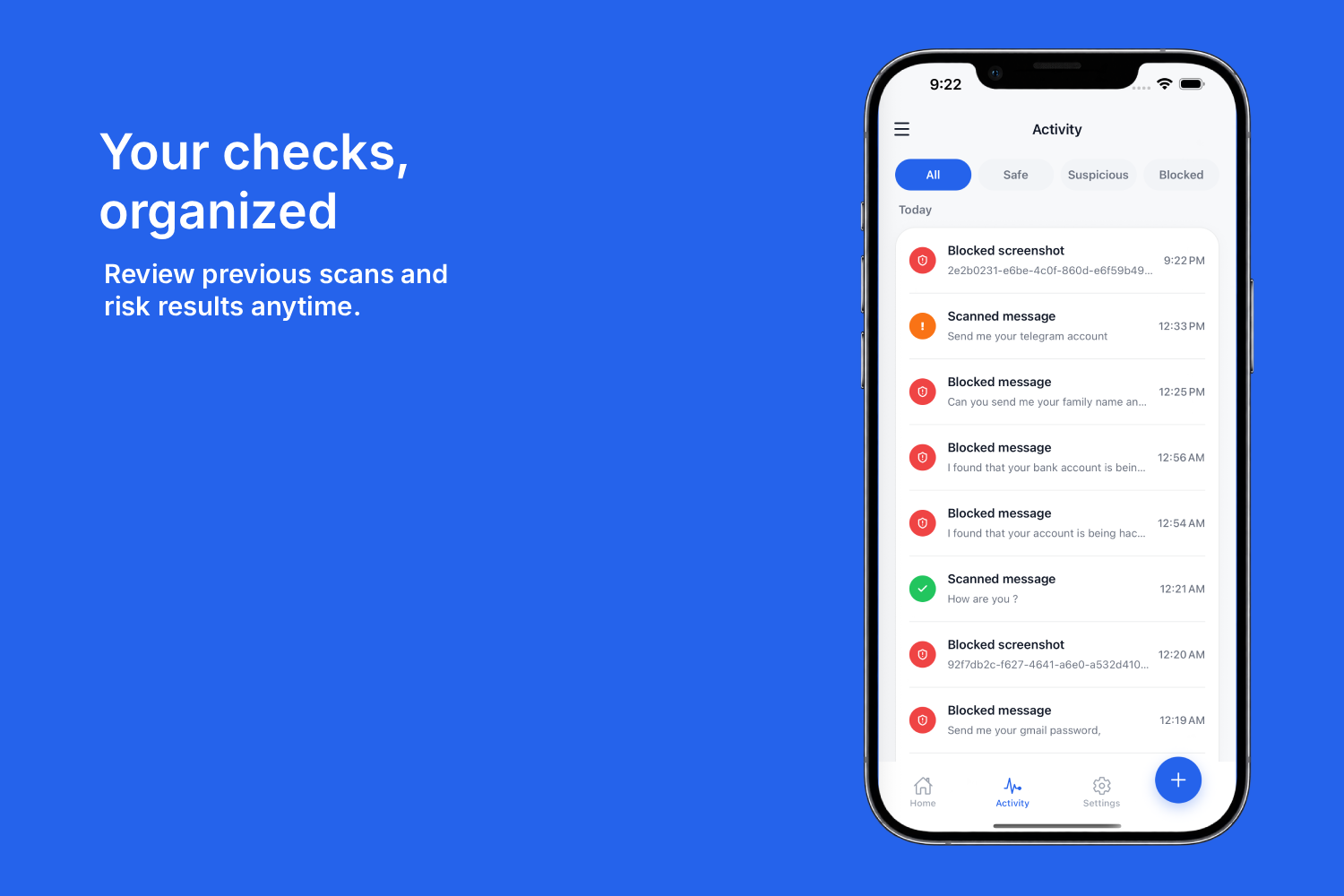
Review previous scans and risk results anytime.
-
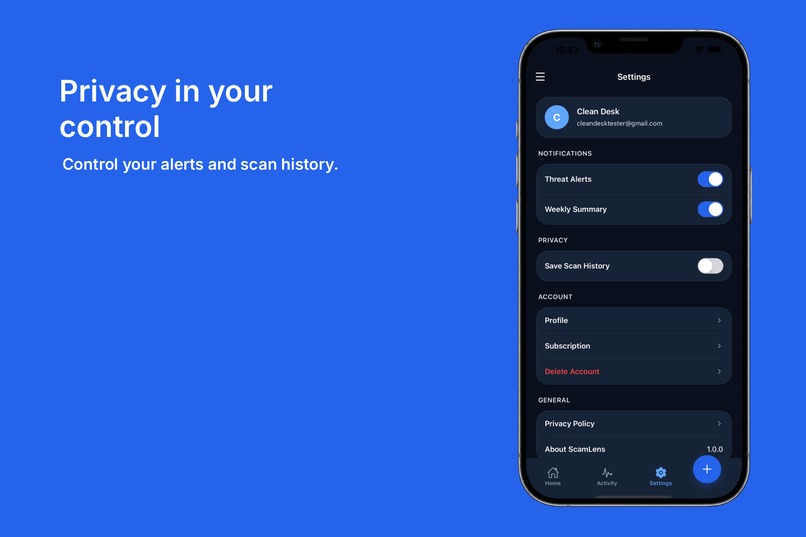
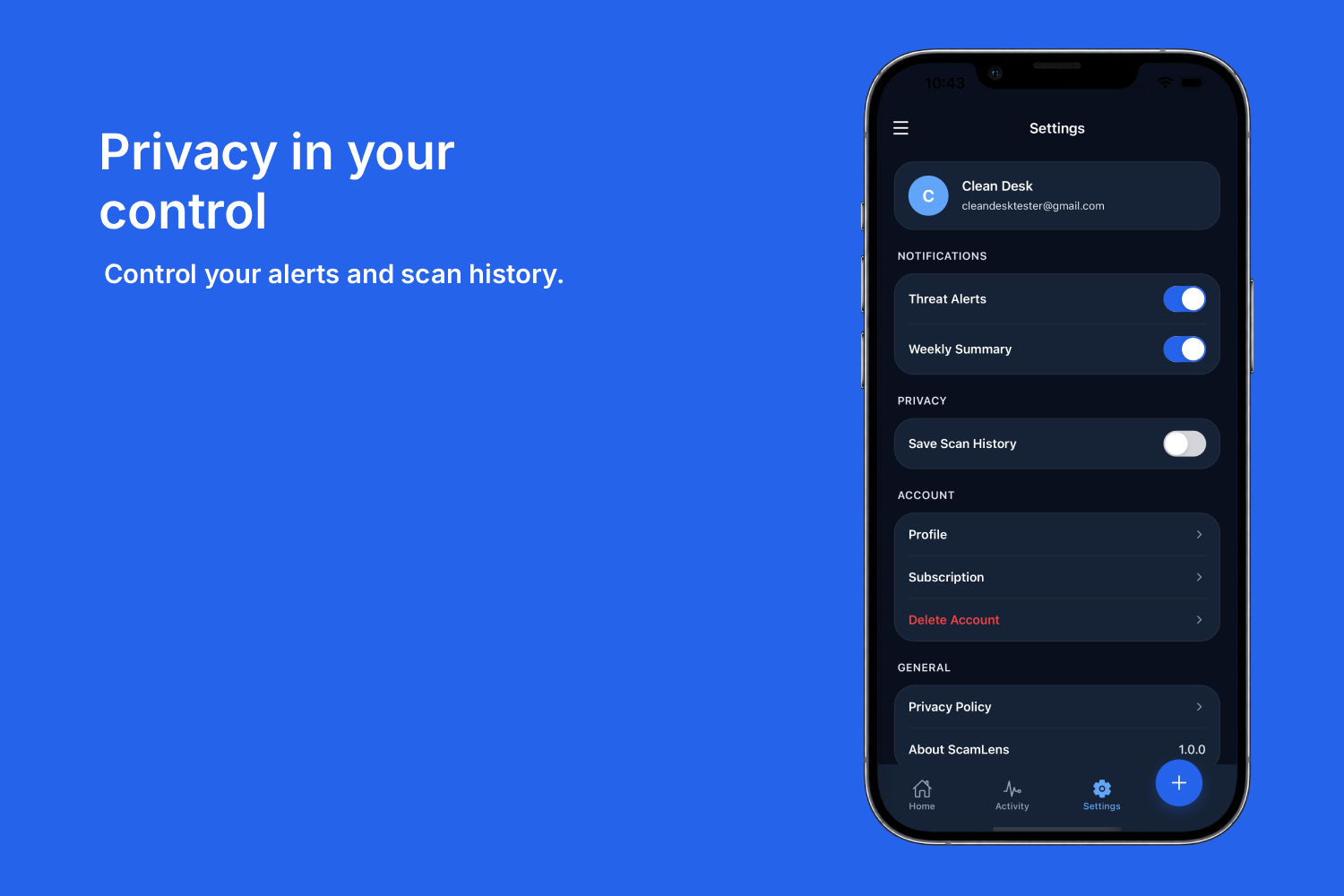
Choose your alerts and decide whether to save your scan history.
-
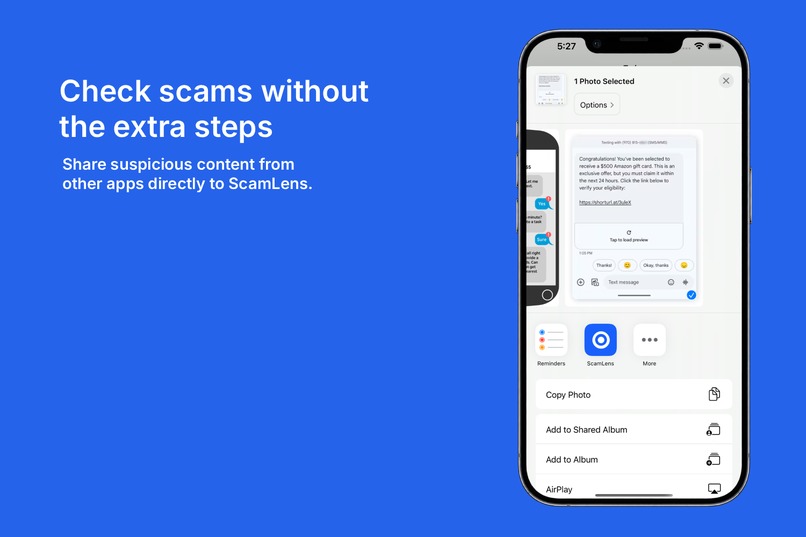
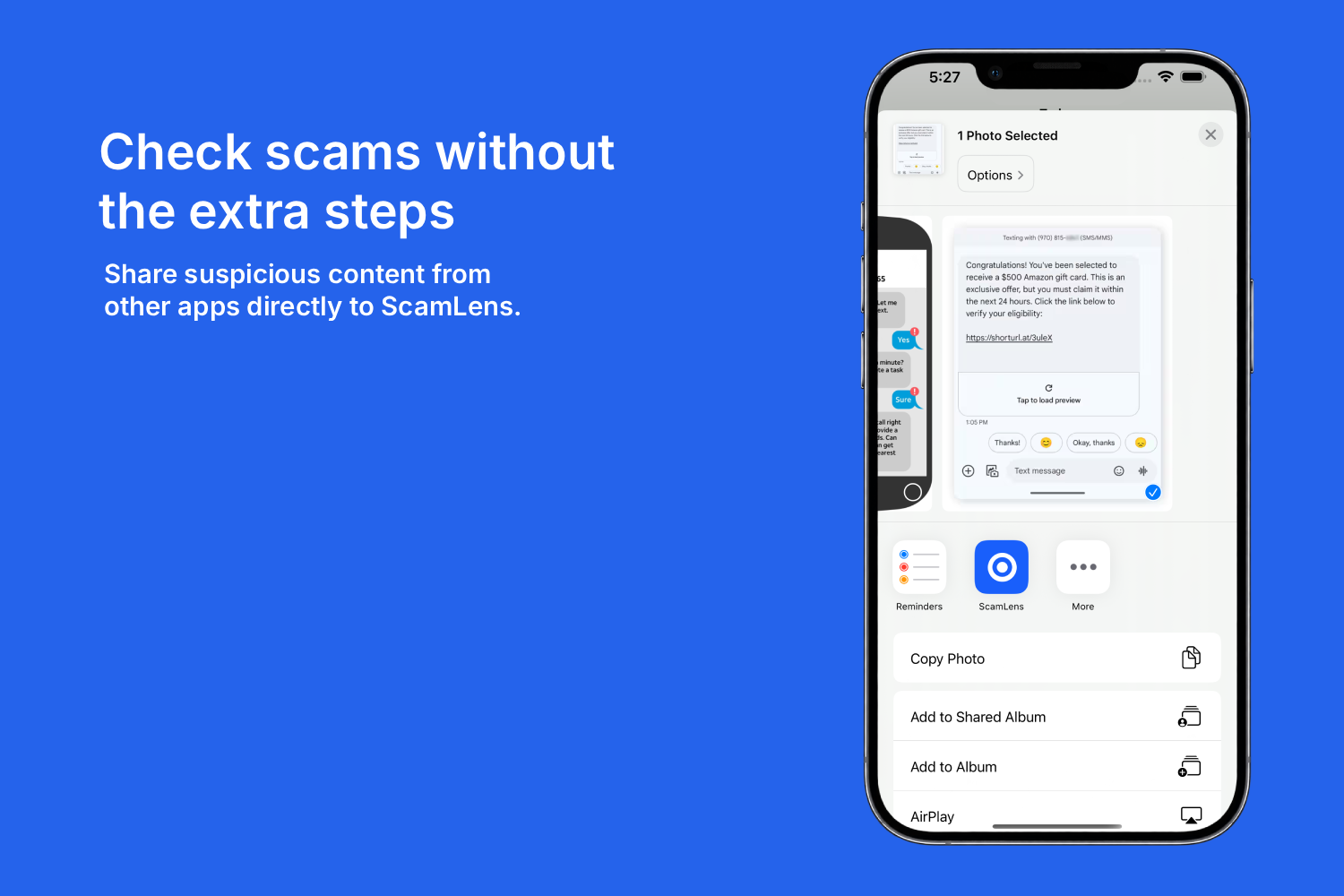
Send suspicious screenshots directly to ScamLens for analysis.
-

-

Inspiration
Scams are becoming increasingly difficult to recognize. A suspicious message may look professional, a phishing link may closely resemble a legitimate website, and fraudulent documents or screenshots can easily appear convincing at first glance.
The problem is that people often realize something was a scam only after they clicked a link, sent money, shared personal information, or downloaded a malicious file.
I built ScamLens around a simple idea: what if you could ask for a second opinion before you trust something?
Instead of requiring users to understand phishing techniques or security terminology, ScamLens lets them submit suspicious content and receive a clear, understandable risk assessment.
What it does
ScamLens is an AI-powered mobile app that helps users analyze potentially suspicious digital content.
Users can submit:
- Suspicious messages
- Screenshots
- Links and URLs
- Documents and files
- Content shared directly from other apps
ScamLens analyzes the content for indicators commonly associated with scams, phishing, impersonation, social engineering, and other suspicious behavior.
Rather than simply returning “safe” or “unsafe,” the goal is to explain why something may be suspicious so the user can make a more informed decision.
How I built it
ScamLens is designed as a mobile-first application with a backend responsible for authentication, secure content processing, analysis, storage, and subscription management.
The application combines multiple signals depending on the type of content being analyzed. Messages can be examined for social-engineering patterns, URLs for suspicious characteristics, and uploaded screenshots or files can provide additional context for analysis.
A major design goal was keeping this complexity away from the user.
The experience is intentionally simple:
Share or upload → Analyze → Understand the risk → Take action
I also designed ScamLens so content can be shared to it from outside the application. This makes checking something suspicious much faster than manually copying information between apps.
For monetization, ScamLens uses RevenueCat to manage subscription entitlements and provide access to premium functionality across supported platforms.
Challenges I ran into
One of the biggest challenges was deciding how ScamLens should communicate uncertainty.
Scam detection is not always binary. A legitimate message can contain unusual wording, while a sophisticated scam can look extremely convincing. I therefore didn’t want the product to create a false sense of certainty.
Instead, the experience focuses on presenting risk indicators and understandable explanations that help users make the final decision.
Another challenge was supporting several very different input types while keeping the experience consistent. A URL, screenshot, message, and document require different analysis techniques, but from the user’s perspective they should all feel like part of the same simple workflow.
Building subscription infrastructure was another important part of the project. RevenueCat allowed me to separate subscription and entitlement logic from the core scam-analysis experience while preparing ScamLens for distribution across mobile platforms.
What I learned
Building ScamLens taught me that security products need more than accurate detection—they need to communicate risk clearly.
Most people don’t want a technical cybersecurity report. They want answers to questions such as:
Why is this suspicious?
What should I avoid doing?
What should I do next?
That influenced both the product design and the way analysis results are presented.
I also learned a great deal about mobile application architecture, authentication, file handling, subscription infrastructure, platform requirements, and designing an AI-powered product around real-world uncertainty.
What’s next for ScamLens
My goal is to make ScamLens an easy safety layer that people can use whenever something online doesn’t feel right.
Future development will focus on improving detection across more scam types, expanding contextual analysis, making sharing content into ScamLens even faster, and continuously improving the explanations and recommended actions provided to users.
Ultimately, I want checking suspicious digital content to become as natural as checking the spelling of a message before sending it:
When in doubt, check it with ScamLens.
Built With
- api
- apple
- artificial
- cloudflare
- expo.io
- in
- intelligence
- machine
- native
- node.js
- oauth
- postgresql
- r2
- react
- rest
- revenuecat
- sign
- supabase
- typescript

Log in or sign up for Devpost to join the conversation.