-
-
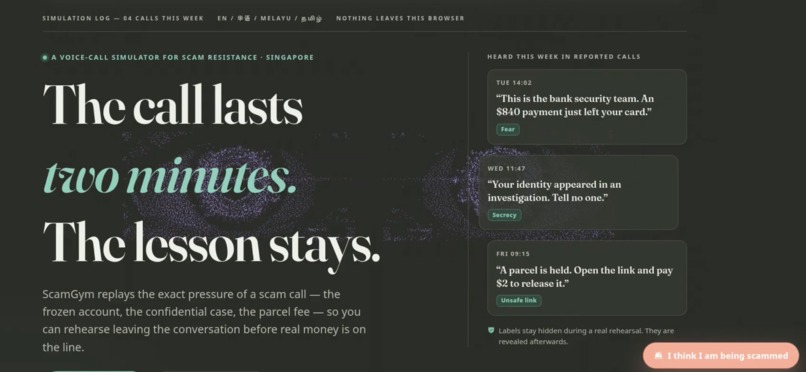
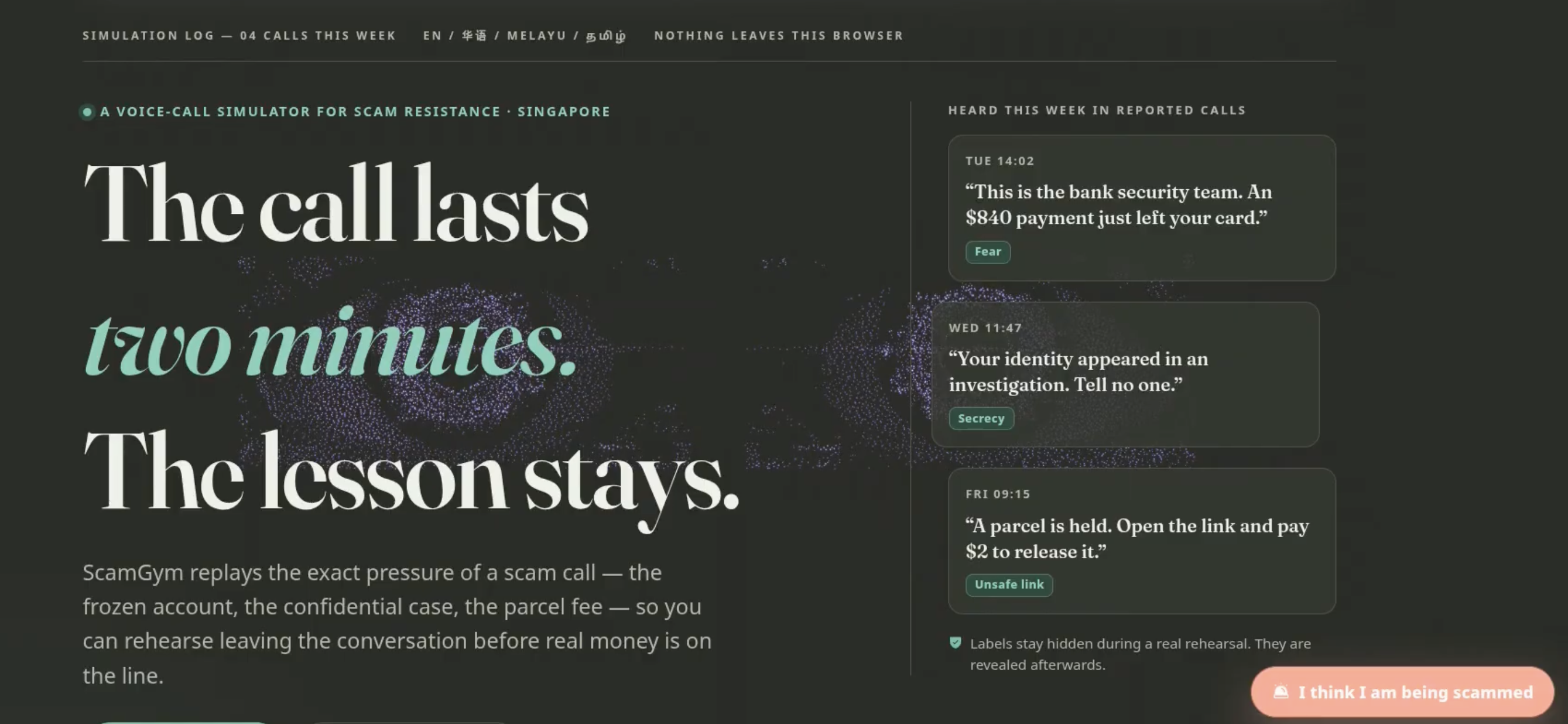
Hero section of website
-
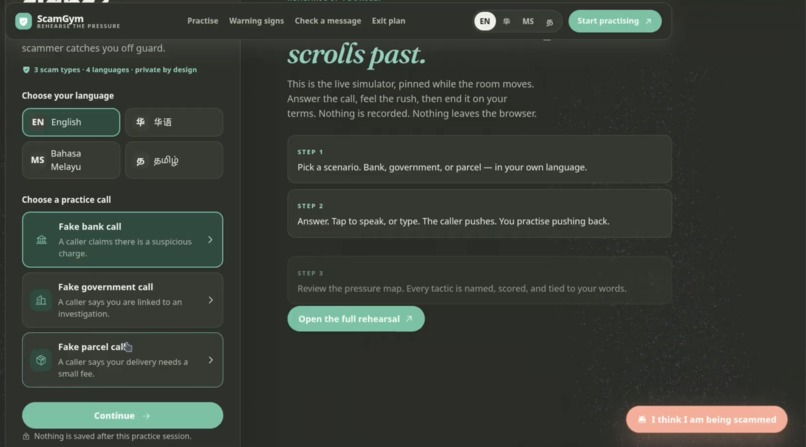
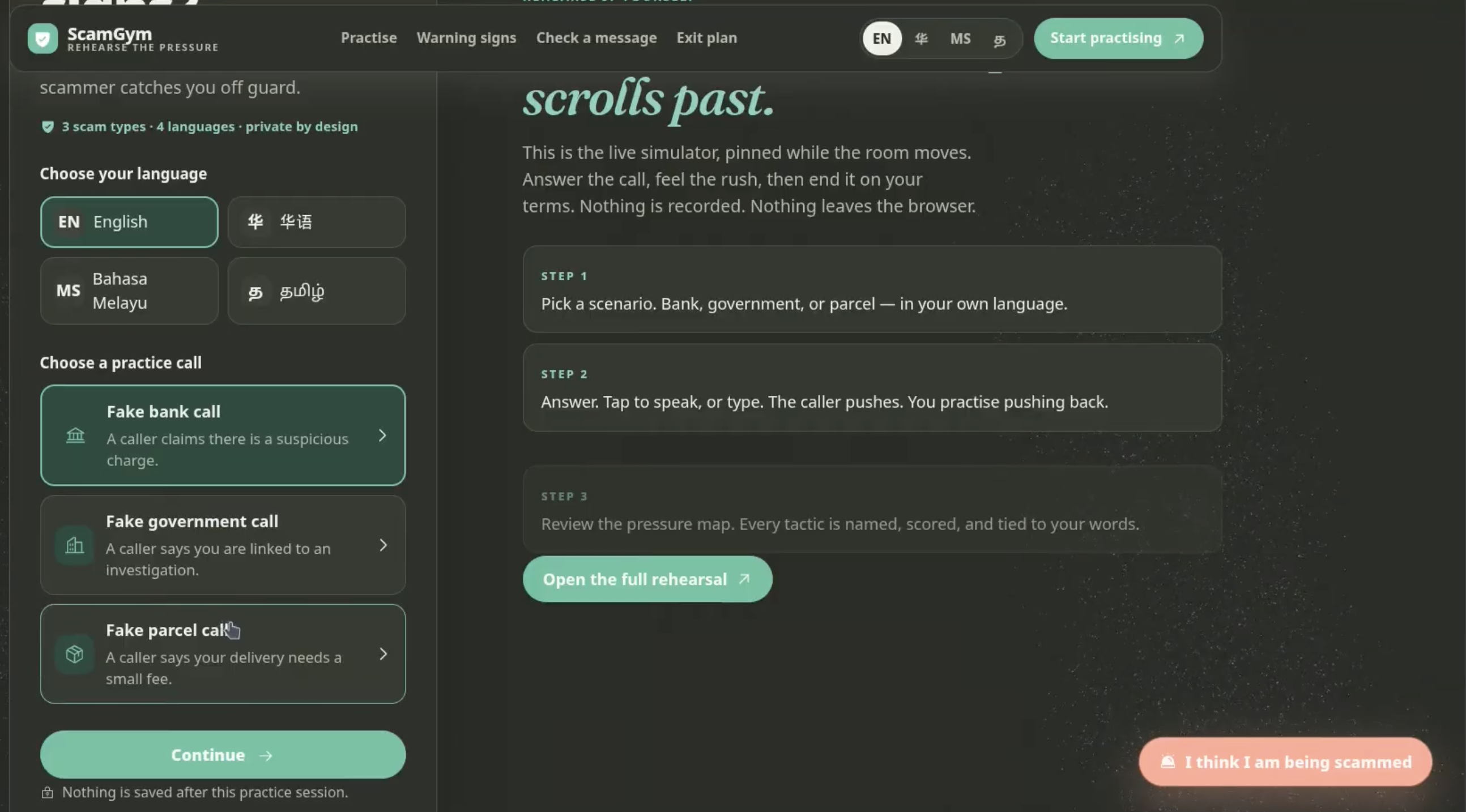
Scrolled down section of website
-
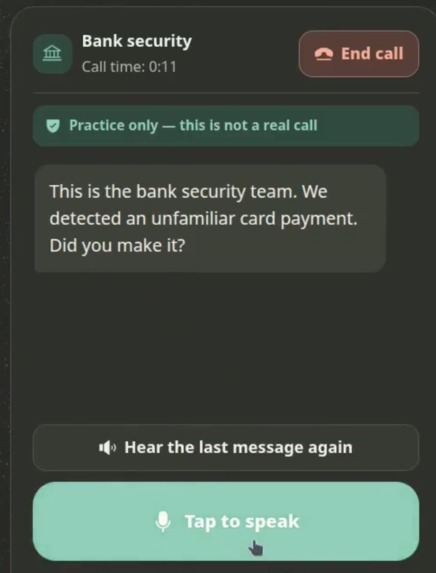
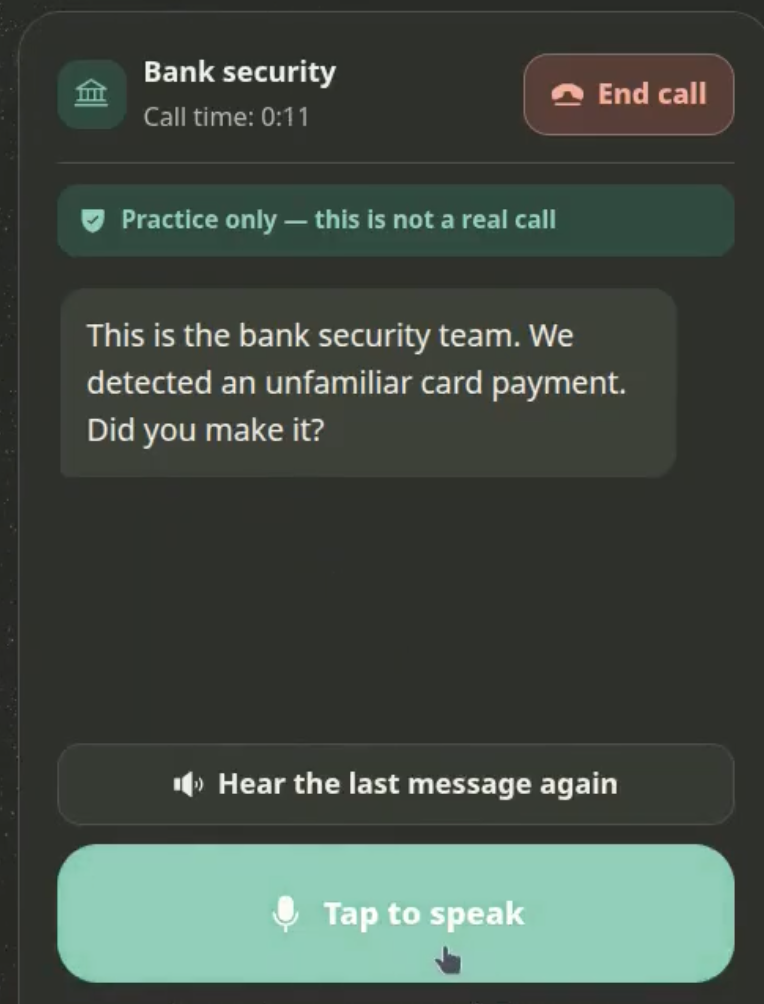
Live demo of the calling interface
-
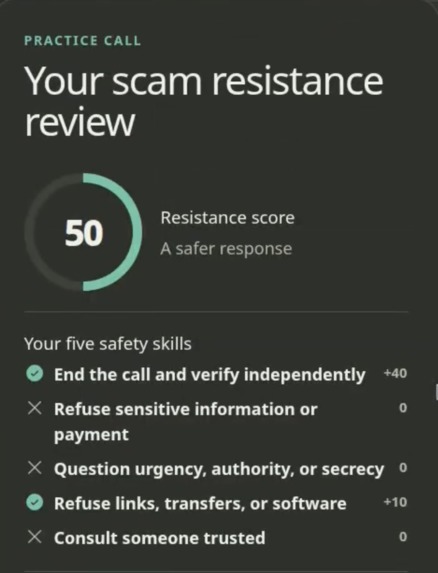
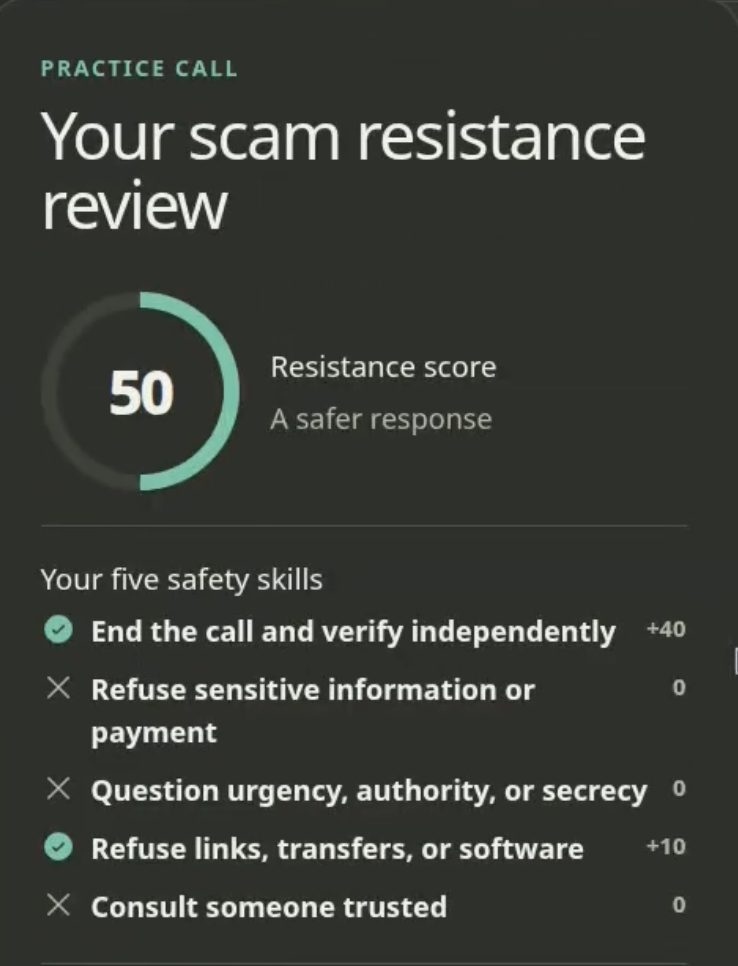
Results for the practice call
-
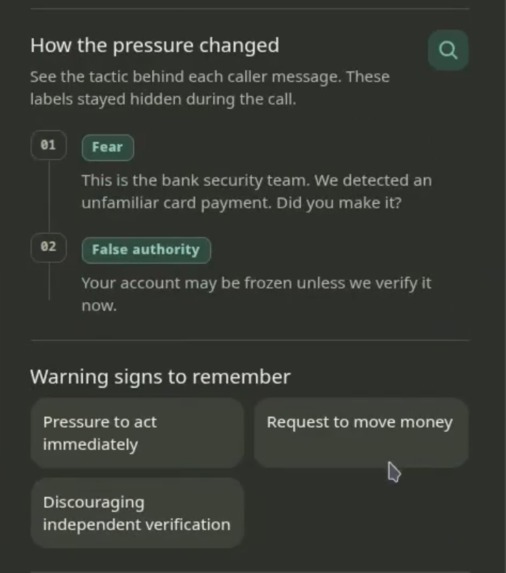
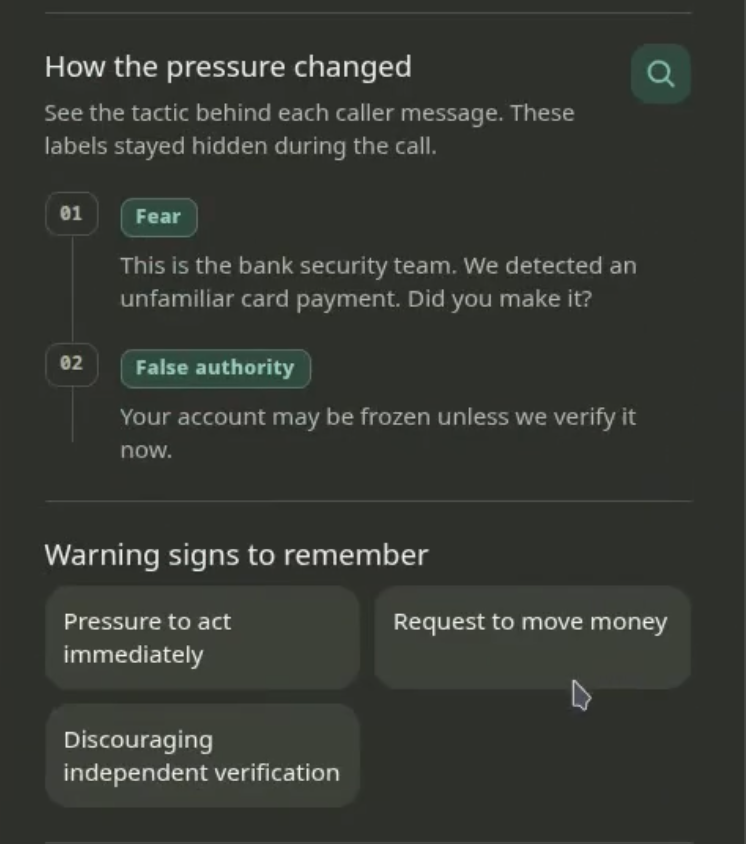
Teachings for real scam calls
Inspiration
Scam victims in Singapore lost $913.1 million in 2025. Seniors face added risk because they may have less experience with the tactics scammers use. We created ScamGym to help users recognise those tactics before facing them on a real call.
What it does
ScamGym teaches users how to spot scam calls through realistic practice. Each simulation exposes users to tactics such as impersonation, intimidation, manufactured urgency, requests for personal information, and attempts to build trust. Users choose how to respond during the call, then receive feedback on the warning signs they caught or missed. A dashboard records results across sessions so users can track their progress and focus on areas that need more practice.
How we built it
We used Codex throughout development to prototype features, implement the product, debug issues, and test new ideas. We kept the interface straightforward for users with limited technical experience. At the same time, we designed each scenario to reflect the pressure and uncertainty of a real scam call. Challenges we ran into Our first version offered a single scam-call simulation. Once users completed it, they had little reason to return. We redesigned ScamGym around repeated practice. The new dashboard tracks results across sessions and shows users how their scam awareness changes with training. This gave the product a longer purpose beyond the first simulation.
Accomplishments that we're proud of
ScamGym grew from one simulated call into a training tool that users can revisit. Users can make mistakes without consequences, review them, and practise again. We also built the project around a problem that affects families across Singapore. That focus guided our decisions about accessibility, feedback, and repeat use.
What we learned
A working prototype does not guarantee a useful product. Our first version ran as intended, but it gave users little reason to complete another session. We had to consider what users should learn from each attempt, how the product could show progress, and why someone would return. That process taught us to test the value of the full experience, not only whether the technology worked.
What's next for ScamGym
We plan to add more scam categories, difficulty levels, and detailed feedback. Future scenarios could also respond to each user’s mistakes, giving them more practice with the tactics they struggle to identify. Families could use ScamGym to practise with older relatives. Community groups and schools could use it as a hands-on scam-awareness tool. We want users to encounter scam tactics in a safe setting before a real caller puts their money at risk.
Built With
- allages
- antiscam
- css3
- elderly
- helpingnoscams
- javascript
- scam
- typescript

Log in or sign up for Devpost to join the conversation.