-
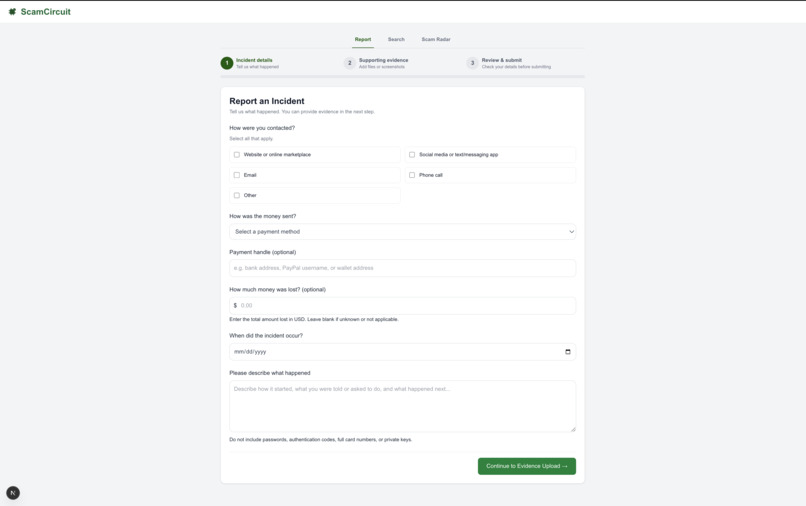
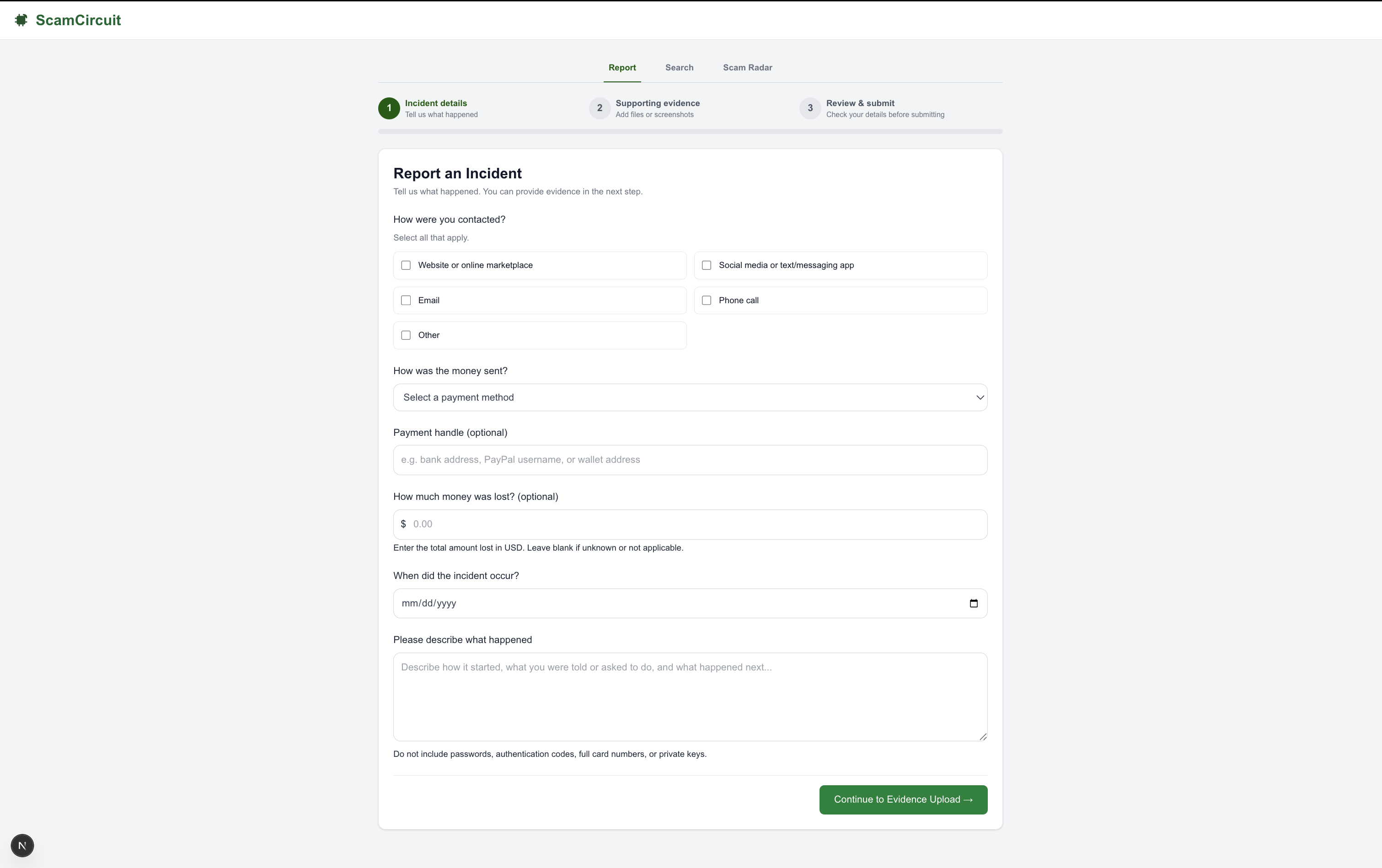
Report Fraud
-
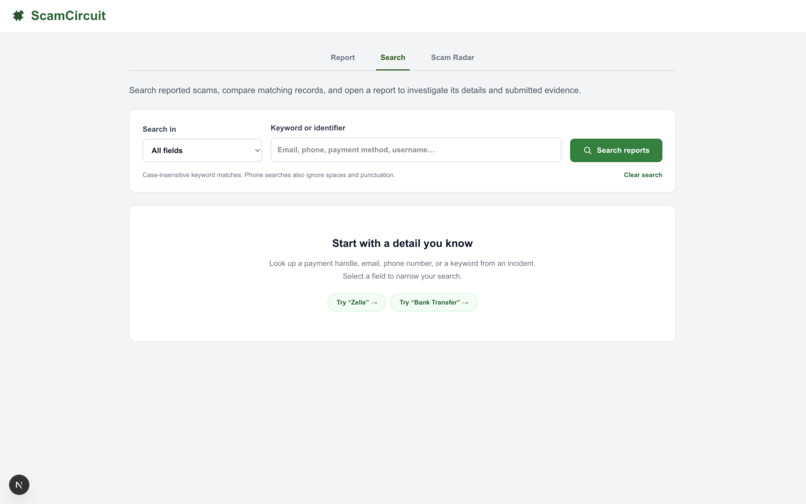
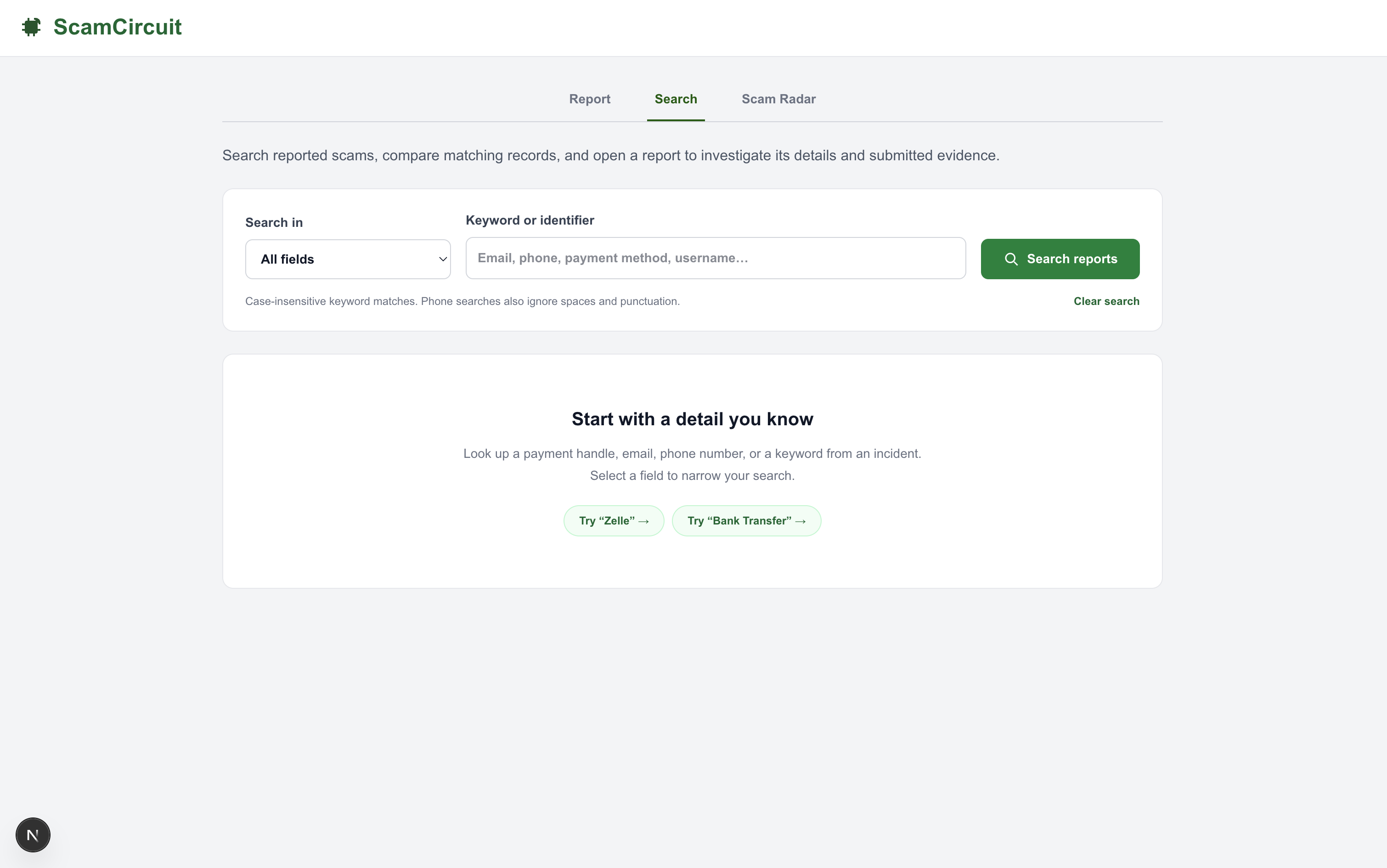
Search Reports
-
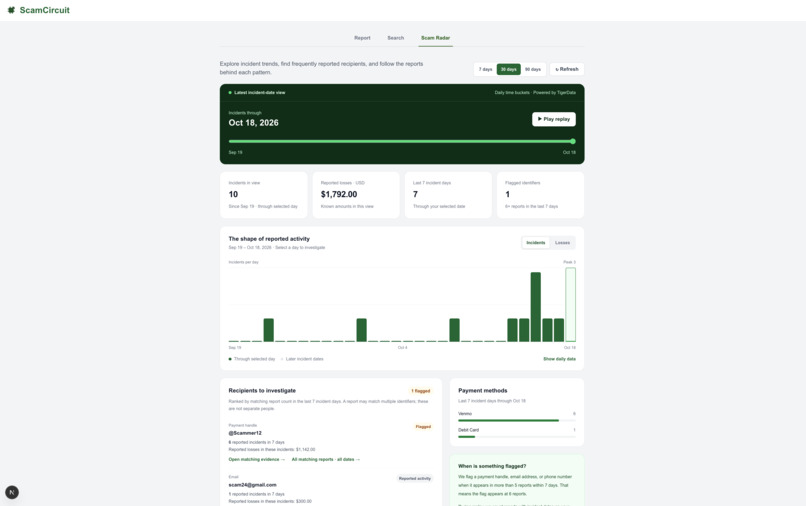
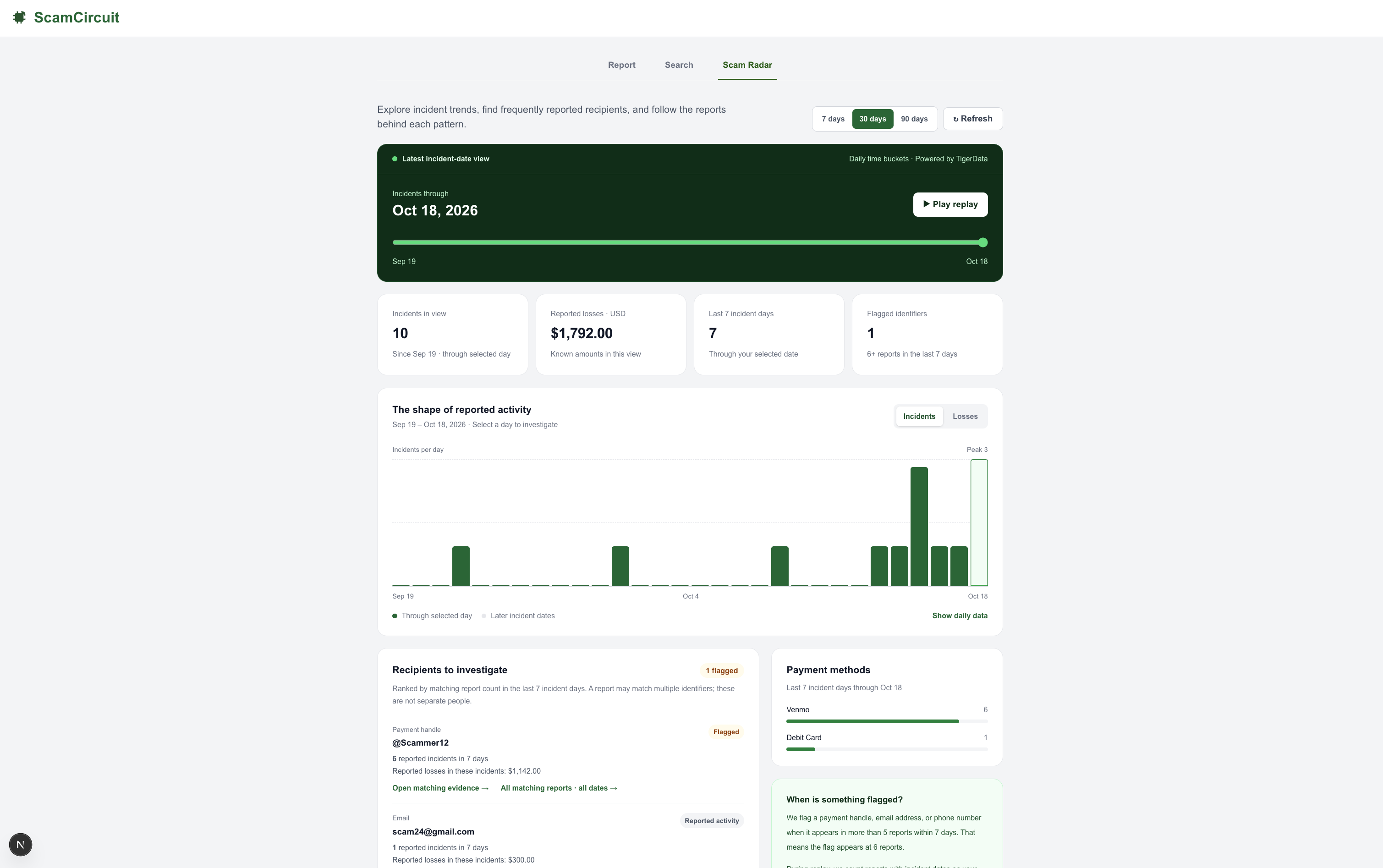
See Timeline/Trends
-
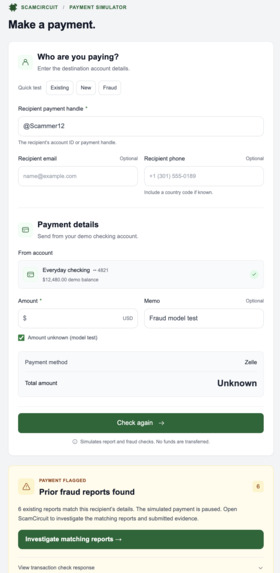
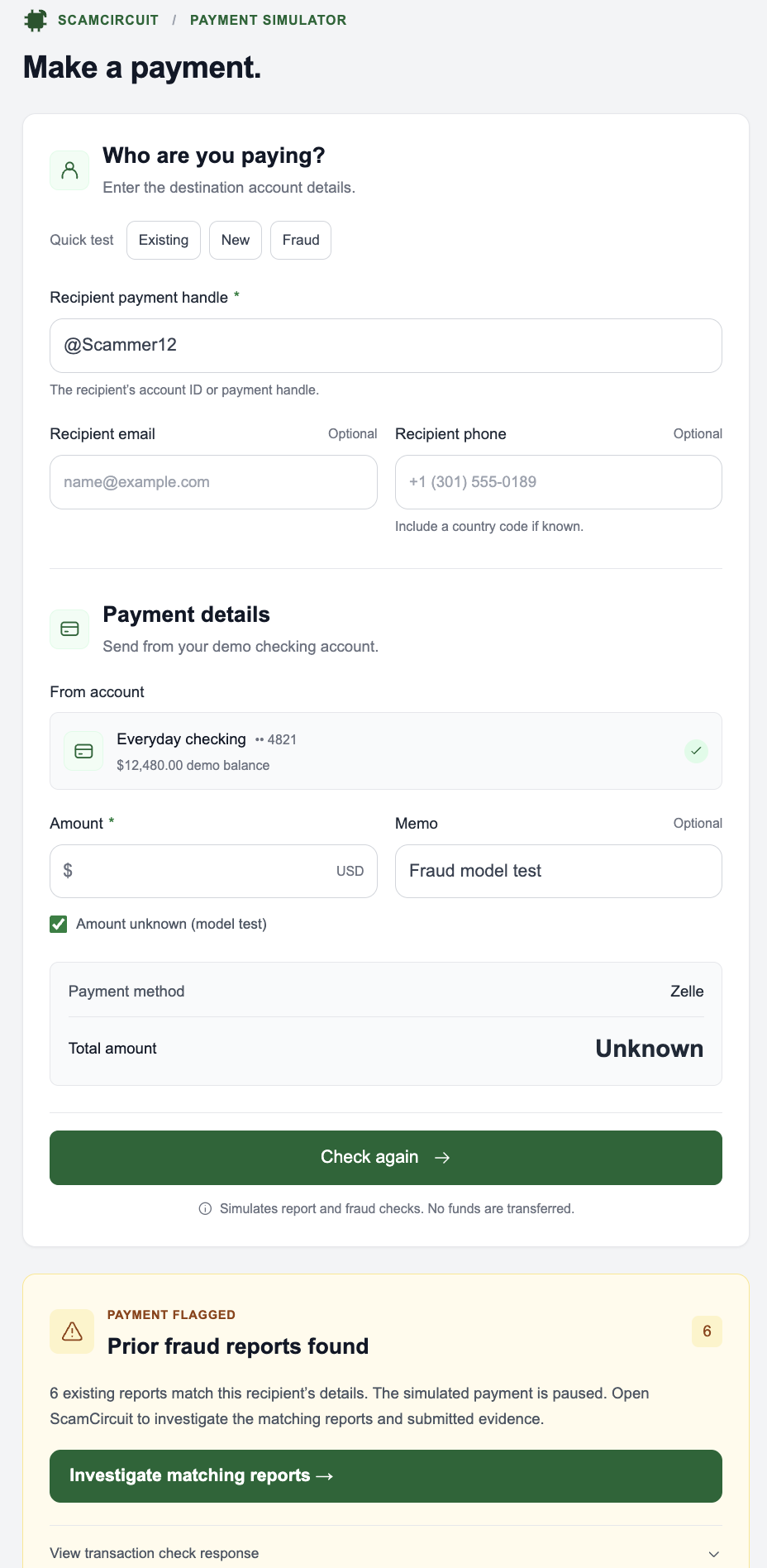
Mock Implementation
Inspiration
The Federal Trade Commission receives about 3 million financial fraud reports annually. Although there exist several different platforms to report fraud, the issue is that no one knows these resources exist until they’ve been scammed. Many people fall for the misconception that they could never be victimized. And when they do get scammed, they can feel vulnerable and alone.
For the past couple of years, we’ve worked as financial analysts for Justice for Fraud Victims at UMD to provide free financial forensic assistance to vulnerable populations. Through our experiences, we’ve often found that although there exists a lot of free reporting sites to cross-check, only a small fraction of people are actually aware of these resources. This creates a more reactive approach, where the damage has already been done and cannot be reversed. We’ve seen first-hand that post-fraud, few victims get their case picked up by authorities and even fewer receive restitution.
Because of this, we wanted to prevent the scam before it happened. There are some challenges to this, such as how can one determine if a transaction is being sent to a scammer? Our strategy was to implement crowd-sourced information on prior scams and use a machine learning algorithm to classify new transactions as participating in a scam or not.
Banks could implement our project into their systems such that right before irreversibly completing a transaction that may be fraudulent, a check is automatically run against both crowdsourced data and our algorithm, detecting fraud and alerting the user before the damage is done.
What it does
The entire purpose of ScamCircuit is to create a community that helps prevent scams before they occur. We fulfill this with two main functionalities:
1) Reporting Fraud
- Victims can report fraud on ScamCircuit, which will then be stored within our database to help with recordkeeping
- If a user wants to check the validity of a source, they can search within our website to see whether it's been flagged by someone previously
- ScamCircuit offers reports on day-to-day scam patterns so users can be aware of rising trends, recent reports, etc.
2) Preventing Fraud
- The purpose of ScamCircuit is to use the power of community to prevent fraud. ScamCircuit can be integrated into financial platforms so that whenever a user is about to make a transaction, ScamCircuit can check the database for previous flags and warn the user before it's too late.
How Does ScamCircuit Fit Within Technica's Mission?
ScamCircuit aims to create an accessible, automatic fraud detection and prevention tool. Our product is aimed towards people from vulnerable populations, who are the most at risk for not only being scammed, but also being denied proper restitution or assistance. Elderly and youth populations suffer the most losses and are least likely to have access to resources. With ScamCircuit, we strive to empower victims and create an accessible tool to protect people from scams.
How we built it
We built ScamCircuit by first drafting the frontend and backend, and later deciding how they connect with each other. We decided to use Typescript, React, and Tailwind CSS for frontend development, Next.js for full-stack development, and Tiger Data for our database. For fraud detection, we used a fraud detection dataset on Kaggle to train an XGBoost classification model as well as designed the matching process to find existing fraud reports in our database.
What we learned
Through this process, we learned a lot about how to integrate multiple different aspects of the backend. We also learned how to shift our thinking to consider the legal and financial regulations surrounding a product such as this one. For example, the GDPR prevents us from storing personal information without the option for a person to remove their data. Also, we were unable to utilize credit card data since it had to be anonymized through PCA. Considerations like this taught us about the complexities of fraud prevention and made us consider what adjustments would have to be made before implementing this project in the real world.
What's next for ScamCircuit
- Report generation - Being able to create official reports outlining the situation, evidence, and information on the fraud could help victims seek legal help.
- Legitimacy score - The legitimacy score will evaluate concrete evidence of fraud in user submissions to ensure the integrity of the platform.
Built With
- machine-learning
- next.js
- postgresql
- python
- react
- tailwindcss
- tigerdata
- typescript


Log in or sign up for Devpost to join the conversation.