-
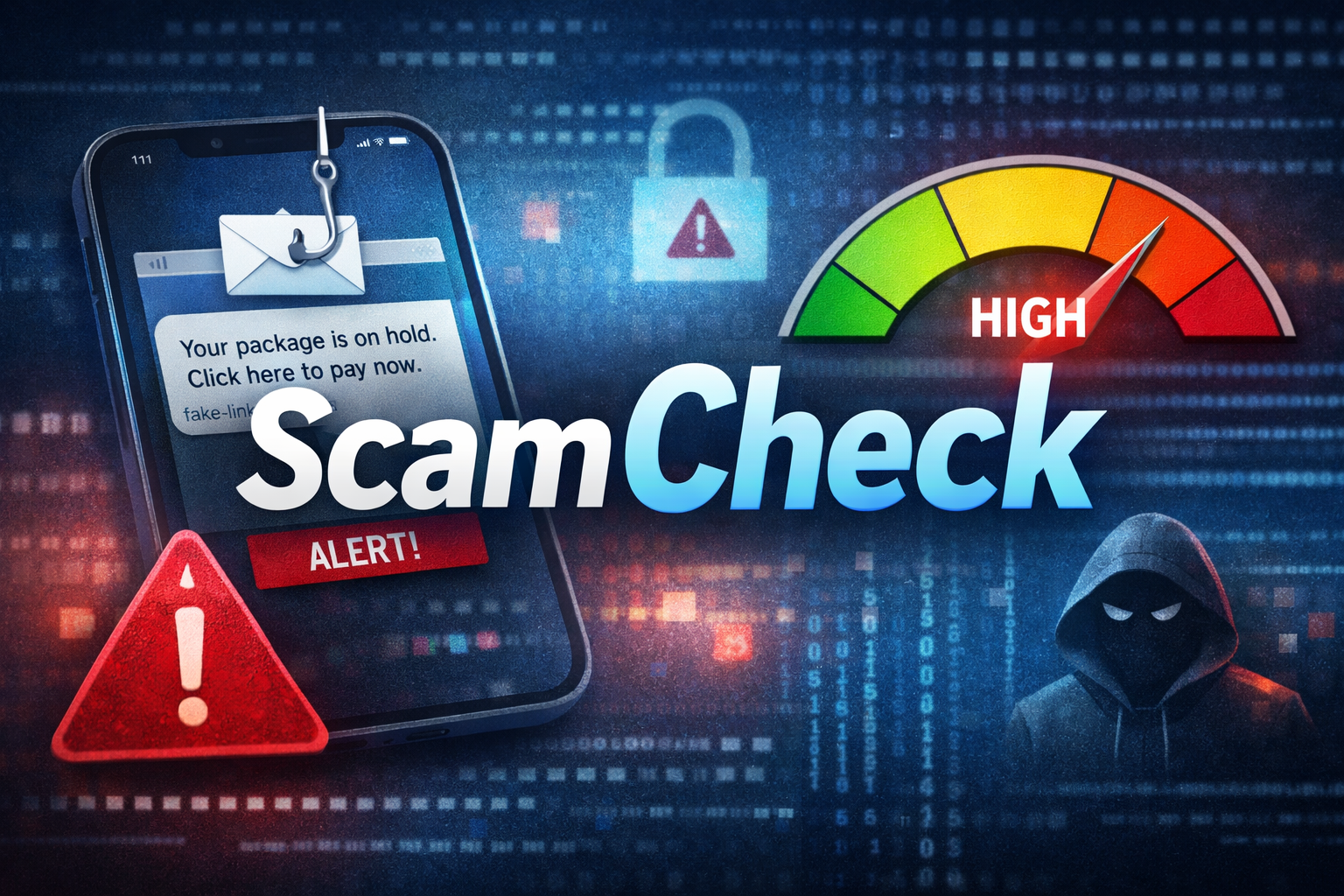
Logo
-
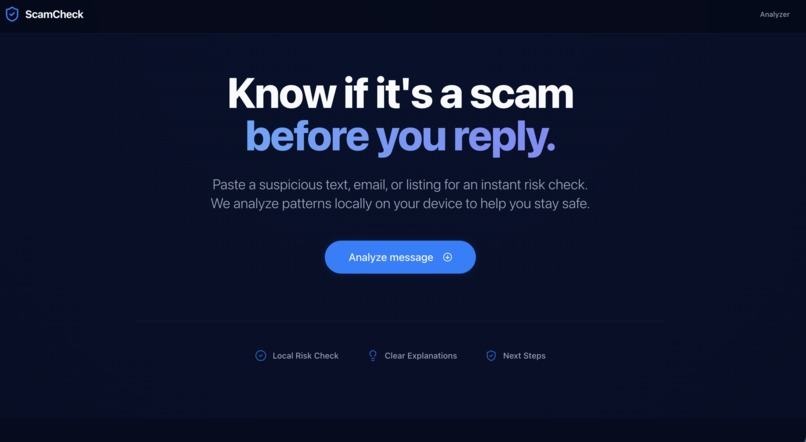
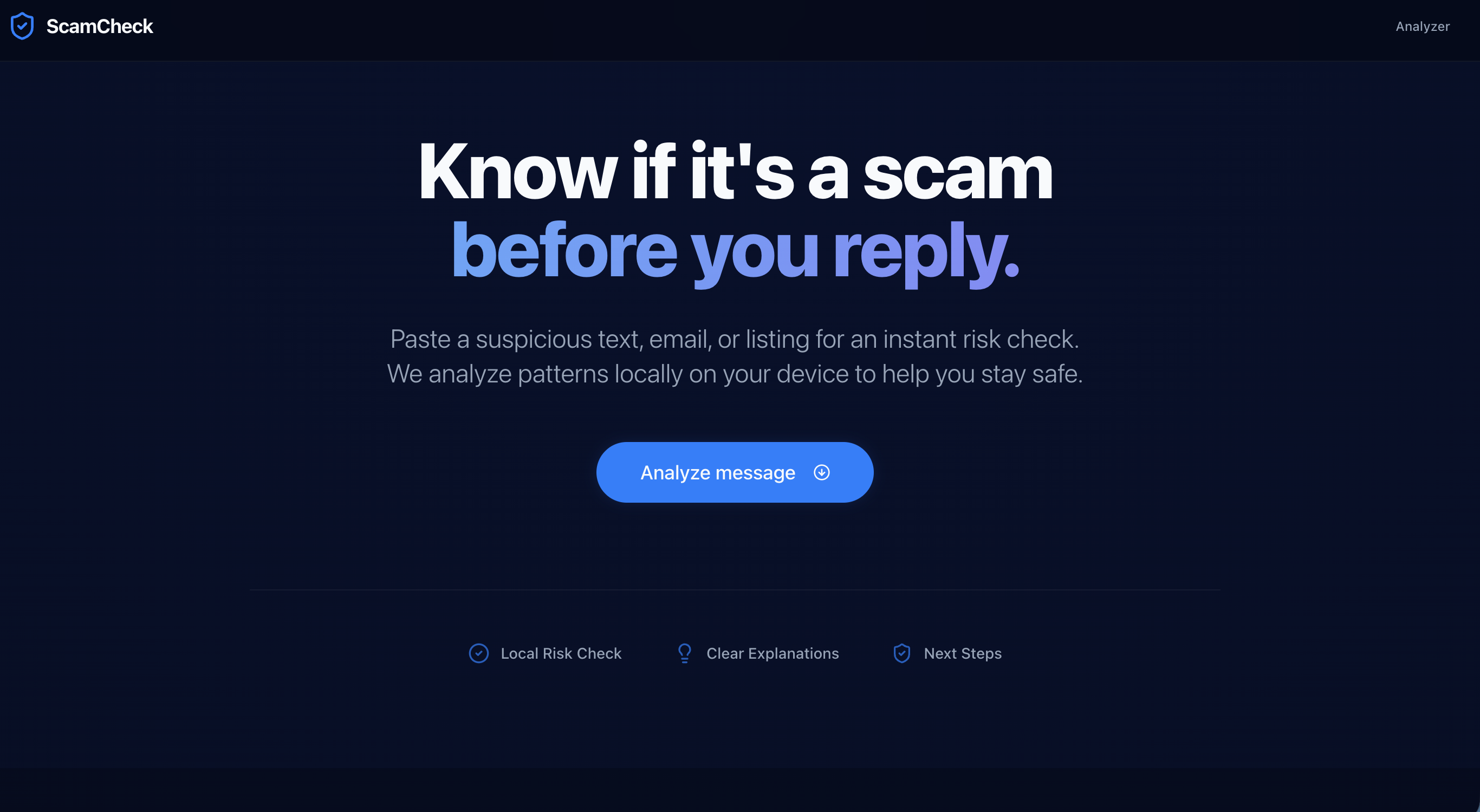
Landing page
-
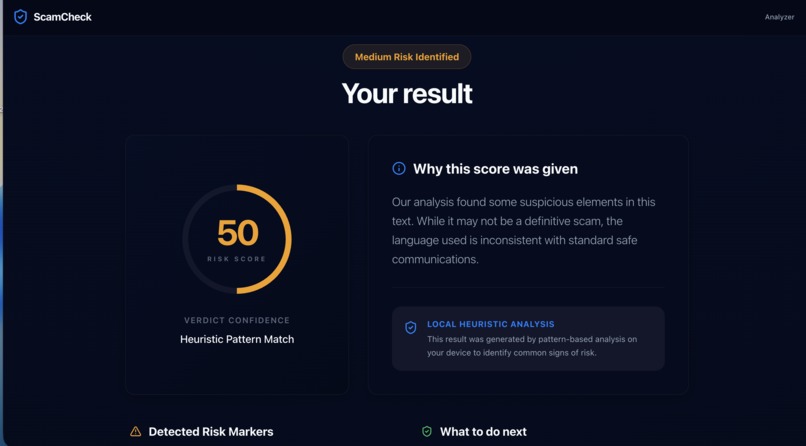
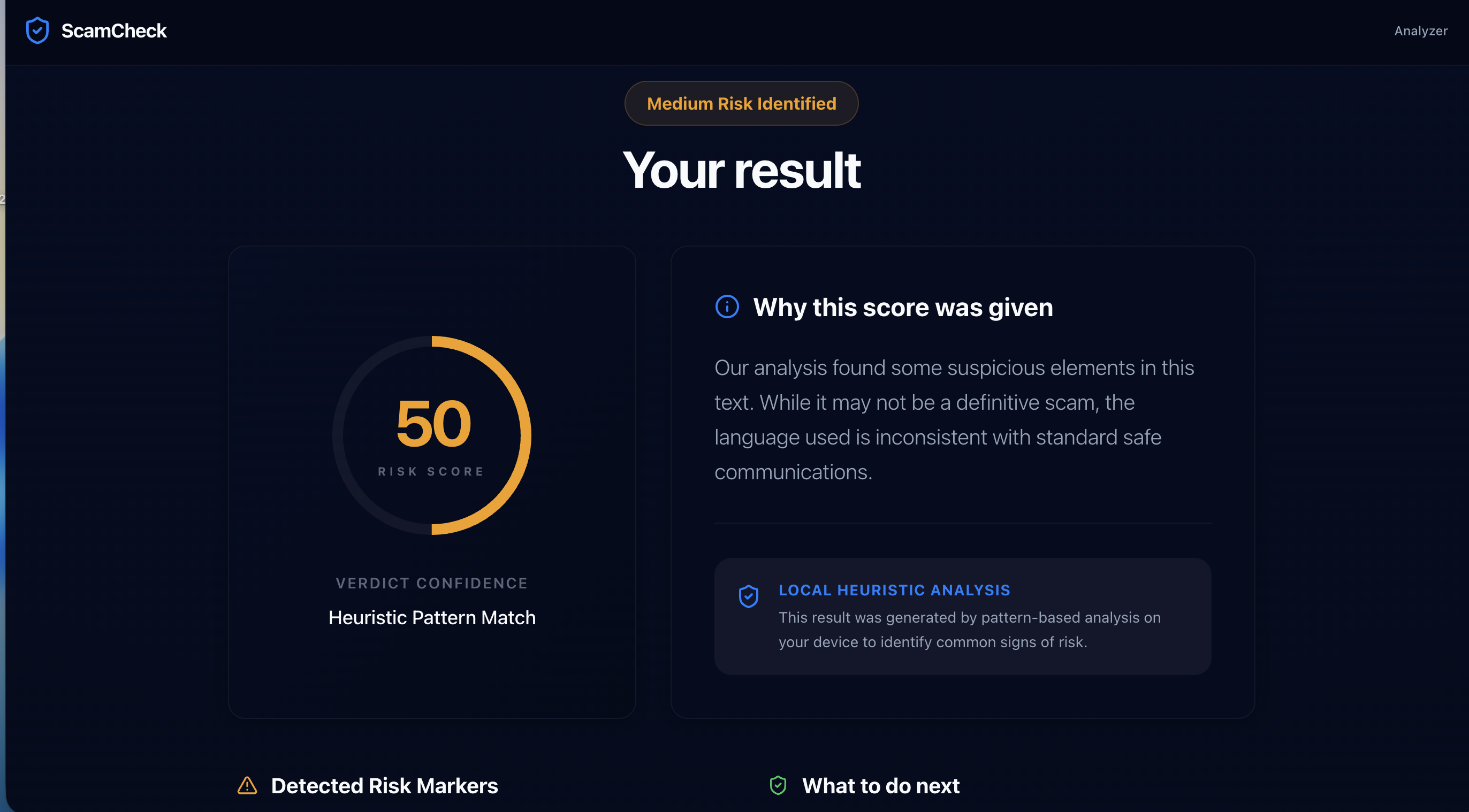
Risk Score
-
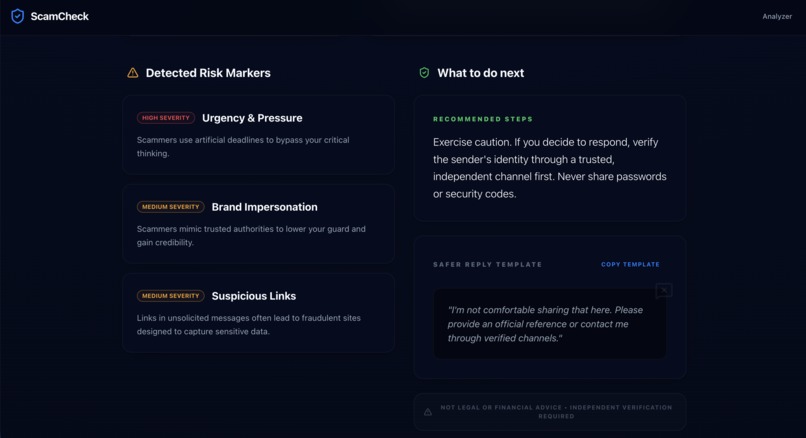
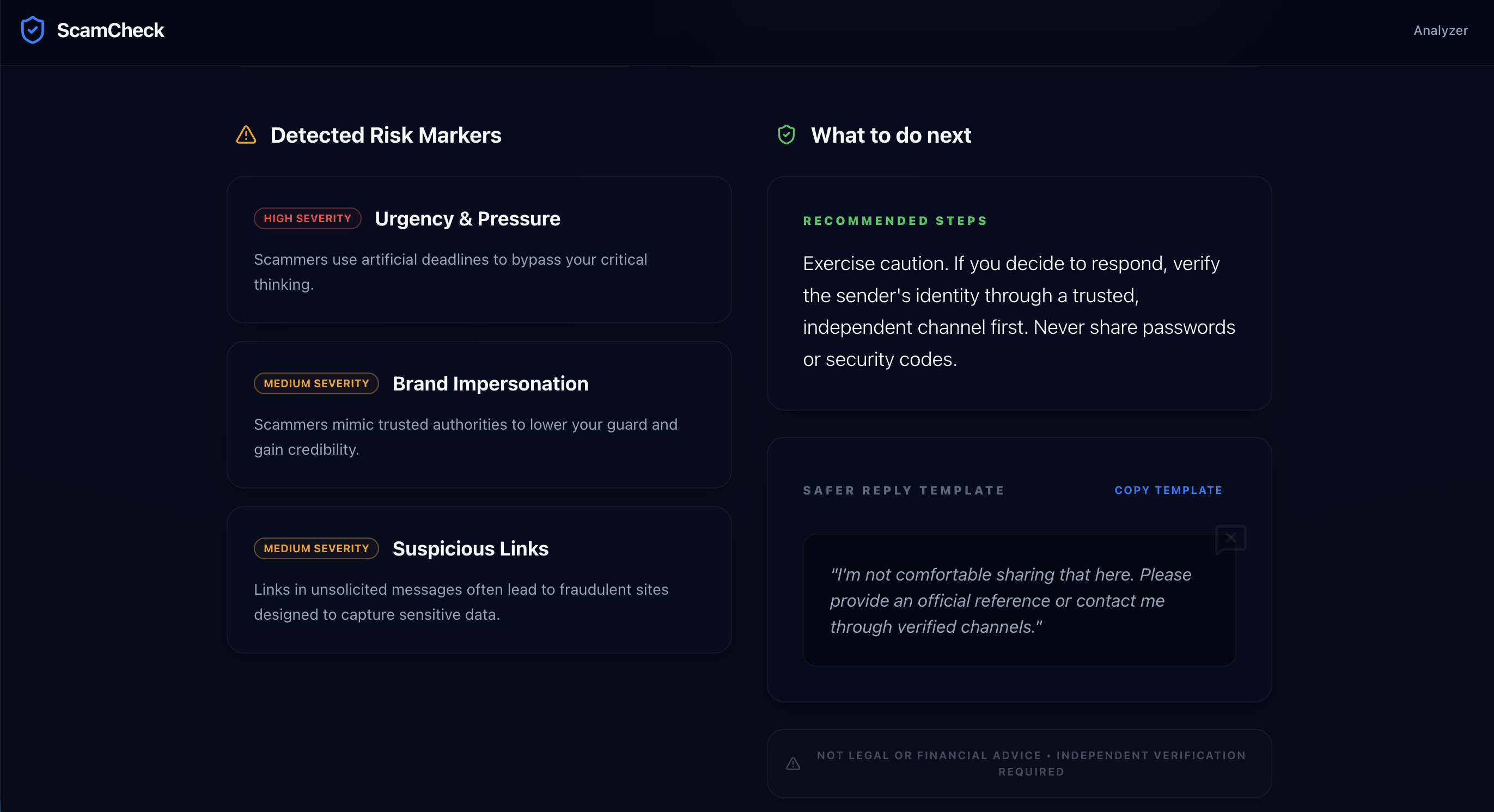
What to do next
Inspiration
Scam messages are now part of everyday life. People receive fake delivery texts, phishing emails, suspicious job offers, impersonation attempts, and pressure-filled payment requests all the time. The problem is not only that scams exist, but that most people are forced to make fast decisions without clear guidance in the moment.
I wanted to build a product that makes that moment easier. ScamCheck was inspired by the idea that trust and safety tools should feel immediate, understandable, and practical for ordinary users, not only for technical experts.
What it does
ScamCheck helps users quickly assess suspicious messages, emails, and listings before they reply, click a link, or send money.
Users paste a suspicious message into the app, choose the source type, and instantly get:
- a risk score
- a plain-English explanation
- detected risk markers
- recommended next steps
- a safer reply template
The goal is to turn uncertainty into a fast, calm, and useful decision flow.
How I built it
I built ScamCheck with MeDo by turning a product idea into a working application through structured natural language prompts and iterative refinement.
The build process was:
- define the user problem and MVP scope
- generate a first full version of the app
- refine the user interface and analysis flow
- improve credibility, consistency, and wording
- publish a live public version
For this hackathon version, I intentionally kept the product lightweight and focused. ScamCheck uses local heuristic analysis and pattern-based scoring instead of relying on external APIs, heavy backend systems, or complex integrations. That made it faster to prototype and easier to keep truthful in its claims.
Challenges I ran into
One of the biggest challenges was balancing credibility and simplicity.
It was easy for the product to sound too technical, too corporate, or too exaggerated. I wanted ScamCheck to feel polished and high-trust, but still honest about what it actually does. That meant refining the copy, simplifying labels, and making sure the product explained local heuristic analysis in a way that felt clear and believable.
Another challenge was keeping the user experience lightweight while still making the results feel useful and substantial. The product needed to look polished without becoming bloated or overbuilt.
Accomplishments that I'm proud of
I’m proud that ScamCheck feels like a real product rather than just a hackathon mockup.
It has:
- a clear user problem
- a focused and believable MVP
- a polished mobile-first interface
- a strong results flow
- a practical trust and safety use case
I’m also proud that the app avoids pretending to be more than it is. It gives useful guidance in plain English while staying grounded in a realistic product concept.
What I learned
I learned how important product framing is when building with AI.
The quality of the output depends heavily on making good scope decisions early, being very precise about what should and should not be included, and iterating carefully on trust, language, and UX. I also learned that a product like this becomes much stronger when it is designed around user confidence, not just feature output.
What's next for ScamCheck
ScamCheck is currently a focused MVP, but it has room to grow.
Possible next steps include:
- family safety plans
- small business fraud protection
- browser and inbox integrations
- scam trend alerts
- partnership versions for banks, telecom providers, and consumer safety organizations
The long-term vision is to make ScamCheck a practical trust layer that helps more people make safer decisions online.
Built With
- aiappbuilder
- client-sideanalysis
- hackathonmvp
- medo
- uxdesign
- webapp


Log in or sign up for Devpost to join the conversation.