Inspiration
As an avid user of Facebook Marketplace, I’ve always loved the thrill of finding a great deal. However, this "digital garage sale" has a dark side. Every day, I witnessed a surge in sophisticated scams, meticulously forged digital receipts, doctored product photos, and psychological traps designed to exploit buyers.
I realized that while tech-savvy users might spot a "too good to be true" price, more vulnerable populations, especially senior citizens, are frequently targeted by these predatory tactics. I wanted to create a solution that acts as a digital detective; a simple Chrome extension that empowers every shopper to shop with confidence. ScamBuster was born from the desire to turn the tide against fraudsters and restore trust in online commerce.
What it does
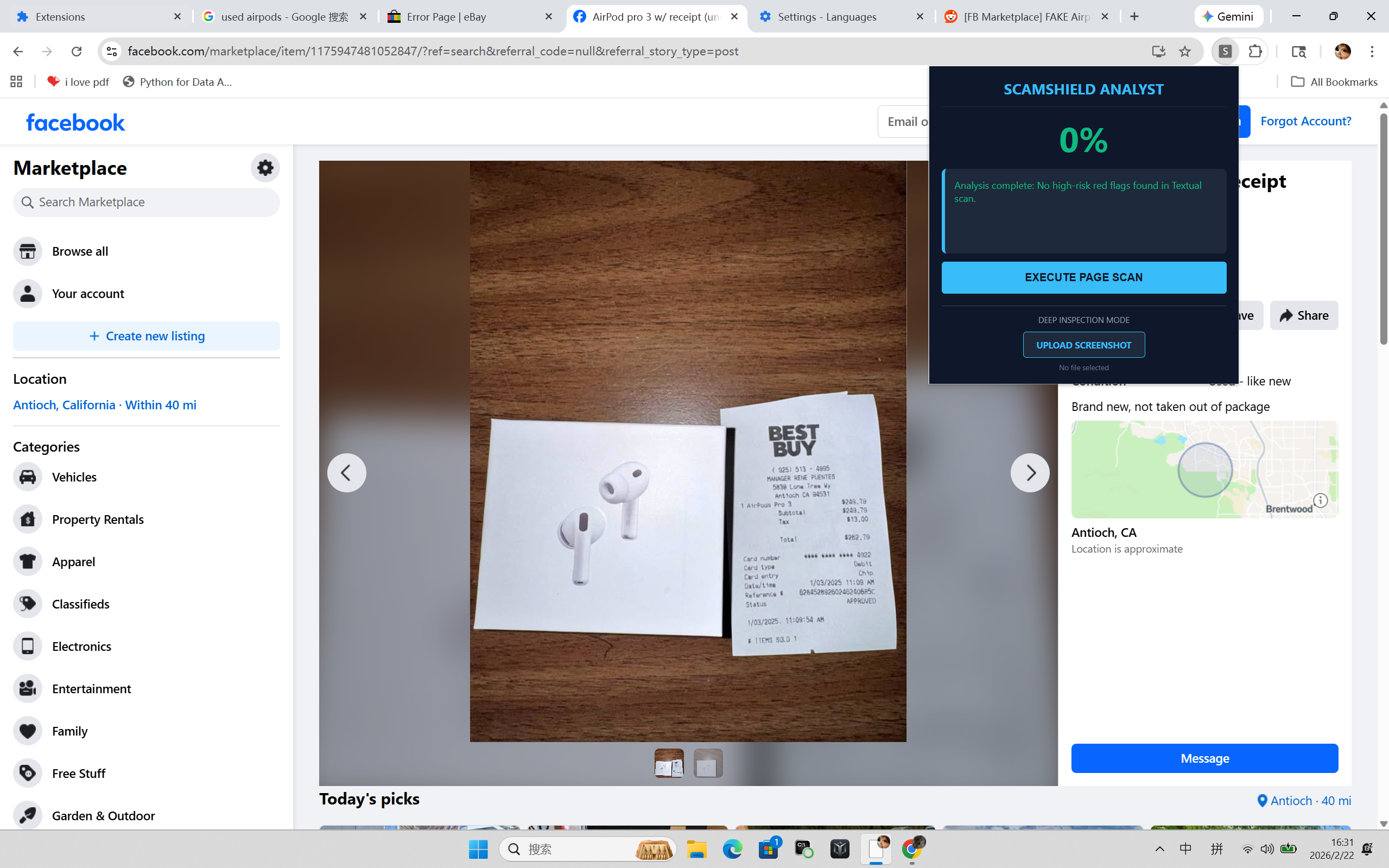
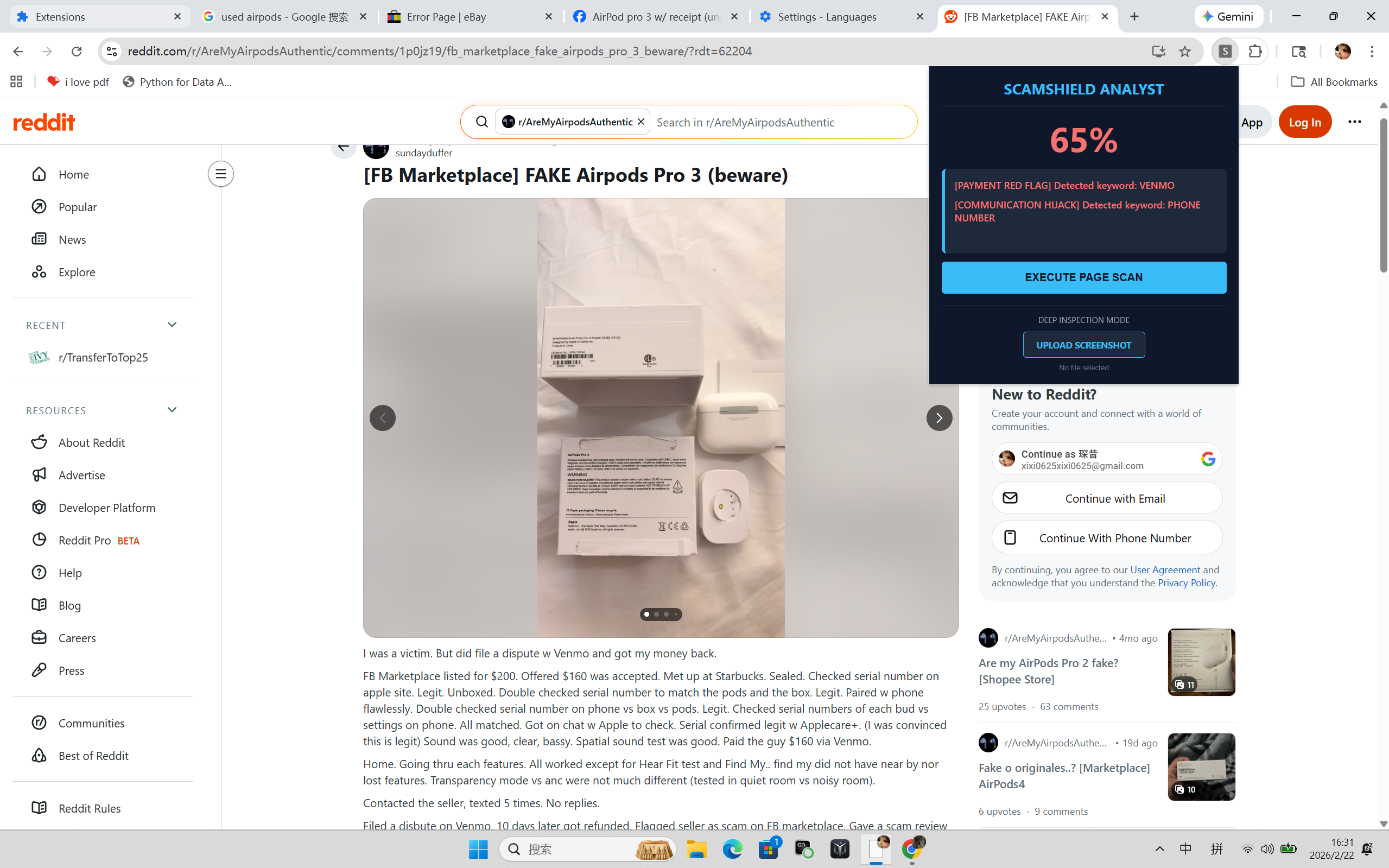
ScamBuster is a browser extension that performs real time security audits on marketplace listings. It analyzes two critical layers of every deal:
Behavioral Heuristics: It scans listing descriptions for "Red Flag" patterns, such as requests for unprotected payments (Zelle, Venmo), attempts to move conversations off the platform (such as on WhatsApp), or artificial urgency tactics ("moving tomorrow!").
AI Forensic Inspection: Using local OCR (Optical Character Recognition), it "reads" product images and receipts to identify signs of forgery, such as hidden "SAMPLE" or "VOID" watermarks and illogical transaction data.
How we built it
We focused on building a lightweight browser extension that would help prevent people from being scammed.
The Engine: We developed a weighted scoring algorithm in JavaScript that evaluates multiple risk factors simultaneously.
Local AI Vision: We integrated Tesseract.js to perform OCR directly in the browser. This allows the tool to analyze image text locally.
Hybrid Logic: We implemented a robust fallback system. If browser security (CORS) blocks direct image scraping, the tool intelligently pivots to a textual scan and invites the user to perform an Inspection via manual upload.
Challenges we ran into
The most significant hurdle we ran into was our lack of knowledge. In a group full of beginners, we were unsure of how to do most things. Through the usage of generative AI and tutorials online, we were able to figure out how to execute our vision the best we could within the time frame.
Another hurdle was CORS (Cross-Origin Resource Sharing). Major platforms like Facebook restrict scripts from reading raw image data to prevent data scraping. We solved this by creating a Manual Forensic Mode. By allowing users to upload a screenshot directly into the extension, we bypass browser restrictions and provide an accurate analysis of the image.
Accomplishments that we're proud of
We are proud to have built a tool that helps people save their money from scammers. Being able to create this project at all was a huge accomplishment for all of us. Figuring out the code and making a weighted scoring system that mirrors how humas spot fraud looking was a major milestone.
What we learned
Through this project, we learned a lot about JavaScript and Chrome Extensions. By using the tools and resources available to us, we were able to create powerful tools that run entirely on the user's machine. We also gained insight into the psychology behind a scam, which helped us fine-tune our detection weights.
What's next for ScamBuster
We hope to expand our "Red Flag" library to include more common "scam phrases", multiple languages, and localized payment scams specific to regions outside the US, such as Europe and Southeast Asia. We also want to implement a "Seller Reputation History" feature that cross-references known scammer usernames and contact info across different marketplace platforms in the future. To do this, we want to add a "Report Scam" button that allows users to anonymously share confirmed scams to help refine our system and collect data on scammers.
Built With
- chrome
- extension
- html5
- javascript
- tesseract.js

Log in or sign up for Devpost to join the conversation.