-
-
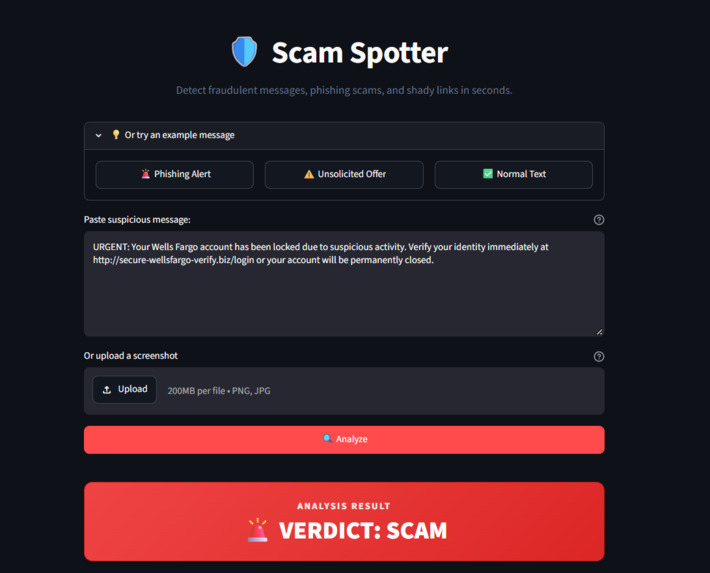
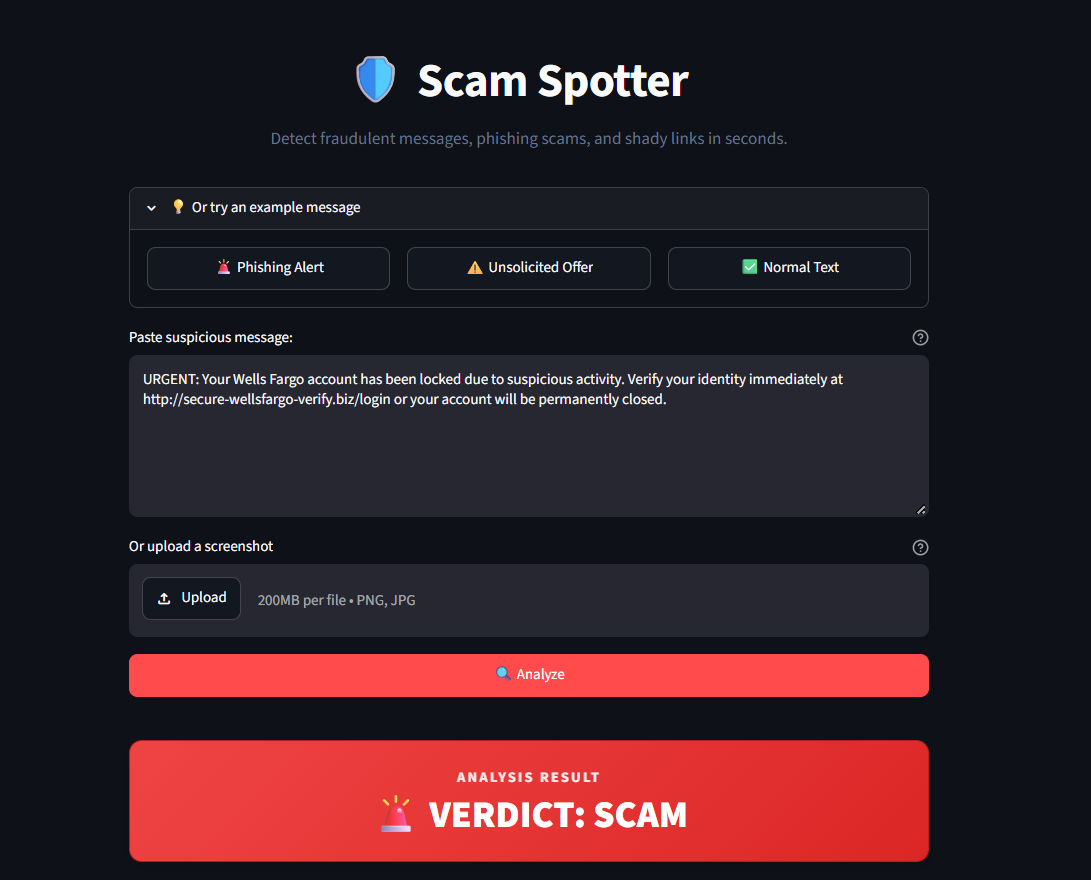
we have try out examples of actual scam messages and safe messages
-
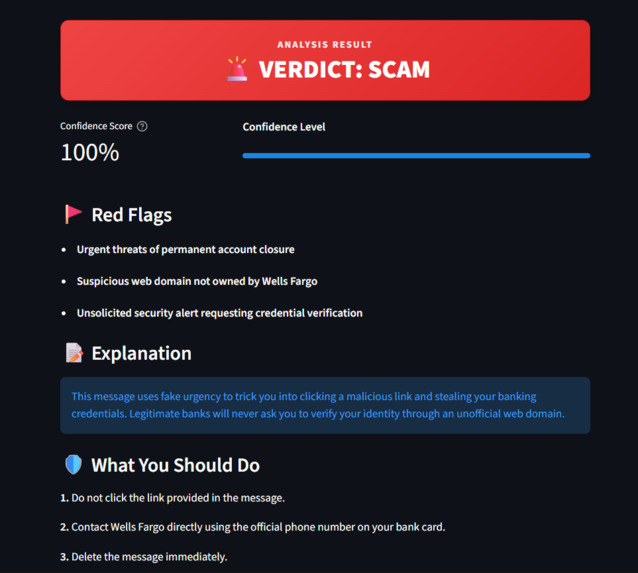
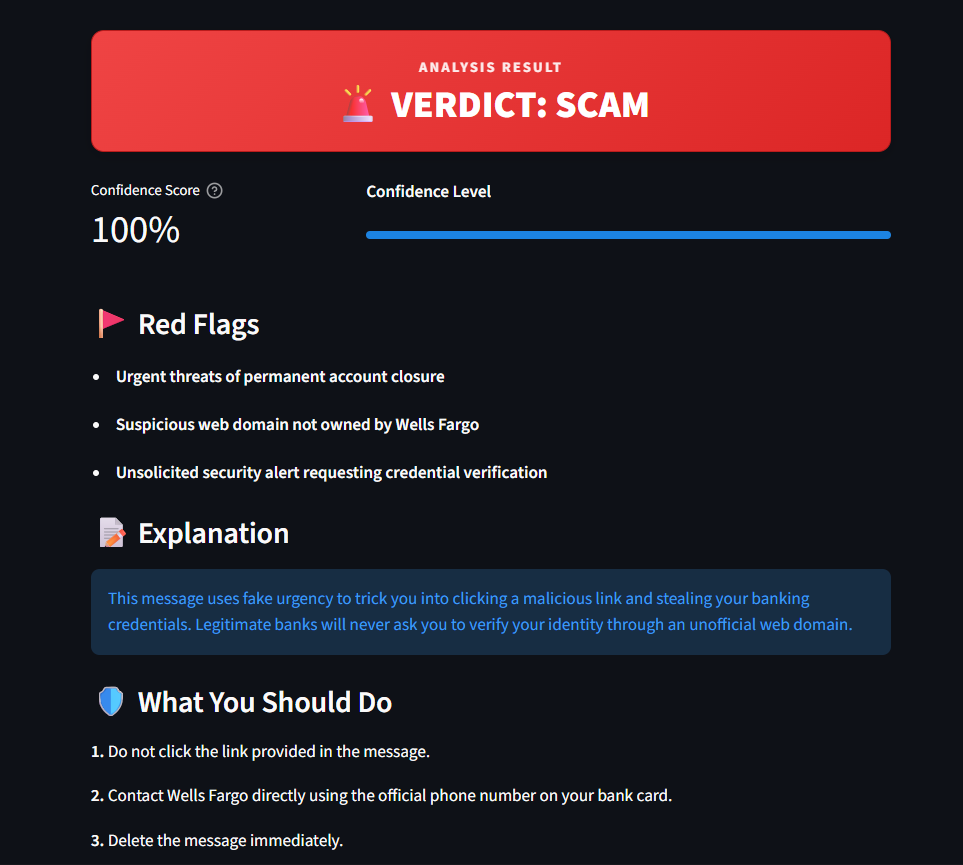
it shows the message is scam and also guide you what to do next
-
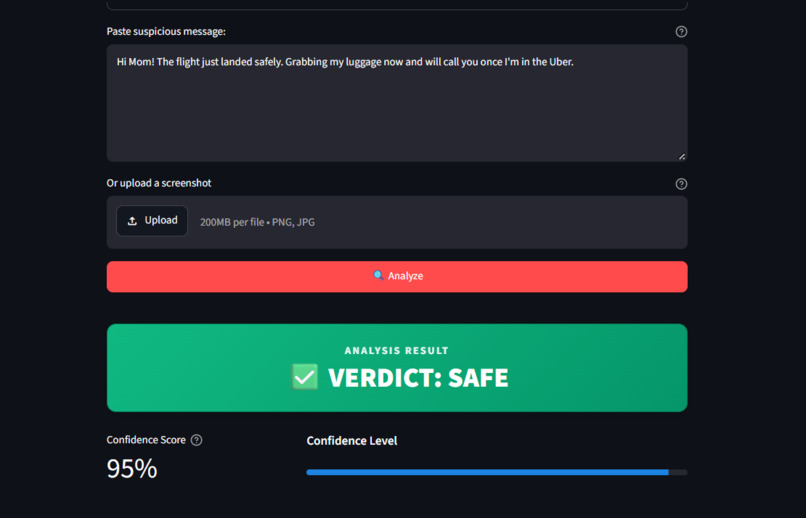
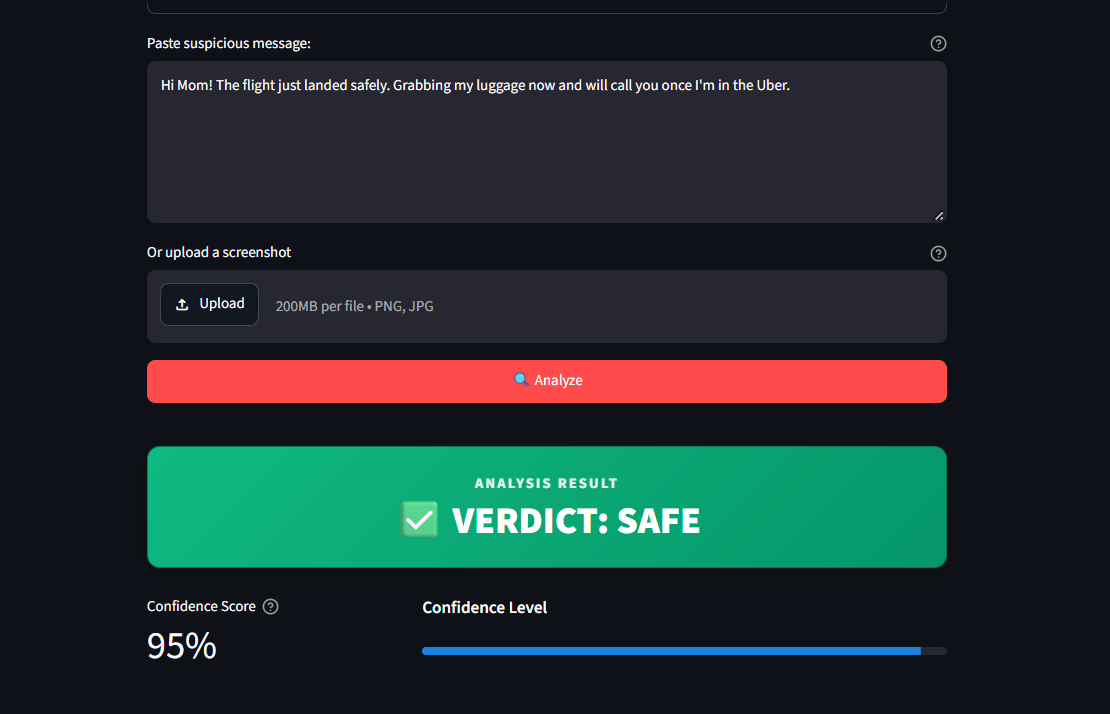
we entered a safe message ,and it says no scam
-
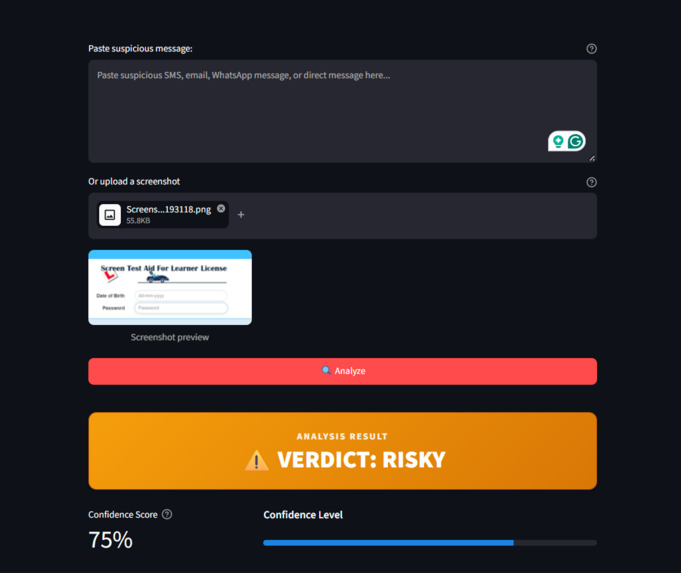
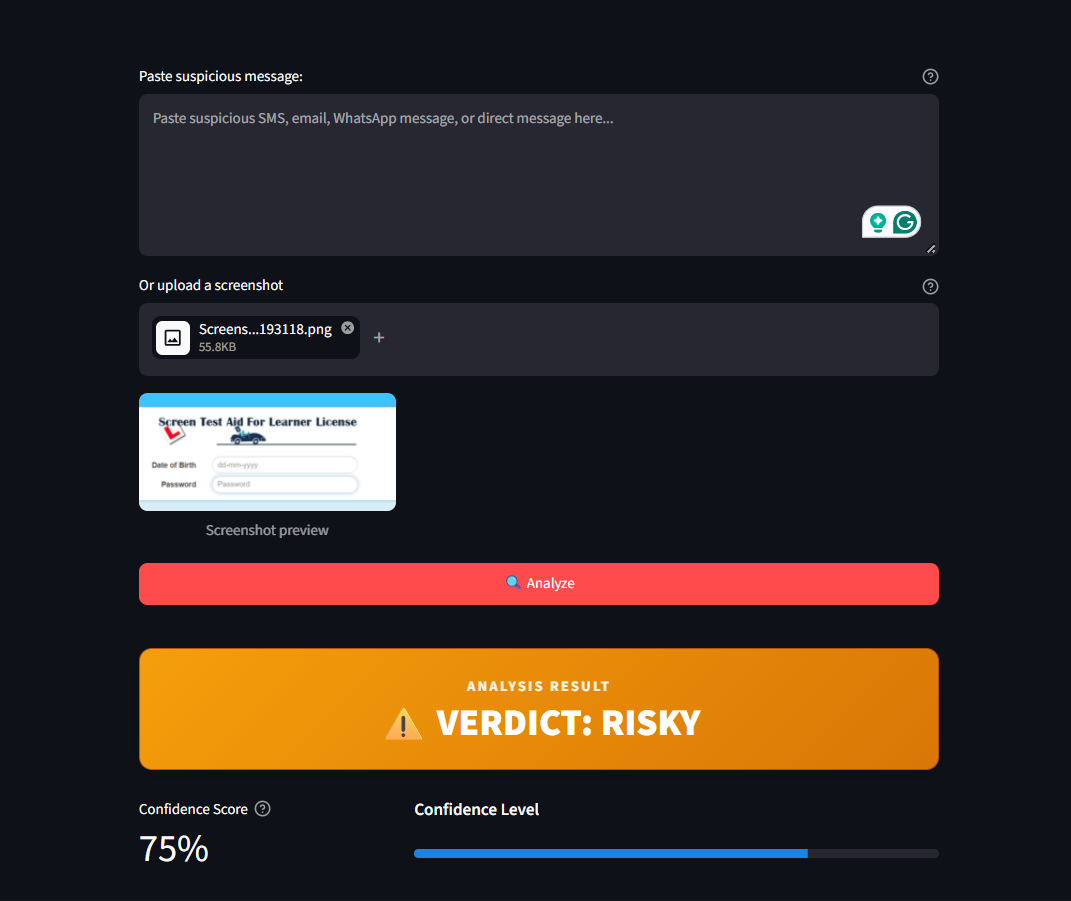
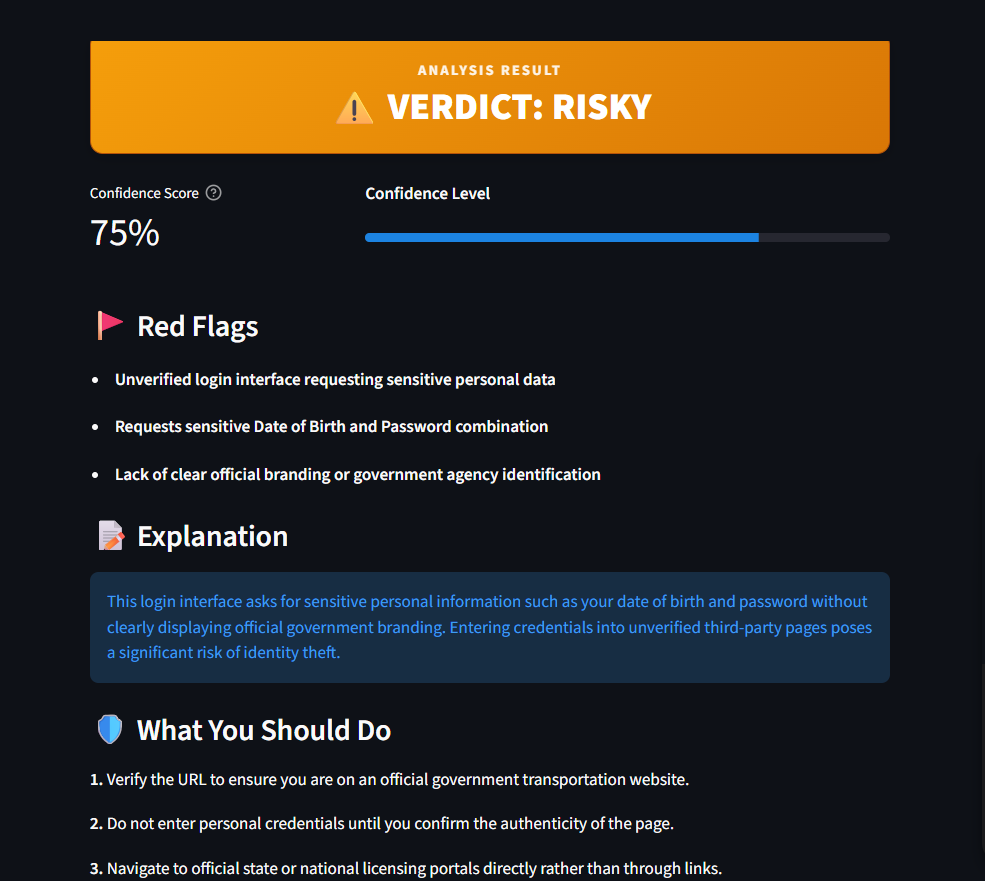
and when i upload a screenshot of an unknown login page, it shows its risky
-
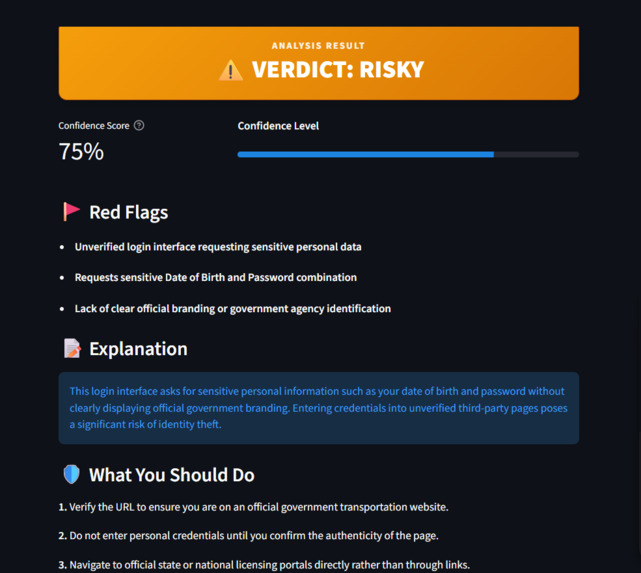
why its risky and what we should do now is already mentioned here
Inspiration
Scams reach every community, and the people hit hardest are often elderly or less tech-savvy users. When a suspicious "your account is blocked" message arrives, they usually have no quick, judgment-free way to check it.
What it does
Scam Spotter lets anyone paste a suspicious message or upload a screenshot (SMS, WhatsApp, email) and instantly get:
- a clear verdict: Scam / Risky / Safe
- a confidence score
- up to three red flags
- a plain-language explanation
- simple next steps (e.g. don't click the link, contact your bank directly)
It doesn't panic about everything: in testing, a fake Wells Fargo alert came back as Scam, an unofficial login page screenshot as Risky, and a normal family dinner message as Safe.
How we built it
- Python + Streamlit for the web app and UI
- Google Gemini API (via the
google-genaiSDK) for analysis, with a system prompt that makes the model act as a fraud-detection expert - Structured JSON output validated with Pydantic, so the UI always gets a consistent verdict, score, flags, explanation and actions
- Image input: screenshots are sent directly to Gemini, which reads the text and visual cues
- Deployed on Streamlit Community Cloud, with API keys kept in secrets and never committed to GitHub
- Built with the help of an AI coding agent (Google Antigravity) for code generation, with testing and iteration done by hand
Challenges we ran into
- Calibrating verdicts: getting the app to separate "Risky" from "Scam" and not flag normal messages took prompt tuning and testing with different message types.
- Keeping secrets safe: I had to keep the API key out of the repo (
.gitignore,.env.example) and configure it separately on the cloud deployment. - Deployment hiccups: my first deploy ran without the API key and failed, so I learned how Streamlit secrets work and fixed it.
- First time with Git and agents: setting up Git, pushing to GitHub and working with an AI coding agent were new to me.
Accomplishments that we're proud of
A working, publicly deployed app that handles both text and screenshots, and gives explanations that a non-technical person can actually understand.
What we learned
How to build and deploy an LLM-powered app end to end, how to get reliable structured output from a model, and why security basics (secrets, .gitignore) matter from day one.
What's next for Scam Spotter
- Link reputation checks against known-bad URL databases
- Multi-language support so more communities can use it
- Voice input for people who find typing difficult
- A WhatsApp bot, so people can forward a suspicious message and get an answer in the same chat
Disclaimer: Scam Spotter is informational only. AI can make mistakes, so always verify with your bank or an official source.

Log in or sign up for Devpost to join the conversation.