-
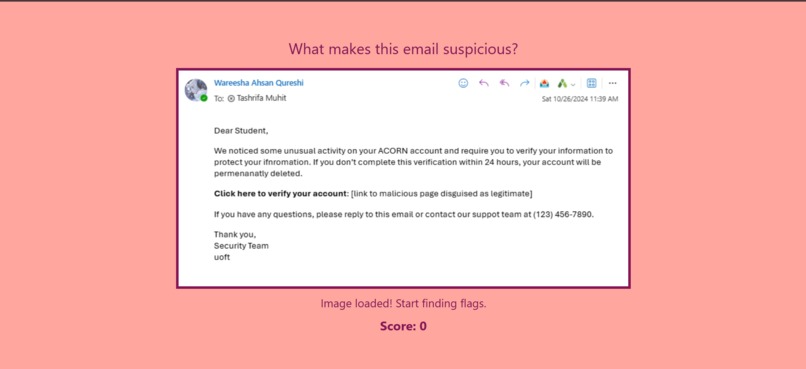
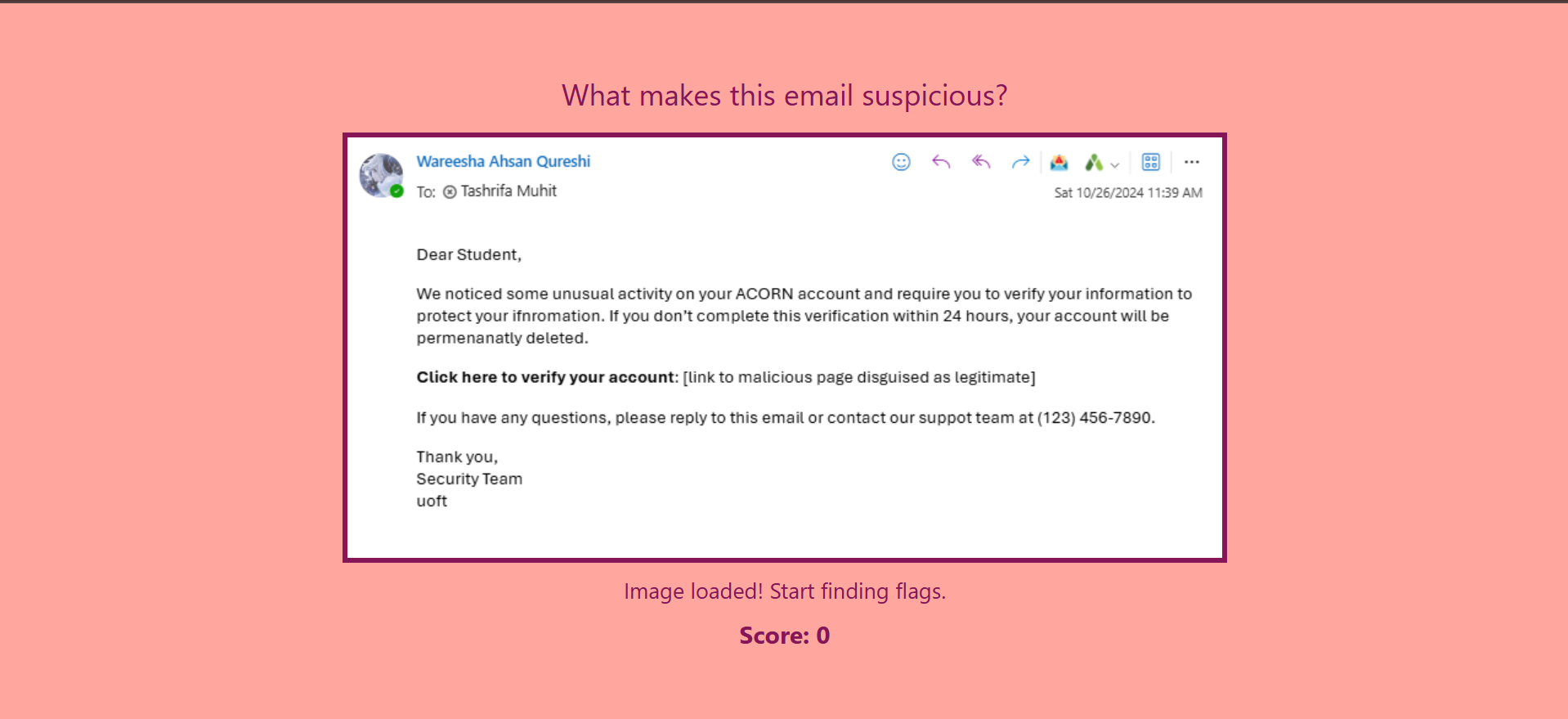
The game page of Scam Spotter
-
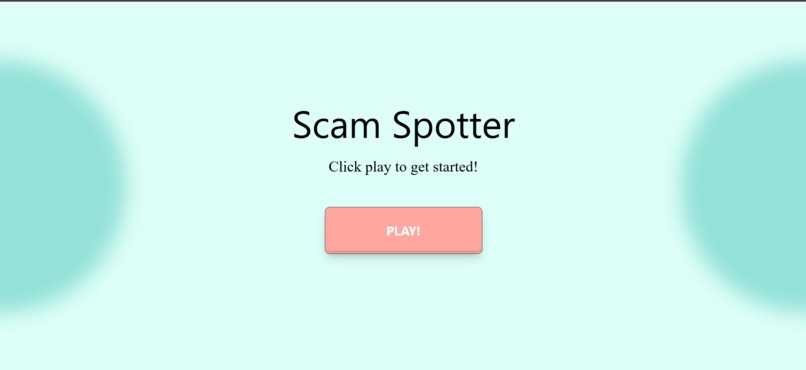
The home page of Scam Spotter
Inspiration
We have been through tiring, boring, hard to get through cybersecurity training. Knowing how we had to force ourselves through those modules, we took our struggles and decided to fix them for future generations.
What it does
Introducing Scam Spotter, cybersecurity gamified. Engaging and colorful, Scam Spotter has what we wanted our cybersecurity to training to have, interaction with the content. The website makes users learn through doing, identifying threats by clicking on email(s) and earning points that go towards an overall score with fun and interesting messages along the way to encourage users to keep going.
How we built it
The algorithm for this program was initially written in Python so that we could get a 'lay of the land'. It was then converted to HTML, Tailwind CSS, and Javascript to make it into the user-friendly website of our cybersecurity training dreams. The design of the website was also first done in Figma before converting to a HTML site.
Challenges we ran into
Converting the Python code into a website was our biggest challenge but by making use of online resources, we were able to, after many hours, do so.
Accomplishments that we're proud of
We are proud that we are able to submit a complete program and that we were able to learn many new things in HTML, CSS, Javascript, and Python along the way. Additionally, we used Figma in a productive way, which we hadn't done before.
What we learned
We learned new Python functions, how to best manage our time, how to pivot when what were doing was not in-line with our end goal, and, most importantly, how to persevere.
What's next for Scam Spotter
Going into the future, Scam Spotter aims to become more sophisticated in its 'game' system, adding more units, incentives to keep checking into the website, and improve the user interface to boost user time on the site.
Built With
- html
- javascript
- tailwindcss

Log in or sign up for Devpost to join the conversation.