Inspiration
Online scams, phishing links, fake KYC notifications, and OTP theft attempts are becoming increasingly common. Many people struggle to identify fraudulent messages before sharing sensitive information or making payments. We wanted to build a tool that helps people recognize potential scams and make safer decisions online.
What It Does
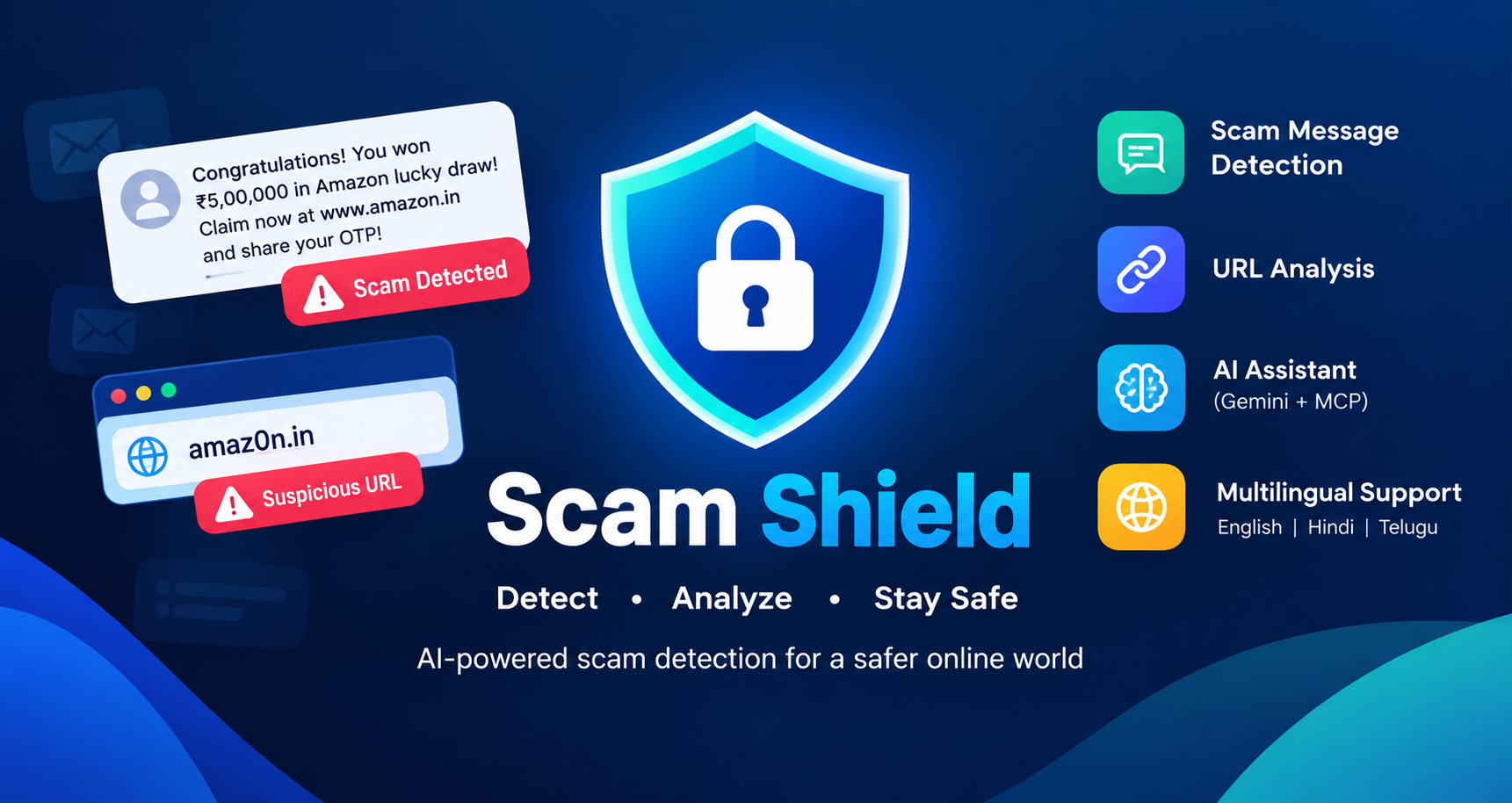
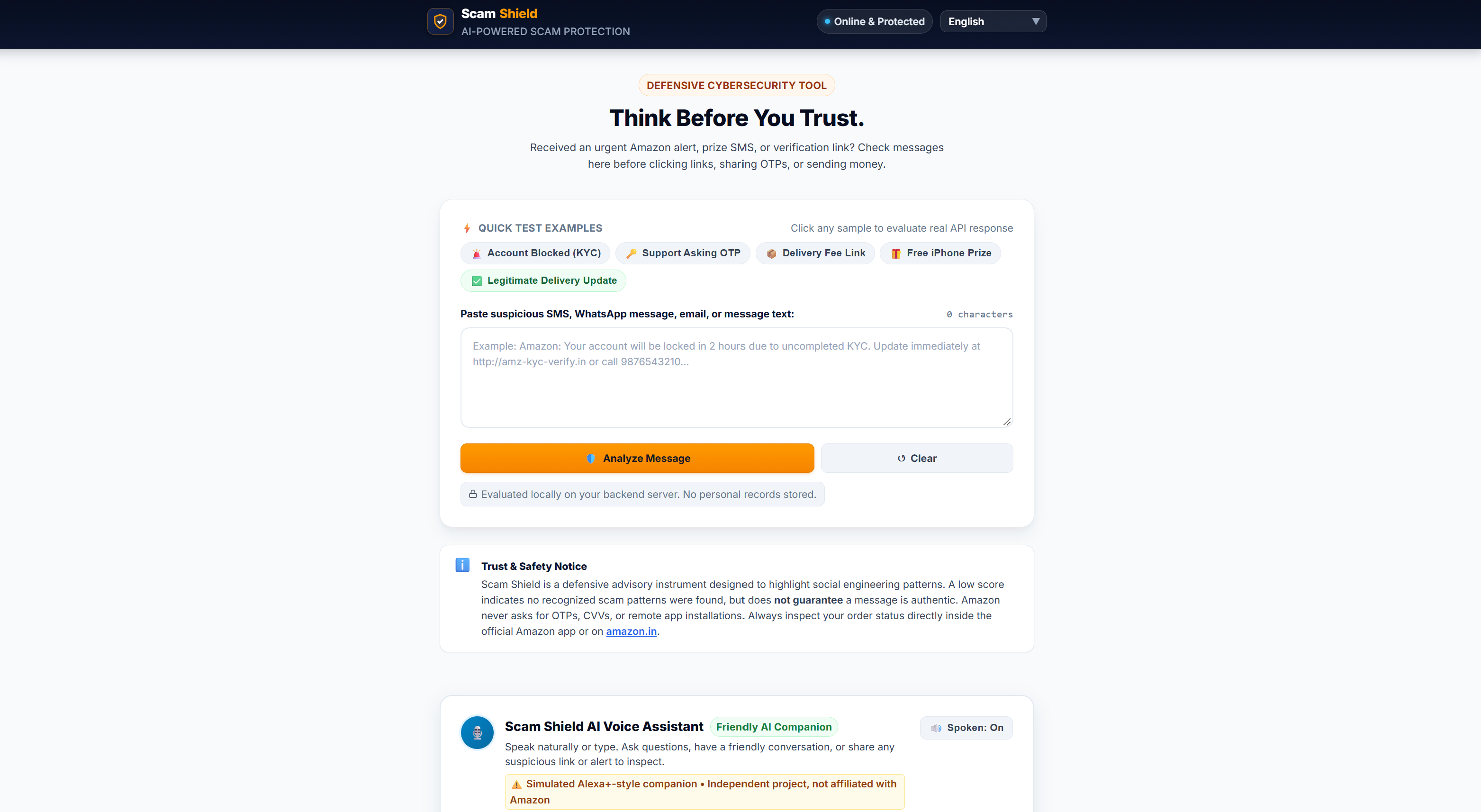
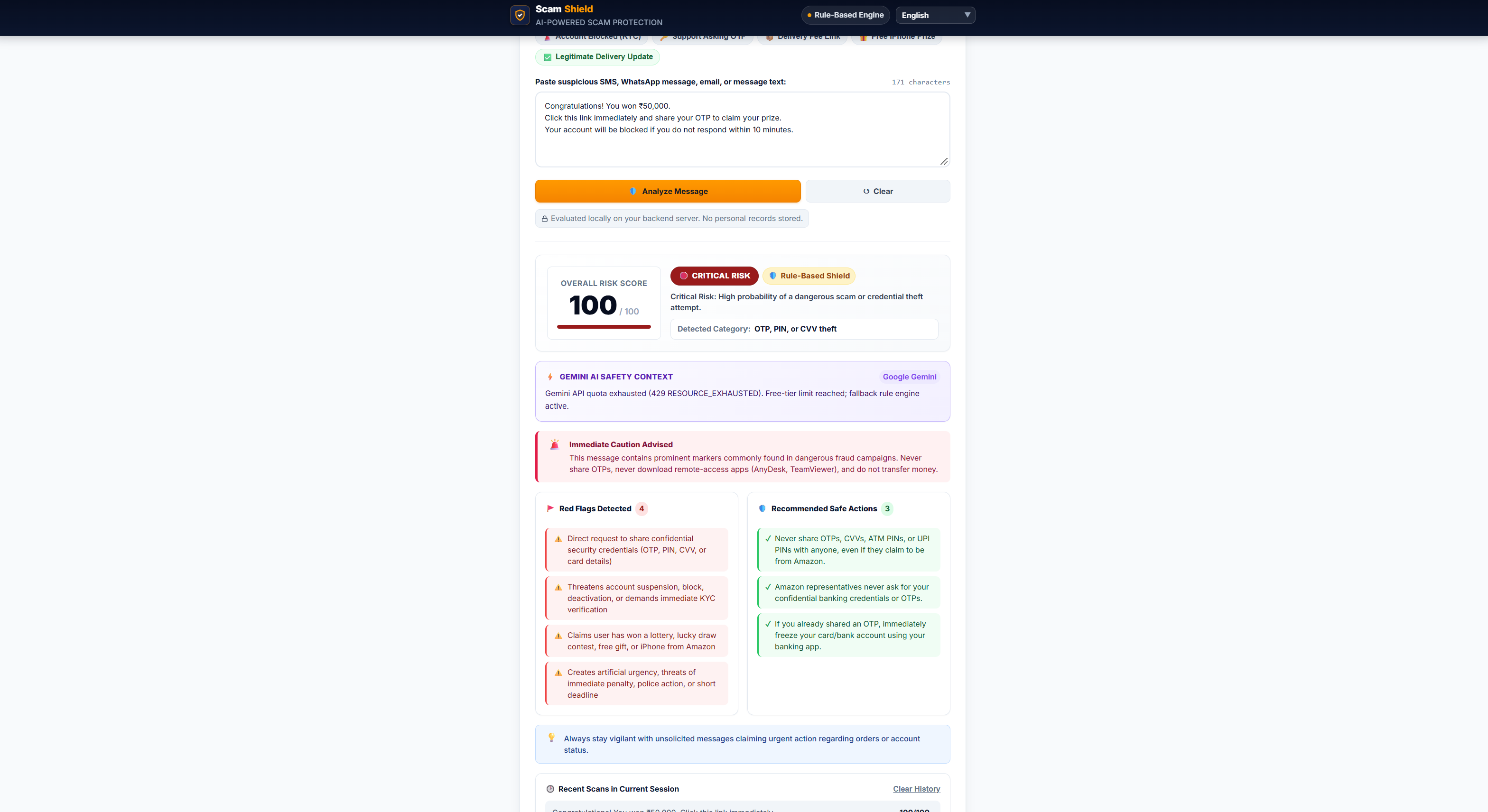
Scam Shield is an AI-powered cybersecurity assistant that analyzes suspicious messages and URLs to identify potential scam indicators. It combines rule-based detection with Google Gemini AI to explain suspicious patterns and provide safety recommendations.
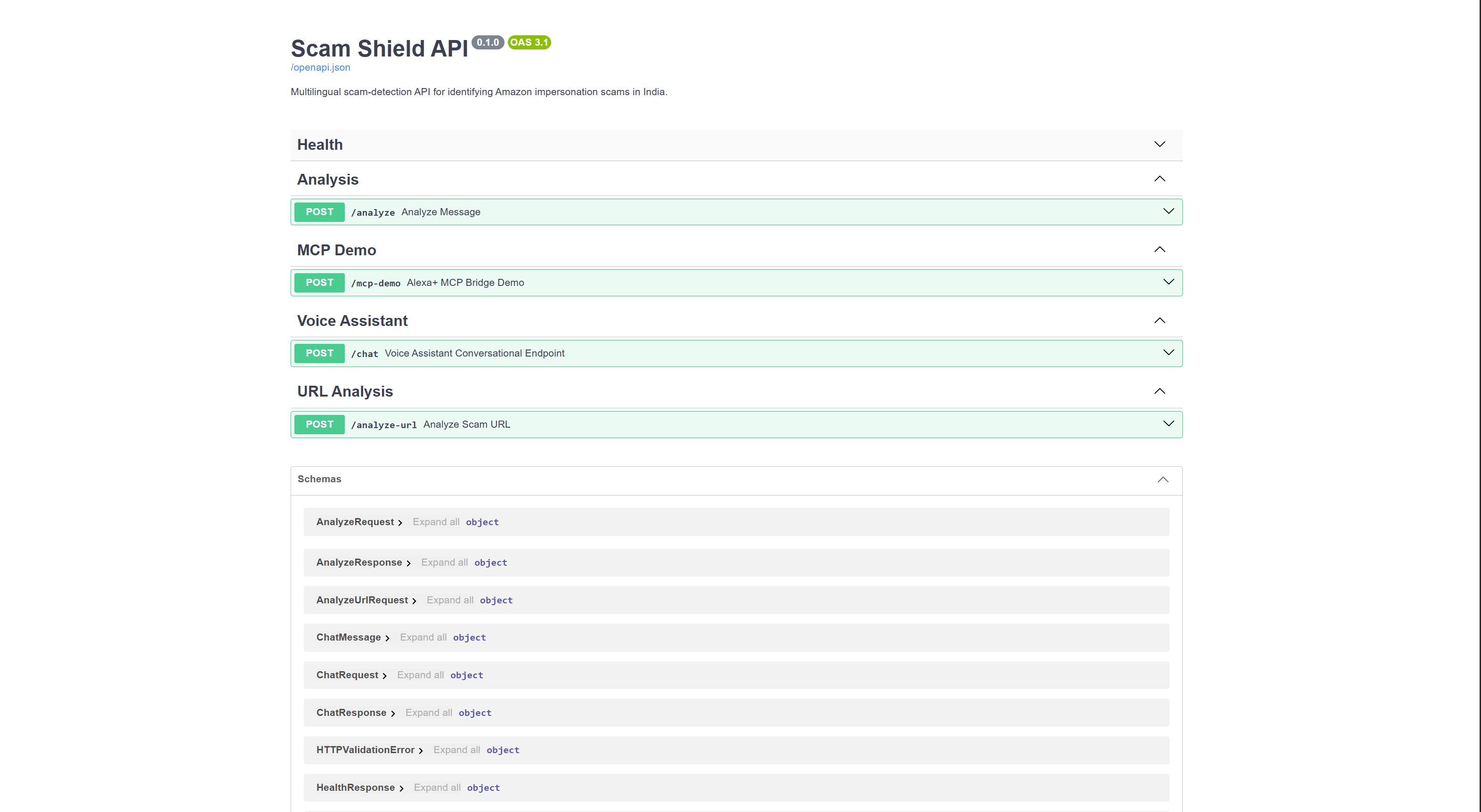
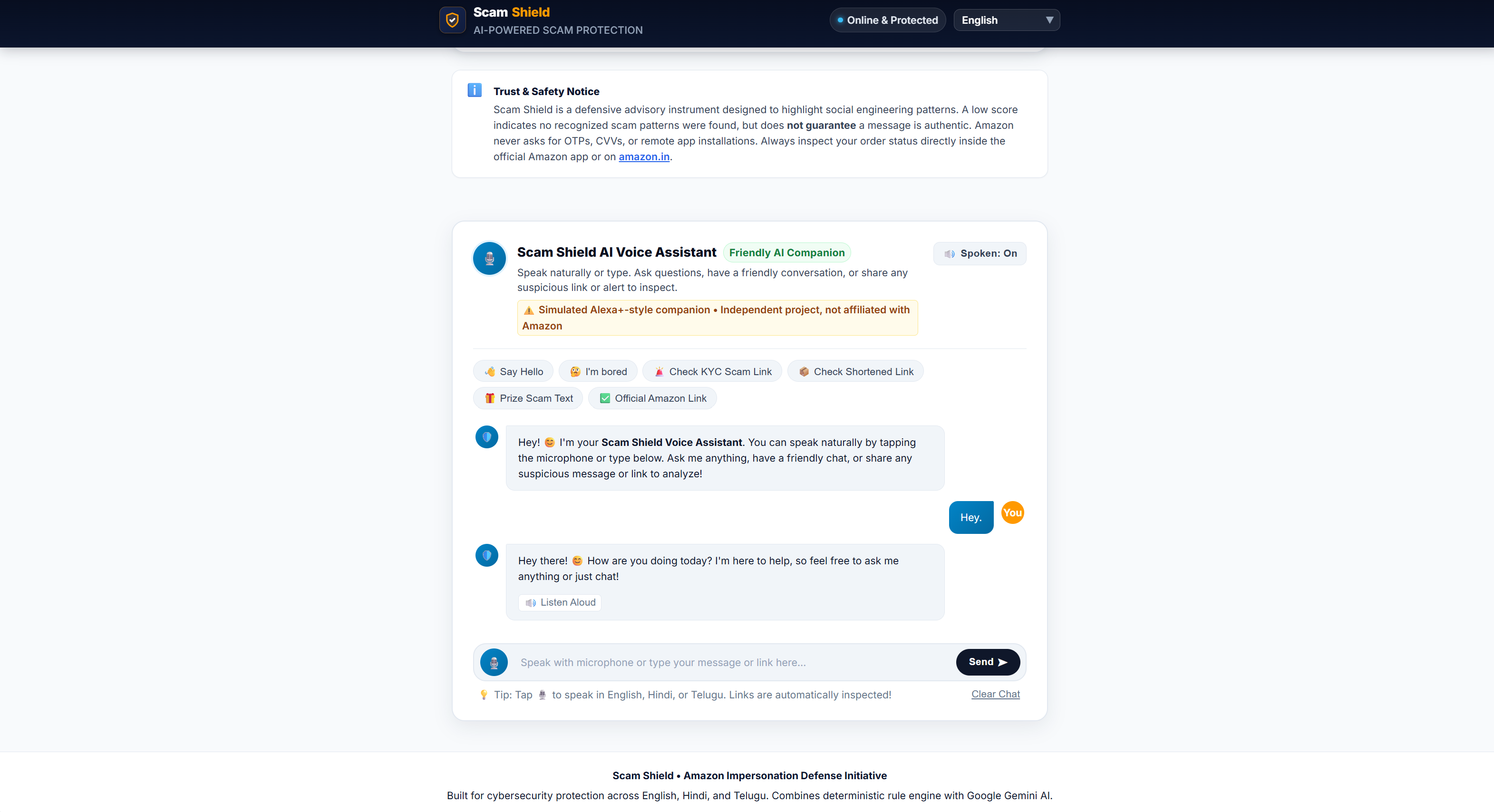
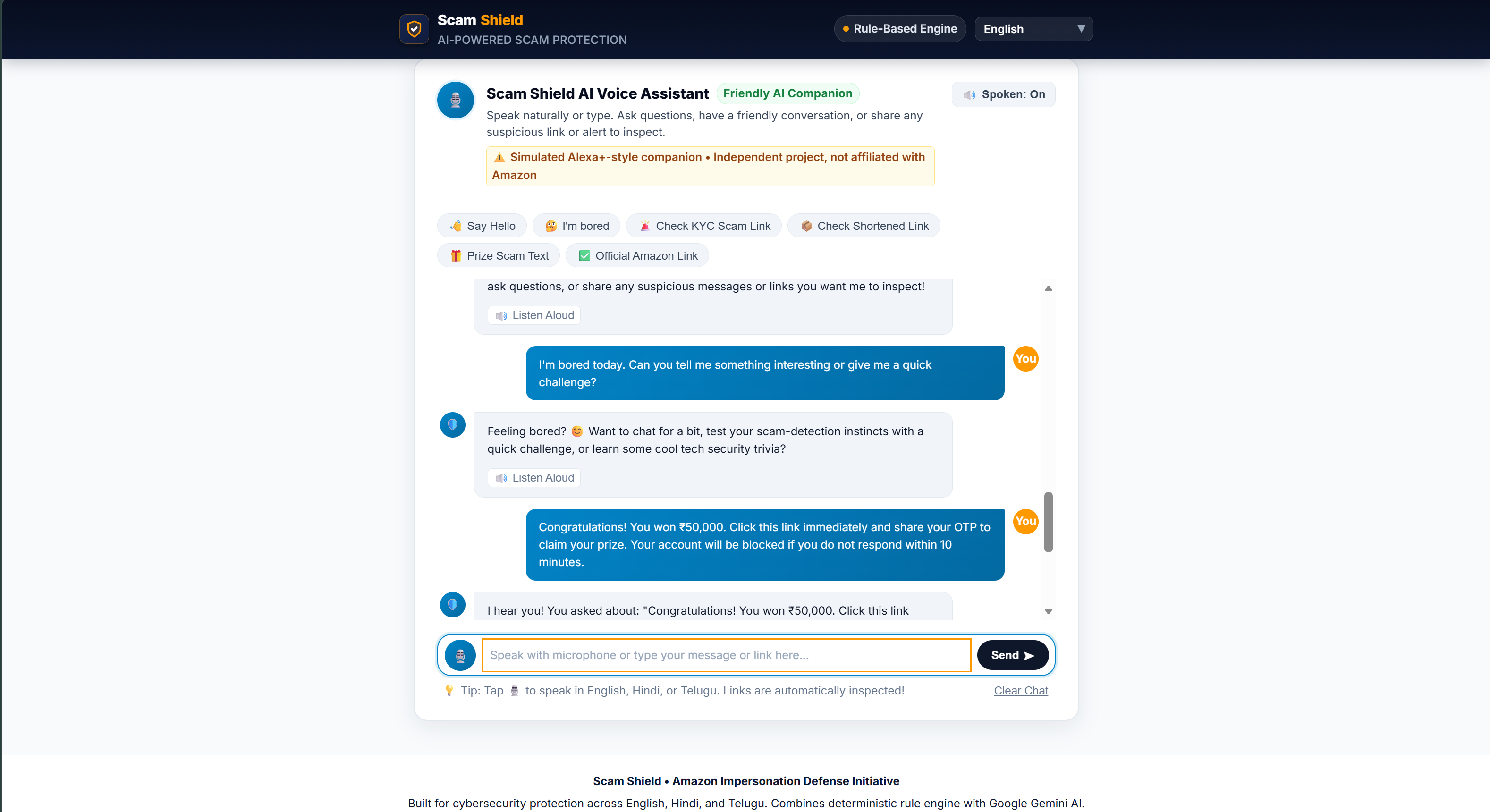
Key Features Scam Message Detection: Identifies warning signs in suspicious messages, including fake KYC requests, OTP theft attempts, and fraudulent payment requests. URL Risk Analysis: Checks URLs for suspicious domains, possible brand impersonation, and typosquatting. AI-Powered Analysis: Uses Google Gemini to provide contextual explanations of potential threats. Multilingual Assistance: Supports interactions in English, Hindi, and Telugu. Conversational Assistant: Helps users understand suspicious messages and online safety concerns. MCP Integration: Provides scam message and URL analysis tools through a Model Context Protocol server for compatible AI clients. How We Built It
We built the backend using Python and FastAPI, the frontend using HTML, CSS, and JavaScript, and the AI-powered analysis using Google Gemini. A rule-based detection engine complements the AI assistant, while a dedicated URL analyzer checks suspicious links and applies security validations. We also developed an MCP server to expose scam-analysis tools to compatible clients.
Challenges We Faced
One of our main challenges was distinguishing legitimate websites from suspicious lookalike domains. We also worked on IPv4 and IPv6 address handling, SSRF protection, multilingual interactions, and improving assistant responses when AI services are unavailable.
What We Learned
This project helped us explore AI-assisted cybersecurity, API development, URL validation, multilingual interfaces, and MCP-based tool integration. We also learned the importance of testing security protections to reduce false positives without weakening safeguards.
Future Plans
We plan to improve screenshot and document analysis, expand language support, enhance detection accuracy, and explore integrations with compatible AI assistants.
Our Mission
Our mission is to make online interactions safer by helping people recognize suspicious messages and links before they share sensitive information or make payments.


Log in or sign up for Devpost to join the conversation.