-
-
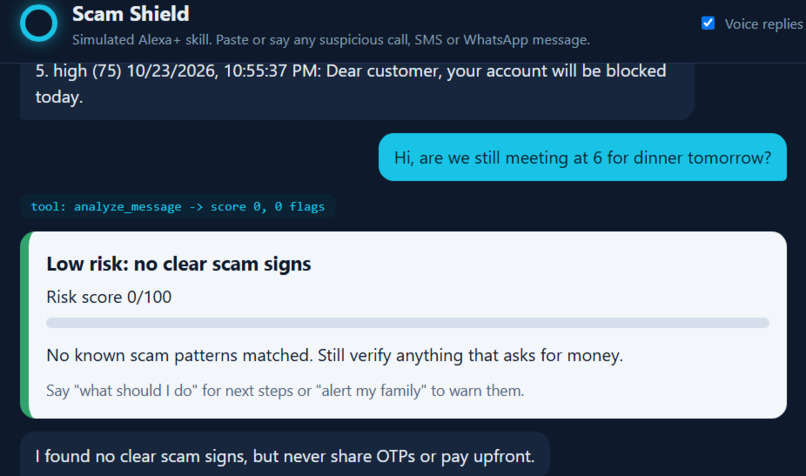
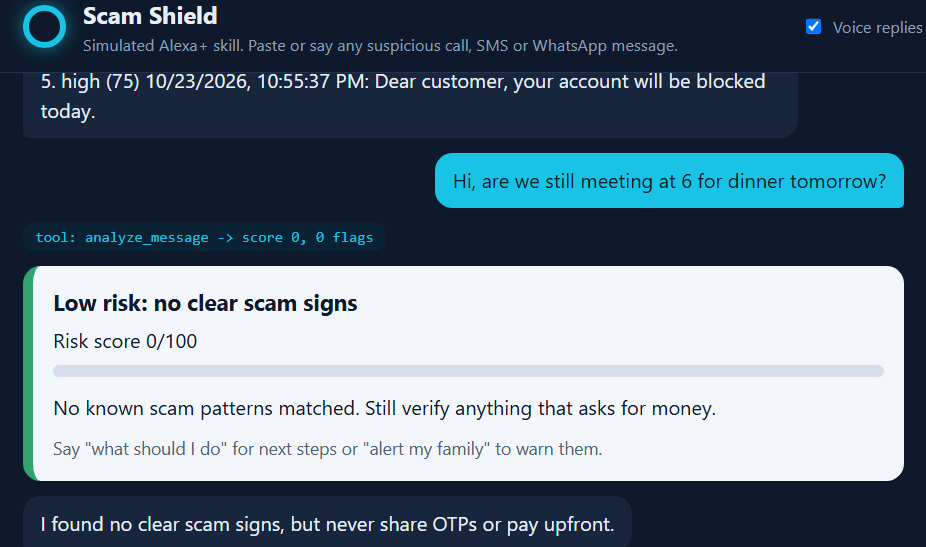
for a normal message
-
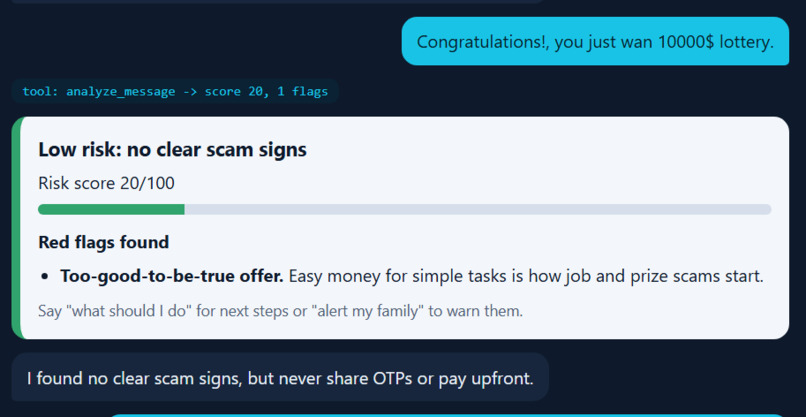
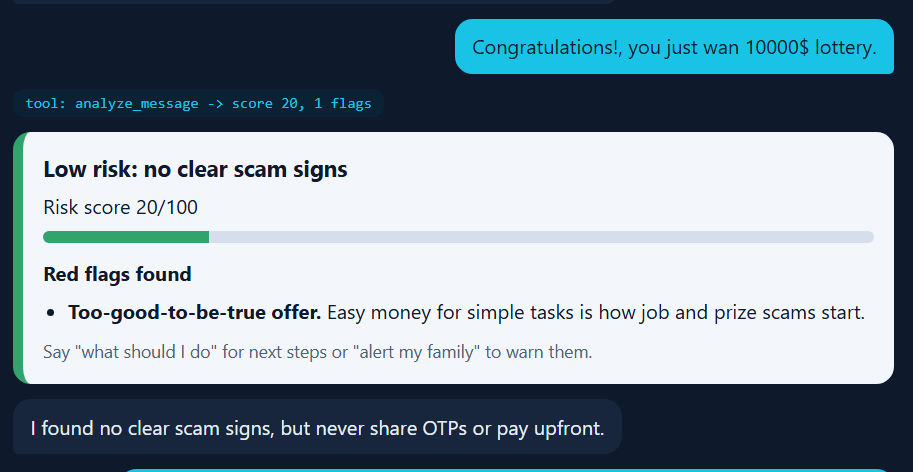
for random advertisment
-
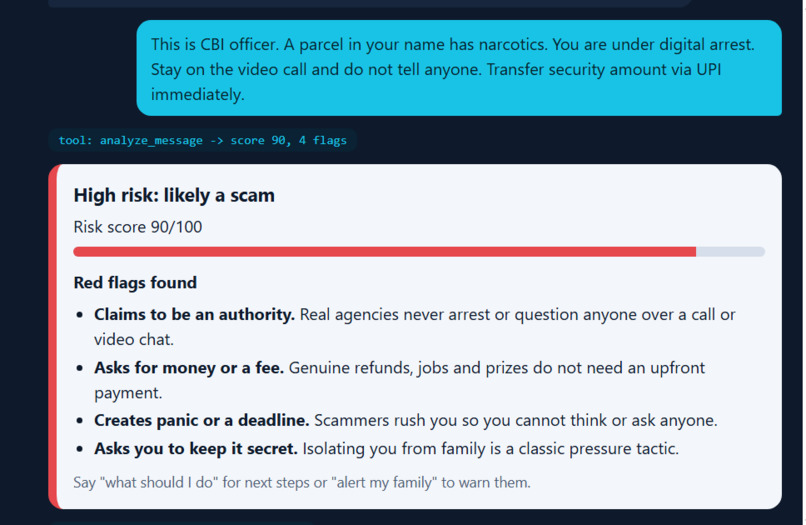
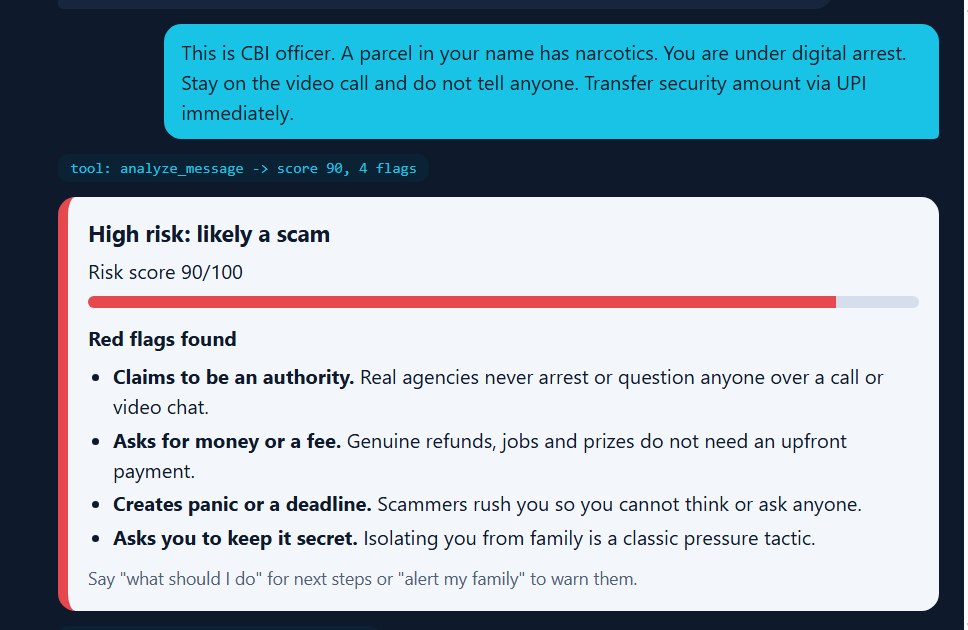
for job scam messages
-
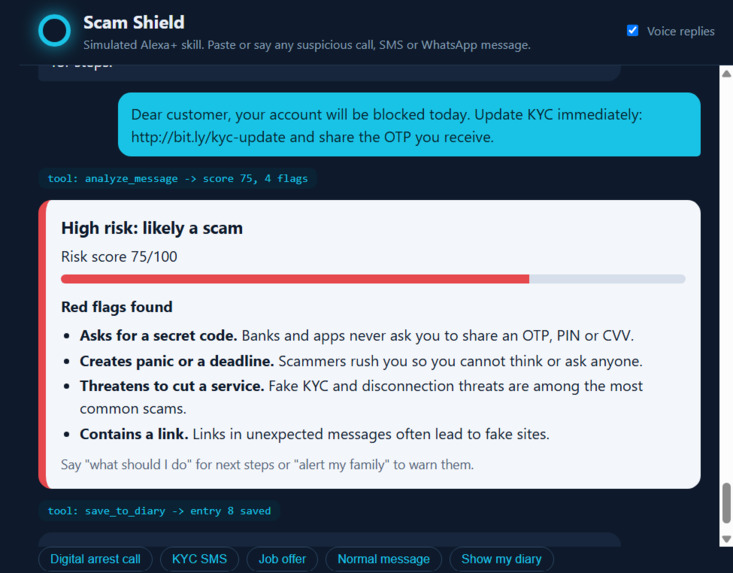
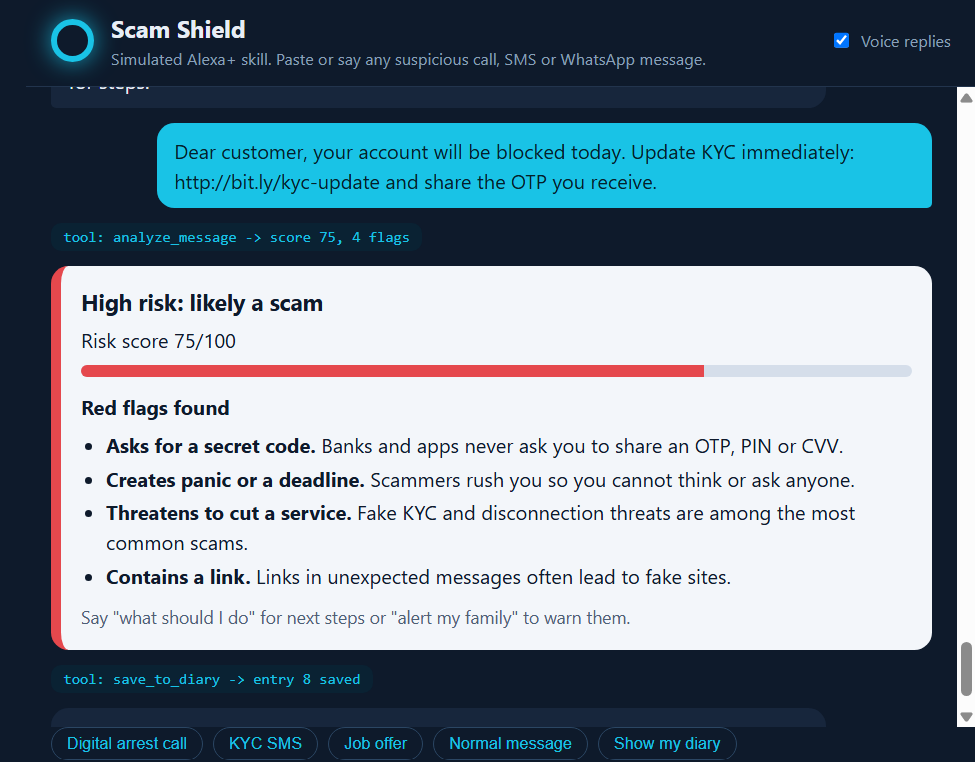
for fake know you customer phishing links
Inspiration
Scams like "digital arrest" calls, fake KYC messages and fake job offers are hitting people across India, and they work because victims panic and are told to keep it secret. I wanted an assistant you can simply ask, "Is this a scam?", by voice or text, at the moment the pressure is on.
What it does
Scam Shield is a simulated Alexa+ skill. You paste or say a suspicious call script, SMS or WhatsApp message and it:
- scores the risk (0-100) and explains each red flag in plain language
- saves suspicious messages to a scam diary that persists across sessions
- gives next steps for India: call the 1930 cyber crime helpline, report at cybercrime.gov.in, contact your bank
- drafts a warning to send to family (simulated)
- speaks its replies and accepts voice input
How I built it
It is a single-page web app in plain HTML, CSS and JavaScript. A small agent loop reads the request, picks tools (analyze_message, save_to_diary, get_action_plan, alert_family, list_diary) and chains them, and every tool call is shown in the chat so you can see the agent working. Scoring uses 10 weighted groups of scam signals, so it runs offline. Memory is kept in localStorage, and voice uses the browser Web Speech API. I used Claude as an AI coding assistant while building it.
Challenges
Keeping the explanations short and clear enough to read under stress, and avoiding false alarms on normal messages. I tested with sample scams and an ordinary message to tune the weights.
What I learned
How the Alexa+ track expects tool-style agents, and that a small rule-based assistant can still be genuinely useful when the tools and output are clear.
What's next
Expose the tools as a self-hosted MCP server over Streamable HTTP so it can run as a real Alexa+ add-on, add Hindi and regional-language support, and add a model-based classifier alongside the rules.
Built With
- css3
- html5
- javascript
- localstorage
- web-speech-api

Log in or sign up for Devpost to join the conversation.