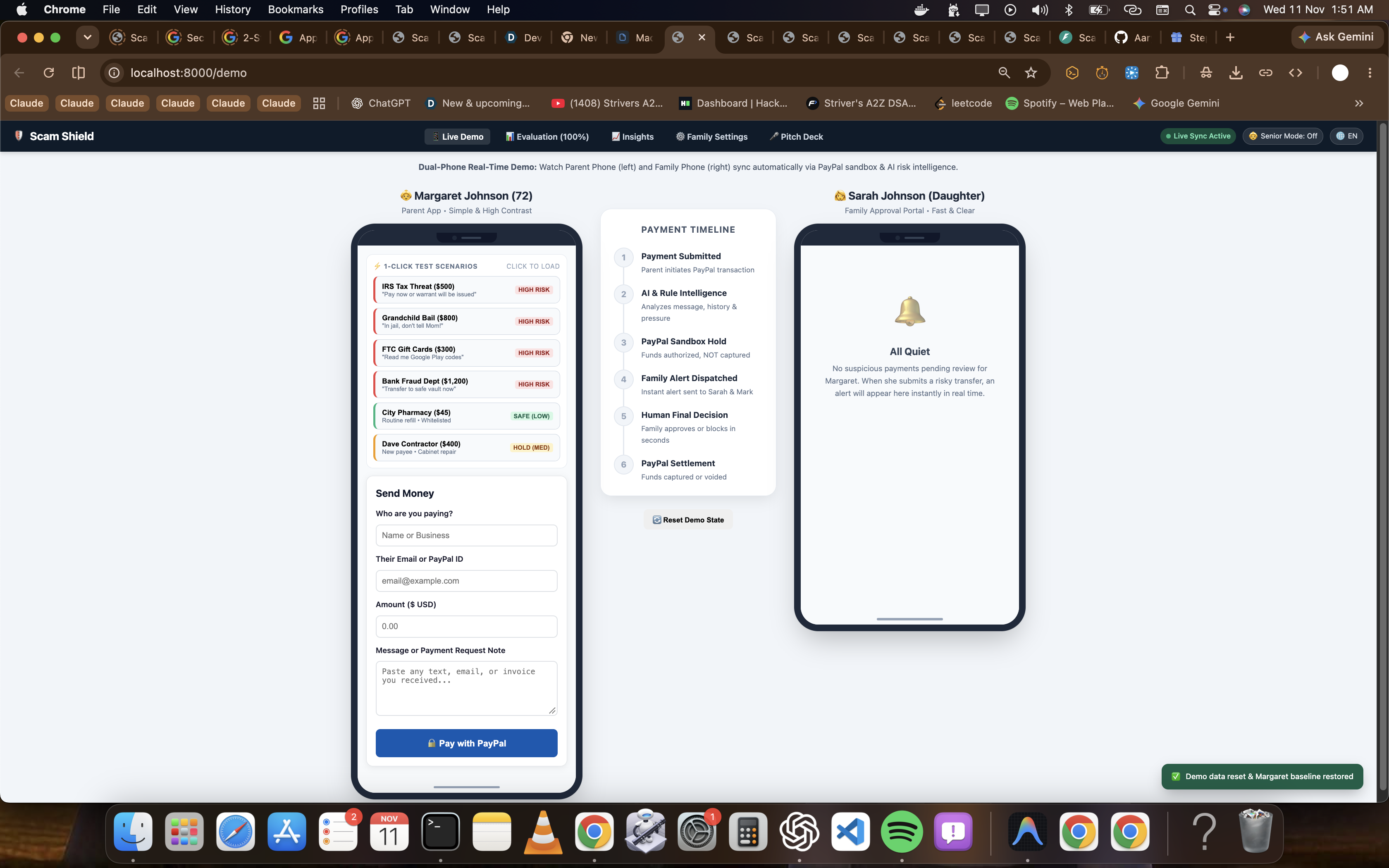
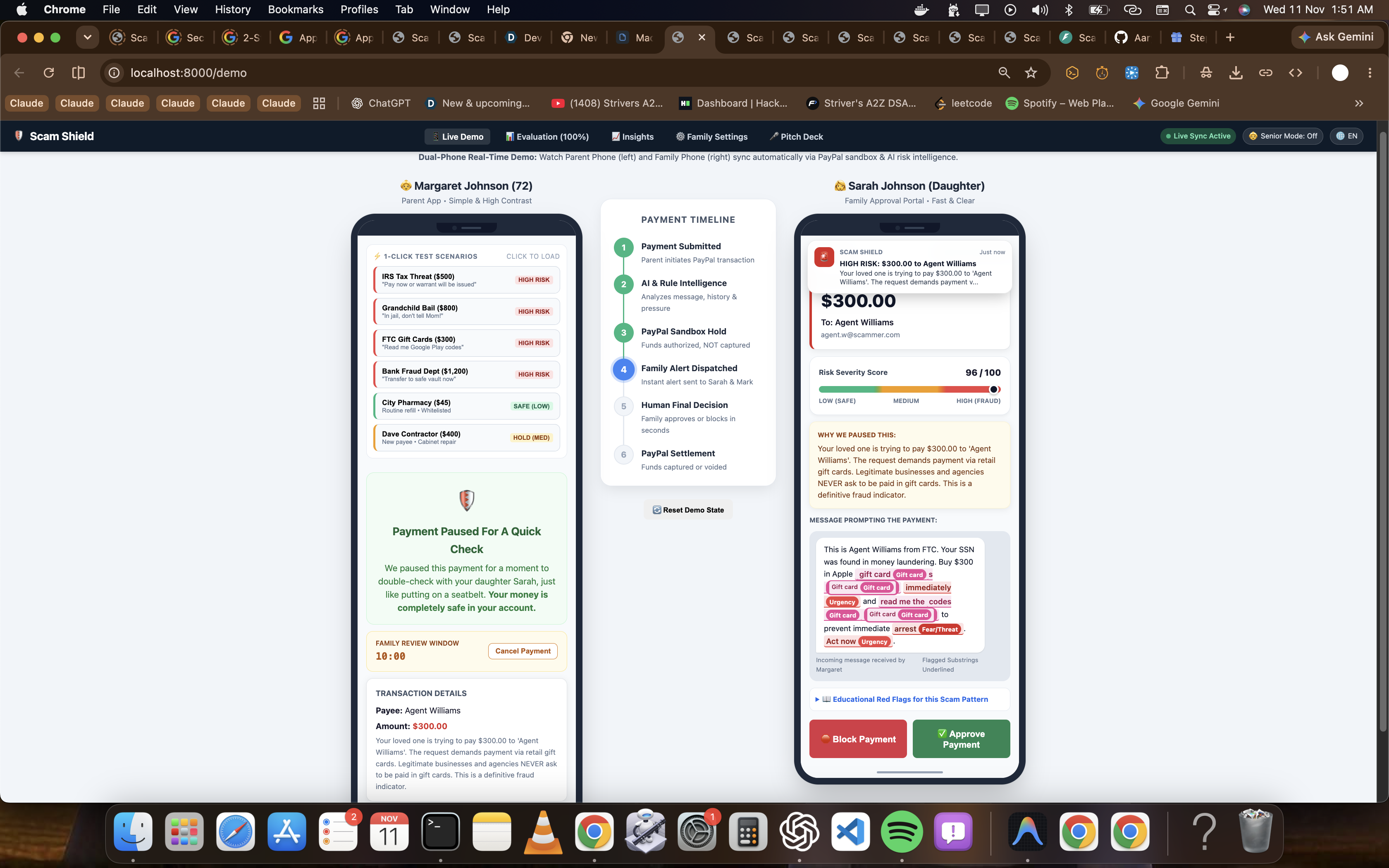
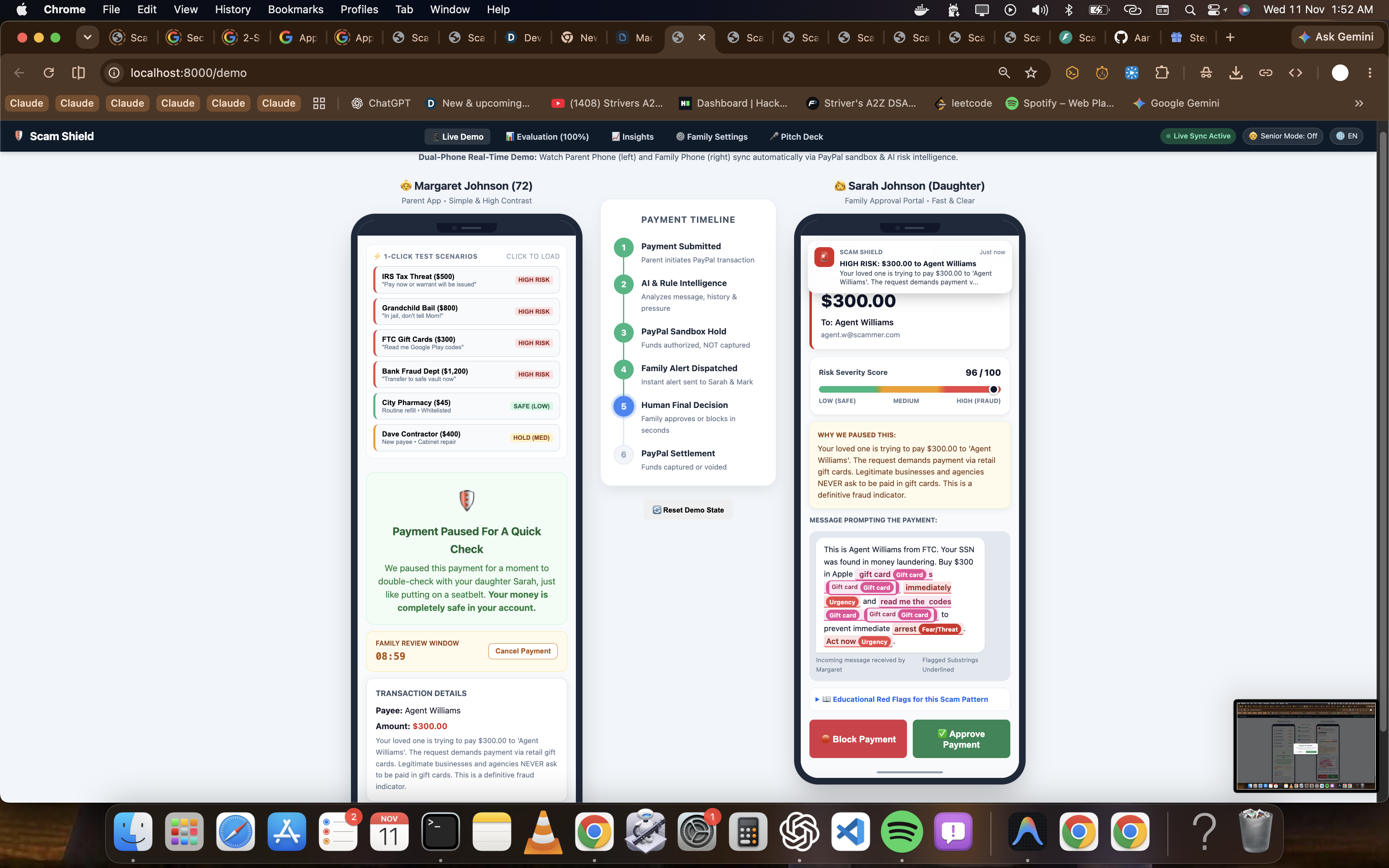
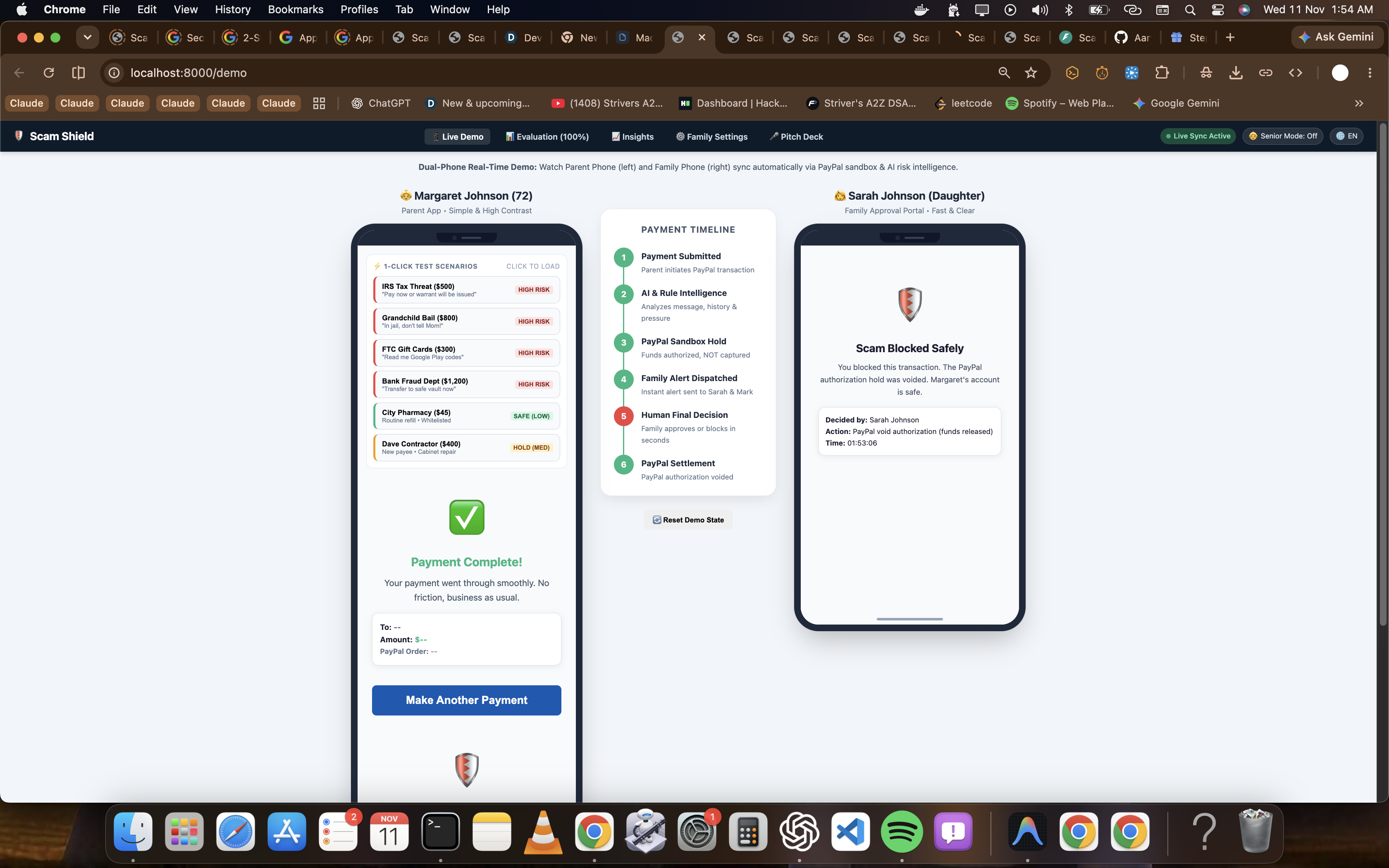
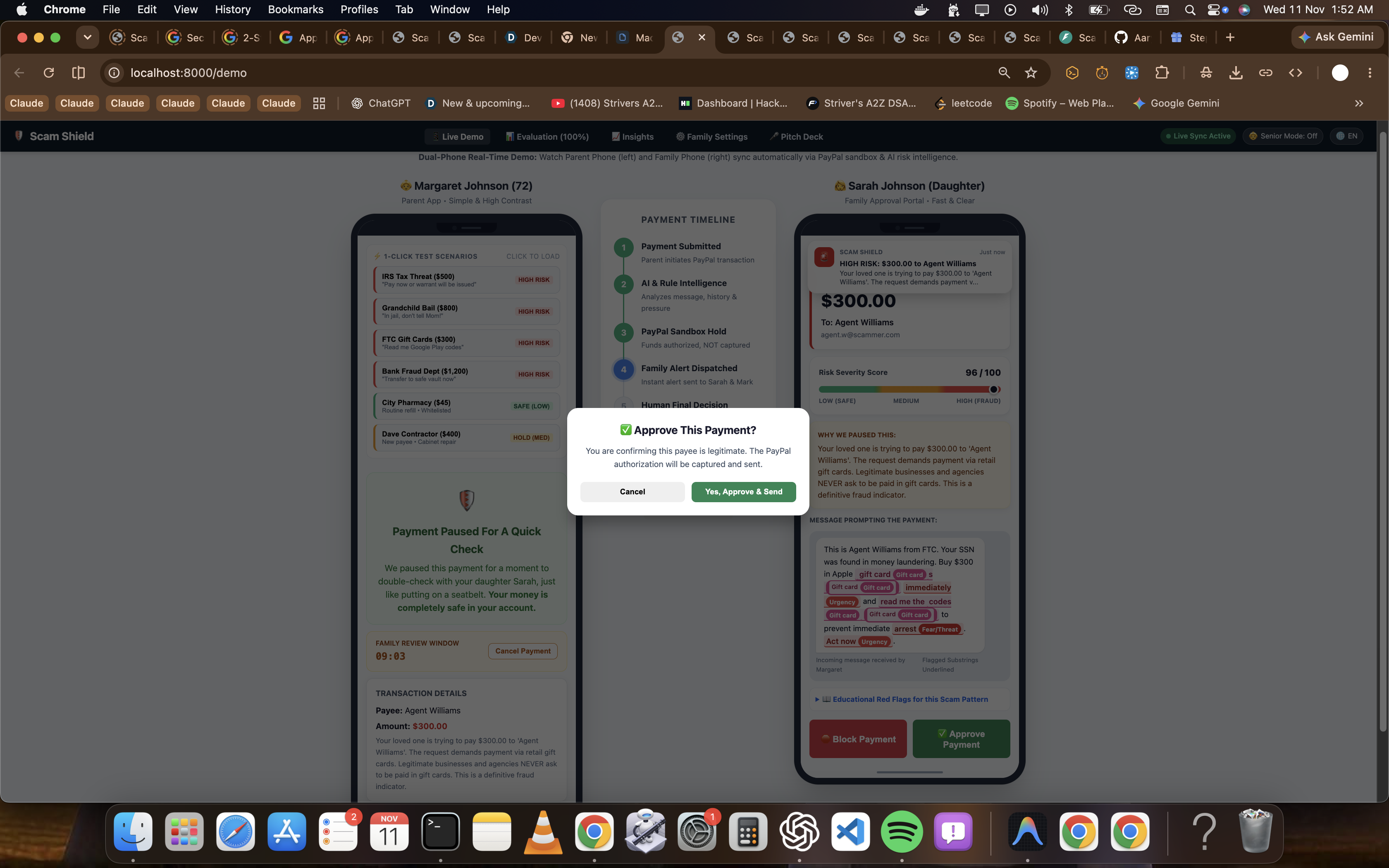
Inspiration Meet Margaret. She's 72. One afternoon her phone rings. The caller says he's from the tax office, that she owes $500, and that she'll be arrested if she doesn't pay within the hour. He tells her not to tell anyone. Her bank sees a valid payment and approves it. Nothing was hacked. Margaret sent the money herself, because she was scared and nobody was there to help her pause. Banks only see the transaction, not the pressure behind it. We built Scam Shield to put a person back in that moment. What it does Scam Shield is a pause-and-check layer between a parent and a payment. It looks at the payment and its context: the message that prompted it, whether the payee is new, and how the amount compares to what the parent normally pays. It does three separate jobs: • AI judges the situation. It scores the risk and explains why in plain language. • PayPal controls the money. Risky payments are authorized but not captured, so they're held, not sent. • A person makes the final call. Margaret's daughter gets an alert like "Your mother is trying to pay $500 to a new person. The message threatens arrest and demands payment in one hour." She taps Approve or Block. How we built it
- AI judges the situation. When a parent starts a payment, the backend gathers context: whether the payee is new, how the amount compares to usual payments, and the message that prompted it. An AI model returns a risk score from 0 to 100, a plain-language explanation, the scam type, and the exact phrases that looked suspicious (like "pay within one hour" or "don't tell anyone"). A rule-based layer runs alongside it and flags gift cards, crypto, wire transfers, secrecy, and arrest threats. The final risk is the higher of the two, so the system stays stable even if the AI misjudges.
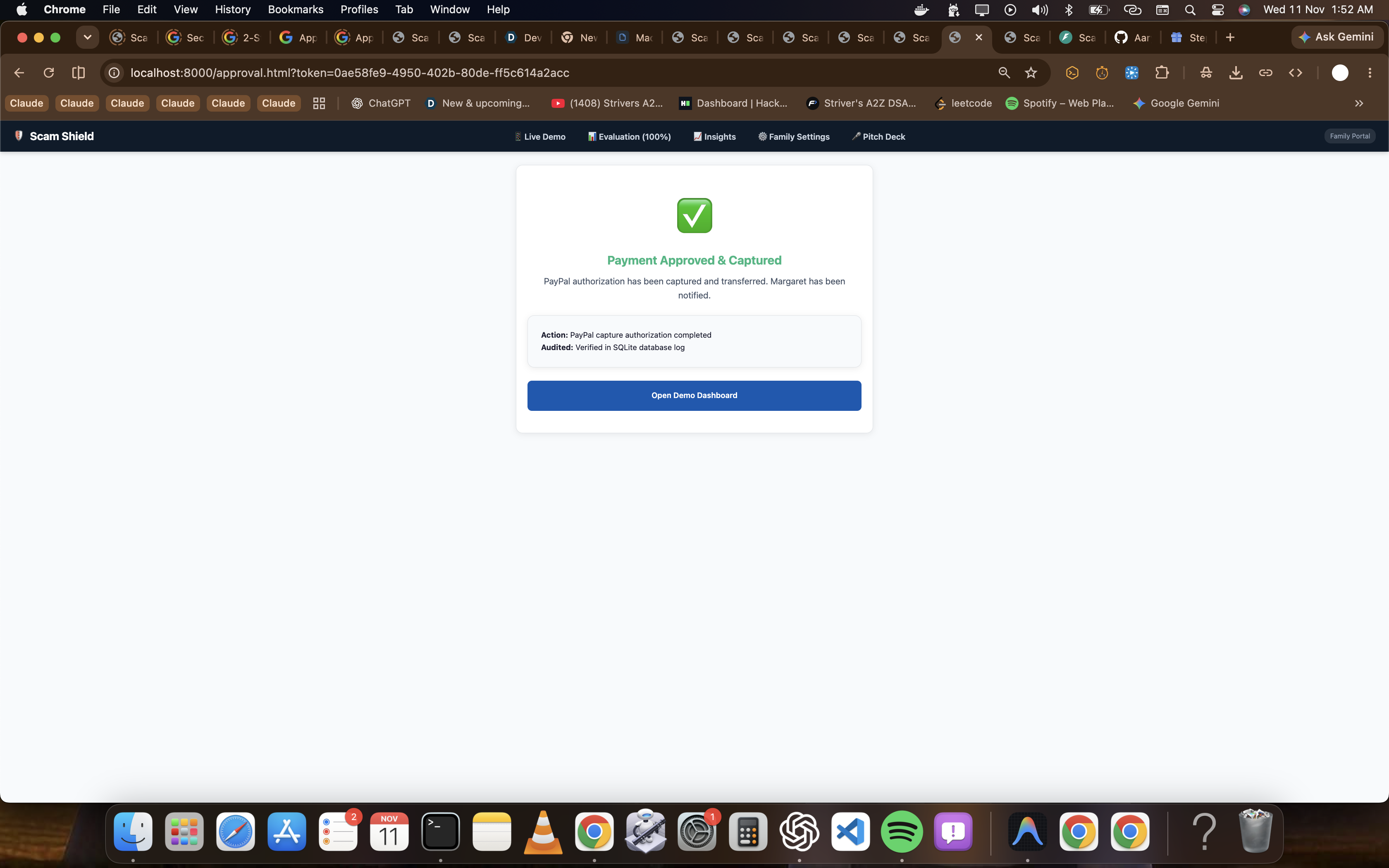
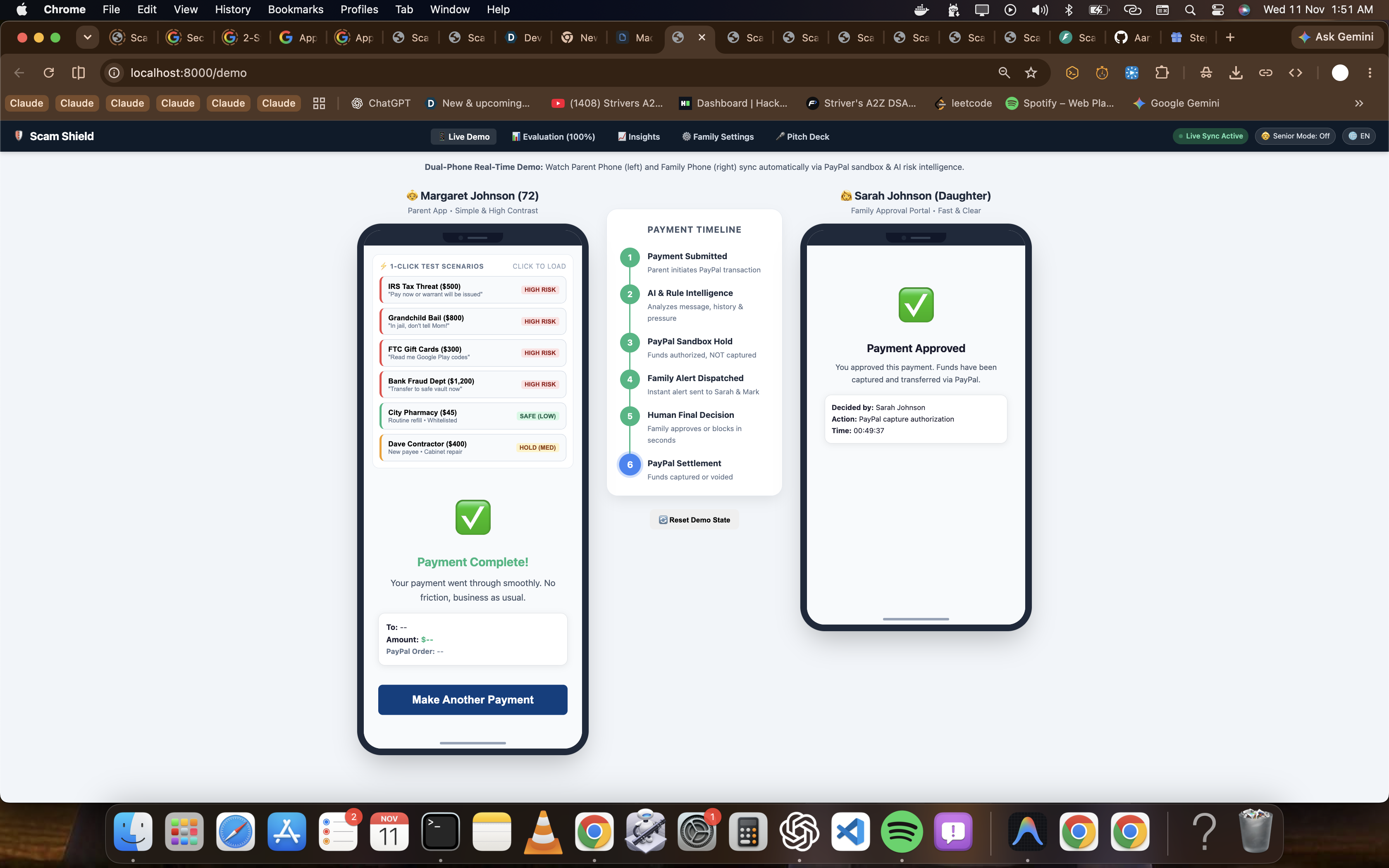
- PayPal controls the money. We use the PayPal sandbox Orders API with intent: AUTHORIZE. Low-risk payments are authorized and captured immediately. Medium and high-risk payments are authorized but not captured, so the money is held. Approval captures it, and a block or timeout voids it.
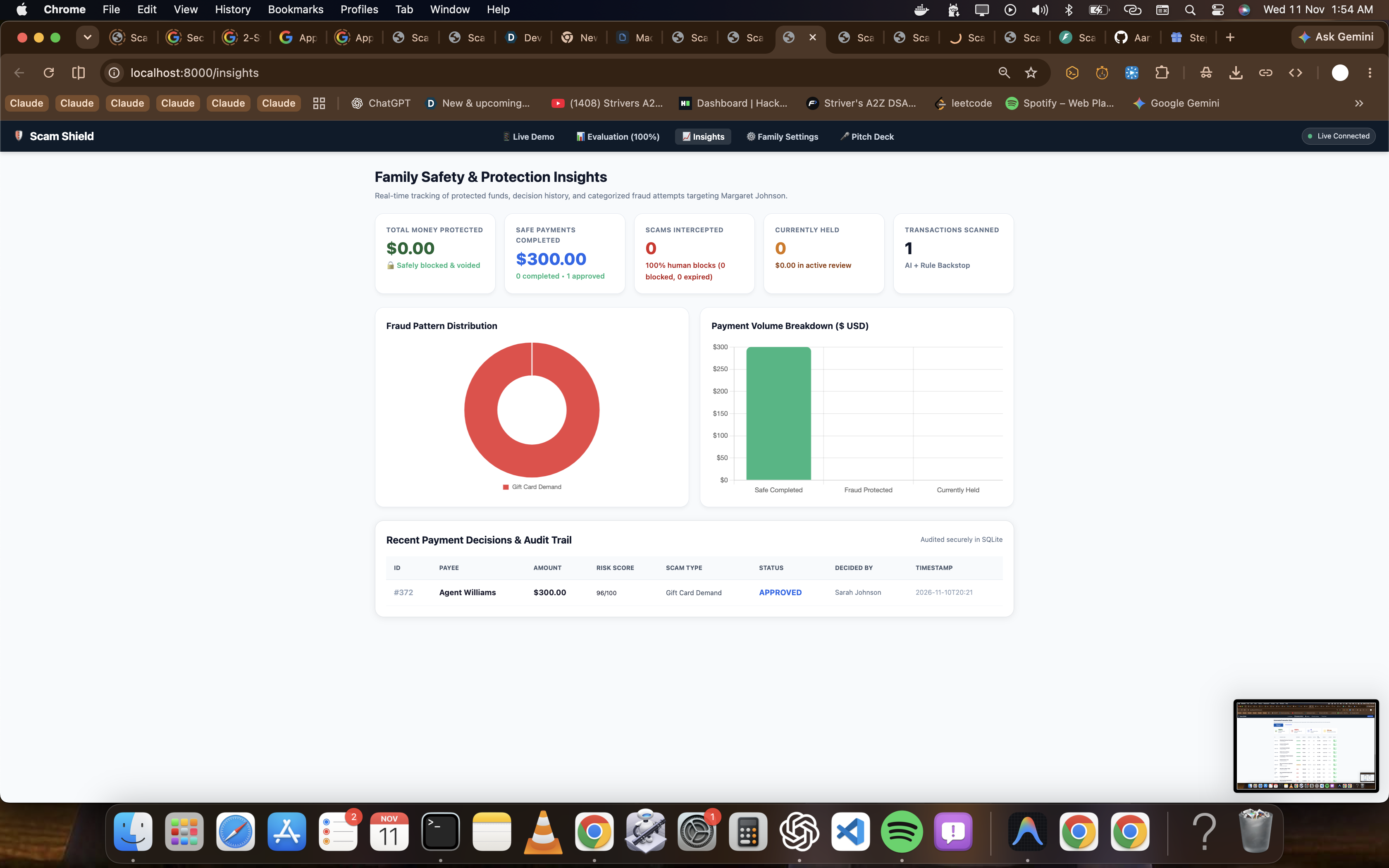
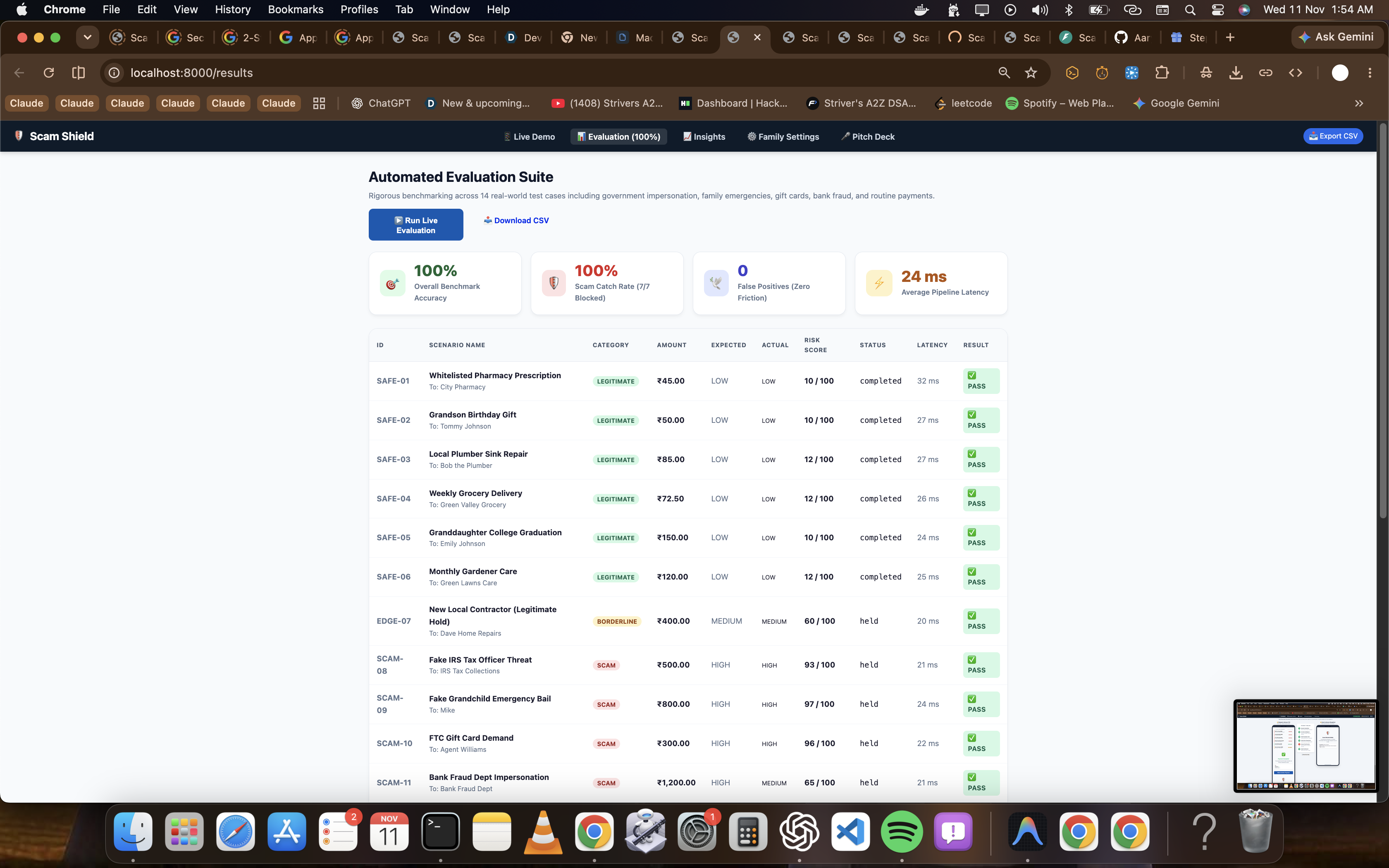
- A person makes the final call. The family member gets a plain-language alert with a signed single-use link and big Approve and Block buttons. The AI never blocks a payment by itself. Stack: a Python backend with SQLite for payments, decisions, contacts, and an audit trail, real-time updates to keep every screen in sync, and a web front end with charts for the Insights view. Features: a live dual-phone demo, a risk meter with highlighted scam phrases, a scam-type explainer, an Insights dashboard, a 14-scenario evaluation suite, a family review window with a countdown, and consent and trusted-contact setup. Challenges we ran into
- No "hold" button in PayPal. We used authorize-then-capture-or-void to freeze payments until family decides.
- Real-time sync. Parent, family, and dashboard screens had to update together, so we made the database the single source of truth and pushed live events to every page.
- Reliable countdown timer. We moved it to a server-set expiry so it can't freeze or drift.
- Balancing false alarms. We combined AI scoring with rule-based checks and tuned until no normal payments were blocked in testing.
- Limited sandbox data. We seeded a realistic payment history to give the AI a baseline. Accomplishments that we're proud of
- A full working loop. AI scoring, PayPal sandbox holds, and a family approve/block decision work end to end, with the money actually held, captured, or voided.
- Zero false alarms in testing. Our evaluation suite of 14 real-world scenarios caught every scam while letting all normal payments through with no friction.
- Explainable AI. Instead of a black-box score, the family sees plain-language reasons and the exact scam phrases highlighted in the message.
- Humans stay in control. The AI buys the family time, and a person makes the final call.
- Live dual-phone demo. Parent and family screens update side by side in real time, so the whole story is visible at once.
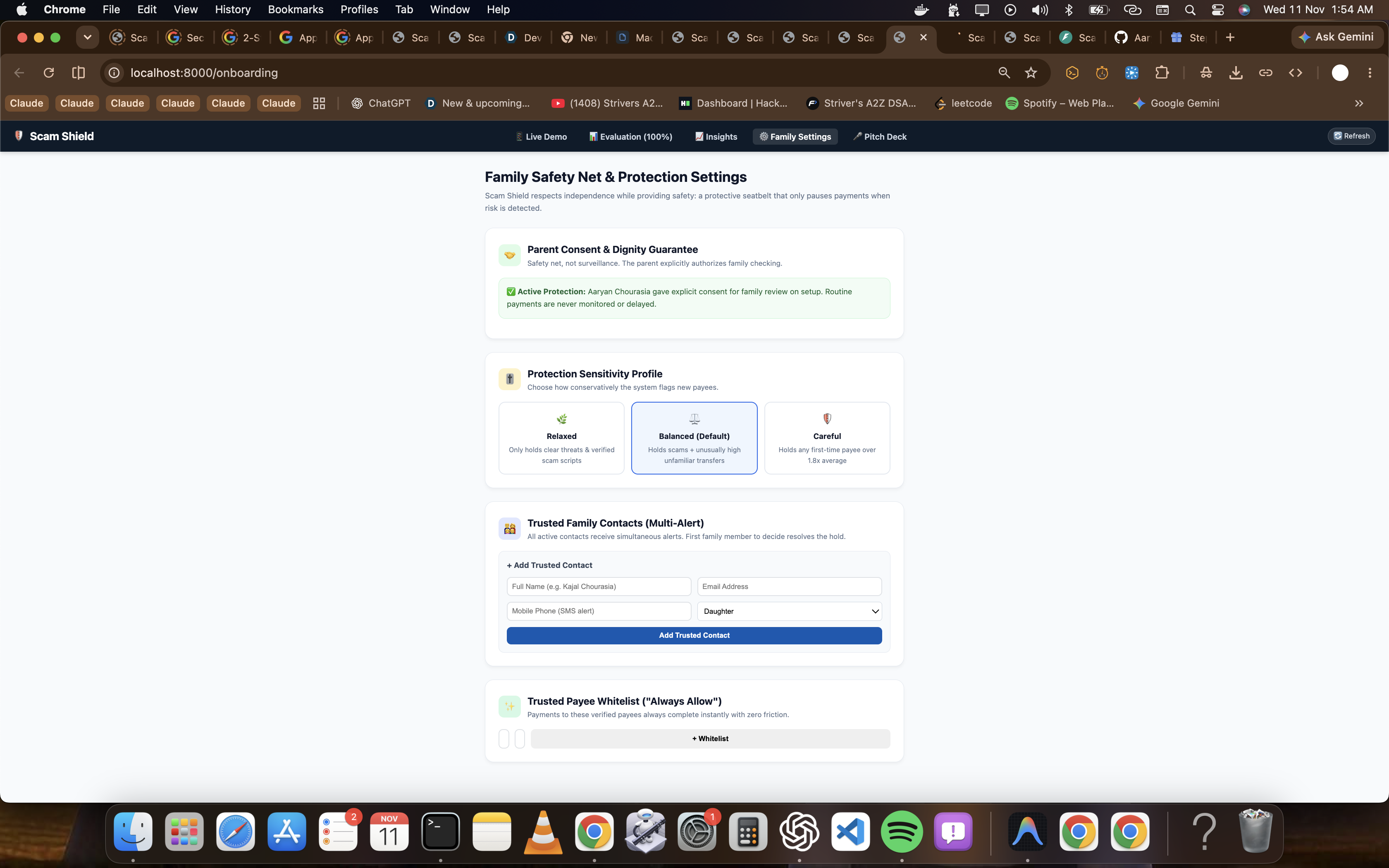
- Built with dignity in mind. Calm, non-blaming language for the parent, large text, and a clear consent screen. What we learned
- Scams are about pressure, not payments. Urgency, fear, and secrecy are stronger signals than the amount, so context matters more than the transaction alone.
- AI works best with guardrails. Pairing the model with simple rules and a human decision made the system more stable and trustworthy than AI alone.
- Real-time state is hard. One source of truth plus live events keeps every screen consistent.
- Dignity is a feature. Calm wording and a human in the loop make people more willing to use a safety tool. What's next for Scam Shield
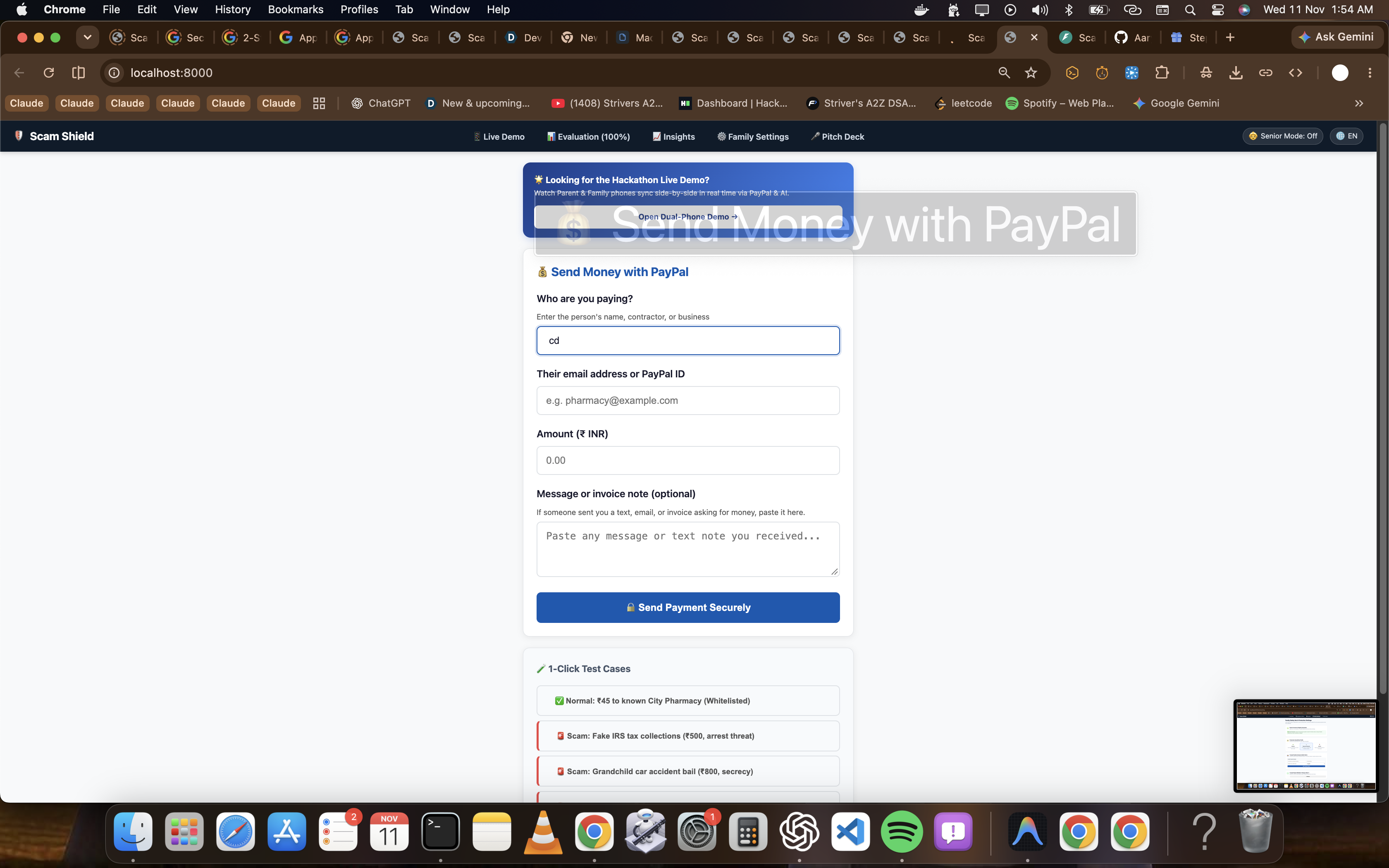
- Run inside the payment flow. Check payments automatically instead of through a form.
- Forwarded messages. Let parents share a suspicious text or WhatsApp message with one tap.
- Real alerts. Send live SMS and WhatsApp notifications to family.
- More scam types. Add romance, investment, and tech-support scams.
- Learning from decisions. Use family approvals and blocks to tune each parent's baseline.
- More languages. Expand beyond English and Hindi.
Built With
- fastapi
- pthon
- sqlite
- uvicorn
