Inspiration
We created Scam Shield because spam messages and fake website links are becoming common. Many people receive messages containing fake offers, lottery claims, suspicious payment requests, and phishing links. We wanted to build a simple tool that helps users identify these threats before they become victims of online scams.
What it does
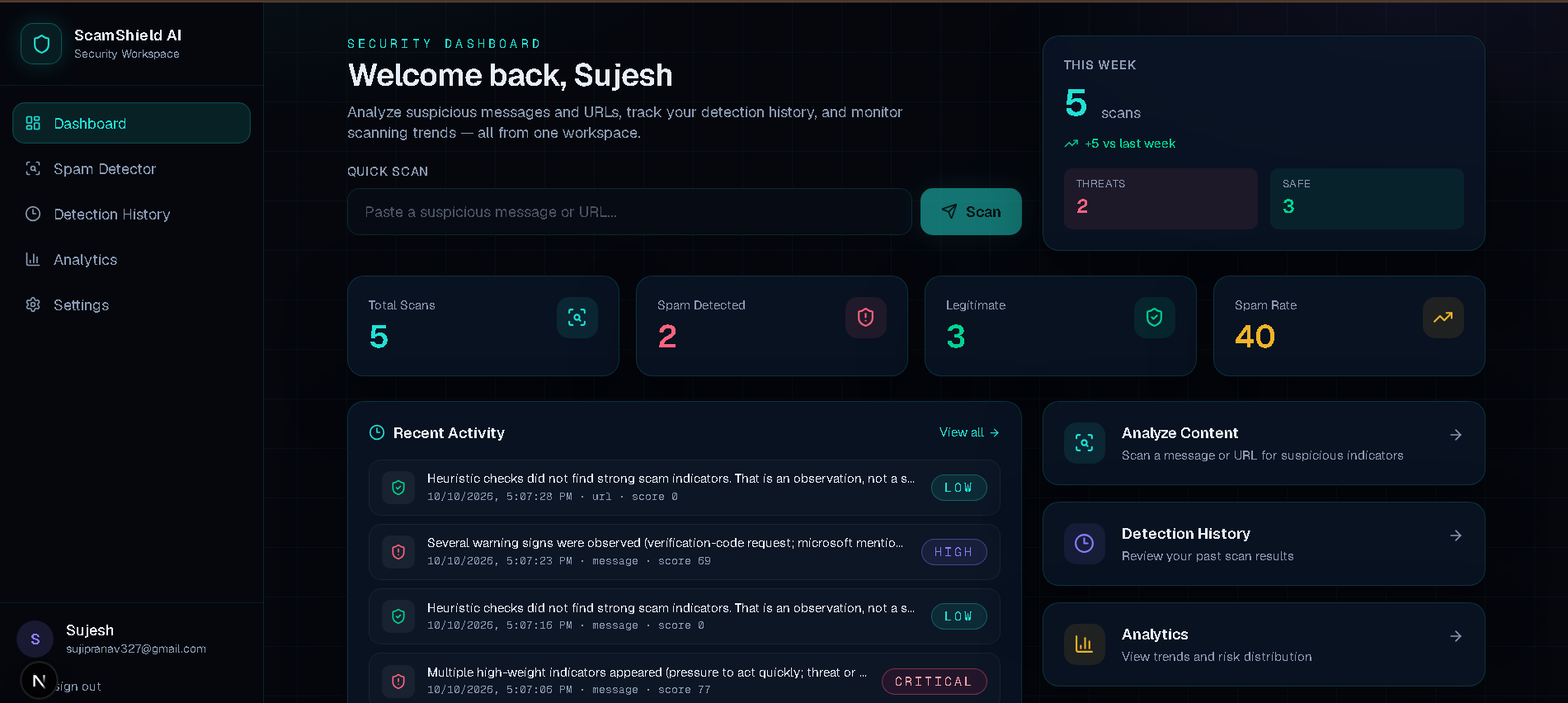
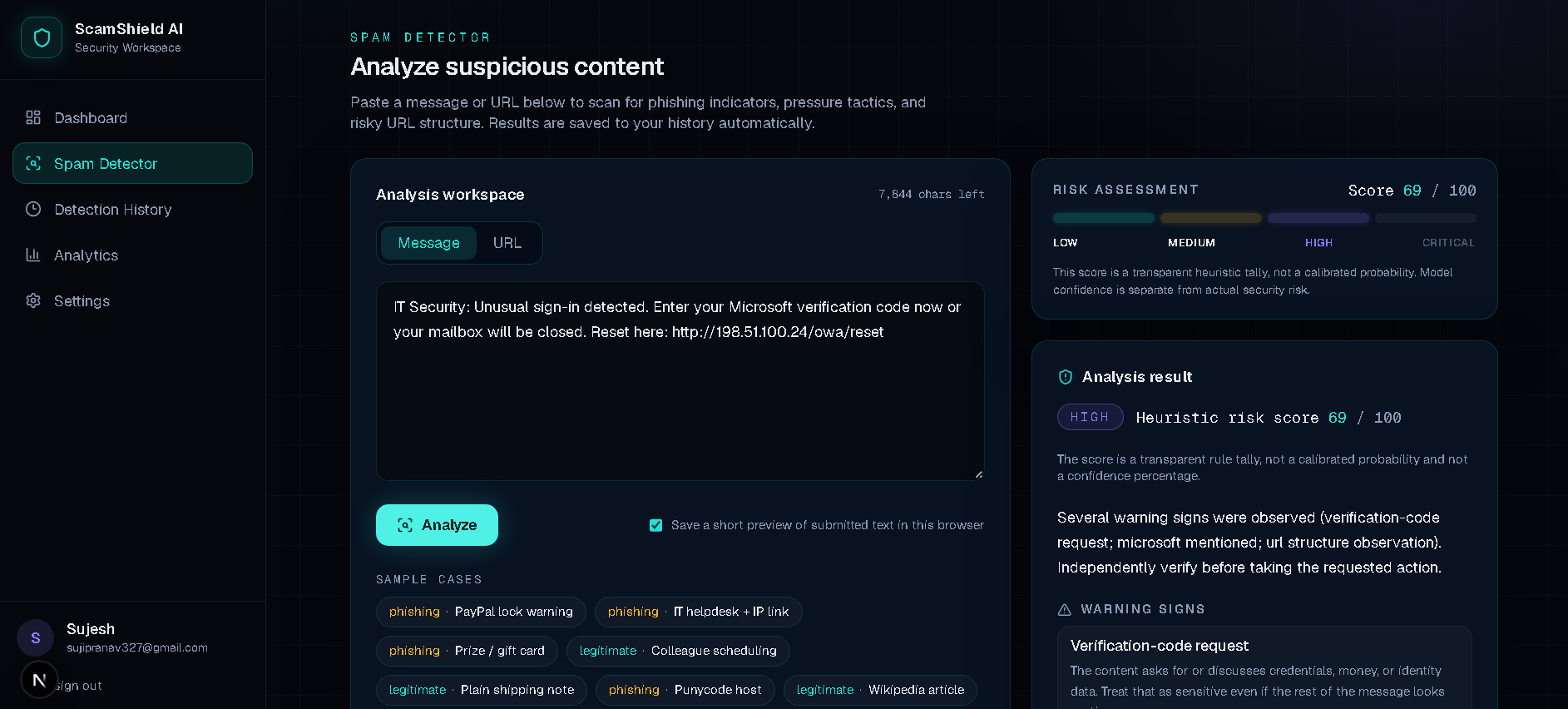
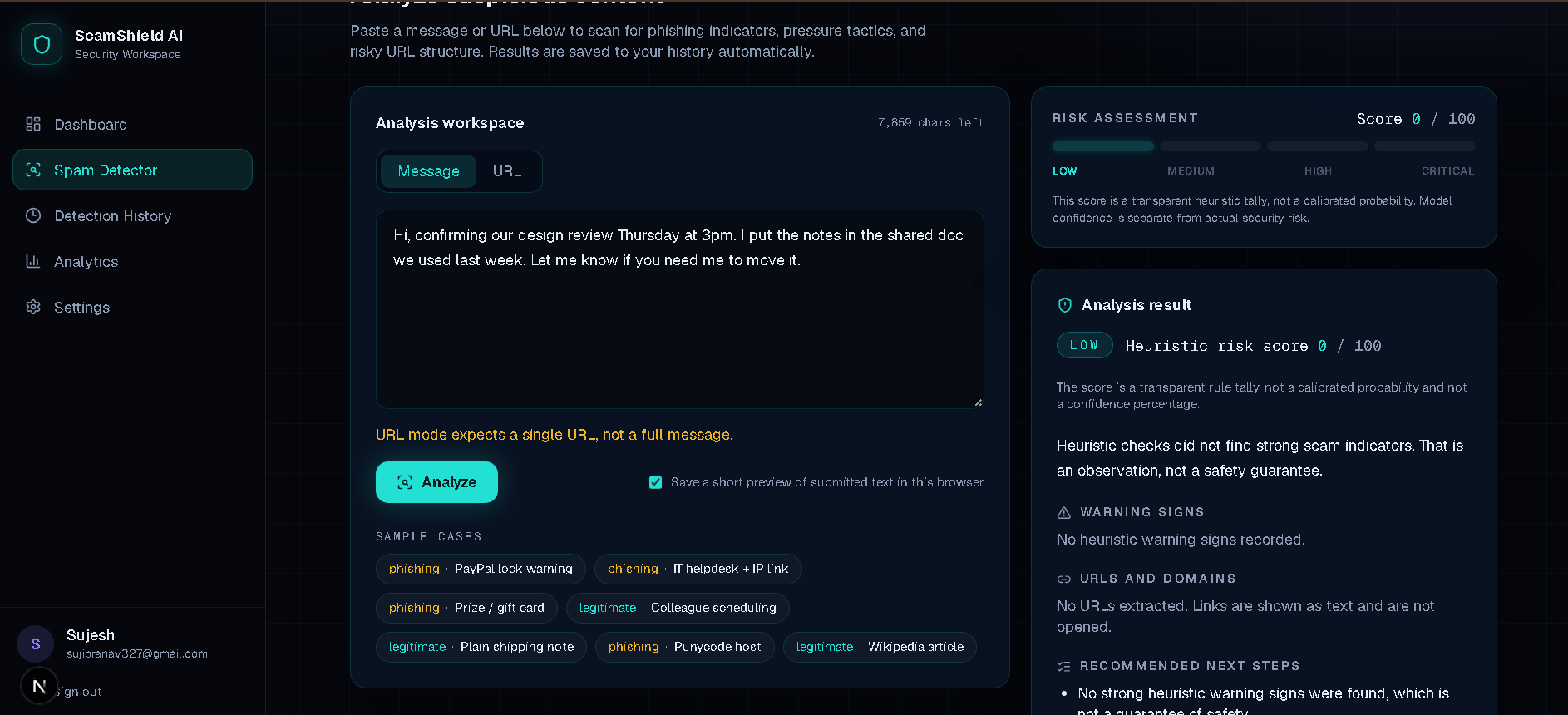
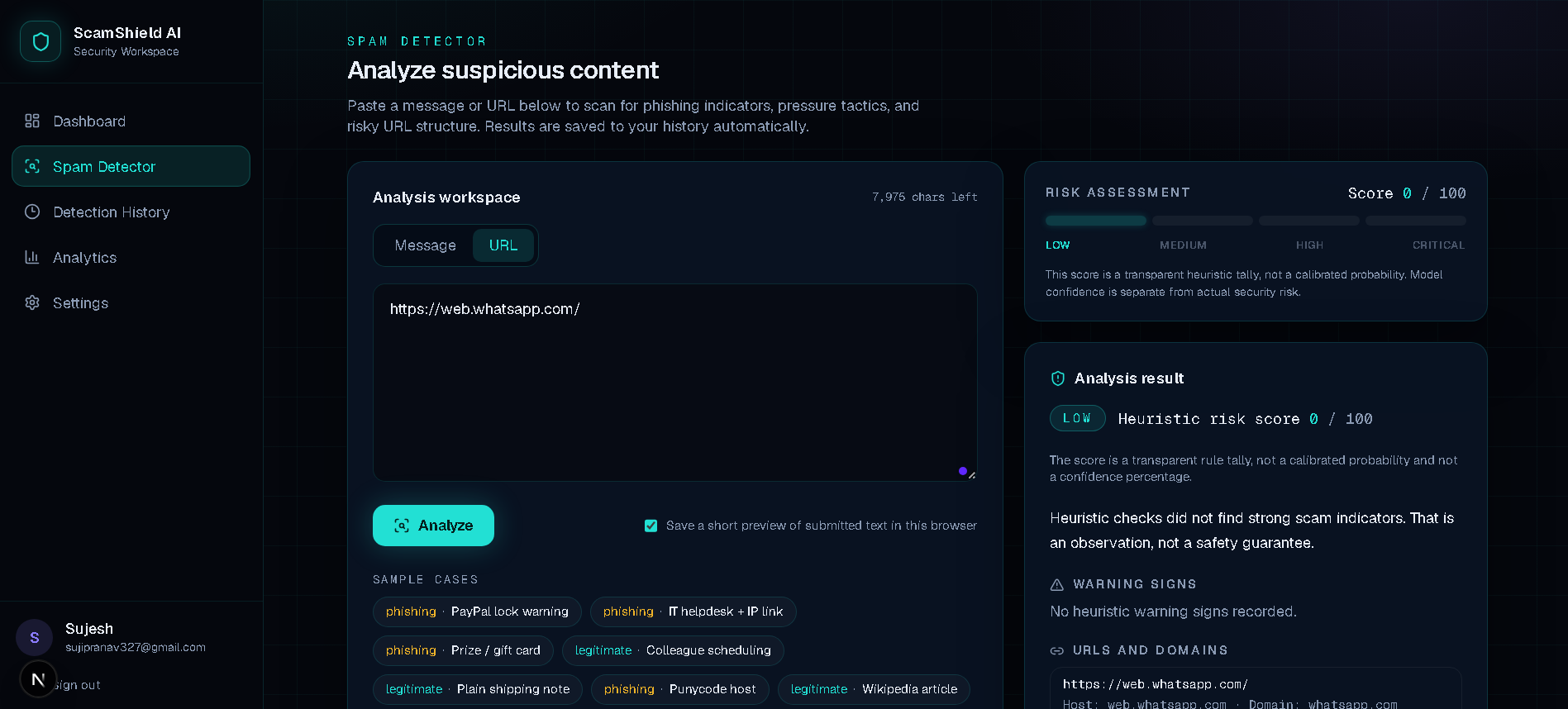
Scam Shield is a spam message and malicious URL detection system. Users can enter a text message or paste a website URL to check whether it appears suspicious. The system analyzes the input and provides a result with a risk indication. The goal is to help users recognize potential scams and make safer decisions online.
How we built it
We planned the project with a frontend for user interaction and a Python backend for processing inputs. For message detection, we use machine learning and text-processing techniques to classify messages. For URL detection, we analyze URL patterns and use a classification model to identify potentially malicious links. We also plan to use reliable security APIs to improve URL reputation checks.
Challenges we ran into
One of our main challenges was understanding how to detect different types of spam messages and suspicious URLs. Some legitimate messages can look suspicious, while some scam messages appear genuine. Choosing suitable datasets, preparing the text, extracting useful URL features, and reducing incorrect predictions were important challenges during development.
Accomplishments that we're proud of
We are proud to bring message spam detection and malicious URL analysis together in a single project. Instead of checking messages and links separately using different tools, users can access both features through one interface. We also focused on making the results understandable so users can recognize potential risks more easily.
What we learned
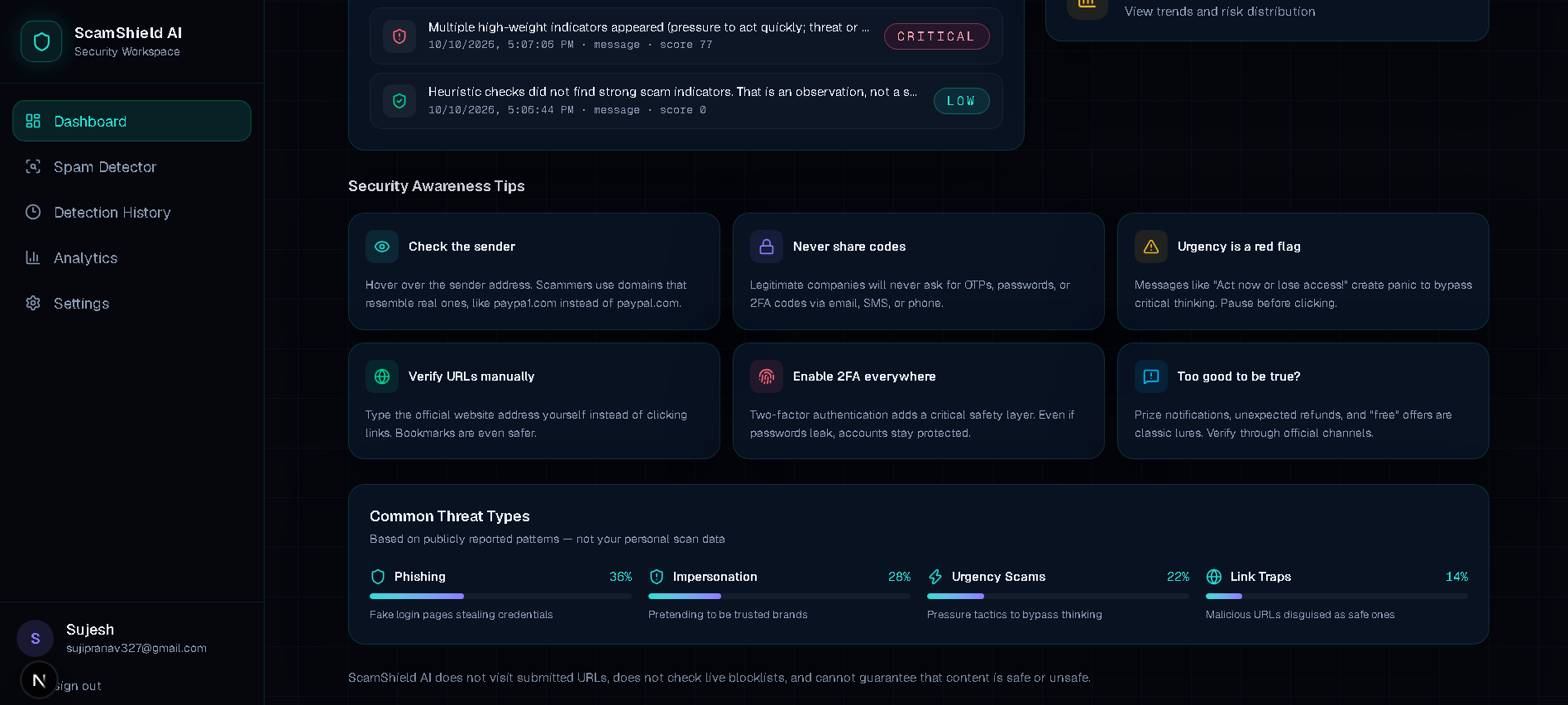
Through this project, we learned about machine learning, text preprocessing, classification algorithms, URL analysis, and connecting a frontend with a Python backend. We also gained a better understanding of cybersecurity threats and the importance of testing a model with suitable data. We learned that a detection system should explain risks clearly and avoid claiming that every message or website is completely safe.
What's next for Scam Shield
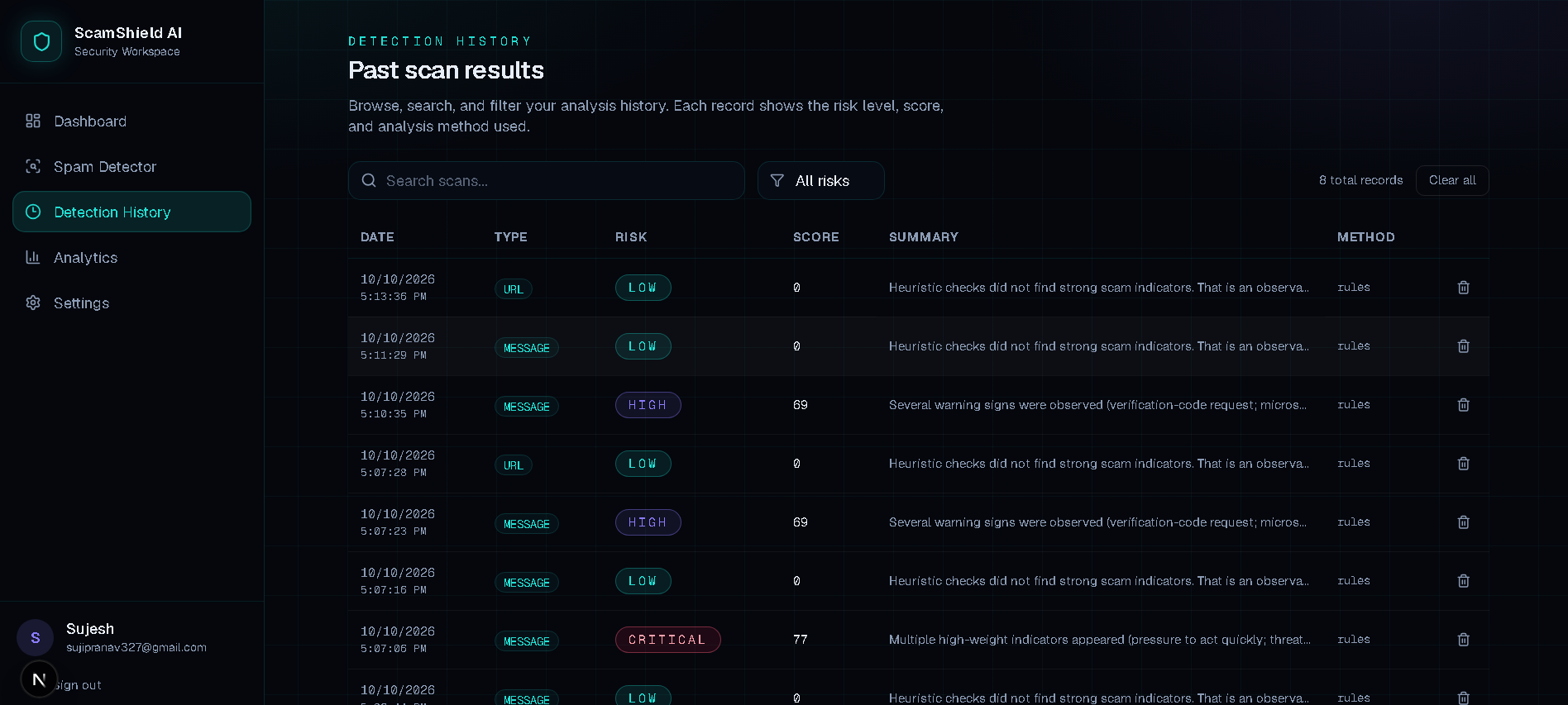
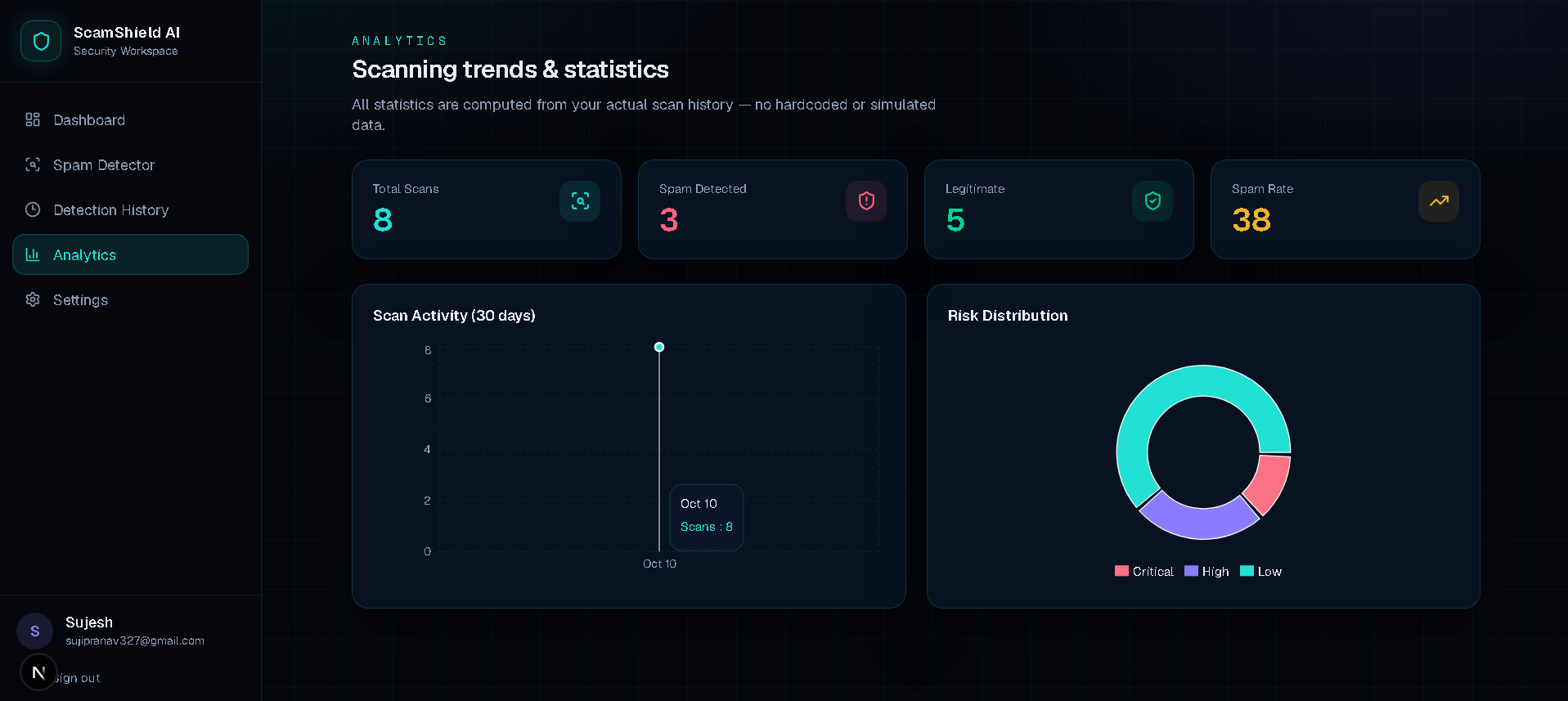
In the future, we want to improve the accuracy of our detection models, integrate security reputation APIs, and add a scan history dashboard. We also plan to support more types of suspicious messages, provide clearer explanations for detected risks, and improve the interface for mobile users. Our long-term goal is to make Scam Shield a useful and accessible tool for safer online communication.
Built With
- api
- bcryptjs
- css
- github
- google/genai
- html
- javascript
- jose
- json
- lucide
- next.js
- node.js
- postgresql
- react
- recharts
- sdk
- sql
- sqlite
- tailwind
- typescript
- vercel
- web
- zod

Log in or sign up for Devpost to join the conversation.